Your ShelfYour Projects

Signs of the Times, Vol. 30, No. 49.

PEACE AND WAR

Signs of the Times

Dec 14, 1904

Pacific Press Publishing Company · Mountain View, California · Dec 14, 1904

PEACE AND WAR.
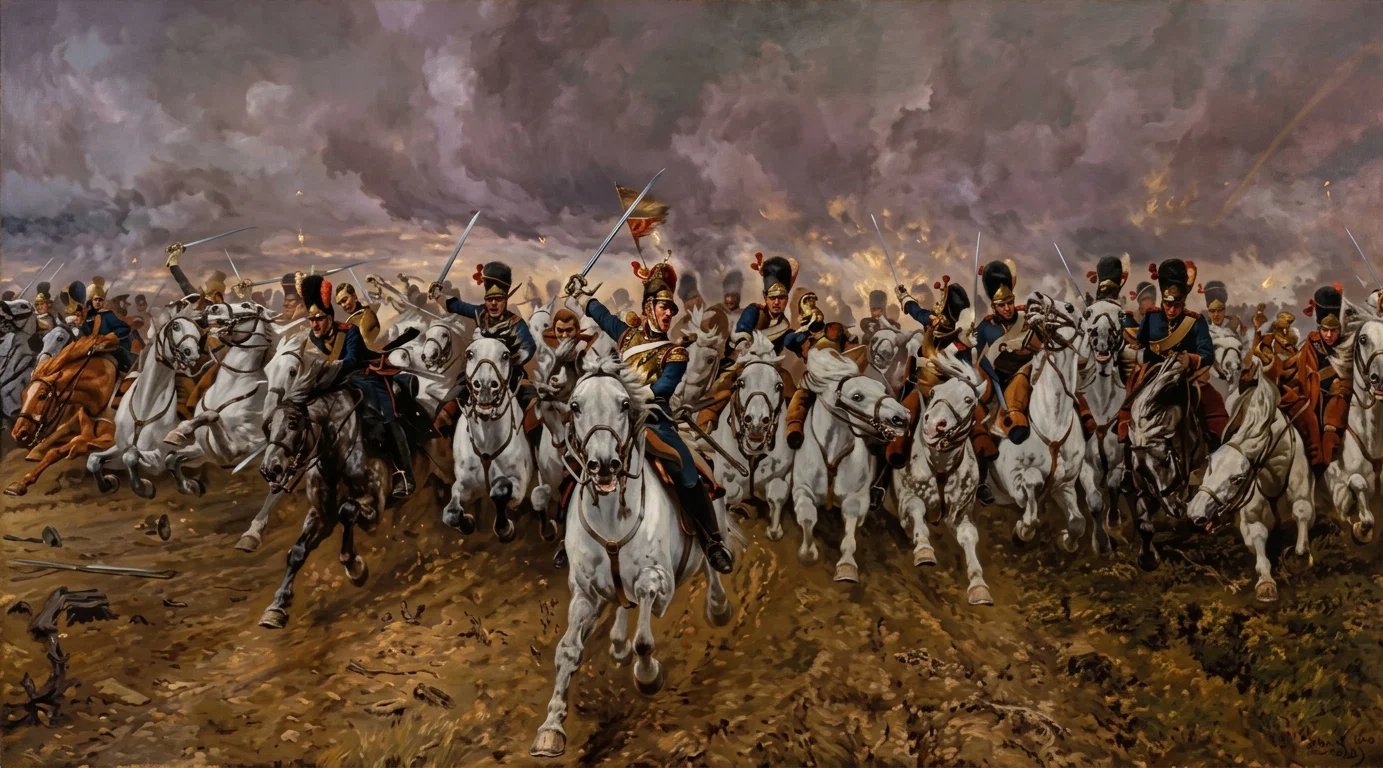
I KNOW the thoughts that I think toward you, saith the Lord, thoughts of peace, and not of evil.” Jer. 29:11. But the world is not now at peace. God’s voice is not speaking in the blare of the trumpets; His Spirit is not moving the engines of war. The hand that bears War’s standard is not His. The eye that sights down the rifle barrel is not the eye nor the agent of the “Everlasting Father, the Prince of Peace.”
War is Satan's answer to the second table of God's law.
“PEACE and good-will toward men,” was the theme of the Redeemer’s annunciation; and peace and reconciliation was the mission of the Son of Man. But the world is filled with violence, and the cruelties of war are wringing the hearts of the people. God is planning peace for man and for the earth upon which He placed him; and failure in His purpose can never be. His word will not return unto Him void, but will accomplish that which is pleasing to Him, and will prosper in the thing whereto it is sent. It is sent for peace; and the Gospel of peace is the Gospel of Christ.
BUT “from whence come wars and fightings among you? come they not hence, even of your lusts that war in your members?” James 4:1. The primal seed of war is found in the principle of self-serving, as opposed to the effacement of self in the service of others.
War is the weapon of the common enemy of God and man. It is Satan’s answer to the second table of God’s law.
God said, “Honor thy father and thy mother;” but the warrior son has slain them both, and the warrior father has slain the wife and children. God said, “Thou shalt not kill;” but war has put a red girdle around the earth, and every generation sings the story of national murder in the ears of those that come after. In the glamour of war man has not stopped at the slaying of mortal foe; but his hungry steel has tasted the marrow of those who nursed at the same breast that nourished him, who looked up from the same lap into the same mother face.
God said, “Thou shalt not commit adultery;” but Satan, through this agent, has flung defiance at this command wherever the hot breath of war has seared the green earth; and he whom God had set for the shield of woman has caused her a thousand deaths wherever a glory-mad nation has flung down the gage of battle. God said, “Thou shalt not steal;” but war has stolen everything, from the thrones of kings to the last morsel of food in the house of the poorest peasant—stolen everything from the virtue of womanhood down to the tinsel on the cloaks of royalty. God said, “Thou shalt not bear false witness against thy neighbor;” but the fear of war has given us the falsehoods of diplomacy, and has taught the denial and denunciation of the most binding and solemn engagements.
God said, “Thou shalt not covet;” but the war lords of earth have coveted everything that God has made or men have fashioned on the earth, and have used the sophistries of patriotism and the glamour of national glory to obtain for themselves the things they coveted.
VERILY, war is Satan’s contradiction of all that God designed for man. It was born in heaven in the envy and jealousy of him who has fostered it from then till now. It was born on earth in the envy and jealousy of him who slew his brother without cause; and this scourge of the heavens and bane of the earth has become the science through which the ends of selfishness have ever been attained, and the insults of men and nations, fancied or real, have been and are being avenged. “Master, remember the Athenians,” was the actuating force inspiring the successive blows that Persia struck at Greece. It was the spirit of revenge for these repeated attacks that instigated the counter blow of Greece to crush the power of the eastern kings. And Islam in Europe, with all the slaughters of the Mohammeds, is Asia’s answer to the challenge of Europe in the conquests of Alexander.
THUS have the thistle and the thorn of humanhatred been sown around the world in the wake of war, till the work of preparing the world for its last and greatest battle is nearly done. In every nation on earth the fever of war is quickening the pulse of the people, and the trip-hammer has displaced the sledge in beating out the implements of death. Look where you will, the forges of Vulcan are burning, and war-ships are dragging anchor on the rising tide.
AND this is not a dream. The fearful day is rushing on apace; the culmination is no longer distant. In the language of the prophet, “The nations were angry, and Thy wrath is come, and the time of the dead, that they should be judged, and that Thou shouldest give reward unto Thy servants; . . . and shouldest destroy them which destroy the earth.” Rev. 11:18. That time of anger has come; and soon will the vials of God’s wrath be poured into the earth to close this part of the history of sin.
BUT God does not leave it there. With the culmination of the work of sin there comes the long-promised reward of the tired hands that have wrought for God, and the tired feet that have run to speed His message. The earth that has been marred by war and sins of every kind will be purified and made new in God’s refining fire (Mal. 4:1; 2 Peter 3:10–13), and sin be found no more in all the universe of God (Matt. 13:41–43). Then, indeed, “truth shall spring out of the earth” that once was cursed, and then will it be true that “righteousness and peace have kissed each other.” War will no more return to wreck and ruin the earth, for “He maketh wars to cease unto the end of the earth.” Ps. 46:9. Even the dread of its memory shall pass away; for the righteous nation which “shall inherit the earth” shall “delight themselves in the abundance of peace.” Then will the peace of God which passeth knowledge fill the earth as the waters fill the sea; tranquillity reign as in the ages before self-will and unbelief gave birth to the Ishmael of war; and the conquest of love be the “science and the song” of all who pass through the glittering gates of Paradise restored.

AN ALL-SUFFICIENT SAVIOUR.

BY MRS. E. G. WHITE.
CHRIST'S words and acts while He was on earth were a revelation of divine truth. They gave evidence that He had come direct from the most excellent glory; but the glory itself was concealed. His actions spoke louder than words, inspiring faith in hearts that had been dead in trespasses and sins. It was His work to reveal the Father. And in the doing of this work He went steadily forward, constantly performing deeds of mercy and compassion. His energy never abating, never flagging. “It pleased the Father that in Him should all fulness dwell.”
“As the Father gave Me commandment, even so I do,” He declared. “This commandment have I received of My Father.” In all that I do, I consult the will and fulfil the purposes of the eternal God. The words that I speak, the acts that I perform, are the fulfilment of the wishes and purposes of God. They are the manifestation of His great love for human beings.
“God so loved the world, that He gave His only-begotten Son, that whosoever believeth in Him should not perish, but have everlasting life.” Christ took human nature upon Himself to show us what God desires us to be. Those who through faith are united with Him will learn that righteousness does indeed exalt nations and individuals. Day by day, year by year, a lack of obedience and reverence for God is being proved to be the ruin of nations. In obedience to God's law there is life. In conformity to His requirements there is a transforming power that brings peace and good-will among men.
Christ acted out the will of His Father, giving Himself without reserve to the work of reclaiming the fallen race. He attached men to Himself, that He might work through them for the salvation of sinners.
The whole agency of evil is working to oppose God. The spirit that led to the apostasy in heaven is in unceasing activity in all parts of the world. Satan flatters his subjects with the assurance that their forces will be sure to conquer. Before the first coming of Christ, it seemed as if the world were wholly given into the control of the enemy. “But when the fulness of the time was come, God sent forth His Son, . . . to redeem them which were under the law, that we might receive the adoption of sons.” All heaven was interested in this great event. At the appointed time the Instructor appeared. Who was He?—The Son of God Himself, the eternal Word. He came to give the world an evidence of the love of God by dying for the fallen race. He gathered to His own pure, sinless soul the penalty resting upon the sinful race, and offered Himself as a sacrifice.
Thus was revealed the love of God, and thus was revealed also the immutability of God's law. Not a jot or a tittle of this law could be changed to meet man in his fallen condition. But sinners were not left without hope, to die in transgression. A ransom was found. Christ became their substitute and surety. Upon Him were laid “the iniquities of us all.” Those who receive Him as their Saviour are freely granted pardon, and become members of the royal family.
“The grace of God that bringeth salvation, hath appeared to all men.” This grace teaches us not to use God's blessings for selfish pleasure, but to impart the divine knowledge to those who do not realize their danger and their responsibility. Seek most earnestly to show them their danger. Thus you will use your knowledge to a purpose in harmony with the will of your Redeemer. The soul is to be cleansed from all self-indulgence, all pride, all vanity. Consecrate the powers of your whole being to the service of God, denying ungodliness and worldly lust. Stand firm in defense of the pure, holy principles of right. Obey the words of the great Teacher. Let your will be conformed to His will. Refuse to be led away by the temptations of the enemy. Cherish constantly a sense of thanksgiving and gratitude. Praise God by being patient, tender, thoughtful, anxious to help others. Work in Christ's lines, and thus demonstrate the genuineness of your love for Him. It means everything to the believer to realize and improve the privileges that are his. God's workers are to be faithful minute-men.
Those who accept Christ as their Redeemer will work earnestly for the salvation of those whom He has redeemed with His blood. The sacrifice of Christ has revealed the value of the human soul, and Christians will reveal a deep, unselfish interest in those who are perishing in sin. Of whatever crime one may have been guilty, do not, for Christ's sake, show a readiness to make their guilt appear in the worst light. Show pity and sympathy for them; for to save them Christ paid the price of His own blood. Let those who have opportunity to speak to such a one, direct his attention to Christ, the Friend of sinners. Let their words be few and well-chosen, and let them reveal the loving-kindness of the Saviour.
It is never too late for Christ to hear words of repentance, never too late for Him to speak words of sympathy.
When Christ was crucified, it was with a thief on either side of Him. Upon one of these thieves pressed the conviction that there is a God to fear, a future to cause him to tremble. All sin-polluted as he was, his life history was about to close. “And we indeed justly,” he moaned; “for we receive the due reward of our deeds; but this man hath done nothing amiss.”
He called to mind all he had heard of Jesus,how He had healed the sick and pardoned sin. He had heard the words of those who believed in Jesus and followed Him weeping. He had seen and read the title above the Saviour's head. He had heard the passers-by repeat it, some with grieved, quivering lips, others with jesting and mockery. The Holy Spirit illuminated his mind, and little by little the chain of evidence was joined together. In Jesus, bruised, mocked, and hanging upon the cross, he saw the Lamb of God that taketh away the sin of the world. Hope mingled with anguish in his soul as the repentant, dying soul cast himself upon the Saviour. “Lord, remember me,” he cried, “when Thou comest into Thy kingdom.”
Quickly the answer came. Soft and melodious the tone, full of love, compassion, and power, the words, “Verily I say unto thee to-day, Thou shalt be with Me in Paradise.”
Shall not the compassion that Christ revealed, even in His dying agony, lead us to deal as He would deal with those who are brought into trying places? Let every Christian represent Christ by speaking words of sympathy and compassion to those who are tempted and tried. O, how many who profess to be Christians have not the spirit of the meek and lowly Saviour. O, how many forget their own defects of character, and forget, too, that God gave His only-begotten Son to die a death of shame and agony, that sinners might be pardoned. He has pledged Himself to save all who repent and turn to Him. Those who place their confidence in the merits of the Lamb of God will gain eternal life.

GOD ON OUR SIDE.

THE first conviction of victory is to have God on our side. This implies that our cause must be absolutely just in the interest of truth and right, and waged for the glory of God. “If God be for us, who can be against us?” Judah was urged by Hezekiah to be strong and very courageous, and not at all afraid of the king of Assyria, “nor for all the multitude that is with him; for there be more with us than with him.” God was with Judah and that was enough. To that important extent the condition of victory was fulfilled. On the front of that great Downing Hall, in the north of Wales, is this very suggestive inscription in English translation; it reads: “Without God, without all; with God, enough.” Yes, if we are without God, we are without all, while the divinely inspired and opposite truth is, “If God be for us, who can be against us?” With President Lincoln, we can say, “It is well to be on God’s side, for He is always right and sure to win.”—Selected.

Immorality Has No Hold on Immortality

IMMORALITY has no hold on immortality. —Sunday-School Times.

THE MOUNTAINS OF GLADNESS.

BY L. D. SANTEE.
The beautiful mountains of gladness Shine bright in the sunshine of heaven; There cometh no shadow of sadness, And the light of one day is as seven. Like dew in the sunshine the spray is That gleams o'er the river of rest, And the rapturous infinite day is Made glad by the songs of the blest.
No darkness, no death, and no grieving, Are feared by the dwellers in heaven, When the “white robes” with joy they're receiving, When chaplets of glory are given. They have left all earth's toils and its losses, And forget the rough way they have trod. Ah, little they'll think of life's crosses, When they rest in the kingdom of God.
That glad land of beauty is nearing, 'Tis the home of the glorified throng; No loneliness, heartache, or fearing, No death, and no shadow of wrong. As yet, here on earth unbeholden Is the city, celestial and bright, Soon its pavements, not gilded, but golden Will be trod by the children of light.
Its dwellers, not dying, but living Will find from all sorrow release; They will sing their glad songs of thanksgiving, As they rest in the kingdom of peace. They will stand on the mountains of gladness That gleam in the sunshine of heaven; They have left every shadow of sadness, And the light of one day is as seven.
Dixon, Ill.

JEREMIAH

BY F. D. STARR.
“Thy words were found, and I did eat them; and Thy Word was unto me the joy and rejoicing of mine heart.” Jer. 15:16. This will be the jubilant expression of every one who gives due study and consideration to the contents of this book. He who has tasted the good word of God as uttered through the mouth of this holy prophet, will realize that there is no joy on earth equal to the joy to be found in learning the thoughts of God, as contained in His revealed will.
This book has fifty-two chapters, just the number of weeks in the year, and if one chapter a week would be studied, one year would be found none too long to dwell upon the interesting volume.
For full forty years the voice and pen of this noted prophet were active in warning and encouraging the people of God and surrounding nations.
To show the esteem in which the prophet Jeremiah was held by the people in the time of Christ, we note that when the question was agitated as to who Jesus really was, some said He was Jeremiah, or one of the prophets, thus placing Jeremiah at the head of the list of prophets, as it were. Matt. 16:14. Jeremiah lived and wrote more than a generation this side of Isaiah, for his prophetic office began about 70 years after Isaiah’s ceased.
It is very interesting to compare the two books. The possibility of human forgetfulness is mentioned by both in a very striking manner. In Isa. 49:15, we read: “Can a women forget her sucking child, that she should not have compassion on the son of her womb? yea, they may forget, yet will I not forget thee.” In Jer. 2:32 occurs this statement: “Can a maid forget her ornaments, or a bride her attire? yet my people have forgotten Me days without number.” The obvious reply to this question would be in the negative, that it is not possible for a maiden to forget her ornaments. This, coupled with the former assertion that she may forget her child, constitutes a sad commentary on the perverted mental condition of humanity. Yet who can say that to-day children are not more neglected than the outward adorning placed upon them and other members of the family to which they belong? That the body is more than raiment is a truth too often ignored.
The reluctance with which both these prophets entered upon their appointed life-work is worthy of note. Said Isaiah: “Wo is me! for I am undone; because I am a man of unclean lips.” Jeremiah’s feelings are thus expressed: “Then said I, Ah, Lord God! behold, I can not speak; for I am a child.” But both of these impediments were promptly provided for, and the Lord fitted these messengers up, as He will every one upon whom He places such great responsibilities.
Perhaps the most important topic that the book contains is the prediction concerning the New Covenant, found in chapter 31. This chapter should be studied in connection with the eighth and tenth chapters of Hebrews.
When the new covenant was introduced, as explained in Matt. 26:26-29, it was not an unheralded event, no one need to have been confused over the matters of the two covenants now. Yet there is a vast amount of error in the minds of the people quite generally concerning this important question. Many seem to have imbibed the idea that the new covenant was made with the Gentiles and not with the Jews; that the covenant involves a change of the law, or the abolition of the law, and other strange ideas concerning the matter. Upon examining these scriptures that speak of the new covenant, we find that the new was made with the house of Israel and the house of Judah, just as the first or old covenant was made with their fathers; that instead of the law being set aside under the new covenant, it is to be given a more conspicuous place, that greater attention is to be given to it than under the old covenant. Mark the statement: “But this shall be the covenant that I will make with the house of Israel: After those days, saith the Lord, I will put My law in their inward parts, and write it in their hearts.” All who are members of the new covenant will, like Him who is the Mediator of the new covenant, have the law of God enshrined in the heart, and will say as He said when He came to take away the first covenant that He might establish the second, “I delight to do Thy will, O My God; yea, Thy law is within My heart.” See Heb. 10:9: Ps. 40:7, 8.
The striking point of difference between the new covenant and the old, was that the blood of beasts offered in sacrifice under the old, could never take away sin, but rather brought sin to remembrance (see Heb. 10:3), whereas, under the new covenant, by virtue of the blood of Christ, sins are forever blotted out and forgotten. “I will remember their sins no more,” is the promise. Now there is a vast difference between remembering a thing, and forgetting that same thing. It was by virtue of the provisions of the new covenant that sins committed under the old covenant were forgiven. Heb. 9:15. If we are Jews inwardly, (Rom. 2:29), and of Abraham’s spiritual seed (Gal. 3:29), then we have the benefits of this new covenant.
The many brilliant lessons, and the many absorbing topics that glisten from the various chapters of this book, like the stars in the sky, must be passed by, by our simply calling attention to their existence. But do not fail carefully to consider the temperance chapter of this book—chapter thirty-five.
Let us follow the noble example of Daniel, who gave careful and prayerful study to this scroll. He says: “I Daniel understood by books the number of the years, whereof the word of the Lord came to Jeremiah the prophet.” Jeremiah was contemporary with Daniel. If his writings were so interesting then, how much more so now, when we are so near the final termination of mortal events, predicted in Jer. 4:23-27. Hear ye the Word of the Lord.

HOW A JEWESS FOUND CHRIST.

ONE Saturday I picked up a Bible. Unlike my own Bible it contained the New Testament. I opened to the third chapter of Malachi and read these words, “Behold, I will send my messenger, and He shall prepare the way before Me; and the Lord, whom ye seek, shall suddenly come to His temple.” I glanced at the heading of the chapter, “Christ’s Coming and Forerunner.” Never before had it been intimated to me that there was anything about Christ in my Bible, the Old Testament. Immediately I began to reason: “I know some good people who read this New Testament which tells about Jesus Christ. I do not believe that it will hurt me to do so.”
Thus God was leading me. I opened to the Gospel of Matthew and began to read, fearing at the same time that it might be a sin to do so. Never in my life had I read anything so wonderful. When I got to the middle of the Sermon on the Mount, I felt an irresistible desire to go to my room and get down on my knees, altho Jews do not now kneel in prayer. There, in the stillness of that summer day, the Holy Spirit convinced me that Jesus Christ was my Saviour. O, the joy of those first moments with my beloved Saviour! It seemed that I must go out and tell everybody; but almost immediately came the thought, If my mother hears of this it will break her heart.
I went on reading the New Testament, devouring every word, and gloriously happy.
When I returned home, a new creature in body and soul, I determined to live as our Saviour would have me live; but told my mother nothing about the change in my faith. O, the struggle of those days! But the truth could not be hidden. One evening my mother asked me a question which might have been answered by the words, “I believe in Christ,” but still I held back. For a whole week I prayed earnestly for strength to be brave and true. Again my mother asked me that question. The time to speak had come. “Mother, I believe in Jesus Christ.” The bitterness to her of those words! How can I speak of that sad time? There was but one thing to do—to choose between my home and my Saviour. And so I went out from the dear ones who had done for me all that parents can do for an only daughter, not knowing what roof would shelter me that night. God directed me to some friends who gave me a home until I found another.
Seven years have passed in which the Saviour has become ever more precious. The promise in Matt. 19:29 is continually being fulfilled in my life. O, that my parents and brothers may soon come to the light, that the veil may be removed from the eyes of my people whom our Father in heaven is waiting to bless as He has blessed me.—C. R. Raphael.
Continue reading: EVENTS DURING THE YEAR OF THE SECOND ADVENT