Your ShelfYour Projects

Signs of the Times, Vol. 31, No. 51.

GOD'S CALL TO HIS PEOPLE

Signs of the Times

Dec 20, 1905

Pacific Press Publishing Company · Mountain View, California · Dec 20, 1905

GOD'S CALL TO HIS PEOPLE.

"Awake, awake, put on thy strength, O Zion; put on thy beautiful garments, O Jerusalem, the holy city; for henceforth there shall no more come into thee the uncircumcised and the unclean. Shake thyself from the dust; arise, sit on thy throne, O Jerusalem; loose thyself from the bonds of thy neck, O captive daughter of Zion." "How beautiful upon the mountains are the feet of him that bringeth good tidings, that publisheth peace, that bringeth good tidings of good, that publisheth salvation, that saith unto Zion, Thy God reigneth! The voice of thy watchmen! they lift up the voice, together do they sing; for they shall see eye to eye, when Jehovah returneth to Zion. Break forth into joy, sing together, ye waste places of Jerusalem; for Jehovah hath comforted His people, He hath redeemed Jerusalem. Jehovah hath made bare His holy arm in the eyes of all the nations; and all the ends of the earth have seen the salvation of our God. Depart ye, depart ye, go ye out from thence, touch no unclean thing; go ye out of the midst of her; cleanse yourselves, ye that bear the vessels of Jehovah. For ye shall not go out in haste; . . . for Jehovah will go before you; and the God of Israel will be your rearward."

NEWS FROM THE

Book Department

THE BIBLE OR TRADITION?

A review of a book by Rev. R. A. Torrey, entitled "Ought Christians to Keep the Sabbath?" The author, Pastor C. H. Edwards, says: "It is not our intention to answer or refute the general arguments presented, but to let the doctor's arguments stand side by side, and notice their force and conclusion." This he has done in such a striking and convincing way that even the casual reader can not escape the conclusion arrived at.
A unique feature of the tract is a series of seven cartoons by one of New York's leading cartoonists. A specimen of these is shown herewith.
The tract contains 32 pages, and will be sent for $1.60 a hundred, post-paid.

HYMNS AND TUNES

AT SEVENTY-FIVE CENTS Our stock of the new, thin paper edition of "Hymns and Tunes" has just been received. It is well printed and bound, and the 75 cents includes the prepayment of postage. Surely no one ought to be without a hymn book when a copy can be secured at this price.

MINISTRY OF HEALING

Mrs. E. G. White's new book, "Ministry of Healing," makes the best holiday gift of the season. It contains 541 pages; is beautifully illustrated; and sells for $1.65 post-paid. Descriptive circular will be sent on request.

THE GREAT SECOND ADVENT MOVEMENT

Have you read Eld. Loughborough's new book, entitled "The Great Second Advent Movement?" It has just been published by the Southern Publishing Association, Nashville, Tennessee, at $1.50 post-paid.
Of his plan of the book, the author says: "Having been familiar with the advent movement in 1843 and 1844, and having, since Jan. 2, 1849, proclaimed the doctrine, first as an Adventist, and since 1852 as a Seventh-day Adventist, I esteem it a pleasure to 'speak the things I have seen and heard.'"
As the manifestation of spiritual gifts has been closely associated with the advent movement, Eld. Loughborough has given that subject careful attention. In referring to this portion of his book, he says:
"Even those who are only slightly conversant with Seventh-day Adventist history know that since 1845 Mrs. E. G. White has been prominently connected with the movement, both as a speaker and writer. They also know that connected with her work there have been peculiar exercises, or gifts. It has been my privilege to be present and witness the operation of this gift about fifty times.
In addition to my own observations, I have also presented the testimony of other eye-witnesses respecting their experiences. Such facts should have more weight with the candid reader than random statements made by those who have never been present on such occasions."
This is a book of far more than ordinary interest and importance. Address the publishers, or Pacific Press Publishing Company.

HOME PEACEFUL

Those of our readers who have been following Mrs. L. D. Avery-Stuttle's articles in the Home Department of the SIGNS, will be glad to know that her book entitled "Home Peaceful," which has been out of print for about two years, is soon to be re-issued. We can not state just when it will be ready, but perhaps within six weeks. It will be bound in cloth, and will sell for fifty cents.
Orders may be sent in at once, and they will be filled as soon as ready.

PACIFIC PRESS PUBLISHING C

MOUNTAIN VIEW, CALIFORNIA 285 SALMON STREET, PORTLAND, OREGON 1109 E. 12TH STREET, KANSAS CITY, MISSOURI

Terms of Subscription.

Per Year, post-paid . . . . . . . . . . . . . . . . . . . . . . . . . . . . . . . . . . . . . . . . . . . . . . . . . . . . . . . . . . . . . . . . . . . . . . . . . . . . . . . . . . $1.50 Six Months, 75 cts. Three Months, 40 cts. To Foreign Countries, per year, $1.75.

SPECIAL TERMS.

1. One new yearly subscription and one renewal, or two new yearly subscriptions, sent at one time, $2.50.
2. Two new yearly subscriptions and one renewal, or three new yearly subscriptions, sent at one time, $3.25.
3. Three new yearly subscriptions and one renewal, or four new yearly subscriptions, sent at one time, $4.00.
Sample copies sent on application.

SPECIAL NUMBERS BOUND TOGETHER.

As the most of our readers are aware, we have just published a series of four Special numbers of the SIGNS OF THE TIMES. These numbers are very closely connected, and are sold as a series only. For the convenience of those who desire to deliver them all at once, we have bound together Nos. 1, 2, 3, and 4, the prices of which will be as follows:
One to four sets to one or more addresses, per set, $.25
Five or more sets to single addresses, per set, .16
Twenty-five to five hundred sets to one address, per set, .11
We will continue to sell these Special numbers separately as we have heretofore, at the regular rates, which are:
One to four sets to one or more addresses, per set, $.20
Five or more sets to single addresses, per set, .15
Twenty-five to five hundred sets to one address, per set, .10
Five hundred and upward, .09
Address, SIGNS OF THE TIMES, Mountain View, Cal.

CO-OPERATION CORNER

For more than two years we have been able through the generosity of the SIGNS OF THE TIMES readers to send 25 copies of the SIGNS to a large penitentiary. The chaplain of this penitentiary has asked for these papers repeatedly and uses them to good advantage. This club has now expired. Shall we continue it? The price for a year is $22.50. Address your answer to
SIGNS OF THE TIMES, Mountain View, Cal.

"ALWAYS WHITE."

LET the words of the ancient preacher apply in the moral field. "Let thy garments of character be always white." To the physical eye no garment is more pleasing, more inviting, more becoming. White speaks of purity, of cleanliness. Yet no garment so clearly shows the staining, the soiling. All matter foreign to its purity stands out in sharp and ugly contrast to its immaculate whiteness.
MAN'S garment of character is not naturally that color. We talk many times of the blank pages of the child's heart upon which we are to write all good things; but the heart of no child of the human is a blank page. Rather it is like the soil of the mother earth—full of the seeds of noxious plants and fruits, waiting only opportunity to spring into life, flower, and fruitage.
IT is a great fact of God's Word that the human "heart is deceitful above all things, and desperately wicked" (Jer. 17:9); that "all have sinned, and come short of the glory of God" (Rom. 3:23); that "from within, out of the heart of men, proceed evil thoughts, adulteries, fornications, murders, thefts, covetousness, wickedness, deceit, lasciviousness, an evil eye, blasphemy, pride, foolishness; all these evil things come from within and defile the man" (Mark 7:21-23); that "the works of the flesh are manifest, which are these: adultery, fornication, uncleanness, lasciviousness, idolatry, witchcraft, hatred, variance, emulations, wrath, strife, sedition, heresies, envyings, murders, drunkenness, revelings, and such like. . . . They which do such things shall not inherit the kingdom of God." Gal. 5:19-21.
YET this is a truth which the religious world to-day in its teaching has put a long way off. Men are shocked and appalled at the constant revelation of guilt and crime and corruption. Various reasons are assigned and speculations indulged; but man in his folly and self-exaltation is loath to confess the indictment of Jehovah, let the logic of facts demonstrate the truth as it will. Every man who will honestly, faithfully, single-heartedly, stand face to face, heart open, before God's throne, and let the light of the sacred law, and the blameless unselfishness of Jesus Christ shine into his heart and life, will echo the cry of the leper, "Unclean, unclean," and in despairing agony will wail, "O wretched man that I am, who shall deliver me from the body of this death?" Who will wash the stains of sin from my robes of character, so that I shall be clean, without stain of sin upon my garment?
THERE is but one answer; there must be a radical change in the nature of the individual. It is thus expressed by Jesus to the outwardly highly-moral Pharisee, "Ye must be born again;" or "Ye must be born from above," "born anew," created a new man in Christ Jesus. John 3:3-7; 2 Cor. 5:17; Eph. 2:10. Thus much for the moral nature of the man; and this regarding the cleansing of sin: "Come now, and let us reason together, saith Jehovah; tho your sins be as scarlet, they shall be as white as snow; tho they be red like crimson, they shall be as wool."
MAN knows no alchemy which can wash white the scarlet and crimson stain without injury to the fabric; but the alchemy of God can wash from the vilest sinner's heart the deepest stains, and make "whiter than snow" the garments stained by sin.
WHEN Jesus was seen up on the Mount of Transfiguration, "His raiment became shining, exceeding white as snow; so as no fuller on earth can whiten them." Mark 9:3. That outward cleanness was but the shining forth of the righteousness within. That was His heart's condition; and for the benefit of all who should come after, God permitted it to shine out in all its native, heavenly purity.
WHAT God wrought in Jesus Christ He is anxious to do in us through Christ. The mighty power of God that kept Him from sin and moulded a divine-human character, which is the admiration of the ages, will, if we are positively willing, cleanse us from every stain of sin and clothe us in the white garments of the righteousness which is in Christ Jesus. Nay, more; He who has cleansed can keep even to the end, blameless and undefiled, His own. Day by day, with humility of heart, as we layour sins and imperfections before Him, and by simple faith grasp the cleansing word, we shall go clean, and the heart which rejects and abjures and hates the sin will be brought more and more into harmony with God.
“Let thy garments be always white.” If they are not, they are saying to the great unsaved multitude, You are the same as we. You are witnesses to self and its utter weakness and inability to do right. But if Christ shall be permitted to work for you, He will make your garment white, and will enable you to walk so as to keep it pure and clean.
It is the clean garment from within which is needed to-day. The preacher needs it, the politician needs it. Our legislators need it. Our judges need it. Lawyers and merchants and farmers and employers and employees need it. All need the white garments of God’s righteousness. And these need it all the time. It is a sad thing to witness of Christ yesterday and witness against Him to-morrow. “Let thy garments be always white.”

OUR WITNESSES.

GOD'S works are His witnesses; so are ours our witnesses. His works witness to His righteousness, His love, His wisdom, His power. To what do ours bear witness? As His works are witnesses of what He does and is, so are ours witnesses of what we do and are. That witness can not be impeached. Our deeds are telling in unmistakable language the condition of the heart that prompts the hand to do them.
If our hearts are in the work of God, then are our hands busy with deeds that prove it so. If we are half-hearted in that work, that word is written indelibly on every piece of work that passes through our hands, and on every act that goes to make up our daily life. It is not left to the angels to write it there—the hands that do the work are doing the writing. The professions we make count for nothing when the works we do are clamoring to be heard against us, and are contradicting our professions to the face. We must be what we want men to think us, or we are asking them to believe a lie.
It is time wasted to profess what our works do not substantiate. They are the only witnesses that are qualified to testify for us, either before men or in the court of last resort. If they witness against us, our professions are empty air. Let us so act that our professions will be in harmony with our deeds. Let us seek to be what we would have God count us as being, and then the deeds that flow from our hands will be a constant well-spring of praise to our Creator, and God will crown our lives with the crown of victory. We can not impeach the testimony of our works either here or hereafter.
This is not teaching salvation by virtue of our own works. That is not the purpose of the argument. When Christ was asked, "What shall we do, that we might work the works of God?" He replied, "This is the work of God, that ye believe on Him whom He hath sent." John 6:28, 29. That is the essential of salvation; and from the life which is actuated by that belief will flow a constant stream of deeds testifying to men and to angels of our belief in that great fact. We can not earn or purchase salvation by the works that we may do; but our deeds can and do bear witness to our belief in, and acceptance of, the only way of salvation open to men. Open your heart to Him; believe on Him; and then your life and deeds will testify that you are His; that His work is your work; and the interests of His kingdom the motive of your life.
In such witnessing as that there is power for good. The world will see it, and be moved by it. Such lives are God's most powerful evangelists.
Now, when God's last warning message is going to the world, what a responsibility rests upon us so to live that the work we attempt to do for Him will not be marred by an inconsistent life. Let consecration to Him be our aim; the mind of Christ within us, let that be an accomplished fact; and then let us go into the vineyard, living and laboring for souls. Often we hear the words, "The harvest is white." Now, while we recognize the whiteness, the ripeness, of the harvest, let us not be idle spectators. God's purpose in bringing us to see the condition of the harvest is not accomplished unless we step in among the reapers to do our part. Mere belief is not enough. The devil can see the condition of the harvest better than many of us. God does not recognize the worth of any belief that does not result in fruitful labor for the cause of Christ, or does not attempt anything for Him. Christ became a servant; His children are to be servants. There will be no pampered pets in His household, no drones who see and do not.
Let the soul who would be a child of God so work and so live each day that his words and his deeds will bear constant witness that he is indeed a child of God. Then others will be glad for his having lived, and Christ will confess him before His Father and before His angels.
S.

RELIGIOUS LIBERTY IS OF GOD.

God obliged the king of Egypt to grant religious liberty to Israel; but He did not deny liberty to the Egyptians to worship what and how they pleased. Israel was sorely oppressed with labor, and the Lord noted it. But when He made demand upon Pharaoh, through Moses and Aaron, it was not for any merely civil rights or temporal privileges, but for religious liberty—freedom to worship God.
God has a spiritual kingdom in this world (Luke 17:20, 21), and in the hearts of His people He is enthroned. They are not of the world, even as Christ was not of the world. John 17:16. They are subject to the governments of earth, as He was. Romans 13. He did not resist the judgment of the government against His personal rights as an individual, even to save His life; yet He reminded the governor that he could have no power at all were it not given him from heaven. John 19:10, 11.
The very existence of the Roman Government was dependent upon the heavenly Father, whose power was all at Christ's command, yet He would not raise a finger against that government in His own behalf as a man temporarily subject to it. He declared to Pilate, "My kingdom is not of this world; if My kingdom were of this world, then would My servants fight, that I should not be delivered to the Jews; but now My kingdom is not from hence." John 18:36. If His kingdom had been of this world, He would have done just as the rulers of this world do—destroyed men's lives for His own personal protection. But He was here to save life, and not to destroy it. Luke 9:56.
Christ made no attempt to reform the Roman Government, or to overrule its action by any political methods. He demonstrated the Spirit of the Gospel before Pilate in a way that caused the governor's wife to plead for Him, and even to convince the governor himself that his prisoner was innocent. But, tho Christ had an invincible army at His command (Matt. 26:51-53), He would use no force. Moreover, He sent His apostles to all parts of that corrupt Roman kingdom, yet none of them had any authority, or made any attempt, to reform the government or take any part in its affairs. They were simply to preach the Gospel and do what other good work they could to bring individuals to Christ.
Paul, an accredited "ambassador" to this world, in coming to Athens, would not assault their institutions or any of their thousands of gods. He recognized one of their deities, one that they ignorantly worshiped in a negative manner, and took advantage of their own law to declare unto them the God of heaven and the Gospel of Christ, the God and His message which they knew not. Acts 17:22-31. In no way did he intimate that they had no right to worship as many gods as they chose; but he singled out their "Unknown God" and showed them that He was superior to all others. In this way he reasoned with them.
Paul spent at least five years as a prisoner of the Roman Government, but in no case did he complain of the government; altho he did show that his accusers had no ground for their complaints. But he made the most of his opportunities as a prisoner to preach the Gospel. He was thus privileged to preach Christ before kings and governors and military commanders, and even made disciples "in Cæsar's household." Acts 13:6, 7; 24:24, 25; 26:19-29; 27:1-3; Phil. 4:22.
All classes of people in this world are dependent upon the God of heaven for "life, and breath, and all things," yet the true subjects of His spiritual kingdom ask only the privilege of worshiping Him in His appointed way, and of proclaiming to all men the Gospel of peace with God through our Lord Jesus Christ. Their motto, as given by the Master, is, "All things whatsoever ye would that men should do to you, do ye even so to them."
Therefore, as the Lord wants religious liberty for His people in the earth, He grants the same to their opponents. If they choose to worship false gods, when probation closes, they will have to take the result of their choice. In the judgment they will simply get the wages they have earned, and "the wages of sin is death." On the other hand, those who have chosen to obey the Gospel will receive the gift of God, which is eternal life. So far as God is concerned, He desires all to have perfect religious liberty, then there will be no ground of complaint against the justice of the final judgment.
Religious liberty for all men is a heaven-born principle. Religious intolerance, by whomsoever exercised, is not of God, and is therefore unchristian.
G.

IS IT THE END OR THE MEANS?

FELLOW-CHRISTIAN, what are you working for, the end or the means? By end we mean the goal to be achieved, the ultimate object to be attained. By means we mean that by which the object is gained, the end accomplished. Which are you working for, the end or the means?
There is need of the question being asked in these days, not only by the world at large, but by Christians. What is your object in eating? Is it simply to satiate the appetite, to tickle the palate, to eat this or that because it tastes good? or do you eat for the sake of health, in order to build up a sound body and a clear mind? Do you eat that you may be better fitted to help others in life and thereby "glorify God"? or do you simply eat to please your taste? The food and its eating is the means; the glory of God, man's highest good, is, or ought to be, the end.
Many men are striving for the gold of earth. But for? Is it the gold itself they desire? If so, they are seeking only the means. Gold is worthless only as it feeds the hungry, clothes the naked, ministers in some way to the needs of humanity, and so glorifies God. As an end, it is worthless; as a means to an end, it is powerful for great good.
Many Christian parents are educating their children; many young men and women are endeavoring to educate themselves. Why? What do they seek? For what are they striving? Is it certain attainments in language, mathematics, history, or science? When you reach those, young men, will you be satisfied? Parents, are you satisfied with this? Education is nothing only as it proves a means to some good end, some worthy object. If attainments tend to satisfy the student, if they give him an exalted idea of his own importance, if they make him proud, sufficient, and self-important, these things ought to be evidence to him that he is seeking the means instead of the end. In fact, he is making the means the end.
He whose whole ambition is to be learned, whose aim is to attain certain accomplishments, is but an educated fool; while he who may have a very limited education, but who understands that knowledge is but a means by which a higher, nobler end may be reached, is in comparison a wise man. It is better to be an ignorant wise man than a learned fool.
"The end [or object] of the commandment is charity [love] out of a pure heart, and of a good conscience, and of faith unfeigned." 1 Tim. 1:5. All that the worldly heart so prizes is nothing unless it leads to and eventuates in something better. The object—the only true object of life—is to glorify God. All things given us here, all opportunities, advantages, blessings, attainments, are to be used for that purpose; and while pleasant in themselves, they are only means to an end far nobler, grander, holier; and all their beauty and enjoyment should be used only as blessed incentives to the final goal. If Christians would ever keep this truth in mind, it would prove of great worth in their experience. We should not find so many superficial, self-satisfied ones who rest content on union with the church, or a certain knowledge of the truth, or a certain position in the work of God. They would see that these, over which so many are so satisfied and complacent, are additional means or helps by which God can be better glorified.
Do we think that we should be more unhappy in seeking the end instead of the means?—Nay, we would be happier. Happiness comes in self-forgetfulness. It is a divine law that that which glorifies God is for the best good of His children, and therefore for their greatest and eternal happiness.

Question Corner

1745.—God's Permission to Noah. Gen. 9:3. Did the Lord permit Noah to eat all kinds of flesh? C. F. B.
The text reads, "Every moving thing that liveth shall be food for you; as the green herb have I given you all." And yet Noah perfectly understood the distinction between clean and unclean beasts, and, certainly, at the time this was given there was but one kind for him to eat, as there were but two of a kind of the unclean beasts taken into the ark, while there were fourteen of the clean. To have eaten the unclean would have been to have blotted out of existence the species. The evident reason why more of the clean were taken into the ark is that Noah might have enough of the clean for food and sacrifice. When the prohibitions were given and specific animals were named, as in Leviticus 11, the law was not a new law; it was simply a repetition of what had existed all the way through.
1746.—When Men Become Responsible. Rev. 14:9-12. What point do we have to reach in the Third Angel's Message when men become responsible for rejecting it? F.
That we do not know. All individual responsibility is toward God, not men, and God alone knows when men pass that point in their experience that the heart no longer responds to His invitation. From the very fact that men are of differing dispositions, some will reach it much sooner than others; some men decide quickly and emphatically, and some are slow in decision. Of course, in the giving of the last message of God to the world, it places, as it becomes better and better known, all the nations of the earth in the valley of decision. Joel 3:14. As the truth of God is pressed upon hearts and consciences on the one side, and as Satan, on the other, uses every means and device of which he is master to draw them away from yielding to God's Spirit and truth, in the very nature of the case men must range themselves with God or with the enemy. As the world shall pass laws in opposition to the law of God, as indicated by Revelation 13, men must take their stand in the face of God's warning against the beast and his image and his mark, or against the Word of God itself. Of course when all unite against God it will be perfectly evident as to where each and all stand, but the time when they make that decision in their own hearts is utterly hidden from man, because man is not the judge. Thank God that it is so. It is the duty of His people so to labor as to win people from making any decision against Him and His truth.
1747.—Pork-Eating and Coffee-Drinking. Have we not the Christian privilege to eat and drink what we will? and what harm is there in the drinking of coffee and the eating of pork? G.
It is Satan's purpose to enslave all those who yield to him so that they can not do otherwise than to do his will. It is the purpose of God through Jesus Christ to set men at liberty, so that in Him they may do God's will or may turn from that will if they so desire. They are not slaves to do His will, save by the bonds of love, but men may turn from God's allegiance and do whatsoever is in their hearts to do, if they desire. God will not compel them to serve Him. The liberty which Christ gives is freedom from sin; to walk in that liberty is to walk free from sin; it is the resolute turning from everything that would bring into bondage. Therefore the matter of diet becomes a matter of importance to the Christian.
Every one who has given the subject proper thought or consideration knows that eating to excess, eating unwholesome food, poisons the whole system, causes irritation of the nerves, blunts the sensibilities, and unfits a man for doing his best work for either God or humanity. The drinking of poison has the same effect. Now it is readily admitted by physicians of all classes that pork is not a wholesome food. The name of the female swine and the disease scrofula both come from the same root in the Latin. The first food almost that a sick person is forbidden is that of pork. It fills the blood with all sorts of impurities.
The only thing that makes coffee a desirable drink is the fact that it has stimulating and narcotic properties found in the caffein, which taken in strong enough doses is a deadly poison. It at first stimulates various organs, just as a whip stimulates a horse. The organs are at first more active until their functions utterly fail, and stronger stimulants or narcotics are demanded. It seems to us that the whole thing is met in 1 Cor. 10:31. "Whether therefore ye eat, or drink, or whatsoever ye do, do all to the glory of God." Is the eating of the filthy swine or the drinking of the narcotic coffee to the glory of God?.
1748.—The Heathen. I believe you are right on the law and the Sabbath, but will the heathen have a chance for eternal life? I. W.
The heathen always have had a chance for eternal life. Over and over has God expressed the truth that He is "no respecter of persons." He has given us in the Bible a history of His providential dealings with men, especially through the line of the descendants of Abraham, showing how His great plan has been worked out and His promises fulfilled in Christ Jesus our Lord. He has also in this shown us how He has worked for those outside of the people through whom Christ came. Abraham's ancestors were idolaters. In response to God's call, Abraham came out from among them, but the fact that he came from among them demonstrated that every other soul could have heeded the same call. Moses went down into Midian and found Jethro a priest serving God. Cornelius whom the Lord told to send for Peter is another instance. The three Magi who came from the East to find Christ came from outside the Jewish nation. And we are expressly told that "the eyes of Jehovah run to and fro throughout the whole earth, to show Himself strong in the behalf of them whose heart is perfect toward Him." It is not perfect knowledge which God demands, but perfect motives. The primary instruction to the great world is given in Ps. 19:1-5, and also Rom. 1:20. Yielding to these evidences of God will lead men to the light, and one ray of light followed will save; it leads to the great center of light; while any amount of light rejected leads to darkness. It is not the amount of light that saves, it is the way one follows the light. Christ Jesus is the Light that lighteth every man coming into the world. John 1:9. Even so missionaries have found men in the very midst of the darkness of heathen lands who have found the truth of God. Consequently the apostle Paul declares that the heathen world itself, not shall be sometime left without excuse, but that the heathen "are without excuse." Knowing these revelations of His will, we can leave all that we know not safely with Him.
1749.—"This Generation." Matt. 24:34. You say that this generation shall not pass away till all those things are fulfilled. At what time did this generation begin?
Briefly it is the opinion of the writer that the last generation covers the period of the last great threefold message (Rev. 14:6-14), beginning in 1844, and from there onward. It is the same as the indeterminate "days" of the voice of the sounding of the seventh angel. Rev. 10:7.

"THE INTER-CHURCH CONFERENCE ON FEDERATION"

THE THIRD MEETING.

(From our own correspondent.)

The United Church and Religious Education.
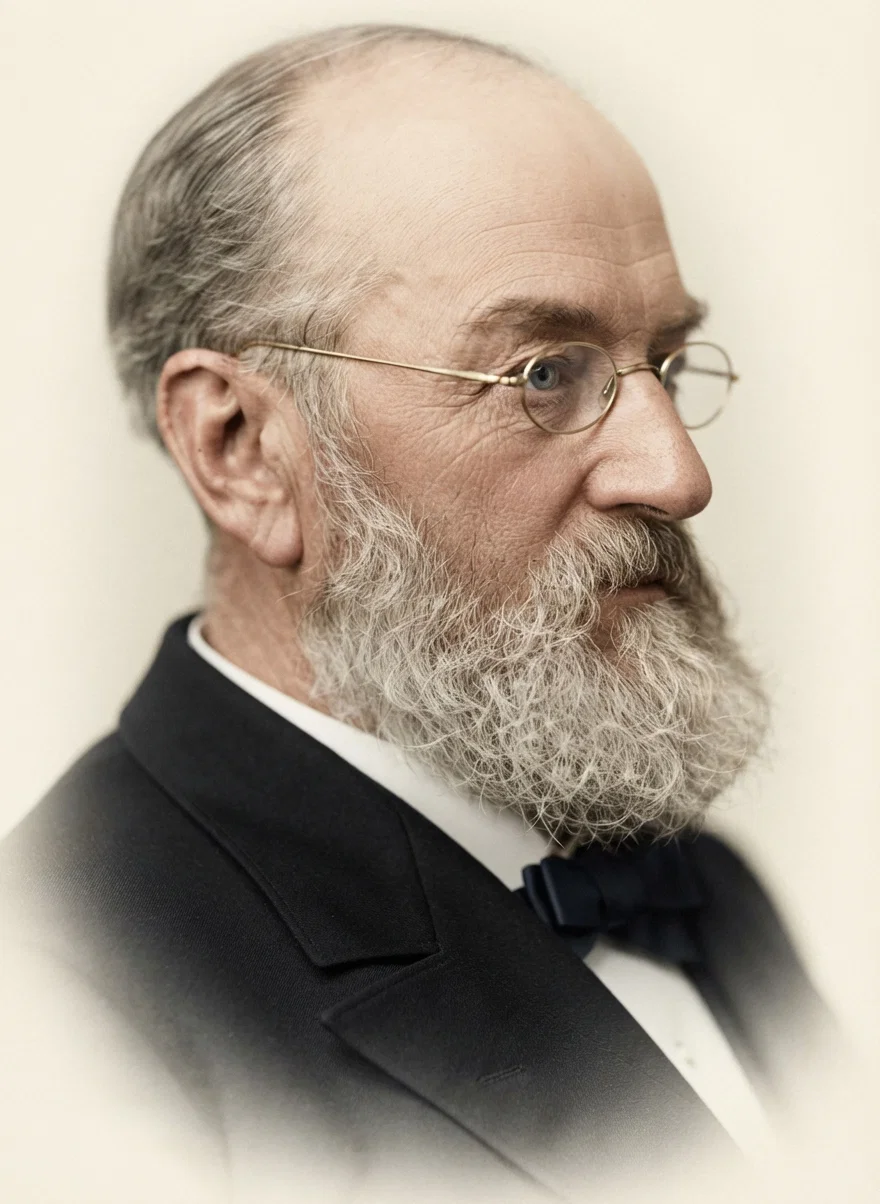
IN the third meeting, Thursday afternoon, November 16, the subject of discussion was "The United Church and Religious Education." (1) in the Home; (2) in the Sunday-school; (3) on the Week-day; (4) in the college; (5) in the Theological Seminary and Modern Life; (6) by the Press.
Dr. Richards, Reformed Church: The home, not the monastery, is the school of the saints. Religion has to do with the whole of man's life; religious education, therefore, embraces the whole sphere of the man. The home is the primary place for religious education.
Hon. John Wannamaker spoke on: "Religious Education in the Sunday-school:" If the conception of the preceding speaker could be realized, and the church in the home could be re-established, I should have nothing to do on this occasion but to burn my paper. No public school can include culture along religious lines.
Rev. Wm. Hayes Ward, LL.D.
Therefore the Sunday-school meets the need that springs from the lack of religious education in the many homes. I recommend that in the year 1906 the people of the churches "bring all the tithe into the storehouse, that there may be meat in Mine house."
Dr. Hodges, Episcopal, on "Theological Seminary and Modern Life," presented a scholarly discussion of the theological graduate and the theological seminary, in a way in which it could have very little to do with modern or any other real or practical life.

Week-Day Religious Education.

Dr. Wenner, Lutheran, presented the subject of "Week-day Religious Education:" First, the obligation of religious education rests on the family, and secondarily upon the church. Religious education should be under the direct supervision of the church and its ministry. The public school can not give religious education. The church and the state are entirely separate in character and in sphere. It is difficult to find any other agency than the church for the conduct of religious education.
After all this that is good and true, and in principle, right, he practically reversed it all by recommending the impossible expedient that "the state shall give to the churches Wednesday afternoon of each week for religious instruction! Not in the school-house, but in places of the churches."
Dr. King, president of Oberlin, Congregationalist, on "Religious Education in the College," presented a vigorous and excellent appeal for the absolute quenching of rowdyism and lawlessness so prevalent in college and university throughout the land, as the chief element in solving the question of religious education there.
Dr. Buckley, Methodist, on "Religious Education by the Press," gave a witty, entertaining, and instructive address on the relationship of religion to literature and the press in all ages. He closed a spirited and impressive speech with this splendid sentence, "The great thing is not to put the Bible in the public schools; but to keep the Bible in the pulpits."
Continue reading: THE FOURTH MEETING