Signs of the Times, Vol. 33, No. 41.

The Gift of the Spirit

Signs of the Times

Oct 9, 1907

Pacific Press Publishing Company · Mountain View, California · Oct 9, 1907

The Gift of the Spirit

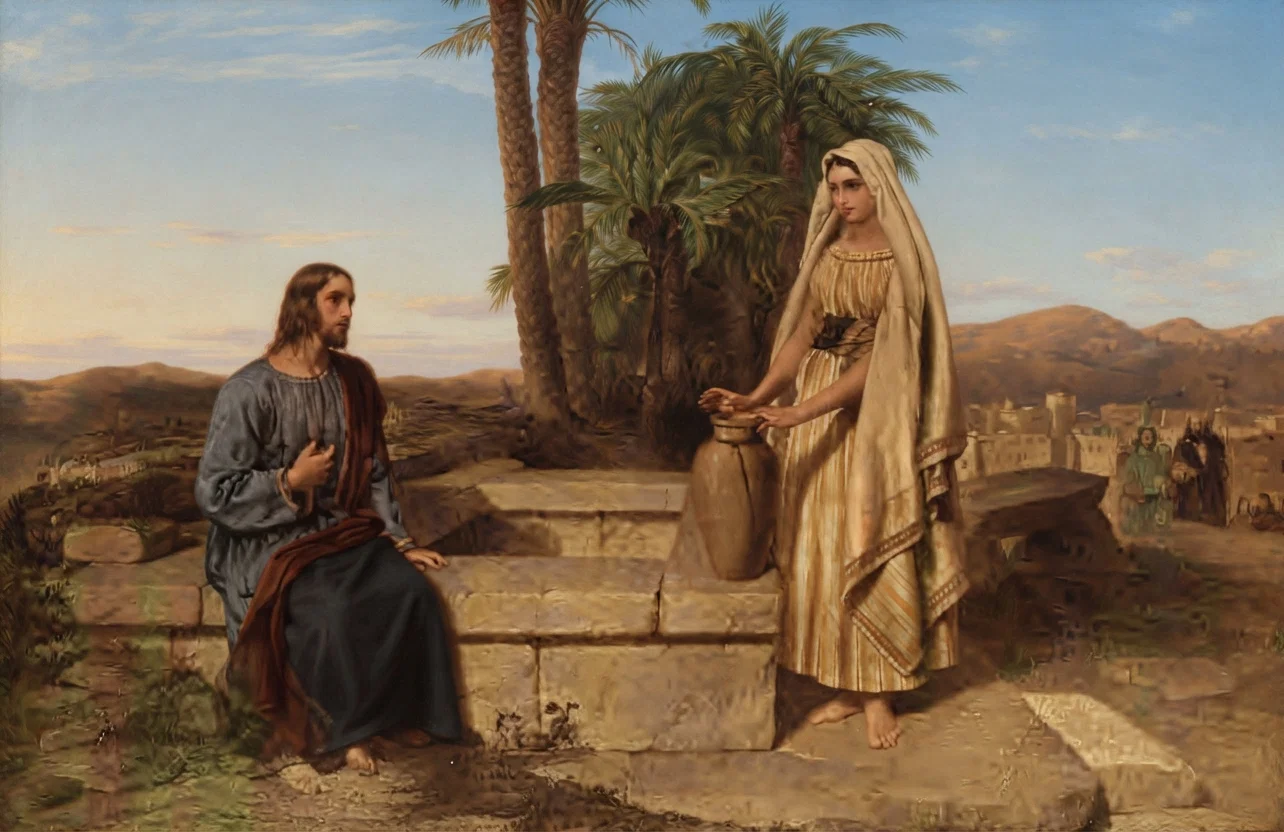
"For I will pour water upon him that is thirsty, and streams upon the dry ground; I will pour My Spirit upon thy seed, and My blessing upon thine offspring."—Isa. 44:3.
"And it shall be in the last days, saith God, I will pour forth of My Spirit upon all flesh."—Acts 2:17.
"Nevertheless I tell you the truth: It is expedient for you that I go away; for if I go not away, the Comforter will not come unto you; but if I go, I will send Him unto you."—John 16:7.
"Ask ye of Jehovah rain in the time of the latter rain, even of Jehovah that maketh lightnings; and He will give them showers of rain, to every one grass in the field."—Zech. 10:1.

With Our Inquirers

"If ye will inquire, inquire ye."
[All questions to this department will be answered which to the editors will seem to minister to the good of the readers and to the mission of the paper. The same question can not be answered repeatedly in the same volume. The name and address must accompany question, not for publication, but as an evidence of good faith, and that answer may be made by letter if deemed advisable. It is well always to enclose a stamp for reply.]

2248.—Sufficiency of Punishment.

Can it be sufficient punishment for the villainous wicked, who, successful thru life in covering up his misdeeds, will have nothing worse to fear after a life of sinful gratification than a perfect and absolute obliteration of self, utter nonentity?
The Bible text is that "the wages of sin is death." Rom. 6:23. Death is certainly cessation of existence. That can not be called death which never ends in cessation of life. He who is in misery without end has eternal life just as truly as he who is in happiness without end. Life persists, and eternal life persists ages without end. Eternal death is death which knows no life, age without end, or, in other words, absolute non-existence, "who shall be punished with everlasting destruction from the presence of the Lord, and from the glory of His power." 2 Thess. 1:7-9. "Whose end is destruction." Phil. 3:19. The death mentioned includes the dying. How long a time that may take we do not know. The word of God presents before us in the 20th chapter of Revelation somewhat of the punishment of the wicked. We are there informed, in connection with Zech. 14:4, that our Lord Jesus Christ shall come at the end of the thousand years, that when He touches the Mount of Olives, it will open; a great valley will be formed; the touch of His presence will purify the place where the Holy City, the capital of the new earth, shall rest. The saints will come with Him, the Holy City will descend in their midst, clothed with all the glory of God, manifesting the superior beauty of righteousness alone, before the hosts of the wicked who are raised from the dead of every age and clime. They will see then what they have lost, will see acquaintances and countrymen whom they despised in life clothed with immortality. The more responsible they are, the stronger and the clearer will be their minds to comprehend these things, and these will be a part of the sufferings prior to the time when the outshining of the glory of God will consume them. Their spirit of enmity against God will still be shown in their attempt, under the great adversary, to take the city and bring destruction to the only thing on earth that is worth preserving, the city with its inhabitants. But then the presence of God will set on fire the very foundations of the earth, the elements will melt with fervent heat, the works that are in the earth will be burned up, all identified with sin will be consumed, and there will be an absolute exactitude of punishment meted out to those who are worthy of it. In Gen. 18:25 we read the question of the father of the faithful, with direct reference to the punishment of a wicked city, "Shall not the Judge of all the earth do right?" At the close of the great controversy with sin, God's redeemed people, having had the privilege of understanding and knowing the reason of all His operations and judgments, which by faith they had believed to be equitable, will see fulfilled what they had accepted by faith, and will sing in the light of perfect knowledge, "Just and true are Thy ways, Thou King of saints." Rev. 15:2, 3.

2249.—The Laws of Moses.

You state under question No. 2165 that the law of Ten Commandments is included in the law of Moses. How do you harmonize this with such scriptures as Acts 15: 5-12, 24; Gal. 3:10; Heb. 10:1?
There will be no trouble in the mind of our inquirer if she will but remember that the fact that Moses' law included the Ten Commandments does not make the Ten Commandments include all the laws of Moses. In a very general sense the law of Moses includes Exodus, Leviticus, Numbers, and Deuteronomy, taking in the four last books of Moses, and of course in that sense includes all the moral precepts which God had given. All those precepts became laws in the Israelitish commonwealth, and yet the Ten-Commandment law was distinct from all those other laws, tho the laws of Moses included that law, because every principle of Moses' law was the outgrowth of some precept of the Ten Commandments. But the Ten-Commandment law does not include all the ceremonial precepts or police regulations of that time. There is no inharmony between this and the statement referred to.

2250.—Unknown Tongues.

Did the apostles speak in several tongues, or did the different nationalities understand when the apostles spoke the one language, as recorded in Acts 2?
We do not know. By some it is understood that the apostles spoke in the different tongues, and by others that the Holy Spirit interpreted what the apostles spoke to each one of the nationalities there present. At least those nationalities said, "How hear we every man in our own tongue, wherein we were born?" It seems as tho the Holy Spirit translated the words into the tongues of those who heard, and yet it is possible that they spoke in the tongues of those who heard. Certainly the New Testament intimates that the messengers of God at times spoke with tongues. There evidently was not any such disorder, however, as we find manifest in some of these modern movements of speaking with tongues. It is contrary to the whole economy of God's work to bestow unneeded gifts. They are given for use. He gave tongues for a particular purpose stated in 1 Cor. 14:22, "Wherefore tongues are for a sign, not to them that believe, but to them that believe not;" while "prophesying serveth not for them that believe not, but for them which believe." The apostle intimates that if there are those who speak in a language that the company does not understand, there should also be some interpreter, and instructs that, "Let him that speaketh in an unknown tongue pray that he may interpret." If this is not the case and the "whole church be come together . . . and all speak with tongues, and there come in those that are unlearned and unbelievers, will they not say that ye are mad?" 1 Cor. 14:23. The writer has not witnessed any of the modern phases of speaking with tongues, but credible eye witnesses have informed him that in most cases the tongue was not understood by either the one who spoke or by any of those present. The most that they could do was to guess at it. Yet those guesses seem to have proved utterly untrue. For instance, one man was given, as he thought, a Hindu tongue, and went to India for the purpose of preaching the "tongue" which he spoke, but when he reached there, instead of finding that people, he was preaching in English. God bestows His gifts that the church may be edified, built up, and profited; and good, straightforward teaching of God's word is worth all the tongues in existence without any meaning. "If the trumpet give an uncertain sound, who shall prepare himself to the battle?"

2251.—Creature. 1 Tim. 4: 3-6.

In a recent issue of the SIGNS you say that the word "meats" means any kind of food, of which I am aware; but this passage tells us plainly that "every creature of God is good," and is created to be received with thanksgiving of them which believe and know the truth." Nothing is said of other food than that which is created, that is, animal food. Am I not right?
Does our correspondent wish to intimate that she does not believe that anything but animals were created? The Greek word is ktisma. It comes from the verb ktizo, which is rendered create, creator, and make. The kindred word ktisis is rendered building, creation, creature, ordinance, and the original word from which creature comes in the text in question is defined as production or created thing. The kindred words take in the whole creation, not only animate but inanimate. See Eph. 3:9, where the verb is used, "Created all things by Jesus." Col. 1:16, "By Him were all things created." 1 Tim. 4:3, "Hath created to be received." Rev. 4:11, "Thou hast created all things." Rev. 10:6, "Who created heaven, and the things that therein are." And in the fourth verse of the text above it is simply the same, every creature, that is, everything created of God. Because it is generally used of animate creatures, does it preclude its applying to inanimate? The term itself is modified by "sanctified by the word of God and prayer," that is, such as God has set apart.

2252.—What Is Man? Ps. 8: 4.

(1) What distinction, if any, exists between the soul of man and his body or "house of this tabernacle"? (2) Is the soul of man merely the flesh or body? (3) The present life "is soon cut off, and we fly away;" the flesh returns unto dust; where do we fly away? Is it not the soul of man (See 1 Kings 17:17-23) that leaves the body at death?
Soul is used in at least three different senses in the Scriptures:
  1. The entire man,—"Man became a living soul." Gen. 2:7. The same expression is used repeatedly in Joshua 10. All the souls were slain in various cities, that is, all the persons. "Eight souls were saved by water" (1 Peter 3:20), that is, eight persons. The term living soul is applied in the original to the very lowest kinds of creatures possessing animal life.
  2. The life, or the breath, as in 1 Kings 17:17, 21, 22; Mat. 16:25, 26, and many other places where the same word which is rendered life is rendered soul, simply the animal life which all creatures possess alike.
  3. The mental powers, as in Ps. 103:1, "Bless the Lord, O my soul; and all that is within me, bless His holy name."
Under these three heads we believe that all the uses of soul in the Scriptures can be classed. It is impossible to give any one definition which will include its entire use.

2253.—The Inner and Outer Man.

"I delight in the law of God after the inward man." Rom. 7:22. "To be strengthened with might by His Spirit in the inner man." Eph. 3:16, and others. What is the meaning of these expressions?
The whole context shows that the thought of the apostle is not one man that lives outside and another man that lives inside; it is not two men that he is speaking about, that is, two individuals, but of two natures in the one man; the one spiritual, the other carnal, referred to in the fifth chapter of Galatians as the flesh and the spirit, the spiritual desires of man in bondage to the flesh of man in his natural condition, but triumphing over the flesh when man is yielded to God. When man is yielded to God, Christ comes in and dwells in the heart, and unites His Spirit with the spiritual man.

2254.—Rev. 17: 8-18.

Please explain this passage in the columns of your paper.
We have not space in this department to explain this scripture. Will say, however, that the subject will be considered within the year to come, and if our correspondent is a reader of the SIGNS OF THE TIMES he will get a full explanation by waiting a little longer.

2255.—Sunday Laws.

Will you kindly tell me how many and which States have Sunday laws?
All the States in the union, with the exception of California, now have Sunday laws. Some of these are quite mild; others are modeled after the Dark Ages. Many of them are dead letters, no regard being paid to them at all, as in Nevada.

The Great Need of the World and the Church
By Elder A. G. Daniells
VIEWED from every standpoint, the greatest need of the world and the church is the abiding presence and unrestrained operation of the Spirit of God in the hearts of men. In all ages men have been proposing and testing remedies for the removal of the evils that have been afflicting them. But up to this day no remedy originating with man has proved equal to the world's great needs. The most that has been accomplished by these man-made efforts has been to change the form and manifestation of the evils with which we have dealt. The world never faced more perilous and appalling conditions than it does to-day.
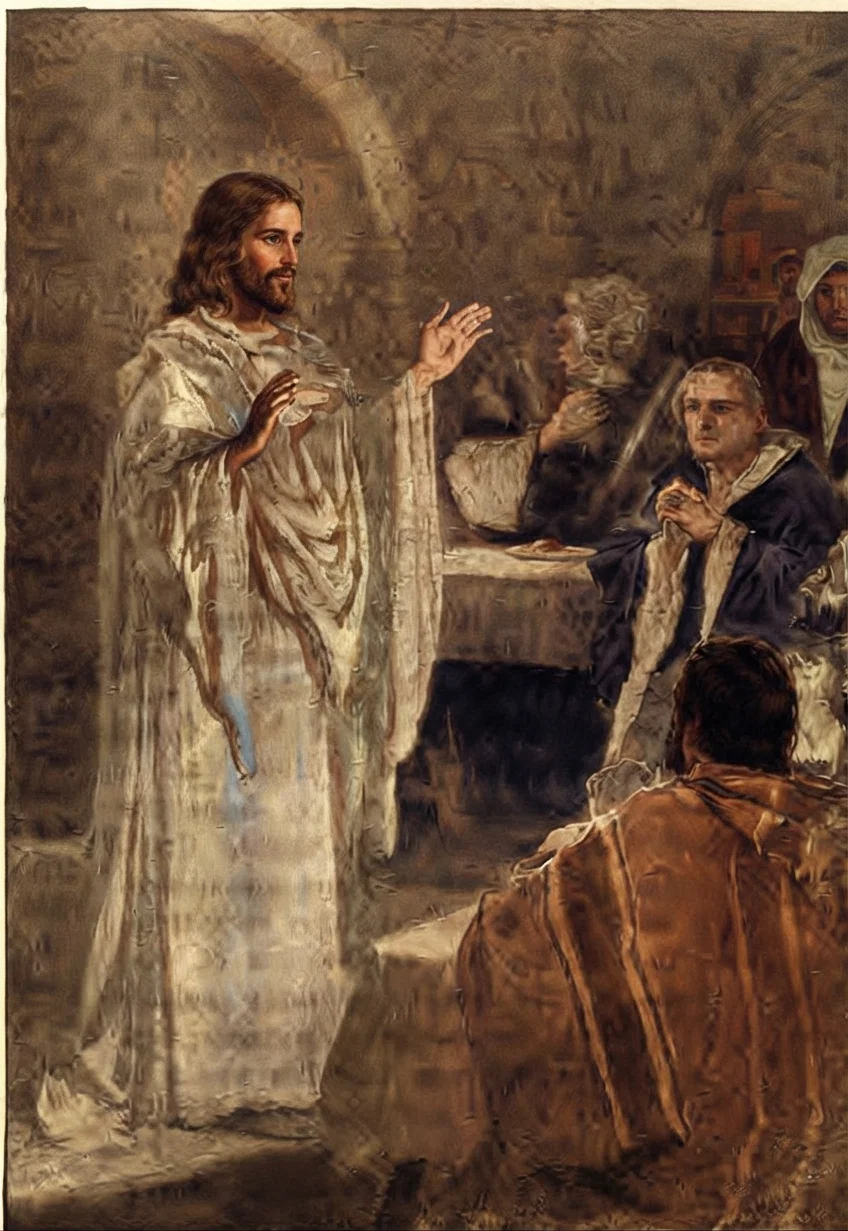
“Jesus therefore said to them again, Peace be unto you: as the Father hath sent Me, even so I send you. And when He had said this, He breathed on them, and saith unto them, Receive ye the Holy Spirit.” John 20:21, 22.
The reason why no remedy suggested by man has been able to accomplish what has been desired is because no human power can reach and move the cause of the troubles. That cause is woven into the web of human nature. It is rooted in every fiber of the moral character. "Can the Ethiopian change his skin, or the leopard his spots?" is the significant question asked by one in olden times. The only effectual remedy is that which is able to give man a new nature.
The real situation to be dealt with is graphically presented in the following statements by the apostle Paul: "Without Christ," "strangers from the covenants of promise, having no hope, and without God in the world;" "foolish, disobedient, deceived, serving divers lusts and pleasures, living in malice and envy, hateful and hating one another;" "being filled with all unrighteousness, fornication, wickedness, covetousness, maliciousness; full of envy, murder, debate, deceit, malignity, . . . without natural affection, implacable, unmerciful."
This accurate pen-picture of human nature gives the true cause of the shocking character of human history. It is this wickedness of the heart that has caused the bloody, desolating wars of all nations. It is this that fills jails with criminals, asylums with insane, houses of ill-fame with the fallen, and cemeteries with Christless paupers. This is the cause of the awful record of crime and suffering that goes into eternity with every passing day. Hence, these terrible conditions will continue in the world just as long as the heart remains vicious and unregenerated.
Regeneration of the heart is the only complete and efficient remedy, and that is provided in the Holy Spirit thru the Gospel of Christ. This remedy has been received by millions, and every one who received it consistently has proved it to be all that is needed. What it is able to do for one person, it can do effectually for all the world.
Now, that which fully and adequately meets the needs of this sinning, sorrowing world, becomes its greatest need. And as the Spirit of Christ, thru His Gospel of salvation, does this, the abiding presence and effectual working of that Spirit in the heart is what the world needs more than anything else. That it is the Spirit of God that ministers the Gospel to the heart, working its regeneration, is taught by the apostle Paul in his letter to the Corinthian church. He says: "Ye are manifestly declared to be the epistle of Christ ministered by us, written not with ink, but with the Spirit of the living God; not in tables of stone, but in fleshy tables of the heart."
Thus, the Spirit of Christ is to make actual in the heart and life now what was made possible by the death of Christ on the cross nineteen hundred years ago. This being true, it follows that all the blessings of the Gospel are centered in the Holy Spirit—He "brings all other blessings in His train." It is the Holy Spirit that strives with all men everywhere to convince them of sin, and to lead them to repentance. He converts the hearts of the penitent, works the death of self, and thus accomplishes the full surrender of the life to God. It is this divine Spirit that transforms the nature, bringing the thoughts and desires of the heart into obedience to Christ, and filling the soul with God's abounding love.
Furthermore, it is the Holy Spirit that gives the Christian workers power for effectual service in the work of the Master. When the Saviour entered upon His ministry, He said: "The Spirit of the Lord is upon Me, because He hath anointed Me to preach the Gospel to the poor." And of His ministry we are told that "God anointed Jesus of Nazareth with the Holy Ghostand with power; who went about doing good, and healing all that were oppressed of the devil; for God was with Him." Under the inspiration and power of the Holy Spirit, Christ "spake as never man spake," so that His hearers "wondered at the gracious words which proceeded out of His mouth." "He taught them as one having authority, and not as the scribes." When the people heard His words and saw His works, they "marveled, and glorified God, who had given such power unto men." They asked: "Whence hath this Man this wisdom, and these mighty works?"
In all His association with the people, Jesus constantly impressed upon their minds the truth that His wisdom to teach and His power to do mighty works were given to Him by His Father thru the Holy Spirit with which He was anointed. In all this there is a most important lesson for His church. When Jesus had finished His work on earth, He said to His disciples, and thru them to all who should believe on Him thru their ministry: "As My Father hath sent Me, even so send I you. . . . Receive ye the Holy Ghost." "Tarry ye in the city of Jerusalem until ye be endued with power from on high." "Ye shall receive power, after that the Holy Ghost is come upon you: and ye shall be witnesses unto Me both in Jerusalem, and in all Judea, and in Samaria, and unto the uttermost part of the earth."
From this parting instruction of our Lord the church should know that the secret of her power in the world depends upon the indwelling presence of the Holy Spirit. She can not be the light and inspiration to the world that she should unless she is under the constant command of that divine Spirit. It is only when this important truth is constantly realized that there will be a true realization of our need of the Holy Spirit, and a full and cheerful compliance with the conditions upon which He may be received and retained as an abiding Friend and Helper.
The world can not receive the Spirit, we are told, because it neither sees nor knows Him. That is to say, the world does not apprehend the truth regarding the Spirit, nor recognizes His operations; therefore, it can not receive Him. To be received in His fulness, the Spirit must be desired. The promise is to those who thirst. To be retained, His counsel and guidance must be followed. He must not be grieved by disobedience. The flesh must be crucified, and the whole life consecrated to the service of God.
Let it not be forgotten that the Holy Spirit is the third person in the Godhead. Since ascension of Christ, the Holy Spirit has been His representative and successor in this world. On the day of Pentecost He took His appointed place as administrator of the affairs of the church. What mighty achievements He has wrought for Christ and the church during the nineteen centuries that have rolled by! How many millions of hearts He has won to Christ! How many thousands of martyrs He has sustained and caused to triumph while enduring the most cruel persecutions! How marvelously He has kept the light of truth shining thru the darkest periods of the church's history! How promptly and accurately He has led the church forward to fulfil her mission according to God's eternal purpose, so that not a word fails of all that God has promised.
The Holy Spirit does not take Christ's place in the church by displacing Him in the hearts of the people, and drawing their affections to Himself. "He shall not speak of Himself," said the Saviour. In all His ministry, the Holy Spirit turns the mind and affections to Him who suffered and died for the world. In this He glorifies the world's Redeemer instead of Himself. And this is what He leads every heart to do in which He abides.
In view of these considerations, and many others that could be mentioned, every Christian should cherish this blessed Spirit, and pray earnestly for His abiding presence. His kindly warnings and counsels should be cheerfully obeyed. Nothing should be done to grieve Him and drive Him from the heart.
"Receive ye the Holy Ghost."

The Light of Men.

By W. M. Batterson.
"IN Him was life; and the life was the light of men." John 1:4. "Thy word is a . . . light unto my path." Ps. 119:105. "The Word was with God, and the Word was God." John 1:1. "God is light and in Him is no darkness at all," while all men "are by nature the children of wrath" (Eph. 2:3), and "walk in darkness" (Isa. 9:2).
That the light of the knowledge of the glory of God might shine into hearts thus darkened (2 Cor. 4:6), Jesus came a revelation of God to the world (John 14:9); His life was the light of men (John 1:4); and the record of that life which in mercy God has given us (John 1:14) leaves no one an excuse for walking in darkness, "for in Him dwelleth all the fulness of the Godhead bodily," and since "God is light, and in Him is no darkness at all," in Jesus was embodied all the light of the world. God's revelation of Himself in Jesus was a complete one. It follows then that everything embodied in the life of the Son of God is light to the world; anything outside that life would necessarily be darkness; anything taken away from that life would be taking away light, anything added to it would be adding darkness.
In that life was Sabbath rest or observance (Luke 4:16; John 15:10), from the creation of the world (Gen. 2:3), for He was in the world and the world was made by Him (John 1:10); and when He had made the world He rested on the seventh day, and made the Sabbath (Mark 2:27), for "without Him was not anything made that was made" (John 1:3). Therefore Sabbath keeping, being in Him, is light.
It may be, my dear brother or sister, that you may not have seen this light before, and yet have enjoyed His blessing, for while we walk in the light earnestly and sincerely the blood of Jesus Christ His Son cleanseth us from all sin (1 John 1:7). This also makes it necessary that any light from His life that comes to us be received into our lives, for "if we say we have fellowship with Him, and walk in darkness, we lie, and do not the truth" (1 John 1:6), and will be classed with those who love darkness rather than light, which Jesus says is condemnation. John 3:19.
To uphold Sunday observance in preference to the Sabbath is simply to deny that God's revelation of Himself is complete, and declare that the light of the life of the Son of God, the Word made flesh, is insufficient and imperfect. He says, "I am the light of the world." O, why turn away from the light from heaven to walk in the sparks of men's kindling? Sunday sacredness, being outside His life and God's revelation, an added thing, is not light but darkness.
In the grace that angels desire to look into (1 Peter 1:11, 12), God has purposed to reveal His Son (Gal. 1:16) and thus Himself to the world thru those who would follow Jesus. "Ye are the light of the world." But the mystery of the Gospel is that Christ will come into our hearts to live again (Col. 1:27; Eph. 3:17; 2 Cor. 1:3-5). "He is the same yesterday, and to-day, and forever." Heb. 13:8. To become lights in the world, to reveal Him in all His fulness, He necessarily must be permitted to bring into our lives what was in His life. He left us an example that we should follow His steps. 1 Peter 2:21.
"Why halt ye between two opinions," timid, doubting one? Why be frightened or blinded by the talk of those who exalt themselves above all that is called God or worshiped, by rejecting the light of His life who was the express image of His Father's person? Heb. 1:3. That it is safe to follow Him none dare deny. But "cursed be the man that trusteth in man, and maketh flesh his arm." "Fear God, and give glory to Him." For His name's sake who shed His blood for you, and who stands at your heart's door knocking, for the sake of your own soul and the souls who are looking to you for light, invite Jesus to come in in all His fulness. Turn away from the darkness of men's traditions, for "he that walketh in darkness knoweth not wither he goeth" (John 12:35), and follow Him who says, "If any man follow Me, he shall not walk in darkness, but shall have the light of life" (John 8:12).

Walk in the Light.

WALK in the light thru all thy days, Then shall thy light ne'er cease; Then shall thy lips speak forth the praise Of Him who brings release; “For wisdom's ways are pleasant ways, And all her paths are peace.” MAX HILL.

Wisdom Through Instruction

“WHEN the scoffer is punished, the simple is made wise; and when the wise is instructed, he receiveth knowledge.”

Righteousness and Kindness Bring Honor

"He that followeth after righteousness and kindness findeth life, righteousness and honor."

The Promise of the Spirit

By W. A. Spicer
JESUS knew that His hour was come that He should depart out of this world unto the Father.” But His thoughts seemed to be more with His children in this world than upon the glories His eyes were soon to behold by the Father’s throne. “Having loved His own which were in the world, He loved them unto the end.”
There is the love that clings until death. He came into the world to suffer because He loved His children, wayward and sinful tho they were. His heart of love so bound Him to His own in the world that the thought of leaving them was relieved of sadness only by the knowledge that it was best for them. “It is expedient for you that I go away.” For our sakes He came into the world. For our sakes He returned to heaven. For us He is coming again. His thought is ever for His children.
In His prayer with the disciples, He prayed: “And now I am no more in the world, but these are in the world, and I come to Thee. . . . While I was with them in the world, I kept them in Thy name.”
We can catch in the tone of the voice the longing to cling to His own and keep them. But He knew that He must go—that it was expedient for them that He should. So He prayed: “Holy Father, keep thru Thine own name those whom Thou hast given Me.”
Just as He had kept them while with them, He prayed that the Father would keep them. Well He knew that in the counsels of God the eternal Spirit was to be sent to be the companion and helper of His children. This was to be more to them than even His personal presence could be in the flesh of humanity.
The promise had been made thru the prophets. Isaiah had written:
“And the Redeemer shall come to Zion, and unto them that turn from transgression in Jacob, saith the Lord. As for Me, this is My covenant with them, saith the Lord: My Spirit that is upon thee, and My words which I have put in thy mouth, shall not depart out of thy mouth, nor out of the mouth of thy seed, nor out of the mouth of thy seed’s seed, saith the Lord, from henceforth and forever. Arise, shine; for thy light is come, and the glory of the Lord is risen upon thee.” Isa. 59:20, 21; 60:1.
This was that “promise of the Father” (Acts 1:4) for which Christ told His disciples to wait at Jerusalem. The Holy Spirit, to be sent in fulness of blessing after Christ returned to heaven, was to be believers what Christ’s personal presence was to John and Peter and all who walked with Him and leaned upon Him and were comforted by Him in the days when He lived among men.
They grieved like children about to be orphaned when He spoke of leaving them. But He said: “I will pray the Father, and He shall give you another Comforter, that He may abide with you forever; even the Spirit of truth; whom the world can not receive, because it seeth Him not, neither knoweth Him: but ye know Him, for He dwelleth with you, and shall be in you. I will not leave you orphans.” John 14:16-18, margin.
Therefore He could say: “It is expedient for you that I go away: for if I go not away, the Comforter will not come unto you; but if I depart, I will send Him unto you.” John 16:7.
The promise was fulfilled. On the day of Pentecost the Comforter was sent to abide with believers. Peter said of Christ and His promise on that day: “Therefore being by the right hand of God exalted, and having received of the Father the promise of the Holy Ghost, He hath shed forththis, which ye now see and hear.” Acts 2:33.
The promise was not for believers in that day alone. In Christ’s prayer He said: “Neither pray I for these alone, but for them also which shall believe on Me thru their word.” And when on the day of Pentecost the people cried out, “What shall we do?” Peter said to them: “Repent, and be baptized every one of you in the name of Jesus Christ for the remission of sins, and ye shall receive the gift of the Holy Ghost. For the promise is unto you, and to your children, and to all that are afar off, even as many as the Lord our God shall call.” Acts 2:38, 39.
Every believer may claim and receive the blessed Spirit as he claims every promise of God from the forgiveness of sins onward in Christian experience. God’s love bestows what we need. “If any man sin, we have an Advocate [Comforter] with the Father, Jesus Christ the righteous.” And there is not only a Comforter in heaven, but a Comforter on earth, the Holy Spirit, “whom God hath given to them that obey Him.” Acts 5:32.
The blessings of the Holy Spirit must be earnestly sought for and claimed in faith. But to those that seek is the promise that they shall find. The earthly parent loves to give gifts to his children. “How much more shall your heavenly Father give the Holy Spirit to them that ask Him.”
We have reached the last days. It is the “time of the latter rain,” the “times of refreshing” “from the presence of the Lord,” when soon He “shall send Jesus Christ.” Acts 3:19, 20. Now is the hour of the outpouring of the Spirit in more blessed fulness, and the Lord exhorts us: “Ask ye of the Lord rain in the time of the latter rain.” Zech. 10:1. The soul that hungers and thirsts shall be filled. “I will pour water upon him that is thirsty, and floods upon the dry ground: I will pour My Spirit upon thy seed, and My blessing upon thine offspring.” Isa. 44:3. The blessed Comforter is come.
“O, spread the tidings round wherever man is found, Wherever human hearts and human woes abound; Let every Christian tongue proclaim the joyful sound: The Comforter has come.”
Continue reading: The Spirit in the World and in the Church