Your ShelfYour Projects

Signs of the Times, Vol. 32, No. 26.

FUNDAMENTAL AND VITAL PRINCIPLES

Signs of the Times

Jul 4, 1906

Pacific Press Publishing Company · Mountain View, Cal. · Jul 4, 1906

FUNDAMENTAL AND VITAL PRINCIPLES.

"God . . . hath made of one blood all nations of men." —Paul the Apostle.
"One is your Master even Christ, and all ye are brethren." —Jesus the Christ.
"We hold these truths to be self-evident, that all men are created equal; that they are endowed by their Creator with certain unalienable rights; that among these are life, liberty, and the pursuit of happiness." —Declaration of Independence.
"And if any man hear My words and believe NOT, I judge him not, for I came not to judge the world, but to save the world." —Jesus the Christ.
"Knowing therefore the terror of the Lord, we PERSUADE men." —Paul the Apostle.
"Congress shall make no law respecting an establishment of religion, or prohibiting the free exercise thereof." —Article 1, Amendments to the Constitution.

SPECIAL TERMS.

1. One new yearly subscription and one renewal, or two new yearly subscriptions, sent at one time, $2.50.
2. Two new yearly subscriptions and one renewal, or three new yearly subscriptions, sent at one time, $3.25.
3. Three new yearly subscriptions and one renewal, or four new yearly subscriptions, sent at one time, $4.00.
Sample copies sent on application.

TO OUR PATRONS.

Please be careful to write all names of persons and places plainly.
Send money by Post-office Money Order, Express Order, or Bank Draft on New York, Chicago, or San Francisco.
Orders and Drafts should be made payable to the Pacific Press Publishing Co.
Paper money or silver should be sent in a registered letter.
Registered mail is safe. Unregistered mail is at the risk of the sender.
The address label on your paper will indicate the time to which your subscription is paid. In case of non-receipt of papers, or any other irregularity, please notify us immediately.
When subscriptions expire, no more papers are sent to the party except by special arrangement.
You are requested to watch the date on your label, and renew early, and save the loss of papers. We can not always furnish missing numbers.
When requesting change of address, be sure to give both old and new addresses.
Important.—If you order Signs, Our Little Friend, books, etc., at the same time, use a separate sheet of paper for each. If this request is complied with, it will materially assist in the prompt and accurate despatch of the business.
When writing to the editor, be sure to use a separate sheet of paper.

SYSTEMATIC WORK.

The good work done with the Earthquake Specials has been gratifying indeed to the publishers of the SIGNS OF THE TIMES. Our readers have ordered thousands of copies. Some have taken five copies; some ten, fifteen, or twenty-five copies; while many have taken fifty, one-hundred, and not a few one thousand, copies. This is encouraging indeed.
Some friends write us that they are spending their time with these numbers. This is good, we wish there were many more. But we would regret very much to see the regular clubs allowed to drop. We believe, yes, we know, that every issue of the paper contains much valuable matter that all our present readers should have, and really desire to have. Shall they not be supplied from week to week? We certainly think they should be.
Let us keep up our clubs by all means, and let us do the other work, too. It is the regular systematic work that counts for most, in the King's business as well as any other. A club of SIGNS distributed regularly every week is one of the most efficient means known for getting these principles of truth that mean so much to us before the world.

Our Publications

All book lovers should watch this space each week for the interesting items it contains.
We want all our friends to have our new 1906 catalog. It's free for asking
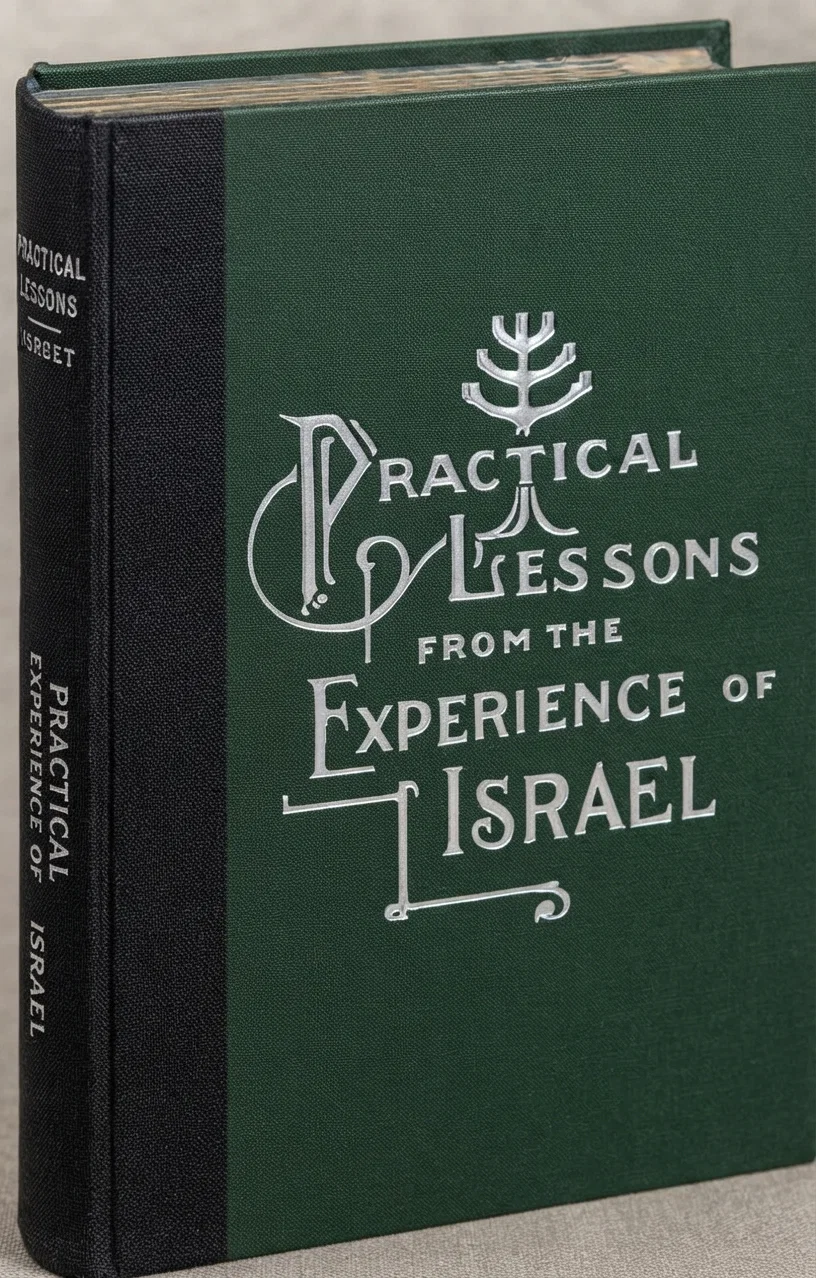
¶Practical Lessons from the Experience of Israel for the Church of Today. By F. C. Gilbert, a Hebrew Christian. The prominent thought is to present Jesus Christ as He is,—Saviour, Messiah, Prophet, Priest, King,—which was the specific mission God had for the Jewish nation. The condition of the Jews at Christ's first advent on the earth, and their refusal to accept Him as the Saviour, are presented in a very practical way. Many of the customs of the Jews, existing at the time of Christ, are vividly portrayed. 400 pages; illustrated. Cloth, plain edges . . . . . $1 00 Cloth, gilt edges . . . . . 1 25
¶Prophecies of Jesus. By Elder J. G. Matteson. This book was first published in Swedish and Danish, and has run through several editions in those languages. It has now been thoroughly revised by the author, with careful attention to its adaptability to the English-speaking people; and additional matter of a peculiarly timely character has been added.
The book contains 556 pages, printed on finely calendered paper, and is embellished with 34 full-page illustrations. It is divided into four parts. Part 1 treats on the prophetic utterances of Christ. Part 2 takes up the prediction of the apostles, and marks their fulfilment. Part 3 treats on the great prophecies of Daniel, and gives the historical evidence of their fulfilment. Part 4 treats on the prophecies of John as recorded in the Revelation.
"Searching what, or what manner of time, the Spirit of Christ which was in them did signify, when it testified beforehand the sufferings of Christ and the glory that should follow," is the basis of thought all through the book, and that part of the prophecy referring especially to our time is carefully dwelt upon. Green, silk-finished cloth, black stamp, aluminum title, marbled edges. . . . . $2 25 Maroon cloth, gilt stamps, gilt edges . . . . . 2 50 Library, marbled edges . . . . . 3 00 Russia leather, gilt stamps, gilt edges . . . . . 3 75
¶Prophetic Lights. This book treats on some of the leading prophecies of both the Old and New Testaments. It shows the exact fulfilment of the predictions of the Bible concerning Egypt, Tyre, Babylon, Medo-Persia, Greece, and Rome, also the first advent of Christ. These prove the inspiration of the Bible, and give assurance that other prophecies which are noted will as surely and exactly be fulfilled. About thirty illustrated chapter headings and full-page plates adorn its pages, each one a work of art. Nearly all were designed and engraved especially for this work, at great expense. 8vo. 182 pages, fine calendered paper. Cloth, gilt edges . . . . . 1 00
¶The Sabbath. A poem. By Uriah Smith. A word for the Sabbath, or false theories exposed. A presentation of the Sabbath argument in poetic form, in seven chapters tracing the institution from Eden to Paradise restored, 64 pages. Cloth . . . . . 30

Pacific Press Publishing Co.

Mountain View, Cal. 285 Salmon St., Portland, Ore. 1109 E. 12th St., Kansas City, Mo.

AMERICAN LIBERTY.

Symbols, Principles, Facts.

THERE are principles and symbols of principles. Some hold to the principles, but pay little regard to the symbol. Many honor or worship the symbol, but forget and trample underfoot the principles. It is the principle itself which ought to be loved or hated, and not the symbol of the principle.
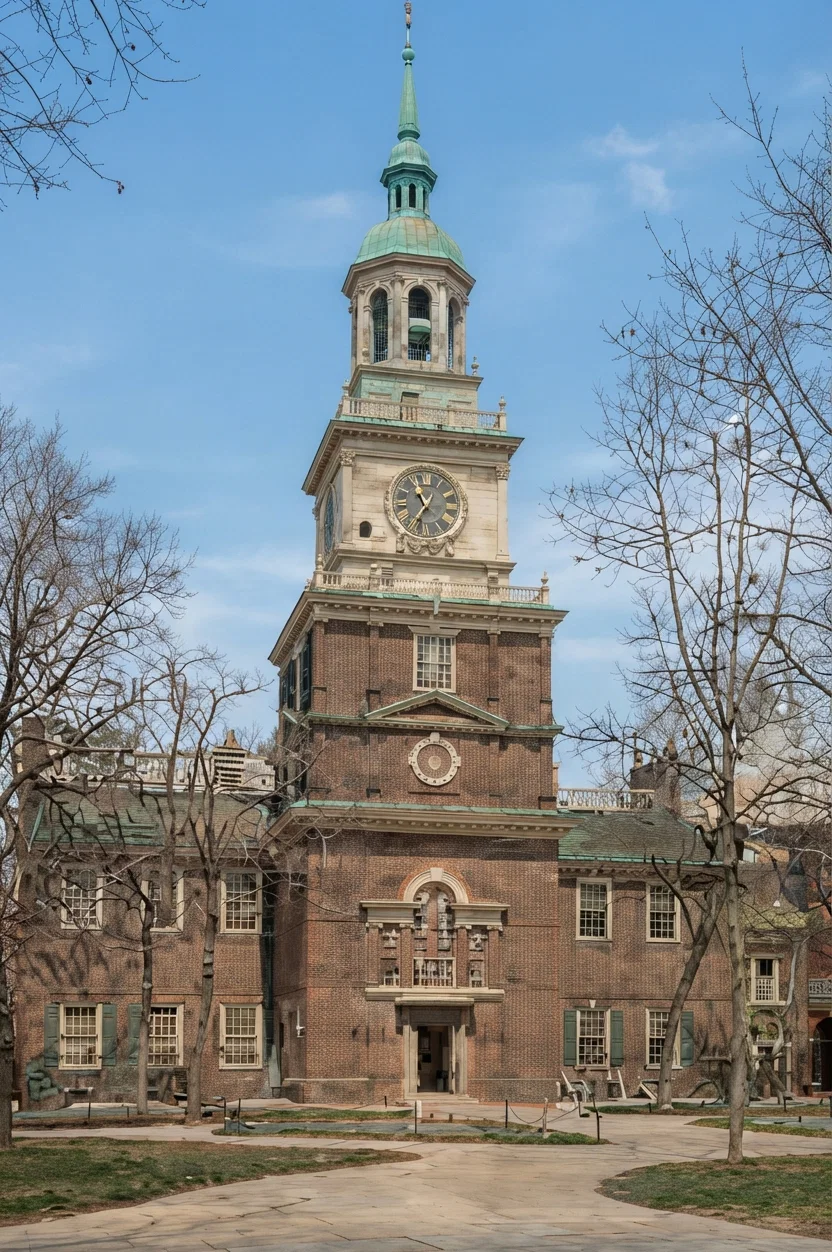
THERE are American symbols,—Independence Hall in Philadelphia, Liberty Bell, Fanueil Hall, Bunker Hill Monument, the Flag, and other things dear to the American heart. Independence Hall and Fanueil Hall are in themselves no more than many other old buildings; but they stand for principles, and those principles were at one time considered of vital worth to the people of this country. The flag of itself is of no more worth than any other tri-colored cloth; but the principle of freedom it stands for is of tremendous value. The old Liberty Bell in itself is worth only what it will sell for as bell metal, but the principle of liberty for which it once rung is of priceless worth.
THE great danger is in worshiping the symbol and forgetting the principle for which it stands. Independence Hall and Liberty Bell are sacred to the heart of many who trample their principles underfoot. Men will worship the flag, and liken its trinity of colors to the trinity of Deity; they will hail "Old Glory" as it is flung to the breeze as the aboriginal does his idol god, while the principles of true freedom, which in a measure gave birth to the flag, are set aside as out of date, and the flag is used to foster tyranny and slavery.

Lessons of History.

THERE are not wanting such lessons. Every decadent nation, every backslidden church, is an object-lesson. Here is one from the Book of God. As long as Israel was faithful to God, cherishing His holy law and rich mercy in their hearts, the ark of God, which contained the tables of the law and the cover of which was the mercy-seat, was a symbol of God's presence and strength to withstand all foes. Before that ark Jordan's rolling flood was stayed. In its presence, while shouting victory by faith, God's invisible army threw down the strong walls of Jericho. When Israel had forgotten God, when His presence in their life had departed, they worshiped the ark as a sort of charm or fetish. When they hoped it would get them victory, they met defeat, and the ark, captivity. The true condition of that nation then was written in one word, "Ich-abod," the glory is departed.

NEHUSHTAN.

When poor sinning Israel were bitten by the fiery serpents of the wilderness, fit symbols of sin, Moses was told to make a brazen serpent and put it on a pole so high that all afflicted ones who so desired could see it. Looking upon that symbol by faith in the power and love of God meant healing, and many were healed. Centuries after Israel forgot God's mercy and goodness, and worshiped the brazen serpent as though there were virtue in it. But Hezekiah, true reformer that he was, in breaking down the high places and images of the licentious sun-worship, also "broke in pieces the brazen serpent that Moses had made; for to those days the children of Israel did burn incense to it, and he [Hezekiah] called it Nehushtan," that is, "a piece of brass." It was only that when the faith, the character, the cleansing, for which it stood, were all gone.
IN many cases we may trace the images they now worship as having virtue in themselves, back to some good principle which the original image symbolized. But later generations forgot the principle and worshiped the image; and the more the principle was forgotten, the more elaborately was the image worshiped, and the more sacredly was it regarded, till it became a symbol of persecution against all who did not agree with its worshipers.
INDEPENDENCE HALL, Liberty Bell, and the old Flag stood for something in the days of 1776. They stood for two principles dear to the heart of every lover of humanity and liberty. These principles are the equality of man, and religious liberty. The former of these is embodied in the Declaration of Independence: "We hold these truths to be self-evident; that all men are created equal; that they are endowed by their Creator with certain unalienable rights; that among these are life, liberty, and the pursuit of happiness." This was the basic principle of that document to which the fathers of this country affixed their names July 4, 1776, in Independence Hall, Philadelphia: "To secure these rights governments are instituted among men, deriving their just powers from the consent of the governed." Man yields no unalienable right in being a subject of true civil government. A just government protects him in those rights and secures them to him. Another principle is involved in the Declaration of Independence; but it was thought necessary especially to emphasize it in the first amendment to the Constitution of the new nation; and that was the principle of religious liberty, the right to worship or not to worship, to believe or not to believe, to be wholly untrammeled in religious worship by human interference. Thus it is guarded in the Constitution: "Congress shall make no law respecting an establishment of religion, or prohibiting the free exercise thereof." And later on in Amendment XIV.: "No state shall make or enforce any law which shall abridge the privileges or immunities of citizens of the United States; nor shall any state deprive any person of life, liberty, or property without due process of law, nor deny to any person within its jurisdiction the equal protection of the laws."
CHRISTLIKE.—Both of these principles are Christian in their origin. Equality of manwithout and within the church is expressed in such scriptures as these: "God is no respecter of persons;" "God . . . hath made of one blood all nations of men for to dwell on all the face of the earth;" "For one is your Master, even Christ, and all ye are brethren." And the second grand principle of religious or non-religious freedom is thus expressed by Jesus Christ and the apostle Paul: "If any man hear My words, and believe not, I judge him not; for I came not to judge the world, but to save the world." "Knowing therefore the terror of the Lord, we persuade men." That these principles were what these symbols stood for in 1776, the founders of the nation speak abundantly.
ON the reverse side of the great seal of the United States is the Latin motto, "Novus ordo seclorum," "A new order of ages." And so began in the United States a new order of ages in government. Every man was the peer of his fellow. Here was a "state without a king and a church without a pope." Religion was free, to live or to die as its devotee willed. The government protected the man, not the religion. If worthy, if of God, the religion would stand of itself without the support of civil government. If unworthy, let it die. So the founders of this government considered, and so they expressed it in the charters of our liberty.
BUT "the new order of ages" is passing away, and the old order of the Dark Ages is reviving. He who has carefully read the history of the first five centuries of the Christian era may see Rome's life being lived over again in this country. The religious element of the country, having lost the Pentecostal power, is seeking affiliation with the state, and state aid to religious institutions. Not knowing the power of godliness, they are seeking the power of the civil arm. They are bringing strong pressure to bear upon politicians, municipal officers, state legislatures, the national Congress, the state, district, and federal courts. All these institutions have bent under the pressure.
THE fulcrum over which the strongest lifting has been done is the Sunday law in a hundred different phases. Judges in our state courts have yielded; the Supreme Court has yielded; Congress and the Chief Executive have yielded. Scores have been imprisoned in different states for the simple exercise of the unalienable rights vouchsafed of God to every human being, and supposed to have been secured by the Magna Charta of American liberty.
JUST now there is a lull in the persecution. But honest and misguided souls are working through our young people's societies, through law-and-order leagues, through so-called "Christian citizenship," through temperance organizations and church federations, to secure what will finally culminate in the fullest union of church and state in this country, and which will result in the utter ruin of both church and state.
NOW is the time for every lover of liberty to be alarmed and aroused. Now is the time for these religio-political reformers to examine anew the ground and motive of their work in the light of past history and in the blazing brightness of New Testament teaching. We can not afford to be mistaken. "Eternal vigilance is the price of liberty." Already the flag, which should be a symbol of liberty existing, is made an instrument of tyranny in some parts of our land in compelling its worship in public schools. So is every principle of right becoming perverted.
IT is the symbol and not the principle which is honored by the backslider in every true cause. It is the principle, the truth, God-given, which is honored by the true reformer in both church and state.
INDEPENDENCE HALL
INDEPENDENCE HALL

The Declaration of Independence

“We hold these truths to be self-evident, that all men are created equal; that they are endowed by their Creator with certain unalienable rights; that among these are life, liberty, and the pursuit of happiness. That to secure these rights, governments are instituted among men, deriving their just powers from the consent of the governed.”

JESUS AND THE TEACHINGS OF HIS TIME.

ONE of the most groundless, and infamous charges that has ever been made against our Saviour and His work upon the earth is that put forward by the apostles of the “higher criticism,” to the effect that the teachings of Jesus were moulded by the customs and the prevailing thought of His time.
The purpose is to rob Him of His divinity, to rob His teachings of their influence upon human hearts, to hide the Saviour from a perishing world, and blind men’s minds even to the need of a divine sacrifice for them.
If they can prove that Jesus Christ thought after the manner of His time, they make Him a mere human, and Himself in need of a Saviour. If they could prove that He saw “with the eyes of His age,” they make Him one who could not even interpret aright the law of God, much less exemplify its teachings in His life. If He thought and taught after the manner of His times, He never could have been the power that He was and has been to lift men out of their surroundings, out of their environments, out of the teachings of their times—out of themselves.
Because He did not so teach, He has become the magnet that has lifted souls out of the most adverse conditions and enabled them to perfect characters reflecting the glory of God. Because He did not so teach, His teachings have so laid hold of the hearts of men and women, and even children, that they have faced threatened death in multitudinous forms rather than turn aside from the living pathway of eternal truth. But turning aside from an argument of contingencies, let us listen to the teachings of Jesus Himself in this regard, and also note whether He reflected the customs of His times. He says of His teachings: “The word which ye hear is not Mine, but the Father’s who sent Me.” John 14:24. Then are the words of the Father also tinctured with the human teachings of the times of Christ? It would have to be so if Jesus’ teaching were tinctured with the thought and teaching of His time, while at the same time He was teaching the very words of the Father. Surely, not even a “higher critic” will be so bold as to make such a terrible charge. Nevertheless it is all involved in the charge they bring against Jesus and His work.
Again He says: “I have given them Thy word; and the world hated them, because they are not of the world, even as I am not of the world.” And He reiterates it: “They are not of the world, even as I am not of the world.” John 17:14-16. How much does this passage teach that either Jesus or His followers were conforming to the world, or teaching as the world taught? The world hated them because they were not doing as it did and teaching as it taught. If the charge of the “higher critics” were true, the opening clause of the last quotation should have read: “I have given them My own words modified by their own thoughts and teachings.” He also should have said: “The world loves them, because they are conformed to it and moulded by its thought. . . . They are of the world, even as I also am, influenced by its teachings and its customs.” The whole animus of such teachings is directly contrary to the character, the business, and the Gospel of Jesus Christ.
Had Jesus been teaching in harmony with the teachings of those times, or been influenced by them, His teachings would have created neither stir nor astonishment. But what is the fact in the case? “When Jesus had finished these words, the multitudes were astonished at His teaching; for He taught them as one having authority, and not as their scribes.” Matt. 7:28, 29. This shows that there was a complete opposition between His teachings and the teachings of His time. It was this very fact that filled the scribes and Pharisees with hatred against Him; and it was this fact that inspired them to persecute His followers, dispersing them from Jerusalem, and following them even beyond the boundary of Palestine. Christ could have escaped the cruel death He suffered, and His followers could have escaped their persecutions, had they been willing to conform to the teachings and customs of their time.
The record declares concerning Christ that He “emptied Himself, taking the form of a servant.” Now the query arises, Having emptied Himself, by whom, or by what was He filled? If His teachings were in consonance with, and moulded by, the teachings and customs of His time, then it was with the teachings and the customs of His time that He was filled, rather than the words, and will, and instructions of the Father. Concerning this, the Word declares of Christ: “Lo, I am come; in the roll of the book it is written of Me: I delight to do Thy will, O My God; yea, Thy law is within My heart.” Ps. 40:8. That purpose to do the will of the Father, without any regard whatever to other influence, filled the entire life of Jesus Christ. “I am come down from heaven,” said Jesus, “not to do Mine own will, but the will of Him that sent Me.” John 6:38.
Filled with this fulness, and maintaining this uncompromising attitude, Jesus Christ went about the mission which brought Him to this world. He healed the sick; He raised the dead to life; He cast out demons; He cast out from the temple of God those who would turn it aside from the purpose God designed it should accomplish. Teaching as He did, living as He did, and dying as He did, He became the long-looked-for Redeemer of the race. Emptied of self, He was filled with the fulness of God, and we are complete in Him, and in Him alone.

Toleration and Religious Liberty

Toleration is an important step from state-churchism to free-churchism. But it is only a step. There is a very great difference between toleration and liberty. Toleration is a concession which may be withdrawn. It implies a preference for the ruling form of faith and worship, and a practical disapproval of all other forms. . . . In our country we ask no toleration for religion and its free exercise, but we claim it as an inalienable right.

PRAYER AS A PRIVILEGE.

The privilege of petition, of asking favor, is highly appreciated by all human beings.
There is nothing that so wounds one's sense of right and justice as to be denied the privilege of soliciting from those who have the power to grant whatever is needed or desired. The child that is denied a request may still cherish hope that by repeating the request, by coaxing or teasing, or by crying if other means fail, the object may be gained. But, when sharply told not to ask again, hope is dispelled; the last avenue is closed.
When the subjects of a kingdom are denied the right to petition the throne, there is no way open by which they may gain redress for their grievances, or make suggestions for the betterment of their condition. To deny the right of petition, the privilege of subjects to make request of their king, is the last step to absolute despotism. The only remedy in such a case is rebellion and forcible overthrow of the government.
While no privilege is more highly prized than the right to appear before the ruler to make request for favor, or for the recognition of right, there is nothing more disheartening to the loyal subject than to be denied that privilege. But recently the first Douma, or popular Parliament, of Russia, received a message from the emperor, and supposed that the reply might be borne to his majesty by the president of the Douma in person, as the representative of the people. But to the great disappointment of the representatives, and of the peasantry at large, this privilege was not allowed.
In a republican government, the forbidding of personal or representative privilege of direct appeal to the president, or other high official, is even more disappointing, altho it is becoming more common. It is a significant sign of the times that personal access to the executive mansion of our own boasted "land of the free" is much more difficult than it was before the Civil War inaugurated and inculcated the military spirit as a dominant feature of the process.
In general, throughout the so-called civilized world, there is nothing that so encourages the spirit of rebellion as the appreciation of the privilege of petition and the discouragement of having it withheld.
And hereby is disclosed a wonderful contrast, showing the superiority of the governmental polity of the Supreme Ruler, of His wisdom and judgment in dealing with His creature subjects. Instead of denying the privilege of prayer, He invites, yea, urges that men come to Him and state their wants and wishes. His promise is, "Ask and ye shall receive; seek, and ye shall find; knock, and it shall be opened unto you." And by parable (of the unjust judge) He impresses the expediency of importunate prayer.
Moreover, when by sin (disobedience of His holy law) man had rendered it a physical and spiritual impossibility to approach the majesty of heaven, God devised a way by which this disability could be overcome. The only-begotten Son of the ever-loving Father humbled Himself and became man, taking upon Him the likeness of sinful flesh. Thus, being "God manifest in the flesh," sinful man could approach unto Him. Through faith in this merciful arrangement, access to the throne itself by petition is complete. "Therefore being justified by faith, we have peace with God through our Lord Jesus Christ."
Not only does the great King of the universe invite us to ask of Him, but He wants us to come to Him at any time, at all times, and to ask believing that we shall receive. The only prayer that is not honored is that in which there is not the element of faith. "Let us therefore come boldly unto the throne of grace; that we may obtain mercy, and find grace to help in time of need."
If men would appreciate the privilege of prayer to the Giver of "every good and perfect gift" as much as they do the prestige of access to earthly rulers, they would enjoy a far greater measure of both temporal and spiritual good.

Question Corner

We wish to say again that anonymous communications to this department, whatever the questions, find their quickest way to the waste basket. We do not ask the writer's name for publication, and invariably append whatever the querist desires if not too long. If no request is made, we give initials.
1840.—To Live or to Die. Phil. 1: 21-23.
Will you kindly give a concise explanation of Phil. 1: 21-23. C. T.
The scripture reads: "For me to live is Christ, and to die is gain. But if I live in the flesh, this is the fruit of my labor; yet what I shall choose I wot not. For I am in a strait betwixt two, having a desire to depart, and to be with Christ; which is far better."
There are three things mentioned in this passage. Paul had no choice between two of them—life and death. He would escape persecution, and Christ would be glorified by his death if he died a martyr to his faith. If he lived, he would still work for Christ. Between these two things he knew not which to choose. There was a third thing that he desired above these, and that was neither the grave nor living here; it was to depart from this world and be with Christ, which was much to be preferred to the other two. When does such departure take place? —Not at death, but at the Lord's coming. John 14: 1-3; 1 Thess. 4: 16, 17, Phil. 3: 20; Matt. 16: 27; 1 Tim. 4: 8. Then, and not till then, did Paul expect his reward, and it was this departure from the earth that Paul preferred either to life or death.
The word rendered "depart" in Phil. 1: 23 is in Luke 12: 35 rendered "return," when Christ "shall return from the wedding."
1841.—His Angel.
What is meant in Acts 12: 15, "It is his angel"? N. B.
Every child of God has a guardian angel. Heb. 1: 14. The people referred to seemed to have the idea that Peter's angel spoke as would the apostle. Of course they were mistaken.
The other text referred to (Luke 24: 37) clearly shows that some of the disciples at least believed in "ghosts," or phantoms. Of course, when their hope in Jesus had gone, they were left to their old superstitious fears, common especially among fishermen. Belief in a conscious state of the dead has been held since Satan's first lie, "Ye shall not surely die." The Jews had imbibed some of the same errors. They might have thought it an evil spirit. These, of course, are composed of substance, but have not flesh and bones like humanity. The evil spirits are fallen angels. Rev. 12: 4, 9. No evil spirit can possess the soul or mind of a person without that person's consent, or his body without God's permission. See Job 1 and 2.
1842.—Knowing the Time of Christ's Coming.
Does any one but the Father know the time of Jesus' coming? Will you kindly answer in the Question Corner, or by letter? It seems that Jesus would know, and yet His own language in Matt. 24: 36 seems to indicate He does not. O.
It seems to us that He knows. See John 2: 20. The word rendered "know" in Matt. 24: 36 is sometimes used in the sense of "making known," as in 1 Cor. 2: 2: "I determined not to know anything among you, save Jesus Christ and Him crucified;" that is, "I determined not to make known anything among you save Jesus Christ and Him crucified." So to no other being in the universe has the Father given the commission to announce the day and hour of Jesus' coming save Himself. No one save the Father knoweth in order to make known. When He declares from the throne, "It is done," then may we know that Christ Jesus our Lord is about to appear. Then it is that probation is closed and character is fixed. This is our understanding of Matt. 24: 36.
1843.—Mechanical Prayer.
A good brother (and he is one of many) writes a letter and encloses a card which he has received. This card requests him to pray for missions and missionaries and to write five other cards like it to as many names, asking them to pray the same prayer, and each of them write to five others, etc. This card numbers six hundred and something, in a chain numbering 1,000 links. If the receiver of the card can not write, he is asked to return the card so that the "chain" will not be broken. Another request comes to this brother in the same month, asking him to write nine prayers and send them to as many persons, with the promise that he would be "signally blest" in so doing, but that if he did not do this some great misfortune would come to him. The brother wishes to know what the Signs thinks of it.
The heathen and superstitious have prayer wheels to turn or beads to count, and they think that the greater number of revolutions of the wheel or the more beads told off, the greater their merit before God. The prayer on that wheel may be good. Each turn of the beads may represent a good prayer; but going over them that way, trusting in the form, the number, is as dead and hopeless of results as the hills of Gilboa or the waters of the Dead Sea. Let every soul seek God, humble himself before God, giving himself to God, and receiving Christ as His Saviour. Let him know His own need and God's goodness. Then will he seek God. Then will his heart go out to others. Then will he pray with the Spirit, definitely, specifically, prevailingly; and one such prayer is worth more than the whole chain of a thousand or ten thousand links. There are dear, timorous souls ever praying for others, who would fear to refuse a request of this kind. But their prayers are of no more worth because of this "chain." It is mere formalism, hoping that in some contrivance of ours we can accomplish results. Besides all this, think of the expense involved. Our advice is to pray, and pray earnestly, but utterly ignore all these schemes and plans, which are purely human and heathen. And ignoring, be afraid of no evil results; "the curse causeless shall not come."

Religious Combinations and Political Power

Extensive religious combinations to effect a political object are, in the opinion of the committee, always dangerous. . . . All religious despotism commences by combination and influence; and when that influence begins to operate upon the political institutions of a country, the civil power soon bends under it, and the catastrophe of other nations furnishes an awful warning of the consequence. — United States Senate Report, 1829.
Continue reading: The ROYAL LAW