Your ShelfYour Projects

Signs of the Times, Vol. 28, No. 51.

Questions on the Text

Signs of the Times

Dec 17, 1902

Pacific Press Publishing Company · Oakland, California · Dec 17, 1902

Questions on the Text.

Under what description does Christ address Himself to Sardis?
“These things saith He that hath the seven Spirits of God and the seven stars.”¹ Verse 1.

“THE REVELATION OF JESUS CHRIST.”

The Dying Church—Sardis.
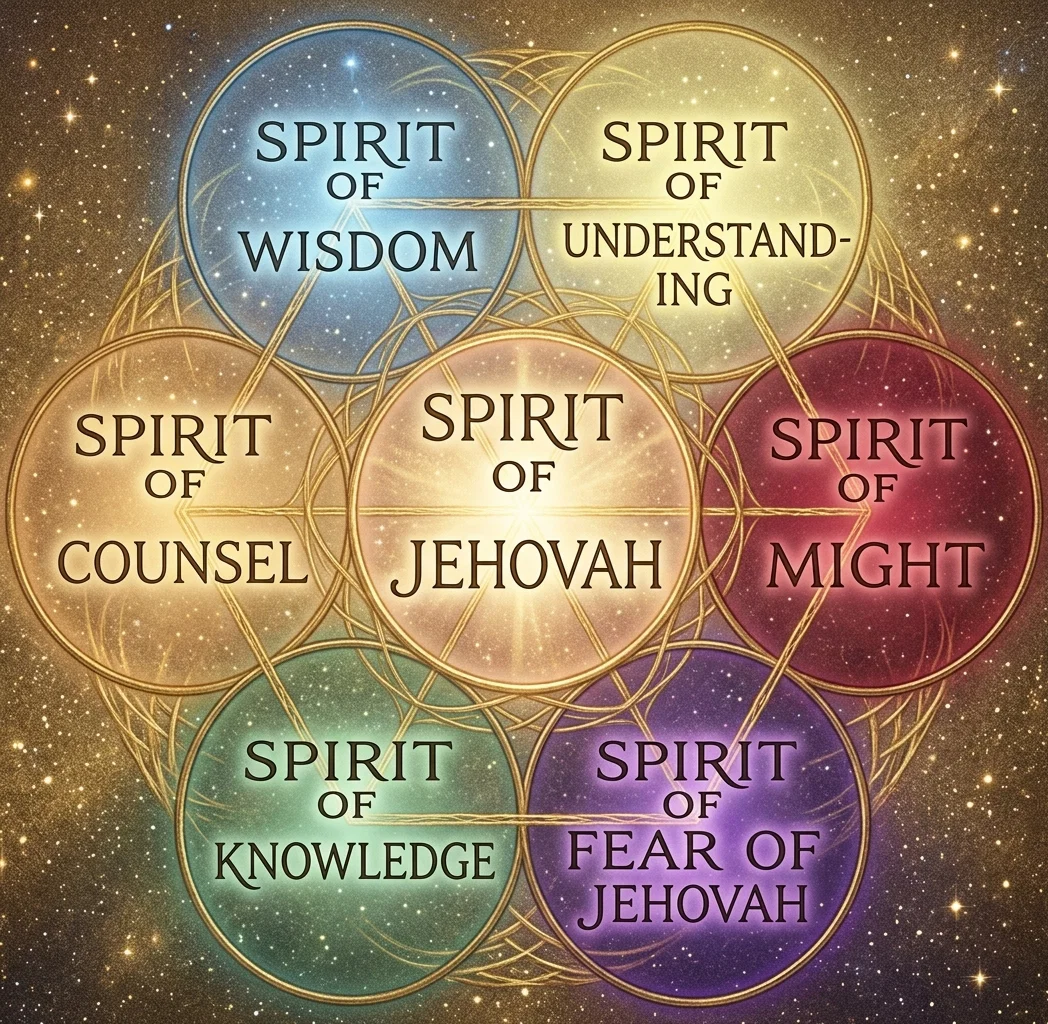
The fifth letter of our Lord is addressed to the angel, or messenger, of the church in Sardis. Sardis (sun) was a city of Asia Minor, beautifully situated on the River Pactolus, noted for its “golden sands.” The city is famous as the residence of the rich Croesus, who filled Sardis with wealth. When Cyrus conquered Croesus in B.C. 548, he gathered treasure to the value of $600,000,000. It was afterward taken by Alexander in B.C. 331, sacked by Antiochus 117 years later, afterward subject to the kings of Pergamum. Destroyed by an earthquake in A.D. 17, the city was soon rebuilt. It was noted for its prosperity, commercially and in manufacturing lines. The art of dyeing wool was discovered in Sardis. The principal worship was that of Cybele, identical with the Greek Rhea, the mother of the gods. Ruins of a magnificent temple have been found, supposed to have been dedicated to her worship. The site of the city now (presumably always) is very unhealthy, and almost uninhabited.
Wealthy, rich, luxurious, its people feeling that its worship was the mother of all other worships, Sardis, the sun city, became a fitting type of modern Babylon, of Christendom of post-Reformation times, even down to the present; of the religio-scientific, religio-commercial world, in which conditions many of the church of Jesus Christ are drifting to doom. Christ’s awful message to Sardis—His message to the back-slidden, cold-hearted, spiritually dying and dead professors of Christianity in our popular churches—is found in Rev. 3:1–6, and is given after the
How does He reprove the church of her condition?
“I know thy works that thou hast a name that thou livest, and thou art dead.”²
What exhortation does He give?
“Be thou watchful, and establish the things that remain, which were ready to die.” Verse 2.
Why is the exhortation so urgent?
“For I have found no works of thine perfected before My God.”³
How does the Master further exhort?
“Remember therefore how thou hast received and didst hear; and keep it, and repent.”⁴ Verse 3.
What warning is given?
“If therefore thou shalt not watch, I will come as a thief, and thou shalt not know what hour I will come upon thee.”⁵
What is the only redeeming feature mentioned in Sardis?
“But thou hast a few names in Sardis that did not defile their garments: and they shall walk with Me in white; for they are worthy.”⁶
What is the promise to the overcomer?
“He that overcometh shall thus be arrayed in white garments; and I will in no wise blot his name out of the book of life, and I will confess his name before My Father, and before His angels.”⁷
With what solemn admonition does the message close?
“He that hath an ear, let him hear what the Spirit saith to the churches.”
1. “Seven Spirits of God.”—Seven is the number denoting fulness or completeness. God’s cycle of time is measured by seven. The pure white light is manifest in the seven colors of the spectrum or rainbow. Every sound in nature ranges in the seven notes. All periods of incubation are even factors or are multiples of seven. One circle is completely enclosed by six others of the same size. Lines connecting the centers of the circles form the outline of the six faces of a perfect cube. Note also the various angles. Mark how the passage in Isa. 11:2, amplifying in description the Spirit of God, perfectly conforms to this combination of geometrical figures. (See diagram next page.) The seven Spirits of God are the universal agencies, the fulness of God’s working, in all parts of His universe. The thought is especially brought home to poor, blind, dying Sardis to show God’s power to reveal, to search, to knowto do, to sanctify, to uphold. God has the all-bountiful supply, the fulness of the Godhead for His messengers and His people. Above all things else He desires His people to know the fulness of His Spirit, that they “may be filled with all the fulness of God.”
2. “A name that thou livest.”—only a name. There is life and LIFE. There is a life that is no life, because it is ever tending to death. It is perverted by sin. Those who possess it eat and drink and sleep and walk and talk, and seem to themselves very much alive; but they are “alienated from the life of God” (Eph. 4:18), “dead in trespasses and sins,” stricken with the awful leprosy of sin. Such is the great world apart from Christ. Such is the condition of many, O, so many, who profess the name of the Living One. Such give birth to spiritual children, and “a month devours them.” If a little one comes in their midst, the walking corpses of spiritual life sap his vitality or repulse him utterly. O, it is an awful thing to fill the living house of God, the church which He purchased with His own blood, with those who live in name only, who are as veritably dead spiritually as the dreamless sleepers in the churchyard. They may live, and the way is simple—just to accept, receive by faith, the righteousness of God in Christ Jesus; and “in the way of righteousness is life; and in the pathway thereof there is no death.” Prov. 12:28.
3. “No work perfected.”—It is a sad thing to begin a work, but never bring it to completion; to plant seeds and never reap the crop nor pluck the fruit. It is sad in the religious life to find always children or dwarfs. But how many there are in modern Sardis. How gloriously the Reformation churches started on their work of Gospel progress, but O how short was the course they ran! Leaving the Word of God for their rule of faith, the Spirit of God for their power, they substituted creed for the first, and the arm of civil power for the second. The State Church services soon become matters of mere form. Earnest souls, finding therein no sustenance, went out from the cold walls of creed and State and formed new flocks, such as the Methodists in England. These soon crystallized into creeds their belief, and progress ceased. And now every one among the so-called evangelical bodies in Christendom have, without exception, either by inclusion or exclusion, adopted some other creed than the Word of God; and all now stand clamoring at the doors of legislative halls for civil law to enforce church dogmas upon men whom the church has no power to reach by the Word and the Spirit of God; (1) because the dogma is not supported by the Word; and (2) the Spirit of God will not convict hearts of the transgression of man-made, man-fostered, traditional, anti-scriptural dogmas. The church with the world has prospered materially. Heart and mind and soul have been seeking worldly fame, wealth, and pleasure, and “she that giveth herself to pleasure is dead while she liveth.” 1 Tim. 5:6. Our Lord gives a similar reason why souls do not do
acceptable work for God—“they are choked with cares and riches and pleasures of this life, and bring no fruit to perfection.” Luke 8:14. Men may call our work grand, noble, perfect, but how does it stand before God?
4. “Remember.”—It is ever necessary for the child of God to prove himself whether he is in the faith. If he has ever received Christ at all, he did it by yielding all to Him in humility, and by faith receiving Jesus as his all in all—the Way, the Truth, the Life. “As therefore ye received Christ Jesus the Lord, so walk in Him, rooted and builded up in Him, and established in your faith.” Col. 2:6. Only by walking humbly with our God can we do justice, and love mercy, and bring work to perfection. Micah 6:8. He who keeps not his humility before God, who keeps not his living faith, will fail. But even tho he has failed, if he remember and repent, there is hope. God will forgive and restore. If there is failure it will be needless failure with us.
5. “If”—a word of awful import sometimes, and especially so here. Christ is coming. His work as priest will soon close. The last repentant soul shall sometime have been shriven by Him who alone can forgive sin. Probation will close. But the repentant, the watchful, will not be overtaken as a thief in the night. See 1 Thess. 5:1–5. The light of God illumines their way. To the unwatchful (always unready) He will come as a thief, not designedly on His part, but carelessly, recklessly on the part of the faithless, rebellious ones. Every soul may know when Christ’s coming is near. Matt. 24:33; Luke 21:25–27. Every unwatchful, careless, selfish soul, will not know. Now is the time to give heed to the “more sure word of prophecy.”
6. “A few names in Sardis.”—God has His faithful few in the modern Babylon of creeds, and science, and higher criticism, and false education, and commercialism, and pleasure. They may not see all His light and truth, but they are faithful to all they see. They have not stooped to the wine of worldly policy and pleasure, nor have they drunk of the fouled waters of false shepherds. They are the earnest praying ones, the steady, hard lifters, the attendants at prayer-meeting, the ministers to the poor and needy. Upon them God will place the robes of His own righteousness. “They shall walk with Me in white.”—“Let thy garments be always white,” is the Lord’s admonition; and the prayer of the penitent should be, “Wash me, and I shall be whiter than snow.” To such prayers God answers: “Though your sins be as scarlet they shall be white as snow.” “I will cause thine iniquity to pass from thee, and I will clothe thee with change of raiment.”
7. “Will in no wise blot out his name.”—Many of those who have come out of the Sardis condition of the church for the truth’s sake have had their names blotted out of church books. They have been covered with obloquy, reproach, and reviling. They have been cast out, excommunicated. God comforts all such. These few short years are not all there is of the life of His people. The perishable books of earth in which men love to have their names recorded are not the only records. God’s life is eternal. His records of His children on high are as imperishable as their character; and there their names remain. But another blotting out is implied. There may be names recorded in God’s book of life which will be blotted out. When a soul accepts
Christ Jesus, he is recorded in the book of life as a candidate for the eternal name and character to which God has called him. If he is faithful to the end all his sins will be blotted
out (Acts 3:19); and he will attain the eternal character; its name will become his new name, and he will be recorded as among the living forever. The choice of every candidate for immortality is whether it shall be his sins blotted out or his name blotted out of the books of heaven. But that his sins may be blotted from the books of heaven, they must be blotted from the character here. Blessed are those who overcome. Jesus says: “I will confess his name before My Father.” The Father, then, is not some great circumambient, impersonal sphere; He is somewhere as He is nowhere else; and sometime surrounded by all His holy ones, into His presence the redeemed will come as they have never come before; and the Lord Jesus Christ will introduce them, and they shall see the Father’s face, with no dimming veil between. This is the climax of faith’s glorious triumph.

HOLINESS UNTO THE LORD.

BY MRS. E. G. WHITE.
GOD has from eternity chosen men to be holy. “This is the will of God concerning you, even your sanctification.”
The echo of His voice comes to us, ever saying, “Holier, holier still.” And ever our answer is to be, “Yes, Lord, holier still.”
No man receives holiness as a birthright, or as a gift from any other human being. Holiness is the gift of God through Christ. Those who receive the Saviour become sons of God. They are His spiritual children, born again, renewed in righteousness and true holiness. Their minds are changed. With clearer vision they behold eternal realities. They are adopted into God’s family, and they become conformed to His likeness, changed by His Spirit from glory to glory. From cherishing supreme love for self, they come to cherish supreme love for God and for Christ.
“Being justified by faith, we have peace with God through our Lord Jesus Christ.” Justification means pardon. It means that the heart, purged from dead works, is prepared to receive the blessing of sanctification. God has told us what we must do to receive this blessing. “Work out your own salvation with fear and trembling. For it is God which worketh in you both to will and to do of His good pleasure.” “Do all things without murmurings and disputings; that ye may be blameless and harmless, the sons of God, without rebuke, in the midst of a crooked and perverse nation, among whom ye shine as lights in the world.”
The love of God, cherished in the heart and revealed in the words and acts, will do more to elevate and ennoble human beings than all else can. In the life of Christ, this love found full and complete expression. On the cross of Christ the Saviour made an atonement for the fallen race. Holiness is the fruit of this sacrifice. It is because He has died for us that we are promised this great gift. And Christ longs to bestow this gift on us. He longs to make us partakers of His nature. He longs to save those who by sin have separated themselves from God. He calls upon them to choose His service, to give themselves wholly into His control, to learn from Him how to do God’s will.
“Let this mind be in you which was also in Christ Jesus; who, being in the form of God, thought it not robbery to be equal with God; but made Himself of no reputation, and took upon Him the form of a servant, and was made in the likeness of men; and being found in fashion as a man, He humbled Himself, and became obedient unto death, even the death of the cross. Wherefore God also hath highly exalted Him, and given Him a name which is above every name; that at the name of Jesus every knee should bow, of things in heaven, and things in earth, and things under the earth; and that every tongue should confess that Jesus Christ is Lord, to the glory of God the Father.”
Jesus is the light of the world. Those who do not receive Him as a personal Saviour can never, never come to the light. They can never have eternal life. But those who follow Him have the light of life. He who commanded the light to shine out of darkness shines into their hearts, revealing through their lives the light of the knowledge of Christ. In His light they see light.
Accepting Christ as a personal Saviour, and following His example of self-denial,—this is the secret of holiness. God exalted Christ above every name that is named. But Christ first reached to the depths of humiliation, working out in behalf of the human race a perfect character, and drawing men and women to God by His unselfish ministry. He has set an example that all who engage in His service are to follow. The more Christlike our efforts for God, the wider will be their influence for good, and the greater the work they will accomplish.

The Prophecy of Zechariah

By Roderick S. Owen

EVIL SPIRITS—OPEN FOUNTAIN.

Selections from Chapters 12 and 13.
In verse 2 of Zechariah 13 God speaks of a time when there shall be no more idolatry in the land, and when prophets and unclean spirits will cease to be. We have learned in past studies that this will not be until the time when they shall have completed their work of deception, and the deceptions are made manifest, for they are to work even under the sixth plague. That this text deals with false prophets, and not with true, is shown in the fact that the ones here spoken of have worn a rough coat to deceive, which no true prophet would do.
In Isa. 8:19 there is brought to view a time when men shall be urged to seek unto those who have familiar spirits, and to wizards that peep and mutter; and in Rev. 16:14 we find that these deceptions will be carried on until the whole world is taken in the snares. In 1 John 4:1 we are told to try the spirits to see whether they be of God, for many false prophets are gone out in the world.
From all this we learn that these deceiving spirits manifest themselves through prophets, and in that time these prophets will resort to all kinds of means to deceive, even to wearing rough garments, or dressing as nearly as possible as did the ancient prophets; and by these the multitudes of earth will be deceived. But the elect, clinging to God’s Word, and putting the prophets and spirits to the test of that Word, will not be deceived. In the eighth chapter of Isaiah, after speaking of this time as quoted above, the Lord gives a test by which we may know the false prophets. He says: “To the law and to the testimony; if they speak not according to this Word, it is because there is no light in them.” But we have found that, by their work of deception, the inhabitants of earth will be led to accept Satan as the Christ, and, by so doing, Satan becomes their king and god. He is the king of darkness, and so they really have no light. Therefore we read in the following verses in Isaiah 8:—
“And they [the deceived ones] shall pass through it, sore distressed and hungry; and it shall come to pass, that when they shall be hungry, they shall fret themselves, and curse their king and their god, and look upward. And they shall look unto the earth; and behold trouble and darkness, dimness of anguish; and they shall be driven to darkness.” Isa. 8:21, 22.

The Plight of the False Prophets.

It is in this time, when the deceptions are laid bare, and when the deceived ones shall curse Satan, their king and god, that the following words shall be fulfilled:—
“And it shall come to pass, that when any shall yet prophesy, then his father and his mother that begat him shall say unto him, Thou shalt not live; for thou speakest lies in the name of the Lord; and his father and his mother that begat him shall thrust him through when he prophesieth. And it shall come to pass in that day, that the prophets shall be ashamed every one of his vision, when he hath prophesied; neither shall they wear a rough garment to deceive; but he shall say, I am no prophet, I am an husbandman; for man taught me to keep cattle from my youth.” Zech. 13:3-5.
These prophets are ashamed of their visions because God has caused them to fail. And when the people see that they have been deceived, and turn against Satan, so that they shall curse him, then shall they also hate those who were his agents. As the hatred of the people shall be manifested, some of these false prophets will deny that they ever did prophesy, and will attempt to show that they have all their lives followed some quiet occupation, such as keeping of cattle or tilling the soil.

Individual Conviction.

In chapter 13:1 it is stated that there is to be a fountain opened in the house of David for sin and uncleanness. This fountain is the blood of Christ, which has power to cleanse from all unrighteousness. But before this cleansing can take place there must come to each individual a deep conviction of his present sins. He must see himself as the one who put Christ to death; he must realize that it was his individual sins which nailed Him to the tree, piercing His hands, His feet, and His sides. Then he will say, He died for me. I slew Him. In harmony with this thought we read in verses 10 and 11 of chapter 12:—
“I will pour upon the house of David, and upon the inhabitants of Jerusalem, the spirit of grace and of supplications; and they shall look upon Me whom they have pierced, and they shall mourn for Him, as one mourneth for his only son, and shall be in bitterness for Him, as one that is in bitterness for his first-born. In that day shall there be a great mourning in Jerusalem, as the mourning of Hadadrimmon in the valley of Megiddon.”
The mourning of Hadadrimmon was a mourning for the king of Israel who was slain. So when the Holy Spirit brings a deep conviction of sin to the hearts of God’s people, they will not say that it was the Jews who pierced Christ, but each one will feel that He has slain the only Son, the First-born of every creature, even their lawful King. This is no national affair applying to the Jews, but Jerusalem and Judah are symbols of God’s people; and the prophet, to show that this is an individual work, speaks, in the following verses, of each family sitting apart to mourn. But this is not sufficient, for even the closest tie on earth is to be separated; for the wife is to sit apart from her husband, and mourn for her sins which have pierced her Saviour. As they view His wounded hands they will sense the fact that these wounds He received in the house of His friends, as stated in verse 6. For “He came unto His own, and His own received Him not.” John 1:11. This experience is not confined to the Jews, for every soul is His own by the rights of both creation and redemption, and it is this coming to the heart of each one which is here referred to; hence we read in the following verse: “But as many as received Him, to them gave He power to become the sons of God, even to them that believe on His name.”
Since we first believed, and claimed to be His friend, have we not been unfaithful, and thus wounded our Saviour, perhaps again and again? But as we see His wounds in this light we will come to hate the sins which made Him mourn, and will banish them from the heart, and yield to Christ’s control. By this process of deep repentance, by the washing in the fountain, and by the trials which will come, the third part will be refined as silver, and tried as gold.
Verse 7 reads:—
“Awake, O sword, against My shepherd, and against the man that is My fellow, saith the Lord of hosts; smite the Shepherd, and the sheep shall be scattered; and I will turn Mine hand upon the little ones.” Zech. 13:7.
The Shepherd was smitten at the time of His rejection and crucifixion, and His flock was scattered. So will it be again when Christ shall be rejected by the world, His Word set aside, His law made void, His children condemned to death. In these acts the Shepherd is again smitten, and His sheep scattered and brought into great distress.
But through it all, and out of it all, God’s little ones will come forth precious as the golden wedge of Ophir, and ready to shine as stars in His crown of rejoicing.
A Fountain Opened.
A Fountain Opened.

IN TUNE WITH THE INFINITE.

MARCONI can talk across the ocean, Santos Dumont can fly over it, and John Holland can sail under it. So progress goes on, so intricate, so interesting, so absorbing in its present, that we hardly stop to size up its feeble past. The terrible cancer finds a cure in the X-ray, they tell us, and we pass it by as a common thing; for it is only one of many wonders. To-morrow it may be a cure for the great white plague of consumption, a fountain of beauty, or even the crystallizing of sunlight. But whatever it is, depend on it, it will elicit no wonder from us, for we are living in the age ofwonders. The century that has just gone out has certainly been a hundred times over the most remarkable century in history. Yes, remarkable for its progress and remarkable for its misery.
Tho men have looked deep into the laws of God, and harnessed them in so many ways to move the wheels of their convenience, they have not chained the sorrow-tide of the earth, nor made captive the powers of joy to do their bidding. They would do it, they would harness their wagons to the stars, but the coupling will not hold. To-day’s misery, vice, crime, wretchedness, and despair in all its forms, have never been paralleled in the history of men. True, the world was filled with evil when the Flood came, but it was also young and strong, and knew nothing of the terribleness of weakness.
The world finds its god in achievement, its pride in invention, and its boast in progress. But there is no achievement, no attainment, and no progress, where the highest elements of happiness are in retrogression, and where the onward course of invention and commerce serves but to blind men’s eyes to the needs and demands of eternal things. To-day nearly all the achievements in the realm of discovery are made ministers of pride, greed, and intoxication, and there is nothing in it.
I tell you that He who spent whole nights in prayer on the mountains of Judea, a poor man with dusty clothes, who added nothing to the inventions and discoveries of the world—I tell you that beside what He accomplished, all that men to-day are doing is like a cloud passing over the mountain. What they have only dreamed of He accomplished for them. He did more than hitch His wagon to a star; He reached up and grasped the hand of the Infinite Maker of stars. He brought down an anchor chain of happiness, and safety, and eternal life for every individual in all the world, and what He did has become the song of the universe. It is only in this small world that its grandeur is drowned by the scream of the locomotive, the whir of wheels, and the echoing thunder of guns. EDISON DRIVER.

THE UNCHANGEABLE LAW.

(Concluded.)
PAUL declares so emphatically the doctrine of salvation only by faith, and the futility of a reliance upon the performance of righteous deeds, that some have fancied that “a Christian is free from the obligations of the moral law.” By keeping the moral law we can not earn heaven, but by breaking it we bring penalty and remorse.—S. S. Journal, p. 495.
Altho those scenes at Sinai lie far back in the world’s history, they are just as impressive and full of meaning to-day. God is the Sovereign Ruler of men. His law “shall not pass, until all is fulfilled,” in the government of the world and in the hearts of men. The Ten Commandments are a chain of truth by which soul, body, and spirit are held to the only safe anchorage. “Fear God, and keep His commandments; for this is the whole duty of man,” says the seer of Ecclesiastes. We are not whole beings, soul, body, and spirit, without this. We are broken, incomplete, ruined. The commandments are not only a chain of strength to hold us to safety, but they are a chain of beauty as well. We are told to bind them upon our fingers, tie them about our necks, wear them upon our foreheads as diamonds and pearls. It was a God of love who gave them. They are not grievous, they are for our good, that it may be well with us and our children forever. The heart is the clasp that fastens this circlet of pearls. For the first command speaks of love’s making God sole Ruler and Possessor of the heart, and the last permits not even a thought of wrong to a friend or neighbor. You have them, “word for word,” in your memory. Let them be heart for heart in your secret self.
How shall you keep them so? . . . How shall you keep the Sabbath in its true spirit, not bound by custom, nor lawless through self-will? . . . It is not possible, except in one way; for the spirit of the law is broader and deeper than the letter, and it must be kept “in spirit and in truth.” How, then, can we keep it? Let Him who gave these commandments in the clouds and thunders of Sinai, and wrote them with His own hand on tables of stone, answer. He says, I will “sprinkle clean water upon you, and ye shall be clean; from all your filthiness, and from all your idols, will I cleanse you. A new heart also will I give you, and a new spirit will I put within you; . . . and I will put My Spirit within you, and cause you to walk in My statutes, and ye shall keep My judgments, and do them.” Love is the fulfilling of the law, and the righteousness of the law is fulfilled in us who walk not after the flesh but after the Spirit. Hopeless, indeed, should we be without Christ, who is the end of the law for righteousness to every one that believeth; for under all circumstances, in every place, the Ten Commandments are still in force, and the judgment day is ahead. . . . Study the circumstances of the giving of the law. . . . Drill in the Ten Commandments.
I have simply quoted from those who break God’s holy day and His law every week in the year (unconsciously, perhaps), but could I have made a stronger plea for the Sabbath of the Lord our God?
Here notice a few points that it is well to “drill in.” The command was given in Eden to keep the seventh day holy to God. “That law was not abrogated.” “That Sabbath day is still a sign between God and man, and profaning this day is a breach of the whole moral law.” “The purpose of the day is a specifically religious one.” If this is so, and they keep Sunday for this day; when they make this substitution and enforce it by law, is it not enforcing their religion on the people subject to those laws? “The Christian Sabbath is a divine institution, and can be abrogated by God alone.” If this is true, have not those who have sought to change the Sabbath put themselves in the place of God? “Six days shalt thou labor and do all thy work,” is as mandatory as the command to rest. No one able to do a man’s work is excusable by God, if it is not done. Then how can they, after we have rested the Sabbath day according to the command of God, compel us to break another command of God by keeping a day which they, by putting themselves in the place of God, have commanded us to keep, and by the authority of their law are trying to enforce upon us? “O consistency, thou art a jewel.”
“Another argument for rest on the seventh day is given in verse 11 of Exodus 20.” Well, who is it that speaks in verse 11? Is it not God? Is He not good authority? Then why not rest the seventh day, as God commands you? “In a certain very practical sense every man’s inward, moral self, or conscience, does at least echo their [the Ten Commandments’] truth when once spoken.” Then why try to change the echo which God has placed in the very conscience of every human being? “That was the true Light which lighteth every man that cometh into the world.” The Spirit of God has written these things in the heart of man. What power shall change the handwriting of the Holy Spirit?
“The law was God’s testimony of the sinfulness and wickedness of the race.” Will these things stand the witness of the Testimony?
“The Ten Commandments are the solid rock of eternal truth. Blasted away by a disregard of divine authority, the very foundations of character fall, and the soul is morally wrecked.” Are we not blasting away the divine authority when we profane the holy day that divinity has made, and substitute in its place one of man-made origin?
“God who spoke them with His own voice, and wrote them with His own hand upon tables of stone in the midst of awful displays of majesty and power, made no mistake in the expression of what He wished to say.” Surely, then, those who change these words are not giving the will of God; but in the place of God’s words and will they have substituted their own. Whose will and words shall we accept?
“But must we keep the whole ten to the very letter? If we keep them in spirit, is not that enough?” I do not think we can keep them in the spirit without the letter. If this answer is correct, and it is, do those who change the letter so that it reads first day instead of seventh, keep them in spirit? The Spirit of God is to lead us into the truth, not to change the truth. Paul speaks of those “who professing to be wise, they became fools, and changed the glory of the uncorruptible God into an image made like to corruptible man.” What kind of wisdom is it that changes the holy day of God into a man-made institution, with no sacredness attached?
“The Ten Commandments are a chain of truth by which soul, body, and spirit are held to the only safe anchorage.” How will these be held by a broken chain? Let them answer. “We are not whole beings, soul, body, and spirit, without this.” “We are broken, incomplete, ruined.” It seems to me that when any Christian denomination finds themselves in this condition, it is time for them to seek God with all their hearts. There is hope for a people when they really see that they are wrong; but do our good brothers see these things, or are they so blinded by creed that they can not see to the end? “But unto this day the veil remaineth upon the heart when Moses is read.” May the Holy Spirit open their eyes, enlighten their minds, turn their hearts to Christ, and lead them out into the glorious light and liberty of the Gospel as it is in Christ Jesus.
C. D. M. WILLIAMS.
Williams, Arizona.
Continue reading: THE DAY-LINE