Your ShelfYour Projects

Signs of the Times, Vol. 37, No. 47.

Freedom and Fruitfulness in Christ

Signs of the Times

Nov 29, 1910

Pacific Press Publishing Association · Mountain View, California · Nov 29, 1910

Freedom and Fruitfulness in Christ
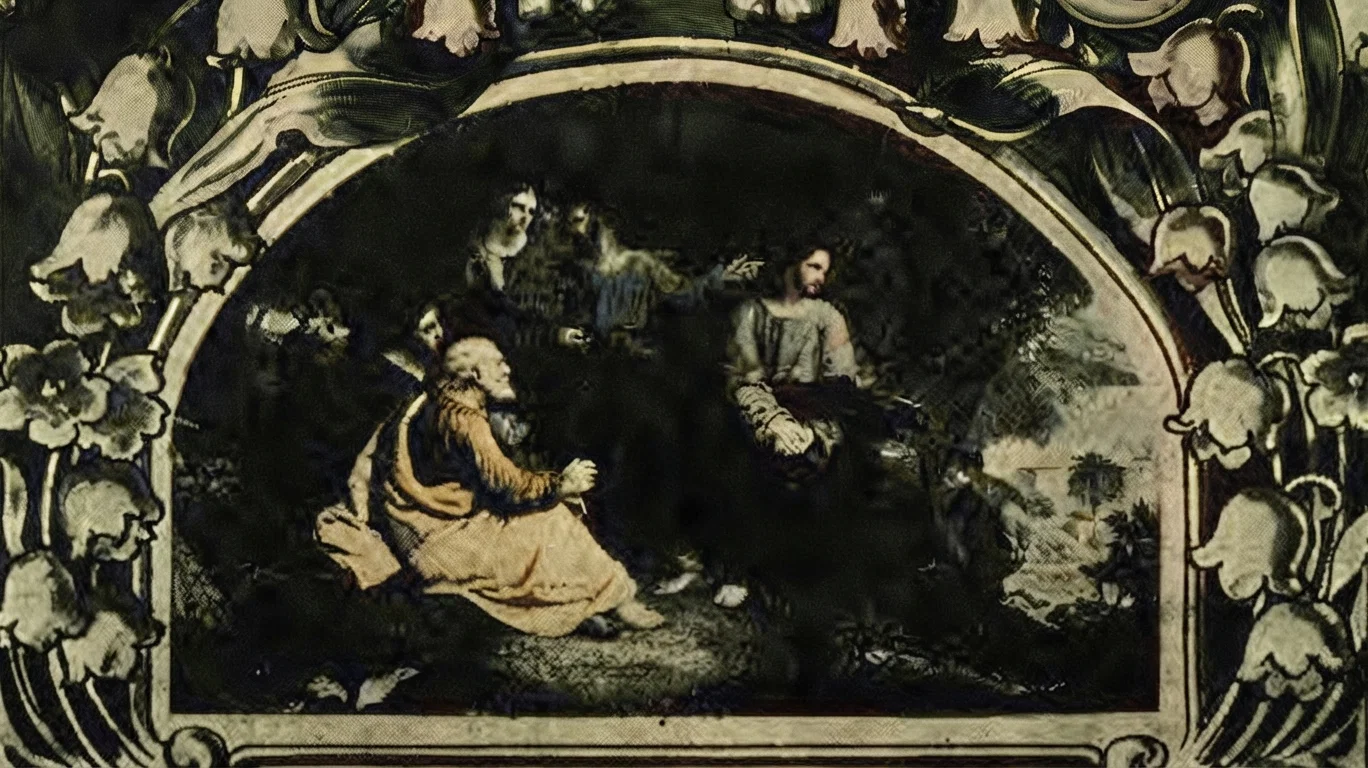
"If the Son therefore shall make you free, ye shall be free indeed." John 8:36.
"Herein is My Father glorified, that ye bear much fruit." John 15:8.

Leading Articles in This Number

Branches of the Living Vine 3
The Master's Coming to the Wicked 4
The Church in Ephesus (Revelation Series) 6
Do Men Die? 9
The Origin of the Sabbath (Bible Reading) 5
Tobacco-Using Habit (Question Corner) 2
Does California Need a Sunday Law? 10
For Africa (Missions) 14
(For full Table of Contents see last page)

New Testament Books This Week

Schedule for the Week Ending December 10
Sunday December 4 Philippians 1-4
Monday " 5 Ephesians 1-3
Tuesday " 6 " 4-6
Wednesday " 7 Colossians 1-4
Thursday " 8 Philemon 1;
1 Timothy 1-4
Friday " 9 " 5, 6;
Titus 1-3
Sabbath " 10 2 Timothy 1-4
THERE are seven different New Testament books in this week's lesson. We can scarcely more than touch upon each one. The city of Philippi was named for the great Macedonian king who founded it, in Macedonia, north of the archipelago on the great highway between Europe and Asia. Here it was that the last great struggle of the Roman republic against despotism was fought, where Brutus and Cassius were defeated by Augustus and Antony. Hence it became a Roman colony. The church was founded by Paul in A.D. 52 where he met at the place of prayer held in the house of Lydia. Acts 16: 13-15. The epistle speaks for itself.
—★—
EPHESIANS comes next in order. Ephesus was a city located in Asia Minor; the great center to which flowed the commerce of the East and West. The inhabitants were noted for their licentiousness and luxurious life, cultivation of the magical arts, and the fanatical worship of Diana, or the Asiatic Artemis. Her temple, owing to its wonderful structure, its great magnificence, and its extravagant embellishments, was one of the wonders of the world. Here Paul sojourned three years, broke the power of the idolatrous religion over the hearts of many, and established a great church. The epistle to the Ephesians, like that of the Colossians, is one of wonderful depth; and only those can truly appreciate it who have tasted of the deep things of God. Three of the chapters are doctrinal, dealing with the Godhead and His relationship to man. Three are moral and practical. From the epistle we would gather that the church was most devoted and earnest.
—★—
THE epistle to the Colossians is very similar to that of Ephesians, written to the church at Colosse, a chief city of Phrygia in Asia Minor. It was probably founded by Paul.
—★—
TIMOTHY was the son of a Greek father and a Jewish mother. His mother, Eunice, was converted by Paul after his visit to the region of Lycaonia in A.D. 51, and Timothy became his own son in the faith and one of his constant companions in his missionary journeys. One object of the epistle seems to be to encourage Timothy amidst the difficulties of his position at Ephesus. It urges him to devotion to study, to faithfulness, assuring him that whatever men may do, the foundation of God stands sure. It is filled with excellent instruction for ministers in all ages. It was written after the apostle was liberated from his first imprisonment, seemingly; the second epistle was written while he was in his second imprisonment and just before his death. It breathes constancy and courage; appeals to the young man with all the ardor of an old soldier to be faithful to the last.
—★—
BETWEEN this first and the second epistle that of Philemon was written, a personal epistle to a friend regarding Onesimus, once a slave, who had run away from the house of Philemon, but was converted by Paul and was baptized and returned to his master.
—★—
TITUS was a Greek by birth, was converted by the apostle Paul, and is called his own son after the common faith. He seems to have been the first Christian converted who was not circumcised, and he was taken by the apostle to Jerusalem to try the matter, where the council decided against this necessity. Compare Acts 15 with Gal. 2:3. He seems to have been a very efficient minister, and was sent by the apostle to different churches to help them through their trials. It is a condensed code of instruction on doctrine, morals, and discipline; is filled with excellent matter for the Christian minister and church.

"IF YE WILL INQUIRE, INQUIRE YE."

This Inquirers' Department is conducted for the purpose of helping those who are studying the Bible. The answers are oftentimes only suggestive. They are never to be considered infallible, only as they agree with the infallible Word. The writer who may answer them does not consider that his opinion is infallible. He will simply give the best that he has, and plead with the inquirer to search the Word. Such questions only will be answered as, to the editors, seem to minister to the good of the readers and to the mission of the paper. We can not answer repeatedly in the same volume questions upon the same scripture. The name and address must accompany question, not for publication, but as an evidence of good faith, and that answer may be made by letter if deemed advisable. No letters are answered which do not contain the name of the writer. It is well always to enclose stamp for reply.

3296.—Tobacco-Using Habit

In the SIGNS of September 20, on "Tobacco-Using Habit" you speak of the help one can receive in breaking the habit by taking a course of eliminative treatment at some sanitarium. Do you have to take a course in some man-established and man-constructed institution for the purpose of helping to be cleansed from sin, or is the promise in 1 John 1:9 to be accepted by faith? W. G. C.
There is much more in this letter from our earnest correspondent, but these questions cover the real points in the case. We heartily agree with her that God is able and God is willing to give instant and absolute victory over every habit. We know from experience that He has done this again and again. There are many who have had the same experience as the one of whom our correspondent speaks, but all men have not faith. God does not always work the same with different individuals; in fact, it may be set down that He never works the same. It was not necessary for Him as His part to put His fingers on the ears of the deaf man whom He healed, or to make mud out of the dust and anoint the eyes of another and tell him to wash in a certain pool to heal his blindness, or to take another outside of the crowd and separate him in order to heal him. Jesus had demonstrated His healing power in restoring one sick unto death while He was at a distance. Why had He to do these things then?—In order to meet the weak faith of the one whom He healed.
Another thing, God wants clean, intelligent people. There are some who have used tobacco so long that they do not know what a terrible, filthy thing it is in their systems until they are once cleansed from it. They have not been convicted as the one to whom our correspondent refers; that is, convicted to that extent. In a general way they think it is inconvenient, undesirable, and to some extent an unclean habit; they would like to get rid of it; it injures them healthwise. They do not have, however, the sensitive, deep conviction of its awful sin, and consequently the simple faith to grasp the healing power of God. We recommend such ones as this to take a course of eliminative treatment and relieve the sensitive nerves from the narcotic effect of the nicotin, and then the Spirit of God can better reach them.
There is one other truth that is worthy of consideration. When we are convicted of that which is wrong, if we meet it right there and then with full purpose of heart, with all our soul depending upon the grace of Christ, He gives us complete victory, just as He gave the children of Israel victory at Jericho; but if we temporize with it, yield to it again and again, we will hold the victory for a while and then suffer defeat. That very thing will keep alive the appetite; and God suffers it just as He suffered Israel's foes to reign and become thorns and pricks to them, until they would get to that place where they would utterly abandon all compromise and temporizing and cast their whole soul upon God. The article was written in order to help all classes, even the unconverted who might read it; because we think it is a good deal easier to reach with the great spiritual truth of God the system freed from tobacco and not narcotoized by its poison; and yet, on the other hand, Jesus Christ is a complete Saviour from sin, with power to save even to the uttermost.
Sanitariums are man-made, man-built institutions; yet we believe that they have come to the great, needy, suffering race through God's providence, and are agents of His in lifting souls to a higher plane physically, that His truth may better reach them spiritually. They are great teaching centers also for better, higher living; and we believe God desires His people to be teachers in this respect, so that they can help others to eat and drink to God's glory.
There is danger on both sides of this question. The danger always in those who have had a remarkably bright experience, is in demanding that others shall have a similar experience or else it is not genuine; and there is danger also in those who are conducting reform work along physical lines, in thinking that all cases must pass through certain rules and regulations. The truth of the matter is that God works in many ways, by human means and without them; and in all these we ought to recognize His hand and give Him the glory.

3297.— The Bible Months

Will you please give the ancient months?
The Jewish sacred year began with Abib, or Nisan (Ex. 12:2; 13:4; Esther 3:7); the second month, Zif (1 Kings 6:1); the third month, Sivan (Esther 8:9); the fourth month, Tammuz, named from the sun god (Eze. 8:14); the fifth month, Ab (Ezra 7:7, 8); the sixth month, Elul (Neh. 6:15); the seventh month, Tisri, or Ethanim (1 Kings 8:2); the eighth month, Bul (1 Kings 6:38); the ninth month, Chisleu (Neh. 1:1); the tenth month, Tebeth (Esther 2:16); the eleventh month, Sebat (Zech. 1:7); the twelfth month, Adar (Esther 3:7). These, beginning with April, followed the year around, the second month corresponding with May, the third month with June, etc. These do not exactly correspond with our English months, but nearly so. The Jewish civil year began with the seventh month, Tisri; the second month, Bul; and so on. Any good Bible dictionary will give a table of the Jewish months in correspondence with ours.

3298.—Melchizedek

Please explain Heb. 7:3. Who is this man Melchizedek? J. E. R.
It has before been shown in this journal, and it seems to us quite conclusive, that Melchizedek was one of a great order of priesthoods of which our Lord originally was the first, the Melchizedek of the universe, a king-priest. In God's plan Adam was to be the Melchizedek of this world; but Adam failed, and in consequence our Lord Jesus Christ comes down to this world and wins the place which Adam lost, and becomes our Melchizedek in a still closer sense. This Melchizedek who met Abraham may have been, as has been suggested by different ones, the Melchizedek of another world, whom God saw fit to place here for a little time as a type of that later Melchizedek of this world who should be manifested as the Seed of Abraham, yet receiving His priesthood from a higher quarter now, from the oath of God. If that be true that the Melchizedek who met Abraham was from another world, we could see the force of what is said that he is "without father, without mother, . . . having neither beginning of days, nor end of life," but was made a priesthood after the order of Melchizedek forever. We believe that the very subject itself opens a wonderful field of thought, shows marvelously what our Lord Jesus Christ has done for humanity, and throws new light on the priesthood, the sanctuary question, and the eternal future. It is impossible, however, to give more than a brief note in this department.

Branches of the Living Vine

By Mrs. E. G. White
"Abide in Me, and I in you. As the branch can not bear fruit of itself, except it abide in the vine, no more can ye, except ye abide in Me. I am the Vine, ye are the branches. He that abideth in Me, and I in him, the same bringeth forth much fruit: for without Me ye can do nothing. If a man abide not in Me, he is cast forth as a branch, and is withered; and men gather them, and cast them into the fire, and they are burned."
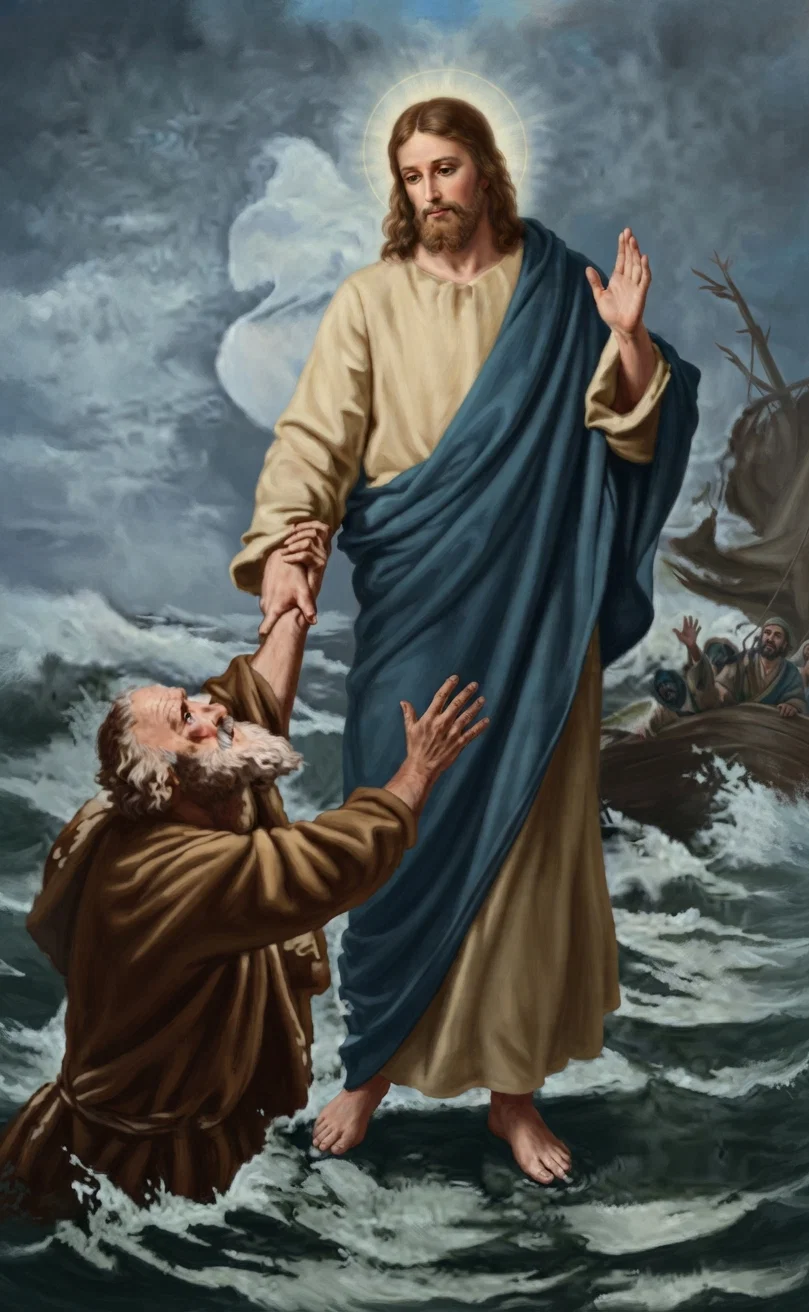
JESUS was about to take leave of His disciples, and return to the Father. He had been presenting before them the close union with Himself by which they could maintain spiritual life when His visible presence was withdrawn; and to impress the thought upon their minds, He gave them this appropriate and striking illustration of His relation to believers. The Jews had always regarded the vine as the most noble of plants, a type of all that was beautiful, excellent, and fruitful. "As a nation," our Lord would seem to say, "you prize the vine. But I am the true Vine. As sinners, you should prize a connection with Me above all earthly good. The branch can not live separated from the vine; no more can you live unless you abide in Me."
(FOR ARTICLE SEE PAGE 6)
Our Lord has here given us a rule by which true disciples may be distinguished from those who claim to follow Him, but have no vital connection with the Source of life. There is a wide difference between a pretended union with Christ, and a real connection with Him by living faith. A profession of religion may place men in the church, but it does not prove them true followers of Christ. The question is, Do they bear fruit to the glory of God? For "by their fruits ye shall know them."
"I am the Vine, ye are the branches." Can we conceive of a more intimate relation to Christ than this? The root sends its nourishment through the branch. The communication of life, strength, and fruitfulness from the trunk to the branches is unobstructed and constant. Such is the true believer's relation to Christ. He abides in Christ, and draws his nourishment from Him.
This spiritual relation can be established only by the exercise of personal faith. This faith must express on our part supreme preference, perfect reliance, entire consecration. Our will must be wholly yielded to the divine will, our feelings, desires, interests, and honor, identified with the prosperity of Christ's kingdom and the honor of His cause, we constantly receiving grace from Him, and Christ accepting gratitude from us.
When this intimacy of connection and communion is formed, our sins are laid upon Christ, His righteousness is imputed to us. He was made sin for us, that we might be made the righteousness of God in Him. We have access to God through Him; we are accepted in the Beloved. Whoever by word or deed injures a believer, thereby wounds Jesus. Whoever gives a cup of cold water to a disciple because he is a child of God, will be regarded by Christ as giving to Himself.
The Father is the Vine-dresser. The living branches are often subjected to His skilful and merciful pruning-knife, "that they may bring forth much fruit," but the withered, lifeless branches are severed from the Vine. Their end is to be burned, when the "Son of Man shall send forth His angels, and they shall gather out of His kingdom all things that offend, and them which do iniquity."
All the followers of Christ have as deep an interest in the lesson of the vine and its branches as had the disciples who listened to His words. In the apostasy man alienated himself from God. Evil is so identified with human nature that no man can overcome in his own strength. But tho the separation from God is so wide, Christ has made provision to connect us again with Himself. Through this union we receive moral and spiritualpower. If we have the spirit of Christ, we shall bring forth the fruits of righteousness,—fruits that will bless our fellow men and honor and glorify God.
Those who share the suffering and reproach of Christ now, will share His glory hereafter. He “will not be ashamed to call them brethren.” His angels will minister to them. To those who have united themselves to Him, He declares: “Tho a mother may forget her child, yet will not I forget thee. I have graven thee upon the palms of My hands. Thou art continually before Me.”
O, what amazing privileges are offered us! Will we put forth earnest efforts to form this alliance with Christ? Will we break off our sins by righteousness, and our iniquities by turning unto the Lord?
A union with Christ by living faith is enduring; every other union must perish. Christ first chose us, paying an infinite price for our redemption; and the true believer chooses Christ as first, and last, and best in everything. But this union costs us something. It is a relation of utter dependence to be entered into by a proud being. All who form this union must feel their need of the atoning blood of Christ. They must have a change of heart. They must submit their own will to the will of God. There will be a struggle with outward and internal obstacles. There must be a painful work of detachment, as well as a work of attachment. Pride, selfishness, vanity, worldliness,—sin in all its forms,—must be overcome, if we would enter into a union with Christ. The reason why many find the Christian life so deplorably hard, why they are so fickle, so variable, is, they try to attach themselves to Christ without detaching themselves from these cherished idols.
After the union with Christ has been formed, it can be preserved only by earnest prayer and untiring effort. We must resist, we must deny, we must conquer self. It is only through the grace of Christ, by courage, by faith, by watchfulness, that we can hope to gain the victory.
Believers become one in Christ; but one branch can not be sustained by another. The nourishment must be obtained through vital connection with the Vine. We must feel our utter dependence on Christ. We must live by faith in the Son of God. That is the meaning of the injunction, “Abide in Me.” The life we live in the flesh is not to the will of men, not to please our Lord’s enemies, but to serve and honor Him who loved us, and gave Himself for us. A mere assent to this union, while the affections are not detached from the world, its pleasures and its dissipations, only emboldens the heart in disobedience.
“Whosoever is born of God doth not commit sin.” He feels that he is the purchase of the blood of Christ, and bound by the most solemn vows to glorify God. The love of sin and the love of self are subdued in him. He daily asks, “What shall I render unto the Lord for all His benefits toward me?” “Lord, what wilt Thou have me to do?” The true Christian will never complain that the yoke of Christ is galling to the neck. He accounts the service of Jesus as the truest freedom. The law of God is his delight. Instead of seeking to bring down the divine commands to accord with his deficiencies, he is constantly striving to rise to the level of their perfection.
Continue reading: The Master's Coming