Your ShelfYour Projects

Signs of the Times, Vol. 27, No. 16.

THE HARVEST OF AN EVIL PURPOSE

Signs of the Times

Apr 17, 1901

Pacific Press Publishing Company · Oakland, California · Apr 17, 1901

THE HARVEST OF AN EVIL PURPOSE.
IF we could truly realize the fearful fruit of a sinful act, the majority of us would quail at the thought of living. The acts we do and the words we utter are creating either sunshine or shadows for our fellow-pilgrims. In spite of all we can do to the contrary, these acts and words are dropping as wheat or are scattered as tares in the fields of our friends, neighbors, and enemies—scattering smiles or sorrows; giving sweet release from trials, or binding upon aching backs burdens grievous to be borne; lifting up into the sunlight, or casting down into gloom and sin. Who can weigh the result of an evil deed? Not man; only God alone is able to read the beam on the balances of eternity.
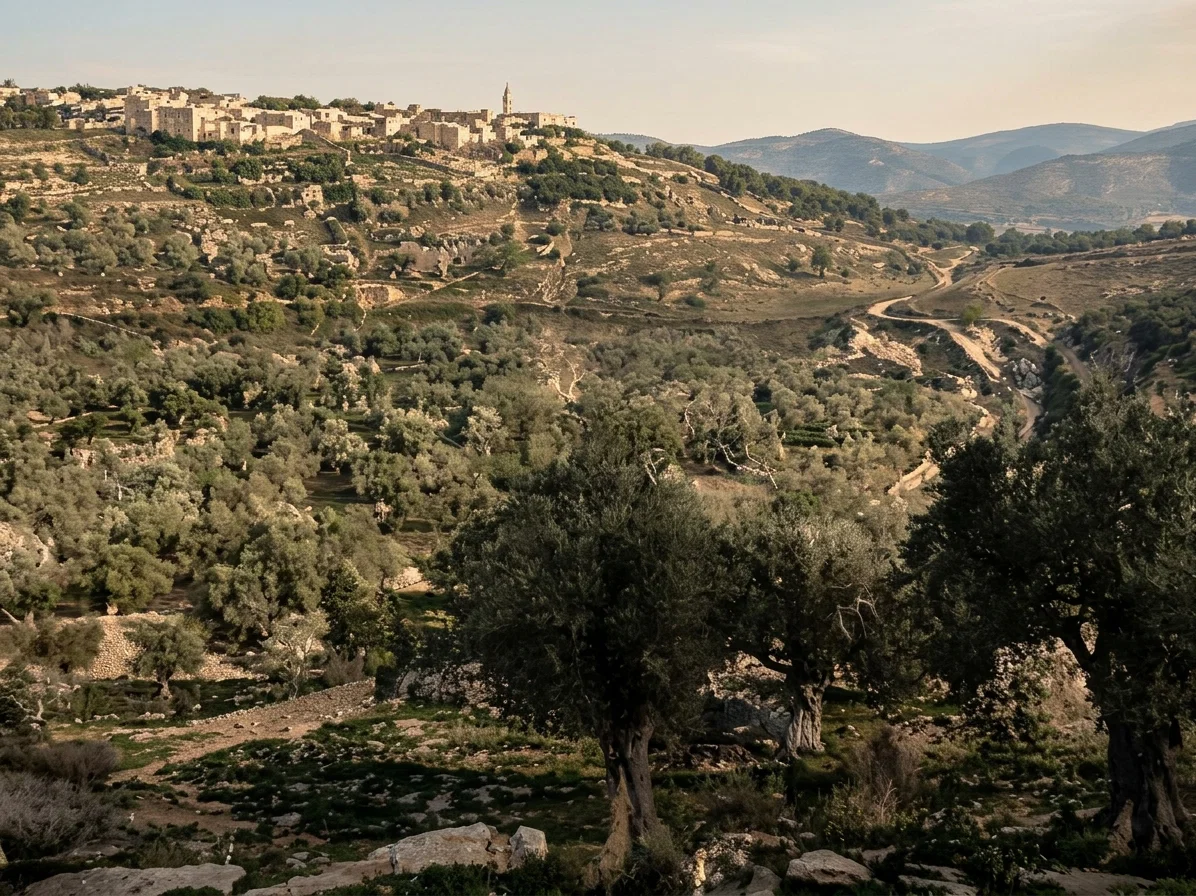
Samaria, capital of Israel, built by Omri about 925 B.C.; the city of Ahab and Jezebel, and the scene of the idolatrous practises which Jezebel brought from Tyre and Sidon to bewitch the people of God.
THE Word of God gives many striking illustrations of the fruits of evil deeds; but perhaps no more striking one is recorded than that of Jezebel in the land of Samaria. By one of the singular ironies of fate her name signified chaste, the same name that is now pronounced Isabel; while she herself was an enthusiastic promoter of that most unchaste heathen worship, the worship of Baal and Astarte. Jezebel was the daughter of the king of Tyre and Zidon, whose name, Ethbaal, contained also the name of his god, signifying “with Baal,” or “Baal with him.” Baal was the sun-god and Astarte the lunar idol; and Ethbaal, the “king of the Zidonians,” was the high priest of their wicked worship.
JEZEBEL the daughter, schooled in all the cunning sophistry of nature-worship, became, by her marriage with Ahab, king of Israel, a strong poisonous weed in the garden of the Lord’s people. Omri, the father of Ahab, built the city of Samaria and made it the capital of Israel. The record of him is that he “wrought evil in the eyes of the Lord, and did worse than all that were before him.” 1 Kings 16:25. But all the wickedness which Omri caused Israel to do in turning the worship of Jehovah into the worship of idols, is not to be compared with the sins which Ahab caused Israel to commit; and yet Ahab was not a man of strong will or masterful courage. Still the testimony concerning his reign is that he “did more to provoke the Lord God of Israel to anger than all the kings of Israel that were before him.” 1 Kings 16:33.
WHAT had Ahab done? In the first place he had broken the command of the Lord and married a woman who was an idolater; but many of the Jews had done this before Ahab’s time. But he “went and served Baal, and worshiped him.” To him it seemed to be “a light thing for him to walk in the sins of Jeroboam.” Jeroboam had set up the worship of calves in Israel, and thus promoted idolatry;but this was a light thing to Ahab. “He reared up an altar for Baal in the house of Baal, which he had built in Samaria,” the capital of Israel. “And Ahab made a grove” (1 Kings 16:33); that is, he set up asheras in the groves; which is equivalent to saying he established that vilest rite of heathen nature-worship in the groves of Israel. Under his reign ordinary idolatry was supplanted by the genuine sun-worship of the darkest heathenism. Omri was wicked; but Ahab’s wickedness transcended his. Omri established more widely in Israel the worship of the golden calves; Ahab established there that root of all false worships—sun-worship. Omri “did worse than all that were before him;” and Ahab, coming after, did worse than Omri.
How was it possible that the vacillating Ahab should be able to accomplish so much more wickedness than all his predecessors? By the mouth of Elijah the prophet the Lord tells us, as He told Ahab at the time; and this is the Lord’s declaration: “But there was none like unto Ahab, which did sell himself to work wickedness in the sight of the Lord, whom Jezebel his wife stirred up.” 1 Kings 21:25. In Jezebel, then, was the mainspring of that excessive wickedness of Ahab. It was her purpose to plant the worship of Baal thruout all Jewry, and she would stop at nothing to accomplish her design. Not by proselyting, not by persuasion, not by the will of the people, would she accomplish her purpose; but by the most rigorous oppression and compulsion was her work carried on, until in all Israel there were but seven thousand who had not bowed the knee to Baal; and these were scattered in the wilderness and in the caves of the earth, hiding from the wrath of Ahab, “whom Jezebel his wife stirred up.” The prophets of the Lord were special objects of her fury; and we see by 1 Kings 18:4, 13 that by the order of Jezebel they were cut off, only those escaping evidently who were hidden in the caves or in the wilderness. When the prophets of Baal were confounded and slain, we hear her sending this defiant declaration to Elijah: “So let the gods do to me, and more also, if I make not thy life as the life of one of them by to-morrow about this time.” 1 Kings 19:2.
THUS we see a little of the wickedness that Jezebel had brought into the realm of Israel; but it did not cease when her servants threw her from the walls of Jezreel to be food for dogs, as the Lord had said. The influence of her wicked purpose went down thru the posterity of Ahab, and afflicted Israel from generation to generation. When Ahab fell at the hand of a Syrian archer, Ahaziah his son reigned in his stead; and the Lord tells us of him that “he did evil in the sight of the Lord, and walked in the way of his father, and in the way of his mother, and in the way of Jeroboam the son of Nebat, who made Israel to sin; for he served Baal, and worshiped him, and provoked to anger the Lord God of Israel, according to all that his father had done.” 1 Kings 22:52, 53. When Ahaziah was upon his death-bed after a reign of two years, we find him sending men to inquire of Baal-zebub the god of Ekron whether he should recover, notwithstanding the fact that the Lord had repeatedly warned Israel against seeking to the gods of the heathen, and had punished them for disobedience in this regard.
BUT Jezebel’s wicked influence did not extend thru Israel only, for Judah suffered as well. Jehoram, king of Judah, married a daughter of Ahab; and this is the record the Lord has left concerning him: “And he [Jehoram, king of Judah] walked in the way of the kings of Israel, as did the house of Ahab; for the daughter of Ahab was his wife; and he did evil in the sight of the Lord.” 2 Kings 8:18. Jehoram’s reign was followed by that of his son Ahaziah; and the record declares that he also “walked in the way of the house of Ahab, and did evil in the sight of the Lord, as did the house of Ahab; for he was the son-in-law of the house of Ahab.” Verse 27.
THIS is a gloomy record which is left us concerning the influence of one single evil purpose; and the Lord has left it for a purpose—that we may realize the fearful fruit that is being borne by every act of sin we do. The result of Jezebel’s life-work is a terrible monument of sin. By the influence of one woman were the hosts of two nations turned from Jehovah to the worship of idols, and made a byword and a reproach among the heathen. In view of this lesson should not a people seek unto their God, and walk humbly and softly before Him?
C. M. S.

A DWELLING-PLACE FOR GOD.

FROM the record in Heb. 8:1, 2, it is clearly established that the place of our Lord’s ministry as high priest is at the right hand of the throne of God in the heavens. He is there said to be a minister of the sanctuary, and of the true tabernacle, which the Lord erected, and not man. This implies that another sanctuary, an imitative tabernacle, had somewhere existed, to which more or less attention had been directed. To learn when and where this one appeared, and what was its purpose, will call for an extended study of the Scriptures.
On this point the apostle does not leave us to wander aimlessly. In the first part of Hebrews 9 he briefly states that under a former ministry there was made a sanctuary, complete in all its appointments, having two apartments, the first holding the seven-branched candlestick and the showbread table, while the second contained the ark of the covenant with its several adjuncts. This statement was not intended to convey to the mind, a detailed description of the sanctuary referred to, but was simply to call attention to it as an arrangement with which the reader is supposed to be familiar from having read a former account of it.
Passing back, therefore, to the early history of God’s people, we learn that shortly after their deliverance from Egyptian bondage God gave special instruction to Moses regarding the erection of a sanctuary, which He said was to be His dwelling-place among men. Ex. 25:1-8. The material for the construction of this “house of the Lord,” was to be made up of voluntary contributions of all the people. These were to be given willingly, and were to consist of gold, silver, brass, fine linen of various colors, rams’ skins dyed red, badgers’ skins, acacia wood, lighting oil, spices for anointing oil and incense, and various kinds of stones with which to decorate the priests’ garments. From the exceeding abundance of these materials which the people offered, a building was to be erected in which the service of God might be carried on in the very presence of the Ruler of the universe.
The plan, or pattern, of this structure was not to be devised according to the notions of Moses or his associates, but the structure, with all its belongings, was to be constructed along the lines of a model prepared in heaven and exhibited to the chosen leader of Israel. Ex. 25:9. He was not to swerve, in the least particular, from the markings of the divine pattern. Verse 40; Heb. 8:5.
But this temporal dwelling-place among the tribes of Israel was not the only earthly place of abode God has chosen. He says that He not only dwells in the “high and holy place,” but also with him who is of a “contrite and humble spirit.” Isa. 57:15. This constitutes the human form a temple of the living God, in which He may dwell and walk, and thus direct the daily course of the individual. 2 Cor. 6:16. Such relationship gives to the place of abode the nature of its Occupant, thus rendering it holy. 1 Peter 1:14-16.
But the care of heavenly oversight given to the erection of the Hebrew sanctuary, by which it might be a holy dwelling-place for God, was not alone to typify the fitting up of men for God’s indwelling. It looked beyond that, even to the heavenly dwelling of Christ to be finally shared by all who have possessed His indwelling during their earthly pilgrimage. In other words, it was a pattern of things in the heavens, and a figure for that time of the position and work of Christ in behalf of the salvation of His people. Heb. 9:8, 9, 11, 23, 24. This heavenly real sanctuary was therefore the model after which the Hebrew typical sanctuary was patterned. It still holds its place in the temple above (Rev. 11:19), which now occupies a position in the city of God, the New Jerusalem. Isa. 60:10-14.
But while Christ, as our great High Priest, dwells in this high and holy place, His Spirit and representative is permitted to remain on earth, and find a dwelling-place in the hearts of men, to transform them from carnal to spiritual beings, and so make them like their Lord. Without the indwelling of this Spirit, however, no one can truly claim to be a part of Him or His. Rom. 8:9. To have the moulding influence of Christ’s Spirit, is to let His mind take the place of the sordid natural mind, guiding the thoughts to continual consecration and devotion. Phil. 2:5. Thus the great Example is closely followed in all the words and acts of life, even to a sacrificial ministering for others’ good. 1 Peter 2:21, 22.
Then as He came to men a living chief corner-stone chosen of God and precious, so true connection with Him will make His followers lively stones, built up into a spiritual, priestly house to offer up spiritual sacrifices, which will be acceptable to Him who is Head over that house. Heb. 3:6; 1 Peter 2:4, 5. It is therefore well for all to consider fully the Apostle and High Priest of their profession, thatby constantly beholding they may become changed into the very image of the Author and Finisher of their faith; and with Him, for the joy set before them, endure the cross, scorning its shame, and at last be permitted to sit with Him at the right hand of God’s throne. Heb. 3:1; 2 Cor. 3:18; Heb. 12:2. J. O. CORLISS.

Faith Beyond Reason

FOR a sinner to believe is an act of faith, not of reason. It is almost like taking a jump in the dark, but reason comes in and justifies this jump in the dark.—Selecta.

THE DAYS OF THE SON OF MAN.

THE Inspired Record says, “As the days of Noah were, so shall also the coming of the Son of man be.”
To us has been given the message of Christ’s second coming. At the ascension of our Lord, angels stood beside the disciples, and with them watched the Saviour as He passed into the heavens. Then they turned to the disciples with the words, “This same Jesus, which is taken up from you into heaven, shall so come in like manner as ye have seen Him go into heaven.” This message was given to the disciples to give to us, and God designs that it shall sound till the end of time. We are to wait and watch for Christ to come in His own appointed time, without sin unto salvation.
Those in the world fail to realize that the judgments of God are about to fall upon the earth. Their minds are filled with thoughts of eating and drinking and getting gain. They have allowed these subjects to take their whole attention, and as a result violence fills the world. Sin is on the increase. Iniquity prevails.
How is the message of warning received?—Just as it was in Noah’s day. “All things continue as they were from the beginning,” men say.
Christ declares, “If that evil servant shall say in his heart, My Lord delayeth His coming; and shall begin to smite his fellow-servants, and to eat and drink with the drunken, the Lord of that servant shall come in a day when he looketh not for Him, and in an hour that he is not aware of, and shall cut him asunder, and appoint him his portion with the hypocrites.”
Man was created to glorify his Maker. But iniquity has so increased that at the present time men and women do not appreciate the goodness of God. They do not believe His Word. Self is the god they worship.
Ever since his fall, Satan has been working at cross-purposes with God, seeking to obliterate all trace of the divine likeness in man. He has led human beings to indulge an appetite for liquor and tobacco. He knows that those who give themselves up to indulgence of these appetites can not stand in their God-given manhood. They are slaves. Their reason is beclouded, their intellect dulled.
All over the world, pride, vanity, and self-indulgence are crippling men and women, so that they dishonor God as their Creator. The wrath of Jehovah is soon to fall upon the ungodly; but human beings are so controlled by the enemy that they see not what is coming. So deeply engrossed are they in the things of this world that they have no time to study God’s Word, no time to think seriously of their spiritual welfare. Their one thought is to gain wealth, to make a display; and tho they make mistakes, they have no time to remedy them, but hurry on, scarcely thinking that soon they must give an account of their life-work.
Satan comes to men and women with his specious temptations. Offering them riches and power, he says, “All these things will I give thee, if thou wilt fall down and worship me.” And thousands upon thousands listen to his words, and worship him by becoming wholly engrossed in a search for wealth or in following the fashions of this degenerate age. Thus the world is being led captive. The beings whom God created in His own image are entirely neglecting to prepare for the Judgment.
As the waters of the flood cleansed the earth in the days of Noah, so will the fire of God purify it in the last great day. Then the water from the heavens united with the water in the bowels of the earth; and in the destruction that is coming, fire from heaven will unite with the fire that is stored up in the earth.
Are we preparing for what is coming upon the earth? Have we thought seriously of these things? You who are giving yourselves up to pride and vanity, have you thought of the day when you must give an account for the time and money you have wasted?
Christ said to His disciples, “Search the Scriptures; for in them ye think ye have eternal life; and they are they which testify of Me.” They tell us that Christ is soon coming, to take to Himself those who have loved Him and have waited for His appearing; and for those who have devoted time to pleasure-seeking and display, to a search for the riches that perish with the using, they bring the message: “I never knew you; depart from Me, ye that work iniquity.”
As Noah warned the people of the coming flood, so God desires His people to-day to give the warning message of Christ’s soon coming. There is no time to lose. Christ’s coming is near at hand, and instead of spending our lives in inactivity, instead of investing our means in the things of this world, we should use our talents to the glory of God. Let us put out our money to the exchangers, that at His coming Christ may receive His own with usury.
Those who serve God will meet with trials and temptations. They will have burdens to bear, and difficulties to encounter. Noah was ridiculed and scorned. His work was made a laughing-stock. But none of these things moved him from his purpose, and God’s people must not allow the trials they meet to lead them away from Him. All the difficulties we meet, all the burdens laid upon us, we are to take to the Lord in prayer, asking Him for help. Those who do this will surely gain the victory.
Now is our time to prepare to meet Christ. God has given us this time, and if we use it in self-gratification instead of in crucifying self by sacrifice, we shall come up to the Judgment unprepared. In that day many will plead as an excuse, that they did not know that Christ’s coming was near. But this excuse will not be accepted. They did not know simply because they did not want to know. God gave them abundant opportunity for knowing, but they closed their eyes that they might not see, and stopped their ears that they might not hear. Their one thought was to enjoy the things of this world. Like the people of Noah’s day, they spent their lives in self-gratification.
The cases of all are pending in the heavenly sanctuary. Day by day angels of God are watching the development of character, and weighing moral worth. In the Judgment the question will not be, “What profession did you make?” but, “What have you done for Me? What fruit have you borne to My glory?” Now is the time to prepare for the coming King. Cultivate the mind; for it is capable of the highest cultivation. Prepare to be among those who shall be saved with an everlasting salvation when the Master comes to gather out His jewels. “It doth not yet appear what we shall be; but we know that, when He shall appear, we shall be like Him; for we shall see Him as He is.”
All defects must be remedied. The character must be assimilated to the character of Christ. “Whosoever will come after Me,” the Saviour declared, “let him deny himself, and take up his cross, and follow Me.” Everything that is unlike Christ, all hatred, jealousy, folly, covetousness, must be put away. We must here be like the angels in spirit if we would join them in the kingdom of glory.
As John saw the multitude standing around the throne of God, the question was asked, “What are these which are arrayed in white robes? and whence came they?”—“These are they which came out of great tribulation,” the angel answered, “and have washed their robes, and made them white in the blood of the Lamb.” At an infinite cost a fountain has been prepared for our cleansing. In the blood of the Son of God we may wash our garments of character, and make them white. If now we crucify self, and live for Christ, God will give us a place in the mansions He is preparing for those who love Him.
Thank God that we have a time in which to get ready, a time in which to wash and iron our garments of character, that we may appear before Christ without spot or wrinkle or any such thing.
In the day of Christ’s coming, many will cry, “Too late, too late.” Others will plead for mercy, but mercy will have folded herwings and taken her departure. Christ will have stepped down from the throne. Then will be heard the terrible cry to the rocks and mountains, “Fall on us, and hide us from the face of Him that sitteth on the throne, and from the wrath of the Lamb; for the great day of His wrath is come, and who shall be able to stand?”
Are we preparing to meet the Saviour in peace, or are we absorbed in worldly business and pleasure? Shall we not strive to be among the number who will welcome Christ with the words, “Lo, this is our God; we have waited for Him, and He will save us; this is the Lord; we have waited for Him, we will be glad and rejoice in His salvation”? MRS. E. G. WHITE.

THE PILOT'S ANSWER.

MANY waste precious time studying error, owing to the idea that one must understand all the windings of error in order to be prepared to escape it, or that one needs to see the evil side of life in order to be able to teach others to shun the evil and to appreciate the good. The true principle is well illustrated by the old story of the pilot.
A traveler stood watching a pilot on a river steamer, and at length asked him, “How long have you been running on these waters?”
“About twenty years.”
“Then I suppose you know every rock, and shoal, and bank, and place of danger?”
“No, I don't.”
“You don't!” exclaimed the passenger in alarm. “Then what do you know?”
And there was a world of meaning in the pilot's answer: “I know where the deep water is.”

THOUGHTS FROM THE MOUNT OF TRANSFIGURATION.

And after six days Jesus taketh Peter, James, and John his brother, and bringeth them up into a high mountain apart.” Matt. 17:1. These three disciples had the privilege of obtaining an experience and seeing something the others did not. They got a new glimpse of Christ. God sometimes sees fit to trust some of His people with a special view of Himself. If heaven should trust you with such a special blessing, what kind of attitude would you take? What responsibility would you feel concerning the new views of truth,—what would you do about it? Peter, James, and John got a special view of Christ’s relation to man; a special view of the presence and association of men with Christ. They saw speaking with Christ those who should die and should be saved by the way of the grave, and those who should be translated without seeing death; for Moses and Elias represent two classes,—those who are raised from the grave to see Him in the last great day, and those who shall see Him without tasting death.
There comes a time when silence is the best speech, a time when the Master says, “Just be still and see that I am God.” But Peter thought he must say something,—he must express himself on this solemn occasion, so without very much deliberation and perhaps without any prayer at all, he uttered the words, “Lord, it is good for us to be here; if Thou wilt, let us make here three tabernacles; one for Thee, and one for Moses, and one for Elias.” In other words: “This is a good place to be. I guess we will stay here. Let us put up some buildings for our comfort.” Perhaps that was the first thing that came to him, and he thought it would be a good thing to say. He forgot all about the suffering in the world below.
Now and then God gives us elevated views of Himself and His glorious truth; He takes us apart from the world for a season, to bring us nearer to Himself, that we may return and communicate to the world of the peace and truth and power we beheld and experienced. “This is My beloved Son, in whom I am well pleased; hear ye Him,” is the message that comes from the cloud. Do we hear a divine voice, in every bit of truth and blessing that comes to us, saying, “This is My beloved Son”? “This comes to you thru the channel of His grace. Hear ye Him. Bow before Him. Walk softly before Him. Hear His voice. Do His bidding. Let your trust be in Him.”
“They were afraid.” Their hearts did not love perfectly. “Perfect love casteth out fear.” Probably none of us love perfectly, but we can love perfectly even with the faculties we have. At least we can love sincerely with the whole heart. Whenever a soul gets fearful, discouraged, or despondent, Jesus touches that soul, saying, “Arise, and be not afraid.”
“They saw no man, save Jesus only.” That is what God gives us great glimpses of truth for. In all our work, in all our experience, we must keep our eyes on Jesus. All we do should be as unto the Lord, and in all our work we should see Jesus, we must see Jesus only. Judas saw Christ, but Judas failed in seeing Jesus only. If the enemy can’t keep our eyes off Jesus, he will seek to have our eyes on Christ and on something else at the same time, but let us see Jesus only. Every time we are downcast and despondent, it is evidence that our eyes are not on Jesus, at least not on Jesus only. Every time we find fault with our co-workers and associates, it is evidence that our eyes are not on Jesus only, but on our brethren too. So all the troubles we get into, as a rule, have their origin in the fact that we have had our eyes on Jesus and on some one else too, or else we have had our eyes off Him entirely. Why were Peter, James, and John the only ones who were taken up into the mountain? They were not perfect men, but they were the most earnest of all the disciples. They were perhaps the nearest God, and better prepared to appreciate what they should see there. The fact that the nine remaining disciples could not cast the demon out of the boy, would perhaps indicate their state of mind and heart.
Peter wanted to stay on the mount, but Christ had a better plan. He saw the experience the other disciples were having in the valley below, so He says, We must go down and help them, and He appears just at the time the baffled disciples needed Him most. God gives us truths, advantages, and opportunities, for no other purpose than that we may give them to those who have them not. Whenever our individual experience begins to come to a standstill, and we begin to nurse our Christianity and thank God for what He has done for us, the next thing is, that we begin to say in our hearts, We are “rich, and increased with goods, and have need of nothing,” etc. The only thing that can keep us in a place of realizing our own deficiency, is constantly to give out all that has been given us. We have freely received; then let us freely give.
When organizations or individuals get to carrying on their work in a stereotyped way, they soon begin to retrograde. Eternal truth should be diffusive, like the light of the sun. Christ mentioned this principle when He said, “This ought ye to have done, and not to leave the other undone.”
We want to hold every fort that God has given us, but at the same time keep on reaching out after the new truths and triumphs. The only way to get truth and keep it is to give it away as soon as we get it. The moment a tree ceases to grow, it begins to die. We cease to grow the moment we cease to give and work for others. Just as physical food must enter into our bodies and be liberated in heat and energy, so our spiritual food must become a part of our characters, and be given out in our efforts for others, as spiritual fervency and as moral energy. W. S. SADLER.

“WE WILL HAVE A KING OVER US.”

For nearly four hundred years “there was no king in Israel.” Owing to their sins and backsliding, about one hundred of these years were spent at various times either in war or in vassalage to neighboring nations; but nearly three hundred were years of peace and prosperity; for while apostasy brought war and bondage, repentance brought swift deliverance. God’s ear is ever open to the cry of His people, and tho at times He left the children of Israel to reap the fruits of their own doings, His providence preserved them a distinct, and for the most part a united, people during those four centuries.
During this time Israel was not a state—a body politic—but a body religious. It was first of all “the church in the wilderness” (Acts 7:38); then the church in Canaan; and always in every place the kingdom of God upon earth, a theocracy pure and simple.
Theocracy is government not by man but by God Himself. It is not a government by men ruling in the place of God, but a government in which God Himself rules. And unlike men, God rules not by force, but by love. He governs by His own perfect law, which of its own inherent moral power speaks to the conscience of every man, testifying what is right and condemning that which is wrong. Therefore theocracy is the reign of the individual conscience, directed by the divine law. In other words, it is self-government.
All this being true, it necessarily follows that genuine theocracy is possible only as long as it lives in the hearts of the people; and that theocracy is pre-eminently “government by consent of the governed.” God is the only being in all the universe that has any right to rule arbitrarily; and He refuses to exercise that right, because it is contrary both to His nature and to His purpose in making man a free moral agent.
Israel’s backsliding brought trouble, as backsliding always does. But as is usually the case, the backsliders did not realize that they were to blame. Instead of confessing that their troubles were due to their own backslidings—to their failure to govern themselves, to be true to their own consciences—they charged the failure to God’s government, and said to Samuel, “Make us a king to judge us like all the nations.” 1 Sam. 8:5.
As already stated, Israel was not a state. Neither Israel nor anybody in Israel claimed sovereignty over anybody or anything. The Lord was the sovereign. The work of Moses and of the seventy elders was purely administrative; they had no legislative authority. The word of the Lord to the people thru Moses was, “Ye shall not add unto the word which I command you, neither shall ye diminish aught from it, that ye may keep the commandments of the Lord your God which I command you.” Deut. 4:2.
There is no way for any one to escape from government. There is only one way whereby any man can be free to do as he pleases, and that is to please to do right; to govern himself in harmony with the divine law. To do this is to “know the truth,” and to be made free by the truth. John 8:32. Not to do this is to be subject to theworst form of bondage; for “whosoever committeth sin is the servant of sin.” Verse 34. “Know ye not, that to whom ye yield yourselves servants to obey, his servants ye are to whom ye obey; whether of sin unto death, or of obedience unto righteousness?” Rom. 6:16.
But the truth can be known and obeyed only as God is known and loved. Therefore it was only by the abiding presence of God with Israel that the theocracy could possibly continue; hence the promise: “I will dwell among the children of Israel, and will be their God. And they shall know that I am the Lord their God, that brought them forth out of the land of Egypt, that I may dwell among them.” Ex. 29:45, 46.
But God dwells only with him “that is of a contrite and humble spirit,” and He can be known only by faith. In His prayer to the Father for His disciples the Saviour said: “I have manifested Thy name unto the men which Thou gavest Me out of the world; Thine they were, and Thou gavest them Me; and they have kept Thy Word. Now they have known that all things whatsoever Thou hast given Me are of Thee. For I have given unto them the words which Thou gavest Me; and they have received them, and have known surely that I came out from Thee, and they have believed that Thou didst send Me.” John 17:6–8.
There is no possible way of becoming acquainted with God without believing Him, and it is impossible to love Him without knowing Him. In short, “without faith it is impossible to please Him.” Heb. 11:6. And it was right here that Israel failed. They did not believe God; therefore they did not love Him. And because they did not love Him, they would not submit themselves to His law. This was all involved in the demand for a king; for the Lord said to Samuel, “They have not rejected thee, but they have rejected Me, that I should not reign over them.” 1 Sam. 8:7.
Israel’s demand for a king was therefore only an outward sign of inward apostasy. The people had become “like all the nations” at heart, and it was only natural and right that they should be governed “like all the nations.” Indeed, it was of necessity that they should have some sort of government suited to their condition. They would not govern themselves by the law of God; they must therefore have some authority over them that they recognized to give them a law by which, if they would not govern themselves, they could be governed. “Then all the elders of Israel gathered themselves together, and came to Samuel unto Ramah, and said unto him, . . . Make us a king to judge us like all the nations. . . . And Samuel prayed unto the Lord. And the Lord said unto Samuel, Hearken unto the voice of the people in all that they say unto thee; for they have not rejected thee, but they have rejected Me, that I should not reign over them.” 1 Sam. 8:4–7.
But even then the people were not left to go on blindly in the path in which they had chosen to walk. Under instruction from the Lord, the prophet told them the manner of the king that should reign over them. “And he said, This will be the manner of the king that shall reign over you: He will take your sons, and appoint them for himself, for his chariots, and to be his horsemen; and some shall run before his chariots. And he will appoint him captains over thousands, and captains over fifties; and will set them to ear his ground, and to reap his harvest, and to make his instruments of war, and instruments of his chariots. And he will take your daughters to be confectionaries, and to be cooks, and to be bakers. And he will take your fields, and your vineyards, and your oliveyards, even the best of them, and give them to his servants. And he will take the tenth of your seed, and of your vineyards, and give to his officers and to his servants. And he will take your men-servants, and your maid-servants, and your goodliest young men, and your asses, and put them to his work. He will take the tenth of your sheep; and ye shall be his servants. And ye shall cry out in that day because of your king which ye shall have chosen you; and the Lord will not hear you in that day.” But the people would not hear. They “refused to obey the voice of Samuel; and they said, Nay; but we will have a king over us; that we also may be like all the nations; and that our king may judge us, and go out before us, and fight our battles.” Verses 11–20.
Here was complete rejection of God and His law for an earthly king and an earthly law. Here was open rebellion against the God of heaven. The reason is not far to seek. The whole sad, shameful story is told in Judges 2:7–13: “And the people served the Lord all the days of Joshua, and all the days of the elders that outlived Joshua, who had seen all the great works of the Lord, that He did for Israel. And Joshua the son of Nun, the servant of the Lord, died, being an hundred and ten years old. And they buried him in the border of his inheritance in Timnath-heres, in the mount of Ephraim, on the north side of the hill Gaash. And also all that generation were gathered unto their fathers; and there arose another generation after them, which knew not the Lord, nor yet the works which He had done for Israel. And the children of Israel did evil in the sight of the Lord, and served Baalim; and they forsook the Lord God of their fathers, which brought them out of the land of Egypt, and followed other gods, of the gods of the people that were round about them, and bowed themselves unto them, and provoked the Lord to anger. And they forsook the Lord, and served Baal and Ashtaroth.” Judges 2:7–13.
The several steps from theocracy—self-government by aid of the divine law—to monarchy—government of men by their fellow-men—are easy. The first once taken, the others naturally follow. First doubt—questioning; then positive unbelief; then failure in self-government under the divine law; then utter rejection of that law as the rule of life; then open idolatry in some form; then monarchy—men governed, not by themselves under the divine law, but by other men under human law. Then comes naturally, and even necessarily, the use of force. And this force is to compel the preformance of what the governor conceives to be duty. And this is just why some of the most conscientious rulers this world has ever seen have been persecutors. They were trying to enforce what seemed to them plain moral duty. And all this was bound up in Israel’s demand for a king.
C. P. BOLLMAN.
Continue reading: CONQUERING BESETTING SINS