Your ShelfYour Projects

Signs of the Times, Vol. 22, No. 13.

Two Ways

Signs of the Times

Mar 26, 1896

Pacific Press Publishing Company · Oakland, California · Mar 26, 1896

Two Ways
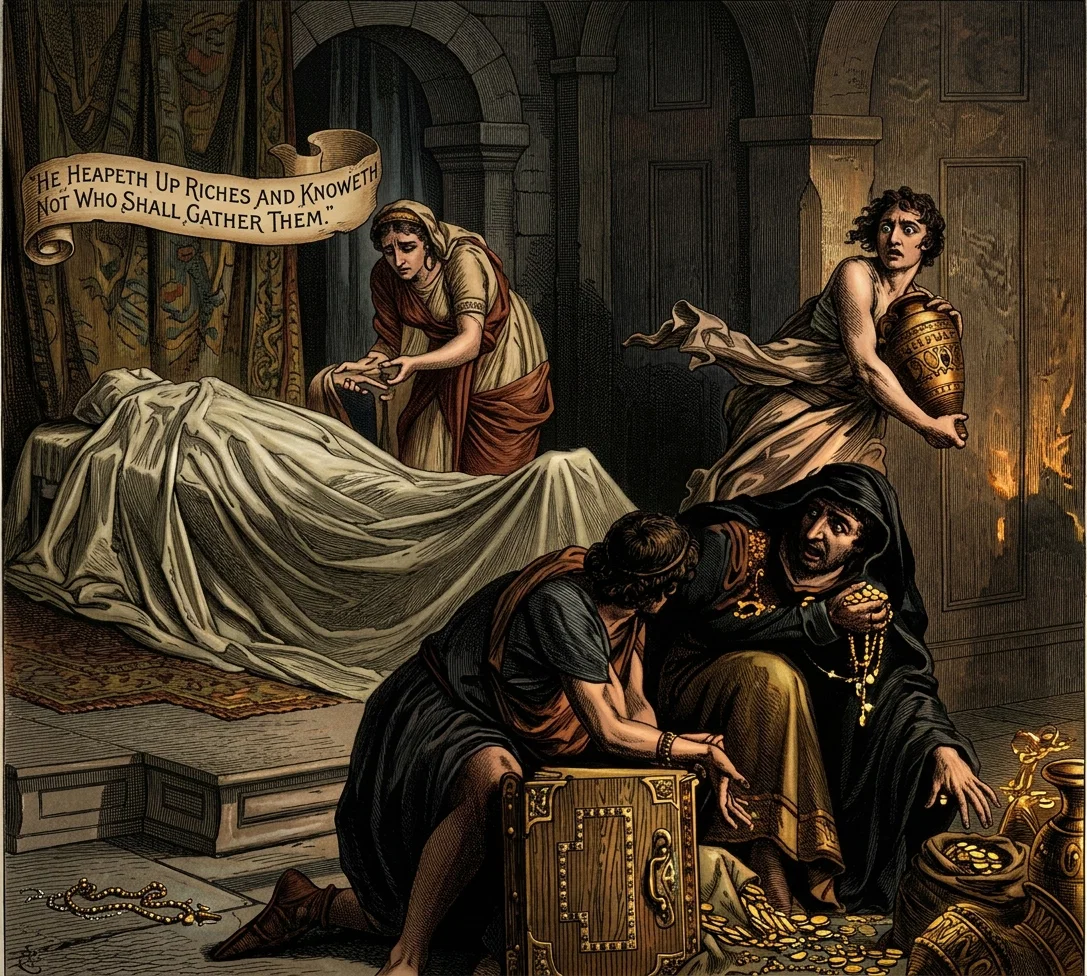
Two Ways.—There are a number of things which all men want, and which God wishes them to have. Among these are long life, liberty, health, wealth, honor, and pleasure. Then why do not all have these blessings?—Because in the very beginning of the history of the race man chose to seek them in the wrong way. God placed before him the true way, the way of obedience to his counsel; but Satan came in and suggested another way, the way of disobedience to God. The man was at liberty to make either of these ways his own way, so he chose the way that Satan suggested, and with that choice he lost all. Altho an experience of about six thousand years has adduced evidence upon evidence that the way of transgressors is hard, mankind still persists in seeking in that way the blessings which he desires, and which God would fain give him in very deed. Is it not time our race had learned that “as for God, his way is perfect,” and that “the way of the wicked is as darkness; they know not at what they stumble”?
Wealth.—The natural man especially desires wealth, because he imagines that wealth can purchase for him everything else that he desires. But, having chosen a selfish, worldly way in which to secure all his benefits, he naturally takes that way to secure wealth. Now the natural man, having rejected the counsel and wisdom of God, is consequently short-sighted; he is impatient to accumulate wealth in a hurry, and therefore aims to grasp that which is in sight. As everything in this world is under the curse of sin, and doomed to be “burned up” (2 Peter 3:10), the wealth to be acquired by those who walk by sight only is necessarily of a very uncertain and transient nature. It is subject to the ravages of the flames, of the winds, and of the floods; it is subject to spoliation by moth and rust, by corrosion and decay, by wear and tear, as well as by the depredations of thieves and robbers of every caste and trade and profession.
A Testimony from Experience.—Solomon had an abundance of riches, above any one who had preceded him, and he used every possible means that a love of carnal revelry could suggest for the purpose of enjoying his immense wealth. But, with the lessons of experience before him, and an extraordinary endowment of wisdom from the Lord, he gives this testimony: “Labor not to be rich; cease from thine own wisdom. Wilt thou set thine eyes upon that which is not? for riches certainly make themselves wings; they fly away as an eagle toward heaven.” Prov. 23:4, 5. “For riches are not forever; and doth the crown endure to every generation?” Chap. 27:24. “Better is the poor that walketh in his uprightness, than he that is perverse in his ways, tho he be rich.” Chap. 28:6. “By humility and the fear of the Lord are riches, and honor, and life.” Chap. 22:4.
Apostolic Testimony.—The apostle Paul is very pointed on the subject of the riches of this world; he tells us that “they that will be rich fall into temptation and a snare, and into many foolish and hurtful lusts, which drown men in destruction and perdition. For the love of money is the root of all evil; which while some coveted after, they have erred from the faith, and pierced themselves through with many sorrows.” 1 Tim. 6:9, 10. Notice, it is not merely those who succeed in accumulating wealth, but those who seek to be rich, who want to be rich in this world. The poorest individual who wants to be rich is subject to these temptations and snares just as well as the one who succeeds and still wants more. To the rich men in the last days, when this world’s history is about to close, the apostle James gives prophetic warning: “Go to now, ye rich men, weep and howl for your miseries that shall come upon you. Your riches are corrupted, and your garments are moth-eaten. Your gold and silver is cankered; and the rust of them shall be a witness against you, and shall eat your flesh as it were fire. Ye have heaped treasure together for the last days. Behold, the hire of the laborers who have reaped down your fields, which is of you kept back by fraud, crieth; and the cries of them which have reaped are entered into the ears of the Lord of Sabaoth. Ye have lived in pleasure on the earth, and been wanton; ye have nourished your hearts, as in a day of slaughter. Ye have condemned and killed the just; and he doth not resist you.” James 5:1–6.
The Example of Christ.—The foregoing very brief testimonies of the Spirit of God show very clearly that man’s way of securing the blessings which God designed that he should have must prove an utter failure. Jesus Christ came into the world to show men, by precept and example, the truth in regard to these things. He came to show them the true way (by faith in him) for even sinners to secure the manifold blessings in store for all who will seek them in the light of his word and life. The initiative of his earthly career, his life as a visible teacher and example, is thus described by Paul: “For ye know the grace of our Lord Jesus Christ, that, tho he was rich, yet for your sakes he became poor, that ye through his poverty might be rich.” 2 Cor. 8:9. And this example was followed by those who united with the church at Jerusalem after the outpouring of the Holy Spirit on the day of Pentecost. “The multitude of them that believed were of one heart and of one soul; neither said any of them that aught of the things which he possessed was his own.” Acts 4:32. And of the forerunner of Christ, John the Baptist, whose honor it was to proclaim him to the world, it is said that he “had his raiment ofcamel’s hair, and a leathern girdle about his loins; and his meat was locusts and wild honey.” Matt. 3:4. When a certain scribe declared his intention to follow Christ, the Lord’s reply to him was, “The foxes have holes, and the birds of the air have nests; but the Son of man hath not where to lay his head.” Chap. 8:20. Christ left his exalted position in heaven, “made himself of no reputation, and took upon him the form of a servant, and was made in the likeness of men; and being found in fashion as a man, he humbled himself, and became obedient unto death, even the death of the cross. Wherefore God also hath highly exalted him, and given him a name which is above every name.” Phil. 2:7–9.

The Teaching of Christ.

All through the Scriptures emphasis is laid upon the transitory, temporary nature of the things pertaining to this world, even the uncertainty of life itself. And concerning worldly possessions, the Lord is very explicit in his counsel: “Lay not up for yourselves treasures upon earth, where moth and rust doth corrupt, and where thieves break through and steal; but lay up for yourselves treasures in heaven, where neither moth nor rust doth corrupt, and where thieves do not break through nor steal.” Matt. 6: 19, 20. The reason given for this course is equally forcible: “For where your treasure is, there will your heart be also.” Verse 21. Then if the heart be centered upon the perishable things of this life, it is impossible to keep the commandments of God, for the great commandment is, “Thou shalt love the Lord thy God with all thy heart.” With this idea agree the words of Solomon: “A faithful man shall abound with blessings; but he that maketh haste to be rich shall not be innocent” (margin, “unpunished”). Prov. 28: 20. That is, one can not strive to be rich in this life and at the same time be faithful to God; for “he that hasteth to be rich hath an evil eye, and considereth not that poverty shall come upon him.” The unprofitableness of this world’s wealth is suggested in the question, “What shall it profit a man, if he shall gain the whole world, and lose his own soul? or what shall a man give in exchange for his soul?” Mark 8: 36, 37.
The teaching of Christ is all in harmony with his life—self-denial here, and riches and honor hereafter. “Blessed are ye that hunger now; for ye shall be filled. Blessed are ye that weep now; for ye shall laugh. Blessed are ye, when men shall hate you, and when they shall separate you from their company, and shall reproach you, and cast out your name as evil, for the Son of man’s sake. Rejoice ye in that day, and leap for joy; for, behold, your reward is great in heaven. . . . But woe unto you that are rich! for ye have received your consolation.” Luke 6: 21–25. We have seen that in this world Christ’s example was one of poverty, of humility, and of strife against sin; that, altho he was “in all points tempted like as we are,” yet by faith he overcame all, and was exalted to the throne of God, where is access to all wealth and joy of the Father. From that high station he sends us this word of promise: “To him that overcometh will I grant to sit with me in my throne, even as I also overcame, and am set down with my Father in his throne.” Rev. 3: 21. This implies access to all the wealth and joy of Christ for all who will seek for it in his way. By walking in the true way, “the commandments of God and the faith of Jesus,” it is possible to be “joint-heir” with Him who is “appointed heir of all things.” W. N. G.

GRACE AND TRUTH.

In studying the two remaining verses of the fifth chapter of Romans, it will be sufficient for our present purpose if we remember that the main thought running through the chapter is life and righteousness. Sin is death, and righteousness is life. Death has passed upon all men, because all have sinned, and the gift of righteousness has come to all men in the life of Christ. Sin is not imputed when there is no law, yet sin was imputed to Adam and to all who lived after him, even till the time of the giving of the law, in the days of Moses.
“Moreover the law entered, that the offense might abound. But where sin abounded, grace did much more abound; that as sin hath reigned unto death, even so might grace reign through righteousness unto eternal life by Jesus Christ our Lord.” Rom. 5:20, 21.

Questioning the Text.

Why did the law enter? “The law entered, that the offense might abound.”
What took place when sin abounded? “Where sin abounded, grace did much more abound.”
Where did sin abound? Wherever the law was; because the law entered that sin might abound, and sin is not imputed where there is no law.
Then when did sin abound? When “the law entered.”
Then when must grace have superabounded? At the entering of the law.
Why did God provide that where sin abounded, grace might much more abound? “That as sin hath reigned unto death, even so might grace reign through righteousness unto eternal life by Jesus Christ our Lord.”
How has sin reigned? “Unto death.”
How does grace reign? “Through righteousness.”
Unto what? “Unto eternal life.”
Through whom? Through “Jesus Christ our Lord.”
“The Law Entered.”—The statement that “the law entered, that the offense might abound,” indicates that there was offense before the particular time spoken of as the entering of the law. Taking into consideration verses 13, 14, we have no difficulty in seeing that the giving of the law upon Sinai is the time referred to. “Until the law,” the time of Moses, and the entering of the law, evidently refer to the one event.
Sin Abounding.—The law entered that the offense already existing might abound. “But sin is not imputed when there is no law.” Therefore we must know that the law was in the world before the time spoken of as the entering of the law, that is, before it was spoken from Sinai. This is what we learned last week from verses 13, 14. It was not possible that the law should actually make any more sin than already existed. It could only emphasize it, that is, more plainly show its true nature. It was, as stated in chapter 7:13, “that sin by the commandment might become exceeding sinful.” There was not one whit more of the law of God in the world after it was spoken from Sinai than there was before; neither was anything that was right before made sinful by the giving of the law; nor was any act that was sinful before made more sinful by the giving of the law. But the circumstances under which the law was spoken, tended to show the awfulness of sin, and to impress the hearers with a greater sense of their sinfulness than ever before.
Grace Superabounding.—“Where sin abounded, grace did much more abound.” It would be well if every person knew this fact. We should hear less talk about being discouraged because we are so sinful. Is the heart full of sin? Know that where sin abounds, there does grace much more abound. This is shown in the fact that Christ, who is full of grace, stands at the door of the heart that is sinfulness itself, and knocks for admission. See Rev. 3:15–20. “This is a faithful saying, and worthy of all acceptation, that Christ Jesus came into the world to save sinners; of whom I am chief.” 1 Tim. 1:15. When Wesley sang, “Plenteous grace with Thee is found, Grace to cover all my sin;” he had the authority of Rom. 5:20 for it.
Grace at Sinai.—Since the law entered that the offense might abound, it is evident that at the very time of the entering of the law the offense must have greatly abounded. There never was a time when the awfulness of sin was made to stand out more prominently. “But where sin abounded, grace did much more abound.” Therefore it is as plain as the Scripture can make it, that grace was superabounding at the giving of the law from Sinai. It is a mistake, therefore, to suppose that God designed that any should think that righteousness was to be obtained by their own works of obedience. On the contrary, the law was spoken to emphasize the boundless grace of God, in pardoning sin, and in working righteousness in men.
The Law and God’s Throne.—We read that “righteousness and judgment are the habitation of his throne.” Ps. 97:2. Righteousness dwells in his throne. It is the foundation of it. That the law of God is righteousness, even his own righteousness, is shownby Isa. 51:6, 7, where God speaks of his righteousness, and says, “Hearken unto me, ye that know righteousness, the people in whose heart is my law.” That is, only they in whose heart is God’s law, know his righteousness. Therefore his law is his righteousness. And the statement that righteousness is the habitation or establishment of his throne, indicates that the law of God is in his throne. He sits upon the throne of righteousness.
Evidence from the Tabernacle.—The tabernacle built by Moses was for a dwelling place for God. “Let them make me a sanctuary; that I may dwell among them.” Ex. 25:8. In that sanctuary, in the most holy place, was the ark of the testament. This ark is described in Ex. 25:10–22. The cover of the ark was called the mercy-seat. Upon this mercy-seat were the two cherubim of gold. Within the ark, under the mercy-seat, were the tables of the law. See Ex. 25:16–21; Deut. 10:1–5. Between the cherubim, upon the mercy-seat, and above the tables of the law, was where the glory of God was seen, and where God spoke to the people. Ex. 25:22. In 2 Kings 19:15 and Ps. 80:1 God is addressed as sitting between the cherubim. Therefore we learn that the ark of the testament, with the mercy-seat, or the cover, was a representation of the throne of God. As the Ten Commandments were in the ark in the earthly tabernacle, so the Ten Commandments are the very foundation of the throne of God in heaven. We may note, in passing, that since the earthly tabernacle was a figure of the true tabernacle in heaven, therefore we are taught that the law as it stands in heaven, in the throne of God, is identical with the law as spoken from Sinai, and written on the tables of stone that were placed in the ark.
God’s Throne and Sinai.—We have learned that the law of God is the very basis of his throne. This is no more than might reasonably be expected, since the basis of any government is its law, and the throne simply stands for the law. Mount Sinai, when the law was spoken from it, was the very seat of God’s law. It represented the awfulness of the law, since no one could touch it without dying. The Lord was there with all his angels. See Deut. 33:2; Acts 7:53. Therefore Mount Sinai, at the time of the giving of the law, was designed to represent the throne of God. Indeed, it was for the time the throne of God, the place whence the law goes forth, out of which proceed “lightnings and thunderings and voices” (Rev. 4:5), and around which stand “ten thousand times ten thousand, and thousands of thousands” of angels. Here again we learn that the righteousness which is the habitation of the throne of God is the righteousness described by the Ten Commandments, just as they were spoken from the top of Sinai, as recorded in Ex. 20:3–17.
The Throne of Grace.—But altho the throne of God is the habitation of his law,—that law which is death to sinners,—yet it is a throne of grace. We are exhorted to “come boldly unto the throne of grace, that we may obtain mercy, and find grace to help in time of need.” Heb. 4:16. Note that we are to come to obtain mercy. Note also that the top of the ark of the testimony, in which were the tables of the law, was called the mercy-seat. It was the place where God appeared to speak to his people. So that the ark of the earthly tabernacle not only represented the throne where God’s law is enshrined, but it represented that throne as the throne of grace.
The Law and the Mediator.—We are told that the law was ordained “in the hand of a Mediator.” Gal. 3:19. Who was the Mediator in whose hand the law was ordained?—“There is one God, and one Mediator between God and men, the Man Christ Jesus; who gave himself a ransom for all.” 1 Tim. 2:5, 6. The law, therefore, was given from Sinai by Christ, who is and always was the manifestation of God to men. He is the Mediator, that is, the One through whom the things of God are brought to men. The righteousness of God is conveyed to men through Jesus Christ. The statement that the law was given in the hand of a Mediator, reminds us that where sin abounded grace did much more abound. The fact that the law was in the hand of a Mediator, at Sinai, shows us this: (1) That God did not mean that any one should suppose that he must get the righteousness of the law by his own power, but only through Christ. (2) That the Gospel of Christ was displayed at Sinai as well as at Calvary. (3) That the righteousness of God which is revealed in the Gospel of Christ, is the identical righteousness that is described in the law as given from Sinai, without the alteration of a letter. The righteousness which we are to obtain in Christ is none other than that.
The Fountain of Life.—In Ps. 36:7–9 we read: “How excellent is thy loving-kindness, O God! therefore the children of men put their trust under the shadow of thy wings. They shall be abundantly satisfied with the fatness of thy house; and thou shalt make them drink of the river of thy pleasures. For with thee is the fountain of life.” It is because with God is the fountain of life that he makes those who trust in him drink of the river of his pleasure. What is that river?—“And he showed me a pure river of water of life, clear as crystal, proceeding out of the throne of God and of the Lamb.” Rev. 22:1. Think of it! A river flowing out of the throne of God. He is the fountain of life. The invitation is to every one that is athirst to drink of the water of life freely. Rev. 22:17; John 4:10–14 and 7:37–39 will help to an understanding of the matter. We take the living water by receiving the Holy Spirit.
Drinking in Righteousness.—The Saviour says, “Blessed are they which do hunger and thirst after righteousness; for they shall be filled.” Matt. 5:6. If one is thirsty, how only can he be filled?—By drinking. Therefore the Saviour means that we can drink righteousness, if we thirst for it. Remember that God’s throne is the seat of righteousness, and that from it flows the river of life, and we shall see the fitness of the assurance that we may drink in righteousness. Since the throne is the seat of righteousness, the river that proceeds from the throne must, so to speak, be charged with the righteousness of the law. Whosoever therefore believes on Christ, and drinks in of his Spirit, must drink in of the righteousness of the law as it is in the throne, or as it was spoken from Sinai.
Drinking at Sinai.—Whoever will read Ex. 17:1–6, together with Deut. 4:10–12 (which show that Horeb and Sinai are the same), will learn that at the very time when the law was spoken from Sinai, there was a river of water flowing from its base. That river flowed from Christ. 1 Cor. 10:4. Christ, the living Rock, stood upon that rock in the desert, from which the water flowed for the thirst of the people, and he it was from whom it came. With him is the fountain of life. And so we have the complete likeness of the throne of God in Sinai. It was the embodiment of the law of God, so that no one could approach it without death, and yet they could drink the living water that flowed from it. And in this figure we again see that the righteousness which those who accept Christ’s invitation are to drink in, is the righteousness that is described in the Ten Commandments.
The Heart of Christ.—Through David Christ spoke thus of his coming to this earth: “Then said I, Lo, I come; in the volume of the book it is written of me, I delight to do thy will, O my God; yea, thy law is within my heart.” Ps. 40:7, 8. He said that he had kept his Father’s commandments. John 15:10. So closely did he keep the commandments that he observed the seventh-day Sabbath, which is sometimes stigmatized as “the Jewish Sabbath.” Canon Knox-Little says, “It is certain that our Lord when on earth did observe Saturday, and did not observe Sunday.”—Sacerdotalism, p. 75. This is not true because Canon Knox-Little said it, but because it is what the Bible teaches. It is so clear a fact that there is no chance for discussion about it. We have never yet heard of any one who had the hardihood to assert that Jesus ever kept any other day than the seventh, the day enjoined in the fourth commandment. The keeping of “the Sabbath day according to the commandment,” was part of the righteousness which was in the heart of Christ. And since Christ is the same to-day that he ever was, it is in his heart still.
Eternal Life through Christ.—“That as sin hath reigned unto death, even so might grace reign through righteousness unto eternal life by Jesus Christ our Lord.” Christ’s life was given for and to us on the cross. It is by being crucified with him that we live with him. Gal. 2:20; Rom. 6:8. “God was in Christ, reconciling the world untohimself.” 2 Cor. 5:19. In his heart was the law, so that the heart of Christ was really the throne of God. Thus we sing of “Christ enthroned within.” When Christ hung upon the cross, “one of the soldiers with a spear pierced his side, and forthwith came there out blood and water.” John 19:34. This was the fountain of life, that freely flows for all. It flowed from the heart of Christ, in which the law of God was enshrined. So we find that Sinai, Calvary, and Mount Sion all present the same thing. Sinai and Calvary are not in opposition, but are united. Both present the same Gospel and the same law. The life which flows for us from Calvary, bears to us the righteousness of the law that was proclaimed from Sinai.
Grace Through Righteousness.—Thus we see how grace reigns through righteousness unto eternal life. Eternal life is in Christ, because his life is the life of the self-existent God, who is “from everlasting to everlasting.” But the life of God is the law. The grace of God flows to us through the life of Christ, and bears to us the righteousness of it. Thus in Christ we receive the law as it was ordained, namely, to life. To accept the unspeakable gift of God’s grace, therefore, is simply to yield ourselves to him, that Christ may dwell in us, and live in us the righteousness of the law as spoken from Sinai, and treasured in the throne of God. From Christ that living stream still flows, so that, receiving him, we shall have in us that well of water spring up unto everlasting life.
E. J. W.

Paying the Tribute Money.

“And when they were come to Capernaum, they that received tribute money came to Peter, and said, Doth not your Master pay tribute? He saith, Yes. And when he was come into the house, Jesus prevented him, saying, What thinkest thou, Simon? of whom do the kings of the earth take custom or tribute? of their own children, or of strangers? Peter saith unto him, Of strangers. Jesus saith unto him, Then are the children free. Notwithstanding, lest we should offend them, go thou to the sea, and cast a hook, and take up the fish that first cometh up; and when thou hast opened his mouth, thou shalt find a piece of money; that take, and give unto them for me and thee.” Matt. 17:24–27.
This scripture is sometimes used to illustrate the loyalty of Christ to the civil government, even to the working of a miracle to procure money to pay his taxes. As to his willingness to render to Cæsar all that was due there can be no question, but it is decidedly questionable whether he would make any personal obligation easy to himself by resorting to miraculous power. We have no other instance of his so accommodating himself, while he was continually exerting such power for the benefit of others. That the tax here referred to was the tribute to the support of the temple service, we have the testimony of a number of able commentators. We here give a few brief extracts for the benefit of those who have not access to such books of reference. We quote first from Dr. Albert Barnes:—
They that received tribute. In the original this is, they who received the didrachma, or double drachma. The drachma was a Grecian coin, worth about fifteen cents of our money. . . . This tribute was not paid to the Roman Government, but to the Jewish collectors for the use of the temple service. It was permitted in the law of Moses (see Ex. 30:11–16) that in numbering the people half a shekel should be received of each man for the services of religion. This was in addition to the tithes paid by the whole nation, and seems to have been considered as a voluntary offering. . . . Of whom do the kings of the earth, etc. That is, earthly kings. Their own children. Their sons; the members of their own family. Or of strangers? The word “strangers” does not mean foreigners, but those who were not their own sons or members of their family. Peter replied that tribute was collected of those out of their own family. Jesus answered, Then are the children, or sons of the kings, free; that is, taxes are not required of them. The meaning of this may be thus expressed: “Kings do not tax their own sons. This tribute money is taken up for the temple service; that is, the service of my Father. I, therefore, being the Son of God, for whom this is taken up, can not be lawfully required to pay this tribute.” This argument is based on the supposition that this was a religious, and not a civil tax. If it had been the latter, the illustration would not have been pertinent. Notwithstanding, lest we should offend them. That is, lest they should think that we despise the temple and its service, and thus provoke needless opposition.
Next we quote from comments in “Scott’s Bible”:—
The tribute here mentioned seems to have been the half shekel apiece, which was collected to defray the expense of the service of the sanctuary. . . . Peter, when asked if his Master did not pay this tribute, answered at once that he did, knowing him to be ready for every act of piety and equity. But Jesus, preventing his mention of the subject by showing that he knew what had passed, asked him of whom kings were accustomed to levy taxes, whether of their own children or of strangers. Children, in this connection, must be understood literally, and strangers must mean the children of others; for kings generally collect taxes from their subjects, tho their own families be exempted. By this question he intimated that, as “the Son of God,” the Lord of the temple (and in this character the Jews ought to have recognized and welcomed him), he had no right to contribute to the expenses there incurred, for the benefit of those who in themselves were strangers and enemies. Our Saviour’s argument, why he should not pay this tribute, as being the Son of that King to whom it was paid, holds not with reference to the other tribute paid to Cæsar, he being not the Son of Cæsar, but of God.
McClintock and Strong (“Ecclesiastical Cyclopædia”) say that “to suppose that it was the same as the tribute paid to the Roman emperor (Matt. 22:17), takes away the whole significance of our Lord’s words. . . . As explained by most commentators, they are simply an assertion by our Lord of his divine Sonship, an implied rebuke of Peter for forgetting the truth which he had so recently confessed.” On the expression, “Then are the children free,” they quote from Smith: “Thou hast owned me as the Son of the living God, the Son of the great King, of the Lord of the temple, in whose honor men pay the temple tribute; why, forgetting this, dost thou so hastily make answer as if I were an alien and a stranger?”
Olshausen’s “Commentary on the New Testament” has this pertinent expression:—
Peter’s answer to the collectors, that the Lord would pay the contribution, implied a failure to recognize his peculiar position; and, although Jesus might appeal to his divine Sonship, which, at a former period, Peter had already confessed, yet the Saviour seems to have wished still more deeply to impress upon his mind a view of his exalted dignity. Peter had, rashly and unauthorized, conceded that Jesus was bound to pay the tax. . . . The question put by the collectors of this assessment, whether Jesus would pay it, doubtless arose from their believing that, as a theocratic teacher, he would regard himself as free from such an impost. But Peter, to whom the question was addressed in the absence of Jesus, believed that, with his strictness in religious observance, he would make it a point to pay the sacred tax, and answered affirmatively.
Dr. Adam Clarke says:—
This was not a tax to be paid to the Roman Government, but a tax for the support of the temple. The law obliged every male among the Jews to pay half a shekel yearly for the support of the temple; and this was continued by them, wherever dispersed, till after the time of Vespasian (see Josephus, Wars, book vii, c. 6), who ordered it afterward to be paid into the Roman treasury. . . . He saith, Yes. From this reply of Peter, it is evident that our Lord customarily paid all taxes, tributes, etc., which were common among the people wherever he resided. The children of God are subject to all civil laws in the places where they live, and should pay the taxes levied on them by public authority; and tho any of these should be found unjust, they rebel not, as their business is not to reform the politics of nations, but the morals of the world.
The “Bible Commentary” gives quite conclusive testimony, from which we take the following:—
The word here used for tribute is different from that used in chapter 22, verse 17, for the tribute paid to the Roman emperor. In the latter passage the Latin word census is used in its Greek form. This alone would seem to imply that the tribute here spoken of was different from the other. . . . This tribute, which at first seems only to have been collected on the occasions of numbering of the people, appears in later times to have become annual. . . . Then are the children free. The argument is very clear on the supposition that the tribute was for the service of the temple. “If the children of earthly kings are exempt from the tribute paid for their service, I, the Son of God, am in like manner free from the tribute raised for God’s service.” The half shekel paid for the temple was regarded as given to God.
Dean Alford, in his “New Testament for English Readers,” says:—
The narrative connects well with the whole chapter, the aim of the events narrated in which is to set forth Jesus as the undoubted Son of God. . . . The whole force of the argument depends on the fact of the payment being a divine one. It rests on this: “If the sons are free, then on me, being the Son of God, has this tax no claim.”
These brief extracts comprise but a small portion of the comments of the authorities quoted, but are sufficient to show a consensus of opinion regarding the character of the tax which Jesus paid by the performance of a miracle. There is sufficient evidence of his recognition of the claims of the civil government upon all classes of men without appealing to acts that have no such reference. In fact, such appeal only tends to weaken a position already supported by abundant proof. We could not consistently urge upon Christians, from Christ’s example, the performance of civil duties which he made easy for himself by working a miracle. The true lesson of the transaction—an additional emphasis upon his claim to being the Son of God—was and is of vastly more importance than the mere duty to pay taxes to the civil government. W. N. G.

The World in Wickedness.

It is true to-day, as the apostle wrote in the early centuries, that “the whole world lieth in wickedness.” The same Gospel is needed now that the apostles preached, calling men to a change of heart and life, and to something separate from the course of this world. The course of this world is evil, and it is as impossible to drift along with it and still be in the service of the Lord, as it was in the apostles’ days. Many things are labeled Christian that are not, and many courses ofconduct are sanctioned by professedly Christian sentiment that are utterly opposed to Christ and his life. The nations of Christendom are arming for war as never before, and still we hear about Christian nations. The fact that no nation can exist in this wicked world without the employment of physical force and all the refined developments of the fighting art, shows that there can be no such thing as a Christian nation in this present evil world. The citizens of Christ’s kingdom are told by their Lord to love their enemies, bear patiently with the oppressor, and suffer violence, if need be, without retaliation. It is thought by many nowadays that the principles which Christ taught are not applicable to the practical affairs of life. But he lived them in his day, and the same life is the Christian’s life to-day. E. J. W.
Continue reading: HUMAN TRADITIONS UNPROFITABLE