Your ShelfYour Projects

Signs of the Times, Vol. 28, No. 38.

THE FOUNTAIN OF LIFE

Signs of the Times

Sep 17, 1902

Pacific Press Publishing Company · Oakland, California · Sep 17, 1902

THE FOUNTAIN OF LIFE.
THE truest conception of God must include the thought that He is a giver, a provider, a storehouse, a fountain, from which the needs of His servants, worshipers, children, can be supplied.
FROM this conception—perverted it is true—has sprung much of the idolatry of the past.
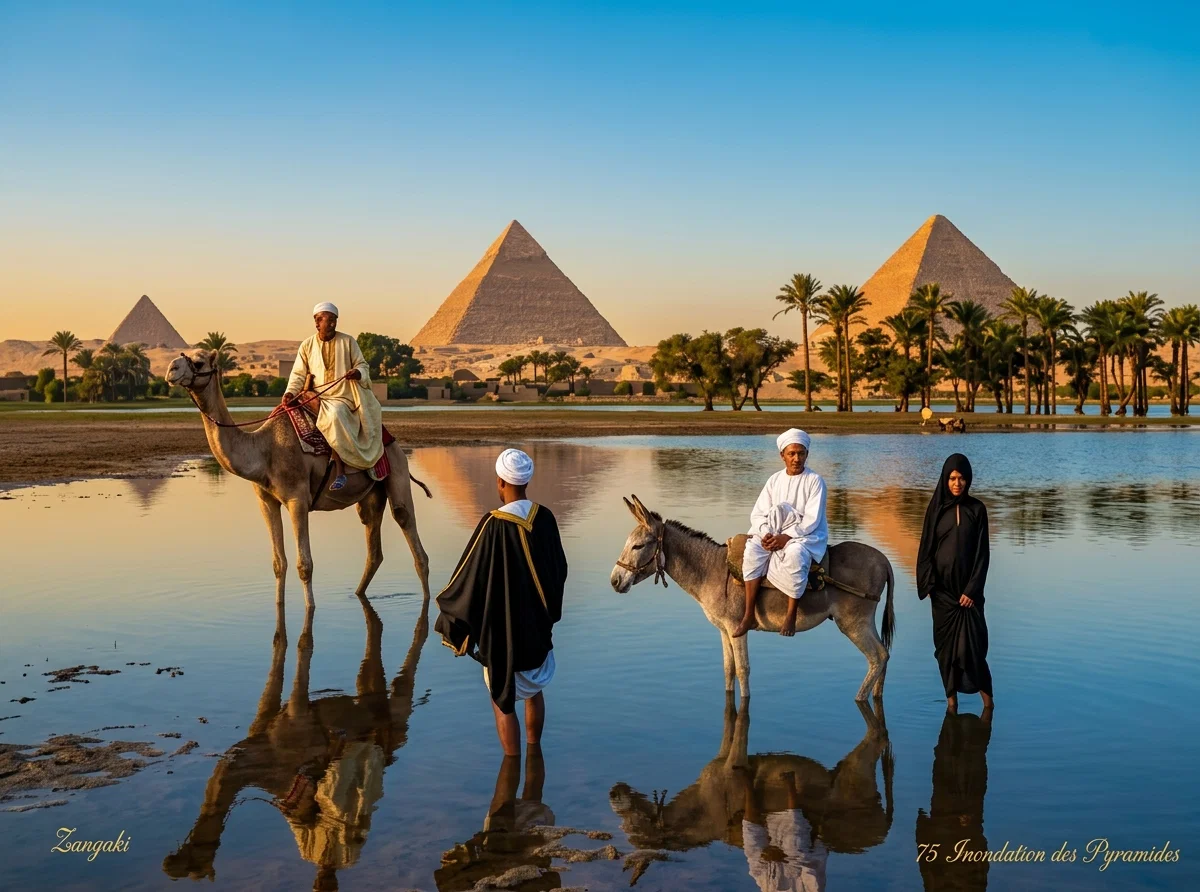
THE NILE AND THE PYRAMIDS.
When humanity lost spiritual sight of the true God, it began to look to the visible sources of supply, the things upon which the physical eye could look, the physical senses discern. These seemingly visible sources they began to personify and deify.
FOR instance, when the sun arose it became light. As it ascended higher in the heavens the earth grew warm. Seeds sprung up, flowers, grain, and fruit appeared. It was easy for the blinded soul to believe that the sun was the greatest god of all, and the worship of the sun became pre-eminent and world-wide. That luminary has been worshiped under different names and under different personifications all over the world, and is still worshiped to-day. It was easy to believe that the moon was consort to the sun, the female deity, life-giver, and fountain. Each of the principal stars and planets was deified and honored for some special influence it was thought to exert. Objects upon the earth were deified. If not deities, they were special representatives of deity.
The tree was worshiped because of the fruit it bore; the earth, as a great mother; rivers, because of their supply of water.
SUCH was the Nile of Egypt. The god Nilus was not equal to Ra, the sun-god, or any one of several other deities, but it was an important lesser deity. It was a sacred river to the Egyptian. One of its names was Hapee, or Hapee-mu, the abyss, the abyss of waters, the hidden. The river-god was represented as a stout man with the breasts of a woman, indicating the idea of a provider.
TRULY the great stream of 2,300 miles in direct line from mouth to source, in actual length exceeding the Amazon, being exceeded only by the Missouri to the mouth of the Mississippi, was a worthy object of worship if the earth could furnish it. Its basin extends from east to west over seventeen degrees of longitude, and from north to south over twenty-one degrees, embracing a territory of over 1,600,000 square miles. It is from one-half to three-fourths of a mile wide generally, and its lowest high-water mark, at Cairo, is from twenty-four to twenty-seven feet. Its great flood begins at lower levels in mid-summer, is highest about September 20 and begins to fall, reaching its lowest water June 20. From the White Nile, so named from its clayey color, comes the greatest amount of waters; from the Blue Nile comes the greatest quantity of alluvium to enrich the land, about four and one-half inches the last century. A few feet less water means a famine, a few feet extra a destructive flood. It is important that it come within certain limits.
ONE of the plagues of Egypt was to turn the peculiarly sweet water of the Nile into blood, to show to Egypt, even as did the other plagues, the nothingness of false gods and the folly of the worship of such vanities. The people of God never called it by its sacred name. It is in the Bible the flood, the river of Egypt, Shihor (the black).
EGYPT had its great river and river-god, and a multitude of others; but none or all could save her. Despite them all, she has become, as God's prophet declared, “the basest of the kingdoms,” never to exalt herself any more among the nations. Its fountain could give neither spiritual nor national life.
BUT there is a Fountain opened and flowing, not for Egypt alone, not for the world alone, but for the universe. With God “is the Fountain of Life.” Christ is the living Fountain opened for sin and uncleanness. Man can not wash out the crimson and scarlet stain; Jesus can cleanse it all away. The crimson stain He can make white, the scarlet under the divine alchemy becomes like the driven snow. He is the Fountain of Life from which the weary may quaff and find rest and refreshing; from which the aged may drink and obtain renewing; the weak may find strength; the sick may obtain healing; and the dying may live. He is a perpetual fountain. So frequently the fountains of earth disappoint. We come to them weary, thirsty, sick, expecting to obtain water, but they are dry, or so defiled with the corruptions of earth that they poison more than cure, and leave the soul unsatisfied. But the fountain of God's life ever flows full and free. “The River of God is full of water.” There is abundant supply for all.
IT is said of the Nile that whosoever has once drunk of its sweet waters returns to drink again; but whosoever once drinks of the flood of life's well-spring thirsts no more for any other water. Says Jesus: “Whosoever drinketh of the water that I shall give him shall never thirst; but the water that I shall give him shall become in him a well of water springing up unto eternal life.” John 4:14. The soul thus connected with God becomes itself a well-spring of life, a refreshing to the weary soul. For to him who yields all to Christ to do His will, imbued with the Spirit of Christ, it is said: “And thou shalt be like a watered garden, and like a spring of water, whose waters fail not.” Isa. 58:11.
THEN, soul, come to the Fountain of living water and drink. God invites thee, whosoever thou art. Ho, every one that thirsteth, come ye to the waters, and he that hath no money.” Isa. 55:1. “I will pour water upon him that is thirsty, and streams upon the dry ground; I will pour My Spirit upon thy seed, and My blessing upon thy offspring.” Isa. 44:3, 4. “And the Spirit and the bride say, Come. And he that heareth, let him say, Come. And he that is athirst, let him come; he that will, let him take the water of life freely.” Rev. 22:17.

THE STRAIT GATE.

BY MRS. E. G. WHITE.
Enter ye in at the strait gate; for wide is the gate, and broad is the way that leadeth to destruction, and many there be which go in thereat; because strait is the gate, and narrow is the way, which leadeth unto life, and few there be that find it.”
He who would enter in at the strait gate must put away all love of the world. There is not room to walk in the narrow way carrying the things of the world. He who would walk in this way must make an entire consecration of his all to God. Christ says, “If any man will come after Me, let him deny himself, and take up his cross, and follow Me.” Those who love wealth, worldly honor, high position, can not enter in at the strait gate unless they part with these idols.
Our besetting sins must be laid aside. There is no room to walk in the narrow way, and at the same time cherish evil surmisings, doubts, criticisms, envy, unkindness. To enter the strait gate and travel the narrow way demands firmness of purpose, perseverance, steadfastness; for on every hand there are voices inviting the soul into forbidden paths. It demands that we give the future life our first attention. We are to cut away from our lives everything that would hinder our progress. Every inclination to evil must be denied, every habit not in harmony with the word of God must be overcome. We are to be one with Christ. We are to refuse to turn into the path of transgression, even tho natural inclination would lead us to take a course in opposition to God’s will. Those who thus strive to follow Christ will hear His voice saying to them, “He that followeth Me shall not walk in darkness, but shall have the light of life.”
An entrance to the strait gate does not depend on the possession of riches or learning, but it does depend on the possession of a teachable spirit. We are to search the Scriptures with a determined purpose to know the will of God. He who comes to the Bible with a humble, teachable spirit, with a heart that prefers truth to error, and the favor of God to the friendship of the world, will know of the doctrine. He will not be left to be deceived by the enemy, or to be swayed hither and thither by false doctrines. Christ will guide him day by day, and he will enter the strait gate, to walk in the narrow path that leads to life.
Let us not refuse to enter the strait gate because we can not see the whole of the path to the Paradise of God. He who receives the first ray of light sent him, and walks in it, bringing his actions into harmony with God’s Word, will receive more light. He who walks in the light as it comes, not waiting to have every doubt removed, every mystery solved, will follow on to know the Lord. For him the light will shine brighter and brighter unto the perfect day. His path will be illuminated as he advances. God’s Word will be a lamp to his feet and a light to his path.
Let us follow our Leader. He has trodden the way before us, and He will lead us safely. With unquestioning confidence in our Guide, let us go forward as children of light.

God Is Wise Where We Are Ignorant

WHERE we are ignorant, God is wise; where we stand blindly in the dark, He is in the light; where we wonder, He calmly knows.—Phillips Brooks.

THE TWO ROOTS.

“The love of money is the root of all evil.” And the love of God is the root of all good. These two roots can not both together live and flourish in the same heart, and the same life, at the same time. The love of money is shed abroad in the heart by the evil spirit, whereas the love of God is shed abroad in the heart by the Holy Spirit. They who are filled with the love of money love the world and the things that are in the world, and are led by the spirit of the evil one, while those who are filled with the love of God, love God and the things of God, are led by the Spirit of God.
Reader, how is it with you? Do you cherish the love of money? If so you are departing from the faith, piercing yourself through with many sorrows, and rapidly and surely traveling the road that leads to utter and eternal ruin. But if, on the other hand, you are cherishing the love of God, then you are surely traveling the highway of holiness that leads up to God, and will, at no distant day lay hold on eternal riches, and eternal life. One or the other of these two roots, lives and bears fruit in your life constantly. It is for you to say which it shall be. Choose this day whom you will love, for the character of all your service is determined by the character of the love shed abroad in your heart.
H. A. ST. JOHN.

A CONSTANT COMPANION.

The day is long, and the day is hard; We are tired of the march and of keeping guard. Tired of the sense of a fight to be won, Of days to live through, and of work to be done, Tired of ourselves and of being alone.
And all the while did we only see, We walk in the Lord’s own company; We fight, but ’tis He who nerves our arm, He turns the arrows which else might harm, And out of the storm He brings a calm.
—Susan Coolidge.

GOD'S ARRANGEMENT, OR MAN'S, WHICH?

When Abel brought his offering of a lamb before the Lord it was accepted, because it was according to God's will, typifying the death of His Son for the sins of the world. Cain brought an offering of luscious fruit, perhaps intrinsically of more value than the offering of his brother. But God did not respect his offering, because it was according to man's judgment of the fitness of worship, exalting itself above God's judgment. It was a religion of selfishness, of salvation by works, and not by faith.
Nadab and Abihu offered strange fire before the Lord contrary to His command, thus exalting their own judgment above that of God, yet they presumed to come before the Lord with an offering. This course was an insult to God.
David thought to bring up the ark to Jerusalem on a new and perhaps expensive cart. But God's command that the priests only should bear the ark was despised and man's way substituted; hence God's judgment upon Uzzah.
Uzziah the king thought he could offer incense in the temple as well as the priests could; but God smote him with leprosy for his temerity.
God says, “The seventh day is the Sabbath.” But man says, practically, “Not so, but the first day is the Sabbath.” Thus they trample upon God's Sabbath and despise His judgment, exalting their own judgment. And yet they come before the Lord in worship, that God will accept them, altho they are seeking to defeat His purpose, and exalt their judgment as superior to the Divine. The first day never was and never will be the weekly Sabbath; and no one keeping it can be saved unless he has done so ignorantly, in which case he will be forgiven for Christ's sake. Where stand you?
A. SMITH.

The Prophecy of Zechariah

By Roderick S. Owen

GOD'S PURPOSE AS REVEALED IN THE DESCENDANTS OF JACOB.
In the beginning God created man in His own image. Everything that He made was stamped with His own impression. His glory was seen in it all and manifested through it. Plant, tree, and forest, fountain, river, and lake, earth, air, and sea—all overflowed with the revelation of the character of Him who had spoken them into existence. And man, crowned with glory and honor, was placed over the works of His hands. Then “the morning stars sang together, and all the sons of God shouted for joy,” as they beheld this new revelation of the beneficence of God. Alas! sin entered and the scene changed. Death like a dark pall settled over the fair face of nature. The winds began to sigh, the forests to fade, and the leaves to wither. Discordant notes marred the harmony. Strife entered; death reigned. Angels ceased to sing, and sorrow filled all heaven.
Man, sold under sin, lost the perfect image of his Maker, and everywhere the manifestation of God’s image was disfigured and well-nigh obliterated. Only dim traces remained. But God would not permit it thus to continue. The plan of redemption was introduced, a plan devised by Omniscience, and adequate in itself to restore the image in both man and his inheritance. But since the desolation began in the mind of man by the exercise of his power of choice, so the restoration must begin in the same place by man’s choosing to permit God’s plan to become operative in his mind, thus renewing it after the image of Him who created him. Those who thus yielded to God became His representatives and took His name, calling themselves the sons of God. Gen. 6:2, 4. Among these we find the patriarchs Seth, Enos, Jared, Enoch, and others, each one of whom in his time and to his generation revealed the character of God to man. Enoch for three hundred years so completely revealed God, his life so fully harmonized with God’s life, that of him the record says, “Enoch walked with God; and he was not; for God took him.”
But men, multiplying and spreading over the earth, carried the blight of sin everywhere, until the world teemed with wickedness and the miasma of vice poured out of the sinks of sin, and spread a noxious and infectious cloud over the world, obscuring the light of heaven. Murder stalked high-handed through the land. Crime waded in its own pollution. Finally the flood of waters came and washed away the filth of the world.
Noah, a servant of God, not partaking of the wickedness of men, safely floated upon the surface of the storm-lashed world of sea in the ark which his confidence in God had builded. From Noah and his family the earth was again peopled, and wheat and tares grew side by side. Sin prevailed, and men forgot God. Then God called Abraham out of his own country and from his father’s house, and brought him into the land of Canaan, and established His covenant, saying, “In thy seed shall all the nations of the earth be blessed.” There is no blessing apart from the name or character of God; hence in the promised Seed of Abraham all the families of the earth must be brought into contact with His name, and thereby be blessed. In this promised Seed, God’s character must be so fully revealed that men may behold it, and by beholding become changed from glory to glory into the same image, until that image shall be completely restored.
This covenant made with Abraham was transferred to Isaac, and confirmed in Jacob, whose posterity we find in Egypt, groaning under galling bondage both physical and spiritual. But God remembered His covenant to Abraham and raised up Moses, to redeem His people. To this people Moses said, “Thy God hath chosen thee to be a special people unto Himself, above all people that are upon the face of the earth.” Deut. 7:6–8. He had chosen them because He would keep the covenant made with their fathers. Hence His purpose in thus selecting them was that through them He might impart to all nations His promised blessing. Since this blessing is found in His name, which expresses His character, and since Israel is to be the agent in imparting this blessing, then must Israel bear His name and reveal His character.
Let us notice the steps taken and the provisions made by the Lord to bring this about. He gave them an invisible leader in the Angel of the Covenant of whom He says, “Behold I send an Angel before thee, to keep thee in the way. . . . Beware of Him, and obey His voice; provoke Him not; . . . for My name is in Him.” Through this One, who was none other than the Lord Jesus Christ, He spoke His law to Israel (see Acts 7:37, 38), thus giving them a transcript of His character. Through this One He gave them constant manifestations of His nature. His love, His power, His gentleness, His goodness, yea, all His attributes, He revealed over and over again in His dealings with them.
To Moses, their visible leader, God declared His name and revealed His character; for in response to His request to see the glory of God we read, “I will make all My goodness pass before thee, and I will proclaim the name of the Lord before thee.” “And the Lord descended in the cloud, and stood with him there, and proclaimed the name of the Lord, . . . The Lord, the Lord God, merciful and gracious, long-suffering, and abundant in goodness and truth, keeping mercy for thousands, forgiving iniquity and transgression and sin, and that will by no means clear the guilty.” Ex. 33:18, 19; 34:5, 6. But before this when Moses hesitated to undertake the work of representing God before Pharaoh and the people, God reproved him and gave his brother Aaron to be his associate. “He shall be thy spokesman unto the people; and he shall be, even he shall be to thee instead of a mouth, and thou shalt be to him instead of God.” Thus commissioned, he went before the people and announced that the I Am had sent him.
At the base of Mount Sinai God declared to Israel, “Keep My covenant,” and “ye shall be a peculiar treasure unto Me above all people; for all the earth is Mine; and ye shall be unto Me a kingdom of priests and a holy nation.” And the people answered, “All that the Lord hath spoken we will do.” O what a glorious, what a wonderful privilege to be unto God a peculiar treasure, to be sons and daughters of the Most High, to bear His name, to receive His character, to be established in a goodly land, and to be blessed above all nations. What a grand and glorious opportunity to be a kingdom of priests, bringing the knowledge of God to the people of the earth, and offering acceptable sacrifices for their sins; to be co-laborers together with God in restoring His image in men; to be dispensers of the blessings promised through the Seed of Abraham. But they forgot God, their Saviour, who did wondrous things in the land of Ham and by the Red Sea. They lost sight of the high calling of God in Christ Jesus, and misrepresented Him. They sinned; they made a molten image, and bowed down to the gods of Egypt. They ate and drank to the gods of the heathen, and rose up to play. They limited God in the wilderness, so that He could not use the nation to be priests to the world.
But Israel continued to go deeper into sin, and to walk after the abominations of the heathen around them. They followed their desires to mingle with the transgressors, until God gave them over to the result of their own choosing, and they were carried away out of their goodly land, and dispersed among the Gentiles. But even then God did not forget His covenant with Abraham, but through His prophets He held out before them His promises.
Isaiah foretold their return, and in striking symbols and thrilling language described their prosperity under the reign of the coming Messiah, the promised Seed. Daniel and Jeremiah, confessing their sins and the sins of their people, longed to see, and prayed earnestly for, the promised Deliverer. Ezekiel described in detail a grand and magnificent temple which they might build at Jerusalem, and which would ultimately be the house of prayer for all nations. But when the decree for the return came, how few availed themselves of its privilege; and the faltering faith of those who did return laid a foundation for a temple so small that when viewed by the old men who had seen the first temple in her glory, they expressed their disappointment in tears and wailing. But the prophets Haggai and Zechariah sought to encourage the people by telling them that altho this temple was so insignificant in itself, still the Desire of All Nations would grace its courts with His presence, so that the glory of this latter house would exceed that of the former.
The Desire of All Nations did come to that temple, but He found its courts defiled. His glory did fill that house; but those who should have received Him fled from before it, even as transgressors would flee from the face of an avenging judge. “He came unto His own,” but “His own received Him not.” He went about among them slighted, despised, and rejected, until from the brow of Olivet, with hands outstretched in agony, and with every feature of His face expressing pain, sorrow, and anxious longing, He cried, “O Jerusalem, Jerusalem, thou that killest the prophets, and stonest them which are sent unto thee, how often would I have gathered thy children together, even as a hen gathereth her chickens under her wings, and ye would not! Behold, your house is left unto you desolate.” Matt. 23:37, 38. Again weeping over it, He said: “If thou hadst known, even thou, at least in this thy day, the things which belong unto thy peace! but now they are hid from thine eyes. For the days shall come upon thee, that thine enemies shall cast a trench about thee, and compass thee round, and keep thee in on every side, and shall lay thee even with the ground, and thychildren within thee; and they shall not leave in thee one stone upon another, because thou knewest not the time of thy visitation. And He went into the temple, and began to cast out them that sold therein, and them that bought; saying unto them, It is written, ‘My house shall be called an house of prayer for all nations; but ye have made it a den of thieves.’ Luke 19:41–46; Mark 11:17, margin; see also Isa. 56:7; Jer. 7:11.
[The next article is “Zechariah’s First Vision.”]

OUR COMING LORD.

“Be ye also ready; for in an hour that ye think not the Son of Man cometh.”
We are nearing the end not only of our natural lives, but also of the world's history. We are at the outer door of our eternal home, soon to enter and be forever with the Lord. Soon we shall see the King in His beauty. How the blessed thought should stir our hearts to renewed diligence. This means consecration to Christ, in which there is no half-way work.
God cares very little for anything we may do for Him if we have not first obeyed all His commands and made a full surrender of our hearts to Him, tho we are told that He will reward even a cup of cold water given in His name.
St. Paul exhorts us to present our bodies a living sacrifice to God, which is but reasonable service. It is often much easier to do some pleasant and helpful work for the poor or the church than it is to yield our stubborn wills, and bow our hearts to Him; but God requires us to lay all upon the sacrificial altar; then just as soon as we yield ourselves to the influence of the Holy Spirit, He gives us the sweet assurance that we are accepted in Him, and we are filled with a peace and joy the world knows not of, the beacon light of faith and hope illuminating our hearts and guiding us through the storms and darkness of life.
Then let us walk in the light, not turning aside to follow the follies and fashions of the world. Let us not be given to unkind criticism of our neighbors' shortcomings, but in love and Christian charity bear with one another. There are slanders and backbitings on every hand, even among those who call themselves Christians. Let it not be the same with His true disciples, who have put on the whole armor of Christ; for if our hearts are filled with His love there will be no room for selfish or evil thoughts. We are not our own, but have been bought by the precious blood of Christ.
It is not always easy to love our enemies; but it is Godlike to do so; it is the love that our Lord showed toward us; for while we were yet sinners, Christ died for us, that He might bring us to God. We are His epistles, “known and read of all men,” our conduct will either retard or advance His kingdom on the earth; therefore we should rightly measure our influence upon others, and strive to live with a conscience void of offense toward all, and thus be ready for the sound of the trump of God and the glorious appearing of the heavenly host.
His coming means to us life and immortality instead of sickness, sorrow, and death. It means reunion with loved ones gone before. It means hearing for the deaf, speech for the dumb. It means sweet rest for the burdened ones. Yea, it means peace and joy for the redeemed forevermore. Then we shall enter into our everlasting inheritance, and be like our Lord, for we shall see Him as He is.
Then, dear reader, let us arise and put on the beautiful garments of salvation, having our lamps constantly trimmed and brightly burning; for we know not how soon our Lord will come; whether He will come at evening, or at cock-crowing, or at noonday; for He has commanded us to watch, lest He, coming suddenly, find us sleeping.
MRS. I. B. STILLWAGON.
Tres Pinos, Cal.
Continue reading: WHEREFORE THE LAW?