Your ShelfYour Projects

Signs of the Times, Vol. 38, No. 15.

Missions in Moslem Lands

Signs of the Times

Apr 11, 1911

Pacific Press Publishing Association · Mountain View, California · Apr 11, 1911

Missions in Moslem Lands

The Meaning of the Resurrection

He Is Risen
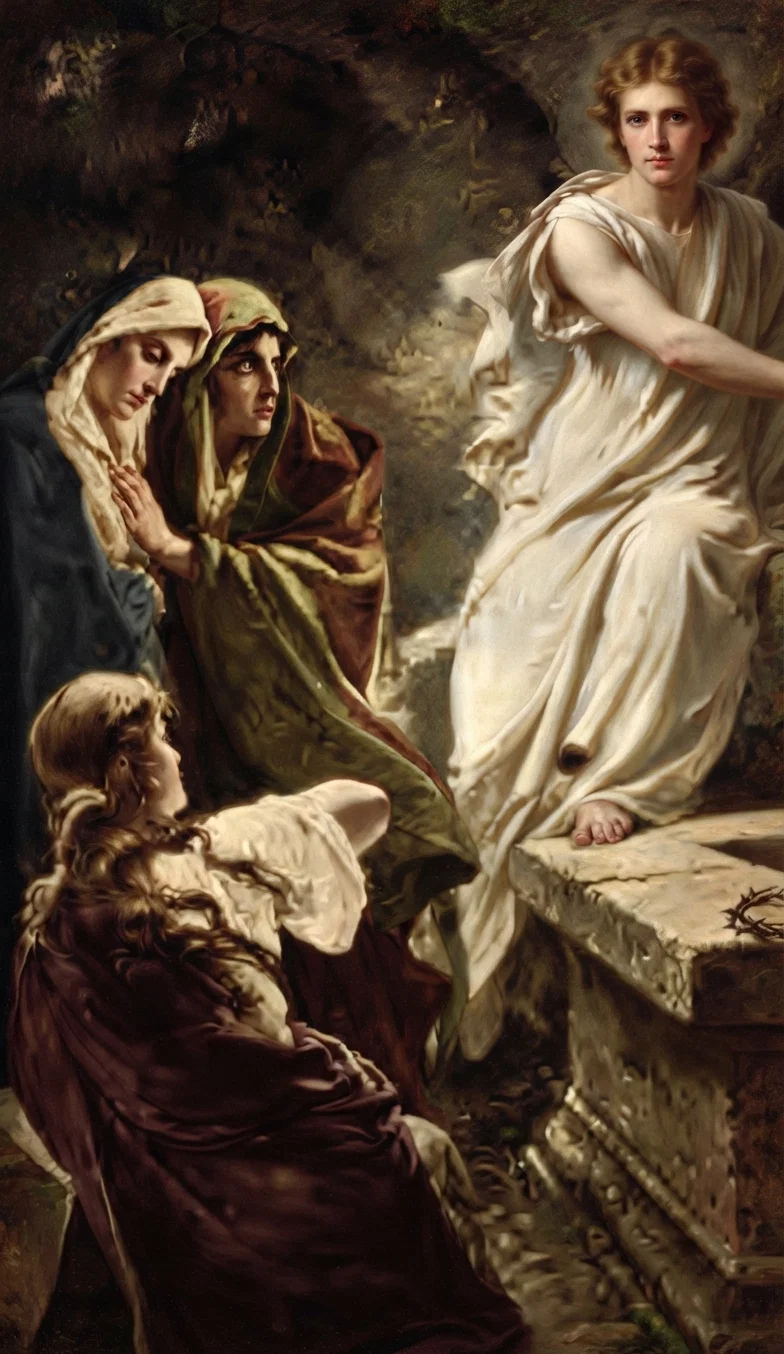
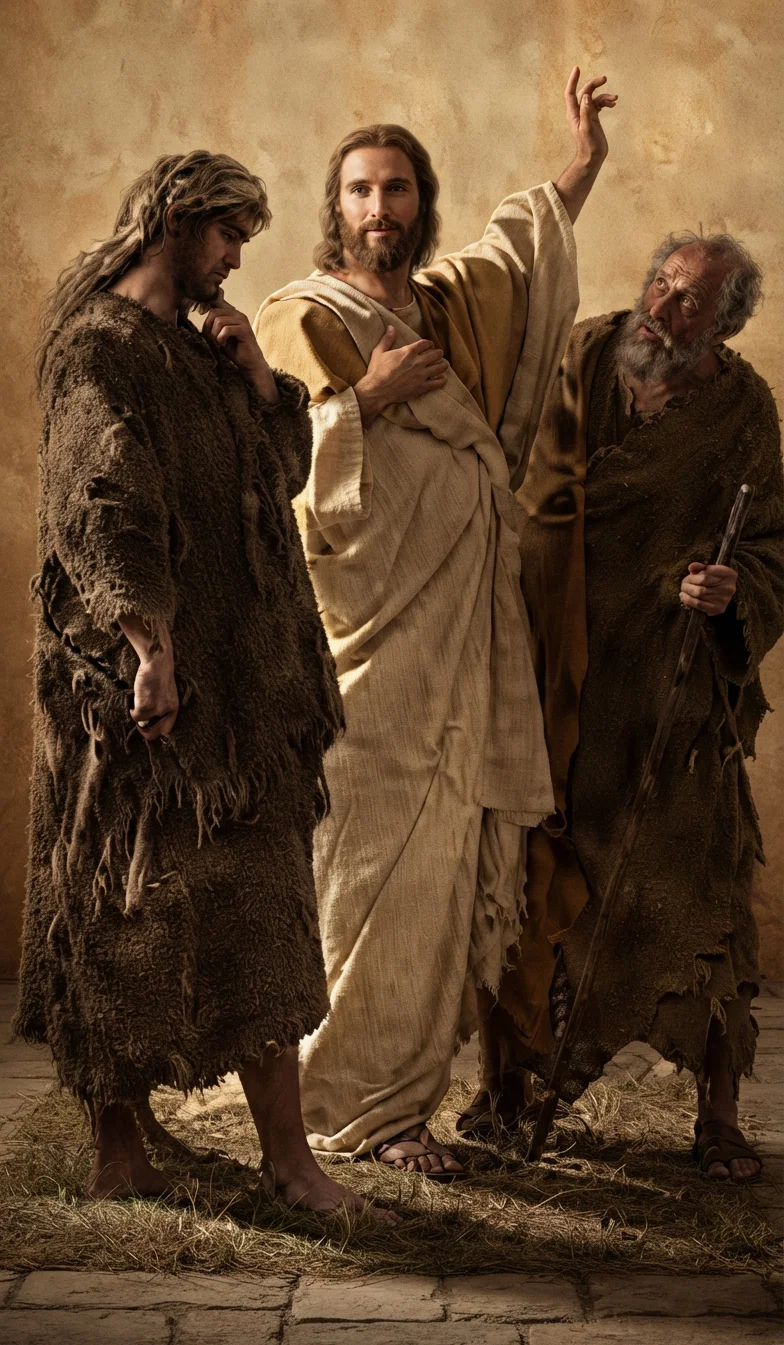
"Why seek ye the living among the dead?" "He is not here: for He is risen. . . . Go quickly, and tell His disciples that He is risen from the dead; and, behold, He goeth before you into Galilee; there shall ye see Him: lo, I have told you." Luke 24:5; Matt. 28:6, 7.

RESURRECTION

By Llewellyn A. Morrison
O, the fragrance of the May-time, When the bursting buds are breaking Through the coverts that encased them From the winter and the wind! Sunlight, showers, trill of song-birds, Breath of zephyrs, are awaking All the odorous balm and blessing By mute Nature's heart refined.
When the fading leaves in autumn Close their eyes and fall on slumber, Then the fairy foldings follow In their robes of green and gold. It is God's abiding promise (He remembers well the number) Of a wondrous resurrection— And forever, as of old.
O, the blossom and the blooming! O, the vernal wealth of splendor! Such a brightness and a sweetness As no heart may comprehend! All the earth, new-robed, rejoices In the sunshine, warm and tender, In her resurrection glories, Without measure and no end.
New York City.

Christ Is Risen

"> For if the dead rise not, then is not Christ raised: and if Christ be not raised, your faith is vain; ye are yet in your sins. Then they also which are fallen asleep in Christ are perished. . . . But now is Christ risen from the dead." I Cor. 15:16-20.

Pacific Press Publishing Association, Mountain View, California

Pacific Press Publishing Association, Mountain View, California

OUR BIBLE BAND

Schedule for Week Ending April 22, 1911
Sunday April 16 1 Samuel 15, 16
Monday " 17 " 17, 18
Tuesday " 18 " 19-21
Wednesday " 19 " 22-24
Thursday " 20 " 25-27
Friday " 21 " 28-31
Sabbath " 22 2 Samuel 1-3
—★—
SAUL'S rashness, weakness, failure, and rejection, and his consequent ever downward course, the choosing of David, and his checkered but ever-rising career, with many interesting incidents throwing much light upon the habits and customs of the people, the influence of surrounding nations upon them, and the wonderful workings of God's providence in shaping and molding national events, are strong features in the narrative of this week's readings. God was still remembering the promised Seed. We have a noble lesson of unselfish friendship in Jonathan, and of mercy and magnanimity in David toward Saul his enemy. It is safe to leave our cause in God's hand. Yet how sincerely David mourned him!

"IF YE WILL INQUIRE, INQUIRE YE."

This Inquirers' Department is conducted for the purpose of helping those who are studying the Bible. The answers are oftentimes only suggestive. They are never to be considered infallible, only as they agree with the infallible Word. The writer who may answer them does not consider that his opinion is infallible. He will simply give the best that he has, and plead with the inquirer to search the Word. Such questions only will be answered as, to the editors, seem to minister to the good of the readers and to the mission of the paper. We can not answer repeatedly in the same volume questions upon the same scripture. The name and address must accompany question, not for publication, but as an evidence of good faith, and that answer may be made by letter if deemed advisable. No letters are answered which do not contain the name of the writer. It is well always to enclose stamp for reply.

3407.—Question Corner

In replying to Question No. 3377 it was stated by mistake that Nebuchadnezzar built the tower of Babel. What it was designed to say was that he rebuilt it. A little syllable makes quite a difference sometimes.

3408.—Change of the Sabbath

Please answer in your question column when, where, and by whom the Sabbath was supposedly changed, giving good historical or other good authority for the fact.
Our querist rightly says, "supposedly changed," because God's Sabbath is eternal. It is impossible to state the exact time when a change took place. Apostasy is never sudden, abrupt; it is gradual. Many of the early Christian converts or half-converts were formerly sun-worshipers. They honored the Sunday, and connected with that the resurrection of Christ, and observed the day, not as a command or a duty, but in honor of Christ, easily helped thereto by former customs. Both days were kept till the fifth century, the Sabbath coming to be a fast-day by the apostate church, the Sunday as a feast-day. It can easily be seen that Sunday would find more favor in a backslidden church. It was at this time that the Abyssinians were converted. They have kept the two days to a greater or less extent ever since. We have not space in this department to give authorities covering several centuries. You will find these authorities fully given in Andrews's "History of the Sabbath," and partially given in "The Lord's Day the Test of the Ages," No. 134 in our "Bible Students' Library," costing ten cents, and in the "Apples of Gold Library," No. 45, "Historical Facts and Incidents Relating to the Sabbath and the Sunday." For instance, Fact 33 states that Tertullian, who wrote in A.D. 200, tells us that the commandments are "the rules of our regenerate life," and tells us also that Christ regarded the Sabbath. This comes in his work "Against Marcion," book 4, chapter 12. Fact 34, referring to about the time of A.D. 250, declares that Origen in his Homily 23 condemns the Jewish or Pharisaical mode of Sabbath observance, and declares that Christians on the Sabbath day "ought to abstain from all modes of worldly labor. Give yourselves up to spiritual exercises, repairing to church, attending to sacred reading and instruction, thinking of celestial things," etc., etc. Fact 35, A.D. 238, Archelaus, bishop of Cascar in Mesopotamia, in his "Disputation with Manes," section 42, says, "Again as to the assertion that the Sabbath has been abolished, we deny that He has abolished it plainly, for He was Himself also Lord of the Sabbath." In Fact 37 it is stated that the learned Giesler, "Ecclesiastical History," volume 1, chapter 2, section 30, says, that while the Jewish Christians of Palestine retained the whole Mosaic law and consequently the Jewish festivals, the Gentile Christians observed the Sabbath and the Passover with reference to the last scenes of Jesus' life, but without Jewish superstitions. Prof. Edward Brerewood of Gresham College, London, in his "Learned Treatise of the Sabbath," page 77, 1631, says that "the Sabbath of the seventh day . . . was religiously observed in the East church 300 years and more after our Saviour's passion. That church being the great part of Christendom, and having the apostles' doctrine and example to instruct them, would have restrained it if it had been deadly." Sunday came in gradually. At first just an hour or so in the morning was used. Later it took in a little more of the day, but it never was regarded as a sabbath for more than a thousand years after Christ, and a few centuries ago in England and Scotland, in fact, down to the sixteenth century, it was considered a day for sport and playing, people attending church only in the morning. The first of the early fathers who without doubt applied the term "Lord's day" to Sunday was Tertullian. This was in A.D. 200. You will find it in his works "De Corona," section 3. He tells us then that we have no Scripture authority for it. See his work on prayer and "De Corona," sections 3 and 4.

3409.—A Desolated Earth

How can the earth be darkened and desolated when we have the statements of Gen. 8:21; Isa. 30:26; Jer. 4:27, 23; 32:37; Zech. 14:7; Micah 4:9 to the end of the chapter; Amos 8:9?
One great trouble in the understanding of Scripture is that we fix a place where we think a scripture must apply, and it seems to fit one thing, but it does not harmonize with other scriptures. Now Isa. 24:1-3 declares that the earth shall be utterly emptied and desolate. John 14:1-3 and other scriptures declare that when Jesus comes He will take His people to heaven and the wicked will be destroyed. The earth during that time will be the abyss, "the deep," rendered in our Common Version "the bottomless pit," but the same word in the Greek as in Gen. 1:2, there rendered "the deep" in our Common Version. The earth is desolate of man until the wicked dead are raised at the end of the one thousand years of Rev. 20:1-5. They are gathered in their graves until the end of that "many days." See Isa. 24:21, 22. There are no scriptures, so far as we know, that militate against this view. Gen. 8:21, 22 refers to this earth during probationary time. See 2 Peter 3:5-7. Isa. 30:26 applies after the 1,000 years, as the text itself shows, especially the last part. Jer. 4:23 will be fulfilled. Verse 27 means that the earth will not be utterly destroyed; it will remain. Bird and beast and devil and demon will inhabit it. Isa. 34:8-15. But there was no man. The "few men left" of Isa. 24:6 are those translated when Christ comes. Jer. 32:37-44 refers to the land of Palestine at that time, and God would have done much more for them than their faith grasped. Promises were sufficient for complete restoration, but they did not see it nor grasp it. The day of Zech. 14:7 includes both type and antitype, and in the fullest sense the whole great day of the Lord with all of its catastrophic changes. Micah 4:9 applies to Israel during her captivity when she was longing for a king, the travailing of Rev. 12:2. Amos 8:9 is but a brief episode in last-day occurrences. See "Bible Students' Library," No. 65, "The Great Day of the Lord." Price, including postage, 3 cents.

3410.—God's Seal

In Johnson's "Bible Text-Book," chapter 17, topic 3, paragraph 5, the Spirit is given as a seal. I understand that the Sabbath is a sign of acceptance. Are there different seals? Is there more than one seal?
The Sabbath is the seal of the living God; the Holy Spirit is the sealer, the divine agency which impresses the seal. This is fully explained in our issue of February 28, page 7, columns 1 and 3.

3411.—The Transfiguration

Is the transfiguration generally understood to fulfil Jesus' words, "There be some of them that stand here, which shall not taste of death, till they have seen the kingdom of God come with power"?
The words above are quoted from Mark; but in both Matthew and Luke, as well as Mark, they immediately precede the account of the transfiguration. Now the kingdom of God will come with power when Jesus comes the second time. It will have its glorified King, our Lord Jesus Christ. It will have those raised from the dead as was Moses. It will have those who were translated without seeing death as was Elijah. All this the transfiguration showed. Peter tells us that this represented the power and coming of Jesus Christ. See 2 Peter 1:16-18. This is absolutely conclusive that our Lord's words had reference to the miniature representation of His coming, and that this was shown in the transfiguration.

3412.—Widows

Please explain Paul's meaning as to widows in 1 Tim. 5:3-16. There seem to be two or three classes referred to. See verses 3, 4, 6, 9. What is the meaning of "the number"? Verses 11, 16. Kindly answer through Question Corner.
The apostle seems to make distinctions as follows: First there were the aged widows, and those, too, who were earnest and devoted. Verses 5, 9, 10. These trusted God and belonged to "the number" of those who ought to be supported. Secondly, there was another class either good or bad who ought to be supported by their near relatives. Verses 4-6. The third class consisted of young, light-hearted, perhaps light-headed, frivolous, idle, busybodies, who sought their own pleasure. Verses 11-13. These, Paul desires, should marry, settle down to a life of usefulness. Verse 14. Many large churches meet with these same problems now.

3413.—Observance of the Sabbath

Please say how the day set apart, hallowed, and sanctified, can be considered as kept properly by turning it into a day of sport and recreation.
The Sabbath law declares, "Remember the Sabbath day, to keep it holy." The inspired comment on that law is found in Isa. 58:13: "If thou turn away thy foot from the Sabbath, from doing thy pleasure on My holy day; and call the Sabbath a delight, the holy of the Lord, honorable; and shalt honor Him, not doing thine own ways, nor finding thine own pleasure, nor speaking thine own words: then shalt thou delight thyself in the Lord." And here is another blessing for him who observes the Sabbath: "Blessed is the man that doeth this, and the son of man that layeth hold on it; that keepeth the Sabbath from polluting it, and keepeth his hand from doing any evil." Isa. 56:2. He who does not find his highest pleasure in doing God's will, has learned but little in Christian experience.

Blank Passage

Decorative Star

—★—

Decorative Star

—★—

Decorative Star

—★—

Decorative Separator

—★—

Decorative Separator

—★—

Daniel an Example of Faithfulness

By Mrs. E. G. White
WHEN Darius set over the provinces of his kingdom a hundred and twenty princes, and over these, three presidents, to whom the princes were to give account, we read that "Daniel was preferred above the presidents and princes, because an excellent spirit was in him; and the King thought to set him over the whole realm." But evil angels, fearing the influence of this good man over the King and in the affairs of the kingdom, stirred up the presidents and princes to envy. These wicked men watched Daniel closely, that they might find some fault in him which they could report to the King; but they failed. "He was faithful, neither was there any error or fault found in him."
Then Satan sought to make Daniel's faithfulness to God the cause of his destruction. The presidents and princes came tumultuously together to the King, and said, "All the presidents of the kingdom, the governors, and the princes, the counselors, and the captains, have consulted together to establish a royal statute, and to make a firm decree, that whosoever shall ask a petition of any God or man for thirty days, save of thee, O King, he shall be cast into the den of lions." The King's pride was flattered. He was ignorant of the mischief purposed against Daniel, and he granted their request. The decree was signed, and became one of the unalterable laws of the Medes and Persians.
These envious men did not believe that Daniel would be untrue to his God, or that he would falter in his firm adherence to principle; and they were not mistaken in their estimate of his character. Daniel knew the value of communion with God. With full knowledge of the King's decree, he still bowed in prayer three times a day, "his windows being open in his chamber toward Jerusalem." He did not seek to conceal his act, altho he knew full well the consequences of his fidelity to God. He saw the dangers that beset his path; but his steps faltered not. Before those who were plotting his ruin, he would not allow even the appearance that his connection with Heaven was severed.
In all cases where the King had a right to command, Daniel would obey. He was willing to obey so far as he could do so consistently with truth and righteousness; but kings and decrees could not make him swerve from his allegiance to the King of Kings. He knew that no man, not even his King, had a right to come between his conscience and his God, and interfere with the worship due to his Maker.
Daniel was true, noble, and generous. While he was anxious to be at peace with all men, he would not permit any power to turn him aside from the path of duty. He had an opportunity to testify in favor of the true God, and to present the reasons why He alone should receive worship, and the duty of rendering Him praise and homage; and nobly did he improve it. Had he respected the King's decree in this instance, he would have dishonored God. He was surrounded by proud idolaters; but he was a faithful witness for the truth. His dauntless adherence to a right course of action, was as a bright light amid the moral darkness of that heathen court.
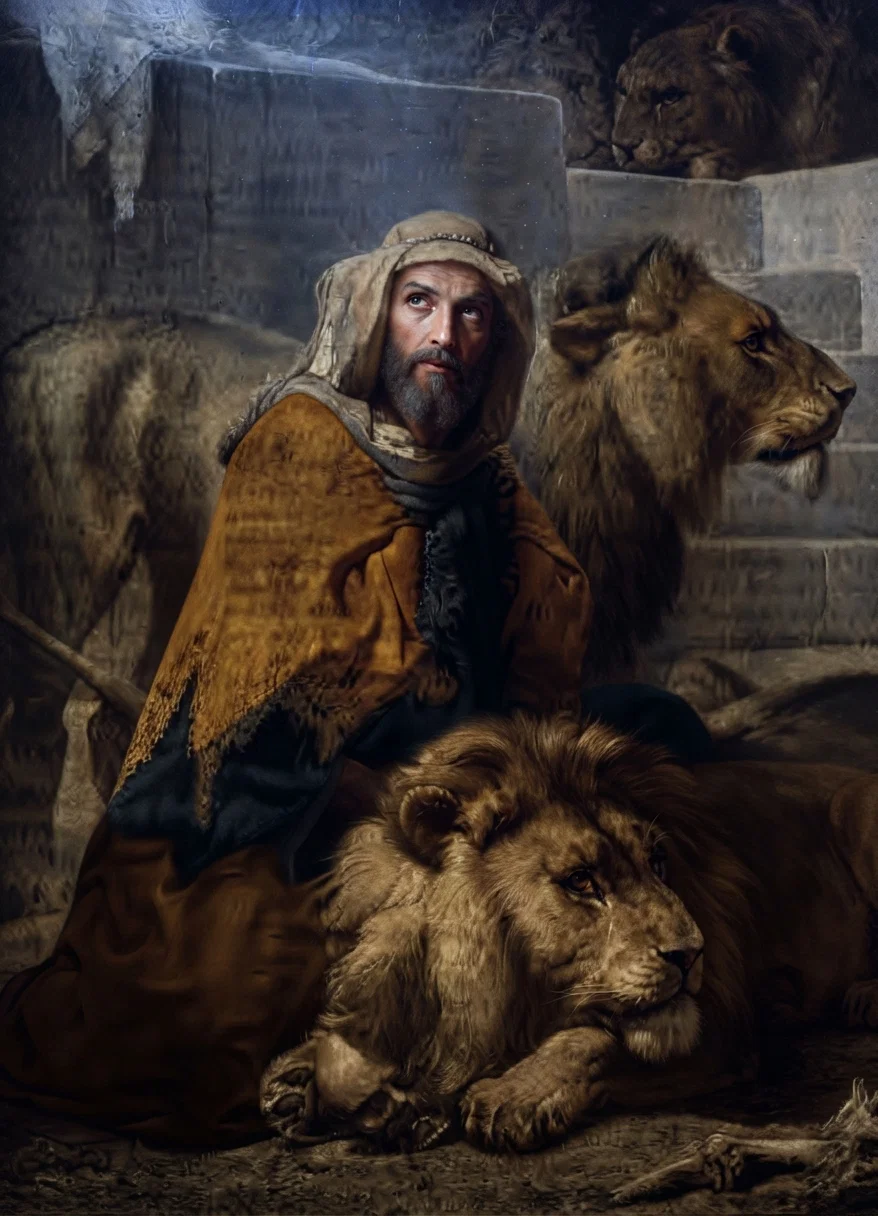
On account of his praying to God, Daniel was cast into the lions' den. Envious and wicked men thus far accomplished their purpose. But Daniel continued to pray, even among the lions. Did God forget His faithful servant, and suffer him to be destroyed? O, no; Michael, the mighty Commander of the hosts of heaven, sent His angels to close the mouths of those hungry lions, that they should not hurt the praying man of God; and all was peace in that terrible den. The King witnessed the miraculous preservation of Daniel, and brought him out with honors; while those who had plotted his destruction were utterly destroyed, with their wives and children, in the terrible manner in which they had planned to destroy Daniel.
Through the moral courage of this one man who chose, even in the face of death, to take a right course rather than a politic one, Satan was defeated, and Godhonored. For the deliverance of Daniel from the power of the lions was a striking evidence that the Being whom he worshiped was the true and living God. And the King wrote “unto all people, nations, and languages, that dwell in all the earth:” “I make a decree, That in every dominion of my kingdom men tremble and fear before the God of Daniel; for He is the living God, and steadfast forever, and His kingdom that which shall not be destroyed, and His dominion shall be even unto the end.”
Daniel was sorely tried; but he overcame because he was of a humble and prayerful spirit. Altho he was surrounded with distrust and suspicion, and his enemies laid a snare for his life, yet he maintained a serene and cheerful trust in God, never once deviating from principle. Altho Daniel was a man of like passions with ourselves, the pen of inspiration presents him as a faultless character. His life is given us as a bright example of what man may become, even in this life, if he will make God his strength, and wisely improve the privileges and opportunities within his reach.
Daniel was a moral and intellectual giant; yet he did not reach this pre-eminence all at once and without effort. He was continually seeking for greater knowledge, for higher attainments. Other young men had the same advantages; but they did not, like him, bend all their energies to seek wisdom,—the knowledge of God as revealed in His Word and in His works. Daniel was but a youth when he was brought into a heathen court in service to the King of Babylon; and because of his extreme youth when he was exposed to all the temptations of an Eastern court, his noble resistance of wrong and his steadfast adherence to the right, throughout his long career, are the more admirable. His example should be a source of strength to the tried and tempted, even at the present day.
Daniel loved, feared, and obeyed God; yet he did not flee away from the world to avoid its corrupting influence. In the providence of God, he was to be in the world, yet not of the world. With all the temptations and fascinations of court life surrounding him, he stood in the integrity of his soul, for he made God his strength; and he was not forsaken of Him in his hour of greatest need.
From the history of Daniel we may learn that a strict compliance with the requirements of God will prove a blessing, not only in the future, immortal life, but also in the present life. Through religious principles, men may triumph over the temptations of Satan and the devices of wicked men, even tho it costs them a great sacrifice. What if Daniel had made a compromise with those heathen rulers, and had denied his God? What if, on first entering the court, he had yielded to the pressure of temptation, by eating and drinking as was customary among the Babylonians? That one wrong step would probably have led to others, until, his connection with heaven being severed, he would have been borne away by the power of temptation. But while he clung to God with unwavering, prayerful trust, he could not be forsaken. The divine protection is pledged to those who thus seek it, and God can not forget His word.
It was through prayer and adherence to right principles that Daniel was enabled to stand firm in the hour of trial and temptation. The prayer of faith is the great strength of the Christian, and will assuredly prevail against the devices of the hosts of darkness. Satan well knows how needful are meditation and prayer to keep Christ's followers aroused to understand his devices and resist his temptations; so he tries to lead men to believe that prayer is useless, and but a mere form. If he can divert the mind from these important exercises, so that the soul will not lean for help on the Mighty One, and obtain divine strength to resist his attacks, he knows full well that he has gained a decided advantage.
We are living in the most solemn period of this world's history, when the last conflict between truth and error is raging; and we need courage and firmness for the right, and a prayerful trust in God, no less than Daniel did. The destiny of earth's teeming millions is about to be decided; and our own future well-being, and the salvation of other souls, depend upon the course we pursue. If we possess the same unwavering integrity that characterized the prophet of old, God will be honored through our course, and souls will be saved to shine as stars in the crown of our rejoicing.
Continue reading: Protestantism Drifting