Your ShelfYour Projects

Signs of the Times, Vol. 36, No. 21.

Our Everlasting God

Signs of the Times

May 26, 1909

Pacific Press Publishing Association · Mountain View, California · May 26, 1909

Our Everlasting God

(Spurrell's Translation)
Hast thou not understood, hast thou not comprehended That Jehovah, the everlasting God, The Creator unto the extremities of the earth, Fainteth not, neither is wearied, That his understanding is unsearchable? He giveth sinew unto the weak, And unto the powerless He multiplieth strength. Even the young men shall faint and be weary, And the applauded youths stumbling shall fall; But they who trust in Jehovah shall renew their strength, They shall arise on the wing like unto the eagle, They shall run swiftly and not be wearied; They shall proceed onward and shall not faint.

Question Corner

[To OUR INQUIRERS.— (1) The name and address of all who ask questions must accompany questions, not necessarily for publication, in token of good faith, and that we may reply by letter if thought best. All communications will be considered confidential if so desired, and no name will be published unless requested. (2) Let the questions be to the point. Do not say, “Explain Josh. 7:1-8,” but state the thing upon which help is desired. (3) Questions can not be answered immediately in this department. Sometimes it will mean a month or more of waiting. We can not reply to the same question frequently. Read answers to other questions; you may find reply to yours. (4) Members of the Bible Band will kindly enclose stamp if answer is desired by letter. Others will please enclose ten cents. This does not begin to meet expenses oftentimes. (5) “Foolish . . . questions avoid.”]

2852.—A Law for Rest.

What is your opinion regarding a law with penalties attached which secures to the laborer a rest day? A.
We have no objection to a law of this kind provided it leaves with the individual employer and employee the arrangement in regard to the day of rest. There is a law on the statute-books of California, which unfortunately was placed there without penalty attached, which demands that employers shall give their employees one day of rest in seven, or one day of rest after six of work, but it does not specify the particular day of the week. There are many newspapers who act upon this principle. Every one in their employ gets one day’s rest in seven. The day of rest for all does not come on the same day. Some have one day of the week, and some the other. These things can generally, if not always, be adjusted without law. But we see no objection whatever to a law like this. That is not the object, however, of Sunday laws. The purpose of those so zealously pushing Sunday laws is not to relieve the working man particularly, but it is to honor the day. It is to place an institution of tradition over the individual man. Then, too, the usual Sunday law forbids labor of any kind; not simply as regards men who are employed in large numbers by others, but it steps in and forbids him to labor to whom labor is a real pleasure upon that day. For instance, here is a lawyer or a clerk in a store who has labored hard all through the week at mental labor. The day upon which work is prohibited by law may be the day of all days that he can get time to work in his garden or do manual labor around his home. To him the labor is rest, pleasure. And man has no right to make a law that would hinder one soul from doing as he chooses to do regarding any day so long as he does that which is legitimate and proper between him and his fellows.

2853.—Creation and Satan.

Was this earth made and in the condition of Gen. 1:2 any time before creation week? When was Satan cast out into the earth? J. W. C.
Genesis 1:1 seems to be cut off from the six days which follow by the passage which intervenes. It is not said, “In six days the Lord created the heavens and the earth;” but “in six days the Lord made the heavens and the earth.” The first verse of Genesis carries us back to the beginning, whenever that was, as the time when God began His creation, “In the beginning God created the heavens and the earth.” The book of John begins in the same way. “In the beginning was the Word, and the Word was with God, and the Word was God. The same was in the beginning with God. All things were made by Him; and without Him was not anything made that was made.” This may pertain to the very material out of which the heavens and the earth were made,—the finishing of many things and the calling into existence of our own solar system with others. Then we read that “the earth was without form and void, and darkness was upon the face of the deep.” See the Revised Version: “The earth was waste and void.” It was in a chaotic condition. Out of that chaotic condition the creative and formative power of God brought the earth into the condition it was at the close of the six days’ work.
Before that six days’ work angels existed; for we read in Job 38:4-7: “Where wast thou when I laid the foundations of the earth? declare, if thou hast understanding. . . . When the morning stars sang together, and all the sons of God shouted for joy!” By reference to Isa. 14:12-14 we learn that Satan before he fell was named Lucifer, the Day Star, the Son of the Morning, one of the morning stars. By reference to Rev. 22:16 we learn that the Son of God was one of the morning stars; in fact Jesus declares: “I am the Root and the Offspring of David, the Bright and Morning Star.” When the foundation of the earth was laid, there was perfect harmony in heaven. The morning stars sang together; the very thought implying that there was to come a time when they would not, or rather, the text was written at a time when that harmony did not exist. All the sons of God, all the heads of different worlds, sang together when this world was brought into existence. And yet shortly, seemingly, that harmony was dispelled. Lucifer was lifted up because of his beauty, and corrupted his wisdom by reason of his brightness, we learn in Ezekiel 28, where the fallen angel is spoken of under the figure of the King of Tyre. In his pride he fell.
His coming to this earth evidently was choice on his part in order to induce man to fall. He was cast out of heaven where God dwells; came to this earth, the newest creation in God’s universe, determined to overthrow those whom God had placed here. This he accomplished. Man yielded to his persuasion, and Satan became prince of the world, and so when the sons of God came to present themselves before the Lord, Satan came also among them as stated in Job 1 and 2; and this position he seemed to occupy until Christ Jesus the Lord came. Then it was that He met the tempter in the very fulness of his power; then, too, it was that He conquered, and then, too, was fulfilled Rev. 12:7-9. That war in heaven continued from the time that man fell until the time that Christ died upon the cross; for Michael, which means, “Who is like God,” is none other than Christ; and that casting down was the utter casting down, so that his appearance among the rulers or heads of worlds could no longer be recognized in heaven. See the article in the SIGNS OF THE TIMES MONTHLY for March, “Satan, His Origin, Work, and Doom.”

2854.—The Ten Kingdoms of Rome.

What are the ten divisions of the Roman kingdom as set forth in Daniel 7? And when did these kingdoms begin? A. O.
Three or four times a list of the ten kingdoms has been published in the SIGNS OF THE TIMES, and we publish them again. We are sure that our readers will find them reliable. The references to Gibbon are from Milman’s edition, five volumes, published by Porter & Coates, Philadelphia, 1880. The figures preceding the colon are the chapter, following the colon, the paragraph.
1. The Alemanni, A.D. 351, Suabia, Alsace, and Lorraine. (See Gibbon, chapter 10, paragraph 26; 12:20; 19:20; 36:5; 49:22.)
2. The Franks, A.D. 351, northwest Gaul. (Gibbon 19:20; 36:5.)
3. The Burgundians, December 31, A.D. 406. (Gibbon 30:17.) Located in Burgundy, A.D. 420. (Gibbon 31:39.)
4. The Vandals, December 31, A.D. 406. (Gibbon 30:17.) Located in Spain A.D. 409. (Gibbon 31:36.) Settled in Africa A.D. 429. (Gibbon 33:35.)
5. The Suevi, December 31, A.D. 406. (Gibbon 30:17.) In Spain A.D. 409. (Gibbon 31:36.)
6. The Visigoths, A.D. 408. (Gibbon 31:2, 14.) In southwest Gaul A.D. 419. (Gibbon 31:39.) In Spain, A.D. 467. (Gibbon 36:22; 38:2, 29.)
7. The Saxons, entered Britain A.D. 449. (Gibbon 31:41, 42; 38:33; Green’s England 1:17; Knight’s England 5:6.)
8. The Ostrogoths, in Pannonia A.D. 453. (Gibbon 35:16.) In Italy A.D. 489, final conquest A.D. 493. (Gibbon 39:7, 8.)
9. The Lombards, A.D. 453, in Pannonia and Noricum, banks of Danube. (Weber’s Universal History, section 180; Gibbon 42:2; Encyclopedia Britannica, article “Lombards.”) In Lombardy A.D. 567-8. (Gibbon 45:5-7; Machiavelli’s History of Florence, chapters 1, 2.)
10. The Heruli, in Italy, A.D. 475-6. (Gibbon 36:28-33.)
The three which were plucked up were the Heruli, in Italy in 493; the Vandals in Africa, 533, and the Ostrogoths in Italy, 538. There were therefore ten kingdoms existing in Western Rome between A.D. 476 and A.D. 493.

2855.—Are the Conditions Incongruous?

How can we harmonize Isa. 66:24 with the teaching that at the time when conditions shall obtain as indicated in the preceding verse, there shall be a new heaven and a new earth? That which seems to me incongruous is the condition upon which the dwellers in the new earth shall look. M.
The promises of the chapter, and also of the preceding chapter, carry the children of God forward to the time when they shall enter upon the new heavens and the new earth. They do not treat upon the glories or blessings of the kingdom, rather more upon the simple entrance itself. These promises are more or less mingled with the temporal promises to Israel in this life. Some of these very conditions set forth by the prophets would have been fulfilled here if the people had been faithful to God. But as they were not faithful, God’s promises will be fulfilled to His faithful children in the earth made new. The 22nd verse is the promise that as the new heavens and the new earth shall remain before the Lord so shall those who are redeemed remain. There from month to month and from week to week, they shall meet before the Lord,—the weekly meeting on the Sabbath, the monthly meeting in conjunction with the bearing of the twelvefold fruits of the Tree of Life. There will be no more of wickedness, for at the very beginning or previous to the beginning of the new heavens and the new earth all wickedness has been banished. The very men that came up against the city of God have been destroyed, and God’s children have seen that destruction, and they see in that punishment absolute and utter extinction of their enemies.
The two figures used, “the undying worm and the unquenchable fire,” are figures indicating destruction of that upon which these agencies prey. Outside of Jerusalem was the Valley of Hinnom. Into that valley were cast every species of filth, bodies of malefactors, and dead carcasses of beasts. Upon these bodies the worms preyed, and no one stayed the worm. It did not die till it did its work. To consume what the worms did not eat, constant fires were kept burning in order to avert pestilence, and nobody quenched the fire. Just so it will be with those who have transgressed against God and have forever identified themselves with sin. With the sin they shall perish. The destructive agencies will completely destroy it. Then God’s universe shall be clean forever. The unquenchable fire goes out when the material upon which it lived is consumed. The same figure is used in Matt. 3:12: “The chaff He will burn up with unquenchable fire,” that is, fire that would consume that which was cast into it. Sometimes you will notice in God’s word that it anticipates; sometimes it refers back to previous conditions.

2856.—How Many Angels Fell?

I have understood that one third of the angels fell and were cast out of heaven. Where do we find proof in the Bible? B. B. 1601.
Revelation 12 is as clear upon this point perhaps as anything. “And there was seen another sign in heaven. Behold, the great red dragon.” Verse 3. “And his tail dragged the third part of the stars of heaven and did cast them to the earth.” Verse 4. Angels of God are called “stars.” So Lucifer said, “I will exalt my throne above the stars of God.” See Isa. 14:12-14. Some of those stars of God yielded to his persuasions and in that revolt went with him. The number seems to be indicated by the passage in Revelation to which we have referred.

The Doing of Duty

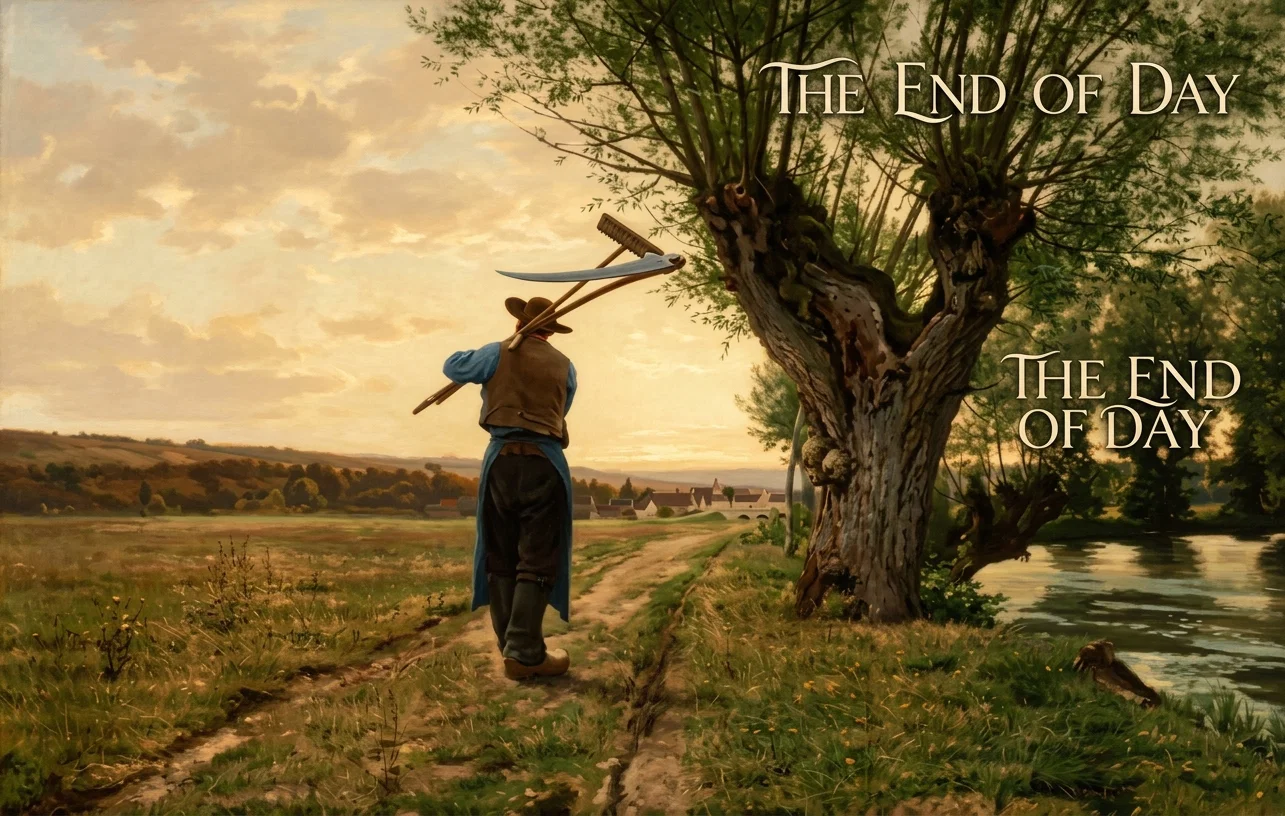
IT is a suggestive picture which the artist Adan has given us of “the end of day.” The stalwart French peasant has finished his work in a long, hot day of harvest, he has shouldered his primitive scythe and rake, and is wending his way homeward to the little hamlet in the near distance. How peaceful, how restful, is the scene! Alongside the babbling, crystal stream fringed with willows, runs the path, the grassy verdure lapping the flowing water on the right, while on the left the meadow land stretches away to the line of trees, beyond which rise the browning hills of sultry summer. In the distance before him is home where wife and children, supper and rest await.
THE day has been taken as a matter of course. Duty called to the field for the sake of wife and children, and he went. The work was hard and the sun hot, and back and limbs grew weary, but the object held him, and the doing of his work well made it a pleasure, heightened by the pleasurable anticipation of the home-coming and the twilight visit in the cottage with the loved ones or with neighbors. We may well believe that the thought of home quickened pace and heart and hand as he neared the close of the day, especially if a happy fireside lay at “the end of day;” and duty done brought a consciousness of rest and peace which all the riches of the Bank of France could not buy.
Is there not a spiritual lesson in this uncommon picture of a commonplace theme? God has given His church a work to do in this “day of salvation,” “the acceptable time.” Jesus tells us that we must work while the day lasts, for “the night cometh, when no man can work.” What a blessing it would have been if that church, like the old peasant, had done her duty, turning not aside to the blandishments of the world, to the allurements of Satan, to a thousand and one tasks and devices not given her of God, but which consumed time and energy, and profited nothing. Doing duty, day by day, simple duty, with a glad and thankful heart, is among the greatest things which this world knows. Doing duty in the grace of Christ Jesus is one of the most potent elements in character-building. We read and hear much of great, startling schemes, devised of men, to substitute for the simplicity of God’s simple plans in soul-saving; but they are generally fruitless of permanent good. What the church needs, what the world needs in the church, is duty-doers, on all occasions, at all times. We are nearing the close of the church’s day of grace. How she should seek out the Book of the Lord and read, that she may know and do her duty now.
THE individual needs the lesson. It is so easy to turn aside from duty. It is easy to think that our sacrifices, in our own way, our doing of big things which brings applause from the world, will compensate for ugly, homely, onerous duty-doing. It is so easy to forget God’s word, “He hath showed thee, O man, what is good; and what doth Jehovah require of thee, but to do justly, and to love kindness, and to walk humbly with thy God?” Micah 6:8. As expressed by our Lord: “Ye are My friends, if ye do the things which I command you.” John 15:14. Simple duty-doing in the love of the Master, for His sake and souls’ sake, glorifies the duty into a living gem of light.
DOING duty is the only safe way. Henry Ward Beecher truly said: “He who is false to present duty breaks a thread in the loom, and will find the flaw when he may have forgotten its cause.” How sad it will be to come down to the close of life’s day and find our sum total of character marred all through and through with the seams and cracks and dry rots of duties shirked or unfulfilled. The shirking was small. Its only effect was a little qualm of conscience; but its cumulative harvest is an eternal loss—perhaps a ruin of character.
“WHAT is the reward of duty-doing?” Nothing, probably, that we can measure in houses and lands, in dollars and cents, even in approval and praise of friends. It may even alienate us from fair-weather friends. We may incur the enmity of our fellows. Our only present satisfaction may be in the glad thought that we have done right, and so kept conscience clear, and know that it is right between our soul and God. So it may ever be through life. Before we have time to estimate the effect of duty-doing, a harder, more onerous, more unpopular duty may face us. It has been said that “the reward of one duty is the power to fulfil another;” and it is true. God tries us for the greater responsibilities by placing upon our shoulders the lighter burdens, so light that men frequently count them of little or no importance, and cast them idly by. Yet the doing of those simple deeds involved in faithfully bearing the responsibilities has within it the potentiality of a mighty life-work reaching beyond the stars.

God As a Father

By Mrs. E. G. White
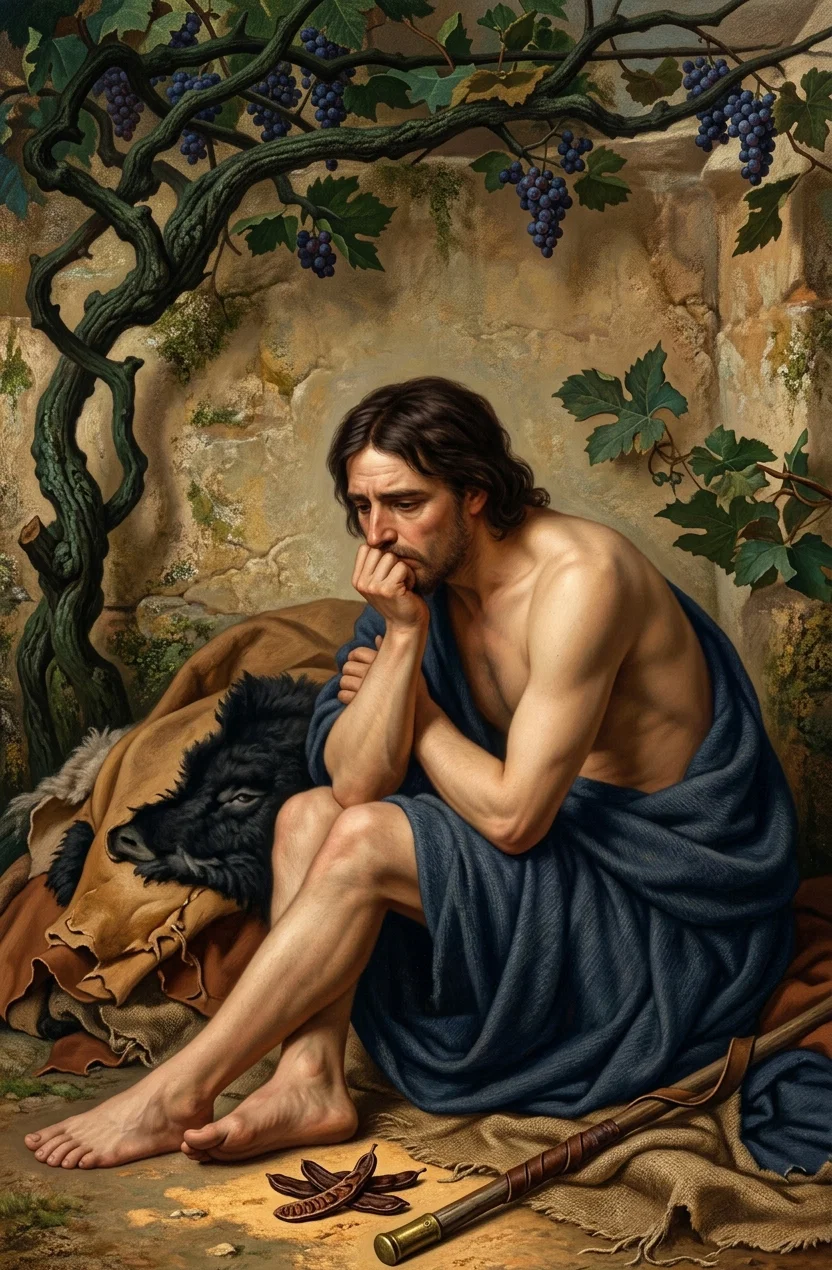
“He is fain to fill himself with the husks.”
No earthly parent ever pleaded so earnestly with an erring child as He who made us pleads with the transgressor. No human, loving interest ever followed the impenitent with invitations so tender:
“Thou hast not called upon Me, O Jacob; . . . Thou hast been weary of Me, O Israel.”
“O My people, what have I done unto thee, And wherein have I wearied thee?”
“When Israel was a child, then I loved him, And called My son out of Egypt.”
Tho He “delivered his strength into captivity, and his glory into the enemy’s hands,” yet He said, “My loving-kindness will I not utterly take from him, nor suffer My faithfulness to fail.”
“Is Ephraim My dear son? is he a pleasant child? for as often as I speak against him, I do earnestly remember him still; therefore My heart yearneth for him.”
“How shall I give thee up, Ephraim? How shall I cast thee off, Israel? . . . My heart is turned within Me, My compassions are kindled together. I will not execute the fierceness of Mine anger, I will not return to destroy Ephraim; For I am God, and not man; The holy One in the midst of thee; And I will not come in wrath.”
The parables of the lost sheep, the lost coin, and the prodigal son, bring out in distinct lines God’s pitying love for those who are straying from Him. Altho they have turned away from God, He does not leave them in their misery. He is full of kindness and tender pity toward all who are exposed to the temptations of the artful foe.
In the parable of the prodigal son is presented the Lord’s dealing with those who have once known the Father’s love, but who have allowed the tempter to lead them captive at His will.
“A certain man had two sons; and the younger of them said to his father, Father, give me the portion of goods that falleth to me. And he divided unto them his living. And not many days after, the younger son gathered all together, and took his journey into a far country.”
This younger son had become weary of the restraint of his father’s house. He thought that his liberty was restricted. His father’s love and care for him were misinterpreted, and he determined to follow the dictates of his own inclination.
The youth acknowledges no obligation to his father, and expresses no gratitude; yet he claims the privilege of a child in sharing his father’s goods. The inheritance that would fall to him at his father’s death he desires to receive now. He is bent on present enjoyment, and cares not for the future.
Having obtained his patrimony, he goes into “a far country,” away from his father’s home. With money in plenty, and with liberty to do as he likes, he flatters himself that the desire of his heart is reached. There is no one to say, Do not do this, for it will be an injury to yourself; or, Do this, because it is right. Evil companions help him to plunge ever deeper into sin, and he wastes his “substance with riotous living.”
The Bible tells of men who, “professing themselves to be wise,” “became fools;” and this is the history of the young man of the parable. The wealth which he had selfishly claimed from his father he squanders upon harlots. The treasure of his young manhood is wasted. The precious years of life, the strength of intellect, the bright visions of youth, the spiritual aspirations,—all are consumed in the fires of lust.
A great famine arises, he begins to be in want, and he joins himself to a citizen of the country, who sends him into the field to feed swine. To a Jew this was the most menial and degrading of employments. The youth who has boasted of his liberty now finds himself a slave. He is in the worst of bondage,—“holden by the cords of his sins.” The glitter and tinsel that enticed him have disappeared, and he feels the burden of his chain. Sitting upon the ground in that desolate and famine-stricken land, with no companions but the swine, he is fain to fill himself with the husks on which the beasts are fed.
Of the gay companions who flocked about him in his prosperous days, and ate and drank at his expense, there is not one left to befriend him. Where now is his riotous joy? Stilling his conscience, benumbing his sensibilities, he thought himself happy; but now, with money spent, with hunger unsatisfied, with pride humbled, with his moral nature dwarfed, with his will weak and untrustworthy, with his finer feelings seemingly dead, he is the most wretched of mortals.
What a picture here of the sinner’s state! Altho surrounded with the blessings of His love, there is nothing that the sinner, bent on self-indulgence and sinful pleasure, desires so much as separation from God. Like the ungrateful son, he claims the good thingsof God as his by right. He takes them as a matter of course, and makes no return of gratitude, renders no service of love. As Cain went out from the presence of the Lord to seek his home; as the prodigal wandered into the far country, so do sinners seek happiness in forgetfulness of God.
Whatever the appearance may be, every life centered in self is squandered. Whoever attempts to live apart from God, is wasting his substance. He is squandering the precious years, squandering the powers of mind and heart and soul, and working to make himself bankrupt for eternity. The man who separates from God that he may serve himself, is the slave of mammon. The mind that God created for the companionship of angels, has become degraded to the service of that which is earthly and bestial. This is the end to which self-serving tends.
If you have chosen such a life, you know that you are spending money for that which is not bread, and labor for that which satisfieth not. There come to you hours when you realize your degradation. Alone in the far country, you feel your misery, and in despair you cry, “O wretched man that I am! who shall deliver me from the body of this death!” It is the statement of a universal truth which is contained in the prophet’s words, “Cursed be the man that trusteth in man, and maketh flesh his arm, and whose heart departeth from the Lord. For he shall be like the heath in the desert, and shall not see when good cometh; but shall inhabit the parched places in the wilderness, in a salt land and not inhabited.” God “maketh His sun to rise on the evil and on the good, and sendeth rain on the just and on the unjust;” but men have the power to shut themselves away from sunshine and shower. So while the Sun of Righteousness shines, and the showers of grace fall freely for all, we may, by separating ourselves from God, still “inhabit the parched places in the wilderness.”

The Duty of Doing Duty

Then do the duty, howsoever small, humble, ugly, or onerous it may be. No king could do a greater work than to do duty. Do it gladly, do it nobly, do it well; do it for God and humanity, forgetting self in its doing. Even so did the Master, for “behooved it not the Christ to suffer these things?” Beyond it, in God’s time, waits the eternal glory in that land whose days can close with naught but joy.
“Stern daughter of the voice of God! O Duty! if that name thou love, Who art a light to guide, a rod To check the erring, and reprove; Thou, who art victory and law When terrors empty overawe, From vain temptations dost set free, And calm’st the weary strife of frail humanity.
“Stern Lawgiver! yet thou dost wear The Godhead’s most benignant grace; Nor know we anything so fair As is the smile upon thy face: Flowers laugh before thee on their beds, And fragrance in thy footing treads; Thou dost preserve the stars from wrong, And the most ancient heavens through thee are fresh and strong.
“To humbler functions, awful Power! I call thee: I myself commend Unto thy guidance from this hour, O let my weakness have an end! Give unto me, made lowly wise, The spirit of self-sacrifice; The confidence of reason give; And in the light of truth thy bondman let me live.”

Labor, Not Luck

It is not luck, but labor, that makes men. Luck is ever waiting for something to turn up; labor, with keen eye and strong will, always turns up something. Luck lies abed and wishes the postman would bring him the news of a legacy. Labor turns out at six, and with busy pen or ringing hammer, lays the foundation of a competence. Luck whines. Labor whistles. Luck relies on chance; Labor on character. Luck steps downward to self-indulgence; Labor strides upward and aspires to independence.— Cobden.
Continue reading: The Spirit World and a Future Life