Your ShelfYour Projects

Signs of the Times, Vol. 23, No. 47.

Editorial

Signs of the Times

Dec 2, 1897

Pacific Press Publishing Company · Oakland, California · Dec 2, 1897

Editorial

"Abundance of Peace."—Many are longing for peace who know naught but strife. Many are prophesying peace who have no grounds for their prediction save the wish of their own hearts.

Is the Longing Vain?—

It need not be. There is not one longing in the human heart for any good thing, that God does not desire to grant. But God must do it in his own way and in his own time.

The Cause of Strife.—

The opposite of peace is unrest or strife, and a most miserable condition it is. It brings misery to the one who possesses it, and like a fretting leprosy it spreads misery all around. Its primal cause is sin; and sin is missing the mark which God has set up, going out of God's way, transgressing his holy law, coming short of the glory of God. 1 John 3:4; Rom. 3:23. In other words, it is being out of harmony with God; it is following the carnal mind. "Because the carnal mind is enmity against God; for it is not subject to the law of God, neither indeed can be." Rom. 8:7.

No Rest in Enmity.—

There is no rest in enmity or hate. Every one who has hated knows that. As long as the hatred or enmity is active, there is misery in the heart. The one hated may be entirely unconscious of this, but the one who hates suffers. His soul is stirred in proportion to the intensity of his enmity and hatred. Hatred preys upon his very vitals. It poisons every holy sentiment. It brutalizes all his finer sensibilities. It makes a man a demon. It is a blighting curse to all it touches; it is a deeper curse to him who cherishes it. It exists in varied forms, and always has its roots in selfishness. O, how many there are who cherish it in their heart! How many there are in whom envy and strife and evil speaking, and the whole foul brood of evil passions, bear sway! Tossed to and fro are they continually, "like the troubled sea, when it can not rest, whose waters cast up mire and dirt. There is no peace, saith my God, to the wicked." Isa. 57:20, 21.

A Message of Peace.—

And yet to you, troubled, restless soul, we bring a message of peace, "from the God of peace." He declares, "I have seen his ways, and will heal him; I will lead him also, and restore comforts unto him and to his mourners. I create the fruit of the lips: Peace, peace to him that is far off, and to him that is near, saith the Lord; and I will heal him." Isa. 57:18, 19. Truly, it is a comforting message to the pain-stricken, sin-poisoned, fever-tossed child of strife. Yet it is true, God's message to such an one is the message of peace. The very ones whom he sends, his chosen servants, must have their "feet shod with the preparation of the Gospel of peace."

How May Peace Be Obtained?—

How does the rebellious province obtain peace with the government from which it revolted? How does the disobedient child obtain peace with the righteous, faithful, yet merciful parent?—Why, they do it by surrendering, yielding. That is all. And that is all the sinner, the wicked, has to do to obtain peace. Here is God's law which he has hated, against which he is in rebellion. Here is God's simple plan by which he may come into complete harmony with that law. That plan is to give up all of self, to surrender self, to yield to that law's demands, and to accept, by faith, the righteousness of that law as wrought out in Jesus Christ. You can not win peace; for you can not pay for the past rebellion nor live a righteous life of yourself in the future. It would still be strife and unrest, even as you have proved it in the past. And, friend, Jesus Christ has purchased peace for you. He lived that law which you could not live. He met its every requirement, or, to put it in another way, he gave up everything of himself to God, emptying himself, and God filled him by the presence and fulness of the Holy Spirit; so that all the works wrought by Jesus were the works of God. Now if you will give up all your own ways, yield your sin, your evil heart, your own ways, good or evil, Christ will come into your heart as God did into his.
He will live the same life in you that he did in Jesus of Nazareth.

How Can He Do It?—

Never mind that. You can never understand just how the mighty power of God can change a heart that loves sin to one that hates sin, from one that does evil to one that does righteousness. Yet he is able to do it. You can not tell why and how one seed brings forth large red flowers, and how a very similar seed in appearance, planted in the same soil, warmed by the same sun, watered by the same rain, will bring forth a tiny white flower. It is the power and wisdom of God which thus transmutes soil to flower. So God will take you, all unlovely as you are in his sight, and make you “to the praise of the glory of his grace.” “Let the wicked forsake his way, and the unrighteous man his thoughts; and let him return unto the Lord, and he will have mercy upon him; and to our God, for he will abundantly pardon.” Isa. 55:7.

Peace.—

Then there is peace, isn’t there? God has naught against you. Christ died to save you. And when you yield all to him, when you come into agreement with him, there is peace between you. But you do not feel it, you say. Never mind if you do not. Your peace with God does not depend upon your feeling, but upon God’s Word, and your acceptance of that Word. That is all. Have you unreservedly accepted of his Word, his terms of peace?—Then rejoice, not for the feeling, but the condition of peace between you; and the rest, the enjoyment, will come with the rejoicing. “Therefore being justified by faith, we have peace with God through our Lord Jesus Christ.” Rom. 5:1.

More Peace.—

But Christ gives increasing peace, even as he gives more grace. “By whom also we have access by faith into this grace wherein we stand, and rejoice in hope of the glory of God. And not only so, but we glory in tribulations also; knowing that tribulation worketh patience; and patience, experience; and experience, hope; and hope maketh not ashamed; because the love of God is shed abroad in our hearts by the Holy Ghost which is given unto us.” Rom. 5:2–5. The world can give peace only in the midst of quiet. But God gives peace in tribulation, in persecution, in trial. The stream of life, righteousness, and peace, which floweth “as a river” (Isa. 48:18), “which passeth all understanding” (Phil. 4:7), is from above, and its mighty current can be cut off only by our own unbelief; it can not be turned aside by the world. In Christ we have peace; in the world, tribulation. John 16:33. Before he went away he said: “Peace I leave with you, my peace I give unto you; not as the world giveth, give I unto you. Let not your heart be troubled, neither let it be afraid.” John 14:27. The strife and turmoil of the world need not destroy the peace of him who has cast all into the great, loving arms of an infinite Saviour. The world may even end our present life; it can not destroy us. He is Lord of life and death. He can save us from it if he will. He can save us out of it and in spite of it, if that pleases him best. Men may wrong us; we may rest in the assurance that God will make all things right. “Let us have peace in him, perfect peace;” for “thou wilt keep him in perfect peace, whose mind is stayed on thee; because he trusteth in thee.” Isa. 26:3. This is the assurance of the Christian; this is what God will do.

“Abundance of Peace.”—

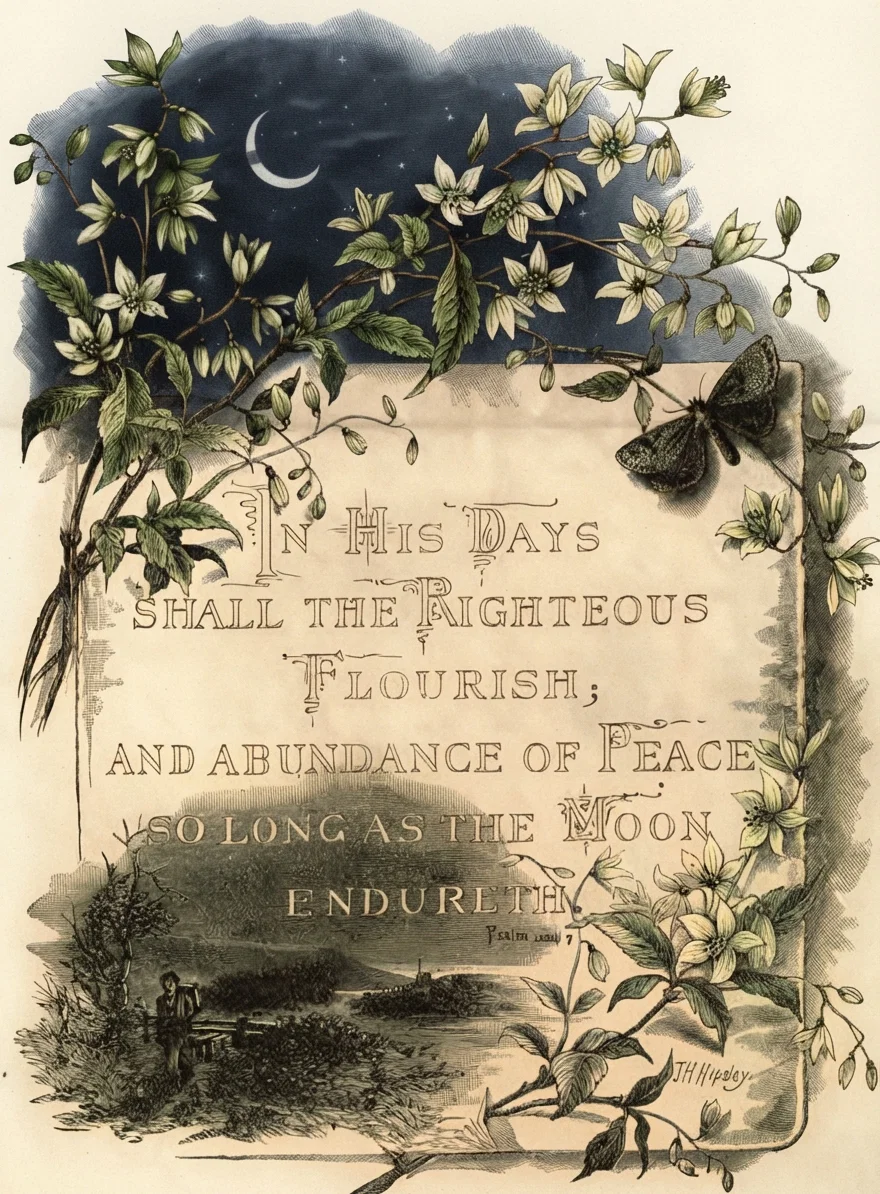
But this is not all. The “peace which passeth understanding,” which is “as a river” in its onward flow, is but the foretaste of the peace which Jesus Christ will give to his own. While he gives peace now in the midst of the world’s unrest and strife and war, that peace is mingled with sadness of heart because of others’ unrest, misery, and wo. But there is coming a time when Christ shall reign, when all of strife, and war, and tumult, and mourning, and distress, and pain, and death, will be forever banished, because sin is no more. All tyranny, oppression, and wickedness will be blotted from the universe, and nothing shall mar God’s fair creation. Jesus Christ, the King of kings and Lord of lords, will have taken to himself his great power, and reigned “from sea to sea, and from the river unto the ends of the earth.” Then, “in his days shall the righteous flourish, and abundance of peace so long as the moon endureth.” It is to this peace now and forevermore that God calls us by his grace.

IS THE ROMAN CATHOLIC CHURCH APOSTOLIC?

A Brief Examination of Her Claims.

THE Catholic Mirror, of Baltimore, the official organ of Cardinal Gibbons, and of that church in America, has a department entitled “Catholic Truth.” In its issue of November 6 is the following:—

Apostolicity of the Catholic Church.

THIS MARK OF THE CHURCH OF GOD FOUND IN HER ALONE.

The Catholic Church is apostolic, because she has her origin and her doctrine from the apostles; because she has the succession of her pastors uninterrupted from them.
As to her origin from the apostles, it is acknowledged by all, even her worst adversaries, that the Catholic Church is the church of the first ages, which all confess was apostolic. This fact is evident, as nothing can be better known than the novelty of heretics and of all heresies, and the antiquity of the Catholic Church. No one can state or point out any time in which the church ceased to be apostolic.
As to her doctrine, her doctrine, like her origin, is that of the apostles. It is the one same Catholic doctrine. Adversaries have never been able to prove any change of faith up to the present day, and no change can be discovered if the doctrine of the apostolic and ancient times be compared with the doctrine of the church at the present time.
She is apostolic as to succession. The succession of pastors comes down in an uninterrupted course from the apostles. She has the succession of Orders. All acknowledge this who in any sense admit the sacrament and the power of Orders; because, if they deny this succession, they can not regard their own orders as valid, inasmuch as they have received them from no other than the Catholic Church. She has the succession as to jurisdiction, which has never fallen away from the church founded by the apostles, and such is the Roman Catholic Church. There is no fact of history more certain than the succession of Pontiffs, from St. Peter to Leo XIII.
Here are presented three proofs, or rather assertions, of the apostolicity of the Catholic Church: (1) That her origin is apostolic; (2) that her doctrine, or teaching, is apostolic; (3) that her succession of pastors has been uninterrupted from the apostles.

The Divine Law True Witness.

For the truth of these claims we have Rome’s witness. But the Scriptural law of witness in all dispensations is that in the mouth of two or three witnesses shall every word be established. (See Deut. 17:6; 19:15; Matt. 18:16; John 8:17; 2 Cor. 13:1.) The testimony of that church alone is not sufficient; for even Jesus Christ said, “If I bear witness of myself, my witness is not true.” John 5:31. The witness of Jesus Christ was of worth only as it agreed with the testimony of God’s Word. The works which he did must witness with the Word of God, which those Jews professed to believe, and which they knew the man Jesus had not altered. (See John 5:36–39.) If in God’s wisdom and condescension the Lord of glory, who was filled with power and wisdom, must present such indubitable testimony to the world of his divine mission, should less be demanded of that system which claims to be his church? God’s one witness of the ages is his holy law, the Ten Commandments, called by him “the tables of the testimony,” and the receptacle in which they were placed, called “the ark of the testimony,” and “the ark of his testament,” because that law witnessed to his character, and was the expression of his will against sin. The inspired prophecies, divine commentaries on that law, infused with the same life, form the Scriptures, possessed by the Jews in the days of Christ. The apostles added other writings God-breathed. The law, and the witness of the holy men, who “spake as they were moved by the Holy Ghost,” is “the law and the testimony,” God’s great witness; and they who speak not according to this Word have “no light in them.” Isa. 8:20. How do the claims of the Catholic Church, as set forth in the Mirror, agree with this witness?
1. Is the origin of the Roman Catholic Church apostolic? The Catholic Church claims to be founded upon Peter. She has her “Lord God the Pope,” her lord bishops, her “cardinals,” a religio-military officer, and her priests, or fathers, who profess to offer anew in the mass the body of Christ. But the apostolic church was founded alone on Jesus Christ, the Rock, of which Peter was but a “living stone.” Matt. 16:16–18; 1 Peter 2:4–8. Peter in the text cited declares Christ to be the “chief cornerstone,” and Isaiah, from whom Peter quotes, calls him “a sure foundation.” Isa. 28:16. The apostle Paul thus condemns the human wisdom which would build on an apostle: “Every one of you saith, I am of Paul; and I of Apollos; and I of Cephas [Peter]; and I of Christ. Is Christ divided? was Paul crucified for you? or were ye baptized in the name of Paul?” 1 Cor. 1:12, 13. The apostle could take no such glory to himself, altho he declares that “in nothing am I behind the very chiefest apostles, tho I be nothing.” 2 Cor. 12:11. Here was his foundation: “For other foundation can no man lay than that is laid, which is Jesus Christ.” 1 Cor. 3:11.
And this is Christ’s order; “for One is your Master, even Christ; and all ye are brethren.” Matt. 23:8. The same prerogatives he gave to Peter (Matt. 16:19), he gave to all (John 20:22, 23), the same power that was given to his prophets in all times of declaring God’s message, which was either death or life according as it was receivedor rejected (Jer. 1:10; 18:7–10; Matt. 3:2–10; Luke 7:29, 30; 2 Cor. 2:15, 16). Jesus Christ was the head; apostles and prophets were but his servants to proclaim his Word. In that Word was the power. Roman Catholics make the mistake of ascribing the power to the man, of placing it in a sort of transmigration wagon called succession of the apostles. Protestants, or many of them, have taken the power from the Word, and as yet it is lodged nowhere. But God has put it in his living Word, the sword of the Spirit, shedding its amplitude of power in the hearts of all who believe.
Neither does our Lord filter that power down through pope, council, bishop, and priest to the believer; but, according to the testimony of the Word, “the head of every man is Christ.” Christ by his Spirit dwells in every believer’s heart (1 Cor. 3:16; Gal. 2:20), and personal faith makes unbroken and direct connection with Heaven.
Rather, the origin of the Catholic Church is expressed in the following words by the apostle: “For I know this, that after my departing shall grievous wolves enter in among you, not sparing the flock. Also of your own selves shall men arise, speaking perverse things, to draw away disciples after them.” Acts 20:29, 30. All this was accomplished by the coming in of half-converted heathen who became “fathers” in the rapidly apostatizing church, and to whom the Roman Catholic Church and many Protestants go for wretched husks for food, when God offers them freely the bread of life.
2. Is the doctrine of the Roman Catholic Church apostolic?
It is not. That church exalts as equal authority with the Scriptures the tradition of “the fathers.” Nay, she does more; for she declares that the Scriptures must be understood as interpreted by tradition. Instead of witnessing to the truth of the Scriptures, she assumes that the truth is in her, and that the first witness,—God’s witness of the ages,—must be understood as her witness dictates. She makes in reality but one witness, that of the tradition and teaching of the church. Even thus did the Jews make of none effect the Word and commandment of God by their tradition. See Matt. 15:6–9; Mark 7:7–13. But of them Jesus said, “In vain they do worship me, teaching for doctrines the commandments of men.” Matt. 15:9.
Apostolic doctrine or teaching is that of the Word. “Preach the Gospel,” “preach the Word,” “preach Christ,” are the divine injunctions, often repeated. That Word is said to be “profitable for doctrine, for reproof, for correction, for instruction in righteousness; that the man of God may be perfect, thoroughly furnished unto all good works.” 2 Tim. 3:16, 17. And the apostle continues:—
“I charge thee therefore before God, and the Lord Jesus Christ, who shall judge the quick and the dead at his appearing and his kingdom: Preach the Word; be instant in season, out of season; reprove, rebuke, exhort with all long-suffering and doctrine. For the time will come when they will not endure sound doctrine; but after their own lusts shall they heap to themselves teachers, having itching ears; and they shall turn away their ears from the truth, and shall be turned unto fables.” 2 Tim. 4:1–4.
The Scriptures of truth teach the perpetuity and immutability of God’s law. Ps. 111:7, 8; Isa. 51:6, 7. Jesus Christ unqualifiedly endorsed this. Matt. 5:17–20; Luke 16:17. And he commanded his apostles to teach what he had commanded (Matt. 28:19, 20), and this they did (Rom. 3:31; 8:4; James 2:8–12; 1 John 5:3; Rev. 14:12; 22:14). But the Roman Catholic Church has set aside the fourth commandment and substituted in the place of the Sabbath “the venerable day of the sun,” in its origin and nature a wholly heathen institution.
The Roman Church holds to the sacrifice of the mass by the “priest” or “father,” but the Scriptures declare that Jesus Christ offered “one sacrifice for sins forever,” effectual through faith till the last soul is gathered to the fold. Heb. 10:10, 14.
In the Catholic Church are many fathers and lord bishops, but Jesus says, “And call no man your father upon the earth; for one is your Father, which is in heaven.” Matt. 23:9. And Peter exhorts the elders, of whom he counts himself one, to “feed the flock of God, . . . not by constraint, but willingly; . . . neither as being lords over God’s heritage, but being ensamples to the flock.” 1 Peter 5:1–3. And Paul declares, “Not for that we have dominion [lordship] over your faith, but are helpers of your joy; for by faith ye stand.” 2 Cor. 1:24.
And many other things held by the Catholic Church may as easily be shown to be out of harmony with apostolic doctrine as taught by Jesus Christ and his apostles.
3. Of the succession of individual men in the same office much might be said from a historical standpoint. What effect the various rival popes with their rival anathemas and excommunications have upon the question we will not discuss. It may, however, be granted that Jesus ordained Peter; and Peter, Clement; and Clement, Linus; and Linus, Cletus; and so on down to Leo XIII. But all this proves nothing. The anointing of God was upon Lucifer, and he became the great apostate. Jesus ordained Judas, but Judas betrayed him; and the mere ordination of men in a succession would not prevent the apostasy of Linus, or Cletus, or Sixtus in A.D. 119, or of the ambitious Victor, three-fourths of a century later, or of the falling away from the humility of Jesus Christ by the many others, who, like Diotrephes, loved to have the preeminence. 3 John 9.
The third claim of the Mirror was the claim of apostate Judea. To them John the Baptist said:—
“Bring forth therefore fruits meet for repentance; and think not to say within yourselves, We have Abraham to our father; for I say unto you, that God is able of these stones to raise up children unto Abraham.” Matt. 3:8, 9.
And Jesus Christ said:—
“Every plant, which my heavenly Father hath not planted, shall be rooted up.” Matt. 15:13. “If ye were Abraham’s children, ye would do the works of Abraham.” John 8:39. “For whosoever shall do the will of God, the same is my brother, and my sister, and mother.” Mark 3:35.
And John the apostle said: “He that saith he abideth in Him ought himself also so to walk, even as He walked.” 1 John 1:6.
And Peter said: “As obedient children, not fashioning yourselves according to the former lusts in your ignorance; but as He which hath called you is holy, so be ye holy in all manner of conversation.” 1 Peter 1:14, 15. “Leaving us an example that ye should follow in His steps.” 1 Peter 2:21.
According to the doctrine of the apostles and the entire Word of God, the Roman Catholic Church is apostolic in neither origin nor doctrine; and without these her succession is a witness against her. Her witness to herself would be worth more did it agree with God’s witness. O, that every Roman Catholic would leave the great apostate system and come to Jesus Christ as he is, a personal Saviour, Friend, and King! God would save each and every one; but his Word forever condemns the system with which they are connected.

Works of the Law

“Works of the Law.”—The “works of the law” are all that man can do by law; he can attempt to keep it outwardly; but his heart remains unchanged. “He that doeth righteousness is righteous.” Man must be righteous before he can do righteousness. The being is before the doing. But man’s “works of the law” (Gal. 2:16; 3:2, 10) are only unregenerate man’s attempts to keep a spiritual law. He simply keeps an outward form of the truth as did the Jews (Rom. 2:20), and is therefore condemned by the law itself. He therefore that is of “the works of the law” is “under the curse.” He is attempting his own salvation. The law demands exact obedience always and all the time, in outward form, in inward motive. Its curse rests upon those who have not done this, and that is upon all. Rom. 3:23. But Christ redeems us from the curse. He kept the law. He makes the believer righteous. He puts within that believer his own Spirit. And then the believer, or rather Christ in the believer, keeps the law, and fulfils its righteousness. The keeping of the law by the believer is not the works of the law, but the fruit of the Spirit, the fruit of the union between the believer and Christ. See Gal. 5:23; Rom. 7:4; 8:4. “The fruit of the Spirit is love,” and “this is the love of God, that we keep his commandments.”

Christianity Is More Than Belief

CHRISTIANITY is more than a belief, it is a life. It furnishes not only truths to be believed, but things to be done, and the doing of them is by no means a secondary consideration. The truth which we believe is to be exemplified in our life. The life that we live is to be “by the faith of the Son of God,” who hath loved us and given himself for us.—The Pulpit.

Blessedness in Service.

“Blessedness” is thought by some to mean happy feelings, and with such it is often true that when the happy feelings go, the loyalty goes. John G. Woolley in a late utterance has a graphic comment on this topic, which is worthy of reproduction. It is from the Voice, and was addressed to Christian Endeavorers:—
Do not confuse “blessedness” in service with popularity or ease or esthetic uplift. It will often mean the very reverse of these—crucifixion maybe.
“Blessedness” is not the applause of the multitude nor the favor of the great, but character won and fixed by a close walk with God.
No pious diplomat was ever, or will be ever, a blessed man. No pious speculator who “plays” the kingdom of God “on margins” can taste the blessedness of serving God. No Endeavorer who purposely lives a little short of the best he knows, in business, in society, in politics, can even touch the edge of blessed living. Nothing short of dead, straight truth to the light you have will answer. But with that, your life is hid so deep with Christ in God that poverty, revilings, stones, fagots, thumb-screws, death are trifles light as air.

THE ANGELS OF GOD.

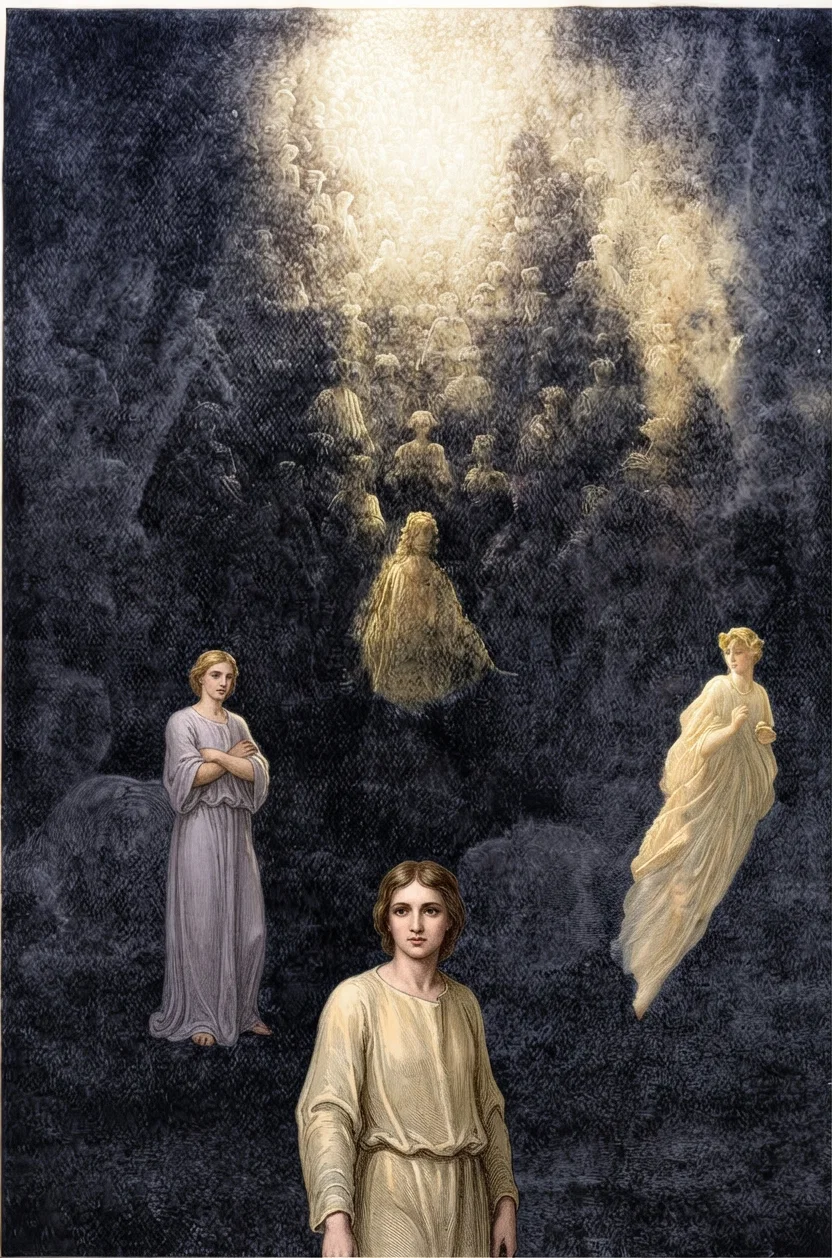
THAT there are beings celestial as well as terrestrial, the Word of God plainly indicates. John says, "And I beheld, and I heard the voice of many angels round about the throne." Daniel, in describing the majesty of the ancient of days, God the Father, says, "Thousand thousands ministered unto him, and ten thousand times ten thousand stood before him." The few thoughts we may have to present upon this interesting subject we will classify under the following heads:—
1. The Origin of the Angels.—Some have believed and teach to-day that the angels are the disembodied spirits of persons that have once lived on this earth. There is, however, no scriptural warrant for this belief. On the contrary, the angels of God are represented as having existed before death entered into the world, and for that matter, even before our world was formed. The Lord inquires of Job, "Where wast thou when I laid the foundations of the earth? . . . when the morning stars sang together, and all the sons of God shouted for joy?" Job 38:4-7. And in the third chapter of Genesis, last verse, it is stated that when God drove man out of the Garden of Eden, he placed at the entrance of the garden, cherubim, or angels, to keep the way to the tree of life. Hence, as angels existed previous to the creation of man, and therefore previous to the death of any member of the human family, they can not be the disembodied spirits of the dead, but they must be a separate and distinct order of being than man.
2. Their Nature.—They are real beings. This is clearly represented in every reference where they are introduced. In the tenth chapter of Daniel, and the fifth verse, it is stated that the heavenly being which appeared to the prophet possessed a body, and as parts of that body, Daniel saw his face, his eyes, his arms, and his feet, and he heard his voice speaking. But, altho in the form of men, and possessing body and parts like unto men, they yet are not of the same nature. In Hebrews, second chapter, and the sixth and seventh verses, the apostle states that man was created a little lower than the angels. Hence, we must conclude that, altho the angels possess a body like man, it is a body of higher organism and nature.
3. Their Work.—Of this Paul says (Heb. 1:13): "But to which of the angels said he at any time, Sit on my right hand until I make thine enemies thy footstool? Are they not all ministering spirits, sent forth to minister for them who shall be heirs of salvation?" Jacob, in the dream given him by the Lord, saw a ladder reaching from earth to heaven, and upon that ladder were the angels of God ascending and descending. The angels are the associates of Jesus Christ in the work of redeeming the lost and fallen world. They are his servants, his agencies, by which he conveys his Spirit and blessing to his children on this earth.
4. Their Number.—If, as previously shown, the angels of God are ministering spirits to the heirs of salvation, reasonably it would require no small number to render the service required. Christ indicated, in some degree, the number of the heavenly host in the rebuke rendered Peter for seeking to defend him by the power of the sword: "Thinkest thou that I can not now pray to my Father, and he shall presently give me more than twelve legions of angels?" A legion in the Roman army consisted of 7,000 men; hence it was in the power of the Father to render Christ the assistance of 84,000 of the heavenly messengers. But in this number the strength of the heavenly host is not fully shown. John, after stating that he heard the voice of many angels round about the throne, says, "And the number of them was ten thousand times ten thousand, and thousands of thousands." Ten thousand times ten thousand would be one hundred million, and this is not enough to express their number, so the revelator adds, "and thousands of thousands." Hence, in the provision God has made for his people, he has provided a sufficient number of the heavenly beings to meet every demand which might be made upon heaven's resources.
5. Their Power.—At the resurrection of Christ, the mighty stone at the door of his tomb, which required the whole force of the Roman guard to put it into place, and which the women that followed Jesus confessed that they were unable to roll away, was turned back at a word of command of the messenger of the Lord. When Jerusalem was encompassed with the armies of Sennacherib, as recorded in 2 Kings 19:35, one angel of the Lord was sufficient to slay 185,000 men of valor in the camp of Assyria in a single night. But the power of the messenger was only the power of God, whose representative the angel was.
6. Their Guardianship.—As already stated, angels are heaven's ministering spirits to convey to the people of the Lord on earth assurances of his grace and the blessings of his Spirit. But closer than this general relation is the relation sustained to every child of God. In the twelfth chapter of Acts, and the fifteenth verse, the disciples of the Lord judged from the description of Peter given by Rhoda that it was Peter's angel instead of Peter himself.
"Are they not all ministering spirits, sent forth to minister for them who shall be heirs of salvation?" "Ministers of His that do His pleasure."
They evidently understood that a particular angel, Peter's guardian angel, had charge of this servant of the Lord. The same thought is contained in the words of our Saviour, as brought to view in the eighteenth chapter of Matthew and the tenth verse, "Take heed that ye despise not one of these little ones; for I say unto you, That in heaven their angels do always behold the face of my Father which is in heaven." Hence, it is but reasonable to conclude that if Peter had an angel, and the "little ones" have angels, every child of God has a particular angel appointed to look after his interests. This thought is further strengthened by a reference to the fifth chapter of Ecclesiastes, where, in speaking of vows made to the Lord, from which the one making the same may desire to be released, it is said, "Neither say thou before the angel, that it was an error." Then there is a particular angel connected with each person, who records the vows made, and whose record the child of God is exhorted not to dispute.
7. They Keep the Record of Men's Lives.—This is evident from the scripture just quoted. It may also be strongly inferred from Mal. 3:16, where it is stated that a book of remembrance is written before the Lord "for them that feared the Lord, and that thought upon his name." In the twentieth chapter of Revelation, it is stated, "And the books were opened; and another book was opened, which is the book of life; and the dead were judged out of those things which were written in the books, according to their works."
We have met those who argued that were a record of men's lives literally preserved in heaven, heaven itself would be filled with books and manuscripts containing the same. In claiming this, the power of the infinite God is compared with and circumscribed by the capabilities of his finite creatures. This was impressed on my mind recently while passing the falls of Niagara on a railway train. The newsboy had for sale wares of various kinds. Among other things was a little trinket about three-fourths of an inch long, about the size of a lead-pencil. Through this little rod-shaped instrument was a little hole lengthwise, no larger than the head of an ordinary sewing needle. Holding this little trinket up to the light, and looking through the hole, one could distinctly see six different views of the Niagara Falls, with the name of each view underneath in type that appeared even larger than the type in which this article is set. In still another little trinket of the same size and dimensions could be seen the Lord's prayer, every letter brought out in bold relief. As I witnessed this manifestation of man's inventive genius, and considered how much had been compressed into such a small space, I said to myself, "If man with his finite powers can do this, what limit is there to the infinite power of God?" If man could write the Lord's prayer upon a space no larger than the head of a small sewing needle, might not the infinite God write the record of a man's life upon even a smaller area if he chose so to do?
8. They Assist in the Judgment Work.—It is but natural that they should do this. Having been ministers of God to the heirs of salvation, having been the guardians of the children of God, having kept the record of the life, and having been associated with all the experiences of that life, it is but reasonable that the angel should have a part in determining whether or not the individual has complied with the conditions, and is worthy through Christ of eternal association with God and with themselves. Dan. 7:9, 10.
9. They Come to Gather Home the People of God in the Last Great Day.—Matt. 13:14-43; 24:29, 30. We do not believe it is any fancy dream to picture the angels of God as interested in all of man's salvation and his experiences. A subject of the kingdom of Satan is redeemed for God. He becomes an heir of salvation. A heavenly being is made his ministering spirit, his guardian angel. Faithfully and tenderly does that angel watch over him while he lives, rejoicing in his successes in the Christian race, grieved at his failures. Day by day the record of his life is recorded. Faithful to his trust, the angel prosecutes his work until at last the history is complete, the life it records is yielded to God, and the child lies down to rest. Carefully the angel marks the spot, and, closing the record, places it in a niche of God's great library to await the time when its secrets shall be disclosed. That time comes. The heavenly court convenes. God himself sits as judge. Christ, our Elder Brother, appears as man's advocate. One by one the names of the heirs of salvation are pronounced, and, as that is done, the angel having charge of each particular case brings the record and places it before the court. Is it too much to imagine that the great Judge asks, as each case is presented, "Is there any reason why judgment should not be pronounced in this case?" And then it is, if the case under consideration be that of a child of God, that the efficacy of Christ's blood prevails. He rises in his place as man's advocate, and pleads the merit of his own precious blood, shows the marks of the wound in his side, and the prints of the nails in his hands. And as the omnipotent Judge looks upon that dear face and upon that marred form, and realizes his sacrifice for the redemption of humanity, he says of the case under consideration: "It is enough. Blot out his sins, and retain his name in the Lamb's book of life." And then, it seems to me, a shout of triumph must rise from that heavenly throng, not the gloating cry that is sometimes heard in our courts for the release and freedom of some wicked criminal, but rather the shout of joy and exultation and praise to the Lamb that was slain, and who has redeemed from sin's pollution one for whom he gave his own precious blood.
And when the work is all completed, and the divine fiat goes forth, "It is done," and court is adjourned, and the supreme Arbiter lays aside his mantle of judgment, and Christ, the Lord of lords and King of kings, attended by his body-guard of shining heavenly ones, returns to this earth to take his children home, with what happy hearts the angelic host descend to awake from their slumber those in whose case they have taken such supreme interest! The voice of the Life-giver awakes the sleeping saints. They are caught up to meet their Lord in the air, forever to enjoy the companionship of celestial beings.
Great and marvelous are the works of God, and his ways past finding out. Gracious provision has he made for our salvation. May we avail ourselves of heaven's resources, and enjoy forever the companionship of Jesus Christ and those associated with him in the work of our redemption. F. M. W.
Continue reading: IN GETHSEMANE