Note.—This lesson presents the Master’s example in the matter of missionary work for the poor and outcast. The question of rank, or caste, or proper society, or the estimation in which He would be held by the “respectable,” was not allowed to influence His work in the least degree. The matter which was of importance was the need of the people and their desire for help. As with the Master, so must it be with His servants. The greater the fall, the greater the need; and the greater the need, the greater the power at their command. The farther a soul has sunk in sin, the more the pitying heart of Heaven yearns toward him. Let the teacher of this lesson follow his Lord in this respect, that the witness of the Spirit may be his, and the power of the Word go with his work.
9 “And as Jesus passed by from thence, He saw a man, called Matthew, sitting at the place of toll; and He saith unto him, Follow Me. And he arose, and followed Him. 10 “And it came to pass, as He sat at meat in the house, behold, many publicans and sinners came and sat down with Jesus and His disciples. 11 And when the Pharisees saw it, they said unto His disciples, Why eateth your Master with the publicans and sinners? 12 But when He heard it, He said, They that are whole have no need of a physician, but they that are sick. 13 But go ye and learn what this meaneth, I desire mercy, and not sacrifice; for I came not to call the righteous, but sinners. 14 “Then come to Him the disciples of John, saying, Why do we and the Pharisees fast oft, but Thy disciples fast not? 15 And Jesus said unto them, Can the sons of the bride-chamber mourn, as long as the Bridegroom is with them? but the days will come, when the Bridegroom shall be taken away from them, and then will they fast. 16 And no man putteth a piece of undressed cloth upon an old garment; for that which should fill it up taketh from the garment, and a worse rent is made. 17 Neither do men put new wine into old wine-skins; else the skins burst, and the wine is spilled, and the skins perish; but they put new wine into fresh wine-skins, and both are preserved.”
(1) Whom did Jesus see at the receipt of customs? Verse 9. Note 1. (2) What invitation did the Saviour extend to him? Same verse. (3) How did Matthew receive it? Same verse. Note 2. (4) With whom did the Saviour sit at meat in Matthew’s house? Verse 10. Note 3. (5) Who were looking on at the time? Verse 11. (6) How did they criticise Jesus and to whom? Same verse. (7) Who heard their criticism? Verse 12. (8) What reply did He make? Same verse. Note 4. (9) What did He tell them to do? Verse 13. (10) What did the Saviour say of His mission to earth? Same verse. (11) Who else came to the Saviour at this time? Verse 14. (12) What question did they ask Him? Same verse. (13) What illustration did the Saviour use in answering them? Verse 15. (14) When did He say that His own disciples should fast? Same verse. (15) What illustration did the Saviour use to show that a man must become a new creature in accepting Christ? Verse 16. (16) What will occur if one tries to follow Christ and still clings to his old life? Same verse. Note 5. (17) What further illustration did He use to prove the same thing? Verse 17. (18) What was their custom in regard to preserving wine? Same verse. Note 6.
NOTES.
1. Matthew.—He was also called Levi, as we learn from Luke 5: 27-30. He was a publican; that is, one who gathered the publicum, or public revenue. Such persons were thoroughly despised by the Jews, partly on account of the fraud and extortion which characterized their dealings, and partly because they were serving under the Roman Government, by which they were oppressed. The publicans, to whom the Roman knights “farmed out” the tax-gathering, were regarded by the Jews as traitors to their own nation and apostates from their religion. No money known to have come from them was received for religious uses.
2. Follow Me.—This call has been sounding through the world since that time, and thousands have heeded, as did “Matthew the publican,” and turned to repeat the call to others. There is this peculiarity about the Saviour’s invitations: Those who accept them are at liberty, nay, they are expected, to repeat the invitation to any and every class of people. Jesus chose a Pharisee (Paul), that he might go and bring other Pharisees; He chose a young man, that he might have more influence with the young; He chose a publican, that he might go and bring in other publicans and the class of persons that associated with them—in this showing that in the kingdom of heaven there will be no such thing as “caste” or different “circles of society.” All are children of the one Parent, whether they come from the slums or the pulpit, the hovel or the14mansion. To every one who listens to the reading of the Word, or to the pleadings of the ministers of Christ, or who opens the Word for himself, that call is spoken, “Come, follow Me.”
3. Came and sat down.—This was in Matthew’s house, and the publicans who came there ate with the Saviour and His disciples, as is seen by the words of the Pharisees in their criticism of His action. Luke 5: 27-30.
4. They that are sick.—The sinner is indeed a sick man. The heart of the sinner is spoken of as being desperately sick. It is a sickness that is unto death, a death that is eternal, unless the remedy of the great Physician is applied. The physician can do but little for the man who does not believe that he is sick. The Jews did not count themselves as sinners, therefore they felt no need of Christ; the publicans did. The fact that the publicans were at this feast would seem to show that Matthew had been at work among them. He felt no hesitancy in asking them to be there, for Christ had shown none in inviting him, and he was one of them.
5. A worse rent is made.—“If any man be in Christ, he is a new creature; old things are passed away; behold, all things are become new.” 2 Cor. 5: 17. Jesus shows in the illustration used the futility of attempting to be part Christian and part Jew, or of clinging to the world while attempting to be a Christian. The two will not combine. An attempt to combine them ends always in disaster, as shown in this illustration and the one following. “Ye can not serve God and mammon.” It must be all one thing or all the other. He who becomes a new creature in Christ is new through and through. His raiment is not patched; it is whole, “without seam,” and is the gift of God, even Christ’s righteousness.
6. Put new wine into fresh wine-skins.—When the new wine of the life of Christ is placed in the one who has become a new creature in Christ, both are preserved. The new life which is put into the converted man, preserves that man unto all eternity; and the man preserves the life thus given to him. As it expands, he will expand with it to the glory of God.
SURE WORD OF PROPHECY. A study of the book of Daniel.
A concise study of this important prophetic portion of the Bible. Fully illustrated. Paper covers. 96 pages. Bible Students’ Library No. 131. Price, 10 cents.
Address,
PACIFIC PRESS PUBLISHING CO.
OAKLAND, CALIFORNIA
Kansas City, Mo. New York City, N. Y.
News and Notes
FOREIGN.
—The Egyptian troops have captured the Dervish outpost of Mugalla, west of Kassala.
—According to the latest reports from Turkey, the sultan has refused to pay an indemnity for American property destroyed during the Armenian outrages.
—Fifty persons were killed and eighteen injured by an explosion of gas in one of the mines of the Donezater Company, on the north shore of the Sea of Azov, on January 18.
—The shortage of crops in Austria-Hungary is reported to be much greater than had been anticipated, and will necessitate the importation of $100,000,000 worth of food supplies.
—It is reported in Shanghai that the demands of the French on China in regard to the island of Hai-Nan have created such uneasiness in Japan that the mikado will send a squadron to the island.
—As a result of further attempts to equalize the German and Czech languages in Bohemia, renewed rioting has taken place, and no satisfactory settlement of the disturbing question seems possible.
—A detachment of the Kongo (Africa) state troops was defeated by insurgent tribesmen north of Lake Tanganyika. Baron Dhanis, the commander, who was personally conducting the punitive expedition, was killed.
—A bread riot occurred in Ancona, Italy, on January 17, arising from a demonstration of women organized by the Socialists to demand a reduction in the price of bread. Several arrests were made in the mêlée which ensued.
—The Government of Chile is preparing for war, presumably with Argentina, and has called to active service all her National Guard and youths of twenty years or more. She has also purchased three cruisers from Brazil.
—The Russian ambassador to Constantinople is reported to have represented to the sultan that unless Turkey gave her assent to Prince George of Greece becoming governor of Crete, Russia would propose the annexation of Crete to Greece.
—Sir Michael Hicks-Beach, Chancellor of the Exchequer, voicing the policy of the British Government anent affairs in the Orient, has stated that England “was determined, even at the cost of war, that the door of Chinese commerce should not be shut to Great Britain.” All the influential journals of the kingdom applaud this sentiment.
—President Sanford B. Dole, of Hawaii, arrived in San Francisco, California, on January 18, en route to Washington, where he will use his influence in favor of the annexation of the islands to the United States. He will be the guest of the nation while at Washington.
—England continues to strengthen her fleet in the Orient, having ordered two of her North Pacific fleet now stationed at Esquimalt to proceed to the China station at once. Other vessels belonging to this squadron are to be kept in readiness for a cruise on short notice.
—Gen. Sir William Lockhart, commander-in-chief of the British forces in India, has been called home to explain the recent reverses of the army. It is stated that his appointment will be canceled unless he can throw the responsibility for the disasters upon the shoulders of his brigadier-generals.
—The old home of Sir Isaac Newton, near Leicester Square, London, is about to be pulled down to make room for a modern structure. Once before this interesting building was threatened with destruction, but public sentiment was sufficiently raised against it to save it to the present time.
—Mrs. J. C. Ayer, widow of the famous patent-medicine manufacturer, died recently in Paris, leaving a fortune of over $15,000,000. She was known as the wealthiest woman in Paris, and spent her entire annual income of $2,000,000 for her own pleasure and the maintenance of her elegant establishment.
—A committee of the Dominion Cabinet has drawn up new regulations for the government of mining in the Yukon. The sliding scale of royalties will be abandoned, and a uniform royalty of 10 per cent. will be exacted from the product of all mines, whether great or small. Instead of reserving alternate claims, the government will reserve alternate blocks of ten claims, which it is thought will be an improvement over the present regulations.
—According to advices from Shanghai, the Russian minister to China has informed the Tsung-li-Yamen (Chinese office for foreign affairs) that as soon as the German affair is settled, Russia will restore Port Arthur to China, and withdraw her troops without demanding indemnity. In return, the despatch states, the Chinese Government must employ only Russians to drill the army of China and to control her customs and railways. There is little reason to believe that the other interested nations will agree to China giving Russia such an influential position in the empire.
—All France is in a turmoil over what is known as the Dreyfus affair. An attempt to open the case of this exiled and imprisoned officer of the French army brought certain scandals to the attention of the public which resulted in the court-martialing of another officer named Esterhazy. The charges were so serious that the trial was held behind closed doors. Esterhazy was acquitted, whereupon Zola, the noted French novelist, took up the matter against Esterhazy and in favor of the exiled Dreyfus, making serious charges of criminal conduct on the part of high officials. The anarchists have espoused the side of Zola, with the students in opposition, and the two conflicting factions, backed by their sympathizers, have stirred up alarming riots in the French capital.
—The more serious outbreak anticipated in Cuba during the week did not materialize, tho it is reported on what seems good authority that a conspiracy on the part of the volunteers to overthrow General Blanco, drive him out of Havana, and capture the fortifications in and around the capital, was nipped in the bud by the plot becoming known to the police but a few hours before it was to have been carried out. All the colonels of volunteers in Havana were at once summoned before the captain-general, and compelled to swear allegiance to the queen and the flag. General Blanco now proposes to send half of the volunteers into the field and disarm the others. General Gomez has issued an address to the Spanish landholders and business men, telling them that their lives and property will be respected in the event of the success of the revolution.
DOMESTIC.
—The Stanford University, at Palo Alto, Cal., dismissed forty-one students soon after the beginning of the new year, for inferior work, immorality, and drinking habits.
—According to the New York Press, Tammany’s program for the governing of Greater New York will make it what is known as a “wide-open” town, with greater license for prize-fighters and characterless women.
—John M. Bittenger, U. S. Consul-General for Canada, has been blackballed by the leading social organization of Montreal, on account of certain printed statements of his in regard to the annexation of British America.
—Mayor Harrison, of Chicago, has issued a sweeping order to the effect that every gambling-house in the city must close. The prohibition also includes professional boxing bouts, prize-fights, and the operating of slot machines.
—What will probably be the greatest convention of woman suffragists ever held in the world is announced for February 14 to 19 inclusive, in the city of Washington, being the fiftieth anniversary of the birth of the woman suffrage movement.
—Hon. Benjamin Butterworth, U. S. Commissioner of Patents, died at Thomasville, Georgia, on January 16, from an attack of pneumonia.
—The House of Representatives voted on January 13 to continue the annual appropriation of $130,000 for the free distribution of seeds to the farmers.
—The steamer Walla Walla left San Francisco on January 17, carrying 360 passengers for the Klondike, the first large instalment of the spring rush to the Yukon gold fields.
—The Commissioner of Internal Revenue states that during the past year there has been a decrease of nearly 6,000,000 gallons in the consumption of whisky and other spirits, and of 1,403,004 barrels in the consumption of beer.
—Senator Hoar, of Massachusetts, introduced in the Senate on January 14 an amendment to the Constitution, making April 30 inauguration day, instead of the 4th of March. The resolution was referred to the committee on privileges and elections.
—On account of their liberal support to the Tammany campaign fund in New York, the liquor dealers are demanding of Mayor Van Wyck that the treasurer of the Liquor Dealers’ Association be appointed as one of the police commissioners for that city.
—The mining town of Randsburg, California, which is not yet two years old, and containing a population of over 3,000, was almost entirely destroyed by fire on the night of January 18. Only one lodging-house and a few cabins remain standing.
—The Chinese Minister to the United States has presented to the President the request of Li Hung Chang that a son of General Grant be appointed as Minister to China. The President had already selected Edwin H. Conger, of Iowa, for this station and no change will be made.
—The steamer Corona, from Dyea and Skagway, arrived at Victoria, B. C., on January 17, with twenty returning Klondike miners whose recently acquired wealth is estimated at over $1,000,000. The members of this party left Dawson on December 14, and came out over the mountain pass.
—A gigantic strike of the cotton-mill operatives in the New England States took place on the morning of January 17. It is computed that 12,000 employees are idle, which means the stopping of 1,000,000 spindles and 25,000 looms. The cause of the strike was a reduction of 10 per cent. in wages.
—Two Americans, natives of Bridgeton, N. J., are now on their way to one of the central provinces of the Chinese Empire for the purpose of constructing mints there for the coining of copper and silver coins on the order of the Chinese emperor. They will have to travel 900 miles inland before they arrive at their destination.
—The Board of Trustees of Princeton University, seemingly stirred to action by the New York Voice, have instructed the faculty of that institution to literally and strictly enforce a forgotten regulation of the college which forbids students indulging in intoxicating liquors or frequenting places where such are dispensed.
—The executive committee of the American Federation of Labor has issued an address to the members of the fifty-fifth Congress, calling for an eight-hour working day on all public works, legislation to prevent “government by injunction,” prohibit the transportation of prison-made goods from one state to another, and to restrict undesirable immigration.
—A dispute has arisen between American and Canadian representatives in regard to the boundary line in the vicinity of Lake Bennett. The United States Commissioner for Dyea and Skaguay has laid claim to a strip of land three miles wide which would give this country control of the territory through from the coast to the lake. The Canadian official has communicated the matter to the government at Ottawa.
—Thomas A. Edison, Jr., has invented a machine with which he expects to compress air by wave power with machines located twenty miles at sea. The inventor states that a wealthy syndicate has the matter of immediate construction of the apparatus in charge, and that the amount necessary to complete the plant will probably be not less than $25,000,000. He expects with this to generate power enough to supply the whole of New York State.
—The principal discussions of the week in Congress have been in regard to the Immigration Bill, the annexation of Hawaii, and the recognition of Cuban belligerency or independence. The latter consisted chiefly of an attempt on the part of one side to get the question before the House, and the successful prevention of the same by the other side. It was the decision of the majority not to embarrass the executive with Cuban legislation at the present time.
—The Lodge Immigration Bill was taken up in the Senate on January 17, and passed. It provides that every immigrant over sixteen years of age must be able to read and write the English or some other language, except parents, or grandparents, of children over twenty-one years of age, who are qualified under the law, providing such parents or grandparents are themselves over fifty years of age. The law does not require the qualification of wives who either accompany or come to join their husbands who are qualified under the law.
Paper Covered Books
IN buying these publications you buy reading, not binding.
CENTS
Abiding Sabbath and Lord’s Day, B. S. L. No. 2 . . . . 20
Ancient Sabbath; Objections Considered . . . . . . 10
Appeal from the U. S. Supreme Court Decision, R. L. L. No. 8 . . . . 15
Angels; Their Nature and Ministry, B. S. L. No. 83 . . . . 20
Bible Sanctification, B. S. L. No. 1 . . . . . . . . 10
Captivity of the Republic, R. L. L. No. 6 . . . . . . 15
Change of the Sabbath . . . . 20
Christ and His Righteousness, B. S. L. No. 72 . . . . 15
Christ in the Old Testament, and Sabbath in New . . . 10
Christ Our Advocate, B. S. L. No. 128 . . . . . . 10
Christian Science, B. S. L. No. 93 . . . . . . 15
Church and State, R. L. L. No. 3 . . . . . . 10
Due Process of Law, R. L. L. No. 1 . . . . . . . 15
Diphtheria . . . . . . 25
Evils of Fashionable Dress . . . 10
Experience and Views . . . . 25
Helps to Bible Study . . . . 25
Historical Sketches of Foreign Missions . . . . . 50
History of the Sabbath . . . . 75
Honor Due to God, B. S. L. No. 135 . . . . . 10
Hope of the Gospel . . . . 10
The Judgment, B. S. L. No. 55 . . . . . . 15
Legal Sunday, R. L. L. No. 22 . . . 40
Life, Its Source and Purpose, B. S. L. No. 108 . . . . 10
Lord’s Day the Test of the Ages, B. S. L. No. 134 . . . 15
Man’s Nature and Destiny . . . . 50
Matthew 24, B. S. L. No. 58 . . . 10
Modern Spiritualism . . . . 20
Morality of the Sabbath . . . 15
Nature and Obligations of the Sabbath, B. S. L. No. 54 . . 10
Objections to Visions . . . . 20
Papacy in Prophecy . . . . 25
Position and Work . . . . 10
Prophetic Lights, B. S. L. No. 117 . . . . . 50
Rejected Ordinance . . . . 10
Redeemer and Redeemed . . . 10
Review of Baird . . . . 10
Review of Gilfillan . . . . 10
Rights of the People, R. L. L. No. 32 . . . 40
Sabbath and the Law, B. S. L. No. 53 . . . . 20
Saints’ Inheritance, B. S. L. No. 140 . . . . 10
Sanctuary and 2,300 Days . . . 30
Seven Trumpets . . . . 10
Siberia and the Nihilists . . . 25
Social Purity and Talk to Girls . . . 25
Spirit of God . . . . 15
Sun of Righteousness, B. S. L. No. 97 . . . . 10
Sunday, B. S. L. No. 80 . . . 15
Sunday Laws of States and Territories . . . . 20
Sunday, Seventh Day Examined . . . . . 10
Sure Word of Prophecy, B. S. L. No. 131 . . . . . 10
Three Messages of Rev. 14 . . . 15
Thoughts on Baptism . . . . 25
Will a Man Rob God? B. S. L. No. 145 . . . . . 10
Abiding Sabbath
Contains some $1,500 reasons for Sunday observance.
Bible Students’ Library, No. 2, 20c.
Angels; Their Nature and Ministry
Part 1 treats of the nature and work of the angels, while Part 2 considers Satan, his origin, work, and destiny.
Bible Students’ Library, No. 83, 20c.
The scope of this work is well expressed in the title.
Bible Sanctification
Bible Students’ Library, No. 1, 10c.
The Sure Word of Prophecy
A chapter-by-chapter exposition of this important prophetic book. Illustrated with diagrams and engravings.
Bible Students’ Library, No. 131, 10c.
Christ Our Advocate
The great truths of the remedial system are here made clear and plain.
Bible Students’ Library, No. 128, 10c.
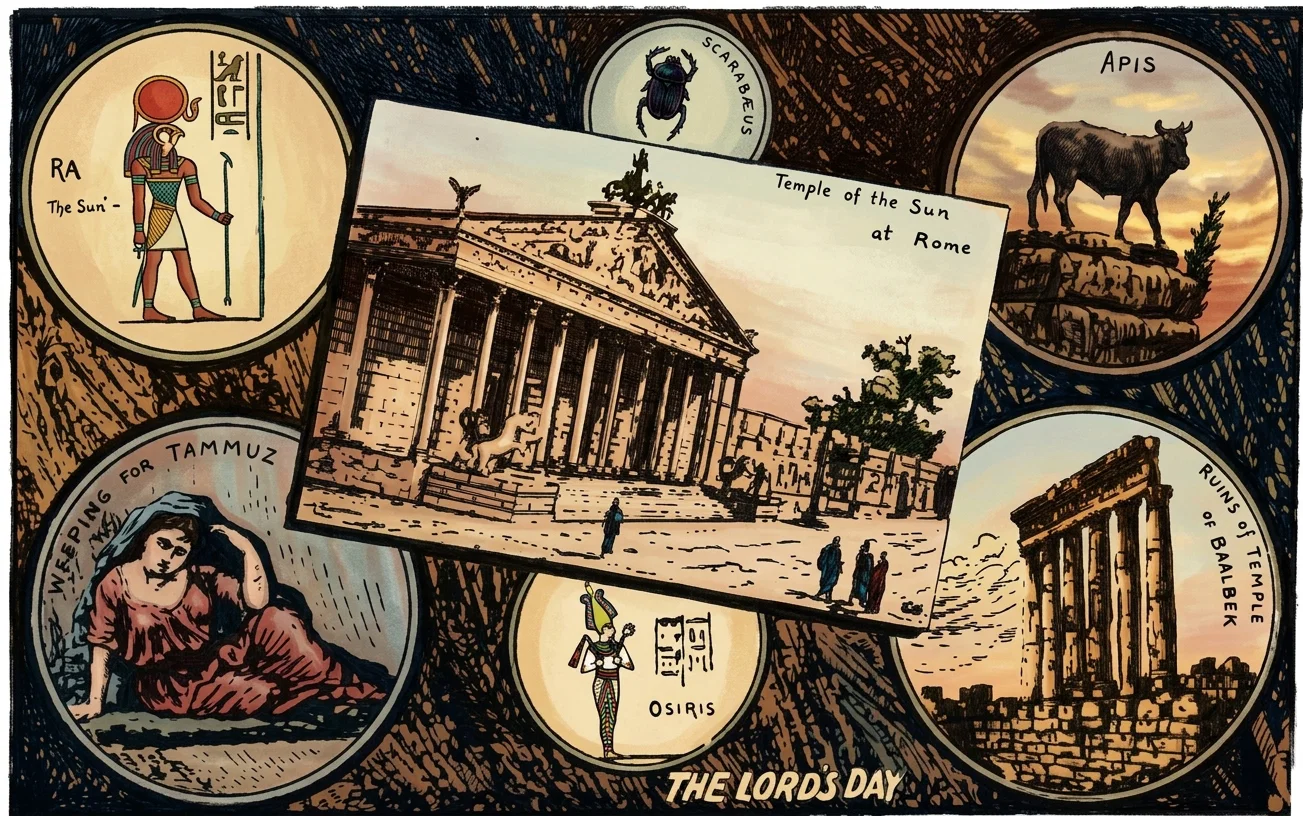
The Lord’s Day
The new third edition of this remarkable pamphlet is now ready. It is a brief but comprehensive setting forth of the Sabbath question from creation to the present time, showing its importance in the Patriarchal, Levitical and Christian dispensations.
Bible Students’ Library, No. 134, 15c.
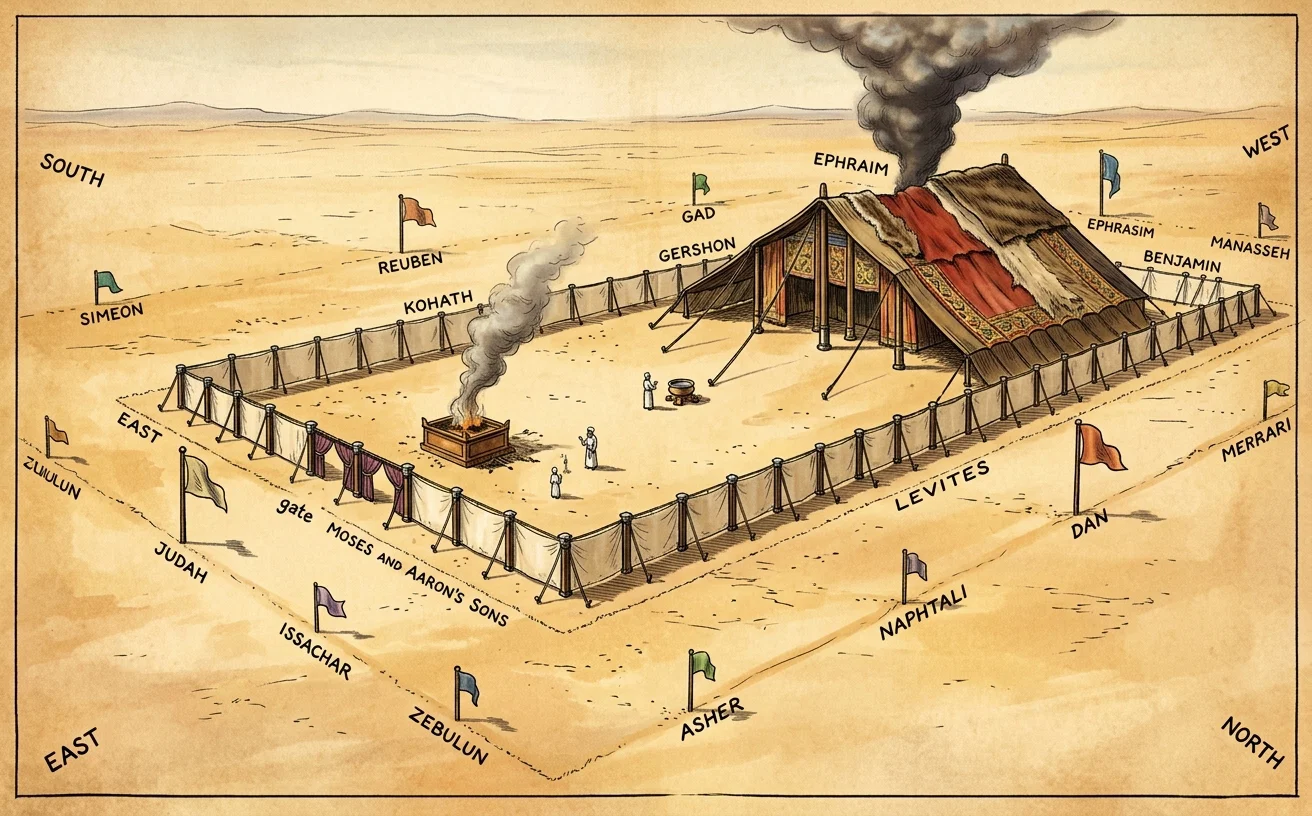
THE TABERNACLE AND THE COURT
TO CONTRIBUTORS.
By Editor
The Signs of the Times is a purely missionary enterprise. For this reason it has felt free to ask for contributions from its friends. It pays nothing for contributions, either prose or poetry, unless solicited by the editor, and then the fact is stated when the articles are asked for. This is a plan rarely followed, but sometimes deemed expedient.
Articles Desired.—Those which set forth in the Spirit of Christ the great saving truths of God, short and to the point. It is better to treat one important truth clearly, in a short article, than many points vaguely in a long one. We desire no caustic, critical productions, which might minister to personal pride or pleasure, but can not save souls.
How Prepared.—Write plainly, with typewriter or ink, with wide space between the lines, to freely admit of editing, writing of subheads, etc. Write on one side of the sheet only. Sign the name to the manuscript, as it becomes oftentimes separated from accompanying letter. Anonymous contributions are not used, whatever their merit. If the writer does not wish his name to appear, let him furnish a pseudonym for the public. But we wish the name.
Manuscript Returned.—We will return all unused manuscript desired if stamp and directions are inclosed. We are forced sometimes to return good manuscript mainly for three reasons: (a) Sometimes the articles are too long; (b) sometimes we have a number on the same subject; (c) sometimes our plans are such that an article can not be used till it is out of date. We therefore hope that no offense will be taken by those who have freely contributed their best thought if their productions are returned. When we receive so much matter, we can not use all.