Your ShelfYour Projects

Signs of the Times, Vol. 24, No. 12.

THE LORD MY SHEPHERD

Signs of the Times

Mar 24, 1898

Pacific Press Publishing Company · Oakland, California · Mar 24, 1898

THE LORD MY SHEPHERD.
Psalm 23, R. V.
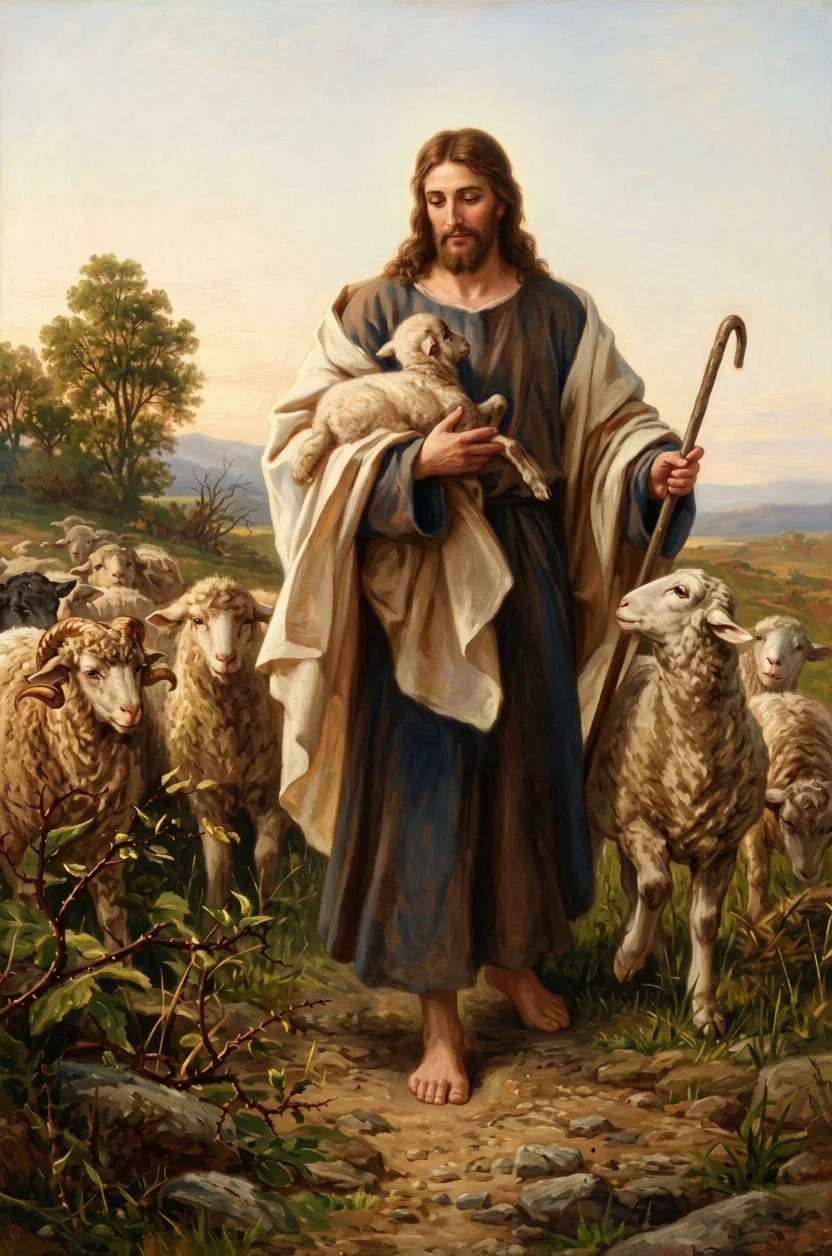
The Lord is my Shepherd; I shall not want. He maketh me to lie down in green pastures;
He leadeth me beside the still waters. He restoreth my soul; He guideth me in the paths of righteousness for His name’s sake. Yea, tho I walk through the valley of the shadow of death, I will fear no evil; for Thou art with me; Thy rod and Thy staff, they comfort me. Thou preparest a table before me in the presence of mine enemies; Thou hast anointed my head with oil; my cup runneth over. Surely goodness and mercy shall follow me all the days of my life; And I will dwell in the house of the Lord forever.
Verily, verily, I say unto you, He that entereth not by the door into the fold of the sheep, but climbeth up some other way, the same is a thief and a robber. But he that entereth in by the door is the shepherd of the sheep. To him the porter openeth; and the sheep hear his voice; and he calleth his own sheep by name, and leadeth them out. When he hath put forth all his own, he goeth before them, and the sheep follow him; for they know his voice. And a stranger will they not follow, but will flee from him; for they know not the voice of strangers. This parable spake Jesus unto them; but they understood not what things they were which He spake unto them.
Jesus therefore said unto them again, Verily, verily, I say unto you, I am the door of the sheep. All that came before Me are thieves and robbers; but the sheep did not hear them. I am the door; by Me if any man enter in, he shall be saved, and shall go in and go out, and shall find pasture. The thief cometh not, but that he may steal, and kill, and destroy; I came that they may have life, and may have it abundantly. I am the good shepherd; the good shepherd layeth down his life for the sheep. He that is a hireling, and not a shepherd, whose own the sheep are not, beholdeth the wolf coming, and leaveth the sheep, and fleeth, and the wolf snatcheth them, and scattereth them; he fleeth because he is a hireling, and careth not for the sheep. I am the good shepherd; and I know Mine own, and Mine own know Me, even as the Father knoweth Me, and I know the Father; and I lay down My life for the sheep. And other sheep I have, which are not of this fold; them also I must bring, and they shall hear My voice; and they shall become one flock, one shepherd. Therefore doth the Father love Me, because I lay down My life, that I may take it again.
My sheep hear My voice, and I know them, and they follow Me; and I give unto them eternal life; and they shall never perish, and no one shall snatch them out of My hand. My Father, which hath given them unto Me, is greater than all; and no one is able to snatch them out of the Father’s hand.

IN THE MASTER’S SERVICE.

“Philip findeth Nathanael, and saith unto him, We have found Him, of whom Moses in the law, and the prophets, did write; Jesus of Nazareth, the son of Joseph.” Philip was a real home missionary. In an interview with Jesus he had received light and knowledge. As he listened to the gracious words that fell from the Saviour’s lips, he believed, and his first thought was that he must communicate to some one else the light he had received. He told Nathanael of the Saviour. Nathanael was walking in the light as far as he had received it, and God did not permit him to stumble along in ignorance and blindness. As he was praying under a fig tree, Philip, with glad notes of joy in his voice, interrupted him, saying, “We have found Him, of whom Moses in the law, and the prophets, did write.”
The words that fell on Nathanael’s ear were words of assurance. Philip did not speak of the Saviour in a hesitating manner; his voice was full of hope as he said, “We have found Him, of whom Moses in the law, and the prophets, did write.” But, altho a sincere seeker after truth, Philip was not yet fully convinced. He added doubtfully, “Jesus of Nazareth, the son of Joseph.”
When Nathanael heard the words, “Jesus of Nazareth,” the prejudice that he had received by inheritance and education, filled his mind, and he answered, “Can there any good thing come out of Nazareth?” But Philip did not stop to enter into a controversy, but answered: I have no arguments to advance. Jesus is here. Come and see Him for yourself.
On Philip’s face Nathanael saw an expression he had never before seen there,—an expression of heavenly peace,—and he immediately left his place of prayer, and hastened with him to Jesus. When Christ saw him coming, He said, “Behold an Israelite indeed, in whom is no guile!” “Whence knowest Thou me?” questioned Nathanael. “Before that Philip called thee, when thou wast under the fig tree, I saw thee,” Christ answered.
Before this evidence Nathanael’s traditional prejudice was swept away. Christ’s words captivated his soul; he saw the Saviour by divine enlightenment, and, turning to Him, his face aglow with the light that had flashed into his mind, he said, “Rabbi, Thou art the Son of God; Thou art the King of Israel.” He had advanced into more perfect light than had Philip; his perception went farther; his faith meant more; for he saw in Jesus of Nazareth the Son of God.
This conversion from ignorance to light pleased the Saviour, and he said, “Because I said unto thee, I saw thee under the fig tree, believest thou? thou shalt see greater things than these.” You have opened your mind and heart and have confessed Me without one word of questioning unbelief. “Hereafter ye shall see heaven open, and the angels of God ascending and descending upon the Son of man.”
There is in this narrative a lesson which all need to learn and practise. Christ gave His life that those who have sinned might be saved; and He calls upon His children to make personal efforts for the saving of souls that are ready to perish. That which Christ has taught and done, His representatives are to teach and do; His influence is to be diffused to others by the well-ordered lives and godly conversation of His followers. God’s people are to be links in the golden chain that binds souls to one another and to God.
Those who have received light from Him who is the light of the world can, if they will consecrate themselves to Him, be instruments in His hands of enlightening many souls. As they share their light with others, it is not lessened, but increased and made more brilliant. As we give to others the riches of the grace of Christ, we too grow in grace; for as we bestow, we receive from the Source of all, light and power to bestow.
Preaching the Word is one way of spreading the truth, but it is not the only or the most effectual way. It is by personal interviews that the truth is most effectually communicated. Visiting the people in their homes, speaking to them personally, not in regard to worldly matters, but about Christ’s power to save to the uttermost all who come to Him—this makes the deepest impression. A few simple words, spoken from a heart filled with the love of Christ, will frequently do more good than the most powerful sermon. Speak calmly, tenderly; drop the seeds of truth into the minds of your hearers, praying that God will bless your work; and your words will spring up and bear fruit to the glory of God.
This is the work God would have His children do. Whatever may be our circumstances, we can be laborers together with God. We are not all called upon to preach, but each one can tell those around him of the wonderful love of Jesus. Those who have not been blessed with our privileges, those who have not received the light that has flashed into our minds, are to be sought out and labored for. To these souls we must go, saying as did Philip, “We have found Jesus.” And as they see our earnestness for the Master, they too will be led to look and live.
All heaven co-operates with Christ in His work of making plain the heavenward path, and co-operates also with those who strive to follow His example. If we could only realize how much is accomplished by personal effort for those in darkness, there would be one hundred at work where now there is but one. But this work is a solemn work, and unless we have the co-operation of heaven, we can not do it effectually. We may speak words of warning, but they will lack power. The words that are accompanied by the power of the Holy Spirit will find an assent in the judgment of candid, unprejudiced minds. The consciences of those who hear these words will be awakened. The soul hungering and thirsting after righteousness, admits the truth of the evidence presented by those who with power hold forth the words of life. The truth is sought for as hidden treasure; the eye of faith, receiving the heavenly anointing, beholds the light of the knowledge of the glory of God in the face of Jesus Christ.
As individuals and members of the church of God, we need to remember the work that has been committed to us. We are living in a time when every believer must show growth, or he will dwarf into nothingness. Paul writes to Timothy, “Take heed unto thyself, and unto the doctrine; continue in them; for in doing this thou shalt both save thyself, and them that hear thee.” As the Word of God is received into the heart, it transforms the life and character; and then the influence that flows from us is a positive, life-giving power. “Unto me, who am less than the least of all saints,” Paul writes again, “is this grace given, that I should preach among the Gentiles the unsearchable riches of Christ; and to make all men see what is the fellowship of the mystery, which from the beginning of the world hath been hid in God, who created all things by Jesus Christ. To the intent that now unto the principalities and powers in heavenly places might be known by the church the manifold wisdom of God, according to the eternal purpose which He purposed in Christ Jesus our Lord.”
Those who look at human souls in the light of the cross of Calvary need not err in regard to the estimate which should be placed upon them. But as witnesses chosen by God do we value Christ’s purchased possessions as we should? Are we pleading with God that He will help us to help the souls that are wounded and bruised and struggling with temptation, and lead them to Him? Are we improving the light God has given us, that we may impart it to others? Are we making it evident that we love the souls for whom Christ has died, or are we passing them by on the other side? Are we ready to make any sacrifice within our reach to co-operate with Him, to be laborers together with God?
No one who has true love for Christ will remain indifferent and indolent. All who are bearing the test of God, who obey His commandments, love the perishing human race. They follow the example of their Saviour, by putting forth earnest, self-sacrificing efforts for those around them, by seeking out, in the highways and hedges, the high and the low, the rich and the poor, bearing to all the message that they are the objects of Christ’s special love and guardian care, and inviting them to come to Him.
The Lord Jesus expects more of His children than they give, yes, a great deal more. He has called and chosen them; and every man according to his several ability has been given his work. All are to be “laborers together with God,” and, as His agents, they are to strive earnestly to win souls for Him. Why then are there so many who have no burden for the souls for whom Christ has died? The angels are constantly seeking to set every one at work in the vineyard of the Lord. They rejoiced when by the sacrifice of Christ the world was brought into favor with God, and again connected with heaven; and they sorrow when they see that those for whom so much has been done have no interest to win souls for Christ.
Every soul who claims to know God and Jesus Christ, whom He has sent, should seek to do his utmost for the enlargement of His kingdom, praying, “Thy kingdom come; Thy will be done on earth as it is in heaven,” and working in harmony with the prayer. Entire consecration and unity are needed in this work. How can any one be silent when they know what Christ expects from every human being? I implore all who name the name of Christ to be no longer selfishly indifferent to their duty. Live unto Christ, who died and rose again. God will greatly bless self-denying, self-sacrificing workers. Each angel has his mission, and is at his post of duty, ready to co-operate with you, and, by combining divine power with human effort, make of none effect the opposition of foes. They will make a place for you to walk, even among principalities and powers, beating back spiritual wickedness in high places.
MRS. E. G. WHITE.

HAVE COURAGE.

THE beautiful stars of heaven are shining, The planets revolve, and God keeps them in place. Have courage, lone heart, no time for repining, For you He upholds by His tender embrace.
O, trust Him, sad heart, just now He is pleading; In love’s sweetest accents He biddeth you come! He pleads with the Father, is now interceding, And soon He will welcome the faithful ones home.
Then, murmur ye not, but trust Him forever, Despise not His mercy, reject not His Word. He careth for you, will leave you, no, never. Then trust the Creator, thy Saviour and Lord.
MRS. ALICE M. AVERY-HARPER.
Laingsburg, Mich.

THE NATURE OF THE ATONEMENT.

In view of what we have so far studied on the subject of the atonement, we may here candidly consider a few points of interest, which are vital to the whole matter. Some may have heard it said that the death of Christ was the atonement. It is true that His death was for the purpose of effecting man’s reconciliation with God. Rom. 5:10. But did this complete the work necessary for the blotting out of man’s sins? It must be freely granted that the offering of Christ’s blood was a provision by which men might have this work done, but whether it shall be done or not depends on the will and conduct of those needing the benefit.
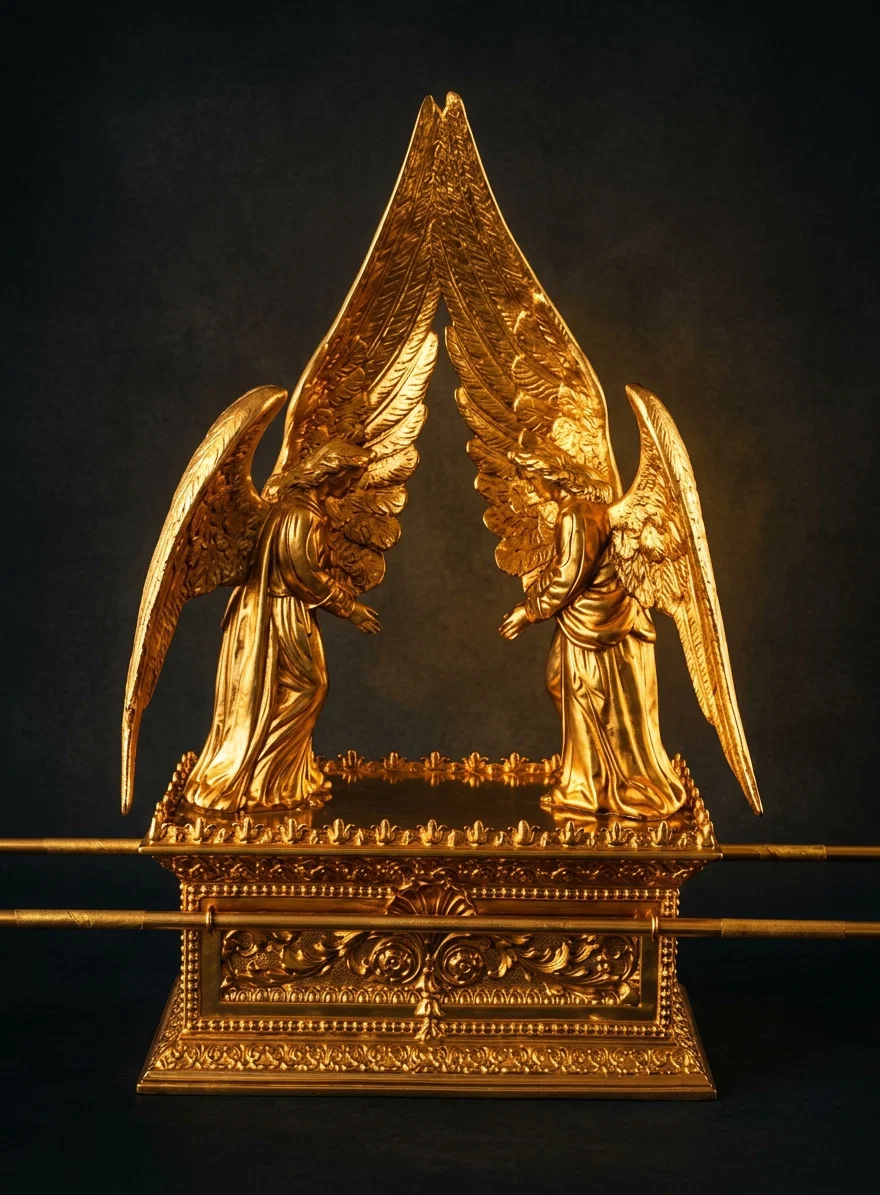
“Ark of the Covenant,” within which were the Tables of the Testimony, the Ten Commandments, and over which was the Mercy-seat. Over the Mercy-seat were the overshadowing Cherubim. Between the Cherubim was the Shekinah, the visible symbol of God’s Presence.
No one can seriously think that men’s sins are removed against their own wills, because that would be to tyrannize over and enslave men, by obliging them to do, and be, what they have no taste for. Were this the way of making atonement for sin, there could be no discrimination, and so all men would alike be saved absolutely. But this would destroy the force of those passages of God’s Word in which are brought to view the final punishment of the wicked.
To hold a belief which makes void any portion of the Bible, begets infidelity toward it in general, and causes hatred of the whole system it advocates.
It is therefore well to settle every question of religious faith on a firm basis. Regarding, as some do, that the death of Christ was to render satisfaction for sin, and that it therefore completed the atonement, brings a ready and decisive conclusion. We are told that Christ tasted “death for every man.” Heb. 2:9. If the death of Christ really rendered complete satisfaction for the sins of all for whom He died, both past and future, and that without the consent of those concerned, it logically follows that every man has actually had satisfaction given for his sins, and must therefore be absolved from them all. This would establish universal salvation at a single bound, and destroy the necessity of any act of faith on the part of men. It would make no difference whatever whether one believed in Christ as an historical being, even; for if His death was in behalf of “every man,” and that death actually rendered satisfaction for every man’s sins, then surely it matters not what one believes, or does, it will be well with him.
But in so momentous a matter as that of life or death in the eternal future, no one should hastily and carelessly settle down upon such a conclusion. There is, however, another consideration worthy of a moment’s thought, which, while not leading to so repulsive a conclusion, will be seen to be just as presumptuous. If the atonement for the sins of the present generation was completed on the cross, satisfaction was rendered for them more than eighteen centuries before they were committed. Could such a thing be possible? Could satisfaction be rendered for a wrong which had not been done, and so was not in existence? It may be suggested that this satisfaction was given in anticipation of what was to be. But this leads to an unavoidable conclusion, which can not be decisive with many; for if the Lord knew, when He died, every person who was to exist, and every sin that every individual of these unborn generations would commit, and then and there made complete satisfaction for them, this was granting indulgences for sin in a wholesale way. The defense may be set up, however, that it was not designed to exempt those who did not repent of their sins, but that since it was known that some would repent, and be saved, it was necessary thus to make an atonement in their behalf.
But this is to relinquish the belief that the death of Christ, which was for every man, comprehended the atonement. For if the atonement was to benefit none but those whom it was known would repent, then surely the death of Christ did not atone for the sins of “every man” for whom He died. This of itself ought to settle the question as to whether or not the death of Christ completed the atonement at the cross. If the atonement was there closed, and only those were included in its provision whom it was known would repent, the doctrine of predestination is established, and the case of every individual was there fixed beyond recall.
But let us look for a better way,—one which affords more hope and consolation. In the death of Christ the iniquity of all was made to meet on Him. Isa. 53:6, margin. That is, with His death He paid the price by which all might be redeemed from the slavery of sin. But if any do not choose to accept the offer of freedom so graciously extended, they may remain in sin, and take its final consequences. The only possible way by which the blood of Christ can avail in behalf of the sinner, is for him to yield himself, with his sins, to Christ. The sins being thus given to Him who purchased them, He performs the atonement work necessary for blotting them out of the “books of remembrance.”
In the typical atonement of the earthly sanctuary, only those sins were remembered by the high priest which had previously, through confession, been removed from the sinner, and conveyed into the sanctuary upon the body of a substitute. That being the true shadow of Christ’s work for the sinner, the atonement He accomplishes in fact, must have been distinctly foreshadowed in the typical sanctuary service. This is well stated by the apostle: “It was therefore necessary that the patterns of things in the heavens should be purified with these [the blood of beasts]; but the heavenly things themselves with better sacrifices than these.” Heb. 9:23.
We have already seen that the earthly tabernacle, called the “patterns of things in the heavens,” was cleansed once each year, at the close of that year’s religious service; that at that time all the sins of the year which had by confession been conveyed into the sanctuary, were taken out by the high priest, and laid on the head of the scapegoat, who, while living, carried these accumulated sins away to an uninhabited region, and there bore them till he died. Those, however, who had not placed their sins in the sanctuary before the close of that day’s service, must carry them themselves, with all the consequences they entailed. As the scapegoat who received the sins from the sanctuary at the close of the atonement ceremony was banished from the camp, so every other one upon whom sin then rested, must also be separated from the Lord’s camp and people, as the closing work of the high priest for His people in that typical cleansing work.
No one can fail to see in the shadowy work of the Jewish high priesthood, the figure of the real day of judgment. As the closing work of the earthly atonement was the putting away of sin from the people of God, so with the heavenly atonement. In that, the closing work of Christ as our high priest must be the final putting away of sin from His people, by separating from them everything and every person tainted with the deadly malady.
The atonement being thus delayed to become the closing work of Christ for the world, every one may receive the full recognition, not only of what he has done personally, whether good or bad, but also of all that has been accomplished through his influence, to the latest moment of probation. This would not be the case were the atonement closed earlier. With such men as Voltaire, Paine, and others of their class, no just sentence could be meted out immediately upon their deaths, for the reason that their influence for evil did not die with them. The same may be said of such men as the Wesleys, and the many missionaries who have sacrificed life to plant the banner of the cross in heathen lands. Those men being dead yet speak, and not till the last generation has lived will their influence for good be computed.
The atonement is therefore really an investigation of the life record of men, to ascertain who are worthy to live forever, and to separate from them all those who must bear their own sins. Up to that time all have opportunity to lay their sins on Christ, who in His own body bears them into the sanctuary above, there to await the time when the accumulated sins of all ages, carried there through confession, shallfinally be blotted out together. With that time past, those who have refused to confess their sins must bear them themselves, even as Satan, the great scapegoat, bears the sins of those who have renounced them and sought refuge in Christ, the divine Sacrifice.
JOHN ORR.

Holy and Unholy Fire

BIBLE OBJECT LESSONS. No. 3.

Holy and Unholy Fire.

At a later period of the world’s history, God gave the leaders of His people minute instruction in regard to the building of a sanctuary, and the offering of sacrifices and sweet incense. When the sanctuary was completed, and the first offerings were presented in harmony with the instructions given, fire was sent by the Lord, and the sacrifice was consumed in the presence of those who offered it. Thus God manifested His approval of perfect obedience to His requirements. Not long thereafter, Nadab and Abihu offered incense before the Lord, and fire burst forth and devoured those that offered the incense.
What made the difference? Why, in the one case, was the offering consumed, and why in the other were those that were offered devoured? The answer is not difficult; in the first instance they obeyed the Lord. In the next, they had their own way, and “offered strange fire before the Lord, which he commanded them not.” They evidently reasoned that the Lord was “not very particular;” but the Lord here gives us a forcible object lesson, to demonstrate and emphasize the fact that He always means exactly what He says, and to show that He is no respecter of persons, but that all will be held responsible for the light which they have received.
Now to apply the lesson. Many professed Christians reason that God is not particular in regard to exact obedience to many of His requirements. They virtually say that “God does not mean what He says.” They fail to make distinction between the sacred and the common, and thereby become stranded on the same rock that caused the ruin of Nadab and Abihu. Do not the words of the Lord through the prophet Isaiah apply to such? “They have cast away the law of the Lord of hosts, and despised the word of the Holy One of Israel.” See also Ps. 119:126.
Men presume upon the love and long-suffering of God, and “because sentence against an evil work is not executed speedily, therefore the heart of the sons of men is fully set in them to do evil.” But when sentence is finally passed—
“Shall we hear from the lips of the Saviour The words, ‘Faithful servant, well done,’ Or, trembling with fear and with anguish, Be banished away from His throne?”
In that great day, shall we be among those to whom the presence of God is a consuming fire, or with that other company, altho not so large, to whom the presence of our God “is fulness of joy”?

Korah, Dathan, and Abiram.

Of these men the record tells us that “they rose up before Moses, with certain of the children of Israel, two hundred and fifty princes of the assembly, famous in the congregation, men of renown; and they gathered themselves together against Moses and against Aaron, and said unto them, Ye take too much upon you, seeing all the congregation are holy, every one of them, and the Lord is among them; wherefore then lift ye up yourselves above the congregation of the Lord?”
Then the Lord instructed Moses to say to the people that they were to separate themselves from these wicked men and touch nothingof theirs, lest they be consumed in their sins. And when they had thus separated themselves, “the earth opened her mouth, and swallowed them up;” “they, and all that appertained to them, went down alive into the pit, and the earth closed upon them; and they perished from among the congregation.” “And there came out a fire from the Lord, and consumed the two hundred and fifty men that offered incense.”
In the case in hand we have a most striking example of the passing of sentence, and the execution of judgment, upon those who, altho prominent among God’s people, failed to recognize the authority of the Creator, and make proper distinction between that which God had sanctified, or set apart for a sacred work, and that which He had not thus set apart. Let us profit by the lesson.
Will not the decision of our heavenly Father be the same in the exactly parallel case of refusing to recognize the distinction between the sacred and the common, the Sabbath of the Lord and the six working days? Or, will not judgment be as surely executed, altho delayed for a time, upon those who live in open violation of, and rebellion against, the authority of God as clearly expressed in His law? “Our God is a consuming fire”—not to the righteous, but to the sinner. “Sin is the transgression of the law.” Reader, are you willing to take the awful responsibility, to hazard the consequences of being an open violator of the divine law?

Saul Sent to Destroy the Amalekites.

Here is another striking example. There came a time in the history of the nation of the Amalekites when God saw that their cup of iniquity was full; they had sinned away their day of grace; their probation had closed, because they had become so hardened in sin that the Spirit of God could not convict them of sin, and thus lead them to repentance; wherefore, to avert the misery and suffering that would, of necessity, have been visited upon their posterity had they continued to live, God purposed to cut short their career, and so sent this message to Saul, the king of Israel, through the prophet Samuel: “Thus saith the Lord of hosts, . . . Go and smite Amalek, and utterly destroy all that they have, and spare them not.” This command was prefaced by the caution, “Now therefore hearken thou unto the voice of the words of the Lord.” Saul gathered his army together and went, but instead of obeying “the voice of the words of the Lord,” the record tells us that “Saul and the people spared Agag, and the best of the sheep, and of the oxen, and of the fatlings, and the lambs, and all that was good, and would not utterly destroy them; but everything that was vile and refuse, that they utterly destroyed.”
When the prophet Samuel, at the direction of the Lord, began to reprove Saul for disobedience, the king tried to justify his course by saying: “Yea, I have obeyed the voice of the Lord, and have gone the way which the Lord sent me, and have brought Agag the king of Amalek, and have utterly destroyed the Amalekites. But the people took of the spoil, sheep and oxen, the chief of the things which should have been utterly destroyed, to sacrifice unto the Lord thy God in Gilgal. And Samuel said, Hath the Lord as great delight in burnt-offerings and sacrifices, as in obeying the voice of the Lord? Behold, to obey is better than sacrifice, and to hearken than the fat of rams. For rebellion is as the sin of witchcraft, and stubbornness is as iniquity and idolatry. Because thou hast rejected the word of the Lord, He hath also rejected thee from being king.” King Saul’s doom was sealed; not long thereafter his rebellious life came to a tragic end, by his own suicidal act, of falling upon his sword.
Many professed followers of Christ to-day, who have the same right and power to choose for themselves as did Saul, persist in obeying(?) the Lord as he did, or, as they express it, “in the spirit, but not in the letter.”
They disregard the command of the Lord, yet claim to obey it by substituting the first for the seventh day of the week, and even ministers of the Gospel quote the fourth commandment as their authority for first-day observance, virtually saying with Saul of old, when confronted with the plain word of the Lord, “I have performed the commandment of the Lord.” Others say that they had as soon keep the seventh day, “according to the commandment,” as the first, if “the people” would only do it. Hear the word of the Lord: “Thou shalt not follow a multitude to do evil.”
Is not this the lesson that we should learn from the experience of Saul, that when the final reckoning is made up, those who persist in rejecting the Word of the Lord will as certainly be rejected from being subjects of God’s everlasting kingdom as was Saul from the temporal kingdom of Israel? Our heavenly Father can not consistently admit rebels into His eternal kingdom, no more than He could permit Satan to remain there, and constantly jeopardize the government of heaven, after his fall, which was simply rebellion against God’s perfect law. G. W. Reaser.
Oakland, Cal.
(Concluded next week.)

THE RETURN OF THE LORD.

Upon no Bible subject has there been more widespread agitation in the religious world than upon that pertaining to the coming of Christ to this earth. Believed by the few, but scouted by the many, it has nevertheless during the last few years in some way and to some extent commanded the attention of the majority. In the minds of the ungodly and the sinner, its contemplation is most unpleasant, for to them it means a day of retribution, a cutting short of their wrong purposes and their unholy plans. On the contrary, to the child of God it appears as the one desideratum, the goal of his expectations, the fruition of his hopes, the fulfilment of his cherished desires. To him the coming of Christ will be as the coming of a friend, a Saviour, a long-lost brother. He who loves Christ will love His appearing. I love my mother, my wife, my sister, my brother; and if I love them I will love to be near them. It is quite impossible for me to separate my love for them from my love of their personal presence. So it is with the love of the disciple for his Lord. If he loves Christ in heaven and not on earth, far off, and not near by, it is not true, genuine love after all. It is love in name, and not in fact and in truth. And so I say again, We can not separate our love of the Lord from our love of His personal presence.
But when Christ returns to this earth, will He come personally? By many it is thought that He will come only in a spiritual sense. That He does come in a spiritual sense through His representative, the Holy Spirit, we do not deny. But that He will come in a literal sense must be conceded from the plain declarations of Scripture on this point. He Himself says: “Let not your heart be troubled; ye believe in God, believe also in Me. In my Father’s house are many mansions; if it were not so, I would have told you. I go to prepare a place for you. And if I go and prepare a place for you, I will come again, and receive you unto Myself; that where I am, there ye may be also.” John 14 : 1–3.
The statement of our Saviour in the above words is given new emphasis by the angels who appeared to the disciples at the time of His ascension, as brought to view in the first chapter of Acts: “And while they looked steadfastly toward heaven as He went up, behold, two men stood by them in white apparel; which also said, Ye men of Galilee, why stand ye gazing up into heaven? this same Jesus, which is taken up from you into heaven, shall so come in like manner as ye have seen Him go into heaven.” Verses 10, 11. To the disciples’ sorrowful hearts, as well as to the longing heart of every child of God to-day, these words of the angel come with sweet assurance. The same Jesus, with whom Peter, James, and John had associated for three years and a half, with whom they had been identified in joy and sorrow, in temptation and suffering, who had alleviated their distresses, satisfied their temporal needs, and opened to their spiritual understanding divine truth, was to return to them once more. O, blessed thought!
And to the disciples to-day, living and laboring in the midst of trial and temptation, buffeted by the enemy, and finding comfort only in the promises of the Holy Scriptures and the assurances of Christ’s representative, do these words of the angel come with comfort and satisfaction. We ourselves as God’s children, if faithful, are to behold the blessed Jesus; not another, but Himself; not His representative, but He Himself, who died that we might live, who suffered debasement that we might enjoy exaltation. Says the inspired apostle, in writing to the Thessalonian church, “The Lord Himself shall descend from heaven.”
But these expressions prompt another inquiry: How will the Lord return? Will His coming be known to one of His children and not to another? Will He come unheralded and unknown as He did eighteen hundred years ago, a lowly babe born in Bethlehem’s manger? Ah, no indeed! but with all the pageant splendor of His celestial kingdom. By mighty signs and wonders will His approach be heralded. And when He appears in the celestial dome, attended by His body-guard of shining ones, every eye shall behold Him, and they also which pierced Him. Matt. 24 : 27; Rev. 1 : 7.
Christ will come to claim His own, to receive His people home to the mansions He has gone to prepare for them. His voice will wake the sleeping dead. John 5 : 28, 29. In response to that life-giving call, those who have been sleeping in Jesus, from the death of Abel down through the ages until the last disciple fell under the power of death, will come forth from their dusty beds shouting victory over death and the grave. 1 Cor. 15 : 51–55. By the brightness of Christ’s coming the living righteous are changed from mortality to immortality, and, with His children who have been awakened from their long sleep, will be caught up to meet the Lord in the air, and so shall they ever be with the Lord. “Wherefore,” says the apostle, “comfort one another with these words.” 1 Thess. 4 : 16–18.
O glorious day soon to dawn! We can but exclaim in the words of the beloved disciple, “Come, Lord Jesus, come quickly.” What a glorious reunion will His coming bring in! What a grand praise service will then be held! And when the sons of God, with their blessed Redeemer at their head, ascend to the city of God, how the universe of God will resound with shouts of joy and paeans of victory. Then when we have awakened in His likeness (Ps. 17 : 15), and been changed into His glorious image, we shall indeed be satisfied. Satisfied, and yet not satisfied; for every day will our hearts drink in new joys, every moment will witness a more perfect transformation into the divine image, and every word and act and phase of Divinity will manifest to our minds deeper riches of divine love, and enlarge our hearts to greater depths and breadths, and tune our tongues to loftier and sweeter tones of praise. F. M. W.

BACKSLIDING FROM GOD.

Now there is one thing to which we wish to call the attention of backsliders, and that is, that the Lord never forsook them, but that they forsook Him. The Lord never left them, but they left Him. And this, too, without any cause. He says: “What iniquity have your fathers found in Me, that they are gone far from Me?” Is not God the same to-day as when you came to Him first? Has God changed? Men are apt to think that God has changed; but the fault is with them. Backslider, I would ask you, “What iniquity is there in God, that you have left Him and gone far from Him?” You have, He says, hewed out to yourselves broken cisterns that hold no water. The world can not satisfy the new nature. No earthly well can satisfy the soul that has become a partaker of the heavenly nature. Honor, wealth, and the pleasures of this world, will not satisfy those who, having tasted the water of life, have gone astray, seeking refreshment at the world’s fountains. Earthly wells will get dry. They can not quench spiritual thirst.—Moody.
Continue reading: GOD AND HIS LAW