DOROTHY hurried through her work and was soon almost ready to go, but before she had put on her wraps, there came a knock at the door.
"Why, good afternoon, Ruth! I am so glad to see you," exclaimed Dorothy; "will you come in?"
"Only for a few minutes," replied Ruth, "I must go down to see little Jane Blackwell, she is one of my Sabbath-school scholars and is quite ill, you know."
After a few minutes pleasant conversation Ruth rose to go. "I am going to see Grandma Finly," said Dorothy, "and if I may, I will go with you."
"O, do!" answered Ruth; "I shall be so glad to have you."
The girls separated at a corner a few blocks away, each feeling refreshed by having been in the other's company.
Grandma Finly was very much pleased to have Dorothy come. "I have been so lonesome," she said, "indeed, it seemed sometimes that I could not endure the solitude. Each day it seemed that surely Delia would come; I could not realize that she would not come any more, but I am so glad, Dorothy, that you thought of poor old me."
Was it by chance that Dorothy opened her Bible to the nineteenth chapter of Matthew?
"That's what it means to love our neighbor," said Grandma Finly. "The rich man thought he loved his neighbor as himself, but the Lord knew he did not; and the rich man himself realized, to a certain extent, that he did not, when he refused to sell his goods and go and give to the poor. Dorothy, how few of us love our neighbors as ourselves."
"Yes," said Dorothy, "The Lord has shown me how far short I have fallen, and with His help I mean to get nearer the high standard upon this point."
"What a nice time I have had!" thought Dorothy as she hurried toward the tumble-down cottage where crippled Grace lived. "How many things we have to learn before we can love our neighbor as ourselves."
Little crippled Grace lay in her white bed, counting the flowers in the border about her bedroom. "I wonder why God wanted Delia Deen to go to sleep," thought she; "now if I had died"—here she was interrupted by a knock at the door.
"Come in," she called.
"Good afternoon, Grace," said Dorothy, "perhaps you don't know me. My name is Dorothy Deen, my sister Delia used to come and sing for you, you know, and I thought perhaps you would like for me to."
"O, indeed, I would!" said Grace. "Can you sing, 'He loves Me Too?'"
In a clear, sweet voice Dorothy sang the song. And Grace clasped her hands with joy as she finished.
"Now, won't you please sing, 'My Days are Gliding Swiftly By'? Mama would like to hear you sing, and so would lots of the folks around here," said Grace, as Dorothy finished.
She thought one moment, "Yes, that would be loving my neighbor," and then said, "If you will tell your mama to come up to my house this evening, and bring all of her neighbors who want to come, I will sing for them."
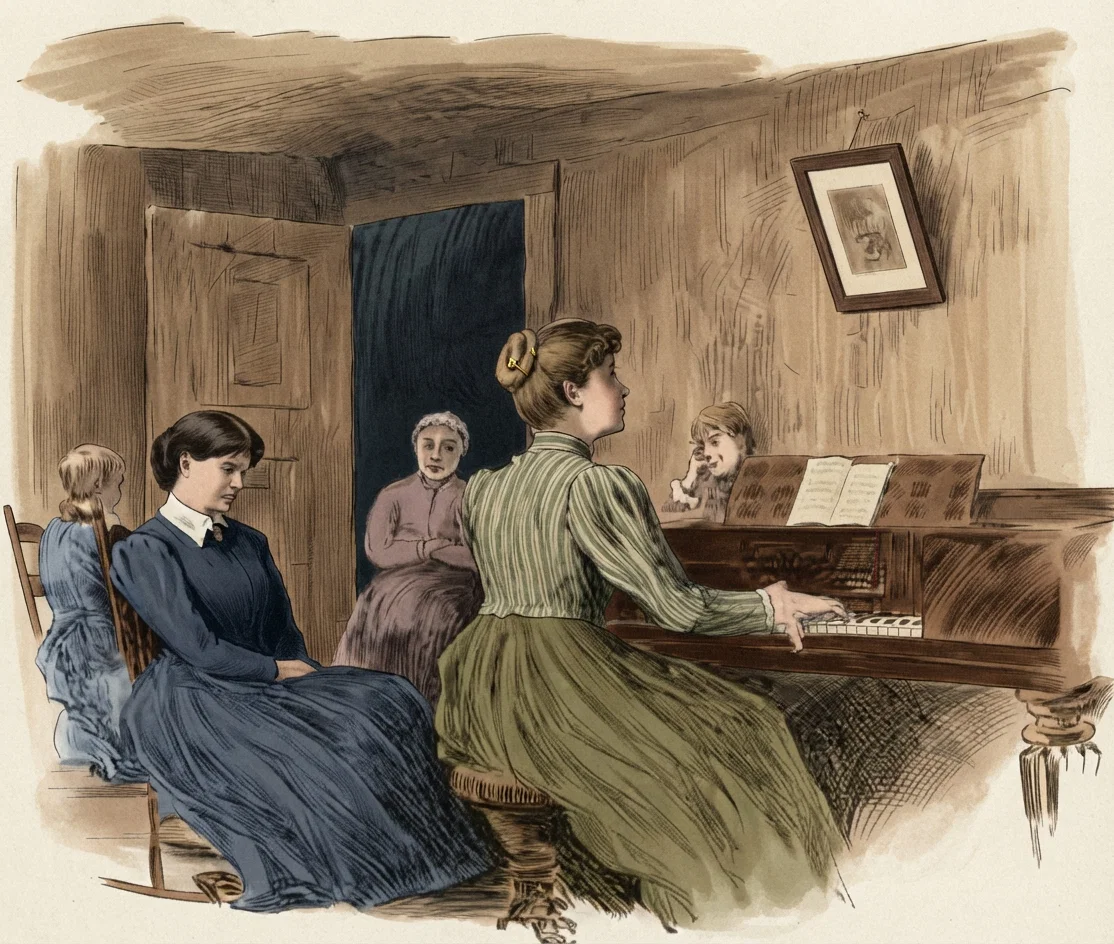
“Dorothy sat at the piano, her fingers ran softly over the keys.”
"That will be so nice," said Grace; "I know mama will come."
"I would like to go over and see old Mr. Lane," thought Dorothy, "but it is getting late, and papa will be home for his supper; so I must hurry."
"Why, Ruth!" she exclaimed, as her friend came up close beside her. "Have you had a nice afternoon?"
"O, splendid!" said Ruth, "I have been to several places, and have had a real good time. How much dearer our neighbors—for these poor are our neighbors—seem when we go out among them."
"There is something more about our neighbors," thought Dorothy; "I wonder if every one is thinking of them this afternoon." She then told Ruth how thoughtful little Grace had been of her neighbors, and asked if she could not come and help her sing.
"I will try," called Ruth after her, as she hurried toward her home.
"Papa," said Dorothy, at supper time, "there are several people coming here this evening from Lowly Row, to have me play and sing for them, and I would like to have you here so much. Won't you come?"
"I will think about it," said Mr. Deen, as he hurried away.
Dorothy knelt and asked the Father in heaven to go with her papa and bring him safely home. She then cleared the table, washed the dishes, lighted the lamps in the parlor, and waited for some one to come. Soon Ruth came, and soon after a crowd of poorly-dressed, but expectant people. The girls sang "Rock of Ages," "Nearer, my God, to Thee," and many others of these dear old hymns that brought to each of them such tender recollections.
Dorothy listened anxiously for her father's footsteps, and still he did not come. She felt sure, however, that he would come, for had she not asked that he would? and had not Jesus said, "Whatsoever ye shall ask in My name, I will give it you?"
"Will you sing 'The Ninety and Nine' for us?" asked one of the old ladies.
"You please sing it, Dorothy," said Ruth. Dorothy sat at the piano, her fingers ran softly over the keys. What a world of memories that old tune brought? It was her mother's favorite song. As she sang, she seemed to forget there was any one present; she sang with such tender pathos, she did not hear her father enter the house. He came
into the hall and stopped, as he heard her voice singing that old song—
"Lord, Thou hast here Thy ninety and nine,
Are they not enough for Thee?
But the Master answered, It is to Mine own
That has wandered away from Me."
"That means me," said Mr. Deen to himself, and as Dorothy sang the next verse, Ruth was startled to hear a sob in the hall; but thinking it was one of the visitors or that she was mistaken, paid no further attention. Mr. Deen hurried to his room. How many times he had heard his wife sing that song, and she had asked him to meet her. He knew full well that the closing scenes were upon the earth and he was not saved.
"O God, help me!" was all he could say as he knelt there. The guests had all gone.
Dorothy sat alone thinking of the events of the day and wondering why her father did not come. Suddenly his voice startled her by saying, "Daughter, will you sing that song again?"
"Why, papa! I did not know you were here; which one do you want?"
"The Ninety and Nine," dear, you know it was your mother's favorite song." Dorothy wondered at her father's tones, but sang the song again.
"Daughter," said her father as she finished, "this night the Lord has forgiven my sins, and I am a new man in Christ Jesus."
Dorothy's heart was filled with an unutterable joy. Surely the Lord is good! What a nice time she and her papa had talking over this new-found happiness; and when at last Dorothy went to her room and knelt in thanksgiving beside her bed, this thought came to her, "Surely it pays to serve God. This has been one day's loving my neighbor."
"Do you know, mama," asked Ruth that evening after she had returned to her home, "that when we love our neighbor as ourselves, we see so much good in them, and so little in ourselves, that we are not tempted to speak evil of them?"13
"Yes, my child," said Mrs. Wiley, "let us pray that the Lord may give us of His love, and of that charity which thinketh no evil."
AVA ELTHYN BARNES.
Pueblo, Colo.
GRANDMOTHER'S THOUGHTS.
By Mary D. Brine
WHAT happy thoughts are flitting
(As grandmama sits knitting)
Throughout the aged heart still true and strong?
Ah! 'tis just the same old story;
She is giving Christ the glory
For the mercies which have blessed her life so long.
For "like stitches on my needles"
(Says this happy Grandma Gray),
"So He multiplies my blessings,
And increases them each day."
—Mary D. Brine.
A MACHINE THAT SOLVES PROBLEMS.
PROF. S. W. BURNHAM, the noted astronomer, has invented a calculating machine which will lighten the labor of the mathematician in intricate and involved work. Simple in construction, by its aid multiplication and division, the extraction of square roots and roots up to the ninth power entail no more mental work than the mere moving of a screw and an index hand. The principle is the same as that of the sliding computing rule, but it does away with the double work of the use of the sliding rule.
Professor Burnham applies the principle to two metal circles, one within the other. The scale is cut on the inner edge of the outer circle. Both are cut together on the machine, so they register exactly. The scale is divided into 1,000 lines, with extended lines at the hundreds and tens. The inner circle is movable. This permits an indefinite prolongation of computation.—Press Dispatch.
A DEAR BUTTON.
"I WAS well acquainted," says a reformed gambler, "with the circumstances of a young man starting to go to the Hot Springs of Arkansas. He was a man who had acquired, by honesty and industry, about nine hundred dollars. He had been in bad health for some time, and concluded to visit the springs to recruit his health. On his arrival at the mouth of White River, he was detained for a boat, and while there he was induced to play cards. I am unable to say at this time what was the game that he played, but he won some forty or fifty dollars, and the game broke up.
"After the game was broken up, one of the gamblers pulled out a button and bantered the young man to win it at a faro, and he pulled out a quarter and bet against the button, and the banker won. He tried again and again, until he lost some three or four dollars, to win the button, and then went to bed. The banker had now several persons betting small bets on the game, and had won some eight or ten dollars, and there was quite a noise and bustle going on. The young man who had quit and gone to bed, got up, and felt a strong propensity to win all. He began betting on the game again, and in a short time lost the whole of his nine hundred dollars trying to win a button; for that was all he could have won, as the man had no money at first but what he had won from the young man. The young man was obliged to make his way home, without his health being benefited, and without his money."
—Selected.
THE CRAZE FOR "DOSING."
THERE is a great and growing craze in this country for the taking of drugs, especially drugs whose nature and effects are to the taker wholly unknown.
A man or a woman has a qualm. Instead of asking himself or herself, "What have I eaten? What have I drunk? Have I been sitting in a draught?" he or she—he no less than she—casts about for some drug which he or she has heard about or read about, no one knows where. And having found one with a sufficiently terrifying name, odor, or taste, he or she pours it into his or her helpless interior and with a sublime faith and courage awaits the results.
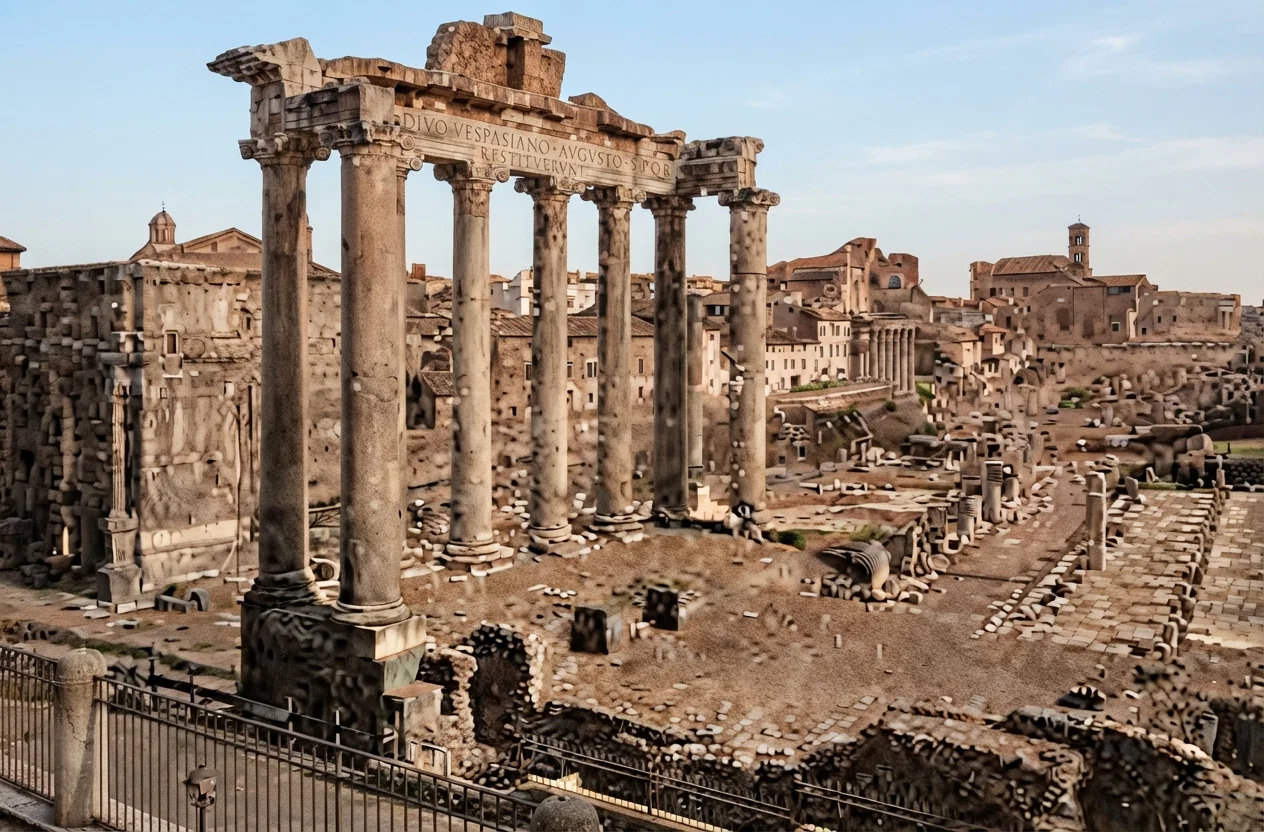
"Ruins of the Home of the Caesars" and "Remains of the Roman Forum." (See article on "Rome," p. 9.)
Usually the drug is harmless and passes ineffectually away, leaving nature free to pursue its task of curing the cause of the qualm. But only too often the drug, worthless for curing the disorder at which it was aimed, strikes and injures some other part of the delicate internal economy.
Of course it would be a waste of words to ask people to take care of their health, to defend their stomachs against their greedy palates, to exercise as much prudence in the care of their bodies as they exercise in the care of their horses, dogs, or birds. But is it equally useless to ask them to let the drug bottles alone after they have made themselves ill by over-eating or the other common imprudences, and to give nature a fair chance to nurse the injured part back to health?—New York World.
Channels for Communicating Grace
"The Lord Jesus seeks the co-operation of those who will become unobstructed channels for the communication of His grace."
Responsibility for Injustice Under Intoxication
"He who puts the intoxicating cup to his lips makes himself responsible for all the injustice he may commit under its besetting power."
Combination Offers
REFERENCE
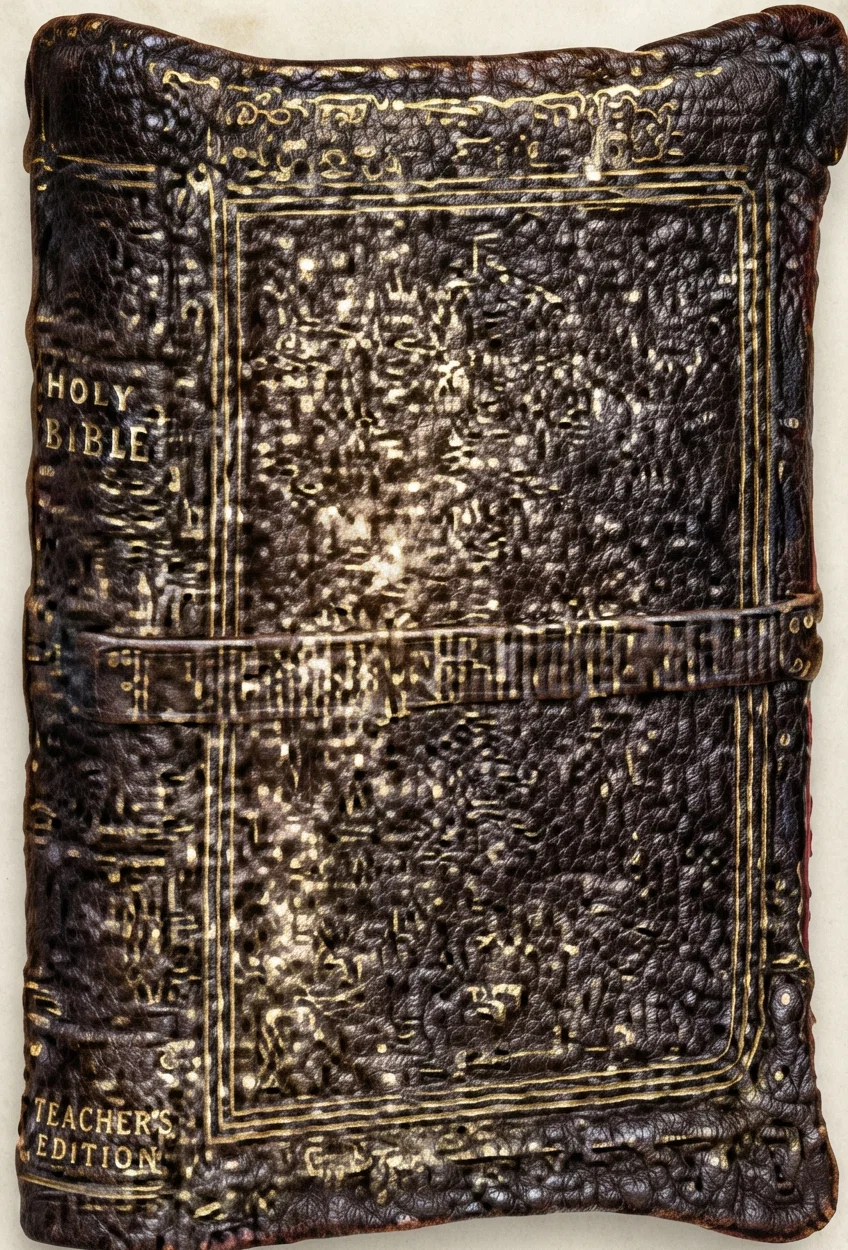
TEACHER'S BIBLE
Minion Type
Page 5 1/2x8
inches....
The Bible is substantially bound in morocco, divinity circuit, leather lined to edge, round corners, red under gold edges, minion type, and contains over 650 pages of finely illustrated Helps to the study of the Bible.
One feature of special value in the Helps contained in this Bible is the COMBINED CONCORDANCE, which unites, in a very convenient form for ready reference, a Concordance, Subject Index, and Pronouncing Dictionary of Scripture Proper Names.
Sent post-paid with the SIGNS one year - $2.75
Bible sent free on receipt of 7 new names and $7.00
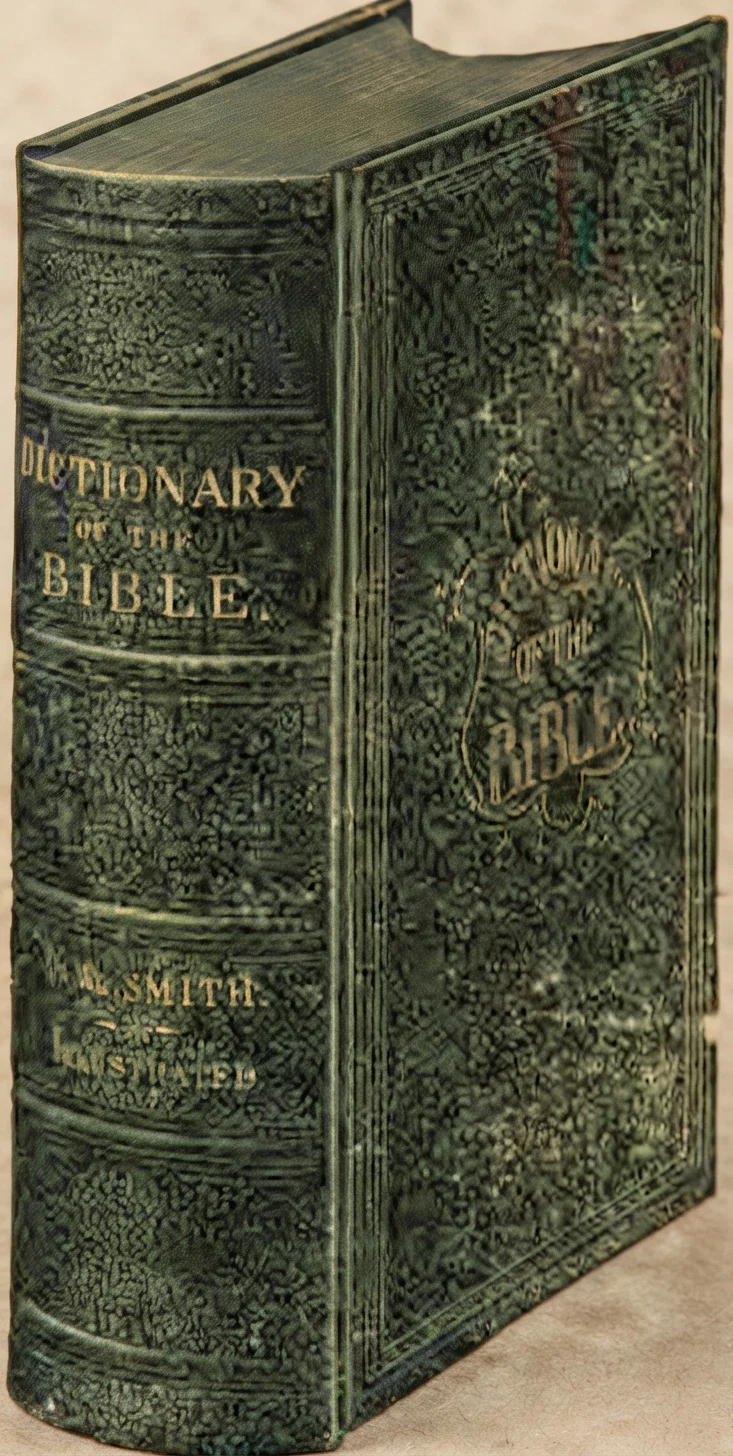
DICTIONARY OF THE BIBLE
By DR. WM. SMITH.
Size 6 1/2 x 9 1/2 x 2 1/2 inches,
Cloth bound.
Dr. William Smith's Dictionary of the Antiquities, Biography, Geography, and Natural History of the Bible is admitted by those most competent to judge to be the best of its kind in the English language. Its editor and his associate contributors are well known as among the most eminent Biblical scholars of our time, in both Europe and America.
The book contains over one thousand pages, is illustrated, and gives a full and accurate account of every name and place mentioned in the Bible, which can possibly need explanation; of every animal, plant, or mineral alluded to by the Sacred Writers; and of every custom and article of use among Jewish and contemporary nations.
This Dictionary is published by Scranton & Co., of Hartford, Conn., and sells at $4.50.
Our Price, post-paid, with the SIGNS, one year, $2.25
Book sent Free for Five New Yearly Subscriptions and one renewal at $1.00 each.
POLITICAL SPEECHES and DEBATES OF LINCOLN AND DOUGLAS...
By Editor
A BOOK FOR THE TIMES. The following is one reason why this discussion by these two able lawyers and statesmen should find a large place amongst the people of this country to-day: Another attack is made upon the Declaration of Independence and the Constitution in an attempt once more "to turn a free people back into the hateful paths of despotism." Then, the attack was upon the clause which declares that "all men are created equal." Now, the attack is upon that clause which declares that governments derive their just powers from the consent of the governed. Then, there was rendered a decision of the Supreme Court of the United States which perverted the Constitution in the interests of that attack. Now, there is a decision of the Supreme Court of the United States which perverts the Constitution in the interests of this attack. The careful study of this history-making discussion and of the principles involved will prepare the people successfully, and in the right way, to meet all attacks upon the immortal Declaration, and to correct any and all perversions of the Constitution.
Sent post-paid with the SIGNS one year - - - - - - - - - - - - - - - - - - - - $1.75
Book sent Free for Three New Yearly Subscriptions and One Renewal at $1.00 each.
HEART-LIFE CLASSICS
By Editor
A choice line of devotional story books bound in cloth, size 6 1/2 x 4 1/2 inches. Excellent books for Sabbath-school libraries. Will be read with much interest and profit by both old and young.
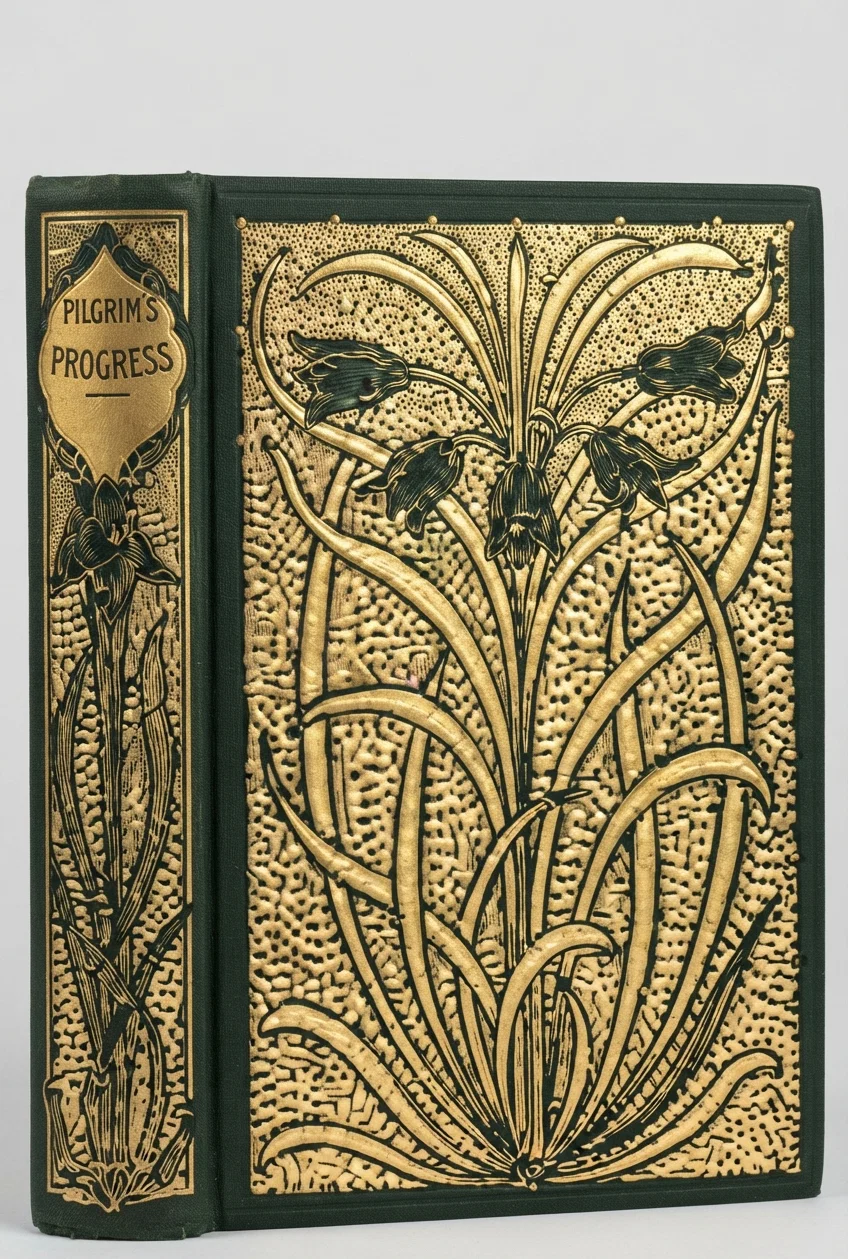
Pilgrim's Progress, Jessica's Prayer and Jessica's Mother, Nobody Loves Me, Olive's Story, Helps over Hard Places—for Girls, Helps over Hard Places—for Boys, Line upon Line, Heart-Life, A Bag of Stories, Shepherd Psalm. Each price 40 cts.
One copy, post-paid with SIGNS one year . . . $1.25
Any single book sent Free for One New Subscriber and One Renewal at $1.00 each.
If you desire the whole set of ten volumes mentioned above, we will send them post-paid FREE for Eight New Yearly Subscriptions at $1.00 each ($8.00).
ADDRESS
SIGNS OF THE TIMES, OAKLAND, CAL.
International
International.—President Krueger, of the Transvaal Republic, has been given permission by his government to cross the frontier, and discuss with the premier of Cape Colony the differences existing between English subjects and the Transvaal Republic. . . . There was a riot in the Italian Chamber of Deputies on May 27, in which the Socialists were attacked by the Rightists. A free fight ensued, the session was suspended, and the chamber cleared by the officials. . . . Russia now has no representative at the Vatican. For several months the czar's minister to the "Holy See" has endeavored to obtain an audience with the pope. On making inquiry as to the reason for his failure in this, the minister was informed that as the czar had ignored the pontiff's sovereign rights by omitting to ask him to send delegates to the disarmament conference, "his holiness" did not feel called upon to receive the czar's representative. The Russian minister at once requested to be relieved of his mission, and it is reported that the czar will not be again represented at the Vatican. . . . The Diet of Finland, after a protracted debate over the new Russian military law which places additional burdens upon the Finns, is drawing up a set of counter propositions to the Russian Government which it is hoped will safeguard the Finns. Proclamations are being circulated among the people urging them to "make common cause with the Poles against Russian barbarism."
Orders have been issued from Peking directing the viceroys and governors of the neighboring provinces to put all their forces on a war footing, owing to the arrival of six Italian war-ships in San Mun Harbor. It is thought also that the Chinese are contemplating an attempt to drive the Germans from Shantung Peninsula. . . . There is marvellous activity through Russia along the line of outlets to the Indian Ocean and the Atlantic. Three of these projects are being pushed as rapidly as possible. One is a line of railway from Russia south through Persia to the Arabian Sea, another is an extension of her Trans-Caspian system toward the headwaters of the rivers of China, and a third is her Trans-Siberian Railway of 6,500 miles, from St. Petersburg to Vladivostok and Peking, China, or more than twice as far as from New York to San Francisco. To the completion of these systems the Russian Government is giving itself assiduously, and it may be regarded as a stroke of brilliant diplomacy on her part to induce other nations to cease increasing their armaments by land and sea until she is in a condition to keep pace with them.
Guatemala is seeking to intervene between the United States and Honduras in the Pears case. The Honduras Government has resisted the demand of the United States for indemnity in behalf of the relatives of Pears, who was murdered while in that country. . . . There is serious rioting in the island of Guadaloupe, French West Indies, between the natives and British contract laborers, and much property has been destroyed in consequence. In a conflagration due to this condition, thirty-one lives were lost and 2,000 persons rendered homeless. . . . The Nicaraguan Government has removed General Torres as commander of Bluefields. The removal is the result of the demand of the American Government, and was due to Torres' demand that American merchants in Bluefields pay double taxes to the Nicaraguan Government. . . . An expedition under Prof. A. G. Nathorst has sailed from Copenhagen, to search for Professor Andree along the northeast coast of Greenland. . . . Through the efforts of the United States State Department the Belgian markets have been again opened to American cattle. They have been closed since 1894. . . . A Liberian statesman is now on his way to America empowered by his government to secure an American protectorate for Liberia or failing in that, he is empowered to approach the British Government on the same subject.
The Philippines.—An attack was made by the Filipinos on the American forces at San Fernando, the former Filipino capital, on May 26. The attacking party was repulsed with a loss of twenty-five killed, and many wounded. A battalion of the California volunteers has been sent to the island of Negros to assist in putting down the forces of those opposing American occupation. There are uprisings both in this island and Cebu, due it is said to the emissaries of Aguinaldo. The Spanish have evacuated the island of Jolo, and it was at once occupied by the Americans. Zamboanga, on the island of Mindanao, has also been evacuated by the Spanish, and the island of Sulu has been occupied by the Americans. The new constitution of the island of Negros has been adopted by the officials of the island. This constitution is similar to that offered the inhabitants of Luzon. The arrival of the rainy season seems to be putting new courage into the Filipinos, and the commands of Generals Luna and Mascardo are becoming more aggressive than usual. The United States troops are compelled to sleep in the trenches in their clothing and to be constantly on the alert to prevent surprises and dashes on the outposts. The garrison life of the troops holding small towns is also rendered exceedingly uncomfortable on account of the activity of the Tagalog. . . . The U. S. transports Ohio and Senator arrived at Manila on May 29 with the thirteenth infantry regiment. . . . General Otis has reorganized the Philippine courts, with prominent Philippine jurists on the bench. The Spanish code (in so far as it does not conflict with American sovereignty) has been adopted, and the Spanish language is to be used.
Casualties and Calamities.—A returned prospector from the Copper River country, Alaska, reports that eighty men have been lost in that region during the past winter and spring, having gone out with scant provisions on prospecting trips from which they never returned. . . . A disastrous tornado swept through a portion of South Dakota near Chamberlain on May 28, destroying buildings and standing crops, and killing seven persons. The tornado was accompanied by a heavy fall of rain and hail, the latter as large as eggs. On the same date considerable destruction was wrought by a tornado in portions of Nebraska and Iowa. The hail-stones accompanying this storm were also reported to have been as large as hens' eggs. Thousands of panes of glass were broken and large numbers of fowls were killed. . . . Nine persons lost their lives and twenty-three were injured in a train wreck near Waterloo, Iowa, on May 28, a cloudburst having washed out the roadbed, leaving the track unsupported. . . . Particulars received regarding the famine in Russia confirm the previous harrowing accounts. The press censors had prevented the truth from being published by the press, so that even the Russians were not aware of the gravity of the situation. Some authorities estimate that as many as twenty million peasants are starving. The members of the Russian aristocracy have at last begun to send contributions into the stricken provinces. . . . Several acres of buildings at Coney Island, New York, have been burned to the ground. The property loss is placed at $1,000,000.
Domestic.—A wireless telephone apparatus is on exhibition in Madison-Square Garden, New York, and in successful operation. The electric waves produced in the transmitter are sent along a beam of light to the receiving instrument, where the sound is heard as distinctly as tho conveyed by the usual wire. . . . A small detachment of soldiers has been sent to the new mining region at Cape Nome, Alaska, to prevent bloodshed among the miners over the possession of claims. . . . A fleet of six revenue cutters has been dispatched to the Bering Sea and Alaskan waters to patrol the coast and prevent unlawful sealing. . . . The Washington University, at St. Louis, Mo., has received a gift of $500,000, to be used on new buildings and endowments. . . . Admiral Kautz, in command of the U. S. cruiser Philadelphia at Samoa, has announced his departure with his vessel for this country. In German circles this is regarded as a move on the part of America to show her desire to be on friendly terms with Germany. . . . The Studebaker Manufacturing Company of South Bend, Ind., has entered into a contract to build $1,000,000 worth of automobile vehicles for New York and Boston capitalists. . . . By order of President McKinley 4,000 places, in the government service have been declared exempt from the civil service rules.
The trusts.—The trusts have won a victory in the State of Arkansas in the decision of the State Supreme Court in the case of the insurance companies which have been doing business in that State, and against whom the Attorney-General had entered suit. . . . A plan is being perfected for the consolidation of all the perfumery concerns in the United States under one management, with a capital of $20,000,000.
Cuba.—Altho most of the Cuban leaders are endeavoring to have their troops disband without turning in their arms and receiving their share of the money offered by the United States, the tide seems to be turning in favor of disbandment according to the American plans. The work of paying off the troops has now begun in Havana Province, and preparations are being made for extending the work to the other provinces.
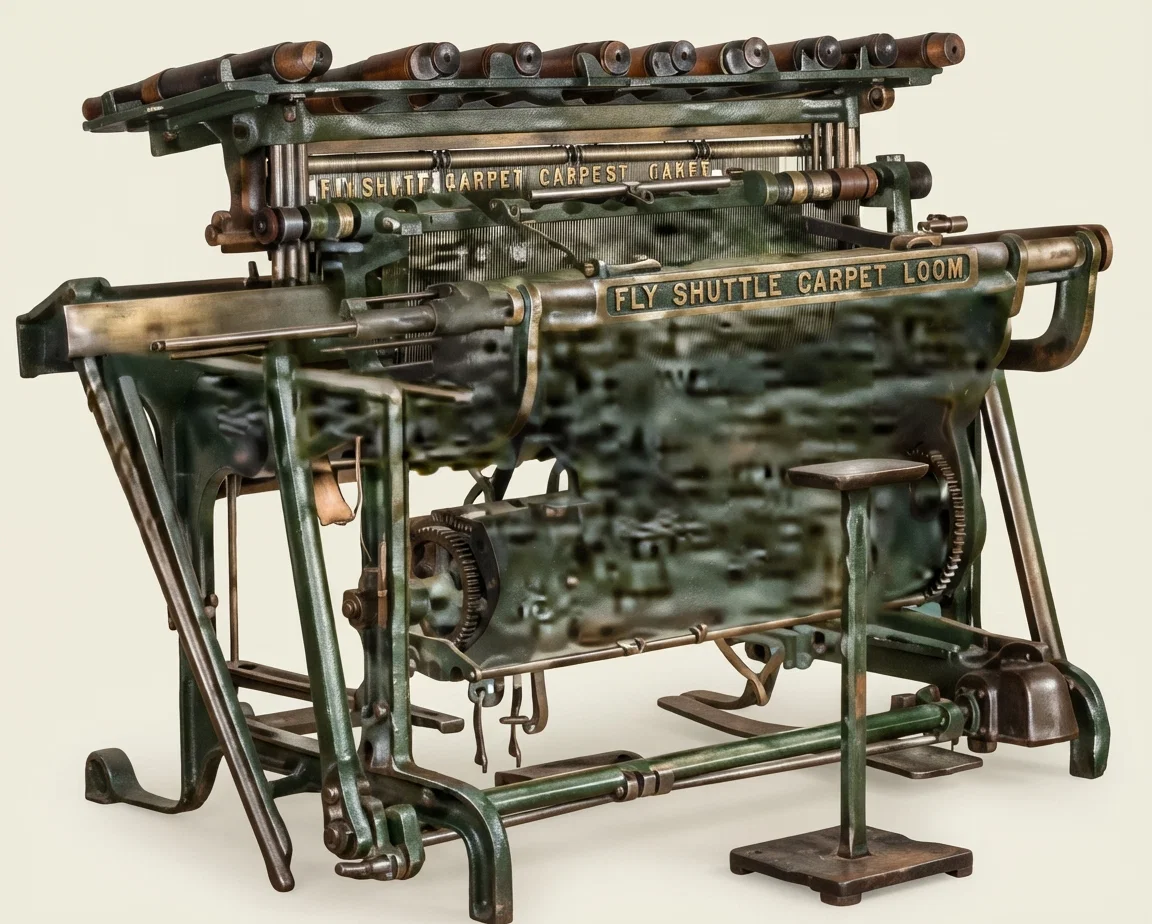
FLY SHUTTLE
The best, handiest, easiest running, cheapest, and most durable
FLY SHUTTLE
GARPET LOOM
In the world,—100 yards a day. Catalogue free.
EUREKA LOOM CO.
5018 Main St., Battle Creek, Mich.
The End Very Near
By Editor
When you write, please mention the Signs of the Times.
The End Very Near
The following tracts show conclusively that such is the case. Now is the time to study and distribute them. Sent post-paid on receipt of price.
PACIFIC PRESS PUBLISHING CO.
Oakland, Cal.
39 Bond St., 14-18 W. 5th St.,
New York City. Kansas City, Mo.
NEW EDITION!
By Editor
Life Sketches.
Ancestry, Early Life, Christian Experience
and Extensive Labors
— OF —
ELD. JAMES WHITE,
AND HIS WIFE, ELLEN G. WHITE,
WITH STEEL PORTRAITS.
THE book is divided into three parts, namely: Eld. White's Narrative, Mrs. White's Narrative, and the Appendix. The Appendix contains the following chapters: Eld. White's Sickness and Recovery; Renewed Vigor and More Extensive Labors; Denominational Institutions; Visit to the Pacific Coast; Dispensation of the Spirit; Last Sickness and Death of Elder White; Conclusion.
The book is nicely printed on tinted paper, contains 453 pages, and will be sent by mail, postpaid, on receipt of $1.25.
Address,
PACIFIC PRESS PUBLISHING CO.,
OAKLAND, CAL.
43 Bond St., N. Y.
Wonders OF THE 19TH CENTURY
Is a 32-page tract. Its object is to recount and describe some of the principal inventions of this closing century, and to show their significance.
It contains fifteen illustrations. Is an easy seller.
Price, 5c each or $2.00 per 100.
PACIFIC PRESS PUBLISHING CO., Oakland, Cal. New York City Kansas City, Mo.
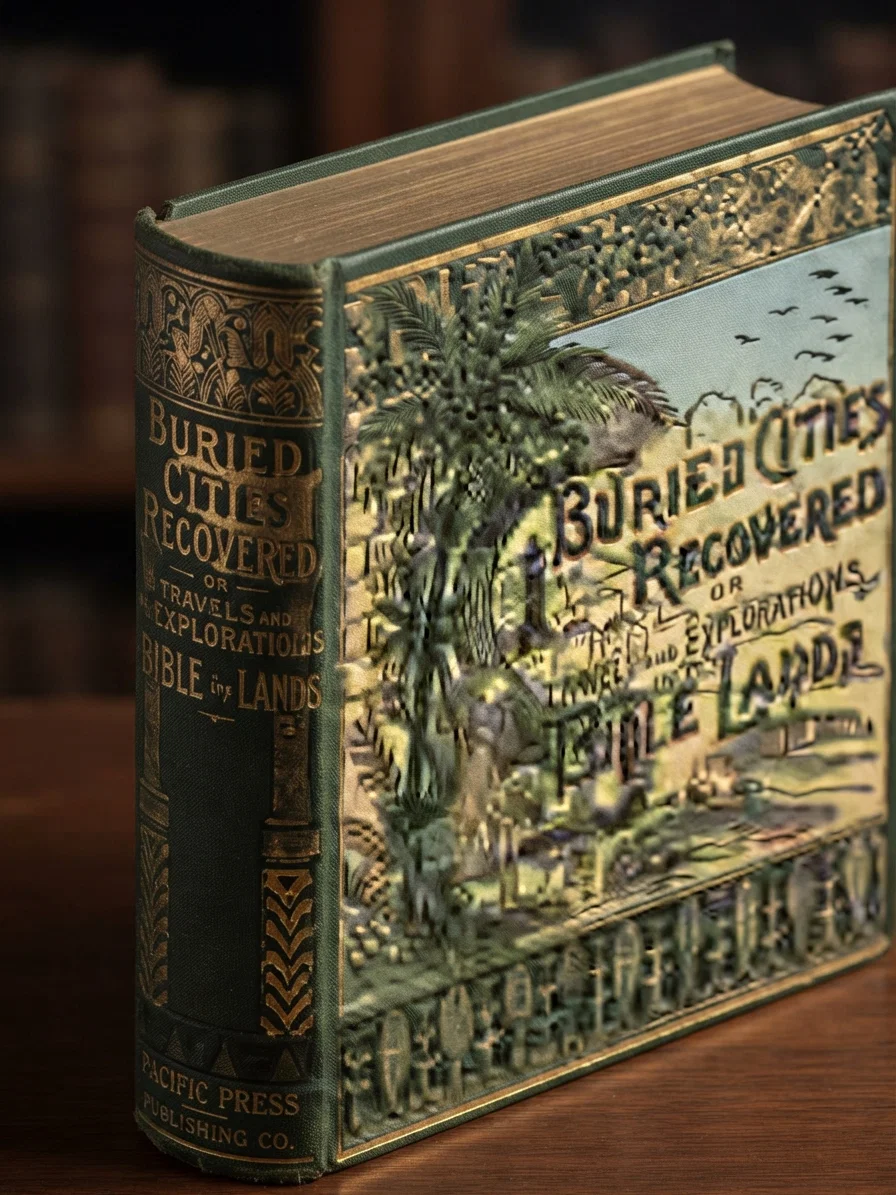
Buried Cities
Recovered
In selecting your holiday books, do not overlook this personal account of Research and Discovery in Palestine by a member of the American Geographical Society.
Actual Size, 6 3/8 x 9 inches
It is not a scientific treatise on geographical subjects, but is designed for the home circle. It will greatly assist in impressing Bible stories upon the mind of the young.
Contains 600 pages and 200 illustrations, and is beautifully bound in cloth.
Special Holiday Price, $1.50 prepaid
Pacific Press Publishing Co.
OAKLAND, CAL.
39 BOND STREET
New York City
18 WEST FIFTH STREET
Kansas City, Mo.