Your ShelfYour Projects

Signs of the Times, Vol. 40, No. 10.

SIGNS OF THE TIMES

Signs of the Times

Mar 11, 1913

Pacific Press Publishing Association · Mountain View, California · Mar 11, 1913

SIGNS OF THE TIMES
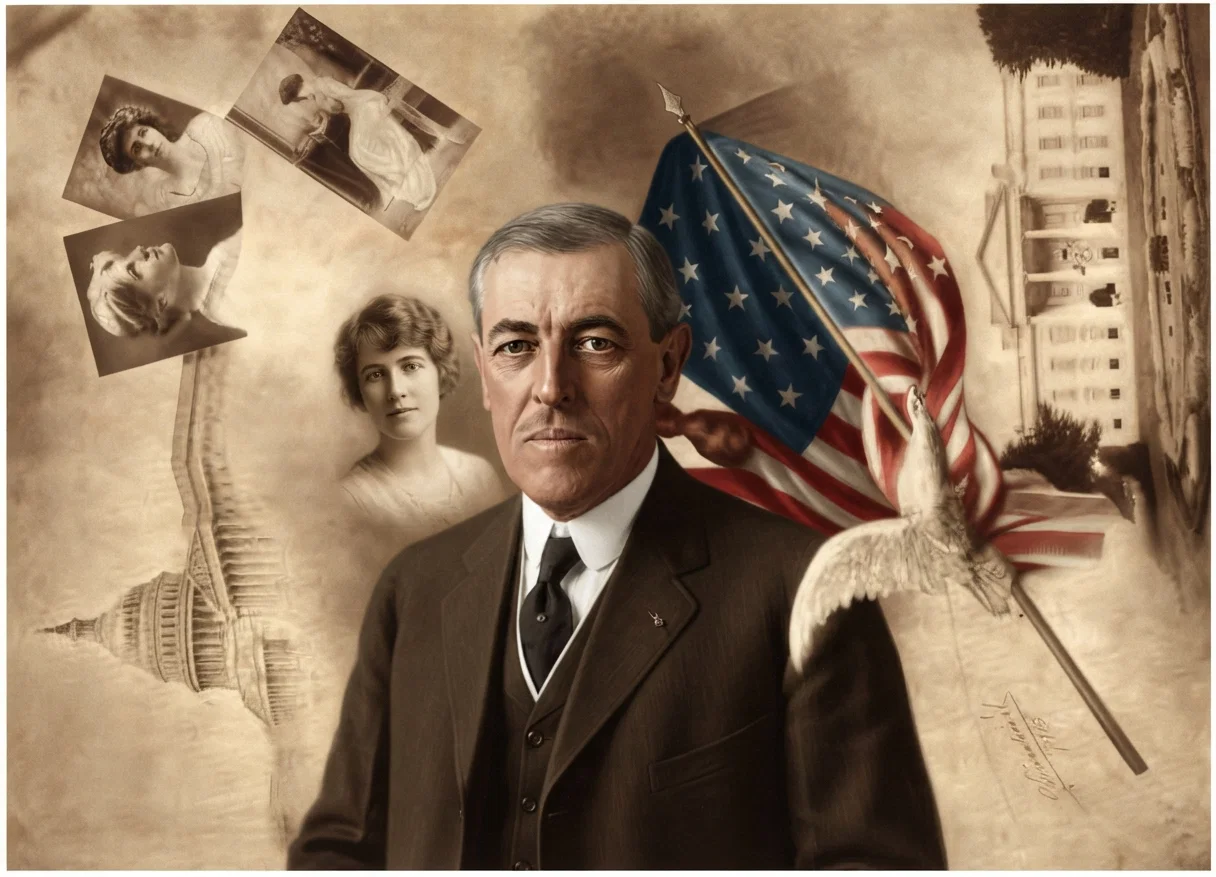
Principles of Our President, page 12
Principles of Our Vice-President, page 13

Question Corner

"IF YE WILL INQUIRE, INQUIRE YE."

This Inquirers' Department is conducted for the purpose of helping those who are studying the Bible. The answers are oftentimes only suggestive. They are never to be considered infallible, only as they agree with the infallible Word. The writer who may answer them does not consider that his opinion is infallible. He will simply give the best that he has, and plead with the inquirer to search the Word. Such questions only will be answered as, to the editors, seem to minister to the good of the readers and to the mission of the paper. We can not answer repeatedly in the same volume questions upon the same scripture. The name and address must accompany question, not for publication, but as an evidence of good faith, and that answer may be made by letter if deemed advisable. No letters are answered which do not contain the name of the writer. It is well always to enclose stamp for reply.

4012 — "With Us, Even Us." Deut. 5:3

How could Moses say that the Lord made the covenant "with us, even us, who are all of us here alive this day" (Deut. 5:3), when almost all those were dead who were of accountable age when the Lord made the covenant?
Moses was not comparing those who were listening to his voice then and those who stood at the foot of Mount Sinai when the Lord spoke the law. Exodus 19. He is drawing the contrast with the fathers. "Our fathers" refers to Abraham, Isaac, and Jacob. Moses was speaking to the nations; and it was with the nations that this covenant was made; and those who were listening to his voice in the repetition of the law, as recorded in Deuteronomy, were of the same nation and the same people, and bound by the same rules and obligations.

4014 — Secret Societies

If the Seventh-day Adventist denomination as a body regards the whole secret society principle as unscriptural and therefore unchristian, why is it that you scarcely ever mention the evils of the lodge in the "Signs"? S. O. G.
That the idea of secrecy, or a select few to whom to give important truths, is not Scriptural is clearly evident from two utterances of Jesus. In Matt. 10:27 He said to His select few whom He was teaching, "What I tell you in the darkness, speak ye in the light; and what ye hear in the ear, proclaim upon the housetops." Frequently it was true that the only time Jesus had with the disciples was in the night hours after the crowds had gone. He could not give them the instruction, before the large assemblies, which they needed to carry on His work. Much of the truth, of course, which He spoke to the great congregations was applicable to His disciples, but they needed special instruction, and fuller instruction, than He could give to the changing crowds. They were not, therefore, to think that He was forming a secret society with them, which was to be held among certain selected ones, but what He taught them was to go to all the world. Again: when He came to His last hours just before the crucifixion that waited Him, He said to the high priest, "I have spoken openly to the world; I ever taught in synagogues, and in the temple, where all the Jews came together; and in secret spake I nothing." It is for these reasons that we do not believe that secret societies, or lodges, are Scriptural, or in harmony with the genesis and spirit of Christianity. If Christianity had continued to be all that the Master taught, there never would have been any ground for secret societies to flourish in Christian communities. It is because Christianity has been perverted that the lodge flourishes. In many cases they are benevolent toward themselves and toward the families of those who are connected with them. The teaching of Christianity is to be benevolent toward all. "As we have therefore opportunity, let us do good unto all men, especially unto them who are of the household of faith." In many cases the lodges, of course, are great secret social societies. No doubt in many instances they have perverted justice. The worst phase of them all, it seems to us, is that they seem to satisfy their members many times, that if they are good lodge men, of this or that organization, they will be saved. For instance, we have heard men who belonged to a certain lodge saying that if they lived up to the principles of the lodge, that was sufficient to save them; and yet these men were blaspheming, worldly men. It is such as these, sometimes that mumble the prayers over the dead. This, of course, is only self-salvation, and is contrary to Christianity, which rests our only hope of salvation in the Lord Jesus Christ. We have found that those who have truly accepted of Christianity have no more use for the lodge. They have found something far better. Those who have accepted of Christianity and still stay by the lodge, have not tasted of what Christianity is. They do not know the power of the Christ, nor the blessed fellowship that there is with Him in ministering to all.
It is impossible to warn against all the detailed evils in the world found in a thousand different organizations and false religions. In a general way it is sufficient to say, and to say it strongly and in just as many ways as possible, that man can by no means save himself or his brothers, and that the only hope of salvation is in Christ Jesus our Lord. Saved in Him, all things else are as nothing. All parties and cliques and lodges and secret societies fall before that one great thought, if it is dominant in a man's soul. Yet at the same time we are not embittered toward those who belong to lodges; we are not embittered toward those who belong to any organization on the face of the earth. The true Christian would save them all from these delusions to the only thing which can save.

4016 — "Corban," Mark 7:11, 12

Please explain Mark 7:11, 12. J. M.
The passage reads, "But ye say, If a man shall say to his father or his mother, That wherewith thou mightest have been profited by me is Corban, that is to say, Given to God; ye no longer suffer him to do aught for his father or his mother." This was a way that the Jews had of getting around simple duty to their parents. God had said, "Honor thy father and thy mother." That commandment holds to the end. It is not simply for the little child, it is for those who are older as well. If the father and the mother needed support it would be the duty of the son to support them; but the Jews would dedicate their property to the Lord nominally. They would say their property was corban, all given to God. Yet they themselves would retain the use of it; and practically, so far as they personally were concerned, it did not affect them at all. But when the parent needed help they would say, "I can't help you with this; corban, it belongs to God." God never designed that they should get rid of doing duty in any such a way as that. It certainly was all right for one to dedicate his property to God, but it was not all right to dedicate property to God to get rid of supreme duties. Corban simply means "given," a gift to God.

4013 — Old Wine and New

Why is old wine better than new (Luke 5:39)? and does not Prov. 31:6, 7 seem to teach that drunkenness is proper under certain circumstances? A. K.
Read the context of the passage in Luke, and it will be seen that it is not to wine that our Lord has reference, but to doctrine and system. "No man putteth new wine into old wine-skins; else the new wine will burst the skins, and itself will be spilled, and the skins will perish. But new wine must be put into fresh wine-skins." The Jews had the old wine-skins and the old wine. They were willing to stay by the old traditional system. Our Lord likens His teaching to new wine. But the new wine must be put into the new bottles; or rather, the doctrine must be put into men who are made new by the power of the Lord Jesus. Old drinkers love old liquors. They claim they are mellowed by age. Just so old hearts, grown old in tradition, love the tradition still; but new hearts love the new wine. It is not Jesus that "saith the old is good," as in the Revised Version. It is not a comparison between the old and the new; they are simply satisfied with the old. The old is good; we do not care for anything new. And that is what millions are saying to-day regarding God's truth for this time, even as the Jews said it in that day,—"The old is good; we want nothing better."
The passage in Proverbs has reference to those who are dying with pain and anguish upon them. If they are about to perish, ease their sufferings, if possible, by giving that which will allay the pain, just as people are given sedatives, narcotics, and powerful drugs, to relieve sufferings now.

4015 — By the Child-Bearing

Does 1 Tim. 2:15 mean that women must give birth to children in order to be saved? T. C. B.
No, it means nothing of the kind. God demands no such unreasonable conditions of any portion of His children. This is akin to the Mormon doctrine that a woman can not be saved unless she is tied to some man. It seems to us that a good many will be saved in spite of the men; for if there is any agency that is endeavoring to drag women down to destruction, it is man. We like the thought that is in the text, that she shall be saved by the Child-bearing. We learn before this that "Adam was not deceived, but the woman being deceived was in the transgression." Eve was deceived by the serpent, and disobeyed. Adam was not deceived, but yielded to the temptation in order that he might not forsake his wife. But God by His grace declared that through the Seed of the woman the serpent's head should be crushed. It is in belief of that Seed that the woman shall be saved,—by the Child-bearing of the Lord Jesus Christ. And her faith in that Person born through woman, if she continue in faith and charity and holiness, with sobriety, as every one must, will bring salvation to her through Him, the Seed of the woman.

4017 — Time to Die

Has man a set time to die? Does God know, the day he is born, just what day he will die?
"Foreknown to God are all things from the foundation of the world." God's knowledge does not predestinate, however, or mark out. In the 90th Psalm the Lord tells us that the days of man are threescore years and ten; but He also tells us, in that same connection, that by reason of strength they may be fourscore. He tells His children, also, that if they are faithful to Him, He will give them long life. This is repeatedly told in the Scriptures,—"Long life and length of days will He add unto thee." For instance, note Prov. 3:2, 16, which tell us that the man who finds the path of wisdom shall also have length of days. We do not believe that God has appointed the day of man's death, unless it be in some special cases of judgment.

Our Bible Band

Schedule for the Week Ending March 15, 1913
Sunday March 9 Numbers 30, 35
Monday " 10 Deuteronomy 1
Tuesday " 11 " 2
Wednesday " 12 " 3
Thursday " 13 " 4
Friday " 14 " 5, 6
Sabbath " 15 " 7, 8
We close our readings in the book of Numbers with chapters 30 and 35, 30 giving instructions as to the vows of a wife, daughter, etc., and 35 instruction as to the setting apart of the cities of refuge for manslayers. Altho it does not come within our reading, it is worthy of note that the death of Balaam is recorded in Num. 31:8. Eight chapters of Deuteronomy are given in this week's lessons. Deuteronomy means second law, or the repetition of the law. It was the reckoning of God's dealings among His children at the close of the forty years' wandering, before Israel passed over into the promised land.
Verse 2 contains a striking lesson, in its simple words, "It is eleven days' journey from Horeb by the way of Mount Seir unto Kadesh-barnea." Horeb was where the law was given; Kadesh-barnea was right on the borders of the promised land. It would have taken the children of Israel only eleven days to go from Mount Sinai to the promised land. They went clear up to the very border, and then were turned back into the wilderness because of their unbelief. It took thirty-eight long years to do what eleven days' journey would have done. How many times, as individuals, do we take a long time in our own wanderings, to pass over moral ground which God desires us to do in much less time. Take home the lesson to heart. All these chapters are exceedingly practical, and God has in them lessons for His own children at the present time.
The repetition of the Decalogue in the 5th chapter does not aim to give the law as it was written upon tables, or as God spoke it as recorded in Exodus 20. It is simply the bringing out of the great thought in each commandment. In the repetition of the fourth commandment there is offered an additional reason as to why Israel should observe it, not alone in memory of God as Creator, but to hold in constant remembrance Christ as Redeemer.

Decorative Divider

—★—

Decorative Divider

—★—

Unidentified Article

Unidentified Article

Unidentified Article

An Impressive Miracle

By Mrs. E. G. White
JESUS healed many and various cases of bodily disease, while He was preaching and ministering to sin-sick souls. Many hearts were liberated from the cruel bondage of sin. Unbelief, discouragement, and despair gave place to faith, hope, and happiness. But when the sick and wretched applied to the Saviour for help, He first relieved the poor, suffering body before He attempted to minister to the darkened mind. When the present misery of the suppliant was removed, his thoughts could better be directed into the channel of light and truth.
Leprosy was the most fearful and loathsome disease of the East. It was looked upon with great dread by all classes on account of its contagious character and its horrible effect upon its victim. Great precautions were taken to prevent the disease from spreading among the people. With the Hebrews the leper was pronounced unclean. He was isolated from his family, restricted from the privileges of society, and cut off from the congregation of Israel. He was doomed to associate only with those who were similarly afflicted with himself.
Away from his friends and kindred he must bear the curse of his terrible malady. No affectionate hands could soothe his pain. He was obliged to publish his own calamity, to rend his garment, and sound the alarm, warning all to flee from his polluted and decaying body. The cry, Unclean! Unclean! coming with mournful tone from the lonely exile, was a signal heard with fear and abhorrence.

Many Lepers in That Region

There were many of these loathsome subjects in the region of Christ's ministry. The news of the great Healer had reached even them in their isolation, and a gleam of hope sprang up in their hearts that if they could come into the presence of Jesus He might relieve them. But as they were debarred from entering any city or village, it seemed impossible for them to reach the great Physician, whose chief work lay among the populace.
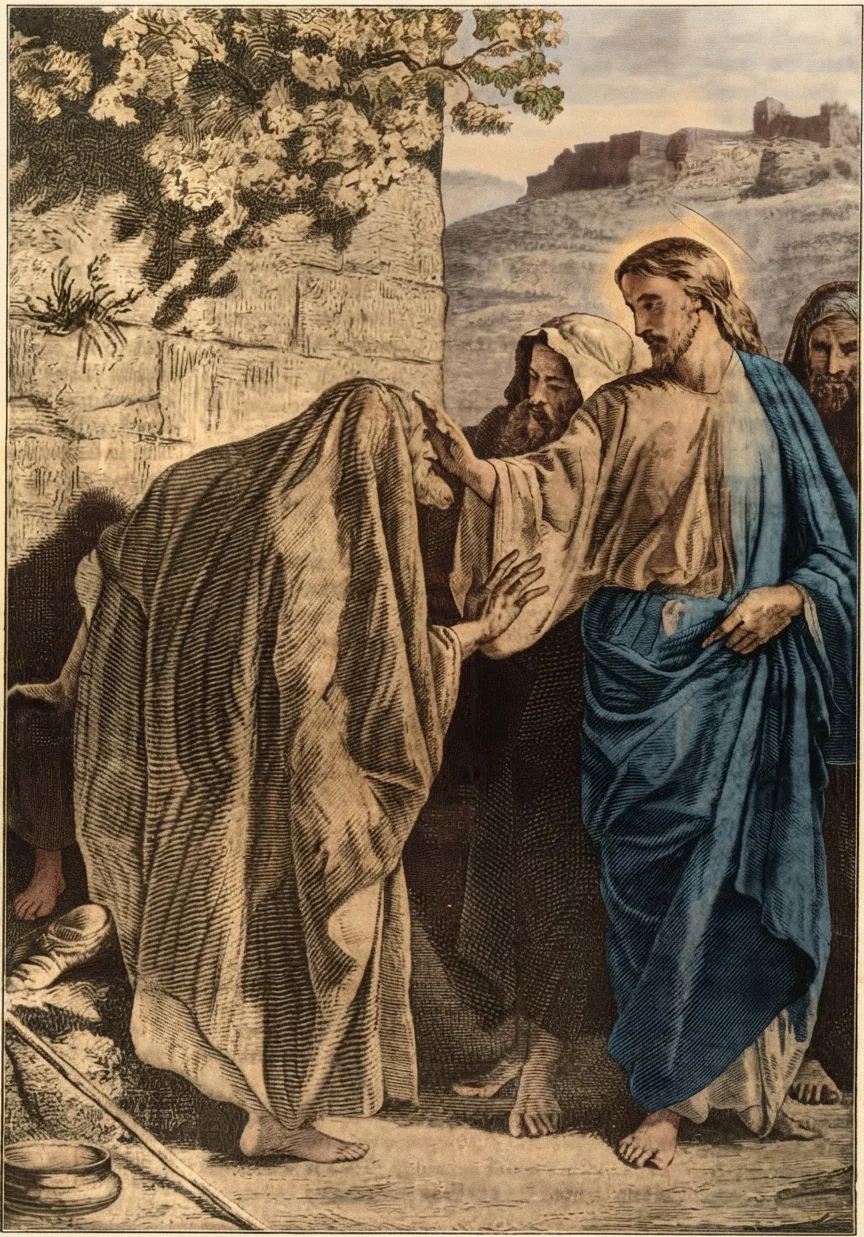
"But Jesus, with calm fearlessness, laid His hand upon the suppliant and answered his petition with the magic words, 'Be thou clean!'"
There was one leper who had been a man of high distinction. It was with the greatest grief that he and his family had become convinced that he was a victim to the fatal disease. Physicians of note had been consulted, and they had examined his case thoroughly, and anxiously searched their books to obtain further knowledge. But they were reluctantly compelled to acknowledge that their skill was baffled, the disease was incurable. It was then the duty of the priest to make an examination. This resulted in a decision that his was the worst form of leprosy. This verdict sentenced him to a living death, separated from his friends and the society in which he had held so lofty a position. But now those who had courted his favor and accepted his hospitality fled from his presence with horror. He went out an exile from his home.

The Leper Got Near Enough to Hear

Jesus was teaching by the lake outside the city limits, and many were gathered to hear His words. The leper, who in his seclusion had heard of some of His mighty works, came out to see Him, and drew as near as he dared. Since his exile, the disease had made fearful inroads upon his system. He was now a loathsome spectacle, his decaying body was horrible to look upon. Standing afar off, he heard some of the words of Jesus, and saw Him laying hands upon the sick to heal them. He beheld, with amazement, the lame, the blind, the paralytic, and those dying of various maladies, rise up at a word from the Saviour; restored to health and praising God for their salvation. He looked upon his own wretched body, and wondered if this great Physician could not cure even him. The more he heard, and saw, and considered the matter, the more he was convinced that this was really the promised Saviour of the world, to whom all things were possible. None could perform such miracles but Him who was authorized of God, and the leper longed to come into His presence and be healed. He had not intended to approach near enough to endanger the people; but now hismind was so powerfully wrought upon that he forgot the restrictions that had been placed upon him, the safety of the people, and the horror with which they regarded him. He thought only of his blessed hope that the power of Jesus could set him free from his infirmity. His faith laid hold of the Saviour, and he pressed forward, heedless of the frightened multitude that fell back as he approached, and crowded over and upon each other to avoid him.
Some thought to prevent him from approaching Jesus, but their efforts were in vain. He neither saw nor heard them. The expressions of loathing and looks of horror that greeted his appearance were lost upon him. He saw only the Son of God; he heard only the voice that was giving health and happiness to the suffering and unfortunate. As he came before Jesus, his pent-up feelings found vent; he prostrated his foul, decaying body before Him, crying out, 'Lord, if Thou wilt, Thou canst make me clean.' His words were few, but comprehended his great need. He believed that Christ was able to give him life and health.

Jesus Did Not Shrink from Him

Jesus did not shrink from his approach, but drew near him. The people fell back, and even the disciples were filled with terror, and would fain have prevented their Master from touching him; for by the law of Moses he who touched a leper was himself unclean. But Jesus, with calm fearlessness, laid His hand upon the supplicant and answered his petition with the magic words, 'Be thou clean!'
No sooner were these life-giving words spoken than the dying body of corruption was changed to a being of healthy flesh, sensitive nerves, and firm muscle. The rough, scaly surface peculiar to leprosy was gone, and a soft glow, like that upon the skin of a healthy child, appeared in its place. The eager multitude now lose their terror, and crowd around to behold this new manifestation of divine power.
Jesus charged the cleansed leper not to make known the work He had wrought upon him, saying, 'See thou say nothing to any man; but go thy way, show thyself to the priest, and offer for thy cleansing those things which Moses commanded, for a testimony unto them.' Accordingly the now happy man went to the same priests who had previously examined him, and whose decision had banished him from his family and friends.
Joyfully he presented his offering to the priests, and magnified the name of Jesus who had restored him to health. This irrefutable testimony convinced the priests of the divine power of Jesus, altho they still refused to acknowledge Him as the Messiah. The Pharisees had asserted that His teachings were directly opposed to the law of Moses, and for the purpose of exalting Himself. Yet His special directions to the cleansed leper to make an offering to the priest according to the law of Moses, evidenced to the people that these accusations were false.
The priests were not allowed to accept an offering from the hands of one who had been afflicted with leprosy, unless they first thoroughly examined him, and proclaimed to the people that he was entirely free from the infectious disease, was in sound health, and could again unite with his family and friends without endangering them. However unwilling the priest might have been to accredit this marvelous cure to Jesus, he could not evade an examination and decision of the case. The multitude were anxious to learn the result of the investigation, and when he was pronounced free from disease, and privileged to return to his family and friends, great was the excitement. Such a thing had never before been known.
But the publicity of this affair created so great a commotion that Jesus was obliged to retire beyond the city. 'And they came to Him from every quarter.' These miracles were not worked for display. The acts of Christ were in direct contrast to those of the Pharisees, whose greatest ambition was to secure the praise and honor of men.

Signs of the Times.

A Bible Study on Man

By L. A. Reed

V. Resurrection to Life and Death

THERE are two resurrections, both of which are clearly stated and described in the Bible. And yet there are few Bible teachers and students who recognize the fact. Preconceived ideas must be given the credit or the blame for this, because the words of the Scripture are plain enough for any one. Let us notice these.
"And have hope toward God, which they themselves also allow, that there shall be a resurrection of the dead, both of the just and unjust." Acts 24:15.
The above scripture alone might be understood as merely that the resurrection comprehends both classes, both the wicked and the righteous. But the following scripture, in the words of Christ, makes the matter more definite:
"Marvel not at this: for the hour is coming, in the which all that are in the graves shall hear His voice, and shall come forth; they that have done good, unto the resurrection of life; and they that have done evil, unto the resurrection of damnation." John 5:28, 29.
Here are plainly two resurrections,—one given the name of the resurrection of life and the other given the title "the resurrection of damnation," or condemnation, or judgment, as some versions give it.
This "resurrection of life" Christ on another occasion called by another title. Speaking of the time when reward would be given to His chosen, He said, "Thou shalt be recompensed at the resurrection of the just." Luke 14:14.
What takes place at this first resurrection is very fully and completely described by the apostle Paul:
"For the Lord Himself shall descend from heaven with a shout, with the voice of the Archangel, and with the trump of God: and the dead in Christ shall rise first: then we which are alive and remain shall be caught up together with them in the clouds, to meet the Lord in the air: and so shall we ever be with the Lord." 1 Thess. 4:16, 17.
It is evident from this scripture just quoted that the righteous dead are raised at the Lord's second coming. This is also definitely stated in another scripture:
"But every man in his own order: Christ the first-fruits; afterward they that are Christ's at His coming." 1 Cor. 15:23.
By this we see that the resurrection of Christ, which took place nearly 2,000 years ago, constituted Him the first-fruits; He was the first in the sense that He was the chief. Next, at His second coming, the righteous will be raised. But thirdly, the question arises, When will the wicked be resurrected? They are also to come in their order, the last ones to awake out of the dust.
By turning to another scripture, we find that a thousand years intervene between the resurrection of the righteous and the resurrection of the wicked. In this scripture referred to, the resurrection of the just is called the first resurrection. And the following blessing is pronounced upon all those who have part in it:
"Blessed and holy is he that hath part in the first resurrection: on such the second death hath no power, but they shall be priests of God and of Christ, and shall reign with Him a thousand years." Rev. 20:6.
This one scripture shows that the wicked are not raised in this first resurrection. Only those who are blessed and holy will have part in it, and upon them will come no second death. This of itself evidences the fact that there is another resurrection in which those who have part will be neither blessed nor holy, and upon whom the second death will have power. This other resurrection is described as follows:
"But the rest of the dead lived not again until the thousand years were finished." Rev. 20:5.
When these thousand years are over with, the wicked are resurrected, and thus the earth where Satan has been confined for the thousand years is no longer to him a prison. We read of what takes place after this second resurrection:
"And when the thousand years are expired, Satan shall be loosed out of his prison, and shall go out to deceive the nations which are in the four quarters of the earth, Gog and Magog, to gather them together to battle: the number of whom is as the sand of the sea. And they went up on the breadth of the earth, and compassed the camp of the saints about, and the beloved city: and fire came down from God out of heaven, and devoured them. And the devil that deceived them was cast into the lake of fire and brimstone, where the beast and the false prophet are, and shall be tormented day and night forever and ever." Rev. 20:7-10.
During this time between the first and the second resurrection—the thousand years—the cases of all the wicked dead are passed upon in heaven. The living who have been resurrected and transported to glory take part in this work. Thus God's fairness and His justice are made evident to all. The wicked may have righteous relatives who appear in the judgment and go over the books, and see that God has been absolutely true and righteous in all His work. This judgment work during the thousand years between the two resurrections is thus described:
"And I saw a great white throne, and Him that sat on it, from whose face the earth and the heaven fled away; and there was found no place for them. And I saw the dead, small and great, stand before God; and the books were opened: and another book was opened, which is the Book of Life: and the deadwere judged out of those things which were written in the books, according to their works." Rev. 20:11, 12.
When the judgment has thus been determined upon by the written record of men's lives, the second resurrection takes place, ending in a second death, which is final. Reading further, we have this described:
"And the sea gave up the dead which were in it; and death and hell delivered up the dead which were in them: and they were judged every man according to their works. And death and hell were cast into the lake of fire. This is the second death." Rev. 20:13, 14.
Thus sin and sinners are destroyed. Those who are to have a part in this second death are pointed out and designated in another scripture:
"But the fearful, and unbelieving, and the abominable, and murderers, and whoremongers, and sorcerers, and idolaters, and all liars, shall have their part in the lake which burneth with fire and brimstone: which is the second death." Rev. 21:8.
This is the victory of righteousness over sin, and this the difference between the righteous and the wicked:
"As therefore the tares are gathered and burned in the fire; so shall it be in the end of this world. The Son of Man shall send forth His angels, and they shall gather out of His kingdom all things that offend, and them which do iniquity; and shall cast them into a furnace of fire: there shall be wailing and gnashing of teeth. Then shall the righteous shine forth as the sun in the kingdom of their Father." Matt. 13:40-43.
It was to this that the prophet Malachi referred when he said:
"For, behold, the day cometh, that shall burn as an oven; and all the proud, yea, and all that do wickedly, shall be stubble: and the day that cometh shall burn them up, saith the Lord of Hosts, that it shall leave them neither root nor branch. But unto you that fear My name shall the Sun of Righteousness arise with healing in His wings; and ye shall go forth, and grow up as calves of the stall. And ye shall tread down the wicked; for they shall be ashes under the soles of your feet in the day that I shall do this, saith the Lord of Hosts." "Then shall ye return, and discern between the righteous and the wicked, between him that serveth God and him that serveth Him not." Mal. 4:1-3; 3:18.
By the resurrection of the wicked they are merely raised to receive their punishment. But how different is the resurrection of the righteous! In the resurrection of the just, this first resurrection, which we have already seen takes place a thousand years before the resurrection of the wicked, a great change takes place in the saints. Paul, writing to the Philippians, says:
"For our conversation is in heaven; from whence also we look for the Saviour, the Lord Jesus Christ: who shall change our vile body, that it may be fashioned like unto His glorious body, according to the working whereby He is able even to subdue all things unto Himself." Phil. 3:20, 21.
Writing to the Corinthians, he further described the change:
"So also is the resurrection of the dead. It is sown in corruption; it is raised in incorruption: it is sown in dishonor; it is raised in glory: it is sown in weakness; it is raised in power: it is sown a natural body; it is raised a spiritual body. There is a natural body, and there is a spiritual body." 1 Cor. 15:42-44.
And David, hundreds of years before, looked forward to that same hope when he said:
"As for me, I will behold Thy face in righteousness: I shall be satisfied, when I awake, with Thy likeness." Ps. 17:15.
Those who awake thus to immortality and glory shall know no more the effects of sin. "Neither can they die any more: for they are equal unto the angels; and are the children of God, being the children of the resurrection." Luke 20:36. Then this mortal puts on immortality.
This wonderful change takes place at the second coming of Christ, the time to which Paul looked forward when he should receive the crown of righteousness which he declares is not for him only, "but unto them also that love His appearing."
Continue reading: The Inheritance of the Righteous