Your ShelfYour Projects

Signs of the Times, Vol. 25, No. 25.

FOR OUR SAKES HE BECAME POOR

Earlier text: THE MANIFEST DOWNWARD TENDENCY

LESSON II.—SUNDAY, JULY 9, 1899.

DANIEL IN BABYLON.

NOTE.—The first seven verses of the lesson chapter should be read in order to get a proper introduction to that which follows.

Lesson Scripture, Dan. 1:8-21, R.V.

8 "But Daniel purposed in his heart that he would not defile himself with the king's meat, nor with the wine which he drank; therefore he requested of the prince of the eunuchs 9 that he might not defile himself. Now God made Daniel to find favor and compassion in the sight of the prince of the 10 eunuchs. And the prince of the eunuchs said unto Daniel, I fear my lord the king, who hath appointed your meat and your drink; for why should he see your faces worse liking than the youths which are of your own age? so should ye en- 11 danger my head with the king. Then said Daniel to the steward, whom the prince of the eunuchs had appointed over 12 Daniel, Hananiah, Mishael, and Azariah; Prove thy servants, 13 I beseech thee, ten days; and let them give us pulse to eat, and water to drink. Then let our countenances be looked upon before thee, and the countenance of the youths that eat of the king's meat; and as thou seest, deal with thy servants. 14 So he hearkened unto them in this matter, and proved them 15 ten days. And at the end of ten days their countenances appeared fairer, and they were fatter in flesh, than all the youths 16 which did eat of the king's meat. So the steward took away 17 their meat, and the wine that they should drink, and gave them pulse. Now as for these four youths, God gave them knowledge and skill in all learning and wisdom; and Daniel 18 had understanding in all visions and dreams. And at the end of the days which the king had appointed for bringing them in, the prince of the eunuchs brought them in before Nebu- 19 chadnezzar. And the king communed with them; and among 20 them all was found none like Daniel, Hananiah, Mishael, and Azariah; therefore stood they before the king. And in every matter of wisdom and understanding, concerning which the king inquired of them, he found them ten times better than all 21 the magicians and enchanters that were in all his realm. And Daniel continued even unto the first year of King Cyrus." Golden Text: "Daniel purposed in his heart that he would not defile himself." Verse 8.

SUGGESTIVE QUESTIONS.

(1) On entering the king's school, what did Daniel "purpose in his heart"? Therefore what request did he make? Verse 8. Note 1. (2) On account of this purpose, what did God do for Daniel? V. 9. Note 2. (3) How did the prince regard this request? V. 10. Note 3. (4) What was the name of this prince? What was his position? V. 11. (5) What proposition did Daniel make to the prince? Vs. 12, 13. Note 4. (6) How was this proposition received? V. 14. Note 5. (7) What was the result of this test? V. 15. Note 6. (8) What then did Prince Melzar do? V. 16. (9) What special favor did they receive besides healthful appearance? V. 17. Note 7. (10) What occurred at the end of their school-days? V. 18. (11) Who examined the students? With what result? V. 19. Note 8. (12) How was their superior wisdom further demonstrated? V. 20. (13) How long did Daniel continue? V. 21.

NOTES.

1. Daniel's condition and purpose.—The seventy years of Babylonian captivity, foretold in Jer. 25:11, had begun. From the first instalment of prisoners, Daniel, Hananiah, Mishael, Azariah, and other young princes, were selected to be taught in the Chaldean language and customs. In this way they could be made useful to the king in governing the captives. The king wanted to give them every opportunity, not only from an intellectual standpoint, but in the matter of good living. But there were articles of diet at the king's table which Daniel and the three companions named above could not conscientiously use. Yet they ran a great risk in declining the honor of eating that which was set before the king. It would have been a great risk even for a nobleman of Babylon to have declined such an honor, much more for a Jewish captive—a slave—to do so. But there was a purpose of heart behind the action of these young princes not to defile themselves. It was respect to the law of their God that actuated them; therefore the king's commandment, and the consequences of disobeying it, were of secondary importance. Like Peter and John, these faithful servants could say, "We ought to obey God rather than men." Acts 5:29.
2. God helped Daniel's purpose.—When Daniel "purposed in his heart," that secured the help of God. He had only to request the prince who had charge of him; he was not driven to the necessity of refusal. God had a future purpose in Daniel and his three companions, and a refusal to obey the king's order would have been death to the young men. So the Lord brought Daniel into such "favor and tender love with the prince" that the latter was willing to discuss the matter.
3. Perilous position.—If the prince who was charged with the duty of providing food for the captive students would endanger his life by neglecting to give them the prescribed diet, much more would the captive who should refuse to eat that which was given him, especially when the refusal was not of disregard for the king's god. The king meant the best good for the young men; he was, as he supposed, providing for them in the best possible manner then, as well as looking to their future honor and the good of their people. Therefore to slight his good intention would have been adding insult to the capital crime of disobeying his order. Thus when Daniel took his stand on principle, he did so at imminent risk.
4. "Prove thy servants."—Daniel did not say in words, "Prove the God whom we serve," but that was just what it meant. Daniel was standing on the Word of God, and not in his own strength. The sequel proved that it was the power of the Almighty that was being put to the test.
5. The power of God's Spirit had already prevailed upon the prince to the extent of imbuing him with a feeling of "tender love" for Daniel. Although he had no faith in Daniel's God, he was willing to indulge Daniel in a test of the food which he desired. The prince was not so careful to carry out the king's decree as he was to save his own life.
6. The result was a vindication of faith, as shown in the mere physical condition of the young men who had a purpose not to defile themselves with unwholesome or forbidden food. Here was one result of recognizing that they were not their own, that their bodies were "the temple of the Holy Ghost," and must not be defiled. See 1 Cor. 6:19, 20.
7. The reward was more than temporal blessing, for God added knowledge and wisdom which the students could not get in the king's school, besides skill in learning the language of the country and the science of government in which the king desired that they should become proficient. And Daniel, as the leader of the movement, was given understanding of visions and dreams, that he might be a marked instrument in the further purpose of his God.
8. The victory which the Lord had wrought out in His faithful servants (Phil. 2:13) was still more manifest at the close of their college course. On this occasion the king examined them himself, and in all the school was none the equal of these captive students. As a recognition of their superior qualifications, they "stood before the king." So much for integrity, for faith in God, for "temperance in all things."

FLY SHUTTLE

The best, handiest, easiest running, cheapest, and most durable

FLY SHUTTLE

CARPET LOOM
In the world,—100 yards a day. Catalogue free. EUREKA LOOM CO. 5018 Main St., Battle Creek, Mich
When you write, please mention the SIGNS OF THE TIMES.
BEASTS, BIRDS, AND FISHES will delight the children. It is a volume of 126 pages and 363 illustrations with descriptive matter in connection with each cut. Price, 50c. PACIFIC PRESS PUBLISHING CO. Oakland, Cal.

KNOWLEDGE.

"O, WHERE is knowledge?" the savant sighed, As he turned the pages o'er, Still wearily searching, yet eager-eyed, Through volumes of treasured lore. Long years he had struggled in vain to win The wisdom his soul did crave,— A knowledge of truth that could save from sin, And the terrors of the grave.
Then wandering forth with restless feet In the hush of the Sabbath day, A little child he chanced to meet, As she tripped on her homeward way; Her eyes were as bright as the morning flowers, And her little singing mouth Made blithe and happy the shining hours, Like a bright-winged bird of the South.
"My child," he said, "how glad you look! Why is it, my pretty one?" She held up before him a little book: "This tells about God's dear Son, How He died that we might go to heaven; My mother told me so: His letter is here to His children given; It tells of His love, you know."
"May I see your wonderful Book?" he said; And he read, as he raised the lid, In Christ, who for our sins hath bled, Are all the treasures hid Of wisdom and knowledge, and life and love. Amazement filled his eyes; "'Tis revealed to babes from the Father above, Tho hid from the prudent and wise."
Then the learned philosopher bared his head Before the little child; "Thou hast the blest knowledge, sweet one," he said, "That I've sought for in anguish wild." He hastened home with a lighter heart, Through the glow of the sunset's gold, And brought out a volume long set apart, All covered with dust and mold.
On the first blank leaf he saw his name, And the traces of tender tears, And while the sunset died in flame, He thought of his mother's prayers; And the glory that lighted her dying brow Ere they laid her beneath the sod; Lo! the gray-haired scholar is kneeling now— A child before his God.
MINNIE ALEXANDRINA SANDERSON. Jacksonville, Florida.

A PENNSYLVANIA WINDOW-PICTURE.

IN the background, clearly defined against the winter sky, are the mountains, sober-hued with the dark gray of the leafless woods, yet lighted by the snowdrifts that nestle in the hollows and lie white in the clearings. Half way up their sides have crept the houses, pretty country residences some of them, set off by stolid-looking square buildings of red brick, whose matter-of-fact slate or shingle roofs, constructed without regard to beauty of appearance, are now covered by a tidy snow blanket. The interlacing boughs of bare trees, shivering in their winter undress, form a screen which half hides them from my view.
On the far side of the road, which has just left off calling itself a street, lies the still Monocacy, never a rapid stream, and now ice-bound—having holiday. Winding along the high bank of the stream and crossing it lower down, is the quondam street, whose brick pavements have subsided into a modest plank walk, with picturesque railing on the streamward side.
This road is well traveled, being the main thoroughfare connecting the northern and southern portions of dear old Bethlehem. Far over the Lehigh it stretches, sometimes street and sometimes highway, till it reaches the mountains,—the beautiful "everlasting hills."
These are always lovely, not grand enough to be terrible, even in their sternest winter aspect. They are my great comfort. Their stillness rests me when I am weary; and when faint, they remind me of the strength that is mine for the asking; for "the strength of the hills" is His who has promised: "As thy days, so shall thy strength be."
A Scene on the Lehigh Valley Railway.
I see them as I lie upon my sick-couch, and in my sharpest pain am comforted. They have a voice and a special message for me: "For the mountains shall depart, and the hills be removed; but My kindness shall not depart from thee, neither shall the covenant of my peace be removed, saith the Lord that hath mercy on thee."
Sweet human associations also cluster around these Lehigh hills. Among the trees which look so dark from my window, I roamed a blithe-hearted midget, serenely happy in the companionship of my scholarly father, who brought to this country his English love of rambling, and taught it to his child.
On the Lehigh Valley Railway.
Later, when he "slept in Jesus," I scrambled up these same hills with groups of merry-hearted schoolgirls, who little dreamed that I trod hallowed ground, and that the gleesome laughter of their frolicsome mood was not half as musical to me as the measured tones of the dear voice that would never again break the silence there.
Stopping short of the mountain path, and branching off at "the old bridge," is the graveled walk by the Lehigh River, in summer-time shaded by tall trees, and grass grown to the water's edge. But I must not tempt you thither, as it forms no part of my window picture, tho I can see the smoke of the locomotive lazily curling upward and marking the track of the railroad on the opposite bank.
Ah, the weather has moderated! See, the little stream that slept so quietly when I began to write now sparkles in the sunshine, its brief holiday ended. Thus it is ever in this work-a-day world. What we call repose is but the interval of rest between periods of labor.
Even nature is full of unrest. Let us learn the lesson she teaches, and, trusting in Him who "by His strength setteth fast the mountains," make sure of the "rest that remaineth." "Here we have no continuing city;" we must "seek one to come."
HELEN A. STEINHAUER.
Battle Creek, Mich.

AN ANSWERED PRAYER.

"O MAMA, come and see my kite!" screamed a babyish voice at the kitchen window. . . . Mother was busy with all the work that crowds in at the end of the week.
Fred was her only child and a sunbeam in the house; if he had been sick she would have left everything to wait upon him, but a kite—no, indeed—and quick came the hasty reply: "The idea! I've no time to waste on kites; don't you come bothering me with your foolishness."
With a crestfallen look Fred turned away, saying sorrowfully, "I've got it up so high, I wish you'd look;" but she didn't, and a few such lessons taught the boy that he could not be sure of mama's sympathy or interest in his pleasures.
A year or two went by, and Fred had grown from kites to baseball.
Rushing into the house one day, he said eagerly: "Say, mama, come with me this afternoon and see the ball game, will you? I want you to awfully. You see you can't care much for things you don't know about, and if you see a game you'll care more about it when I play; come now, say yes."
"Indeed, I'll not go a step, sir. I've more important work than going to ball games," was the mother's reply.
Fred went off muttering to himself, "When I ask her again she'll know it."
Is it any wonder that as the boy grew into young manhood regard and politeness were the substitutes for tender love and whole-hearted confidence?
And the mother said not long ago: "It is thankless work to bring up a boy; as soon as he gets old enough to be a comfort, he'll care more for everybody else than he does for his mother."
Where was the fault? Did it not begin away back in kite days, or before?
But perhaps you say, Do you think mothers ought to stop work and run at every call?—O, no; but what if mama had said, as her fingers flew over her work: "How nice of you to come and tell me. I can't come to see just now, for I really must finish my work, dear, but I dearly love to have you want me to see it." Or suppose she had said, "I mustn't take but a second, dear, for I've so much to do, but I'll have a peep," and then had run to the door and glanced up at the kite with cheery words of appreciation. Would it not have been an added bond between the two?
There were once two boys in a home I know, and after a few happy years one was taken.
. . . The two boys and their mother had always knelt together for the bedtime prayer, and each had offered a simple petition. The first night there were only two to kneel the sobbing voice of the lonely brother uttered but one sentence, "Dear Lord, keep mother and me intimate."
Said the mother, years after, "I consecrated my life to answer that prayer."
Did she have to give up anything?—Yes; receptions and calls were secondary matters when the boy's friends needed entertaining.
Embroidered doilies and hand-painted screenswere of no account whatever beside the cultivation of intimacy with her boy, and the answering of his prayer. "Always give me the first chance to help you, dear," she would say; and he did. Whatever was dear to his boyish heart found glad sympathy in her.
Perhaps mothers do not always realize how soon a boy begins to think toward manhood, and so they treat him like a child, to be watched and scolded instead of helped and trusted.
This mother's boy was just as impulsive and self-willed as you often find. But she had a few rules that helped wonderfully. Shall I copy them for you?
  1. I will pray and work to be patient.
  2. I will strive to grow in grace and in the knowledge of God.
  3. No matter what happens, I will try to hold my temper and my tongue.
  4. I will try never to scold and never to reprove or punish in anger.
  5. I will listen patiently and tenderly to my boy's side of a grievance.
You will notice that these rules are to govern the mother instead of the boy, and is not that the secret of success? Mother, do you want to keep your boy? Then control yourself. Not the fashionable attempt at stoicism that says it is not "good form" to display emotion, but the real holding of one's self in hand.
Fashion would tie the mettlesome steed fast. Control harnesses him to life and lets Christ hold the reins.
This mother's boy made many a blunder; he had his days of waywardness and times of unreasonableness, but never a time when he was not sure that his mother was ready to listen, advise, and help. There were times when his impulsiveness made him sore trouble, but the first place he turned for help was to the tender, loyal "mother-friend," and he was sure of comfort. Do you think it paid? When she reads in the papers the theories on "how to get hold of the boys," she thanks God she has never lost her hold on hers. And in the answering of the boyish prayer, the mother has not only grown more and more intimate with him, but both have grown intimate with Christ.
Mother, you have no "charge to keep" half so sacred as the heart of your boy. Are you true to your trust?—Emma Graves Dietrich, in Christian Work.

THE DEAF HEAR.

THOSE who have read Mr. Chamberlain's article, "Helen Keller as She Really Is," in the Ladies' Home Journal for May, can realize something of the difficulty hitherto experienced in the education of those who are deprived of sight or hearing. Now, however, through a recent application of electricity, even the stone deaf are made to hear music and conversation. And having heard, many who were previously dumb acquire the power of speech. For this wonderful discovery the world is indebted to Miller R. Hutchison, of Mobile, Ala. He describes his instrument and its use for Success in an article in substance as follows:—
"The shape, size, etc., of the instrument can be adapted to the use to which it is to be put." The instructor has a "receiving instrument," into which he speaks. Each listener has two ear-pieces, a mouthpiece, and a light aluminum breastplate on which are simple switches, enabling him to connect or disconnect himself and the speaker. Wires, of course, join the different parts.
"The deaf mute hears the instructor's words, and, speaking them himself into the mouthpiece, hears his own pronunciation, so being enabled to learn accurately. The pupil can hear himself whisper, even, but, without suitable change of the switch, no one else in the class can hear. Thus all confusion is avoided.
"The instructor can teach any number of pupils at the same time. He can teach each individually, or all collectively, with no switches to be manipulated by him, or other complicated arrangement." In a thorough trial made at the Alabama State Institute for the deaf, over one hundred children were tested, and all heard loud conversational tones at from fifteen to twenty feet. They were also given a musical treat which caused them to manifest great delight.
"One little fellow was so deaf that he could not hear a cornet blown a foot from his head; but, with the aid of Mr. Hutchison's instrument, at a distance of thirty feet, with eyes closed and back turned he distinctly heard the sound.
"What a wonderful world this will reveal to these poor unfortunates! Competent judges predict through it a revolution in the education of both deaf and dumb. To many it will bring joyful relief from the cheerless gloom of years of total silence. . . . Success (Cooper Union, New York City) will be pleased to receive and forward to Mr. Hutchison any letters from its readers concerning this remarkable invention, and will also answer any inquiries that may be sent its editors on the same subject."

Combination Offers

REFERENCE TEACHER'S BIBLE
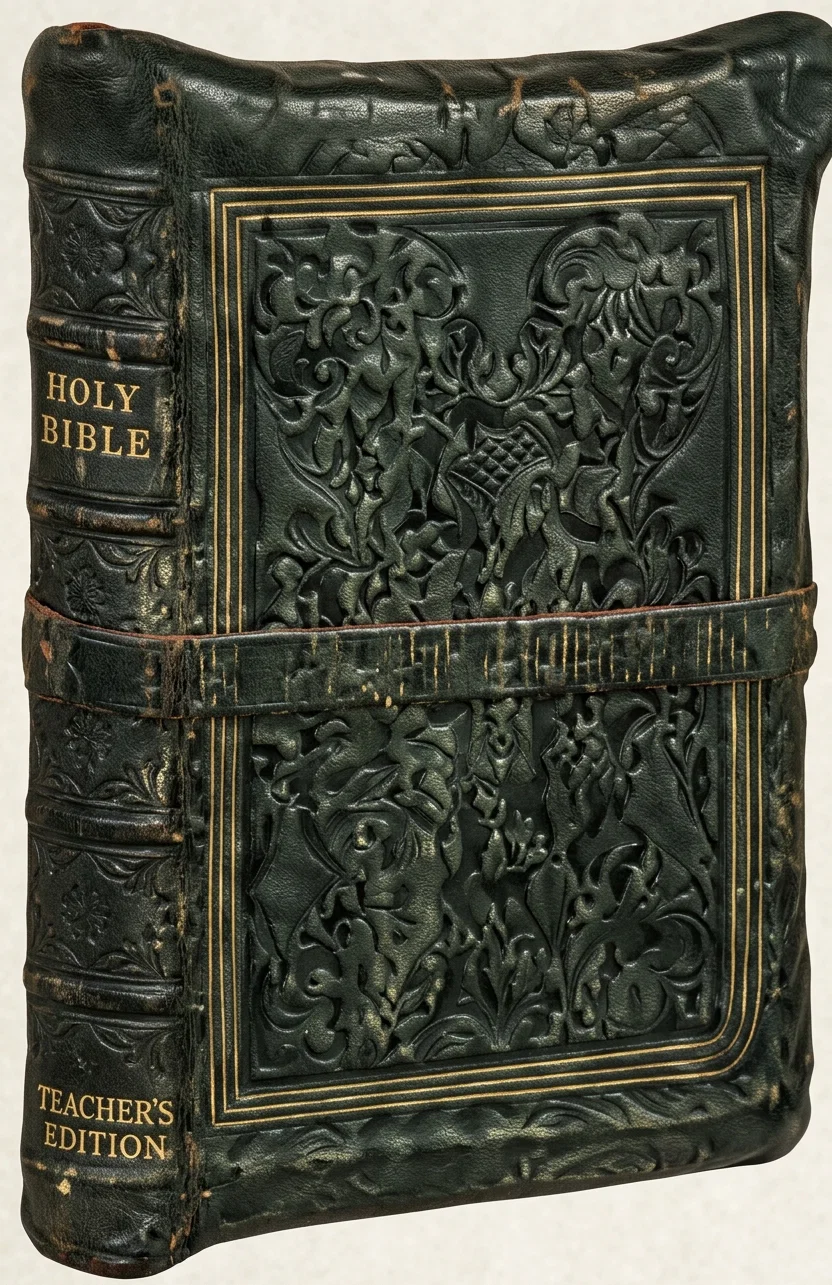
Minion Type Page 5 1/2 x 8 inches....
The Bible is substantially bound in morocco, divinity circuit, leather lined to edge, round corners, red under gold edges, minion type, and contains over 650 pages of finely illustrated Helps to the study of the Bible.
One Feature of special value in the Helps contained in this Bible is the COMBINED CONCORDANCE, which unites, in a very convenient form for ready reference, a Concordance, Subject Index, and Pronouncing Dictionary of Scripture Proper Names.
Sent post-paid with the SIGNS one year - $2.75 Bible sent free on receipt of 7 new names and $7.00

DICTIONARY OF THE BIBLE

BY DR. WM. SMITH. Size 6 1/4 x 9 1/2 x 2 1/2 inches, Cloth bound.
Dr. William Smith's Dictionary of the Antiquities, Biography, Geography, and Natural History of the Bible is admitted by those most competent to judge to be the best of its kind in the English language. Its editor and his associate contributors are well known as among the most eminent Biblical scholars of our time, in both Europe and America.
The book contains over one thousand pages, is illustrated, and gives a full and accurate account of every name and place mentioned in the Bible, which can possibly need explanation; of every animal, plant, or mineral alluded to by the Sacred Writers; and of every custom and article of use among Jewish and contemporary nations.
This Dictionary is published by Scranton & Co., of Hartford, Conn., and sells at $4.50. Our Price, post-paid, with the SIGNS, one year, $2.25 Book sent Free for Five New Yearly Subscriptions and one renewal at $1.00 each.

POLITICAL SPEECHES and DEBATES OF LINCOLN AND DOUGLAS......

A BOOK FOR THE TIMES. The following is one reason why this discussion by these two able lawyers and statesmen should find a large place amongst the people of this country to-day: Another attack is made upon the Declaration of Independence and the Constitution in an attempt once more "to turn a free people back into the hateful paths of despotism." Then, the attack was upon the clause which declares that "all men are created equal." Now, the attack is upon that clause which declares that governments derive their just powers from the consent of the governed. Then, there was rendered a decision of the Supreme Court of the United States which perverted the Constitution in the interests of that attack. Now, there is a decision of the Supreme Court of the United States which perverts the Constitution in the interests of this attack. The careful study of this history-making discussion and of the principles involved will prepare the people successfully, and in the right way, to meet all attacks upon the immortal Declaration, and to correct any and all perversions of the Constitution.
Buckram Cloth, 555 pages - - - - - - - - - - - $1.75 Sent post-paid with the SIGNS one year - - $1.75 Book sent Free for Three New Yearly Subscriptions and One Renewal at $1.00 each.

HEART-LIFE CLASSICS

A choice line of devotional story books bound in cloth, size 6 1/2 x 4 1/2 inches. Excellent books for Sabbath-school libraries. Will be read with much interest and profit by both old and young. Pilgrim's Progress, Jessica's Prayer and Jessica's Mother, Nobody Loves Me, Olive's Story, Helps over Hard Places-for Girls, Helps over Hard Places-for Boys, Line upon Line, Heart-Life, A Bag of Stories, Shepherd Psalm. Each price 40 cts. One copy, post-paid with SIGNS one year . . . . $1.25
Any single book sent Free for One New Subscriber and One Renewal at $1.00 each. If you desire the whole set of ten volumes mentioned above, we will send them post-paid FREE for Eight New Yearly Subscriptions at $1.00 each ($8.00).
ADDRESS SIGNS OF THE TIMES, OAKLAND, CAL.

GREAT THINGS.

THE greatest structure ever raised by the hand of man is the great pyramid of Cheops, founded 4,000 years ago, and measuring 746 feet square on the base, and 449 feet high. It took twenty years in construction; 100,000 men worked for three months, and, being then relieved, were succeeded by an equally large corps. The massive stones were brought from Arabia, 700 miles away. The cost of the work is estimated at $145,000,000.
The largest cathedral in the world is St. Peter's, at Rome. The total length of the interior is 612½ English feet; transept, 446½ feet; diameter of cupola, 193 feet; height of dome from pavement to top of the cross, 448 feet. It was begun in 1450 A. D., dedicated in 1626, but not finished until 1880. Forty-three popes lived and died during the process of building. The cost is set down at $70,000,000.—Selected.

A DIVINE GOSPEL.

WHEN we preach the Fatherhood of God we preach His divinity; when we point to Christ the perfect Saviour, it is a divine Redeemer that we declare; and when we plead with men to hear the voice and yield to the persuasions of the Holy Spirit, the Comforter into whose comfort we invite them is divine. The divinity of Father, Son, and Holy Ghost, this is our Gospel. By this Gospel we look for salvation. It is a Gospel to be used, to be believed in, and to be lived by; not merely to be kept and admired and discussed and explained.—Phillips Brooks.

Serving God in Small Things

"The most successful toilers are those who will cheerfully work to serve God in small things."

The Angel of the Lord Protects

"The angel of the Lord encampeth round about them that fear Him, and delivereth them."
Continue reading: International