Your ShelfYour Projects

Signs of the Times, Vol. 40, No. 35.

Question Corner

Signs of the Times

Sep 9, 1913

Pacific Press Publishing Association · Mountain View, California · Sep 9, 1913

Question Corner

“IF YE WILL INQUIRE, INQUIRE YE.”
This Inquirer's Department is conducted for the purpose of helping those who are studying the Bible. The answers are oftentimes only suggestive. They are never to be considered infallible, only as they agree with the infallible Word. The writer who may answer these questions does not consider that his opinion is infallible. He will simply give the best that he has, and plead with the inquirer to search the Word. Such questions only will be answered as, to the editors, seem to minister to the good of the readers and to the mission of the paper. We can not answer repeatedly in the same volume questions upon the same scripture. The name and address must accompany question, not for publication, but as an evidence of good faith, and that answer may be made by letter if deemed advisable. No letters are answered which do not contain the name of the writer. It is well always to enclose stamp for reply.

4171 — What Generation

Please inform me what generation we are in. H.
We are in the last generation. We have no numbering of generations in chronology. A generation before the Flood was clearly much longer than the generation at the present time, and so it must have been immediately after the Flood. We have four hundred years mentioned in the fifteenth chapter of Genesis, and spoken of in connection with the fourth generation. This has led some to believe that a generation was about one hundred years long. We have forty-two generations mentioned in Matthew 1 from the time of Abraham to the time of Jesus. This gives about forty or more years to a generation, and some have concluded that that was the length of a generation. But we can not depend upon these at all. The clear teaching, it seems to us, of Matthew 24,—“This generation shall not pass away”—is that those to whom God has entrusted the last message will give that message. It will not fall outside of the generation that has to do with it. Its length we do not know. We do not know how long the long-suffering of God may wait, but we have the assurance of Jesus that this generation shall not pass till all these things be fulfilled. There we must rest. Its beginning, it seems clear to us, was in 1844; but where it ends is a matter that we must leave with the Lord, in whose hands are the times and seasons.

4172 — Flesh Food

Please explain 1 Tim. 4:3-5. Does this have reference to flesh food? F. S. L.
This text has been explained a great many times, and that quite recently, in the “Question Corner.” See a very extended explanation in “Questions and Answers,” page 192. The food referred to, we will say in brief, is any kind of food. Creature is anything created. The word “meats” comes from the Greek “bromaton,” food of any kind. Those who depart from the faith are those who command fasts, who seek, by mere formal regulations, to control the spiritual life. It would seem that the creature of God that is good, “and nothing to be refused,” is modified by verse 5.—“It is sanctified by the word of God and prayer.” God has very clearly set forth in His word that there are certain foods that are not good. 1 Cor. 10:31 ought to guide us in these things.

4173 — Holy Days and Sabbath Days, Col. 2:16

Please be so kind as to explain the difference between the terms “a holy day” and “sabbath days,” and state if the seven annual sabbaths, or annual convocation days, of Israel, are included in the expression “a holy day.” And if they were so included, kindly explain as to what “sabbath days” refers to. R. B. S.
The apostle Paul is not making definite, clear references to systematic feasts or systematic customs. He uses general terms covering all,—holy days, new moon festivals, sabbath days. The weekly Sabbath is generally referred to in the singular. One can very readily learn from Leviticus 23, the most elaborate list of the Jewish feasts that is to be found in the Scriptures, that there were other days designated as sabbath days besides the weekly Sabbath, as is mentioned in the first part of Leviticus 23, verses 1-3. Then we are given the feasts of the Lord, holy convocations. And the days connected with these feasts were all holy days; that is, they were set apart from the common days. Some of these holy days were sabbaths, in which no servile work was to be done. First in the year came the Passover, and the holy days of unleavened bread on the first day and on the seventh day of that feast were sabbaths. The offering of the wave-sheaf was one of the great days of the year. Of the feast of the trumpets, beginning the first day of the seventh month, we are expressly told, on this day “shall ye have a sabbath.” “Ye shall do no servile work therein.” And on the tenth day of that month is another solemn day,—the Day of Atonement; and that day, according to verse 32, was to them a sabbath of rest. Then there was the fifteenth day of the seventh month, which should also be a day in which there should be no servile work done. But all these were to be “beside the Sabbaths of the Lord.” Verse 38. All these shadowed forth Christ or some part of Christ's work. There was nothing, however, in the weekly Sabbath that was shadowy in any way. That of itself clearly shows that these were not a shadow of things to come. All those who teach otherwise are endeavoring to get rid of the law of God, the Sabbath which He Himself has given. God has taught elsewhere in His word, and multiplied teachings show, that the Sabbath commandment is a part of the eternal, immutable, unchangeable law, and that faith establishes that law in the heart. Rom. 3:31. Let us be willing to leave it there. There is only one reason why the heart of man should object to, or seek to overthrow, the law of God, and that is stated in Rom. 8:7.

4174 — Doing Work on the Sabbath

What is the wife's duty? She is a believer, the husband is an unbeliever. The husband sets the children to work on the Sabbath day; also expects fresh foods, etc., cooked on that day, cream separator and some dishes washed. I do as little as I can. What is duty? A Wife.
These and similar questions frequently come to us from perplexed souls, and it is impossible for any one to answer them in a precise way. Certainly nothing would be gained by opposition and strife. That the Lord does not want in families if it can be avoided. Rom. 12:18. We think that this sister is taking the wise way, if there is in connection with her work a peaceful disposition. It is possible for her, because it has been done again and again, so to teach her children that while they will obey their father, they will still have regard for the commandments of the Lord. Let her teach them both,—obedience to the father, if they are young and accountable to him; at the same time let her teach them the duty which they owe to God, and pray that the father's heart and mind will so be turned that he will not exact of the children that which is contrary to their conscience. But do not argue. Let her minimize her Sabbath work as much as possible. There always will be some connected with farm work. There must have been in the care of the flocks and herds in Abraham's and Jacob's and David's day; but let it be minimized. If the husband desires warm food, prepare it. Everything that can be done conscientiously should be done. And above all things, win; and some men are won through their stomach quicker than any other way. We sympathize with those who are placed as is this wife, and others; but let us make the best of it in every way. Let the husband or the wife take home to heart the words of the apostle, “For what knowest thou, O wife, whether thou shalt save thy husband? or how knowest thou, O man, whether thou shalt save thy wife?” It is a missionary field; let us use it for the Master.

4175 — Questions of Marriage and Divorce

In the many questions which arise over personal duty, we would like to urge all our readers to seek God, and seek Him earnestly, for the way. It is impossible for one to answer for another at the bar of God. Consequently one can not be conscience for another here. He to whom we are responsible will certainly not withhold the light that is necessary for us to meet our responsibility. This question, as summarized, is as follows:
Three years ago Mrs. A separated from her husband. He was guilty of breaking the marriage vow. Just recently she met B, who desires to marry her. The question is, Is it wrong for her to get a divorce from her former husband, A, and would it be wrong for B to furnish the money necessary to secure the divorce? Would such a course on their part prevent either of them from inheriting eternal life? S. W.
Now all this, as in many other things, depends on the motive. To our mind, according to Matt. 5:31, 32; and 19:9, the woman is entitled to a legal separation. When her husband committed adultery, he certainly showed that he had proved false to her. When she left him, he became dead to her. A legal separation on the part of proper authority leaves her free. She is no longer his, he is no longer hers; and if this is true, she has the right to marry again. As to the propriety of securing the divorce in the way referred to, we must leave that with the parties concerned. First of all let them seek God, that they may know whether their motives are right or not, whether they are glorifying God in the proposed union or not. We could understand how such a course might be right, and how such a course also might be wrong, and have a wrong influence upon others. This is a matter which must be settled by the parties concerned.

4176 — “Devour,” 1 Peter 5:8

What is the full and complete import of the word “devour” as used in 1 Peter 5:8? A. J. M.
It means literally “to drink down.” Satan goes about seeking whom he may devour,—seeking whom he may drink down, completely swallow up.

Our Bible Band

Schedule for the Week Ending September 13, 1913

Day Date Reading
Sunday September 7 Amos 8, 9
Monday September 8 Obadiah 1
Tuesday September 9 Jonah 1
Wednesday September 10 Jonah 2, 3, 4
Thursday September 11 Nahum 1–3
Friday September 12 Zephaniah 1, 2, 3
Sabbath September 13 Haggai 1, 2
We cover several books in this week's reading. Our first day closes the book of Amos, with chapters 8 and 9. Then we read Obadiah, Jonah, Nahum, Zephaniah, and Haggai, prophecies extending from about 780-520. Obadiah's prophecy has to do wholly with Edom, and the nations of the earth outside of Judah, of which Edom was a type. He tells us nothing of himself. Jonah was the son of Amittai. We have him referred to in 2 Kings the 14th chapter and the 25th verse. He was a prophet of God, albeit he was not the most agreeable servant. He refused to obey God and go to Nineveh; and yet when he came to the wonderful test of the storm at sea, he acknowledges that he is the one at fault, and tells them to throw him overboard. He finds fault because the little gourd withers and he is left in the hot sun instead of the shade; but when he comes to the great tests of life, he seems to endure them. There are such characters now. The book presents before us God's wonderful mercy, and what thorough repentance ought to be.
Micah was a prophet of Judah who flourished in the days of Jotham, Ahaz, and Hezekiah, about the time of Isaiah, or a little earlier. There are two prophecies quite alike, Isaiah 2 and Micah 4. The book is noted for its high standard of moral teaching. Micah points out the very birthplace of our Lord Jesus Christ. The 7th chapter contains some most striking passages regarding God's wonderful mercy and power to cleanse.
The burden of Nahum is the burden of Nineveh, one who prophesied against Nineveh about the year 700,—a little before perhaps, or a little after. Nineveh may well be taken as a type of the wickedness of the last days. The short prophecy of Habakkuk is a very striking one, written perhaps about the year 625 or 626. It points out the evil that there is among God's people, especially in the way of the strong oppressing the weak; and as human nature is always the same, and oppression is always the same, it forms a striking picture of the last days. The prayer of Habakkuk is a wonderfully eloquent and beautiful poem which closes the prophecy.
Zephaniah also lived in the days of Hezekiah and in the days of Josiah, between Isaiah and Jeremiah. It is a marvelous prophecy, not only touching upon some of the signs of the times in which he lived, but of the great day of God.
Haggai is a prophet of the restoration, the one who strengthened the hands of Ezra in the rebuilding of the temple, rebuking the people for their covetousness and selfishness in working for their own interests and neglecting the interests of God. But with the reproof there also comes promise of blessing.

A Time for Loyalty

By Mrs. E. G. White
GOD may bear long with the sins of men, but in His own time He will vindicate His authority. Altho the wicked may say, “My way is hid from the Lord,” yet when His interposition is needed, He will show that He beholds all the works of the children of men. In the days of Noah, the wickedness of man became so great that it was necessary for God to assert His authority and punish the transgressors of His law.
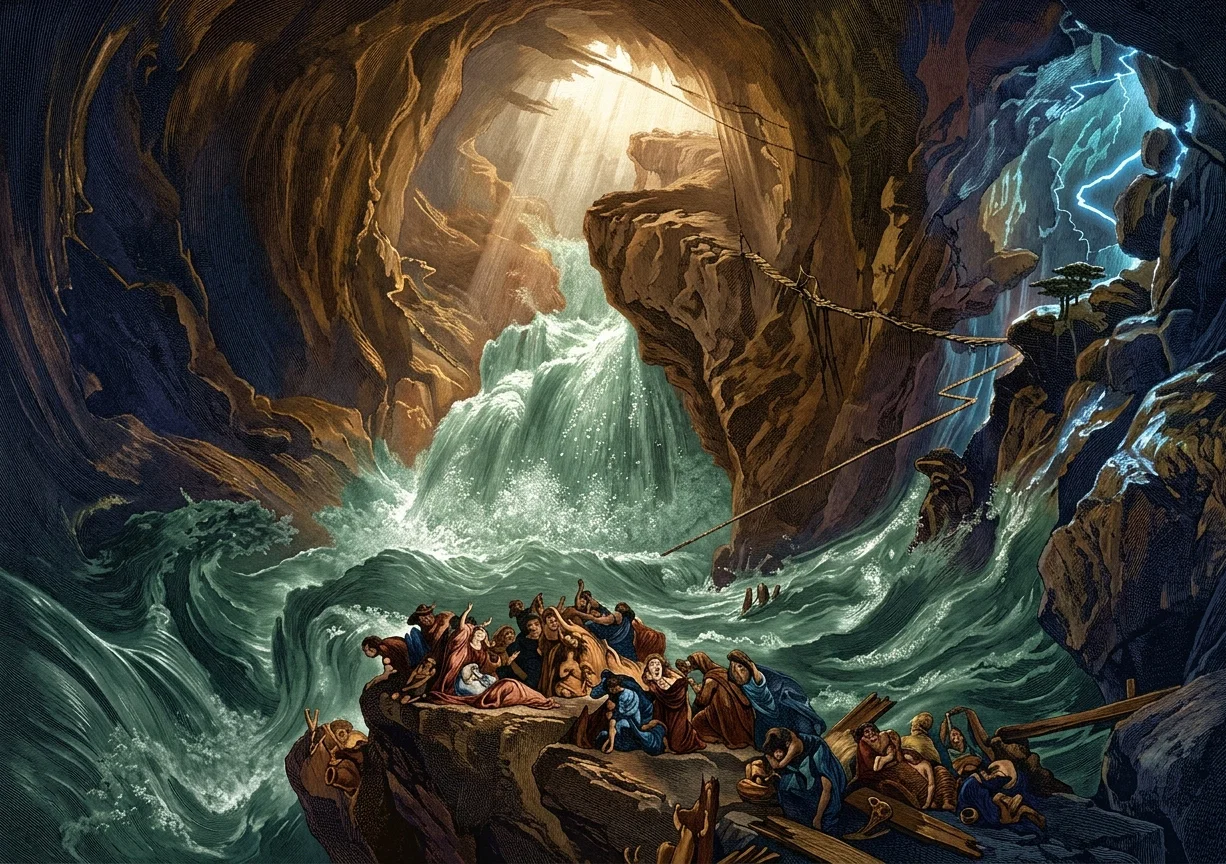
A crisis had come, and the Lord declared the limits of His forbearance toward that guilty race. He sent His faithful servant with a message of warning, giving them one hundred and twenty years in which to turn from their sins. They rejected and despised God’s love, and when the measure of their iniquity was full, when the boundaries of divine mercy were passed, the Lord swept that wicked race from the earth by the waters of the Flood.
As men again increased, they departed from the Lord, and then Abraham was made the depositary of God’s law. When the Israelites, through their long bondage in Egypt, had to a great degree lost the knowledge of that law, the Lord Himself proclaimed it from Sinai, in the hearing of all the people. The nations of the earth were given to idolatry; it was to preserve the children of men from total apostasy, that the Lord manifested His mighty power in bringing the Israelites out of Egypt, and establishing them in the land of Canaan.
God’s people had been crying to Him with humiliation and fasting, that the wickedness of the wicked might come to an end. And while He manifested His power as an avenger to the wicked, He would also appear as the protector of the righteous. Tho their prayers might long have seemed unheard, yet in God’s own time they saw that He had given ear to their supplications, and answered them by terrible things in righteousness.
THE DELUGE — THE RESULT OF VIOLATED LAW
In every age, God’s judgments have been visited upon the earth because men transgressed His law. What, then, have we to expect as we behold the wickedness which prevails at the present day? An ungrateful people, forgetful of God’s care, His long forbearance, and His unnumbered blessings, are showing contempt for His holy law. Many of the acknowledged leaders in the church and in the nation, break, and teach others to break, that law, as sacred to God as His own throne and name. It is time for the Lord Himself to assert His authority in the earth. And He is doing this, by fires, by floods, by tempests. He removes His protecting, providential care, and visits His judgments upon the children of men.
In these days of peril, shall we show less devotion to the truth of God, and less fervent attachment to His law, than in former years? The very condition of things exists which Christ declared would be, prior to His second coming in power and glory. The prevailing ungodliness tends to paralyze and even to destroy true faith and piety. But this is the very time when the gold of Christian integrity will shine brightest, in contrast to the dross of hypocrisy and corruption. Now is the time for Christ’s chosen to show their devotion to His service,— the time for all His followers to bear the noblest testimony for their Master by standing firm against the prevailing current of evil.
As we see the results which have followed a disregard of God’s law,— dishonesty, theft, licentiousness, drunkenness, and murder,— we are prepared to say with the psalmist, “I love Thy commandments above gold; yea,above fine gold;” “in keeping of them there is great reward.” When the divine law is set aside, the greatest misery will result, both to families and to society. Our only hope of better things is to be found in a faithful adherence to the precepts of Jehovah. Infidel France once tried the experiment of rejecting the authority of God. What scenes of horror followed! Men cast aside the divine law as a yoke of bondage, and in their boasted liberty they placed themselves under the rule of the veriest tyrant. Anarchy and bloodshed ruled that terrible day. “It was then demonstrated to the world that the surest way to undermine the foundation of order and government, is to set at naught the law of God.”
Let us remember that “by the law is the knowledge of sin.” The commandments of God convict the sinner of his guilt; but that perfect law has been obeyed by Christ in our stead, and through faith in Him we are released from our great debt, and are placed where, in His strength, we can render obedience to God. Instead of feeling that we are now in the slightest degree excusable in further transgression, we shall realize as never before the justice of God’s claims upon us, and the sacred character of His law, since Christ must die to maintain its authority.
Erelong the obedient will see the blessed results that follow the keeping of all God’s commandments, and the transgressors of His law will reap the reward of their doings. The Judge of all the earth will vindicate His insulted authority. Already we see His judgments in the land. And the end is not yet. He will work until sin and sinners are destroyed from the earth.

Redeemed from the Curse of the Law

By V. B. Watts
CHRIST hath redeemed us from the curse of the law, being made a curse for us.” This is a most wonderful statement, and we will let the word of God explain the text. We know that when man came from the hand of God, he was a happy, holy creature; and it was not until he put forth his hand and took of the forbidden fruit, that the change came. As a result of this sin, the Lord said to Adam, “Because thou hast . . . eaten of the tree, . . . cursed is the ground for thy sake.” This is the first text in the Bible where the curse is mentioned. Why the curse?—Because man had broken God’s law.
The next statement we have of the curse was made to Cain after he slew Abel. God said, “And now art thou cursed from the earth.” From the very beginning of the history of sin, the curse was pronounced upon the one who had transgressed God’s holy law.
Tracing the result of wilful disobedience through the history of the Bible, we find every wilful transgression of the Ten Commandments brought the transgressor under the curse. In the thirteenth chapter of Deuteronomy is recorded the result of breaking the first two precepts; and in the twenty-fourth chapter of Leviticus, the third. Turning to Ex. 31:15, we find the curse pronounced upon those who refuse to keep the Sabbath holy to the Lord. Disobedient children did not escape the curse, as we find recorded in Lev. 20:9. Many records are made of the result of transgressing the sixth, seventh, and eighth commandments. Achan fell under the curse as a result of breaking the eighth and the tenth. In the fifth chapter of Acts is recorded the result of breaking the ninth precept of the Decalogue. These scriptures record the terrible result of disobeying our heavenly Father.
“How did Christ redeem us from the curse of the law?” is a question that every man and woman should be interested in, for “all have sinned, and come short of the glory of God.” Man failed to live the holy life that God intended him to live; but God did not leave him in his lost condition, for He so loved the world that He gave His son Jesus to come and live the life He wanted man to live. In the city of David this Redeemer was born. Earth was silent, and heaven listened to the song, “Glory to God in the highest, and on earth peace, good will toward men.” The Babe foretold by prophets was here. Divinity was clothed with humanity. Heaven and earth were united. The ladder that was seen by Jacob had now spanned the gulf made by sin. The curse resting upon humanity was now to be lifted.

Like His Brethren

Jesus did not come to live this life with the nature of an angel, but He took our nature, became like His brethren. The Lord “laid on Him the iniquity of us all.” Now, dear reader, what did God do with your transgressions? He says He laid them all on His beloved Son. Then all the lying, stealing, committing adultery, Sabbath-breaking, coveting, swearing, and idol-worship was laid upon the Son of God. Paul says, “For He hath made Him to be sin for us, who knew no sin; that we might be made the righteousness of God in Him.” 2 Cor. 5:21.
What is the penalty of sin?—“The wages of sin is death.” Rom. 6:23. Then when God laid on Jesus all our sins, He must die to meet the penalty for us. Could He not change His law to meet man’s condition?—No! No! It reveals the very character of God, and is as unchangeable as God Himself. The only thing God could do to save the race, was to let the One who had made the worlds to float in space, and created man in His own image, come and live the holy life, with the fallen creatures,—live in their flesh, meet all the temptations that are common to man. This He did, yet without sin. The very night in which He was betrayed by Judas He took His disciples with Him to the Mount of Olives. As they neared the mount, Jesus said, “All ye shall be offended because of Me this night: for it is written, I will smite the shepherd, and the sheep of the flock shall be scattered abroad.” O, the hour had come for the Saviour of the world to bear the curse for us! The guilt of the human race was placed upon Him, and He must tread the wine-press of the almighty God alone.
He was numbered with the transgressors, and must bear the guilt of fallen humanity. He exclaimed, “My soul is exceeding sorrowful, even unto death.” The sins of humanity separated Him from His Father’s presence. He fell prostrate upon the ground, and in agony, said, “O My Father, if this cup may not pass away from Me, except I drink it. Thy will be done.” As He poured out His soul to God, His sweat was, as it were, great drops of blood, falling to the ground. He would have died there in this awful crisis had not His Father sent a mighty angel to strengthen Him. The angel came, not to take the cup, but to assure Him of His Father’s love.
Dear reader, it is your sins and my sins that caused that terrible agony to the Son of God in Gethsemane. It was because you and I have transgressed God’s holy law, that the blood oozed from the Saviour’s brow. Our sins put Him to death on Calvary.
Christ’s agony did not cease until He expired on the cross. Why did He die before the thieves did?—Because He was giving His life as the penalty for the transgression of God’s law. For “we see Jesus, who was made a little lower than the angels for the suffering of death, . . . that He by the grace of God should taste death for every man.”
You ask, Is not this universal salvation?—Yes, on condition. What is the condition?—(1) We must confess to God that we have sinned, or transgressed His holy law. 1 John 1:9. (2) We must accept Jesus as the one who has paid the penalty for transgressing that law. John 3:16; Heb. 2:9. (3) We must accept His righteous life that He lived here in the flesh as our life. Jer. 23:6. (4) We must trust in His divine power to live the life that Jesus lived. 1 John 2:6.
To confess with our lips that we believe in Him, and yet trample underfoot the holy law, is to fail to receive eternal life, and failure is written opposite the name of every one who tries to keep the law without Christ. The natural man receives not the things of God, “because the carnal mind is enmity against God; for it is not subject to the law of God, neither indeed can be.” Rom. 8:7.
God has surrounded this world with an atmosphere of grace as real as the air we breathe, and we are without excuse before Him. May the love of God fill our hearts, and lead us on to be like Him, for “there is therefore now no condemnation to them which are in Christ Jesus, who walk not after the flesh, but after the Spirit.” Rom. 8:1. We have been justified by faith, and have peace with God through Jesus Christ. “And the life which I now live in the flesh I live by the faith of the Son of God, who loved me, and gave Himself for me.” Gal. 2:20.

Was the Law Abolished at the Cross?

By I. A. Crane
SOME people confidently affirm that when Christ died on the cross, the old law, the Ten Commandments, Sabbath and all, was abolished. There are some very serious objections to this doctrine.
1. If the moral law was nailed to the cross, we need to know when a new law was enacted, and how it reads since the change came.
We recently heard a man who advocated the abolition of the law, tell his congregation that the new law was instituted at Pentecost, and that there was no law during this fifty-three days! If this were true, how could God condemn those wicked priests for what they did during this time? They were guilty of bribery, perjury, fraud, and deception. See Matt. 27:63; 28:11-15. Where no law is, sin can not be imputed. Rom. 4:15; 5:13.
God has a case against those who pierced His Son. Will these modern lawyers quash the proceedings, and have it thrown out of court? Rev. 1:7.
But this theory leads to still greater inconsistencies. No law was given at Pentecost. See Acts 2. The same speaker told us Christ lived under the old covenant, and therefore His example in keeping Saturday must not be followed by people in the new covenant. He stated that the books of Matthew, Mark, Luke, and John, which of course do relate the events before the cross, belong to the old covenant, and are not for us to-day. This robs us of all the teaching and example of Christ; but to one who wants to get rid of the law, this presents no serious objection. Besides, it does get rid of such troublesome texts as Luke 4:16 and 23:56.

The Everlasting Covenant

But, thank God, all before the cross was not abolished. The covenant made with Abraham was confirmed, not abolished, in Christ. Gal. 3:17. It was “the everlasting covenant,” which, in other words, was to last to “a thousand generations.” 1 Chron. 16:15-17. Only forty-two of these generations passed from Abraham till Christ. Matt. 1:17.
No law given to Israel could conflict with this covenant made with Abraham and his seed. Tho it were a man's covenant, no later additions or changes could be made. Gal. 3:15. God keeps His covenant, and herein is the hope of all that shall be redeemed. Men may fail, but God remains faithful. Therefore, even to-day, if we believe in Christ as Abraham did, we become Abraham's children, and heirs of that eternal promise. Gal. 3:29. Bless the Lord, this promise did not end at the cross, and it never will end.
It is easy to see that the sacrificial system which shadowed forth the great sacrifice of the Lamb of God, did meet a fulfilment in the death of Christ.

Not a Shadow

There was nothing in the Ten Commandments which was a shadow of anything to come, but the law of the sacrifices did have a “shadow of good things to come.” “But in those sacrifices there is a remembrance again made of sins every year. For it is not possible that the blood of bulls and of goats should take away sins.” Heb. 10:1-4.
The perfection required in each symbol, the manner of its offering, the death and blood of the innocent victim, all taught them about Jesus. The law relating to the first-born, taught them of Heaven's First-born; the first-fruits pointed to the choicest and best gift of the Father. To prefigure Him, man was to bring an offering which would inspire him with the thought of this great outlay of Heaven's treasure freely given for man's redemption.
God gave what He loved most — His own Son. His gift was His most valued treasure. In this gift was the highest type of perfection. Every believer in this great gospel truth, was to show his faith by offerings calculated to lead him to understand and appreciate the offering of Christ.
The sacrificial system began just after the fall. From Abel's time, the faith of the faithful was expressed by sacrifices and offerings. See Heb. 11:4; Gen. 4:4; 8:20; 22:13; 31:54. More complete instruction was given in connection with the sanctuary service at Sinai.
These offerings, to them, like baptism and the Lord's Supper to us, brought to mind the guilt of sins which could only be forgiven through faith in the blood of Christ. Heb. 10:1-4. These ceremonies point to a remedy; the moral law is a safeguard against sin.
Had man never broken the moral law (1 John 3:4; Rom. 7:7), there would have been no lost sinners to save, no need of a Saviour to bleed and die; and consequently no sacrificial law to prefigure His death. Obedience to all the Ten Commandments would have saved a world from being lost, and rendered unnecessary the suffering and death of the Son of God.
No, we do not make void the law by faith. We establish it before all the universe by our confession. Rom. 3:31.
Truly Christ did not come to abolish the law which is the detector of sin (Rom. 7:7), but to deliver us from sin and its slavery. “He shall save His people from their sins.” Matt. 1:21. He takes away sin, not the law. He makes us free from sin and its dominion over us, “that the righteousness of the law might be fulfilled in us.” Rom. 8:3, 4. And His saints “keep the commandments of God, and the faith of Jesus.” Rev. 14:12. Thus delivered, they will once more have a right to the tree of life. Rev. 22:14.
Waurika, Oklahoma.

Divine Law

By T. Godfrey
“There is therefore now no condemnation to them which are in Christ Jesus, who walk not after the flesh, but after the Spirit. For the law of the Spirit of life in Christ Jesus hath made me free from the law of sin and death. For what the law could not do, in that it was weak through the flesh, God sending His own Son in the likeness of sinful flesh, and for sin, condemned sin in the flesh: that the righteousness of the law might be fulfilled in us, who walk not after the flesh, but after the Spirit.” Rom. 8:1-4.
THERE has been much said and written by eminent theologians, pro and con, concerning the law and its relation to the gospel, without arriving at any definite agreement or conclusion. But before we can become intelligent worshipers of the true God, we must become intelligent citizens of His moral government. The law of God as couched in the Ten Commandments is the organic law of God’s moral government, and is eternal and unchangeable in its nature, being a transcript of the righteous and unchangeable character of God. Mal. 3:6; Ps. 89:34. The transgression of this law is sin. 1 John 3:4. And the penalty for sin is death. Eze. 18:4, 20.
When man therefore transgressed the law of God, he came under the law, under condemnation, under the sentence of death. “For the wages of sin is death.” Rom. 6:23. Man in his fallen condition could not redeem himself. The law could not be abolished nor the penalty changed. For the law demanded the life of the transgressor. Now to satisfy the demands of the law, and to maintain the honor and integrity of the throne of God, God sent His Son into the world to die in man’s stead, that a way might be opened for the redemption of fallen man. This fountain of life was opened up through the death and resurrection of Jesus Christ. Therefore, every soul that truly accepts Jesus Christ as his Substitute and personal Saviour, is no longer under condemnation; no longer under the dominion of sin (Rom. 6:6-8), no longer under sentence of death (Rom. 6:9, 10), but has passed from death unto life. “For the law of the Spirit of life in Christ Jesus hath made” them “free from the law of sin and death.” They walk no longer after the flesh, to fulfil (obey) the lusts of the flesh, but walk after the law of the Spirit of life in Christ Jesus. “For what the law could not do [could not justify the transgressor], . . . God sending His own Son in the likeness of sinful flesh, and for sin, condemned sin in the flesh: that the righteousness of the law might be fulfilled [obeyed] in us, who walk not after the flesh, but after the Spirit. For they that are after the flesh do mind the things of the flesh; but they that are after the Spirit the things of the Spirit. For to be carnally minded is death; but to be spiritually minded is life and peace. Because the carnal mind is enmity against God: for it is not subject to the law of God, neither indeed can be. So then they that are in the flesh can not please God.” Rom. 8:3-8.
Western, Washington.

Human Rights a Popular Slogan

WALTER LIPPMANN'S new book, “A Preface to Politics,” tells us that “Human rights above property rights,” “The man above the dollar,” are slogans which indicate the trend of popular thought, and that—
“These expressions have compelled; politicians who haven't the slightest intention of putting men above the dollar, who, if they had, wouldn't know how, take off their hats to the sentiment, because it seems a key to popular enthusiasm.”
“If you wish to drive an audience out of the hall, tell it how rich America is; if you wish to stamp yourself an echo of the past, talk to us young men about the Republican Party's understanding with God in respect to bumper crops. But talk to us about ‘human rights,’ and do you talk rubbish, we'll listen; for our desire is bent that way, and anything which has the flavor of this new interest will rivet our attention.”
“That the opinion-making people of America are more interested in human welfare than in empire or abstract prosperity is an item that no statesman can disregard in his thinking.”
But is this bent or trend the basis of a true, lasting reform? He further says of this:
“There is an ascendent feeling among the people, that all achievement should be measured in human happiness.”
Now all this would be good if the demand were for the rights of the other fellow; the labor, for the happiness of others. Unfortunately, the demand and the efforts are for personal, selfish happiness. We want our “rights,” personal, more often, class, “rights.” Never mind the others, let them join us or go under.
But this sentiment never can lay a stable foundation to society, never can bring human happiness. It is not Christ's way. His labor was for the happiness of others, forgetful of self. “Our rights” becomes a potent political slogan because it appeals to human selfishness; but it will add to the world's unhappiness in the disappointment that will follow. The only hope of the world is in Jesus Christ and His remedy, the elimination of self and the enthronement of righteousness.
Continue reading: The Bible as a Whole