Your ShelfYour Projects

Signs of the Times, Vol. 40, No. 17.

Union Complete

Signs of the Times

Apr 29, 1913

Pacific Press Publishing Association · Mountain View, California · Apr 29, 1913

Union Complete

BY FLORA E. WARREN
"Mercy and Truth are met together; Righteousness and Peace have kissed each other." Psalm 85:10.
"Mercy and Truth are met!" and from that meeting Shines healing light for earth's dark night of sin. Righteousness has kissed Peace! and by that greeting, The Prince of Peace brought His sweet message in,— Message of Truth for every soul in error; Message of Mercy for a guilty world. Righteousness speaks the word of Peace yet clearer; And over all, Love's banner is unfurled.
Oneness complete! formed for a world's salvation! Love's union sweet, whereby the lost to save. O matchless Love, for every soul and nation! "For God so loved the world," His Son He gave, That "whosoever will" may live forever In Him — the Way of Life, and Peace, and Right. They who believe and follow Him, will never Walk in Sin's darkness, but in living light.
Then shall we hear the words that Truth has spoken In mercy, through His Son, the Prince of Peace? All who accept the Son — God's great Love-token — Will know His power to give from sin release. O, heed the voice of Truth — the voice eternal — And praise His name each day, that Mercy waits For guilty souls to thirst for Love supernal, And hate vile Sin, as His pure Spirit hates.
If we will seek the path of Peace forever, And hunger for "the Lord our Righteousness," Eternal Love rewards our true endeavor, And Peace will fill each cup with happiness.

"IF YE WILL INQUIRE, INQUIRE YE."

This Inquirers' Department is conducted for the purpose of helping those who are studying the Bible. The answers are oftentimes only suggestive. They are never to be considered infallible, only as they agree with the infallible Word. The writer who may answer them does not consider that his opinion is infallible. He will simply give the best that he has, and plead with the inquirer to search the Word. Such questions only will be answered as, to the editors, seem to minister to the good of the readers and to the mission of the paper. We can not answer repeatedly in the same volume questions upon the same scripture. The name and address must accompany question, not for publication, but as an evidence of good faith, and that answer may be made by letter if deemed advisable. No letters are answered which do not contain the name of the writer. It is well always to enclose stamp for reply.

4056 — A Double Prophecy, Ezekiel 38 and 39

Please explain Ezekiel 38 and 39. What nation is Gog? Who constitute Israel? In what age of the world does this take place? What is the meaning of the burning of the weapons seven years, and burying the dead seven months? Are there two battles of Armageddon? If so, when do they take place, and how far apart? F. J. H.
To the mind of the writer, the last part of Ezekiel, from the 36th chapter onward, was first of all a prophecy to the Jews, the people of God at that time. It told them just what God would do if they would yield to Him, and just what they could expect. If they had yielded to God, had obeyed His call to return, He would have restored them—nay, He would have brought up from the dead those who were sleeping, as predicted in the 37th chapter. He would have taken the poor captive nation, represented by the dry bones of the vision, and would have made it alive again. He would call back the wandering, honest-hearted ones from the various nations into which they had been driven, and restore them into their own land. That land would have been divided then on a different plan, and the new glorious temple would have been built, and God's presence would have been among His people, as predicted in the last chapter of Ezekiel. All the northern nations, their foes from the north, would have been conquered before them, and the very detail of Ezekiel 38 and 39 would have been fulfilled.
Gog at that time represented all those northern Scythian nations, with all the confederacy which would have swept down upon Israel. But Israel failed to meet God's requirements. They were not ashamed of their sins, as intimated in chapter 43, and therefore God could not fulfil to them in the fulness of the vision the promises that were based upon their acceptance of His terms. Therefore the victory of Israel was only a partial victory, and the temple that they built in the restoration was a very small affair as compared with what it would have been.
But the Lord looked forward from the latter days of that age to the latter days of the Christian dispensation, when there would be a far greater northern confederacy to sweep down upon the children of God, when Gog would embrace all the various nations of the north, as intimated in the prophecy of the ten kings in Revelation 17. But the prophecy will not be fulfilled in its details. It will be fulfilled in harmony with the new covenant under which the children of God live.
If we will look upon the prophecy in this way, all is plain and harmonious. We may leave out the details which applied at that time, and could apply only at that time, regarding the weapons of wood, the burial of bodies. In the last great struggle, which is more fully predicted in the 25th chapter of Jeremiah, we have a better description of the war of the last days, when all the kings of the north, far and near, will be marshaled by the demons spoken of in Rev. 16:13, will be brought down to the land of Palestine, and there will fight for the world's mastery and against God. Then the slain of the Lord shall be from one end of the earth to the other, but He Himself will come, and will deliver His people.
The Bible speaks of only one battle, or better, war, of Armageddon, to be fought just before Christ comes. At the end of the thousand years there will be plans for another great battle, for the capture of the city of God; but this will be ended by the appearing of the great white throne and the glory of God, as set forth in Revelation 20.

4057 — Foods Lawful and Unlawful

I have been greatly troubled about the eating of foods not lawful in the Old Testament. In 1 Corinthians 10 it is stated, "Whatsoever is sold in the shambles, that eat, asking no question for conscience sake," and yet I have understood that all the ordinances of the Old Testament were done away at the cross. Was not this done away with as well as circumcision? Please explain. H. V.
There were laws which Israel had which were purely ceremonial laws, laws which pertained to types and shadows, pointing forward to Christ. Such were the laws regulating sacrifices, feasts, etc. There were other laws that were purely civil, and having to do with the sojourn of Israel in Palestine and their home government. There were still other laws that were based upon eternal principles,—principles that were just as true in one time and age of the world as another, laws which did not originate with the Israelites at all, but which were in perfect harmony with the dealings of God with His children at all times. Such was the tithing system, man's duty to render to the Lord and His cause a certain amount of what He gives us. Such was the law of clean and unclean meats. This did not originate with Israel. It was in vogue from the beginning. Two each of the unclean animals went into the ark, but fourteen each of the clean animals.
Now these were not pronounced unclean arbitrarily. It was the very nature of the animal itself. The swine was not good food for God's children. It did not build up the best physical condition for good and loyal service. That was true of the rabbit, true of all birds of prey. It was true of other things, mentioned in Leviticus 11 and Deuteronomy 14. And it is always true. While we have no law governing us as that law governed them, the principle is just as true today as it was then, and science teaches the same thing,—that the swine is not good to eat, that the rabbit is unwholesome, that there are a great deal better foods than flesh foods anyway, in the large-hearted menus which nature provides.
1 Corinthians 10 does not have reference to meats clean and unclean in the nature of the creature itself, but as regards offering to idols. The Jews were surrounded by people on every side who were idolatrous. The Israelites ate what the Levitical law allowed them to eat. That was true, doubtless, of Christians, many of whom were Jews, and many came in under the influence of Jewish Christians. The heathen who killed these beasts for food, many times offered them to idols; for idolatry entered into many phases of life. They were placed in the market, or shambles, for sale. One need not trouble his conscience by asking whether those meats had been offered to idols or not, because an idol was nothing to the Christian. It did not amount to anything to him,—that is, to the well-instructed one. But if some one standing by should tell him that that had been offered to idols, he must not injure that man's conscience by partaking. For the sake of him whose conscience was weak, let him refrain. And then the apostle gives us the rule that ought to guide us in all our eating and drinking,—"Whether therefore ye eat, or drink, or whatsoever ye do, do all to the glory of God." He who has this motto for his life will seek to wear such clothing as will honor God, he will seek to use such food as will put him in the very best physical condition for serving God, he will seek such employment and such pleasures as will lead to better service. God does not want His children bound in every step they take, or in every meal they eat, by hard and fast laws. He does want them in loyalty and love to bind themselves to Him to do that which is to His glory, and which will always be for their good.

4054 — Repenting

1 Sam. 15:29 says, God "is not a man, that He should repent," but verse 35 says that He did repent. X. X. X.
We use words in two senses often. It would not be reasonable to think, for the moment, if the Bible were not inspired at all, that one writing the 15th chapter of Samuel would use words which express identically the same thing in a contrary way. The writer knew that the readers would understand just what was meant. The thought of verse 29 is that when God had given His positive promise He was not going back upon it, but verses 11 and 35 simply express to us God's sorrow that Saul was king. That is, to express it from a human view-point, it was a sad thing that he was made king. Looking at the reign of Saul in and of itself alone, it seemed to have no redeeming feature. It began good and ended in disaster, but God in His great power is able to bring good out of all this evil.

4055 — Seeing God

Gen. 32:30 and many other places tell us that different people saw God face to face; and yet John 1:18, and parallel passages, tell us, "No man hath seen God," or can see Him and live.
X. X. X.
This is not the exact wording of these texts, but the reader can learn just what is said by referring to them. Seeing God face to face with His unveiled glory is one thing; meeting with Him as Jacob did, in the darkness, is quite another. It was Moses to whom God said, as recorded in the 33d chapter of Exodus, that no man shall see My face and live. Note Moses' question,—"I beseech Thee, show me Thy glory." That is what Moses wanted to see,—the undimmed glory of God's face; but the Lord told him that that was utterly impossible. He revealed to Moses His glory, but not the most glorious part—His countenance. In other places where it is spoken of men seeing God, they did not look upon God's face. It was only God's glory veiled. This simple thought will help us to understand what is meant. God dwells in the light which no man has seen or can see, simply and solely because of its insupportable glory; but God has veiled that glory, in order that men may look upon the veiled form and still live. God's glory in its fulness of character was in Jesus Christ, but the outshining of that glory was veiled by the flesh.

4058 — Obeying the Laws of the Land

Are we disobeying God when we disobey the law of the land by not observing Sunday as the Sabbath? H. V.
No, we are not. God has given us His own holy law. That we are to follow; and the man who does that is always doing the very best that he can for God, for country, for people. This does not mean that he ought to show active opposition or spite toward the government. He can simply worship God on the Sabbath, as God has commanded, and go about his regular business on Sunday, endeavoring to do this not to injure his fellow men in any way, or disturb them in any way in any worship which they may have. If we are charged with breaking the law of the land, we can say, as did Peter, "We ought to obey God rather than men;" and, "Whether it be right in the sight of God to harken unto you more than unto God, judge ye." See Acts 5:29; 4:19.

4059 — Amazement, 1 Peter 3:6

What is the meaning of the word "amazement" as found in 1 Peter 3:6?
The word in this case simply means "terror," or "fright," as in the American Revised Version,—"Whose children ye now are, if ye do well, and are not put in fear by any terror." That is, they do what is right without being compelled to do it through fear.
Schedule for the Week Ending May 3, 1913

Reading in 2 Samuel

Sunday April 27 2 Samuel 1, 2 Monday " 28 " 3, 4 Tuesday " 29 " 5, 6 Wednesday " 30 " 7, 8, 9 Thursday May 1 " 10, 11 Friday " 2 " 12, 13 Sabbath " 3 Psalms 27, 28, 29
2 Samuel, written by Nathan or Gad, and perhaps Nathan and Gad, opens with the story of Saul's death brought to David, and David's psalm and lamentation regarding the death of Saul and Jonathan. It gives us the rise of the kingdom of David, the moving of his capital from Hebron to Jerusalem, David's sin in the seduction of Bath-sheba and the murder of Uriah, and the humility that he manifested when he was reproved of God. The Scripture reading is very interesting indeed, as showing God's providence in the building up of the Israelitish kingdom. The week closes with Psalms 27, 28, 29.

The All-Important Lesson

DURING the entire day after Christ had cleansed the desecrated courts of the temple, He was healing the sick and relieving the afflicted. Nicodemus had seen with what pitying compassion He had received and ministered to the poor and the oppressed. With the demeanor of a loving father toward his suffering children, He had wrought cures and removed sorrow. No suppliant was sent unrelieved from His presence. Mothers were made glad by the restoration of their babes to health, and voices of thanksgiving had taken the place of weeping and moans of pain. All day, Jesus had instructed the restless, curious people, reasoning with the scribes, and silencing the caviling of the haughty rulers by the wisdom of His words. Nicodemus, after seeing and hearing these wonderful things, and after searching the prophecies that pointed to Jesus as the looked-for Messiah, dared not disbelieve that He was sent of God.

Affecting Dignity and Composure

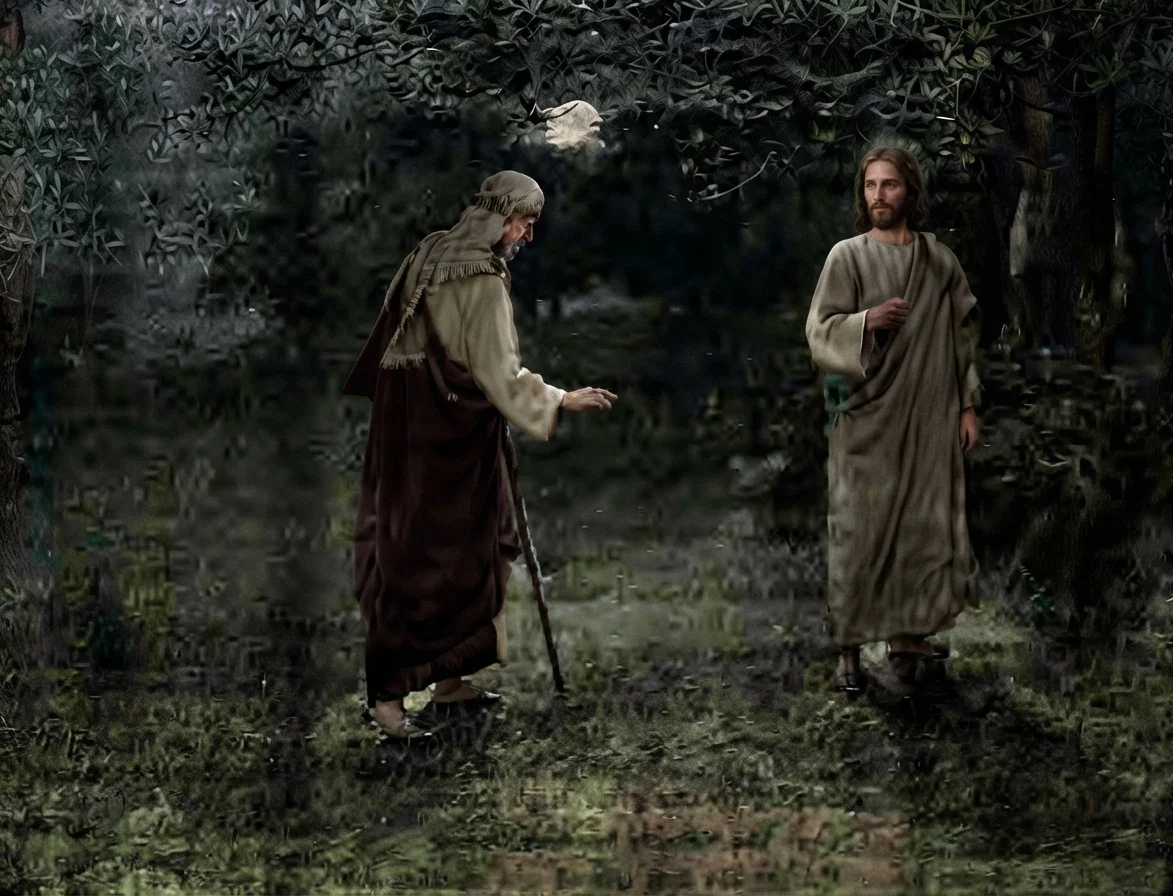
When night came on, Jesus, pale with the weariness of His long-continued labors, sought for retirement and repose in the Mount of Olives. Here Nicodemus found Him and desired a conference. This man was rich and honored of the Jews. He was famous throughout Jerusalem for his wealth, his learning and benevolence, and especially for his liberal offerings to the temple to carry out its sacred services. He was also one of the prominent members of the national council. Yet when he came into the presence of Jesus, a strange agitation and timidity assailed him, which he essayed to conceal beneath an air of composure and dignity.
He endeavored to appear as if it were an act of condescension on the part of a learned ruler, to seek, uninvited, an audience with a young stranger at that unseasonable hour of night. He began with a conciliating address, "Rabbi, we know that Thou art a teacher come from God: for no man can do these miracles that Thou doest, except God be with him." But instead of acknowledging this complimentary salutation, Jesus bent His calm and searching eye upon the speaker, as if reading his very soul; then, with a sweet and solemn voice, He spoke, and revealed the true condition of Nicodemus: "Verily, verily, I say unto thee, Except a man be born again, he can not see the kingdom of God."
Here Nicodemus found Him and desired a conference.

Nicodemus Felt the Want of Spirituality

The Pharisee was surprised out of his self-possession by these words, the meaning of which he partially comprehended; for he had heard John the Baptist preach repentance and baptism, and also the coming of One who should baptize with the Holy Ghost. Nicodemus had long felt that there was a want of spirituality among the Jews; that bigotry, pride, and worldly ambition guided their actions in a great measure. He had hoped for a better state of things when the Messiah should come. But he was looking for a Saviour who would set up a temporal throne in Jerusalem, and who would gather the Jewish nation under His standard, bringing the Roman power into subjection by force of arms.
This learned dignitary was a strict Pharisee. He had prided himself upon his own good works and exalted piety. He considered his daily life perfect in the sight of God, and was startled to hear Jesus speak of a kingdom too pure for him to see in his present state. His mind misgave him, yet he felt irritated by the close application of the words to his own case, and he answered, as if he had understood them in the most literal sense, "How can a man be born when he is old?"

The Holy Spirit the Transformer

Jesus, with solemn emphasis, repeated, "Verily, verily, I say unto thee, Except a man be born of water and of the Spirit, he can not enter into the kingdom of God." The words of Jesus could no longer be misunderstood. His listener well knew that He referred to water baptism and the grace of God. The power of the Holy Spirit transforms the entire man. This change constitutes the new birth.
Many of the Jews had acknowledged John as a prophet sent of God, and had received baptism at his hands unto repentance. Meanwhile he had plainly taught them that his work and mission were to prepare the way for Christ, who was the greater light, and would complete the work which he had begun. Nicodemus had meditated upon these things, and he now felt convinced that he was in the presence of that One foretold by John.
Said Jesus, "That which is born of the flesh is flesh; and that which is born of the Spirit is spirit. Marvel not that I said unto thee, Ye must be born again."
The conversion of the soul through faith in Christ was but dimly comprehended byNicodemus, who had been accustomed to consider cold formality and rigid services as true religion. The great Teacher explained that His mission upon earth was not to set up a temporal kingdom, emulating the pomp and display of the world, but to establish the reign of peace and love, to bring men to the Father through the mediatorial agency of His Son.

Nicodemus Referred to Prophecies of David and Ezekiel

Nicodemus was bewildered. Said Jesus, 'If I have told you earthly things and ye believe not, how shall ye believe, if I tell you of heavenly things?' If Nicodemus could not receive His teachings illustrating the work of grace upon the human heart, as represented by the figure of the wind, how could he comprehend the character of His glorious heavenly kingdom should He explain it to him? Not discerning the nature of Christ's work on earth, he could not understand His work in heaven. Jesus referred Nicodemus to the prophecies of David and Ezekiel:
'And I will give them one heart, and I will put a new spirit within you; and I will take the stony heart out of their flesh, and will give them an heart of flesh: that they may walk in My statutes, and keep Mine ordinances, and do them: and they shall be My people, and I will be their God.' 'And they shall come thither, and they shall take away all the detestable things thereof and all the abominations thereof from thence.' 'Therefore I will judge you, O house of Israel, every one according to his ways, saith the Lord God. Repent, and turn yourselves from all your transgressions; so iniquity shall not be your ruin. Cast away from you all your transgressions, whereby ye have transgressed; and make you a new heart and a new spirit.' 'Create in me a clean heart, O God; and renew a right spirit within me. Cast me not away from Thy presence; and take not Thy Holy Spirit from me. Restore unto me the joy of Thy salvation; and uphold me with Thy free Spirit. Then will I teach transgressors Thy ways; and sinners shall be converted unto Thee.' 'A new heart also will I give you, and a new spirit will I put within you: and I will take away the stony heart out of your flesh, and I will give you an heart of flesh.'
There must be a new birth, a new mind, through the operation of the Spirit of God, which purifies the life and ennobles the character. This connection with God fits man for the glorious kingdom of heaven. No human invention can ever find a remedy for the sinning soul. Only by repentance and humiliation, a submission to the divine requirements, can the work of grace be performed. Iniquity is so offensive in the sight of God, whom the sinner has so long insulted and wronged, that a repentance commensurate with the character of the sins committed often produces an agony of spirit hard to bear. Nothing less than a practical acceptance and application of divine truth opens the kingdom of God to man. Only a pure and lowly heart, obedient and loving, firm in the faith and service of the Most High, can enter there.

A Study of the Sanctuary

VI. The Heavenly, Its Cleansing, and the Judgment

THE earthly sanctuary was built according to the pattern shown in the mount. It consisted of two apartments, the holy and the most holy. Certain articles of furniture were found in the first apartment, and certain others in the second. Likewise the heavenly sanctuary has its holy and its most holy apartment, with the articles of furniture peculiar to each. The apostle John was taken to heaven, and in vision beheld the temple of God. In the temple he saw, in the holy place, the seven golden candlesticks, the golden altar of incense before the throne, and the golden censer filled with fire of the altar. Again he saw the temple of God opened in heaven, and in His temple the ark of His testament. Rev. 4:1, 5; 8:3-5; 11:19.
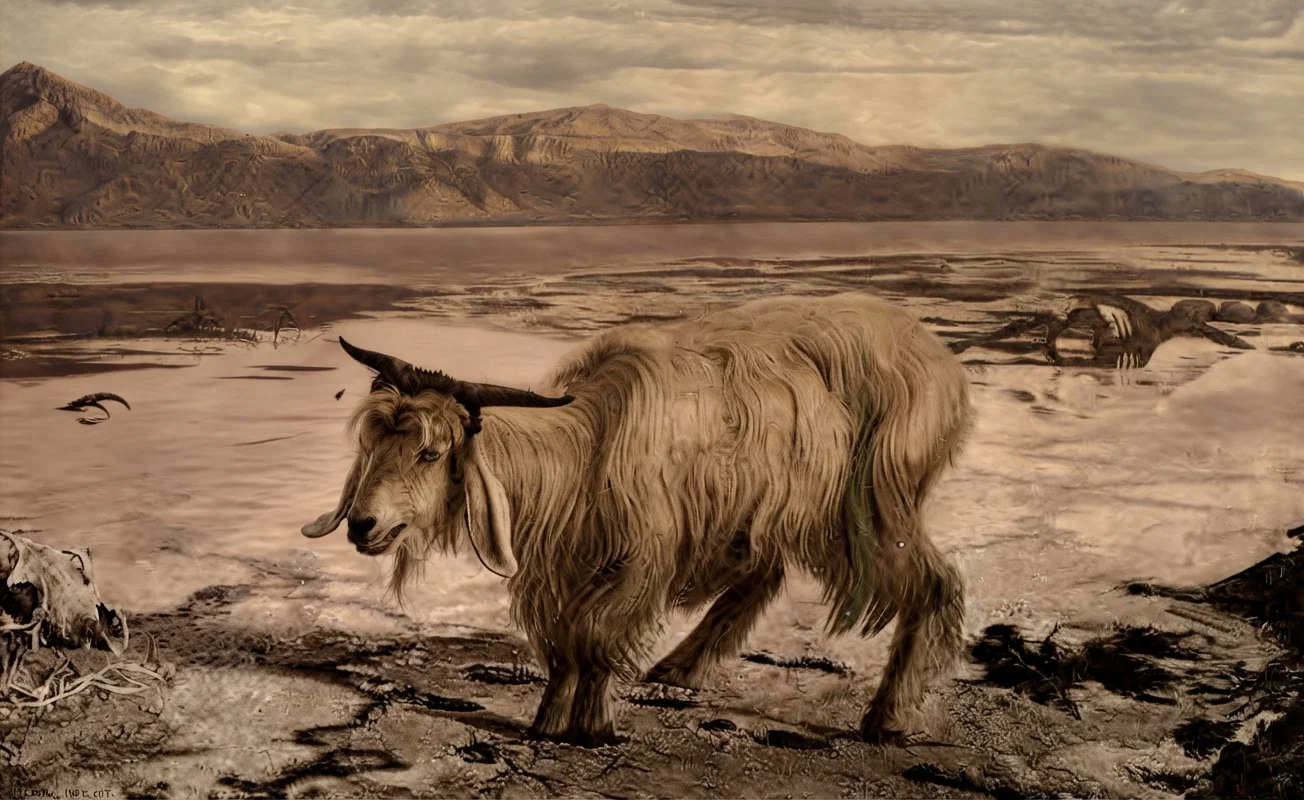
The ministry in the earthly sanctuary consisted of two divisions. In the first apartment the priests ministered daily, while "into the second went the high priest alone once every year, not without blood, which he offered for himself, and for the errors of the people." Heb. 9:7. The service performed in the most holy place consisted of a special ministration, which the high priest alone was permitted to perform, on the great day of atonement, for the cleansing of the sanctuary. By means of the daily ministration, the sins of the people were transferred to the sanctuary, where they continued to accumulate till the day of atonement, when the high priest entered the second apartment, and performed the service of cleansing, bringing all the sins of the people forth from the sanctuary, and by confession placing them upon the head of the scapegoat, when it was led away into the wilderness to perish with the sins of God's penitent people. Israel was then free from guilt; for if any one failed to afflict his soul on the day of atonement, he was to be cut off from among his people. Lev. 23:26-30.
Such was the service performed "unto the example and shadow of heavenly things." Heb. 8:5. That which was done in type in the ministrations of the earthly sanctuary by the Levitical priesthood, was done in reality in the ministrations of the heavenly sanctuary by our great High Priest.

The Heavenly Sanctuary Opened

"After He had offered one sacrifice for sins forever," and before a human hand had been permitted to touch Him, the Saviour ascended to His Father, that He might receive the assurance of His Father's acceptance of His offering. Heb. 10:12; John 20:16, 17. Having performed the ceremony of consecration or dedication of the heavenly sanctuary by the sprinkling of His own precious blood, in harmony with the type, "being by the right hand of God exalted, and having received of the Father the promise of the Holy Ghost," the Saviour poured upon His waiting disciples the Holy Spirit, as a testimonial to them, and to the world, that the way into the holiest of all was made manifest; that His ministry in the heavenly sanctuary was actually begun; that henceforth all penitent souls were to come boldly to the throne of grace, where they would find their Saviour ever living to make intercession for them, and grace to help in time of need. Acts 2:33; Heb. 9:8; 4:16; 7:25.

Two Divisions

As the typical ministry consisted of two divisions, each occupying a distinctive place in the earthly sanctuary, so the ministry of Christ consists of two divisions, the daily and the yearly service, and to each a department of the heavenly temple is devoted.
In the type, the blood of the sacrificial victim removed the sin from the penitent, but it rested in the sanctuary until the day of atonement; so the blood of Christ releases the penitent transgressor from the condemnation of the law, but the sin stands on the book of record in the sanctuary until the antitypical day of atonement. Peter exhorted the people in Solomon's porch, saying, "Repent ye therefore, and be converted, that your sins may be blotted out, when the times of refreshing shall come from the presence of the Lord." Acts 3:19. As we come to Jesus in penitence and contrition of heart, confessing our sin, the Saviour as our Advocate and Intercessor before the Father, pleads His precious blood in our behalf. While the sin is not then canceled, yet pardon and acceptance are secured.

The Life Record Preserved

In describing the judgment scene, the prophet Daniel says, "The judgment was set, and the books were opened." Dan. 7:10. The apostle John says, "I saw the dead, small and great, stand before God; and the books were opened: and another book was opened, which is the Book of Life: and the dead were judged out of those things which were written in the books, according to their works." Rev. 20:12. In each instance, books were seen in the judgment, and they were opened when the judgment began. It is therefore clear that they have an important part to act in the work of that great tribunal. We are told, "The dead were judged out of those things which were written in the books, according to their works." It would seem, therefore, that the books to be opened in the judgment, and out of which every man will be judged according to his works, must contain a faithful record of the life-work of every individual.
Among the books opened in that great day is found the "Book of Life." In this book are written the names of the righteous. Rev. 13:8; Phil. 4:3; Rev. 3:5; 20:15; 21:27. Another book, called the "Book of Remembrance," was written before Him for them that feared the Lord and that thought upon His name. Mal. 3:16. Since this book is written for them that fear the Lord, and who think upon His name, it is very probable that it contains a record of all the good deeds of God's children. The psalmist prayed to the Lord, saying, "Thou tellest my wanderings: put Thou my tears into Thy bottle: are they not in Thy book?" Ps. 56:8.
Sin is also recorded in the books kept in the sanctuary. "Tho thou wash thee with niter, and take thee much soap, yet thine iniquity is marked before Me, saith the Lord God." Jer. 2:22. Through Isaiah the Lord declared of the sin of Judah, "It is written before Me." Isa. 65:6. Of the sin of Israel the Lord said, "Is not this laid up in store with Me, and sealed up among My treasures?" Deut. 32:34. A faithful record of each one's actions is kept in the sanctuary above. The heavenly mirror accurately reflectsevery thought, word, and deed that makes up the texture of his character, and that determines the course of his life. This record is preserved in the heavenly archives, and in the great day of judgment—the antitypical day of atonement—the books are opened, and the final decisions are rendered which are to determine the destiny of every soul.

The Great Day of Atonement

This solemn work was prefigured by the services of the great day of atonement in the earthly sanctuary. Dean Farrar says of this day, in his "Early Days of Christianity," "So awful was the day of atonement that we are told in a Jewish book of ritual that the very angels run to and fro in fear and trembling, saying, 'Lo, the day of judgment is come!'" That was the day when the sins of Israel for the entire year were expiated. It was the day for the cleansing of the sanctuary. Upon this day the high priest went into the most holy place with the blood of the Lord's goat (Leviticus 16), and sprinkled it upon the mercy-seat over the broken law. When he had completed his work in the two apartments of the sanctuary, he came out bearing the sins of Israel. "And Aaron shall lay both his hands upon the head of the live goat, and confess over him all the iniquities of the children of Israel, and all their transgressions in all their sins, putting them upon the head of the goat, and shall send him away by the hand of a fit man into the wilderness: and the goat shall bear upon him all their iniquities unto a land not inhabited ["of separation," margin]: and he shall let go the goat." The sins of Israel that had been confessed and borne into the sanctuary throughout the year by means of the daily ministration were now brought out and removed forever from the camp of Israel. In this way the sanctuary was cleansed and hallowed from the uncleanness of the children of Israel. This was the last work in the yearly round of service, and the type of the last work of Christ in the sanctuary above in behalf of fallen men.

The Judgment

Before the Saviour's work is finished in the heavenly sanctuary, He passes through the veil from the holy to the most holy place, the judgment is set, and the books are opened. Dan. 7:10, 13. One by one the cases of those whose names appear in the books of life are examined, the sins of the overcomers are blotted from the books of record (Acts 3:19), their names are retained in the Book of Life, and are confessed by the Saviour before His Father and before His angels. Rev. 3:5. The names of those who, upon examination, are found to have failed to prove faithful to the end, are blotted out from the Book of Life. Rev. 2:10; Matt. 24:13; Ex. 32:32, 33.
THE SCAPEGOAT
THE SCAPEGOAT
This is the work of cleansing the heavenly sanctuary, not from physical impurity, but from the sins that have been accumulating in the records of heaven. It is this cleansing of which the apostle Paul speaks when he says, "It was therefore necessary that the patterns of things in the heavens should be purified ["cleansed," R.V.] with these [the blood of calves and of goats]; but the heavenly things themselves with better sacrifices than these." Heb. 9:23. It was of this work that the Saviour spoke when He said, "They which shall be accounted worthy to obtain that world, and the resurrection from the dead, neither marry, nor are given in marriage: neither can they die any more; for they are equal unto the angels; and are the children of God, being the children of the resurrection." Luke 20:35, 36. When this work shall have been completed, the sins of the overcomers all blotted out from the books of record—covered with the blood of Jesus our Lord—the names of the unfaithful blotted from the Book of Life, our great High Priest comes out of the sanctuary, and confesses the sins upon the head of the antitypical scapegoat—the originator of sin—an angel from heaven lays hold on "the dragon, that old serpent, which is the devil, and Satan," and binds him a thousand years, and casts him into the bottomless pit, and shuts him up, and sets a seal upon him; "that he should deceive the nations no more, till the thousand years should be fulfilled;" and at the end of the thousand years the devil that deceived them is cast into the lake of fire (Rev. 20:1-10). Then will type have met antitype fully. The mystery of God will have been finished. Then, having made up the subjects of His kingdom, the Lord of Glory will receive from His Father "dominion, and glory, and a kingdom, that all people, nations, and languages, should serve Him: His dominion is an everlasting dominion, which shall not pass away, and His kingdom that which shall not be destroyed." Dan. 7:14. Dear reader, are your sins all confessed and put away? Are you ready for your great High Priest to come forth from the sanctuary, to lay aside His priestly robes, to say, "It is done"? Are you prepared to meet your Saviour in glory, wearing the royal robes and the kingly crown? If not, then make haste and "prepare to meet thy God."

A Korean Prayer for Enlightenment

—★—
A PATHETIC instance is told of an old Korean man who prayed earnestly that the eyes of the foreigners might be opened “to see the sore need of people in a land where no one knows anything and where all believe in devils and are dying in the dark.”
Continue reading: Sunday in Scripture