Your ShelfYour Projects

Signs of the Times, Vol. 40, No. 8.

Our Bible Band
Earlier text: The Inheritance of the Righteous

Why Do Men Kill?

We naturally suppose that men kill each other from some overmastering motive, at least in the majority of cases. Arthur Train, formerly Assistant District Attorney of New York County, in his recent book, “Courts, Criminals, and Camorra,” has analyzed a large number of murder cases with the purpose of ascertaining the reason why men kill. He reaches some astonishing conclusions.
After giving in detail sixty-two cases, he sums up:
“The significant features of this analysis are that about seventy-five per cent of the killings were due to quarrels over small sums or other matters, drink, and women; over fifty per cent to drink and petty quarrels, and about thirty per cent to quarrels simply. The trifling character of the causes of the quarrels themselves is shown by the fact that in three of these particular cases, tried in a single week, the total amount involved in the disputes was only eighty-five cents. That is about twenty-eight and one half cents a life. Many a murder in a barroom grows out of an argument over whether a glass of beer has, or has not, been paid for, or whose turn it is to treat; and more than one man has been killed in New York City because he was too clumsy to avoid stepping on somebody’s feet or bumping into another man on the sidewalk.”
“With a view to ascertaining conditions in general throughout the United States, I asked a clipping agency to send me the first one hundred notices of actual homicides which should come under its scissors. One hundred and seven clippings brought the following reasons why men killed: There were four suicides, three lynchings, one infanticide, three murders while resisting arrest, three criminals killed while resisting arrest, two men killed in riots, eight murders in the course of committing burglaries and robberies, seven persons killed in vendettas, three race murders, and twenty-four killed in quarrels over petty causes; there were twelve murders from jealousy, followed in four instances by suicide on the part of the murderer; six killings justifiable on the ‘higher law’ theory only, but involving great provocation; and thirty deliberate slaughters. The last clipping recounted how an irate husband pounded a ‘masher’ so hard that he died. Leaving out the suicides and those killed while resisting arrest, there remain one hundred persons murdered, not only by persons insane or wild from the effects of liquor, but by robbers and burglars, brutes, bullies, and thugs, husbands, wives, and lovers, and by a vast number of people who not only destroyed their enemies in a fury of anger, but in many instances openly went out gunning for them in the dark, or hacked off their heads with hatchets while they slept.”

A Sanguinary Record and Little Consolation

“It is, indeed, a sanguinary record, from which little consolation is to be derived, and the only comfort is the probability that the accounts of the first one hundred murders anywhere in Europe would undoubtedly be just as blood-curdling. I had simply asked the clipping bureau to send me one hundred horrors and I had got them. They did not indicate anything at all so far as the ratio of homicide to population was concerned, or as to the blood-thirstiness of Americans in general. They merely showed what despicable things murders are.”
“The reasons for these homicides were of every sort: A girl of eleven shot her girl friend ofabout the same age, and killed her; a plumber killed his brother—also a plumber—for saying he stole two dollars; a jealous lover shot and killed his sweetheart, her father and mother; a card game resulted in a revolver fight on the street in which one of the players was killed; and a couple of dozen persons were incidentally shot, stabbed, or otherwise disposed of in the course of quarrels over the most trivial matters. In almost no case was there what an intelligent, civilized man would regard as an adequate reason for the homicide. They killed because they felt like killing, and yielded to the impulse, whatever its immediate origin.”

Abundantly Supported

This conclusion is abundantly supported by the figures of the Chicago Tribune for the seven years ending in 1900, when carefully analyzed. During this period 62,812 homicides were recorded. Of these were 17,120 of which the causes were unknown, and 3,204 committed while making a justifiable arrest, in self-defense, or by the insane, so that there were in fact only 42,488 felonious homicides the causes of which can be definitely alleged. The ratio of ‘the quarrels’ to this net total is about seventy-five per cent. There were, in addition, 2,848 homicides due to liquor—that is, without cause. Thus eighty per cent of all the murders and manslaughters in the United States for a period of seven years were for no reason at all or from mere anger or habit, arising out of causes often of the most trifling character.”
“Nor are the conclusions changed by the figures of the years between 1904 and 1909.”
“The fact to be observed—the interesting and, broadly speaking, the astonishing fact—is that among a people like ourselves anybody should desire to kill. It is even more astonishing than that the impulse should be yielded to so often if it comes.”
“This, then, is the real reason why men kill—because it is inherent in their state of mind, it is part of their mental and physical make-up—they are ready to kill, they want to kill, they are the kind of men who do kill.”

Strikingly Foretold

It would seem that the prophet’s words apply to-day: “There is naught but swearing and breaking faith, and killing, and stealing, and committing adultery; they break out, and blood toucheth blood.” Hosea 4:2. “Your hands are defiled with blood. . . . Their feet run to evil, and they make haste to shed innocent blood.” Isa. 59:3, 7.
We are certainly in the “perilous times” spoken of by Paul. 2 Tim. 3:1-7. But why do men kill?—“Ye are of your father the devil, and the lusts of your father ye will do. He was a murderer from the beginning.” John 8:44. Paul tells us that he is “the god of this world,” and “the prince of the powers of the air.”
Why do men kill?—Because they are of their father, who was a murderer from the beginning. There is no other reason, there can be no other. Satan is the author of murder, so Jesus tells us, and those who profess to have any faith in Jesus will believe Him, and not spend valuable time in seeking to account for murder on some sociological ground. Even lawyers like Arthur Train are compelled to admit that men kill without any reason for killing. And yet in the face of these 10,000 yearly murders which are admitted to be without reason, without the slightest justification, those who venture to assert that the world gives no evidence of getting better are derided as fanatical alarmists. May people see that the land is filled with blood because men have rejected the gentle Jesus, and chosen the murderer, Satan!
EARLE ALBERT ROWELL.

“Distress of Nations, with Perplexity”

Photo by. Paul Thompson
A STRIKE INCIDENT IN NEW YORK
Photo by. Paul Thompson A STRIKE INCIDENT IN NEW YORK
The above, Jesus tells us in Luke the 21st chapter, the 25th to the 27th verses, is among the striking signs which will be manifest in the world just before our Lord comes. Was there ever a time when the nations were in more perplexity than now? For instance, an editorial in a secular paper opens with the following:
“A feeling of unrest and uncertainty, and a nameless fear that something unusually bad will happen the present year in France and Germany, prevails to a greater or less extent in both these countries. In the first place, we are told that this is noticeable in the gold shortage in France. Banks are hoarding their gold and giving out paper and silver wherever possible.”
The people are hiding their gold, and keeping it in hiding, just as they did previous to the Franco-German war, and long before diplomatic relations had been broken off between the two countries. It was impossible then to obtain gold in France. Afterward it was brought out to pay Germany her indemnity for the war. This condition many believe is OMINOUS OF CALAMITY, and perhaps war between France and Germany, or in some other way which will involve the two nations. Germany has a prophecy that 1913 is bad for her.
“There is hardly an optimistic note in all Germany, says a Berlin despatch, not one in the reviews and newspapers. The North German Gazette, the organ of the imperial chancellor, recalls the dark days of 1813, and inveighs especially against the Napoleon cult in Germany. It castigates Germans for their hero worship of Napoleon as shown by the thousands of statues and pictures of the man who a hundred years ago humbled Germany in the dust.”
One of the things that breed foreboding is the condition of European politics in general and the complications there that may result, of course, leading to a general war. A hundred years ago Prussia saw her darkest days, and a prophecy by a great seeress named Leonormand, which has been fulfilled in part with striking exactness, was uttered then. Prince William, we are told, the first German emperor, called on her in 1829 and asked her four questions which she agreed to answer. She told him that he would be the head of the army in 1849, that the victorious war would end in 1871, that he would die in 1888, and that THE END OF PRUSSIA WOULD COME IN 1913. All except the last has been fulfilled, and the prophecy is “having its effect on the masses of the German people, and FILLING THE POPULAR MIND WITH DISMAL FOREBODINGS.” Whether the old seeress told the truth or not, certain it is that the Master’s words are emphatically true in the “distress of nations, with perplexity, men’s hearts failing them for fear.”
Among the other things which are troubling Germany are the Socialists, nay, not only Germany, but all Europe. Three great Socialist meetings have been held within the last twelve months in Europe, a hundred thousand men attending each one, and all of them declaring against war. These sentiments have been sown broadcast in the armies of Europe, and they hardly know whether they can depend upon their troops when Socialist is pitted against Socialist brother. They do not know whether the patriotic feeling is stronger than the brotherhood feeling. This newspaper editorial finds some ground for these prophecies, not simply in the superstitions which possess people, but in the marvelous sensitiveness of some minds that the editor seems to believe can sense the future; and he quotes a verse from “Evangeline”:“
“As at the tramp of a horse’s hoof on the turf of the prairies Far in advance are closed the leaves of the shrinking mimosa, So at the hoof-beats of fate, with sad forebodings of evil Shrinks and closes the heart ere the stroke of doom has attained it.”
But better than all these, if the people would but trust it, is God’s great Book with His wonderful prophecies of the nations. Germany MAY COME to its end in 1913, Socialism may sweep over Europe, thrones may topple and fall — we do not know; but we do know that in a little while from this, beyond all the misrule of man, there shall come the rule of God Most High, with Jesus as King.

Sunday Law Urgency

THERE is a growing determination to ingraft more and more Sunday legislation into all our state codes, as well as into the laws of the nation. Every time a state legislature meets, it is importuned with proposed laws in behalf of Sunday observance; and, likewise, every time the national Congress convenes, it is urged to pass one or more laws to enforce certain individual ideas of Sunday sacredness.
We have recently reported the efforts being made to have California pass a Sunday law during the sittings of its present legislative body. Last week we reported the bill that has been introduced into the Utah legislature; and word has just been sent us by Brother I. A. Crane, of Oklahoma City, that three Sunday bills are now before the Oklahoma legislature. One of the noticeable facts of this time is that whenever a legislature is in session you can count on its having one or more bills before it to regulate the observance of Sunday.
Photo by Paul Thompson
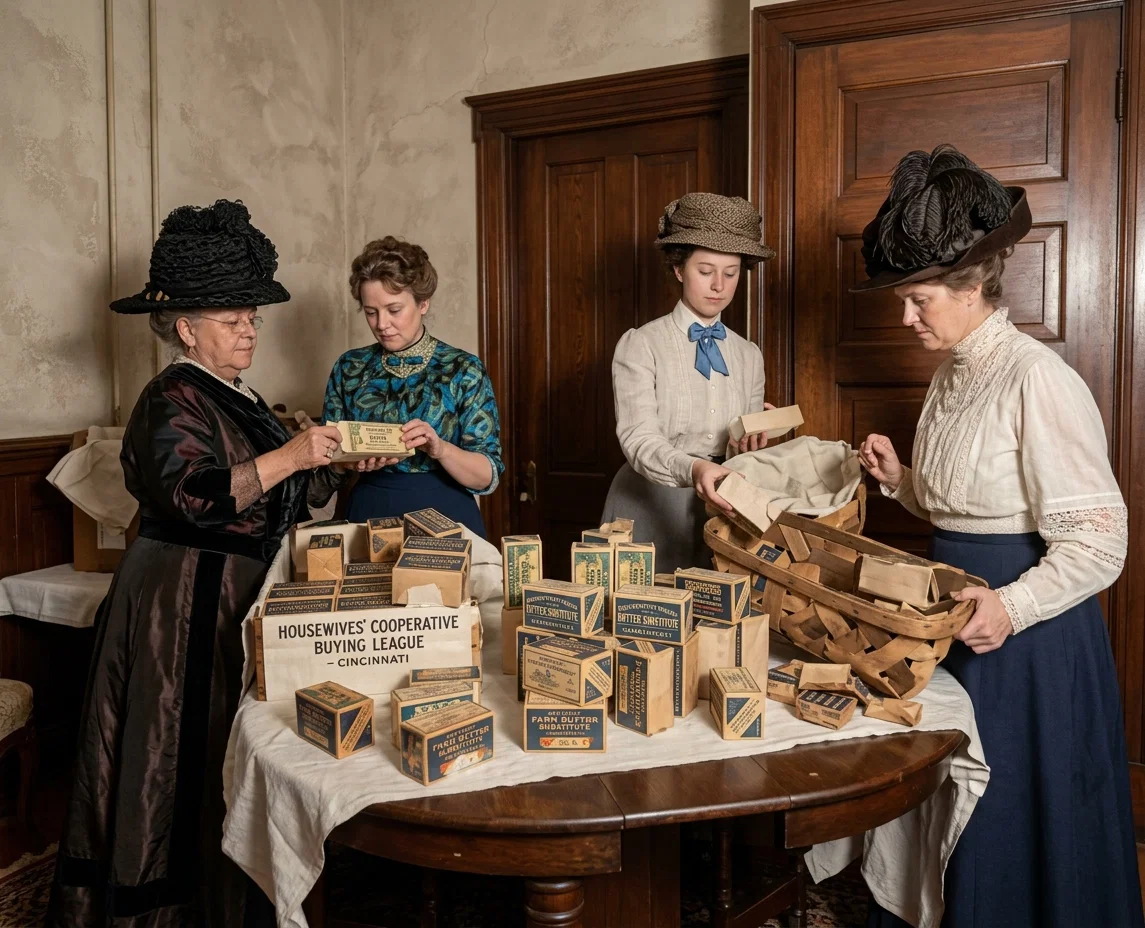
CINCINNATI WOMEN RUNNING BUSINESS FOR THEMSELVES
Photo by Paul Thompson CINCINNATI WOMEN RUNNING BUSINESS FOR THEMSELVES
Felix Diaz
Felix Diaz
At first, these proposed Sunday bills called for the observance of the day because it was sacred. They wanted it observed because they claimed it was a sin against God not to have it properly regarded. But it was pointed out that it was contrary to the spirit of the American institutions and principles to make laws that favored any religious doctrine or belief. Furthermore, it was also pointed out that Sunday observance was not enjoined in the Bible anyway, and requiring rest from labor on that day was not in harmony with Bible doctrine, even if it were right to legislate on religious questions.
The Bible being absolutely silent on the subject of Sunday sacredness, and the United States government in its constitution and elsewhere having expressed itself against any religious legislation, it seemed that all Sunday laws were logically shut out. But those who are working for such laws, are now changing front, and calling for laws requiring rest on one day of the week, on “humanitarian” grounds. They claim that there is no religious idea in their measures at all. They simply want to give the “downtrodden laboring man a chance for rest, and to spend one day in the week with his family.”
This all sounds well when you do not know what is back of it. We have been telling the world for nearly half a century what this thing means, and how it will finally come out. Sunday observance will yet be universally demanded, not because God says so, but because the church says so. And this demand will be made in open defiance of what God Himself says upon the subject. It has been affirmed by the world at large, that we have passed the time when we will have any more religious bigotry that will result in religious persecution. But keep watch of the events that are passing, and also of the events that are most manifestly approaching. The world is yet to see the establishment of the greatest religious despotism that has ever defaced the pages of history; and compulsory Sunday observance will be one of the main planks in the platform of the universal ecclesiastical confederacy. The prophecies of the Bible make this matter clear. We have been telling it to the world for years; and unmistakable doings of this time make it clear that the time for the realization of these prophetic utterances can not be long delayed. That great climax of a world-wide religious confederacy will mark the very last act in the closing history of this world of sin and rebellion against the righteous principles of Jehovah.

Women and Intoxicating Liquor

In the Colorado Senate, a few days ago, Senator John Hecker, of Denver, affirmed that “twenty women to one man, in Denver, drink intoxicating liquor, and they drink more than men.” The senator was doubtless a bit excited, and overdrew the facts. But there is no denying the truth that women are coming to drink a great deal more than in former days. Reliable statistics show an increase each year of the amount of intoxicants consumed, and the women are bearing their part of this wrong.

Revolution Breaks Out Again in Mexico

As suddenly as an explosion, the revolution in Mexico has broken out again, and has assumed very angry proportions. The rebel forces have entered the capital, and liberated a number of political prisoners, among whom is Felix Diaz, the nephew of the old exiled President Diaz, that ruled Mexico so successfully and for so long a time. President Madero is making a strong fight; and the streets of Mexico City have been the scene of continued artillery and musketry fire for a number of days. The United States is rushing war-ships to the harbors of the troubled republic as fast as it can, and troops are being put in readiness to protect the lives and property of United States citizens and other foreigners residing there. As usual, as soon as fresh trouble breaks out in Mexico, the despatches begin telling of what the Japanese propose to do. Some of the despatches say that 20,000 Japanese stand ready to rise up to help the rebels in their fight, as soon as they get well under way. This old world is well filled with inflammable material, and it is breaking out in war and revolt in many — very many — parts of it, and the worst difficulties lie still ahead. Men can see these things coming, and truly the words of the Master are being most literally fulfilled, that men's hearts are failing them for fear as they are looking for those things that are coming on the world.

Portugal to Return Royal Possessions

The Portuguese government has decided to send to Manuel, late ruler of Portugal, and Queen Amelia, the furniture, jewels, works of art, etc., belonging to them.

Home Memories

By Mrs. L. D. Avery-Shuttle
He was an old man long past the threescore and ten mile-stone, but it would have done you good to look into his mild, gray eyes, clear and honest, and filled with a kindly light. His frame was sturdy and manly, and the passing years had scarcely left their mark upon it.
Something was said about “temperance.” At once the intelligent eyes brightened—“Temperance? Shall I tell you what it was that made that word the guiding star of my life?”
“Please tell me your story,” I begged.
“There’s nothing to tell, only that I should long ago have filled a drunkard’s grave,—for I was born with a natural craving for the poison,—had it not been for one thing.”
“I suppose that one thing was the fear of the outcome,” suggested some one.
“Perhaps it was just principle and a determination to lead a good clean life,” ventured another.
“No, no;” and a genial smile lighted up the old man’s face, “neither of these would have weighed an ounce against my natural desire for the cup. It was the sacred promise which I gave my mother; that held me.”
O, it doesn’t take very long to pass judgment on such a mother as that, does it? What a strong grip she must have had on her boy’s heart,—a grip so strong that the passing of threescore weary years could not weaken it. What tender memories must have clustered about such a mother,—memories that are worth more to any man or woman, or to any boy or girl than all the gold of Golconda,—memories of loving words and tender kisses and appreciation and smiles and gentleness, together with firmness for the right, strictest integrity, and sterling character!
O, these memories of the old home days! What character molders they are,—yes, and what character builders!
Then be careful, mother, be careful of that boy of yours. It does not take many years of carelessness and lack of sympathy and love on your part, to render his young heart as hard and unfeeling as a stone.
“Well,” you say, “I love my boy as well as any mother ever did, but I don’t believe in coddling my boys and girls. I see no use in manifesting my affection. As much as I do for them, I take it for granted that they know I love them.”
Ah! but what about the days to come? What about the memories of home and mother? O, I tell you, we take too much for granted. Johnnie gives up his vegetable garden, that sister Mary may use the available ground for her roses. Sister is really pleased to be thus accommodated, but she doesn’t say anything about it, because she takes it for granted, of course, that Johnnie understands, well enough, that she is thankful. But Johnnie goes off to school, wondering why his sister isn’t like other girls.
Emma gives up her birthday party, which she has so long anticipated, because she fears mother is unable to do the extra work. But mother takes it for granted that her self-sacrificing daughter understands that she is grateful. And so mother says nothing about it.
But in after-years, the daughter’s memory of her mother will lack just a little of the sweetness which naturally throws a sacred halo about the very name of “mother.”
Somehow, life—our every-day home life—does not seem to us as it used to, years ago. I wonder if we have not all noticed it. There is an intensity which seems to pervade everything, changes which seem vital to our peace and happiness are thrust upon us with startling suddenness, until the weary heart throbs anxiously, and the tired head almost reels, as we strive to accustom ourselves to each new emergency.
What is the meaning of it all? What is the reason that the enemy thrusts and presses his darkness and blackness in upon us, at every onward step? The wheels of life used to run smoothly and quietly enough,—almost no changes,—almost no disquiet. To-day the newspapers are filled with alarm and horror and dread and blood and crime.
O, I am glad, so glad that the memories of the other days are for the most part, calm and restful. And, O, sometimes our hearts yearn to go back to those old days once again,—to the sweet care-free days of childhood; to hear the music of voices long since hushed, and to see the loved faces and forms that used to make our childhood so happy.
Well, in all these longings—longings too often mingled with unavailing regret—our merciful Saviour sympathizes with us. There is never a cabin too humble for Him to enter, never a heart too stained and sinful for the blood of the Crucified to purify. “Him that cometh unto Me, I will in no wise cast out.” He has taken the contract to save us, and He will never fail nor be discouraged.
When we cry out with heart-sickness and homesickness, He who spent whole nights alone upon the mountains in prayer for us, knows the miseries of homesickness. Think you that His divine spirit felt not the human pangs of heart hunger and heart yearning? O, how dark and dim must this sin-cursed world have appeared to Him, before whom the angelic hosts delight to bow,—how dark, how dreary! What wonder that He groaned in bitterness of spirit: “My flesh and My heart crieth out for the living God.” “My soul thirsteth for Thee . . . in a dry and thirsty land, where no water is. To see Thy power and Thy glory, so as I have seen Thee in the sanctuary.”
What sacred memories of home; what yearning of soul; what consuming desire!
Let none of us forget that we are character builders for others as well as for ourselves. “None of us liveth to himself, and no man dieth to himself.” O, that we might build so wisely and well, that in after-days the memories which arise in the hearts of others concerning us, may be pure and sweet and holy!

The Lower for the Higher

(From Sunday School Times)
We must give up the lower for the higher. An artist's pupil was sketching a landscape bathed in the glow of the setting sun. A large barn stood in the foreground. The artist watched his pupil in silence for a time, and then said to him impressively, “If you spend so much time painting the shingles on that barn, you will never have time to paint the sunset.” In all our work we must choose between shingles and sunsets, between pearls and goodly pearls and the noblest pearl. If we will win the higher things, we must give up the lower.
The easy way is not to trouble ourselves about the better things, the better spiritual attainments, the better service, the winning of other souls. “Nobody will ever thank you for it,” one said, in speaking of certain exhausting work and costly self-sacrifice. “Nobody will ever thank you for it.” But the Christlike man or woman toils not for human thanks, never thinks of human gratitude or ingratitude. His one thought is, “What is my Master bidding me to do? How can I do most for Him?”
The love of Christ impels us to our holiest, our bravest, and our best. The Master's face looks into ours; and in the gentle stillness there is a voice that calls us upward, upward, tho with bleeding feet and weary step, to the higher things, to the highest. Let us follow unafraid, undismayed. We shall lose nothing by giving up ease, or pleasure, or gain, or life; for what we shall receive in exchange will be a thousand times better possession and treasure than what we have sacrificed.
“O Master, point Thou out the way, Nor suffer Thou our steps to stray; Then in the path that leads to-day We follow Thee.
“Thou hast passed on before our face; Thy footsteps on the way we trace; O keep us, aid us by Thy grace; We follow Thee.”

Your World

YOUR world is a reflex of you. Men talk about “the world” as if it were a single entity, while in fact every individual lives in a different world from that of every other individual. What one finds in his world is due not to outside facts, but to the choices he makes within. Mr. Moody once portrayed the absurdity of the man who would paint his pump in order to improve the quality of the well-water. One whose world seems to be a sad misfit for him, insists that the world outside be put into better order. What he really needs is to get himself into a different condition within, learn to relate himself positively to the best things he can find, and let them make up his world.—Selected.

Nests of Pleasant Thoughts

To GET peace, make for yourself nests of pleasant thoughts.—John Ruskin.

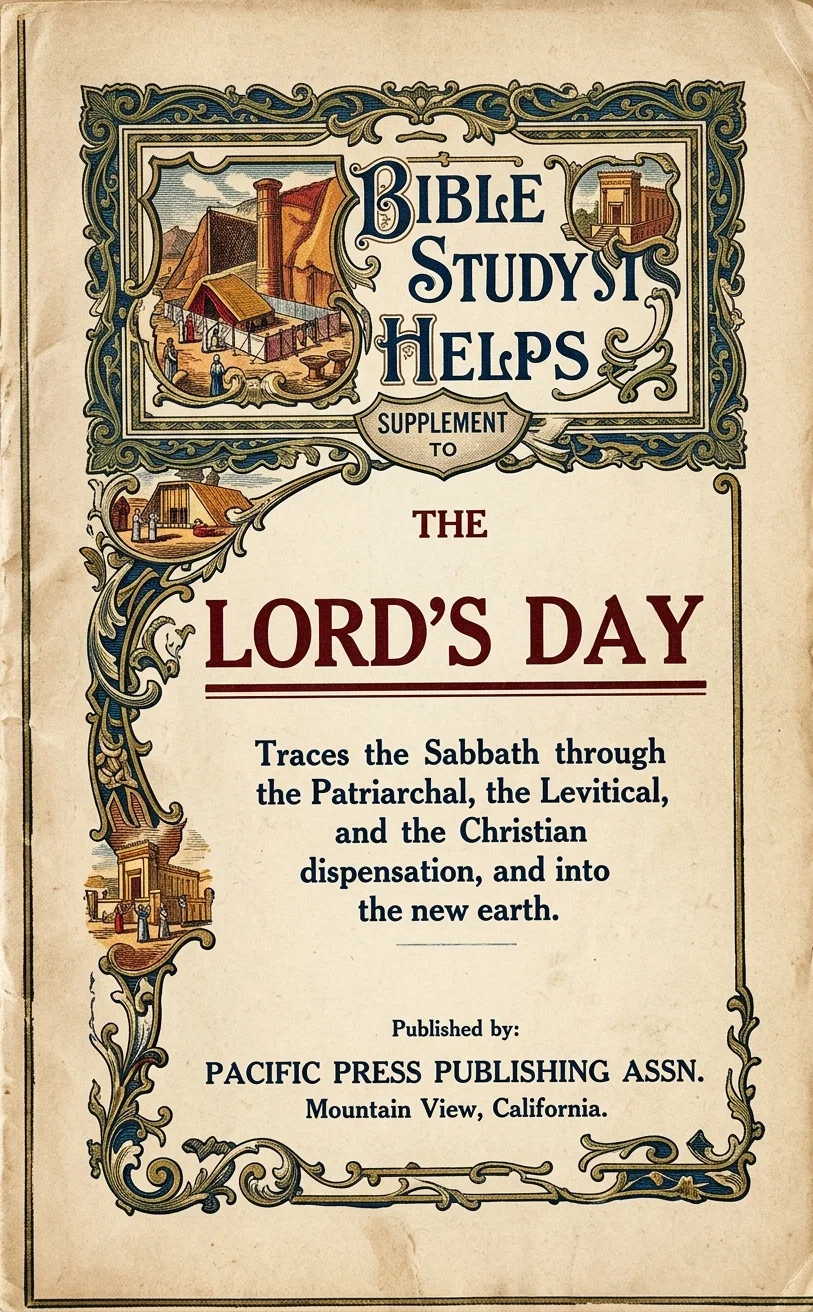
Bible Study Helps

The value of this group of helps in pamphlet form can not be overestimated

Coming of Christ—New Earth

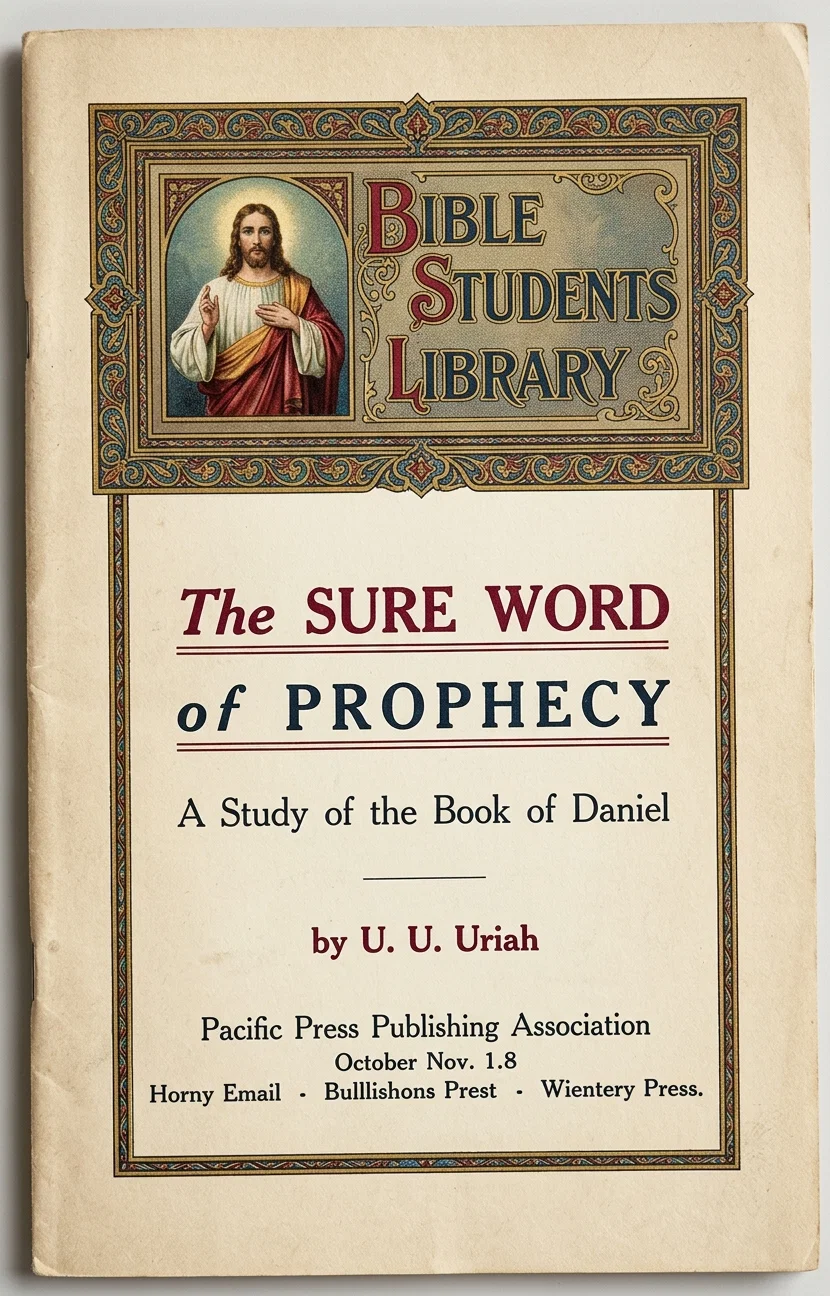
A chapter-by-chapter outline of the book of Daniel. It explains “the time of the end.”
“The Sure Word of Prophecy,” 10c.
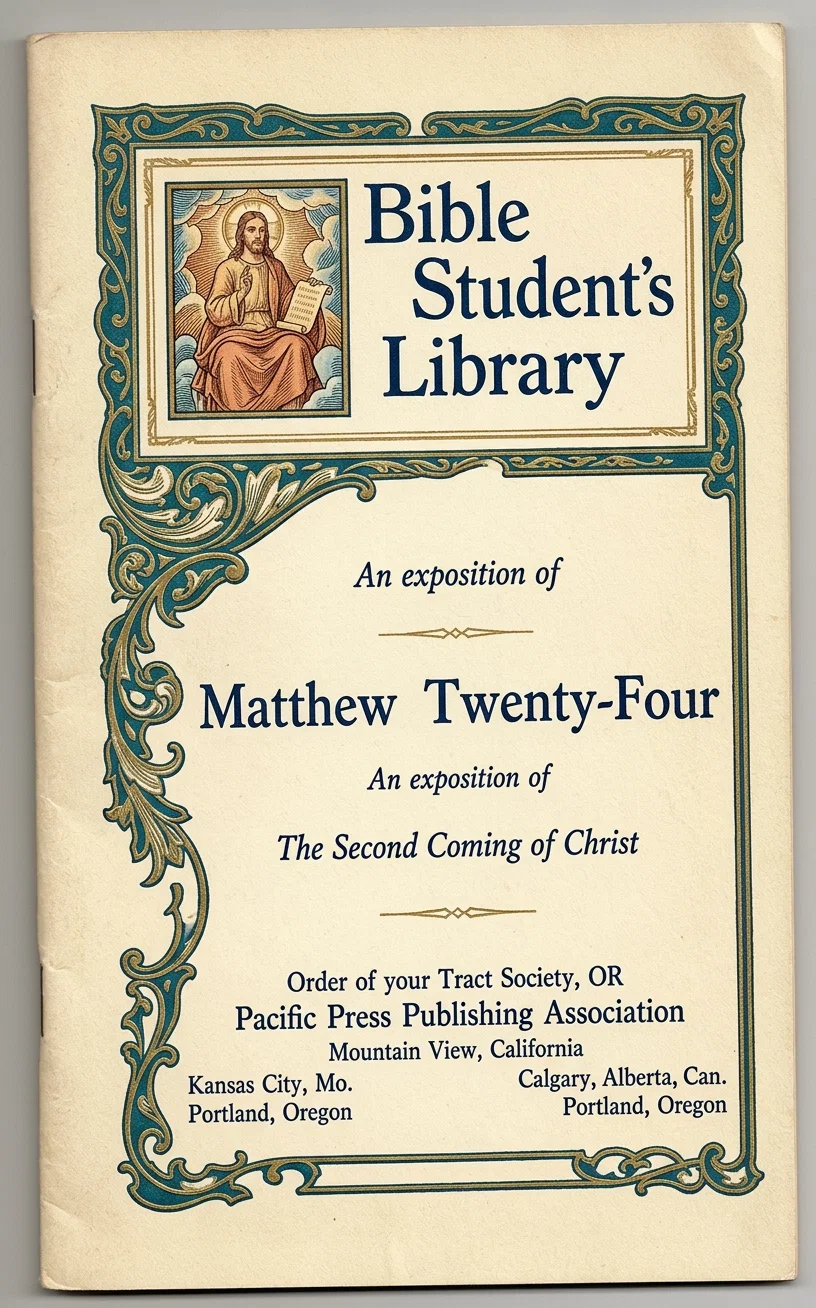
Connects conditions of to-day with a verse-by-verse study of Christ’s prophecy.
“Matthew Twenty-Four,” 10c.
Beautifully describes the home of the saved, and how it may be gained.
“The Saints’ Inheritance,” 10c.

Sanctuary—Sabbath—Prophecy

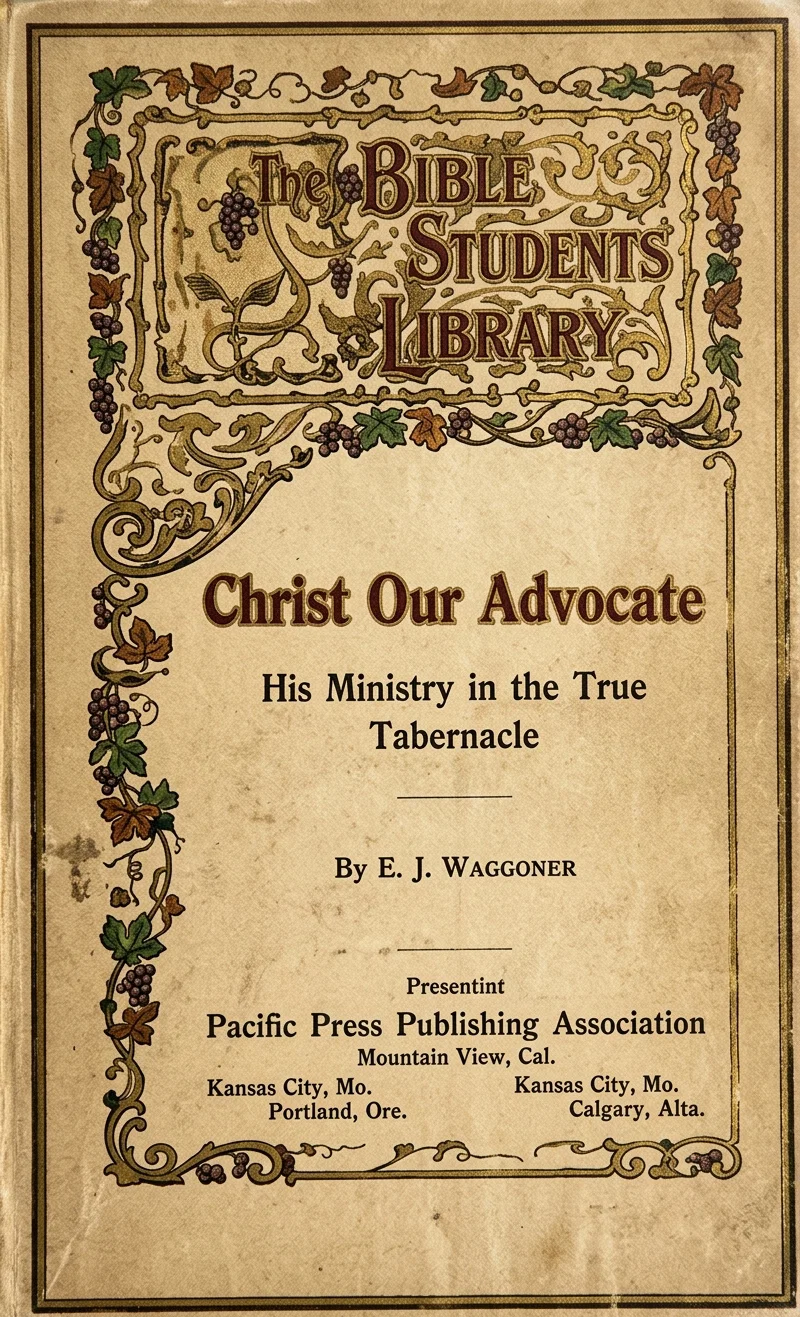
Explains the whole sanctuary question, the 2300-day period, and the judgment.
“Christ Our Advocate,” 10c.
Traces the Sabbath through the Patriarchal, the Levitical, and the Christian dispensation, and into the new earth.
“The Lord’s Day,” 10c.
Shows how prophecy has been present with the Church in every age. Explains Eph. 4:8-11.
“Prophetic Gift,” 15c.
Order of your tract society or
Pacific Press Publishing Association
Mountain View, California
Kansas City, Mo.  Calgary, Alberta, Canada  Portland, Oregon
Continue reading: Questions and Answers