The closing part of my last report was written on the steamship “Vestris” while we were en route from Brazil to Argentina, after attending the union conference in Brazil. As our ship arrived at Montevideo Sabbath morning and remained there until evening, we had the opportunity of meeting with the believers in that city. Brother F. L. Perry, the superintendent of the Uruguay Mission, had arranged for a meeting at 3 P. M., and Brethren Montgomery and Town and I each spoke briefly to the assembled company. A good property is owned by the union conference, and this provides a place for the mission office, for public services, and a home for the workers. We were glad to find that the truth had been planted in the city of Montevideo.
We arrived at Buenos Aires on Sunday morning, January 30, and proceeded at once to La Plata, one hour’s ride by train, where we found the workers’ meeting in progress, leading up to the biennial session of the South American Union Conference. We were heartily welcomed by Elder J. W. Westphal, the president of the union, and all his associates in the work; and the Christian hospitality extended to us made us feel very much at home. So it is the world over. There is something about this message which constitutes a strong tie binding together in a spirit of unity the workers in all parts of the great field, and we are always among friends. The unity of our work is one indication that this movement is under divine guidance.
We were at once assigned a share in the work of the meeting, which, including the conference, was to continue three weeks longer. Brethren Montgomery and Town and I usually gave one study each as our contribution to the daily program, and joined with others in the other features of the meeting. A deep interest was manifested in the study of the gospel message for this time, and we all appreciated the light which came to us from the Word of God. We have been told that there is more light for us, and our experience is in harmony with this statement. Greater assurance and fresh courage seemed to come into the hearts of the workers as we dwelt upon the wonderful revelation of the plan of salvation through the gift of Christ to be the Saviour of the world, and as we gained a new and more comprehensive meaning of the special truths which are to be proclaimed in finishing the work of God in the earth. The prophecies throw a wonderful light upon our time, and what we have been looking forward to for many years is now taking place before our eyes. “Blessed is he that waiteth, and cometh to the thousand three hundred and five and thirty days.”
The meetings of the union conference which began February 11, were of much interest. The reports from the field were encouraging, and the various financial statements rendered showed that the work was being carried forward upon a safe basis. We were thankful to find no burdensome debts resting upon the different organizations, and we were not called upon to give time and strength to devising methods for meeting financial obligations. It is cheering to find that the mission fields have been operated in harmony with the plain counsel given through the Spirit of prophecy, to shun debt. It saves many heart-breaking experiences.
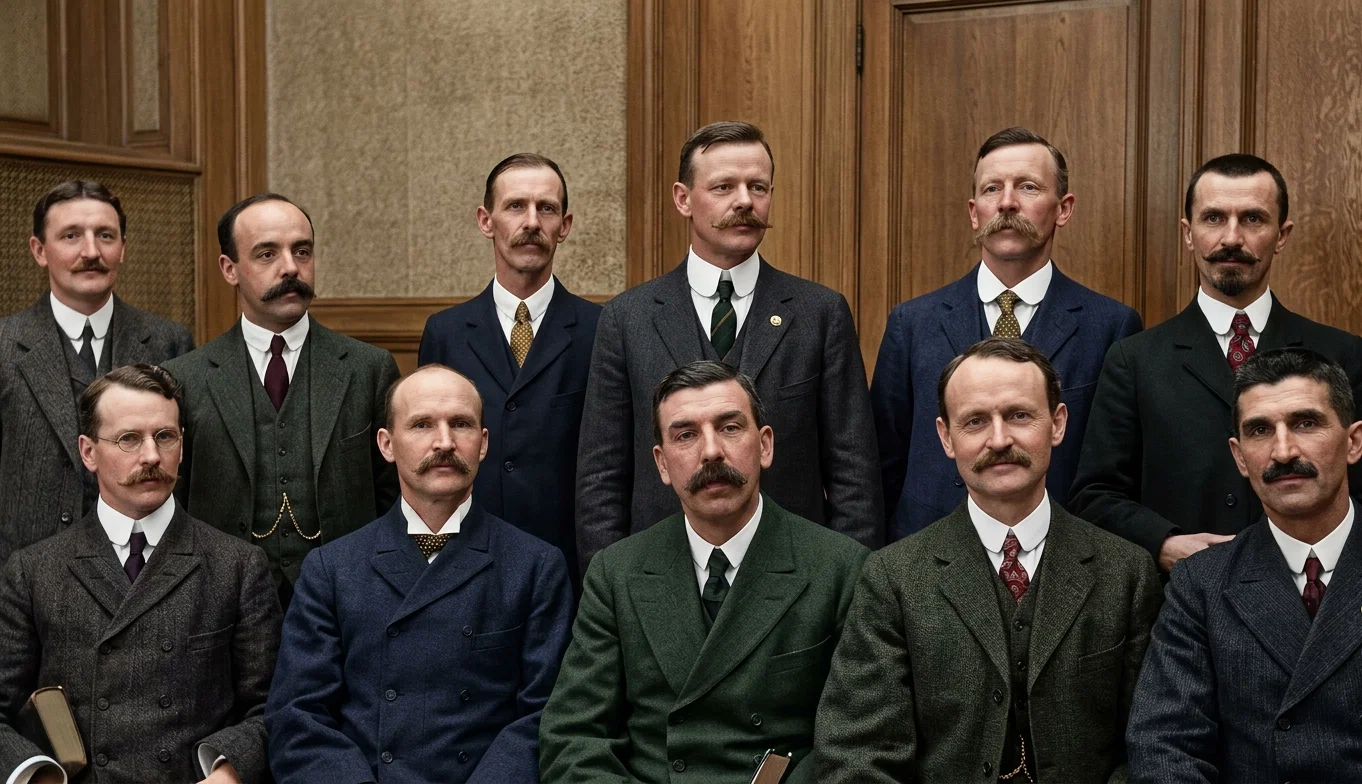
ORDAINED MINISTERS IN THE SOUTH AMERICAN UNION CONFERENCE
In his report to the conference the president, Elder J. W. Westphal, gave a brief review of the work in South America from the time when the first workers came to this country in 1891 down to the present year. In 1901, when the first general organization was effected, there were about 1,100 believers in the whole field. As the work has extended, two union conferences have been organized, with local conferences and local mission fields in the territory of each union. I will quote a brief statement: “In the three years, 1911-13, from the separation of Brazil from the South American Union Conference to the time of the last session, the membership [of the South American Union Conference] had reached 1,947, a total increase of 474. During the biennial term of 1912-13 the increase was 335, beginning with a membership of 1,612. The last biennial term has brought the membership to 2,698, an increase of 751, more than 38½ per cent, or an average of two a day, with a surplus of 21. Of these, 300 were added to the church in 1914, and 451 in 1915, a gain of 50 per cent in 1915 over the previous year.” These facts speak for themselves. Adding the membership in Brazil, 2,197, we have a total membership in South America of 4,895. With a roll of almost five thousand believers, three training schools, two printing offices, and a sanitarium, we may surely say that our message is strongly and permanently established in this field. Those who during the past fifteen or twenty years have acted as the pioneers in this country and have contributed by their labors to bring about the above-mentioned results, have endured many hardships, and have given the best of their lives in self-sacrificing devotion to the interests of the cause of God in South America during the most trying period of its development, and those who enter into their labors and reap the benefit of their faithful efforts should remember them for their works’ sake.
The reports rendered by the heads of the various local fields entered into more details concerning the progress of the work. Limited space prevents me from giving extended extracts from these reports, and I can present only their most important features. It is generally conceded that the mission to the Indians around Lake Titicaca has done more than any other one thing to bring our work into favorable prominence in South America, and it therefore seems proper to speak somewhat fully of that effort. About six years ago an Indian in that region read some of our literature and became interested. He told other Indians what he had learned, and began to correspond with the superintendent of the Peruvian Mission. Later two of our brethren visited these interested Indians, and Brother F. A. Stahl began work among them. Now there is a church of 335 members, 235 of whom have accepted the truth during the last two years.
The medical missionary work and the educational work have been combined with the preaching of the gospel. The average attendance at the school last year was 135, some of those in attendance being thirty years of age. “As the result of this work among the Indians, one town two leagues from this mission cannot support a priest any more. There are two large church buildings at this place, and only four years ago it had the name of being a most profitable parish, and it had two priests stationed there; but things have changed, and there is no priest there now, and none wants to go there. The people of this town have advised the governor to turn over these two large church buildings to the Adventists, telling him that they could certainly use these buildings to greater advantage. The priests themselves have helped in an indirect way to increase the interest in our work by visiting the Indians and scolding them because they attended our Sabbath meetings. This served only to drive the Indians farther away from the priests, and many who had16never attended our meetings before, did so after being thus scolded.”
There are calls for the extension of the mission work among the Indians, not only at a number of places around Lake Titicaca but also in Bolivia, and this seems to be a most favorable time to respond to these urgent calls. The fact has already been stated in the reports from this field that the granting of religious liberty in Peru by making a change in the constitution was directly due to this work among the Indians, and I do not need to go into the particulars of the case, but this remarkable step has brought our work into great prominence not only in Peru but throughout South America and even in North America, as many papers have reported the facts and discussed the issues involved. As the teachers of the Protestant religion cannot now be legally prosecuted in Peru, it is more than likely that more missionaries representing the various societies may be sent to that field, and I am convinced that just now is our opportunity to occupy this unworked territory. In closing his report, Brother Stahl said, ‘The great need is laborers. Seven are needed at once. These could be placed at the most strategic points, and the work could be connected in this way. The land is open to us, and it is expected that we should go forward and take possession of it.’ I sincerely wish that these laborers could be secured.
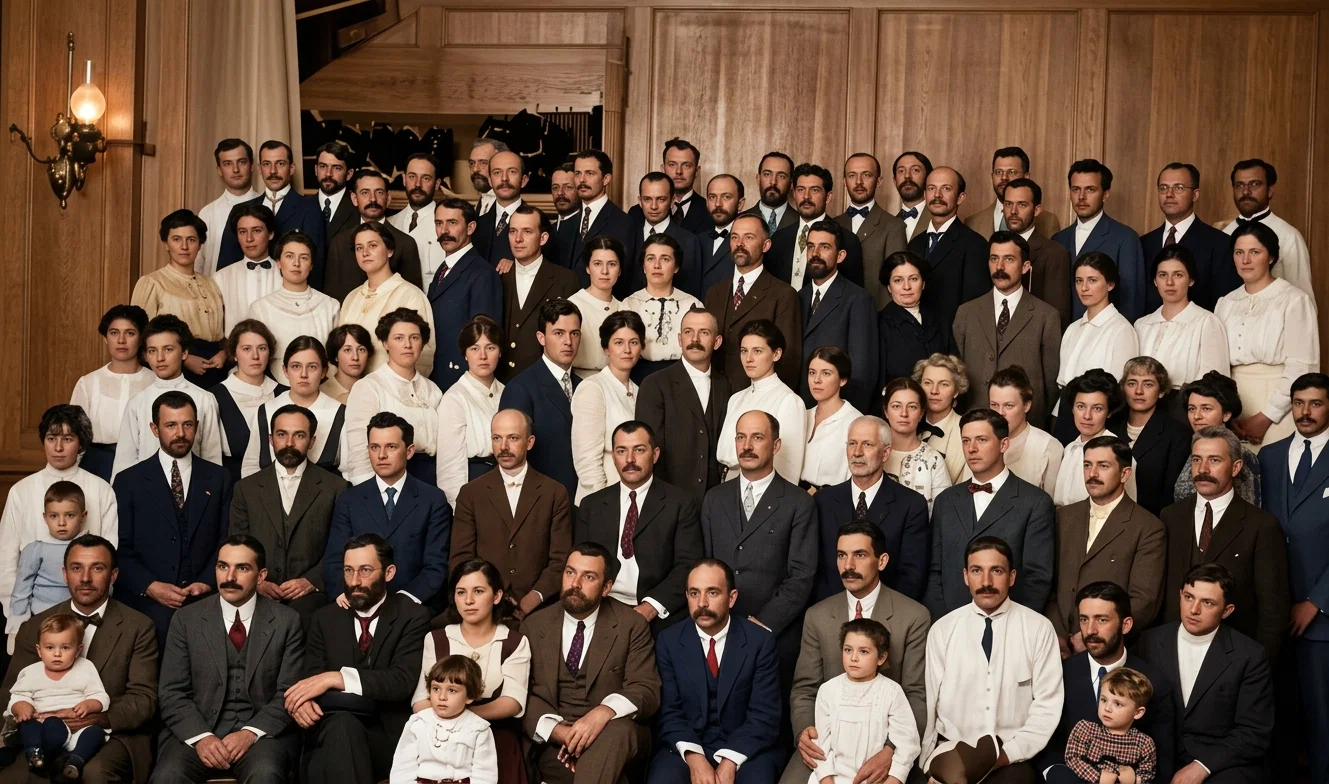
DELEGATES AND VISITORS AT THE LA PLATA MEETING
FORMER STUDENTS OF UNION COLLEGE IN ATTENDANCE AT THE LA PLATA MEETING
One paragraph in the report of Elder C. E. Knight, the superintendent of the Ecuador Mission, is quoted here in order to show the spirit which prevails in a large part of South America: ‘A few months ago I met a New York journalist while on the boat going to Lima who told me that coming down from Panama a priest wished to land at Guayaquil, the port of Ecuador, but the immigration agent would not allow him to do so. The priest asked, “Is not this a Catholic country?” “Yes,” the agent replied. “Then why am I not permitted to land?” inquired the priest. The official answered, “There are too many of you here now.” This reply may at first appear favorable to our efforts at evangelization, but the real reason for giving it was not sympathy with the gospel, but the skeptical and atheistical spirit that is opposing the church.’ As to the progress of our work in Ecuador, Brother Knight said, ‘The present membership is 23, of which number 16 reside in Ecuador. Of these, five are on the list as paid workers. Since the last biennial meeting five have been baptized. There is not the same large percentage of foreign population as there is in many other Latin-American countries from which to draw stable converts, and the Ecuadorian people seem to me less accessible to the truth than any I have met.’ Brother Knight suggested the advisability of opening up work among the aborigines of Ecuador, of whom there are about one million.
In his report of the Inca Union Mission Elder E. L. Maxwell, the superintendent, mentioned a gratifying increase in the sales of literature, as follows: ‘It is in the matter of the circulation of our literature that we have exceeded to the greatest extent our former attainments, and even our most sanguine hopes. While I have not been able to get a statement of the sales during the two years just past, I feel safe in saying that we have sold much more than in any like period in the history of our field. This is especially true of the war specials of the Atalaya [the missionary paper published at Buenos Aires], of which we have disposed of about 35,000 copies. The splendid increase in our membership is in large part due to the good influence of our message-filled literature.’ Another interesting statement was this: ‘The brethren of the Otao church in the hinterland from Lima are building the first and only Protestant chapel built by native Protestants and for native Protestants in the republic.’
In Peru, apart from the converts at Lake Titicaca, there were at the close of 1915 five churches, with a membership of 174. During 1914 and 1915, 87 were baptized. Conditions in Bolivia do not seem to be so favorable as in some other fields, as appears from this extract from Brother Maxwell’s report: ‘Bolivia seems to be a hard field that has given little fruit for the many years of work that have been spent there. During the two years three persons have been baptized, and others are expecting to be baptized soon. The membership is ten, and the tithe receipts and offerings for the two years were $556.95.’ Visiting the churches in Peru is a very different matter from what it is in the average conference in the United States. This will be apparent from Brother Maxwell’s statement that in the three months just before the La Plata meeting he had traveled 237 miles on horseback, in addition to his travel by train and steamer, and some of this journeying is in very high altitudes. One baptism was held at an elevation of 13,500 feet above the level of the sea.
The reports from the conferences and the other mission fields, most of which were verbal, indicated progress and a favorable outlook. The work of the sanitarium in Entre Rios was reported by Dr. R. H. Habenicht, the medical director of the institution. During the two years an average of 35 workers has been employed, of whom 24 were nurses in training, and 1,080 patients have been received. ‘Of the 293 operations, of which a large number were what are called major, only five deaths occurred, and four of these were due to conditions of other organs which existed before the operations were performed.’ The treasurer’s report showed resources of $39,900.08 and liabilities of $4,109.76, about one third of these liabilities being a fund reserved for an addition to the main building. The net gain for the two years was $8,807.61. This is certainly a most gratifying showing.
Prof. H. U. Stevens presented the report of the school in Entre Rios. This institution was established in 1899, and the first principal was Elder N. Z. Town, who was present to hear the report. Since the establishment of the school, there has been steady progress both in facilities and in the grade and character of the work. A new dormitory for the girls has just been erected with funds provided by a thirteenth Sabbath offering in the United States, and this improvement is greatly appreciated. During the past two years between forty and fifty students have been baptized and have17united with the church. According to the treasurer’s report, the resources of the school are $27,920.45, and the liabilities are $1,981.96, leaving a net worth of $25,938.49. The work was carried on during the biennial period at a net loss of $153.50. Had it not been for the financial crisis which has overtaken the country, there would have been a balance on the other side of the ledger.
From the other financial reports rendered, it appeared that the union conference had kept within its income in operating its field, and that the publishing house had made a net gain during the biennial period of $5,156.21. About three thousand dollars of this gain was afterward donated to the Inca Union Mission, it being the whole amount due to the publishing house for the stock of books and other literature in the various depositories of the mission. This generous gift accompanied the turning over of the territory of the Inca Union Mission by the South American Union Conference to the South American Division Conference, and was a substantial help to the latter conference.
On account of the organization of the South American Division Conference and the consequent change in the territorial lines of the South American Union Conference, it was deemed advisable to change the name of the latter conference, and it will hereafter be known as the Austral Union. The following officers were elected: President, J. W. Westphal; secretary and treasurer, G. E. Hartman; director of the colporteur work, A. R. Sherman; executive committee, J. W. Westphal, R. T. Baer, F. L. Perry, S. Mangold, R. H. Habenicht, H. U. Stevens, G. B. Wheeler, A. R. Sherman, C. E. Krieghoff, and J. T. Thompson.
The last Sabbath of the union conference was a day of special blessing, and on the part of almost every one present there was a renewed consecration of the life to the service of God for hastening his work in the earth. The workers returned to their various fields filled with hope and courage.
At the close of the meeting in La Plata we started at once for the conference in Rio Grande do Sul, a report of which will be furnished by Brother Montgomery. W. W. PRESCOTT.
“The title of the books is taken from the Hebrew, the title in the Septuagint being ‘The Things Omitted,’ implying that the books are intended to supply what was left out of the books of Samuel and the Kings. In the course of the books twelve other histories are named as the author’s source of information. This author may have been Ezra—a supposition made probable by the fact that the closing passage of Second Chronicles is identical with the opening passage of Ezra. There are four divisions of the books—genealogies, and the histories of David, Solomon, and the remaining kings of Judah. Everywhere a knowledge of the preceding books of the Bible is taken for granted, and many new and important facts are given. Scarcely anything is said about the northern kingdom or about the sinful acts of David and Solomon. The great number of genealogies is accounted for by the need of such records that would be felt after the exile, when the land came to be assigned to its hereditary owners, and the temple service to be taken up by those whose hereditary duty it was.”—Amos R. Wells.
The Second Book
“The second book of Chronicles is a continuation of the first book, and consists of two distinct portions. The first portion (chapters 1 to 9) relates to the same events as the first portion of the first book of kings (1 Kings 1 to 11); namely, the history of the undivided kingdom under Solomon, and the second portion to the history of Judah under its several kings, from the revolt under Jeroboam to the Babylonish captivity. The first portion alone comes now in chronological order. Note especially the building and furniture of the temple, with the dedication prayer and sacrifices, and the divine answer to Solomon’s prayer.”—Anderson.
Post-Davidic Psalms
The psalms given in this week’s assignment (47, 97-100, 135, 136) are “psalms written presumably by Solomon during his reign.”
The Song of Solomon
This book “was written by Solomon probably in the early part of his reign; a single composition rather than a collection of separate poems; a sublime and mystical allegory referring to the Lord Jesus Christ and his union with a pure church. Under the endearing figure of a bridegroom and bride, the affection of Christ, the heavenly Bridegroom, is set forth toward the bride, as well as the closeness and perpetuity of the union subsisting between them. The innermost spiritual experiences of a believing and loving soul are also represented under the figure of the earthly love of a king and his bride.”
“This book, like the rest of Scripture, is to be read with seriousness. The holiest and most spiritually minded have naturally delighted most in this book, in which they find most of their Beloved and their Friend.”—Homiletic Commentary.
“The church has ever in her days of earnestness and special devotion used the Song of Solomon. It has been the thermometer of her condition; when and where her energy and love were strong, then and there the Song of Songs became her mode and form of expression.”—E. Monroe.
Workable Temperance Plans
By M. E. Kern
The following article, which appeared in the Norway (Maine) Advertiser, gives some concrete results of the efforts of one of our conference Missionary Volunteer secretaries with the Anti-Tobacco number of the Instructor. First, the wife of one of the ministers of the town was interested in the work, and with her help the W. C. T. U. became very enthusiastic over the plan mentioned. The superintendent of18schools not only agreed to place the paper in the hands of all pupils above the fifth grade, but to give a talk in each room on the evils of tobacco, and cigarettes in particular, and explain the benefits of a careful reading of the paper.
Save the Boys of Norway!
“The Anti-Cigarette League of America, with general headquarters at Chicago, Ill., and branches in many States in the Union, has issued a general appeal that April 20, 1916, be observed as Anti-Cigarette Day. On this day there will be services in all the churches under the direction of this league.
“There is no such league in Norway, but the W. C. T. U., always loyal and active in its efforts to help the youth, voted $5 to buy enough of the special issue of the Youth’s Instructor, published in Washington, D. C., to give each of the boys in all the grades above the fifth, both in the village schools and in the rural districts of the town. This paper is a special edition devoted wholly to the subject, and fitly called ‘Anti-Tobacco’ number, with sixteen pages from such writers as Dr. Harvey W. Wiley, thirty years chief of the Division of Chemistry for the United States; Bruce Fink, Ph. D., head of the College Department of the Anti-Cigarette League of America; and Dr. D. H. Kress, vice president of the league.
“Mr. Morrell, our superintendent of schools, is deeply interested in this effort of the W. C. T. U., and personally placed the nearly two hundred copies of the paper in the hands of the teachers and boys of the schools.
“Did your boy bring home a paper? Will you cooperate with us in trying to save him from this great menace to all his future? Read the paper with him, look at the pictures, encourage him to sign the pledge. ‘He who saves the children, saves the State.’”
The W. C. T. U. also send a copy of the paper to each Sunday school superintendent in the town, asking him to speak of it and to tell the boys that they would receive a copy at school. An effort is now being made by the teachers of boys’ Sunday school classes to get the boys to sign the pledge.
The superintendent of the Temperance Department of the Sunday Schools of Maine purchased several copies and sent to the district superintendents all over the State, asking them to order from the Maine Tract Society. The Portland Sunday school superintendents are being visited with reference to using the Anti-Tobacco number of the Instructor on Anti-Cigarette Day, which is appointed for June 1st there.
The interest which has been awakened by Anti-Cigarette Day has made it easy to do this same thing in hundreds of places. Who will help? M. E. Kern.
If You Have Found a Friend Worth Loving
If you have a friend worth loving,
Love him. Yes, and let him know
That you love him ere life's evening
Tinge his brow with sunset glow.
Why should good words ne'er be said
Of a friend — till he is dead?
If you hear a song that thrills you,
Sung by any child of song,
Praise it. Do not let the singer
Wait deserved praises long.
Why should one who thrills your heart
Lack the joy you may impart?
If you hear a prayer that moves you
By its humble, pleading tone,
Join it. Do not let the seeker
Bow before his God alone.
Why should not your brother share
The strength of “two or three” in prayer?
If you see the hot tears falling
From a brother's weeping eyes,
Share them; and by kindly sharing
Own your kinship in the skies.
Why should any one be glad
When a brother's heart is sad?
If a silvery laugh goes rippling
Through the sunshine on his face,
Share it. ’Tis the wise man's saying —
For both grief and joy a place.
There's health and goodness in the mirth
In which an honest laugh has birth.
If your work is made more easy
By a friendly, helping hand,
Say so. Speak out brave and truly
Ere the darkness veil the land.
Should a brother workman dear
Falter for a word of cheer?
Scatter thus your seeds of kindness,
All enriching as you go —
Leave them. Trust the Harvest Giver;
He will make each seed to grow.
So, until the happy end,
Your life shall never lack a friend.
Selected.
Christianity’s Value to China
DURING the Chinese revolution about sixty students in the city where the present premier was living thought it would be a good thing to organize a Red Cross Society for service at the front. The premier gave advice and help in the organization. But when it was about time to leave for the scene of action, news of heavy fighting came in; and when the new premier left for the battle field, he had only thirty men, and one of these turned back before going very far. Of the twenty-nine remaining true, he found to his utter astonishment that every one was a Christian. He wisely drew the conclusion that Christianity has certain elements of value that China cannot well do without.—Selected.
The First Lessons of the Home
By J. T. Stocking
ONE of the first lessons of the home is that one does not stand or fall alone. One's honor and good are the honor and good of the family; one's dishonor is the family's dishonor. It is a saving lesson for one to learn.—J. T. Stocking.
Missionary Volunteer Department
M. E. KERN - - - - - SecretaryMATILDA ERICKSON - - - - - Assistant SecretaryMRS. I. H. EVANS - - - - - Office SecretaryMEADE MACGUIRE } - - - Field SecretariesC. L. BENSON } - - -
J. F. SIMON } - - -
The Nurse’s Confession of Faith
By Dr. Charles Sumner
BEING resolved to devote my life to its utmost useful purpose in behalf of the day and generation in which I live, and believing I can best accomplish this object by a life of service to others, I submit herewith the following as my confession of faith as relates to my sacred calling of ministering to the wants of others:—
I resolve, therefore,—
First, To devote my life, its energies, its capabilities, its hopes, and its results to uplifting the fallen, to healing and helping the afflicted, and aiding in every way I can those who are in sorrow, and those who are striving to make life happier and to lift its social service upon a higher plane of living.
Second, To fit myself by tireless training to still more worthily wear the insignia of my esteemed profession, to the end that I may never bring dishonor or discredit upon so worthy and sacred a calling.
Third, To cultivate every attribute of mind and heart that may make my ministrations what my ideals so urgently demand that they should be—lofty and all-praiseworthy.
Fourth, To esteem as a high privilege the opportunities that shall be open to me to become a trusted and sympathetic friend in those homes to which I may be invited. May I ever carry into them good cheer and encouragement, and leave only pleasant recollections when my service shall have terminated.
Fifth, To the kind-hearted and helpful physicians with whom it will become my privilege and duty to serve at the bedside of the suffering, I pledge an instant, constant, and faithful service. To serve with them is pleasanter than to command alone.
Sixth and lastly, To serve also in that larger field of the great world’s activities, sharing its joys and its sorrows, its sunshine and its shadows; and these whether in my own or other homes, in my own or other cities, in my native or in other lands, I shall count an equal privilege and honor as compared with all else in my life of service that may have gone before or may come hereafter.
Invoking the aid of the Great Physician, I am therefore resolved truly and faithfully to carry forward to completest fulfilment all these my several resolutions to the end that I may discharge every duty and obligation that may be placed upon me with conscientious fidelity unto the end of my life.— Dr. Charles Sumner, in Bulletin of Iowa State Board of Health.
A Prayer
By Mary Stuart
KEEP us, O God, from Pettiness; let us be large in thought, in word, in deed.
Let us be done with faultfinding, and leave off self-seeking.
May we put away all pretense and meet each other face to face — without self-pity and without prejudice.
May we never be hasty in judgment, and always generous.
Let us take time for all things; make us to grow calm, serene, gentle.
Teach us to put into action our better impulses, straightforward and unafraid.
Grant that we may realize it is the little things that create differences; that in the big things of life we are as one.
And may we strive to touch and to know the great, common, human heart of us all, and O Lord God, let us not forget to be kind.
— Mary Stuart.
For Nurses
By L. A. Hansen
THE proper, training of a nurse includes, besides the technical instruction and practical experience in the care of the sick, a training in conduct or ideals of personal living. The ideals of character and service which a nurse holds will greatly influence her practical work in all her nursing career.
The technical training is important, but the ethical training is in many respects no less so. Her calling often places her where she needs a keen sense of propriety and a good knowledge of rules and principles to guide her aright in moral conduct. The want of true culture cannot be made up by ever so good training in technique.
There has come to our desk a book just issued that we feel is worthy of special mention, and to which we wish to call the attention of our nurses. No doubt the superintendents of our training schools will receive a copy, and will make such use of it in class work as they think best. Graduate nurses would also do well to secure a copy. The plan of the book is such as to encourage reflection and meditation on ethical problems, and many of these drawn from life are presented.
The book contains twenty-six chapters, dealing with all phases of the nurse's work, as a student, in the hospital, and in private practice. Even a brief notice of the various important topics would make too much of a review for this column. There are three hundred and twenty pages. We are glad to recommend "Studies in Ethics for Nurses," by Charlotte A. Aikens. Price $1.75, postpaid. W. B. Saunders Company, Philadelphia, Pa. L. A. HANSEN.
Dishonest Shopping Practices
THERE are frequent and grave breaches of ethics in the practices of some shoppers. Goods are selected, sent home, ostensibly purchased, but really with no intention of keeping them. Others have articles of wearing apparel or house furnishment sent “on approval,” and after use for special occasions return the goods. The Consumers’ League of New York City has entered upon a systematic campaign against these forms of dishonesty. They report some astounding findings. In a public letter the president of the league says, “We found upon investigation that thirty per cent of all goods purchased by customers and charged to their accounts are returned for credit; twenty per cent of all goods shipped out C. O. D. are not accepted; ten per cent of all cash purchases are exchanged; every fifth pair of shoes that is sold has to be sold over again. The records of the merchants show that this is not spasmodic, but a year-in-and-year-out occurrence. It is not unusual to have customers send back goods to be credited which they have had out three, six, or twelve months.”
The Cost of Chewing Gum
STATISTICIANS say that more than $35,000,000 was spent in this country for chewing gum in the past ten years. This amount is almost five times the price that we paid to Russia for Alaska, and over twice as much as we paid France for territory which now comprises the States of Arkansas, Iowa, Missouri, Kansas, Nebraska, Oklahoma, North and South Dakota, and the greater part of Minnesota.
Medical Missionary Department
W. A. RUBLE, M. D. - - General Secretary
L. A. HANSEN - - Assistant Secretary
H. W. MILLER, M. D. - - N. Am. Div. Secretary
The Canvassing Work in the Philippines
By W. E. Lanier
It is remarkable how God is blessing the work in this part of his vineyard. This is certainly true with reference to the literature work. Our hearts are made to rejoice as we see the progress that is being made by our native brethren.
A little more than two years ago we sent out several young men to sell “Thoughts on Daniel,” in Tagalog; and almost from the beginning they had good success. In less than a year some of them were taking orders to the value of $100 a week, and others did correspondingly well. This was done in territory where the average wage is from forty to fifty cents a day. To our American canvassers, this may seem large, yet it is so here. And our deliveries here average about as good as they do in the States. It is true that the padres (priests) sometimes warn their flock, and thus cause us some trouble; yet we have not had a great deal of trouble from that source.
We have made a small beginning in three other languages—the Cebuan, the Panayano, and the Ilocano. The books used in these three last-mentioned languages are small, corresponding in price to our English juvenile books. But some of our boys are doing remarkably well with these. I shall take the liberty of quoting from letters written by two of our newest canvassers, from our newest field, and with our smallest book. These letters were written to Brother Hay, who is in charge of that mission station. They are as follows:—
“We are now far away from our city, spreading the printed page to the people. My work here is much better than last week. I have raised the bounteous sum of 54.80 pesos [$27.40]. . . .
“We have founded the Canvassers’ Institute, in which every Sabbath we have a meeting, and one of us discusses a topic of the Bible. I am the secretary-treasurer of the Canvassers’ Institute. And in the two meetings we have had, I raised .45 peso donations. This will be for the Vigan Sabbath school’s benefit.
“I cannot give you statements referring to the experience I had during the week. I reserve them. I will relate them when I arrive at Vigan.
“I close my letter and pray God to dwell among us.
“Yours in the Lord’s gospel work, “JUAN.”
Juan is a young Ilocano boy, who has been living with Brother Hay while attending the English school.
Manuel writes:—
“I am glad to state that we, the colporteurs, have very good orders. We thank God, for he puts his hand on us at every time we need him. Every morning we have morning devotions, and we feel in our hearts that Jesus is dwelling in us. He is leading us. . . .
“I am glad also to tell you that we have a society named the Canvassers’ Institute. The purpose of this institute is to strengthen our faith and to serve the Lord as closely as possible. The last two Sabbaths we had Sabbath school, being three members. The first Sabbath we had the donations of twenty cents and the next of fifteen cents. . . . We have also regulations, and if any of us neglects to obey these regulations, he is punished. Now, Brother Hay, we are trying hard to control ourselves.”
There was another letter from Domingo, but I did not get it. But these give some idea of the devotion of our canvassers here. Brother Hay wrote that these boys are so young that when he sent them out he felt as if he were sending out children. But praise God, they are proving men in faith. In his last two deliveries, Juan delivered one hundred per cent of his orders. Manuel delivered an average of ninety-five per cent in his last two deliveries. Domingo’s delivery was good, but not quite so good as the others.
I might tell you something of the results of the literature work, but I will reserve them for some future time. We now have about thirty canvassers, besides paper workers. W. E. LANIER.