Signs of the Times, Vol. 33, No. 11.

Contained in this Issue

Signs of the Times

Mar 13, 1907

Pacific Press Publishing Company · Mountain View, California · Mar 13, 1907

Contained in this Issue.

JOHN THE FORERUNNER.
THE PARTING OF THE WAYS.
QUESTIONS.
2017, The Dispensation of the Fulness of Times; 2018, Salvation at Any Price; 2019, Spiritual Bodies; 2020, Associations; 2021, The Word "Creation;" 2022, Who Will Be Saved?
THE GREAT SALVATION.
Testimony of the Ages.
FIFTEEN FACTS REGARDING THE SABBATH.
MODERN CONFUCIANISM.
THE FIFTH UNIVERSAL KINGDOM.
OUR COUNSELOR.
THE SUNDAY.
CHINA—People and Population.
THE MODERN DAILY RATION.
RELIGIOUS LEGISLATION.
SUNDAY LAW PROSECUTION.
TEARING DOWN THE BIBLE.

Poetry

Building of Character.
Like Simon of Cyrene.
A Warning.

26 Special Numbers.

To Begin May 1.

Beginning with the issue of May 1, each issue of the SIGNS OF THE TIMES will present one study in a series of connected Bible studies running thru 26 issues.
Last week appeared here outline for the first four studies. Here, again, these first four subjects are named, and the outline for the following six studies given.
  1. THE BIBLE.
  2. PROPHECY.
  3. THE COMING OF THE LORD.
  4. OUR SACRIFICE AND PRIEST.
  5. THE SIGNS OF THE TIMES.
(a) Signs in the Sun, Moon, and Stars. (b) Signs in the Physical Earth—Cyclones, Earthquakes, Tidal Waves, etc. (c) Crop Failures, Destruction by Insects. (d) Various False Isms Which Are Undermining Christian Faith. (e) Capital and Labor. (f) Socialism. 6. THE LAW AND THE GOSPEL. (a) The Law—Its Scope, Character, and Perpetuity. (b) The Gospel—What It Is and Its Purpose. 7. MAN AND HIS DESTINY. (a) The Man Created and His Nature. (b) The Entrance of Sin and Its Ripened Fruit—Death. (c) Righteousness and Life. (d) Christ Our Life. (e) The Resurrection. 8. SPIRITUAL GIFTS. (a) What They Are, Their Purpose, and Distribution. (b) Restoration in the Church.
  1. ELECTION, PREDESTINATION, AND FREE WILL.
  2. THE GREAT THREEFOLD MESSAGE.
(a) The Condition of the World. (b) God's Healing Message. (c) Message Rejected, and Result. (d) The Beast. (e) The Image. (f) The Mark. (g) The Result of the Messages. (h) God's Sealing Work. 11. THE CHURCH. (a) What the Church Is. (b) The Called-Out Ones. (c) The Apostate Church. (d) The Two Witnesses. 12. BIBLE TEMPERANCE. (a) The Temple of God—Eating, Drinking, Dressing, Exercise, and Breathing. (b) True Sanctification.
Single, six months' subscriptions, including this series, will be furnished at the regular subscription rate for 75 cents each.
Clubs of five or more to one address will cost fifty cents each copy for the six months.
It is not too early to begin to plan for definitely placing a large number of this series. Orders are already being received.
Order by the date of the first issue, as back numbers can not be furnished later. To interest others, request descriptive booklet from your tract society, or from the SIGNS OF THE TIMES, Mountain View, Cal.

School Text-Books

We are glad to make the following announcement concerning text-books:

Church School Readers

The readers known as the "Christian Educator Reading Series," were adopted by the General Conference at its Educational convention held in College View, Neb., June 29 to July 10, 1906, and recommended for use in all our church and primary schools. The first edition of this series of readers has for some months been exhausted. A new edition is now in preparation. It is to be known as the "True Education Reader Series." The series consists of the following books:
Book One for grade one. Book Two for grade two. Book Three for grade three. Book Four for grade four. Book Five for grade five. Book Six for grade six. Book Seven for grades above six.
Books Nos. 1 and 2 are now ready. Price, 75 cents each. Book No. 3 is also ready; price, 90 cents, and No. 5 will follow soon. Book No. 7 is being pushed along rapidly, but we can not promise exact date of publication.
The author of books No. 4 and No. 6 promises us copy in time to have these books on the market before the fall terms open.
"True Education Reader Series" is the result of successful experience in teaching. An experimental edition of these books was issued during the year 1904. During the two succeeding years they have been used quite largely in our schools on the Pacific Coast. In many other conferences they have also been used to some extent. Almost without exception they have been welcomed by teachers as a blessing in their schools. Even from Australia and Africa have come words of the heartiest commendation.
These readers are no longer regarded as an experiment. The call has come for a new and larger edition. In preparing the present edition, the authors have counseled with a large number of our leading educators and our best teachers in different parts of the country. To these we owe many valuable criticisms and suggestions. We feel clear in saying that in every way the present edition greatly excels the former.
Most careful attention has been given to the subject-matter. No fairy tales or other objectionable matter has been admitted. Readings from the Word of God, readings on the works of God and His dealings with His people, occupy the chief place. All other matter has been measured by this standard. A pleasing variety of prose and poetry on a large number of subjects makes the books a delight with the pupil.
All the books are well illustrated, many of the master-pieces of art having been secured for this purpose. Every teacher knows the value of illustrations in the work of education.
Special attention has been given to developing the work in language, composition, and spelling. The lessons in these subjects, as well as the reading-matter itself, have been carefully graded. It is almost universally conceded by educators that language and spelling are greatly neglected in most schools. Experience has shown that this natural method of presenting these subjects not only saves the time of both teacher and pupil, but insures more thoro work, and, consequently, better results.
Prices on No. 1 and No. 2 will be 75 cents each post-paid. Book No. 3 is 90 cents post-paid. The prices on the other books are not yet decided upon.
As an evidence of the wide-spread interest in these readers, will say that we have just received an order from Australia for one hundred eighty copies to go to a school by mail.

McKibbin's Bible Lessons

Nearly all these books were destroyed in our fire. There are a limited number of No. 1, however, the post-paid price on which is 50 cents.

Bible Nature Studies

A few hundred signatures of these books were saved and are now being bound. Price, $1.00 post-paid.

Bible Nature Study Notebooks

These notebooks are now published in two ways,—the complete book bound in cloth at 85 cents post-paid,—in three paper-covered volumes containing about one hundred twelve pages each, at 40 cents each post-paid.
No. 1 is for fourth-grade work, No. 2 is for fifth-grade work, and No. 3 is for sixth-grade work. All the above books may be obtained by addressing your state tract society, or PACIFIC PRESS PUBLISHING COMPANY Mountain View, Cal. 285 Salmon Street Portland, Ore. 1109 East 12th Street Kansas City, Mo.

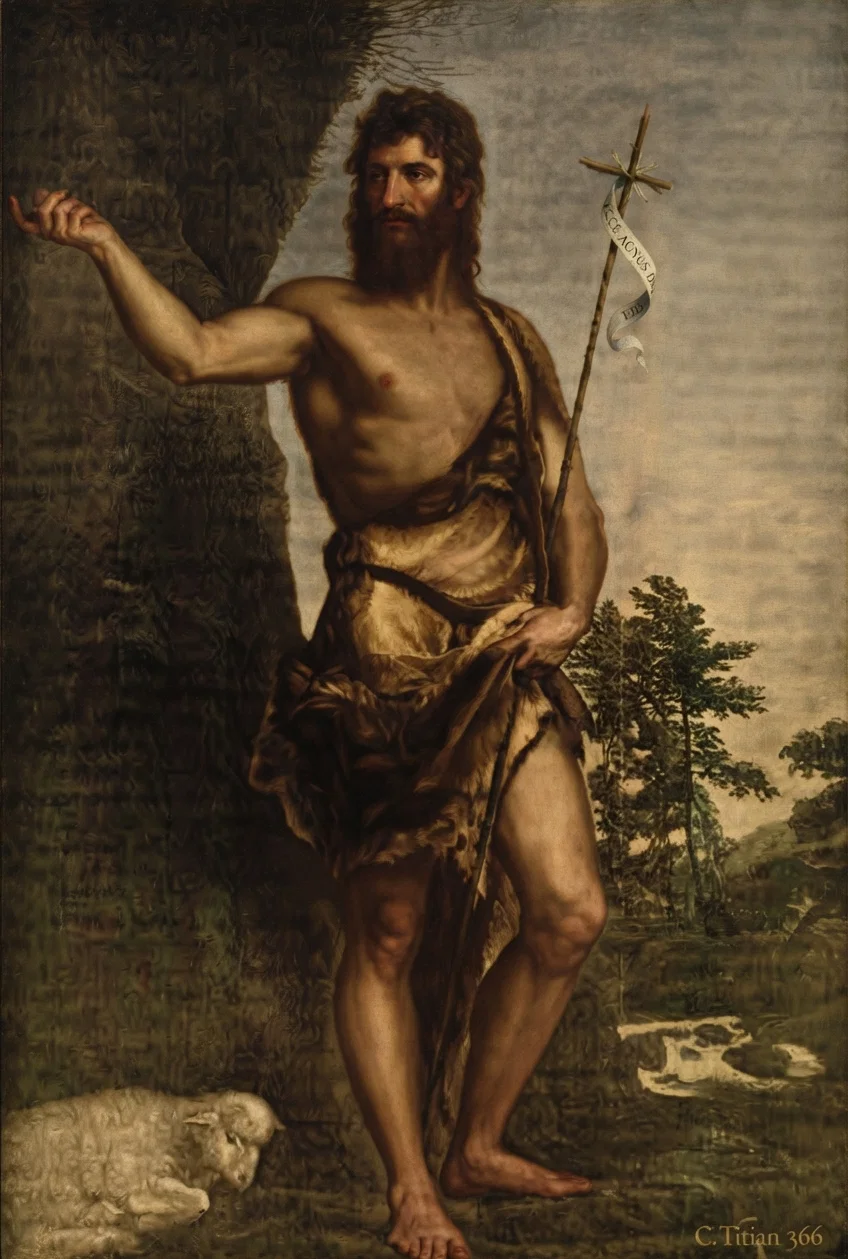
JOHN THE FORERUNNER.

EVERY reform of God has begun in littleness and humility. He has chosen for the inception and inauguration of that work lowly souls having neither recognized power nor influence in the world, rather than the decrees of kings, the actions of the parliaments of nations, the power of the armies of men, or the great influence of the universities of earth. All these have many times been arrayed against His work, but despite of all opposition that work has gone forward.
IF God should begin His work thru earth's great and learned and wise and wealthy, it is easy to perceive that they would receive the glory of its success and progress, and the human would overshadow the divine. "But God chose the foolish things of the world that He might put to shame them that are wise; and God chose the weak things of the world, that He might put to shame the things that are strong; and the base things of the world, and the things that are despised, did God choose, yea, and the things that are not, that He might bring to naught the things that are; that no flesh should glory before God."
THE reform which preceded the first advent of Jesus Christ was no exception to this general rule. As the herald and apostle of that reform, the obscure son of a humble priest was chosen. His childhood was with his parents, during which period he doubtless attended school. But his boyhood and early manhood were passed in the wilderness, the wild, rugged region in the east of Judea, west of the Dead Sea. Here, by an abstemious life of hard discipline and devotion, he learned God's greatness and man's littleness. The mighty thunder storms which swept over the mountains, the raging torrents which plowed the desert wadys and valleys, the silent star-gemmed night, the blue skies, and genial sun, all spoke to him of God's love, purity, wisdom, and power. As he read and meditated upon the law and the prophets, his soul became surcharged with the Spirit of God, the spirit of the ancient prophets; and he longed to see Israel free from her sins and meaningless traditions.
JOHN THE BAPTIST IN THE WILDERNESS.
WHEN the time came, God called him, called him to go before the face of the Anointed One, announce His coming, and plead with the "chosen people" to prepare to receive Him. Very particular is the "beloved physician" to tell the very time when the call of God came to John, and he responded to that call. Luke 3:1, 2.
FORTH from the wilderness came the messenger, clad in the garb of an ancient prophet. 2 Kings 1:8. Fearful and terrible as an Elijah he came. Simple, radical, uplifting, awful, was his message:
"Repent ye; for the kingdom of heaven is at hand. . . . Bring forth fruit worthy of repentance: and think not to say within yourselves, We have Abraham to our father; for I say unto you, that God is able of these stones to raise up children unto Abraham. And even now the ax lieth at the root of thetrees; every tree therefore that bringeth not forth good fruit is hewn down, and cast into the fire. I indeed baptize you in water unto repentance; but He that cometh after me is mightier than I, whose shoes I am not worthy to bear: He shall baptize you in the Holy Spirit and in fire: whose fan is in His hand, and He will thoroly cleanse His thrashing-floor; and He will gather His wheat into the garner, but the chaff He will burn up with unquenchable fire." Matt. 3: 1-12.
CLEAR-CUT and direct was the message. "Repent ye," demands no mere show of sorrow, but a sorrow and forsaking of sin that needs not to be repented of (2 Cor. 7: 10, 11), a reformation of life and character. It meant a turning from vain, empty tradition to the word of God, from a "public conscience" to the law of God, from sin as God defined it to the righteousness of God. It set aside the human and exalted the divine. It made of none effect the elaborate schools of the rabbis, and brought men face to face with God. It tore to tatters mere priestly succession and hereditary holiness, and made paramount and essential divine regeneration. It spared neither sinning royalty nor perversive education. The king upon the throne heard and trembled. Multitudes of the people listened, heard, repented, and were baptized. Even priests and scribes, Saducees and Pharisees, moved by the mighty spirit of unrest and inquiry, came to hear and criticise and condemn.
IN all his message was echoed the prophet's cry of seven centuries before: "Prepare ye in the wilderness the way of Jehovah; make level in the desert a highway for our God. . . . All flesh is grass, and all the goodliness thereof is as the flower of the field. The grass withereth, the flower fadeth, because the breath of Jehovah bloweth upon it; surely the people is grass. The grass withereth, the flower fadeth; but the word of our God shall stand forever." Isa. 40: 3-8. Seven hundred years had that prophecy in its specific purpose lain dormant. Seven hundred years rolled by and God gave it life, "when the fulness of the time came." God is everything; man is nothing only as he is connected with God.
JOHN was the embodiment of his message. In the words of the Master, no greater prophet was born; in the conduct of the man, none was more humble nor self-effacing. When the committee of priests and Levites sent from Jerusalem came to examine him, they asked, "Who art thou?" He told them he was not the Christ, not that prophet, not Elijah. He did not even mention his noble, honorable ancestors, running back to Abraham. "I am the voice of one crying in the wilderness, Make straight the way of the Lord, as said the prophet Isaiah." He knew his mission and his message. He was not a reed shaken by the wind. He was content to eliminate himself, and be a voice, merely a voice for God. For the glory of the Master he wrought. His disciples, jealous of his fame, tell him that the greater number go to Jesus. He responds: "A man can receive nothing, except it have been given him from heaven. Ye yourselves bear me witness that
I said, I am not the Christ, but, that I am sent before Him. . . . The friend of the bridegroom . . . rejoiceth greatly because of the bridegroom's voice: this my joy therefore is made full. He must increase, but I must decrease." Blessed humility which could see his own life and light fade out in the greater glory of the Master.
GOD has a message for this time, which must go as did that of John's in "the spirit and power of Elijah." It is a message of prophecy which slumbered for eighteen long centuries. Its time is now due. It must be given in lowliness, in meekness, in humility, in self-effacement, yet in fearlessness and power. That message is, "Fear God, and give Him glory; for the hour of His judgment is come; and worship Him that made the heaven and the earth and sea and fountains of waters." Rev. 14: 6-14. From glory and worship of the human it calls to the divine; from the fear of man it calls to the fear of God; from the contrary decisions of the creeds and councils and parliaments of men to the judgment of God; from the education in the mire of evolution to the Maker of heaven and earth. It tells the sad story of Babylon's sickness, her moral fall and union with the world. It warns of the awful consequences of the rejection of the message, the unmixed wrath of God, the burning up of the chaff. Matt. 3: 12. But it tells that which may be true to every one, the glorious development of characters which "keep the commandments of God and the testimony of Jesus" at the coming of the Master. Reader, will you be one to heed this message?

“THE PARTING OF THE WAYS.”

It has been evident to thoughtful minds for some years that the great “orthodox” denominations, the Protestant churches, had come to the parting of the ways. They are not standing at a dual division of the road, but at a four corners, and their ranks are rapidly, tho not always consciously nor manifestly, dividing into the great highways which lead out from the center.
When these great denominations were launched they had at least a few beliefs in common: they believed the Bible to be the word of God, the authority in matters of faith; they believed Christ was a vicarious sacrifice, that He “died for our sins;” that He was miraculously conceived and born of a virgin; that He truly died and rose again; that the Gospels are inspired narratives of the life, the teachings, the works, the character of Jesus.
But the miners and sappers of “higher criticism” have been at work. They began with the Old Testament, with the books of Moses. They have assumed in their own wisdom certain premises, and on these uncertain premises the conclusions are logical, tho not true. Their conclusions have been received as Gospel truth by thousands of ministers and teachers. Evolutionists and geologists, also building on assumption, have mightily assisted the higher critics in the destruction of Christian faith. It matters not to these critics that archeology has demonstrated the falsity of many of these higher critical conclusions, they cling to the tattered remains, and still make balls of the thrums of their web by which to pelt the rock of the word. Listening only to the higher critics and their disciples, the great mass of professed Protestant Christendom is leavened with the corrupting thing.
Logically, the strongest attacks are now upon the very bastions and bulwarks of New Testament truth. Now and then this is revealed in some heresy trial like that of Dr. Crapsey. More frequently it is manifest in so broad a way as utterly to preclude heresy trials. There are few seemingly left to hunt the heretics, or try them after they are caught.
An instance of this is an article in the Independent, of January 10, entitled, “Confessions of an Undistinguished Heretic,” which the editor calls “highly significant and timely.” He tells us that it is from an “ordained clergyman of a large and orthodox denomination, a church which has expelled ministers for smaller heresies than are confessed in the article. He has been the pastor of important churches in progressive cities, and is still in active service.”
The writer of this article plainly declares “that the Bible is no longer for me an infallible book, even for substance of doctrine. I have discarded definitely all doctrines of inspiration.”
“I do not believe in devils, big or little, many or one. I can not credit the resurrection of Lazarus.”
He does not believe in “the virgin birth of Jesus, nor in the physical resurrection,” nor in “imputed righteousness,” nor that the law is immutable; but he is “not shouting out every Sunday” that he does not believe them. All there is in the Gospels of Matthew and Luke in addition to that of Mark are but embellishments of the men, “possibly true,” but not reliable, and to be carefully examined.
All these negative things he has been believing for years, some of them he wrote down and hid in his drawer years ago, from which he now and then takes them“to refresh his soul, allowing occasionally a delicate effluence from them to steal over a page or two of the next Sunday’s sermon;” and we are told that if this is done wisely, after a while one “may avow them as violently as he pleases,” and the congregation “will sit peaceably under his doctrine, and sing the last hymn lustily in satisfaction that they have heard once more truth they have always believed.”
These heresies he subtly teaches, but not to “endamage” his work, hoping that soon these things will be generally tolerated, and that his soul may be delivered to declare his “opinions of the atonement.”
There were replies to this galore. Some of these were printed in the Independent of Feb. 7, 1907. Some of them condemned his opinions. Most of them condemned his cowardice. Some of them declared themselves to be in sympathy with him. “A veteran theological professor” declares that “very many sermons of the day reveal a similar ‘delicate effluence’ to those of the undistinguished heretic,” and he calls “confessions” “a very interesting expression of a mind moving somewhere in this current trend of modern skepticism.” Another writer declares the confessions to be “an expression of a condition that is becoming general;” that “there are many ministers who believe as the writer of the article in question does,” and that “the people are finding out these things anyway.” Of course they are. They are constantly taught them in a subtle way, and are too ignorant of the Bible to refute them. And Dr. Crapsey declares that
“I have reason to know that his attitude is that of a large and increasing number of ministers in the various churches—Protestant and Catholic.”
And the many letters which have been sent thru the Independent to the writer of the article convinces him of the truth of what Dr. Crapsey says. There are many who hold to the same conclusions who will not confess their belief.
It is not alone the influence of the teaching of the geologists and evolutionists and higher critics which is leading men to the rejection of the Scriptures; but their own refusal, for various reasons, to follow the light of Scripture in clearly revealed duty is stultifying and hardening conscience. Some of these reasons are moral cowardice and unpopularity. They have believed the Scripture, but they fear to face the so-called scholarship of the world in avowing their belief. The Scripture demands certain duty; but to do that duty would separate them from the great mass, and leave them with the unpopular few. Faith is fostered by living it. Conscience is kept clean and clear by following its convictions. The truth of God’s word is demonstrated in the doing of it. John 7:17. But refusing to follow light and duty throws the soul into darkness; and then to justify conduct, doubt is thrown upon the Scriptures which condemn the conduct of unbelief.
This is emphatically true of the great and important Sabbath question to-day. It is not a mere day which is involved; it is the integrity of the Scriptures; it is the immutability and inviolability of the law of God; it is the example of Jesus Christ; it is also some of the strongest declarations of needless creeds.
Rather than turn to the memorial of God’s creative power, take their foot from His Sabbath day, and call it holy, a delight, honorable (Isa. 58: 13), men are rejecting the Scriptures which teach and emphasize from Genesis to Revelation what that Sabbath stands for—the almighty power of God in creation, redemption, and regeneration—and are leaving the Creator for the husks of evolution, tradition, or some vagary of human conception.
The great Protestant churches stand at the four corners of decision. Shall it be blank infidelity? or the tradition of Romanism? or the vagaries of an unguided and misguided conscience in a thousand isms? or shall it be the plain, old-fashioned belief in the Scriptures of the Old and New Testament, all-sufficient, unfettered by creed or council, shining brighter and brighter to the perfect day?

2017.—The Dispensation of the Fulness of Times. Eph. 1: 10, 22

[We are willing to answer all questions in this department that are practical for the department and that would minister to the general good of our readers, but we answer no questions unless the name and address accompany the question. We do not ask this for publication, nor will it be published unless the inquirer so desires; we ask it, however, as an evidence of good faith, and that we may answer by letter if deemed best. Inquirers will please take notice. There is no departure from the rule. Unsigned questions reach the waste basket by the most direct route.]

2017.—The Dispensation of the Fulness of Times. Eph. 1: 10, 22.

Will you please explain the meaning of “the dispensation of the fulness of times” in Eph. 1:10, 22? Does that refer to the thousand years of Revelation 20, and will Christ reign upon earth during that time? H.
This is a very large question, and we can only reply to it very briefly. A much fuller explanation will be found in “The Great Day of the Lord,” a tract upon this question, which can be obtained at this office, or of your tract society, for five cents. The term as used in Eph. 1:10 looks forward to the great consummation of all things for which Christ died. Ephesians 1 presents the purpose of God before the world was, that purpose as related to Christ and His death, and the work of the Spirit in that purpose; all look forward to that time when all things shall be summed up in Christ. The gathering out of the children of God precedes the one thousand years. During this time, according to Zechariah 6, and First Corinthians 15, Christ reigns as priest upon the Father’s throne. When the work of priesthood is finished, He will take His seat upon His own throne.
A paraphrase of 1 Cor. 15: 23-26 will throw light upon this. All our comments are in brackets: “But each in his own order; Christ the first-fruits; then they that are Christ’s, at His coming. Then cometh the end, when He [Christ] shall deliver up the kingdom [where Christ now sits as priest-king, Rev. 3: 21; Heb. 8: 1; Ps. 110: 1] to God, even the Father; when He [the Father, according to His promise in Ps. 110: 1] shall have abolished all rule and all authority and power. For He [Christ] must reign [as priest upon His Father’s throne], till He [the Father] hath put all His [Christ’s] enemies under His [Christ’s] feet. The last enemy that shall be abolished is death.” Christ is now priest upon His Father’s throne. When He rises from His work as priest, that fiat will go forth referred to in Rev. 22: 11. Then the Father will give Him His own kingdom, this earth. The capital city of that kingdom is the New Jerusalem in heaven, and there Christ will begin His reign for a thousand years. During this time the earth lies desolate, enjoying the Sabbath which sinful man refused to give it, for one thousand years. Revelation 20, Isaiah 24. At the end of the thousand years the final acts of the judgment take place. During the thousand years the saints have been with the angel scribes examining the records of the wicked. At the end of the thousand years their sentence is executed, and they die the second death, in the great lake of fire. After this melting of the elements with fervent heat, and the destruction of all the works of sin, God’s power will change the blighted, blasted earth into a glorious new earth, where the saints will reign forever. That will be the dispensation of the fulness of times, when all things are gathered together in Christ Jesus. There is but one true way to study this great subject involving Christ’s priesthood and kingship, and that is from the view-point of the sanctuary. Ignore its teachings, all others are thrown into confusion; follow its teachings, and every doctrine of the Scriptures falls into place and leads us on to the glorious triumph.

2018.—Salvation at Any Price. Matt. 5: 29, 30

Would like to have you explain Matt. 5:29, 30. I always thought that any Christian losing arms or limbs in this world would be made perfect in the next. J. E. S.
The passage reads as follows: “And if thy right eye causeth thee to stumble, pluck it out, and cast it from thee; for it is profitable for thee that one of thy members should perish, and not thy whole body be cast into hell. And if thy right hand causeth thee to stumble, cut it off, and cast it from thee; for it is profitable for thee that one of thy members should perish, and not thy whole body go into hell.”
Our correspondent believes rightly; there will be no imperfect people in God’s kingdom, no pain, no sickness, no mutilated bodies. The thought of the passage is this, that absolutely nothing must stand between us and eternal life. Better to lose here the lustful eye which has caused us to stumble than to follow it blindly to destruction; better lose the deft right hand which by its skill would lead us away, than to keep it and perish. The right eye and the right hand are two of the dearest members of the body. The Lord uses these as illustrations of things which are very dear to us in this world. Some are passionately fond of art, others of music, others of some other pursuit. These are as dear as the right hand or the right eye, and yet they are constantly leading away the ones who love them from the simplicity of God’s truth. Better to sacrifice them forever, and go on ignorant of the highest harmony and the highest art than to permit these things to shut us out of the kingdom of God.
That is likewise true of the church as it is of the individual. The church may have a person of highest talent in its midst, and yet, if that talent is being used to throw down the church of God, or to turn that church away from the simplicity of the religion of the Lord Jesus Christ, it is better to let that individual go, separating from the church, rather than have the whole body itself destroyed. Our Lord did not mean that we should mutilate ourselves, nor that we should kill recalcitrant church-members, but it does mean that we should separate ourselves from everything that would drag us down.

2019.—Spiritual Bodies.

Paul in speaking of the resurrection body in 1 Cor. 15:44, says: “It is sown a natural body; it is raised a spiritual body.” If at the resurrection, redeemed man becomes a spiritual body, will he not be an immortal spirit in the strict sense of the word? If we are to awake in His likeness, why was Christ, the first-fruits of the resurrection, not also immediately raised a spiritual body, a spirit? See Luke 24:39. These two passages seem to be out of harmony, as also the following: In John 20:17, Jesus said to Mary, “Touch Me not; for I am not yet ascended to My Father,” and yet John 20:27 states that He permitted Thomas to touch Him. Did He make any other ascension after the resurrection except that spoken of in Luke 24:51? E. F. D.
First, it is impossible for us to tell the difference between the physical substance of spiritual bodies and spirits, between immortal man and angels; yet the Bible seems to make a distinction. This inability of all to understand these things is indicated in First Corinthians 15. Each seed has a body of its own, all flesh is not the same flesh, there are celestial bodies and terrestrial bodies; all these things differ as one star differs from another in glory. The “spirit” referred to by the disciples in Luke 24: 39 was their own superstitious idea evidently of a ghost. Some of those things taught by the traditions of their childhood still held with them, and according to their own conception no spirit such as that had flesh and bones such as Jesus had. We have no reason to suppose otherwise from the Scriptures than that He would bear the body in which He was raised to all eternity, and we shall be in His likeness. Doubtless He also was raised immortal, but the glory of immortality was veiled because the mortal eyes of His disciples could not look upon it. What is spiritual is not necessarily not substantial. The natural body is a dying body; that which is spiritual may be altogether more substantial than that which is natural.Secondly, we must understand that immediately after His resurrection, immediately after His speaking with Mary, Jesus ascended to the Father, and was accepted of Him; His offering was accepted, His atonement was accepted for fallen man. His words to Thomas would indicate that this was so. We will find many things in scripture in this way. The Lord does not satisfy our curiosity, but He gives us His word and we may know that the word is true. Later we will see the harmony of it and the beauty.

2020.—Associations.

Can a Christian go to a social held in a church without helping to make the house of prayer a "den of thieves"? Is it not contrary to Adventist principles? I.
This would depend on the character of the social. We could understand how people could meet together in the house of God in a social way and still honor the Master. If "social" is used to mean a gathering for all kinds of games, entertainment, etc., for the purpose of raising money for the house of the Lord, it would seem as the devoted Christian could have no part in it. The real question is, Is it in harmony with the principles of Christianity? The only true Adventist principles there are are the true Christian Biblical principles that should guide all Christians. Adventists should have no other. If we were to define principles by Adventist principles, it would be what the Adventists themselves hold, and would be only a human standard. The principles which ought to guide us are the principles of Christianity. If our presence at such a gathering as that leads souls to Christ and away from the follies of the world, we may be needed there as missionaries; if we are there to take part in the foolishness and revelry and song and utterly false ways of raising money for Christ, we would much better be absent and serving the Master in some other way. Of course, as to "the den of thieves," that might be too broad a term to use of all such gatherings as that; if carried to the extent that the temple was used in the days of our Lord, the same principles would apply now as then. The courts of God's house should never be used for unholy and sinful practises of any kind, and no cause connected with the Lord's work ever demands any such plans of raising means.

2021.—The Word "Creation." Rom. 8: 19.

Kindly explain what is meant by the word "creation" in Rom. 8:19, and also the same word in verses 20, 21. B.
The Greek word is ktisis. It is translated building, creation, ordinance. It really means creation here, and is so translated in the American Standard Revised Version, "for the earnest expectation of the creation," that is, God's whole creation. That creation has been marred and pained on account of sin. All the perversions of physical law have come on account of sin, and the apostle represents all this as the expectation of the time when the sons of God shall be revealed, for the 21st verse tells us that creation itself "shall be delivered from the bondage of corruption into the liberty of the glory of the children of God." Then the 22nd verse: "The whole creation groaneth and travaileth in pain together until now." God's creation is one, just the same as the human body is one. When one member of the body suffers, other parts suffer with it; when one member of God's great creation suffers, all the others suffer with it; and that suffering will go on until the time that sin is forever banished, and God's children are redeemed, and then will come the liberty of the glory of the children of God.

2022.—Who Will Be Saved?

Sometimes people say to us, "I don't like to hear that only the Adventists, and perhaps a few others, will be saved." What shall we reply to such a remark? H.
I think we could say first of all that we do not know one who is teaching any such doctrine as that. I am sure that no truly well-informed Seventh-day Adventist teaches any such thing. We do not know who will be saved and who will not. We do know, however, what characters will be saved. Those who believe in the Lord Jesus Christ will be saved, for whosoever believeth in Him shall have eternal life. John 3: 16. But true faith implies an obedient heart. The Scriptures declare: "For the eyes of the Lord run to and fro thruout the whole earth, to show Himself strong in the behalf of them whose heart is perfect toward Him." 2 Chron. 16: 9. Doubtless there will be many in the kingdom of God whom we did not expect to see there; many will not be there whom we expected to see; because judgment will be by His word and according to the light we have received. It is not for us to say whether one has rejected light to condemn him, or one has accepted enough light to save him. God has not placed that in man's power. All that we can do is to preach His word, speak His truth, and let that accomplish the bidding of the Master. No man will be saved because he is called by the name of Adventist or Methodist or Baptist or Roman Catholic; neither do these names necessarily imply that any one will be lost. There is no salvation in mere words or forms; there is salvation in the Lord Jesus Christ and the truth of His word, and whosoever he may be, if that truth is transmuted in his life, he shall live. Rev. 22: 14; 14: 12.
Continue reading: THE GREAT SALVATION