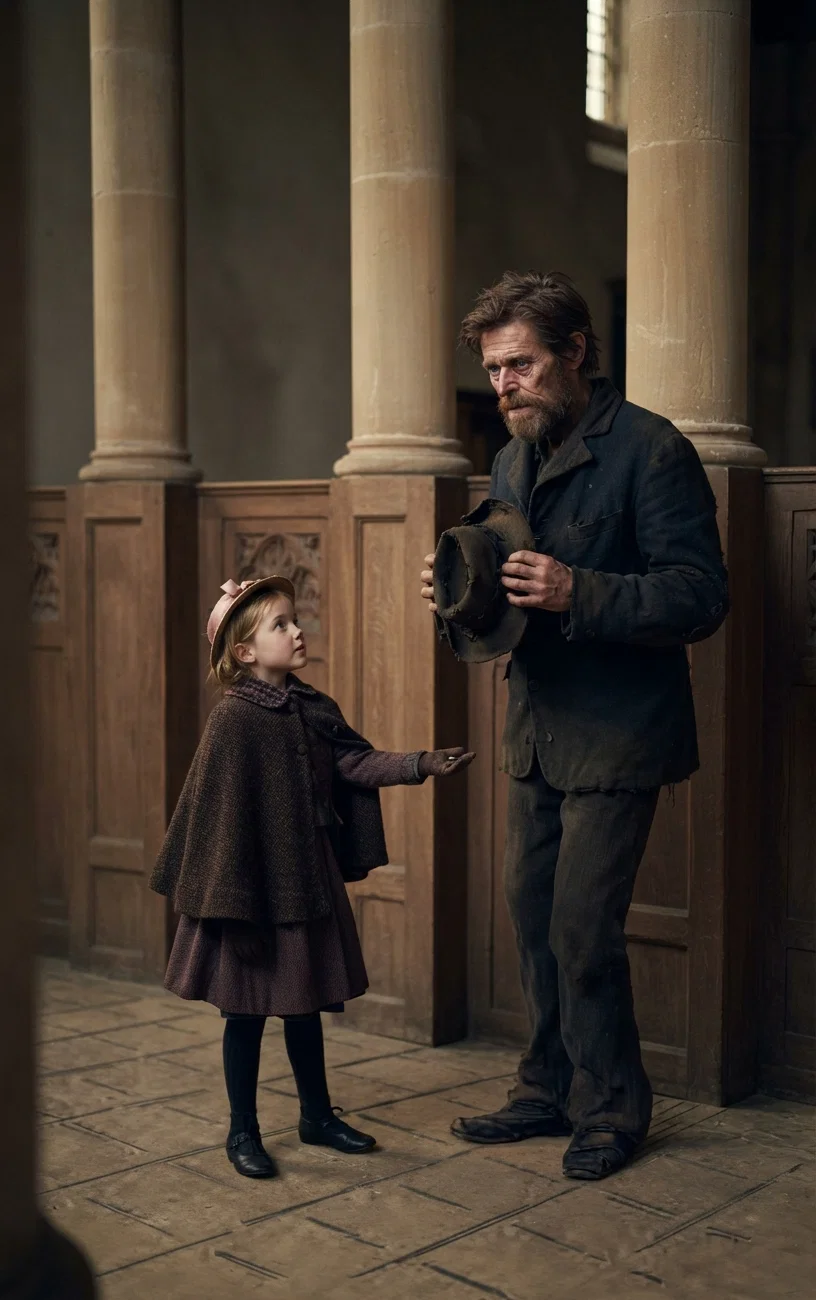
HE was a spare-built man, thirty-seven or eight, the wreck of a once sturdy manhood. The scant wraps which clung about him were threadbare and ill-fitting. He looked wayworn and weather-beaten. Presumably he was a mechanic—one of the luckless sort, with an odor of stale rum in his breath. Life to him had become intolerable, the penalty for having prostituted it. The poverty of existing for existence' sake lay heavy upon him. His face, though pinched and scarred and wrinkled, was for some reason not ugly. Two large blue eyes, sunken under his forehead, had the restless stare of a man on the verge of suicide.
What had taken such a one to church this Sabbath morning? For there he sat, planted in a rear pew, having slipped in, as once or twice before he had slipped in, and out again, unwelcomed, unnoticed. No, a few had noticed him—his unsightliness. This few had frowned, measured him from head to foot, seeming to say with their stares, What a sight!
All this had not escaped the spare-built man. He was dead only in part. Time, among other things, had preserved to him an exquisite sensibility. He shrank into himself as if to take up less room; winced with the consciousness of having committed some offense—the offense of living. But who was he? What was he doing among that sitting of "saints"?—Well, he had gone there in search of Christ. A street preacher had, years before, told him that he needed Christ. He had treated the matter as a joke at the time. He in need of Christ? What did he need Christ for? He was young, hopeful, strong, full of resource. The world was fair. Life was worth living—a spread of possibility on ahead.
Subsequently things changed for him. Reverses followed, a pulling off of the top. Sickness and a pack of ills overtook him. The days were few which brought him no disaster. His friends advised, felt sorry, said so at any rate, but as for helping him out—well, they had troubles enough of their own, that was all.
Henceforth life meant drift; a squarer look into the face of it. Finally it meant despair, a planning to end it all. Was this life? the most for which one is born? the distress men struggle to prolong? He had burned his candle fiercely for a few years, and now it was going out; worse, there stood the fear, the possibility, that its going out meant a hurrying to worse ills—a fear that would not stifle even in the fumes of rum.
One morning he recalled what the street preacher had said. Sometime he would need Christ. That time had come, supposing that Christ meant help, that He could save one from one's own self, verily he needed Him. One other fragment of that street exhortation came to his mind. It concerned Christ's unbiased love. How it went out in sympathy with ascertainable dimensions to it. How it fed multitudes, healed diseases, relieved distresses. The spare-built man's distress was beyond question. He would go to this man—the befriending Christ, the next meeting day—to that house of His with the tall spire and the deep-toned bell. Judging from the look of things, Christ was an extremely good Friend to the folk who went there, for they all appeared to roll in plenty. This being so, he would have no trouble in getting what he stood in need of. Christ would be there, and without doubt give him a hand. Such was his faith.
The prospects of relief acted like leaven. Tidying his person the best possible, with no toilet article save some hydrant water, he legged it to church.
A love-lit face looked up inquiringly.
This on three occasions, where, to his keen disappointment, a smart preacher and not Christ at all, had measured off some cold talks about Christ—an historical, two-thousand-years-ago Christ. Latter-day church-houses, conventional sermonizing, ritualistic machinery were ciphers to him. He had his own notions about love and adoration. Prayers were sent up, among which some touched upon the spare-built man's case. That is, Christ was requested to bear in mind the poor, to help the disconsolate. The request, however, was hedged in by less religious utterances. "This is not a lying-in hospital," was one. Another, "The church is not a dumping-ground. O Christ, we want able-bodied men and women for the church, not cripples, not invalids."
The spare-built man took it as aimed at him. He shivered and looked painfully self-conscious. The situation eased, however, with the announcement of a hymn, and soon a burst of sacred strains thrilled him with strange delight. The comfortably-seated crowd fanned itself and looked on. The morning was hot, still the spare-built man shivered, ill at ease.
He was not looking for that sort of thing. It was not entertainment he was after. It was Christ, some one who could help him, who could see as he saw, feel as he felt, weigh circumstances as he weighed them; in a word, understand him, weaknesses and all. Talk could not help him. The world was busy throwing away advice. He needed succor, sympathy, support. His shabbiness, his shame, his very presence declared his needs. Was he to be put off with words? Were there no bowels of mercy? Was Christ, after all, a pretty etherealism, unmindful of flesh and blood, of human wretchedness? Now-a-day prodigals must still their penitential hunger with the bread of isms.
The conclusion that they must fastened itself in the mind of the spare-built man. He believed his eyes. And now, for the third time, he was about to steal away empty-handed—back again to his world—the street. Would he never find the mysterious Christ?
The congregation was on its feet awaiting the benediction. The spare-built man seized his hat and tumbled awkwardly through the open door. The wish to hide himself, to vanish out of sight, possessed him. In the vestibule he breathed easier; stopped and listened to the dying tremors pulsating from the huge organ. Presently a sweet voice, the voice of a child, accosted him. "Who are you looking for?" it asked. A little hand caught hold of the tattered coat. A love-lit face looked up inquiringly into the lean face.
"Christ," answered the man pathetically.
"Christ?" repeated the child, stroking his knuckly hand. "Mama says she does'nt think He is in this church."
The pinched features paled. A look of bewilderment, then despair came into the man's eyes. "Not here?" said he, "then I have been deceived." He stood jammed against the wall, clinging unconsciously to the child. Past him poured a stream of chattering people—prosperous up-towners. Unmindful of it all, he bent over and kissed the up-turned face. The sweetness and purity of the young life enchanted him. He drank it in greedily, forgot that he was a forlorn, misery-surfeited wretch; rose for the moment to the stature of a god. Scores of haughty eyes were glowering at him. Mothers were pulling their children closer to them as they passed. But he was only aware of reveling in the warmth and glory of some hallowed presence. He took it to be the child's.
After a time a hand was laid heavily on his shoulder. "Do you wish anything?" asked a coarse voice; at the same time his attention was directed to a notice which read: "Do not loiter in the entry way." The spare-built man slowly collected himself, read the notice, looked about him in a dazed way, like one who has been dreaming vividly. The child, where was she? He saw only some men preparing to shut the massy oaken doors. "Not here," said a still, small voice. A moment more and he had grasped the situation. Like a roe he turned and bolted for the street. In his confusion he missed his footing and fell twenty or more steps. When they reached him he lay on the pavement in a pool of blood. Seemingly, by the movement of his fingers, he was holding an unseen hand. Putting his ear to the man's face, the sexton heard him say: "Christ! Christ!" with the eager delight of one who has found something infinitely dearer than life.
HENRY F. CUNNINGHAM.
Watsonville, Cal.
A PLEA FOR PEACE.
By Henry O. Morris
Is this the country of the free
That once was praised in song and story?
Are those our sons beyond the sea
Whose hands with patriots' blood are gory?
Can it be true that might is right,
With us who once dug slavery's grave,
And caused the rays of Freedom's light
To shine afar—to guide—to save?
Was this sad war fought to enslave?
Was it for this we sprang to arms
And spilled the blood of true and brave?
Was this the cause of war's alarms?
Have we, my people, sunk so low,
So far, so deep in degradation,
That we thus treat as common foe
A weak and struggling helpless nation?
No! Let us cease the wicked fight
And show the world we still are men,
By sheathing now our sword once bright,
While untold millions cry: "Amen."
HENRY O. MORRIS.
Political Representatives and Religious Liberty
The individual acts for himself, the [political] representative for his constituents. He is chosen to represent their political, and not their religious, views; to guard the rights of man, not to restrict the rights of conscience.—U. S. House of Representatives Report, 1830.
THE PRESENT CRISIS.
By James Russell Lowell
ONCE to every man and nation comes the moment to decide,
In the strife of truth with falsehood, for the good or evil side;
Some great cause, God's new Messiah, offering each the bloom
or blight,
Parts the goats upon the left hand, and the sheep upon the right,
And the choice goes by forever 'twixt that darkness and that
light.
Hast thou chosen, O my people, on whose party thou shalt stand,
Ere the Doom from its worn sandals shakes the dust against
our land?
Tho the cause of evil prosper, yet 'tis Truth alone is strong,
And albeit she wander outcast now, I see around her throng
Troops of beautiful tall angels to enshield her from all wrong.
—James Russell Lowell.
Combination Offers
REFERENCE
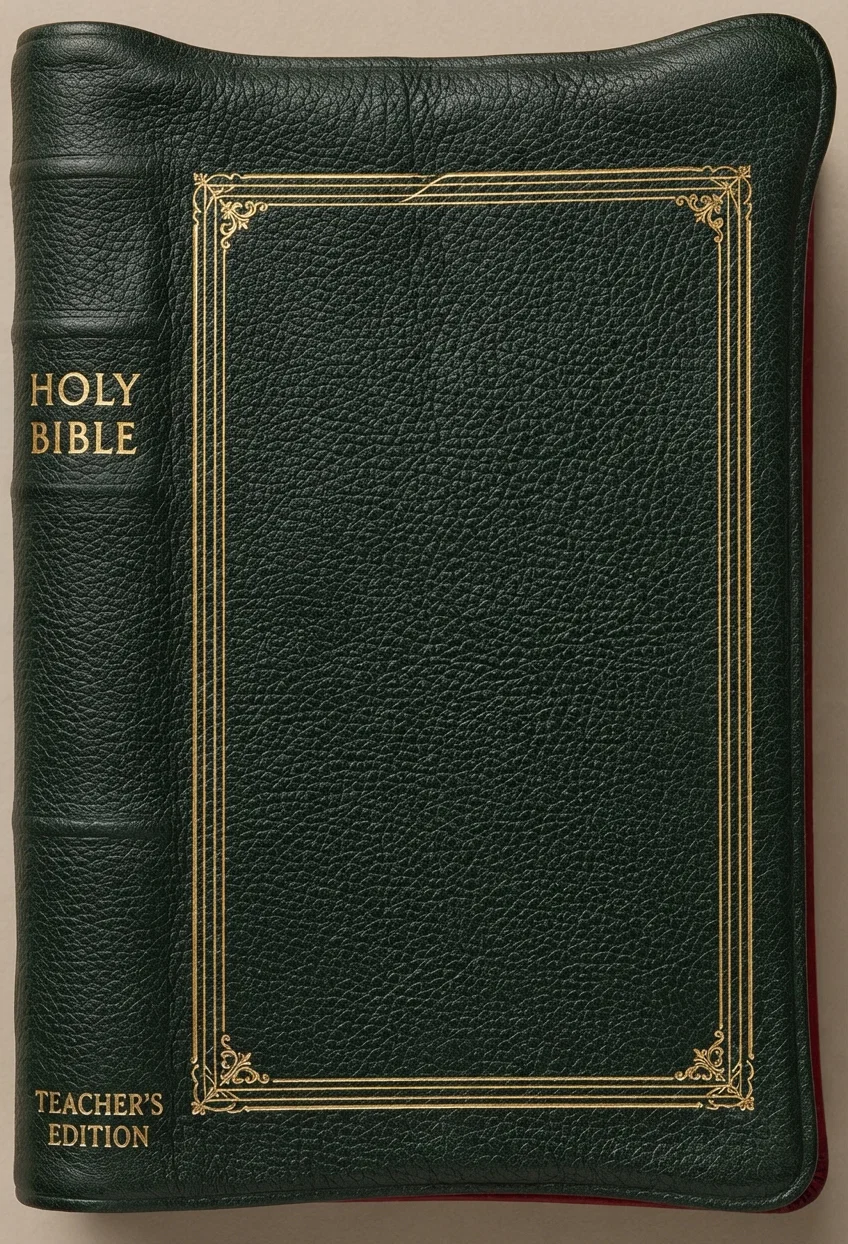
TEACHER'S BIBLE
Minion Type
Page 5½x8 inches....
The Bible is substantially bound in morocco, divinity circuit, leather lined to edge, round corners, red under gold edges, minion type, and contains over 650 pages of finely illustrated Helps to the study of the Bible.
******
One Feature of special value in the Helps contained in this Bible is the COMBINED CONCORDANCE, which unites, in a very convenient form for ready reference, a Concordance, Subject Index, and Pronouncing Dictionary of Scripture Proper Names.
Sent post-paid with the SIGNS one year - $2.75
Bible sent free on receipt of 7 new names and $7.00
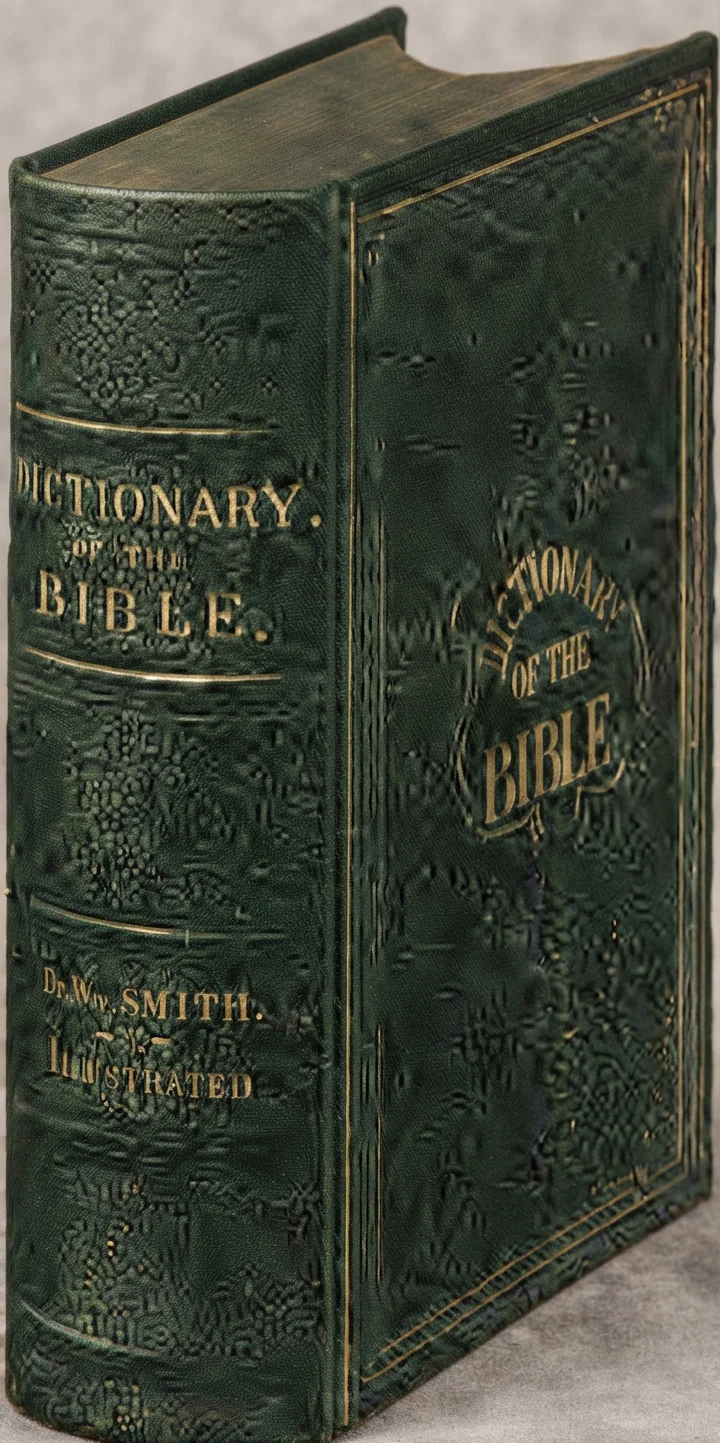
DICTIONARY OF THE BIBLE
By Dr. Wm. SMITH.
Size 6¼ x 9½ x 2½ inches,
Cloth bound.
Dr. William Smith's Dictionary of the Antiquities, Biography, Geography, and Natural History of the Bible is admitted by those most competent to judge to be the best of its kind in the English language. Its editor and his associate contributors are well known as among the most eminent Biblical scholars of our time, in both Europe and America.
The book contains over one thousand pages, is illustrated, and gives a full and accurate account of every name and place mentioned in the Bible, which can possibly need explanation; of every animal, plant, or mineral alluded to by the Sacred Writers; and of every custom and article of use among Jewish and contemporary nations.
This Dictionary is published by Scranton & Co., of Hartford, Conn., and sells at $4.50.
Our Price, post-paid, with the SIGNS, one year, $2.25
Book sent Free for Five New Yearly Subscriptions and one renewal at $1.00 each.
HEART-LIFE CLASSICS
By Editor
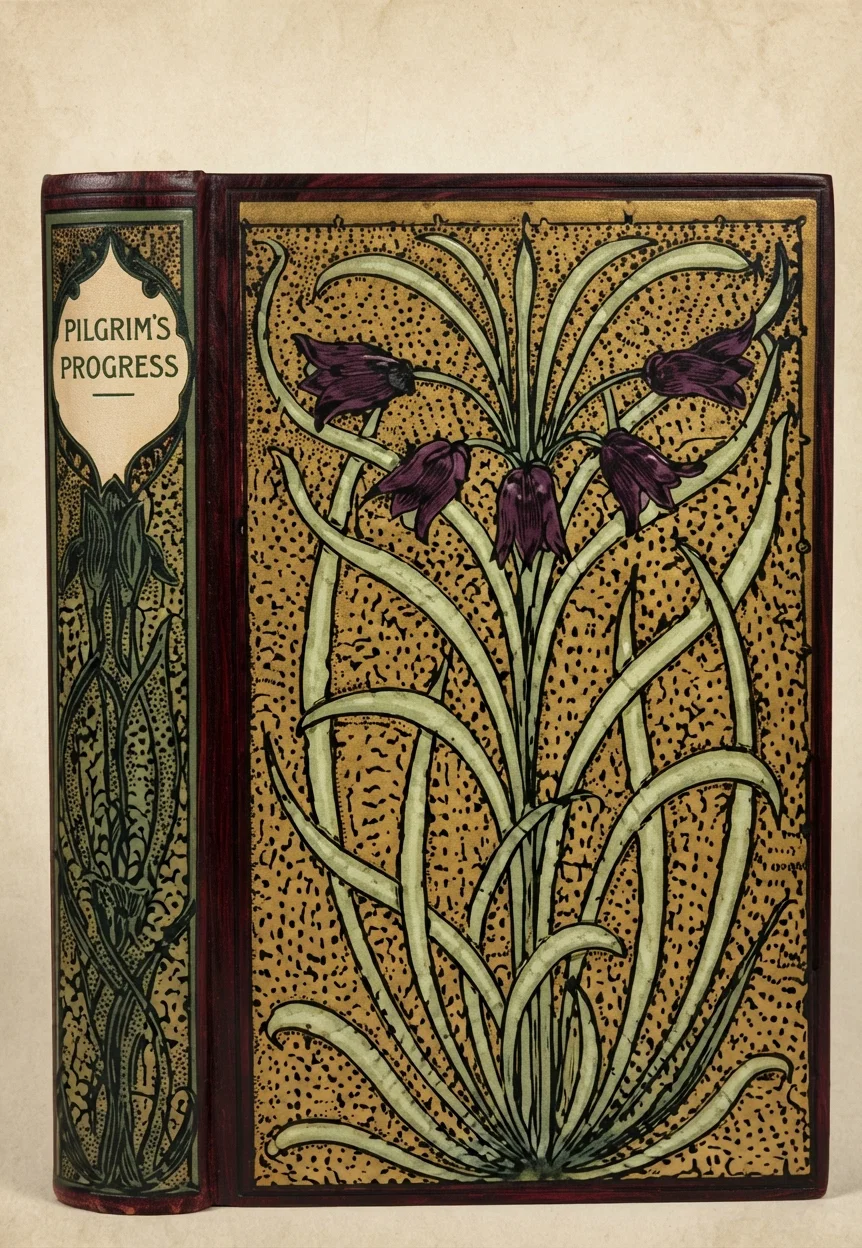
A choice line of devotional story books bound in cloth, size 6½ x 4½ inches. Excellent books for Sabbath-school libraries. Will be read with much interest and profit by both old and young.
Pilgrim's Progress, Jessica's Prayer and Jessica's Mother, Nobody Loves Me, Olive's Story, Helps over Hard Places—for Girls, Helps over Hard Places—for Boys, Line upon Line, Heart-Life, A Bag of Stories, Shepherd Psalm.
Each price 40 cts.
One copy, post-paid with
SIGNS one year . . . $1.25
Any single book sent Free for One New Subscriber and One Renewal at $1.00 each.
If you desire the whole set of ten volumes mentioned above, we will send them post-paid FREE for Eight New Yearly Subscriptions at $1.00 each ($8.00).
ADDRESS
SIGNS OF THE TIMES, OAKLAND, CAL.
IS IT PROVIDENCE?
THE following from Our Dumb Animals is pertinent at this time: "A Western religious society, according to the Springfield Republican, adopted recently a joyful resolution to the effect that 'a wise Providence, through the incidents of war, has opened vast fields for the advancement of Christianity.' This was passed at a time when fifty car-loads of beer left the same part of the West to be shipped to the Philippines. The Republican is of the opinion that the beer train is only the prelude to a grand and impressive advance of New England rum and Kentucky whisky—for which a wise Providence through the incidents of war must likewise be regarded as responsible."
"How many of the Indians who once owned this continent have we ever converted to join our Protestant churches, in proportion to the number we have killed by bullets, and the vices we have carried among them?"
Better the sad sentiment ascribed to the Iron Chancellor, Bismarck: "How many have I made unhappy? But for me three great wars would not have been fought, 80,000 men would not have perished."
FREEDOM.
By Ina D. Coolbrith
[From a poem by Oakland's sweet singer, Ina D. Coolbrith, read at a Fourth-of-July celebration, 1895.]
"Of old sat Freedom on the heights!"
(So sang a singer of our day.)
O golden age of pure delights!
O planet, happy in her sway!
*
*
*
*
*
*
*
For thee the Mayflower crossed the sea;
Her sails were wings of thy desire;
And on the virgin shores to thee
She builded high the altar-fire.
She wove the banner of the stars;
Thy spirit mailed her arm with might
To break the Old World's prison-bars,
And write the New World's name in light.
But in the Mayflower's heart, unguessed,
Lurked still one foe not overthrown;
It bound about her brother's wrist
The shackles stricken from her own.
Then didst thou rise in grievous ire,
O Freedom! storm in majesty!
As sweeps the prairie storm of fire,
Thy legions swept from sea to sea,
And cleansed thy shame to spotless white,
And made the land thy very own;
And once again was known her light,
God's Rainbow-Land, from zone to zone.
Are we still thine, O Freedom? Join
Thy voice to mine, and utter clear
Thy truth; lest, cowardly, I coin
The lie to lull the rising fear.
Speak thou the blame we shame to own;
What tawdry despot rules the hour!
How, servile, at a tinsel throne,
We bow to pelf, we bow to power.
We drain the ore from nature's veins,
And festering fetters forge, to bind
Our cringing souls in mammon's claims—
Slaves! Slaves!—in limb, in will, in mind!
We sleep, while Cain's uplifted hand
With crimson drops befouls the sod;
Crime writes across the shuddering land
Its awful blasphemy of God;
And wrecks of men drift to and fro,
And Dives feasts in jeweled state,
And dreams to melody, while, lo!
In thousands, Lazarus at the gate!
The sons of patriot sires, we dare
The bribe to give, to take the bribe!
And sit beneath the Old World's sneer,
The king-ruled nations' jest and gibe.
Like theirs shall leisured lords of lands
Mock the tired tiller of the soil
With scanty harvest? Toiling hands
Gain as their guerdon only toil?
O, for the loyal faith of old!
The simple dignity and truth!
The law that was not bought and sold!
The clean soul of the nation's youth!
Heed! lest our banner mock the arch
It mimics—heaven's starry home!
The music of our pageant march
Be Nero's play to burning Rome.
There is no slavery like sin;
Where wrong is, freedom can not be;
By right alone her crown we win,
In honor, only, are we free.
HOPE ON, TOIL ON.
By J. A. Edgerton
O my brother, are you weary?
Does the way seem long and dreary
That leads up to the new era
You have pictured in your dreams?
Is your portion one of sorrow?
Yet be brave and strive to borrow
From the glory of the morrow,
That beyond your vision gleams.
"Never?" Cease the wail of "never,"
For the race goes on forever
Up the highway of endeavor
To heights that onward glow.
There is no room for despairing,
But for action and for daring,
And for helping and upbearing
One another as we go.
There are lives that we may brighten,
There are burdens we may lighten,
There are joys that we may heighten,
There are wounded hearts to bind;
There are fetters to be broken,
There are blessings to be spoken,
Let us give them as a token
Of the love we bear mankind.
See, a golden bow is bending
Over us, its glory lending
Unto us, a message sending
That the world is moving on;
From its ancient moorings drifting,
While the tides of thought are shifting,
And the shadows are uplifting
From the gateways of the dawn.
O my brother, cease complaining.
See, the night of wrong is waning,
And the King of right is reigning,
And the flag of hope's unfurled.
There are evils left for righting,
There are battles left for fighting,
There are beacons left for lighting,
To illuminate the world.
As, when all her hues combining
In a golden-tinted lining,
Through the clouds the morn is shining,
So the Future's upturned face,
With a glow of promise burning,
My rapt spirit is discerning,
While humanity is turning
To the morning of the race.
A prophetic sense comes o'er me;
A new epoch spreads before me;
And the human seas are stormy,
And I hear a cry of "War."
Then a vision looms entrancing
On my sight. With armor glancing
Comes a mighty host advancing,
Like an army, from afar.
Through the valleys it is swarming;
From the shops its ranks are forming;
Its embattled lines are storming
Evil's bastions old and gray.
I can see its banners streaming,
I can see its forefront gleaming
In the dawn-light on it beaming
From the new and grander day.
'Tis the rising of the masses
In their struggle with the classes—
Like a dream the vision passes,
While another yet I see;
In the midst of every nation
Two great forces take their station,
And the minions of oppression
Meet the hosts of liberty.
'Tis the conflict of the ages;
It has been foretold by sages,
And on poets', prophets' pages,
For a thousand years and more.
It is coming, we are near it;
The faint rumbling, don't you hear it?
Gird your armor, do not fear it,
'Tis the great and final war;
When the hosts of toil from slumber
Shall arise in strength of number,
And shall smite the foes who cumber
Earth with ancient forms of wrong;
When old evils shall be righted,
And above the lands benighted
Freedom's beacons shall be lighted,
While the earth is filled with song.
O my brother, why repining?
All the clouds have silver lining,
And the rose-white dawn is shining
O'er the yet unrisen day.
Ever forward, ever dawnward,
Swings the world, and ever onward;
While the Christ-soul leads us vanward
On the ever-upward way.
Better days are breaking o'er us;
From the nearing goal before us
We can hear a joyous chorus
Wafted o'er the years to be.
Through the portals, open swinging,
Notes of sweet and rapturous singing
Down the future's aisles are ringing
From the anthems of the free.
J. A. EDGERTON.
POLITICAL SPEECHES and DEBATES OF LINCOLN AND DOUGLAS...
By Editor
A BOOK FOR THE TIMES. The following is one reason why this discussion by these two able lawyers and statesmen should find a large place amongst the people of this country to-day: Another attack is made upon the Declaration of Independence and the Constitution in an attempt once more "to turn a free people back into the hateful paths of despotism." Then, the attack was upon the clause which declares that "all men are created equal." Now, the attack is upon that clause which declares that governments derive their just powers from the consent of the governed. Then, there was rendered a decision of the Supreme Court of the United States which perverted the Constitution in the interests of that attack. Now, there is a decision of the Supreme Court of the United States which perverts the Constitution in the interests of this attack. The careful study of this history-making discussion and of the principles involved will prepare the people successfully, and in the right way, to meet all attacks upon the immortal Declaration, and to correct any and all perversions of the Constitution.
Buckram Cloth, 555 pages - - - - - - - $1.75
Sent post-paid with the SIGNS one year - - $1.75
Book sent Free for Three New Yearly Subscriptions
and One Renewal at $1.00 each.
13 "Now WHEN Jesus came into the parts of Cæsarea Philippi, He asked His disciples, saying, Who do men say that the 14 Son of man is? And they said, Some say John the Baptist; some, Elijah; and others, Jeremiah, or one of the prophets. 15 He saith unto them, But who say ye that I am? And Simon 16 Peter answered and said, Thou art the Christ, the Son of the 17 living God. And Jesus answered and said unto him, Blessed art thou, Simon Bar-Jonah; for flesh and blood hath not revealed it unto thee, but My Father which is in heaven. And 18 I say unto thee, that thou art Peter, and upon this rock I will build My church; and the gates of Hades shall not prevail 19 against it. I will give unto thee the keys of the kingdom of heaven; and whatsoever thou shalt bind on earth shall be bound in heaven; and whatsoever thou shalt loose on earth 20 shall be loosed in heaven. Then charged He the disciples that they should tell no man that He was the Christ.
21 "From that time began Jesus to show unto His disciples, how that He must go unto Jerusalem, and suffer many things of the elders and chief priests and scribes, and be killed, and 22 the third day be raised up. And Peter took Him, and began to rebuke Him, saying, Be it far from Thee, Lord; this 23 shall never be unto Thee. But He turned, and said unto Peter, Get thee behind Me, Satan; thou art a stumbling-block unto Me; for thou mindest not the things of God, but the things of 24 men. Then said Jesus unto His disciples, If any man would come after Me, let him deny himself, and take up his cross, 25 and follow Me. For whosoever would save his life shall lose it; and whosoever shall lose his life for My sake shall find it. 26 For what shall a man be profited, if he shall gain the whole world, and forfeit his life? or what shall a man give in ex27 change for his life? For the Son of man shall come in the glory of His Father with His angels; and then shall He render 28 unto every man according to his deeds. Verily I say unto you, There be some of them that stand here, which shall in no wise taste of death, till they see the Son of man coming in His kingdom."
1 "And after six days Jesus taketh with Him Peter, and James, and John his brother, and bringeth them up into a 2 high mountain apart; and He was transfigured before them; and His face did shine as the sun, and His garments became 3 white as the light. And behold, there appeared unto them 4 Moses and Elijah talking with Him. And Peter answered, and said unto Jesus, Lord, It is good for us to be here; If Thou wilt, I will make here three tabernacles; one for Thee, and 5 one for Moses, and one for Elijah. While He was yet speaking, behold, a bright cloud overshadowed them; and behold, a voice out of the cloud, saying, This is My beloved Son, in 6 whom I am well pleased; hear ye Him. And when the disciples heard it, they fell on their face, and were sore afraid. 7 And Jesus came and touched them and said, Arise, and be not 8 afraid. And lifting up their eyes, they saw no one, save Jesus only."
9 "And as they were coming down from the mountain, Jesus commanded them, saying, Tell the vision to no man, until the 10 Son of man be risen from the dead. And His disciples asked 11 Him, saying, Why then say the scribes that Elijah must first come? And He answered and said, Elijah indeed cometh, 12 and shall restore all things; but I say unto you, that Elijah is come already, and they knew him not, but did unto him whatsoever they listed. Even so shall the Son of man also suffer 13 of them. Then understood the disciples that He spake unto them of John the Baptist."
32 "Now Peter and they that were with him were heavy with sleep; but when they were fully awake, they saw His glory, and the two men that stood with Him."
SUGGESTIVE QUESTIONS.
NOTE.—The texts inclosed in marks of parentheses, while not essential to the lesson study, will be found to throw much light upon the lesson, and are suggested for those who wish to study further.
Upon arrival in the country of Cæsarea Philippi what question did Jesus ask His disciples? Matt. 16:13. Note 1.
What demonstration accompanied this unstudied utterance? Verse 5. (1 Peter 1:17, 18.)
How did this display of glory affect the disciples? Verse 6. (Ex. 34:17.)
Having partially recovered from their fright, what did the disciples then see? Verses 7, 8. (Dan. 10:18, 19.)
While coming down the mountain, what charge did Jesus give the disciples? Verse 9. (Luke 9:36.)
What indicated that the disciples did not really yet understand what they had witnessed and heard? V. 10. (Mal. 4:5.)
How did the Saviour answer this query? Verses 11-13. Note 4. (Matt. 17:13, 14.)
Side Lights.—"Desire of Ages," chapters 45, 46. "Spirit of Prophecy," vol. 2, chapter 26.
NOTES.
1. Cæsarea Philippi.—The town bearing this name lay to the northeast of the plain of El Huleh. It was close to the territory of Dan, and nearly due east from Tyre. The town had been formerly known as Baal-Gad, so named from the Caananite god of fortune. It was rebuilt by the tetrarch Philip, three years before the birth of Christ, and named Cæsarea, in the honor of Augustus, the reigning emperor; hence its name. It was called Panium by Josephus, but is now known as Banias.
2. Upon this Rock.—It is upon the rock of this revelation that the church of Christ is built. When guided by the Spirit of God, His representatives will do and speak as led by that power, and so their loosing and binding is sanctioned in heaven. See side texts. When Peter said by the Spirit to the lame man at the gate of the temple, "Rise up and walk," the result was the same as tho the words were uttered direct from heaven.
3. Taketh with Him.—Only three were permitted to see this wonderful sight—those who constituted the innermost circle of the Lord's followers. The same trio were the only ones admitted into the death chamber of the little maid (Luke 8:51), and were also the exclusive companions of the Lord during His passion in the garden. Just why this was we do not fully know, but one thing is taught by the example—that, while the Lord's work recognizes no favorites, in a low sense, there are some whom He permits to enter deeper into the mysteries of His doings than others. This being so, all should trust God's wisdom and justice, and know that God reigns over His work and people in the earth.
4. Elijah indeed cometh.—The very fact that Peter included Elias (Elijah) in the number to dwell in one of the three tabernacles he suggested to have made, shows that he still believed that that prophet was yet to come and live with the Messiah on the earth forever. He, therefore, could not understand the statement that Christ was to die and be raised again. This only illustrates how tenaciously one clings to his old, preconceived ideas, in spite of the plain teaching of the Word of God.
Instructions for Ordering.
By Editor
1. REMIT by P. O. Money Order, Express Order, or Bank Draft on New York, Chicago, or San Francisco.
2. If paper money or silver is sent, register the letter.
3. Orders and Drafts should be made payable to the PACIFIC PRESS PUBLISHING CO., or to SIGNS OF THE TIMES.
Postage-stamps.—Please do not send postage-stamps, as they are liable to stick together, and are useless in this condition.
Foreign Money.—Do not send any.
Receipt.—No formal receipt is sent unless by special request. The address label on your paper will indicate the time to which your subscription is paid. In case of non-receipt of papers, or any other irregularity, please notify us immediately.
Expiration of Subscription.—All papers are discontinued at the expiration of the time paid for. Notification will be sent several weeks before date of expiration, thus enabling you to renew in ample time to secure unbroken files. Please be prompt, as we can not always furnish back numbers.
Change of Address.—When ordering change of address, please give both the old and the new address.
Important.—Use a separate sheet for SIGNS orders, separate for other papers, separate for books, for tracts, etc., and if you address the editor, use a separate sheet. All can be sent in one envelope, and the money all sent in one order, but write each kind of business on a separate sheet. In this way each order can be handed to the proper clerk and filled at once.
OUR GENERAL AGENTS.
General Eastern Agency—Pacific Press Pub. Co., 39 Bond St., N. Y. City, N. Y.
General Central Agency—Pacific Press Pub. Co., 14-18 W. 5th St., Kansas City, Mo.
Argentine—Señor N. Z. Town, Casilla del Correo, 481 Buenos Ayres, Argentine Republic, S. A.
Arkansas Tract Society—913 Rock Street, Little Rock, Ark.
Atlantic Tract Society—39 Bond St., New York City, N. Y.
Australia—Echo Publishing House, North Fitzroy, Victoria.
Australian Tract Society—251 St. George's Road, North Fitzroy, Australia.
Battle Creek Tract Society—271 W. Main Street, Battle Creek, Mich.
California Tract Society—1059 Castro St., Oakland, Cal.
Canada—Review and Herald, 320 Yonge St., Toronto, Ontario.
Chesapeake Conference,—C. D. Zirkle, Sec., 826 N. Mount St., Baltimore, Md.
China—A. La Rue, Hongkong, China.
Colorado Tract Society—1112 S. 11th St., Denver, Colo.
Dakota Tract Society—Vilas, S. Dakota.
England—International Tract Society, 59 Paternoster Row and 451 Holloway Road, London.
Florida Tract Society—Box 508, Orlando, Florida.
Foreign Mission Board, S. D. A., 1730 N. 15th St., Phila., Pa.
Germany—International Tract Soc., Grindelburg, 15a, Hamburg.
Illinois Tract Society—324 Dearborn St., Chicago, Illinois.
Indiana Tract Society—132 E. Ohio St., Indianapolis, Ind.
International Tract Soc.—271 W. Main St., Battle Creek, Mich.
Iowa Tract Society—603 East 12th St., Des Moines, Iowa.
Kansas Tract Society—821 West 5th St., Topeka, Kan.
Maine Tract Society—North Deering, Me.
Manitoba—Manitoba Tract Society, Box 725 Winnipeg, Manitoba.
Michigan Tract Society—226 Wash. Ave. N., Lansing, Mich.
Minnesota Tract Society—Box 989, Minneapolis, Minn.
Missouri Tract Society—14 West Fifth St., Kansas City, Mo.
Montana Tract Society—Cor. Pine & Warren Sts., Helena, Mont.
Nebraska Tract Society—1505 E St., Lincoln, Neb.
Nevada—Cal. Tract Society, 1059 Castro St., Oakland, Cal.
New England Tract Society—South Lancaster, Mass.
New York Tract Society—317 West Bloomfield St., Rome, N. Y.
New Zealand Tract Society—Beulah Hall, Wellington, N. Z.
North Pacific Tract Society—508 E. Everett St., Portland, Or.
Ohio Tract Society—Mt. Vernon, Ohio.
Oklahoma Tract Society—204 California St., Oklahoma City, Okla.
Pennsylvania Tract Society—Box 644, Williamsport, Penn.
Quebec Tract Society—S. Stukely, P. Q., Canada.
Scandinavian Tract Society—Ackersgaden 74, Christiania, Nor.
South Africa Int. Tract Soc.—28 a Roeland St., Cape Town.
Southern Field,—Review and Herald—243 South Boulevard, Atlanta, Ga.
Switzerland—Imprimerie Polyglotte, 48 Weiherweg, Basel.
Tennessee River—415 Woodland St., Nashville, Tenn.
Texas Tract Society—626 and 628 Elm St., Dallas, Tex.
Upper Columbia Tract Society—College Place, Wash.
Utah Tract Society—Box 1058, Salt Lake City, Utah.
Vermont Tract Society—190 N. Winooski Ave., Burlington, Vt.
Virginia Tract Society—2504 E. Clay St., Richmond, Va.
West Virginia Tract Society—Newburg, W. Va.
Wisconsin Tract Society—14 E. Johnson St., Fond du Lac, Wis.
Religion Exempt from Civil Authority
WE maintain that in matters of religion no man's right is abridged by the institution of civil society, and that religion is wholly exempt from its cognizance. —James Madison.
Church and State Separation
Keep the Church and State forever Separate.—U. S. Grant.
We maintain that in matters of religion no man's right is abridged by the institution of civil society, and that religion is wholly exempt from its cognizance.—James Madison.