Your ShelfYour Projects

Review and Herald, Vol. 80, No. 17.

God and His Picture

Review and Herald

Apr 28, 1903

Seventh-day Adventist Publishing Association · Battle Creek, Mich. · Apr 28, 1903

God and His Picture

God is busy up above, Getting all his colors ready, Mixed of sunlight, dew, and love! He is strong, and he is steady, Only in this world of change, With its story old but strange. Earth is waiting for the Picture Yet in shadow, shy and coy, Like a maiden's modest joy; Weary of the stress and stricture Laid upon it in the storm, By the ice and iron frost, It puts on a fairer form, And refuses any staying; Lo, the branches' hands are crost As in worship and with praying.
God is busy up above If our faithless hearts are fainting; And the snowdrop from its glove Bursting, shows that he is painting. And the crocus, too, like fire, Now is clothed in his attire. All the leaves will soon be laughing, Needless of the woes they had, Just because they feel so glad; And their little lips are quaffing Life, and liberty, and bliss; Singing, singing, as they say, God can nothing do amiss, And is ever for us toiling; We must fondly praise and pray, While he washes off our soiling.
God is busy up above, He upon the earth keeps printing Tenderly, in brooding dove, Bleating lamb, and blossom's tinting, And the breezes' perfumed feet, Everywhere his portrait sweet. It is written for our reading, Like a riddle broad and plain, Come to perfectness through pain, For our light and for our leading, With a blessing in each hue. Every line is gay and good, Every touch divinely true; O, the features, pure and pleasant, Of the wondrous Fatherhood, Always love and always present.
God is busy up above, Shedding flowers on hill and hollow. As his colors meet and move, Calling upon us to follow; We must bear his beauty now, Shining forth from breast and brow, We must show his care and kindness In the offering of our powers, And must be his human flowers Scattered through the paths of blindness, With the fragrance of his breath; We must wear his impress bright, Fresh and loyal even in death, Yielding all to all his giving Who alone can paint us right, In the glory of his living. — F. W. Orde Ward.

THE YOUTH'S INSTRUCTOR

PUBLISHED BY THE
REVIEW AND HERALD PUBLISHING COMPANY
BATTLE CREEK, MICHIGAN
An eight-page illustrated weekly paper. Especially adapted to the daily needs of the youth. Lively, interesting, instructive, entertaining, and entirely free from all cheap reading so common in most of the young people's papers. For fifty years the recipient of the hearty support of the Sabbath-schools and the general confidence of the people, is sufficient testimony of its merits.

SUBSCRIPTION RATES

YEARLY SUBSCRIPTION . . . . . . . . . . . . . . . . . . . . $ .75 SIX MONTHS . . . . . . . . . . . . . . . . . . . . . . . . . .40 THREE MONTHS . . . . . . . . . . . . . . . . . . . . . . . . .20 To Foreign Countries . . . . . . . . . . . . . . . . . . 1.25

CLUB RATES

5 to 9 copies to one address, each . . . . . . . . . . $ .55 10 to 100 copies to one address, each . . . . . . . . . . .50 100 or more copies to one address, each . . . . . . . . .45

OUR SPECIAL PREMIUM OFFER

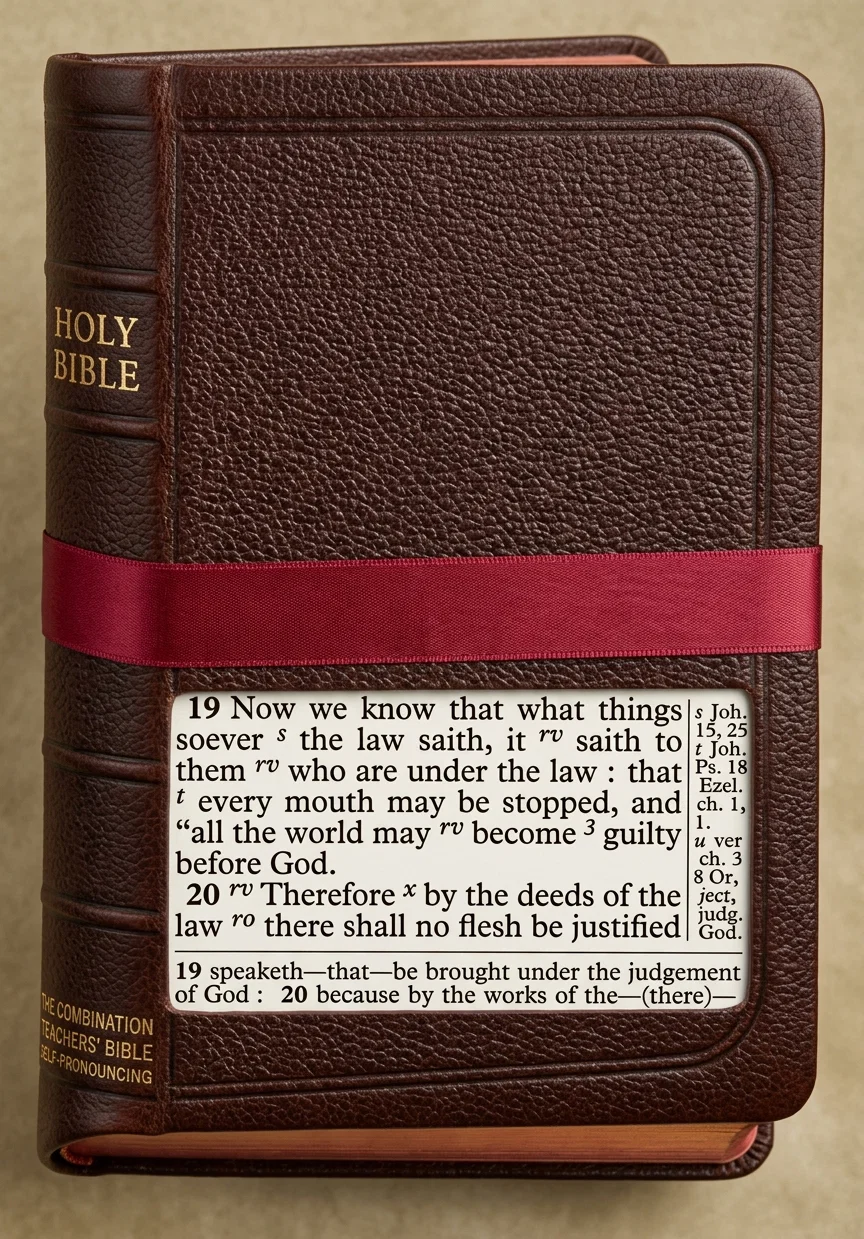
To those sending us new yearly subscriptions for the Instructor, we offer the COMBINATION TEACHERS' BIBLE, AS FOLLOWS:—
For one new yearly subscription and $2.10. For two new yearly subscriptions and $1.75. For three new yearly subscriptions and $1.40. For four new yearly subscriptions and 70 cents. For five new yearly subscriptions alone.
Size, 6 x 8 x 1½ inches.

DESCRIPTION OF THE BIBLE

The Old and Revised Versions of the Bible in One Volume without Increasing the Size or Weight, or Diminishing the Size of the Type.

SELF-PRONOUNCING

A teachers’ Bible, enabling its readers to use and study the changes embodied in the Revised Version (heretofore only made possible by using a large parallel family Bible, or a separate revised Bible). A Bible which, without omitting a feature, or disturbing the text, points out all the words and passages wherein the two versions differ, giving the Revised Version of each at the foot of the page, as illustrated in the cut, which also represents the size of the type, and the general make-up and style of the book. The text is the old or authorized version. At the foot of the page is shown every change made by the revisers. The letters RV in the text denote that the word or passage following is changed in the Revised Version as shown in the foot-note of the same verse. The letters RO denote that the word or passage following is omitted in the Revised Version as shown in parenthesis () in foot-note. When two or more changes occur in the same verse, they are divided by a dash in the foot-note.
It is substantially and attractively bound in imperial seal, divinity circuit, leather lined to edge of circuit, round corners, carmine under gold edges.
It contains all the standard helps to the study of the Bible, a complete series of new maps illustrating the geography of Palestine and the surrounding countries from the earliest times, and embodying the most recent discoveries, together with a very full concordance, containing over 40,000 references, history and summary of the books of the Bible, historical, chronological, and geographical tables, new subject index to the Bible, dictionary of the Scriptural proper names with their pronunciations and meanings, table of miracles, parables, etc., etc.
The type is large, the paper excellent, and the binding good. The newest and best teachers’ Bible published in every particular. Its construction is simple, compact yet comprehensive. Any child can readily compare each, the old and the Revised versions.

TESTIMONIALS

Every student of the Bible ought to know what the revisers did. Whoever gets this Bible gets the most complete one extant.—Rev. Hiram C. Haydn, Cleveland, Ohio.
One of the most valuable editions of the Holy Scriptures ever published, and no other can claim to be its equal.—Rev. Milton S. Terry, Evanston, Ill.
The combination and self-pronouncing features make it the most practically useful Bible that has ever been published.—Bishop Spaulding, Denver, Colo.
I know of no Bible that contains within itself so much of real value to every Biblical student as your “Combination Bible.”—Rev. D. D. MacLaurin, Detroit, Mich.
Unique in plan, extraordinary in scope, and exceptional in value. The arrangement of the two editions is most helpful.—Bishop Huntington, Syracuse, New York.

Editorial

With Authority

THERE is authority in the principles of truth and righteousness. This was the basis of all the authority which Jesus revealed. “The multitudes were astonished at his teaching: for he taught them as one having authority.” The scribes and Pharisees based their estimate of authority upon the position of the teacher, and not upon the principles which he taught; and they were therefore offended at Jesus because he was only the son of a carpenter, and had no official standing. Having departed from the principles of truth and righteousness, they had lost the authority of these principles, and had attempted to substitute in its place the authority of position. Right here is the essential difference between the mystery of godliness and the mystery of iniquity, between Christianity and the papacy. It is the principle of Christianity that the authority is in the thing taught, and not in the teacher or his official position. It is a principle of the papacy that the authority is in the teacher because of his official position. When the pope speaks as a man, a mere individual, he is not infallible, but when he speaks ex cathedra, sitting in the chair of Peter, he is infallible, and his utterances have the authority of infallibility. There is a constant danger that the papal principle shall be adopted in the Christian church. When a teacher has gained the reputation of being a teacher of truth, there is the constant tendency to accept what he may teach thereafter as truth simply because he teaches it, and not because of the authority of the teaching itself in the conviction which it carries to the heart of the hearer. This is purely and wholly papal. Those who have the message against the papacy and all that pertains to it must be on their guard lest they adopt the very principles which they ought to expose and repudiate.

A Response

A DEFINITE note was struck at the recent General Conference. The fact was emphasized that we are in the last of the last days, and this people was called upon to accept the responsibility under God of finishing the work of giving the advent message to all the world in this generation. This definite note sounded out among the people, and a hearty response is coming from them on every side. Many prayers ascended to God in behalf of the General Conference. Many loyal believers hoped that it would mark the beginning of a new experience in this message. And when they read of the keynote which was sounded, and of the call that was made for a rally upon the solid advent platform, they thanked God, and took courage. To all these believers we wish to say, Cast not away your confidence. “Hold fast that which thou hast.” This advent movement has received a new impetus. Bands are being broken, and this message is being delivered from interpretations and policies which have imperiled it. The outlook is hopeful. The greatest factor in the success of this work will be in our personal relation with God and our experience in the daily revelation of righteous principles. Let courage and hope fill our hearts as we gird ourselves anew for the closing work.

The Gospel Message for To-day***

The Gospel Message for To-day
We have considered our present position in prophetic history and the call to finish in this generation the work of preparing the way of the Lord. It seems natural that we should study now what that work is which prepares the way of the Lord, and to note whether there is any special emphasis upon any special phase of gospel truth for this generation. Our greatest need is to know the purpose of God for any particular time or work, and then to be in harmony with that purpose, so that God's purpose shall easily find expression in the earth through his church, the ordained channel through which light and knowledge shall be made known to the earth.
Now, while in different epochs of the world's history there have been special phases of truth to be emphasized, yet there is always one truth to be emphasized all the time; and that is that the purpose of God is set for the salvation of sinners who will exercise faith in the merits of Jesus Christ.
Now, whether it be in one age of the world or another, under one outward form of organization or another, yet always there is this one purpose of God,—that is, the purpose of salvation from sin. There have been special experiences that have seemed to mark off special epochs in the history of God's work in the earth. And there have been special phases of truth that needed to be emphasized at that time. That is, God's truth is infinite. It is all-inclusive. It is broad enough to meet every issue. It is broad enough to meet every form of opposition that may be raised against it. All it needs is that there shall be instrumentalities, that there shall be channels, through which the right phase of the truth may be brought to the earth; through which just those rays of light that are needed at that time shall shine forth, in order that the gospel shall be sufficient for the needs. That is, there is only one gospel, and that gospel is the gospel of salvation from sin through faith in Jesus Christ.
But that is infinite, and can be applied to every possible situation, to every possible opposition that may be brought against the gospel; and it is able to unveil every possible deception the enemy may bring to hide from men the light of God's truth. When the flood was impending, Noah gave his message, and the Scriptures say that he was a preacher of righteousness. That is always the gospel. But Noah's preaching of righteousness at that time meant that he should set forth clearly and distinctly that God had threatened the world with a flood, and that there must be a special preparation to escape it. That was preaching righteousness in Noah's day. To declare to the world an impending flood, and the necessity of preparation for it, would not be God's purpose for this day.
John the Baptist was a preacher of the gospel, raised up of God at a special timeto do a special work, but the burden of his work was, “Repent ye; for the kingdom of heaven is at hand.” John's preaching of repentance at that time would not have been a message of repentance and forgiveness of sins, the message of righteousness at that time, if he had failed to make it very clear that the kingdom of God was at hand; that the time was fulfilled, and that he was the voice that was to prepare the way for the manifestation of the Messiah; and yet he preached nothing but the gospel of righteousness through faith in Jesus Christ.
In our own time there is only one gospel to preach,—this same everlasting gospel of salvation from sin,—but this everlasting gospel of salvation from sin must be preached in such a way in this generation that it shall declare also that the time is fulfilled, and that the kingdom of God is at hand; and such a message will prepare the way for the coming King.
Now, in order to make this clear to God's messengers, he has given for every such special occasion and for every such need a special setting for the message for that time.
Preparing the Way of the Lord
John the Baptist took his message in a very marked way, as the scripture says, from the prophet Isaiah. And when we note the scripture that is quoted as being the foundation of his message, we find that it came from the fortieth chapter of Isaiah: “Comfort ye, comfort ye my people, saith your God. Speak ye comfortably to Jerusalem; and cry unto her, that her warfare is accomplished, that her iniquity is pardoned; that she hath received of Jehovah's hand double for all her sins. The voice of one that crieth, Prepare ye in the wilderness the way of Jehovah; make level in the desert a highway for our God. Every valley shall be exalted, and every mountain and hill shall be made low; and the uneven shall be made level, and the rough places a plain: and the glory of Jehovah shall be revealed, and all flesh shall see it together; for the mouth of Jehovah hath spoken it. The voice of one saying, Cry. And one said, What shall I cry? All flesh is grass, and all the goodliness thereof is as the flower of the field. The grass withereth, the flower fadeth, . . . but the Word of our God shall stand forever. O thou that tellest good tidings to Zion, get thee up on a high mountain; O thou that tellest good tidings to Jerusalem, lift up thy voice with strength; lift it up, be not afraid; say unto the cities of Judah, Behold, your God! Behold, the Lord Jehovah will come as a mighty one, and his arm will rule for him: behold, his reward is with him, and his recompense before him.”—American Revised Version.
Now that was a positive message of John the Baptist. And his message centered in this idea: Behold your God; behold the Lord God cometh. And when that day, on the banks of Jordan, he saw Jesus of Nazareth standing in the multitude, he took up that word of the prophet Isaiah, and applied it definitely in the setting that belonged to it, in his message, and he said, “Behold, the Lamb of God, that taketh away the sin of the world.” It was necessary that John the Baptist should rise at that time and say, “Behold, the Lamb of God, that taketh away the sin of the world.” And why?—Because God, as revealed for salvation from sin, because God, as the righteousness of his people, had been hidden from their eyes; a veil had been brought in between God and man, and man was taking the place of God; but the message took away the veil, and pointed out with distinctness the Lamb of God, the revelation of God in the flesh as the Deliverer from sin.
John the Baptist was to prepare the way of the Lord, to give knowledge of salvation in the remission of sins. But this work is not finished until the Lord comes, bringing his reward with him. That is, the work of John the Baptist was to prepare the way of the Lord when he was first manifested to bear sin. The work of John the Baptist will not be completed until the way is prepared for him to be manifested in glory. Therefore the very work of preparing the way of the Lord in this generation is to take up and complete the message of John the Baptist, to give knowledge of salvation in the remission of sins.
The Message of Revelation 14
But there is for our time an additional, a new, setting of this message of preparation, and that setting is found in Rev. 14:6-12.
Let us note clearly that the gospel message to be preached in this generation, the gospel which is to be preached in all the world for a testimony to all the nations, to prepare the way for the coming King, is still the everlasting gospel of salvation from sin, and any preaching of this message of preparation in this time which does not find its sum and substance in bringing to the people salvation from sin, is not the message that will prepare the way of the Lord; and yet that message of salvation from sin is to be preached definitely in the setting that God has given for us himself, for this generation. It is by that setting that we are to know how to deliver the message in such a way that it shall meet exactly the situation in this generation.
The prophecies are clear enough to set forth that we have come to the last generation, but the mere fact is not enough. It does not save from sin, or deliver from the power of sin, to know the fact that this is the last generation, to know the fact that the coming of the Lord is near: there is an experience in this fact that must be known, and that experience in this message of the coming of the Lord, the experience of this message of preparation of the way, will deliver from sin, and will make the church without spot or wrinkle or any such thing.
Let us note some of the settings of this message. It is not to be expected that in one brief hour we can unfold all this message. The first thing that is emphasized is that it is the everlasting gospel which this angel has to proclaim. And the first words spoken as the setting of the message are these: “Fear God, and give him glory; for the hour of his judgment is come: and worship him that made the heaven and the earth and sea and fountains of waters.”
Now that is a positive message to be declared. The second message simply states a fact, and introduces a name which needs explanation. “Babylon the great is fallen, is fallen.” The third message is simply a further statement of fact. It is a warning against the worship of the beast and his image, introducing symbols that need explanation from some source, symbols that are not explained in these few verses. The warning is one of the most terrible warnings in the Scriptures: “If any man worshipeth the beast and his image, and receiveth a mark on his forehead, or upon his hand, he also shall drink of the wine of the wrath of God, which is prepared unmixed in the cup of his anger.”
Now to teach the gospel message of salvation from sin through faith in the righteousness of Jesus, the only Mediator and Saviour, and to preach it with these verses as the syllabus, is the work to be done to prepare the way of the Lord in this generation. And the very first thing to which we are introduced in the message, in the words, “Fear God, and give him glory; for the hour of his judgment is come,” brings us face to face with that which sets forth in the fullest manner the whole provision of God for the salvation from sin. And that whole provision is wrapped up and revealed in the sanctuary question. And by the terms of this message, the first thing that we are brought to face when we are to preach salvation from sin through faith in Jesus Christ, is the whole question of God's provision for the remission of sin as set forth in the sanctuary.
Dealing With Sin
And this brings us to note the real meaning of sin. What is involved in sin? Sin is such treason against God and his righteous government as means the casting down of God from his throne, and the putting of the sinner in the place of God. Every sin involves the casting down of God from his throne. That is what sin means, no matter what the particular sin be,—the casting downof God from his throne, and the setting aside entirely, the annihilation, of God and his righteous government, and the establishment of the sinner and his unrighteous way in the place of God.
Now how does God deal with sin which has that meaning in it? He does not abdicate his throne in favor of the sinner; but he sets forth a provision for the conduct of his government, even when that effort to cast him down from his throne has been made. That is, he sets forth his government as adapted to subjects who are in rebellion against him, and he makes it clear that the power by which he will rule even those who have sought to cast him from his throne is the power of infinite love, and that by giving himself in behalf of those who would cast him from his throne, he would lift up those who have fallen, and give them anew a place with him on his throne. And all this is set forth in the sanctuary question.
The sanctuary and its service, as set forth in the tabernacle among Israel, and later in the temple, is the letting down upon earth of the object-lesson which sets forth God's plan of government, and how he deals with those who have sought to dethrone him.
The Scripture makes this clear. As priest upon the throne, still king, and executing the office of priest, in dealing with sinners, he sets forth, in the provision of the sanctuary, the plan that he has devised from eternity for salvation from sin.
Now notice some of the lessons that come just from the leading events connected with this history of this sanctuary question. First, when he would set forth this object-lesson upon earth through his servant Moses, he made known his purpose to his people, because God's people are so intimately related with this question of the sanctuary that they co-operate with God in his work through Christ in the sanctuary. So that every step of the way the divine and the human co-operate; and God sent this word to his people, “Let them make me a sanctuary; that I may dwell among them.” And in Exodus, chapters 25 to 31, God gave to Moses explicit instruction concerning the building of the sanctuary and the preparation for its services.
Moses was to make this known to the people, because the people had a part to act in this work. He made it known to the people, and the people acted their part in the work, and the sanctuary was built, and the service was established. Now that is the first marked development upon the earth in the revelation of the truth found in the services of the sanctuary. That service went on for centuries. The real import of it was lost sight of; it was perverted into mere form and ceremony, and yet it was God's established service.
But in due time, in the development of God's purpose, came that time when type met antitype, when everything was fulfilled, the great Sacrifice was offered, and the typical ministry ceased.
There is something in these different steps in the development of God's purpose of salvation from sin as set forth in the sanctuary and its services that makes a difference to the people of God, that they ought to know. It is God's purpose that they should know this, and it is necessary for them to know it, in order to co-operate intelligently with the development of God's purpose of salvation as found in this question. Therefore when this change was made, when the veil of the temple was rent, the typical service upon earth ceased, and the ministry in the holy place in the sanctuary in heaven began, it was necessary that the people should know concerning it. How did they find it out? Note some steps in the development of the purpose of God, and the revelation of his truth to that people.
First, John the Baptist came with his message to prepare the way of the Lord. Next, the Messiah himself was revealed; was crucified; raised from the dead; and ascended on high. Next came the day of Pentecost. Now these events have a relationship one to another. The message of John was to prepare the way for the coming Messiah. His message received would have prepared the people to receive him. The reception of the Messiah would have prepared them to understand his work and mission. That knowledge would have prepared the way for the blessing on the day of Pentecost.
On the other hand, their rejection of the Messiah when he was manifested shut away the light and the knowledge that would have enabled them to understand his work, his death, his resurrection, his ascension.
How were these successive steps in the development of the purpose of God revealed?—By the messages that God himself sent; and when on the day of Pentecost the Holy Ghost came upon them, their minds were enlightened concerning the purpose of God, and they saw, and Peter, as the spokesman, set forth, the fact that Jesus, the Messiah, the One who had been crucified, who had been raised from the dead, who had ascended on high, was now the high priest in the heavenly sanctuary; and it was because of his work as high priest in the heavenly sanctuary that they enjoyed the ministry of the blessing they had that day. And Peter made that clear, the Holy Ghost being interpreter; and you can see this by reading in the second chapter of the book of Acts.
The apostle first quotes from David this prophecy: “Men and brethren, let me freely speak unto you of the patriarch David, that he is both dead and buried, and his sepulcher is with us unto this day. Therefore being a prophet, and knowing that God had sworn with an oath to him, that of the fruit of his loins, according to the flesh, he would raise up Christ to sit on his throne; he seeing this before spake of the resurrection of Christ, that his soul was not left in hell, neither his flesh did see corruption. This Jesus hath God raised up, whereof we all are witnesses. Therefore being by the right hand of God exalted, and having received of the Father the promise of the Holy Ghost, he hath shed forth this, which ye now see and hear.”
Peter saw that day what Paul, in his letter to the Hebrews, so distinctly stated: “Now of the things which we have spoken this is the sum: We have such an high priest, who is set on the right hand of the throne of the Majesty in the heavens; a minister of the sanctuary, and of the true tabernacle, which the Lord pitched, and not man;” and that was opened up to their minds that day by the Holy Spirit, and Peter, as spokesman, told them. They began on that day, as it were, a new epoch in the development of this gospel plan of salvation.
(To be concluded)

The Doctrine of “Moderate Inspiration”

UNDER the title, “The Logical Stopping Place,” The Independent argues that it is not necessary for a Christian to believe that all statements in the Bible are given by divine inspiration, but that he can reject many statements whose “inaccuracy” has been shown by Bible critics, without any damage resulting to his Christian faith. The doctrine of infallible, inerrant inspiration, says The Independent, leads to a rejection of the whole Bible when once the latter’s statements are shown to be in error, since there is no logical stopping place short of that result. It therefore recommends its doctrine of a “more moderate” inspiration, which allows one to believe that the Bible makes many erroneous statements, but that “these errors and contradictions affect nothing vital” in the Christian religion. This affords a logical stopping place, it says, between the belief that all Scripture is by divine inspiration, and the belief that none of it has other than a human origin.
The Independent gives some examples of Scripture texts which it says may be disbelieved in part, without giving up anything essential to Christian faith. The Christian, it says, “reads that ‘in six days the Lord made heaven and earth.’ He is informed by science that the world was not made in six days, and he is compelled to believe science. What does he give up? Simply ‘six days.’ What has he left? All this: ‘The Lord made heaven and earth,’ which is all that is of any account for religion.”
But let us examine this statement in the light of another Scripture text. There is a very important and familiar text which reads: “Remember the Sabbath day, to keep it holy. Six days shalt thou labor, and do all thy work; but the seventh day is the Sabbath of the Lord thy God: in it thou shalt not do any work, . . . for in six days the Lord made heaven and earth, the sea, and all that in them is, and rested the seventh day: wherefore the Lord blessed the Sabbath day, and hallowed it.”
If the Lord did not make heaven and earth in six days, he did not rest on the seventh day; and if he did not rest on the seventh day, he did not make a Sabbath day; and there is no Sabbath day. But when we give up the Sabbath, when that institution is dropped out of the Christian religion, how much is left? As well might one give up Christianity altogether as give up the Sabbath. And to retain the Bible Sabbath, the seventh day, it is absolutely necessary to believe that the earth was made in six days. The Sunday sabbath, of course, may be adhered to without involving this necessity, since it has no connection with the creation work.
Next is given what The Independent calls “a more serious example.” The Christian “reads in the fourth commandment as recorded in Exodus that the Sabbath was instituted to commemorate the resting of God on the seventh day after the work of creation. God so declared it on Sinai, and wrote the words on tables of stone. He reads in Deuteronomy that God declared from Sinai that the reason for its institution was to preserve the memory of the deliverance from Egypt, and nothing said about creation, and each the exact words of Jehovah from the burning mount and recorded on the tables of stone preserved in the ark. When a man sees that, he begins to question whether Moses wrote Exodus and Deuteronomy, or spoke the words recorded of him; and he begins to accept the conclusion of the higher critics as to . . . the unhistorical character of much written therein.”
Is there any discrepancy between the statement that the Sabbath was made as a memorial of creation, and the statement that it was given to God’s ancient people because he had delivered them from Egyptian bondage? Seemingly there is, but in reality there is not. The Sabbath is a memorial of creation, yet no one can enjoy it till he has been delivered from the bondage of sin. The deliverance from Egypt under Moses was a type of the experience of all those who find deliverance from sin through faith in Christ. The law of God, of which the fourth commandment is a part, and which is addressed to all persons in the world, says to each one, “I am the Lord thy God, which have brought thee out of the land of Egypt, out of the house of bondage.” Every individual is by nature in bondage to sin, and he who has not been led up out of the house of this bondage is not a Christian, whatever may be his profession. He can not become a son of God until he leaves the Egypt of sin. “Out of Egypt have I called my Son.” The Sabbath can no more be separated from the experience of deliverance from sin than it can from the fact of creation. There is no reason here, therefore, for questioning the reliability of the statements of Exodus and of Deuteronomy. Both books are true and historical, and from the standpoint of Christianity there is perfect harmony between them.
For another example, says The Independent, the Christian “reads in school the text-books on history, and he finds that the story of the flood is absolutely contradicted, and that no such event could have occurred within thousands of years of the time fixed for it in Genesis. Then, if a sensible man, while he is confirmed in his relaxation of doctrine, he does not feel compelled to relax beyond the evidence. There may have been no Noah, no ark, no two and two, no seven and seven, no flood at all; but it does not follow that there is no God who hates sin, who loves righteousness, who is our Father in heaven, and to whom worship should be paid. What has Noah got to do with religion?”
As well might it be asked, What has Jesus Christ got to do with religion? For Christ said of Noah and the flood, “As the days of Noah were, so shall also the coming of the Son of man be. For as in the days that were before the flood they were eating and drinking, marrying and giving in marriage, until the day that Noah entered into the ark, and knew not until the flood came, and took them all away; so shall also the coming of the Son of man be.” Matt. 24: 37-39. And in the prophecy of Peter also are these words: “For if God . . . spared not the old world, but saved Noah the eighth person, a preacher of righteousness, bringing in the flood upon the world of the ungodly,” etc. And also: “For this they willingly are ignorant of, that by the word of God the heavens were of old, and the earth standing out of the water and in the water: whereby the world that then was, being overflowed with water, perished: but the heavens and the earth which are now, by the same word are kept in store, reserved unto fire against the day of judgment and perdition of ungodly men.” 2 Peter 2: 4, 5; 3: 5-7.
If the Bible story of the flood is rejected, what becomes of these words of inspiration which indorse that story? If that story is false, these words are false, and their author, Jesus Christ, appears as a falsifier and an impostor. And how much religion can a Christian have without Jesus Christ? This is what Noah “has got to do with religion.”
Again, to quote from The Independent: “The story of Abraham’s faith is sublime, but faith does not lose its beauty if we conclude not to believe that Abraham lived to be a hundred and seventy-five years old, and that Isaac was born when he was a hundred years old, and his wife was nearly or quite as old, or that he was about to kill his son on Mount Moriah when an angel stopped him.”
In a portion of Scripture devoted especially to the subject of the beauty of faith, the eleventh chapter of Hebrews, the stories of the birth of Isaac and of the offering on Mount Moriah are mentioned as examples of the triumphs which are made possible to individuals through faith. But if these things never happened at all, the beauty of the faith which they depict is as mythical as they are themselves. If faith does not enable an individual to perform superhuman things, its chief point of beauty is gone.
Again, says The Independent, “The careful student of the Bible may absolutely deny the truth of the beautiful story of Jonah and the whale, and the repentance of Nineveh, and yet not lose a bit of the lesson of obedience and of the love of God even for idolaters.”
But Jesus said to the Pharisees concerning Jonah: “For as Jonas was three days and three nights in the whale’s belly; so shall the Son of man be three days and three nights in the heart of the earth.” And, “The men of Nineveh shall rise up in the judgment with this generation, and shall condemn it: for they repented at the preaching of Jonas; and, behold, a greater than Jonas is here.” Matt. 12: 39, 40; Luke 11: 32.
If the story of Jonah and the whale and the repentance of Nineveh is not true, Christ’s words are not true, and must be rejected; and if we give up the words of Christ, we must give up Christ himself. There is no other alternative.
And therefore it is strictly true that there is no logical stopping place between belief in the absolute inerrancy of the Bible and the blankness of unbelief. The doctrine of “moderate inspiration” may provide such a stopping place in theory, but in practice the doubter does not stop there, but drifts on into a virtual atheism but thinly disguised, if at all, with a pretense of piety. By the best showing that can be made in behalf of this doctrine, it is found to be utterly wanting. The only safety lies in accepting all Scripture as being by inspiration of God, and “profitable for doctrine, for reproof, for correction, for instruction in righteousness.” Any other view leads inevitably either to the substitution of tradition for the Word of God—the religion of the papacy—or to atheism. We have no use for the doctrine of “moderate inspiration.”
L. A. S.

The Waiting-time

The King and the kingdom are coming, Though long has the waiting-time seemed; And oft to the eye of the watcher, A light in the distance has gleamed, But only to go out in darkness, And leave the heart sad as before; Be patient a little while longer; The waiting-time soon will be o’er.
The crown is a thing of the future, The glory will yet be revealed; The royal gift has not gone by thee, Nor Jesus his promise repealed. Be faithful a little while longer; The night must give place to the day; The King and the kingdom are coming, And for their arrival we pray.
Our prayer is the prayer of the ages, Which Jesus himself taught to men; And thus he is pledged to performance, Without telling all about when. So, praying, and hoping, and working, In faith to each other we cry: “The King and the kingdom are coming! Keep heart; for the Lord draweth nigh.”
— Charles H. Gabriel.
Continue reading: Words of Counsel