Your ShelfYour Projects

Signs of the Times, Vol. 40, No. 7.

The Pursuit of Happiness

Signs of the Times

Feb 18, 1913

Pacific Press Publishing Association · Mountain View, California · Feb 18, 1913

The Pursuit of Happiness
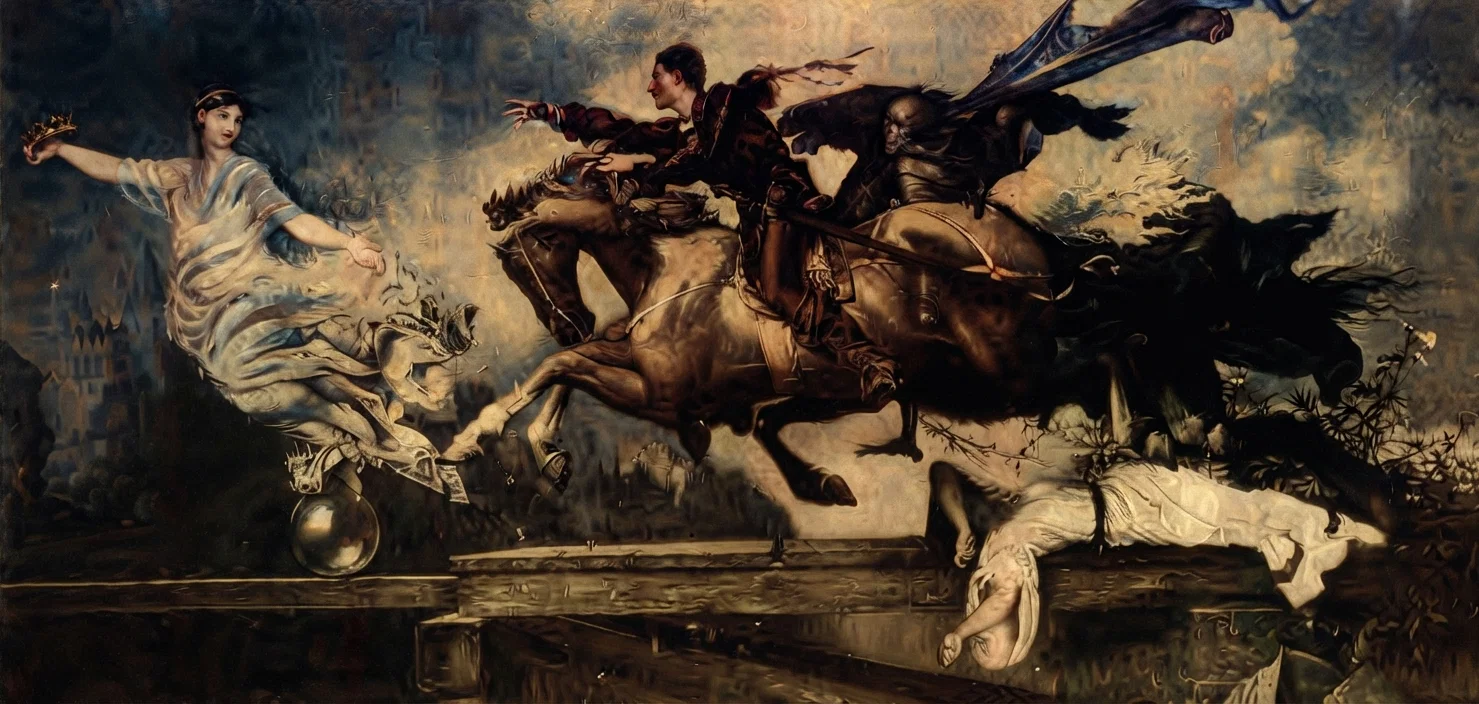
ALL mankind desire happiness, and nearly all are seeking it in one way or another. As Pope has phrased it: "O happiness, our being's end and aim! Good, Pleasure, Ease, Content! whate'er thy name; That something still which prompts the eternal sigh, For which we bear to live, or dare to die." And yet we never find happiness by seeking it. There is no particular, fixed spot in the universe where it is lodged. It is found nowhere, and yet almost everywhere. Lucifer did not find it in heaven. Some men seek happiness in the low things of life. Cowper says of the French: "The Frenchman, easy, debonair, and brisk, Give him his lass, his fiddle, and his frisk, Is always happy, reign whoever may, And laughs the sense of mis'ry far away." But there is scarcely a land of earth which has seen more misery than la belle France. What a low view of life is this, that finds its chief happiness in tea: "Tea! thou soft, sober, sage, and venerable liquid, . . . thou female tongue-running, smile-smoothing, heart-opening, wink-tippling cordial, to whose glorious insipidity I owe the happiest moment of my life, let me fall prostrate." And Samuel Johnson expressed about the same thought:
THE PURSUIT OF HAPPINESS
"There is nothing which has yet been contrived by man, by which so much happiness is produced as by a good tavern or inn." This is the happiness of the sensuous man, the flesh-fed happiness of the beast. To those who have tasted of the higher good, this low, mere body-sense happiness is, in the words of George Eliot: "The worst of misery . . . When a nature framed for noblest things Condemns itself in youth to petty joys, And, sore athirst for air, breathes scanty life Gasping from out the shallows." The mere happiness of sense is, indeed, a "gasping from out the shallows," not knowing the joys of the great depths. Nor can we single out great and good things, and say we will reach perfect happiness in one or more of them. Ben Jonson has well said: "True happiness Consists not in the multitude of friends." It is not to be found in great wealth or power or fame. So Shelley has sung: "Ye seek for happiness — alas, the day! Ye find it not in luxury, nor in gold, Nor in fame, nor in the envied sway For which, O willing slaves to Custom old, Severe taskmistress! ye your hearts have sold." How all this is demonstrated in the gilded, luxurious, sumptuous misery of the rich at the present time!
"Can wealth give happiness? look round and see What gay distress! what splendid misery! Whatever fortunes lavishly can pour, The mind annihilates, and calls for more." — Young. Perpetual solitude does not give happiness, tho thousands have sought and are still seeking it in that way, but never finding. "Knowledge," says the great Byron, "is not happiness, and science but an exchange of ignorance for that which is another kind of ignorance." And he whose name and fame men have praised, thus sang the language of his own sad life: "There comes Forever something between us and what We deem our happiness." And so the great world goes on in its mad or wearisome pursuit of happiness — "Toiling on and on and on, With breaking heart, and tearful eyes, The secret longings that arise, Which this world never satisfies! Some more, some less, but of the whole Not one quite happy, no, not one!" And with the little happiness, there is always the great fear, expressed by a witty French writer: "We must laugh before we are happy, for fear we die before we laugh at all." "There comes forever something between us and what we deem our happiness."We make that something other than it is. We promise ourselves that sometime — "that far distant sometime" — we shall secure happiness. Knowledge or wealth, or fame or pleasure; at times we get glimpses of it, but "the highest happiness, the purest joys of life [which the world knows], wear out at last."
Why the vain pursuit? Why the disappointment? The answer is summed up in one short word — SELF. Real happiness is not dear, but it never can be found by selfish seeking, never can be bought by selfish gold. It can never be found within ourselves, or for ourselves. O, "how dearly we pay for its counterfeit"! But God can not give happiness to him who selfishly seeks it; for selfishness is sin, and sin indulged or fostered is the murder of the better man; and "Heaven takes care that no man secures happiness by crime." The beginning of the seeking of happiness, soul, roots in repentance toward God for selfish sins. If it be the sincere repentance of faith you will find that — "The liquid drops of tears that you have shed Shall come again, transformed to Orient pearl, Advantaging their loan with interest Of ten times double gain of happiness." In true humility you will take God's way instead of your way. A view of our selfishness and God's goodness may tumble us into the dust, but in it you will find "the blessedness of being little." In God's service we will find that the first things in the entrance of the way to happiness are the paths of Duty-doing and Cross-bearing. We must enter them forgetful of self, forgetful of consequences, forgetful of our desire even to be happy. Upon the road we shall find pilgrims with burdens; we must share our blessings, help lift their burdens.
"All who joy would win Must share it. Happiness was born a twin." "Happiness seems made to be shared." The doing of duty will bring joy to the true heart, and the happiness will ever be doubled by sharing it. If we love God, if we choose His ways, if we count virtue and piety and righteousness first, we will find in the unselfish, self-forgetting doing the highest happiness. If an old heathen philosopher (Seneca) could write: "No man can live happily who regards himself alone, who turns everything to his own advantage. Thou must live for another if thou wishest to live for thyself," how much ought Christians to find joy in following Jesus Christ, without thought of self. In so doing, the most onerous, disagreeable service becomes a joy; the happiness of others our delight. Without seeking happiness, it comes into our heart, lights up all the dark corners, and irradiates the whole being. If we wish it to abide, we must go on in the same way. Happiness will not abide with him who is satisfied. Active, unselfish living for God and humanity will bring abiding happiness here and hereafter. "There is no other way but God's way."

Aid for the Tempted

By Mrs. E. G. White
WHEN Adam was assailed by the tempter in Eden, he was without taint of sin. He stood before God in the strength of perfect manhood. All the organs and faculties of his being were equally developed and harmoniously balanced.
Christ, in the wilderness of temptation, stood in Adam's place, to bear the test he failed to endure. Here Christ overcame, in the sinner's behalf, four thousand years after Adam turned his back upon the light of his home. Separated from the presence of God, the human family had been departing, each successive generation, further from the original purity, wisdom, and knowledge which Adam possessed in Eden. Christ bore the sins and infirmities of the race as they existed when He came to the earth to help man. In behalf of the race, with the weaknesses of fallen man upon Him, He was to stand the temptations of Satan upon all points on which man could be assailed.
Adam was surrounded with everything his heart could wish. Every want was supplied. There was no sin, and no signs of decay in glorious Eden. Angels of God conversed freely and lovingly with the holy pair. The happy songsters caroled forth their free, joyous songs of praise to their Creator. The peaceful beasts in happy innocence played around Adam and Eve, obedient to their word. Adam was in the perfection of manhood—the noblest of the Creator's works. He was in the image of God, but a little lower than the angels.

Great Contrast

What a contrast the second Adam presented, as He entered the gloomy wilderness to cope with Satan single-handed! Since the fall, the race had been decreasing in size and physical strength, and sinking lower in the scale of moral worth, up to the period of Christ's advent to the earth. In order to elevate fallen man, Christ must reach him where he was. He took human nature, and bore the infirmities and degeneracy of the race. He who knew no sin, became sin for us. He humiliated Himself to the lowest depths of human wo, that He might be qualified to reach man, and bring him up from the degradation in which sin had plunged him.

Christ Took Our Nature

"For it became Him, for whom are all things, and by whom are all things, in bringing many sons unto glory, to make the Captain of their salvation perfect through sufferings."
"And being made perfect, He became the Author of eternal salvation unto all them that obey Him."
"Wherefore in all things it behooved Him to be made like unto His brethren, that He might be a merciful and faithful High Priest in things pertaining to God, to make reconciliation for the sins of the people. For in that He Himself hath suffered being tempted, He is able to succor them that are tempted."
"For we have not an high priest which can not be touched with the feeling of our infirmities; but was in all points tempted like as we are, yet without sin."
In the wilderness of temptation, Christ was without food forty days. Moses had, on especial occasions, been thus long without food. But he felt not the pangs of hunger. He was not tempted and harassed by a vile and powerful foe, as was the Son of God. He was elevated above the human, and especially sustained by the glory of God which enshrouded him.

Satan's Confidence

Satan had succeeded so well in deceiving the angels of God, and in ruining noble Adam, that he thought he should be successful in overcoming Christ in His humiliation. He looked with pleased exultation upon the result of his temptations, and the increase of sin in the continued transgression of God's law, for more than four thousand years. He had worked the ruin of our first parents, and brought sin and death into the world, and led to ruin multitudes of all ages, countries, and classes. By his power he had controlled cities and nations, until their sin provoked the wrath of God to destroy them by fire, water, earthquakes, sword, famine, and pestilence. By his subtlety and untiring efforts, he had controlled the appetite, and excited and strengthened the passions, to so fearful a degree that he had defaced, and almost obliterated, the image of God in man. His physical and moral dignity were in so great a degree destroyed that he bore but a faint resemblance in character, and noble perfection of form, to the dignified Adam in Eden.
At the first advent of Christ, Satan had brought man down from his original, exalted purity, and had dimmed that golden character with sin. The man whom God had created a sovereign in Eden, he had transformed into a slave in the earth groaning under the curse of sin. The halo of glory, which God had given holy Adam to cover him as a garment, departed from him after his transgression. The light of God's glory could not cover disobedience and sin. In the place of health and plenitude of blessings, poverty, sickness, and suffering of every type, were to be the portion of the children of Adam.
Satan had, through his seductive power, led men to vain philosophy, to question, and finally disbelieve, the divine revelation and the existence of God. He looked abroad upon a world of moral wretchedness, and a race exposed to the wrath of a sin-avenging God, with fiendish triumph, that he had been so successful in darkening the pathway of so many, and had led them to transgress the law of God. He clothed sin with pleasing attractions, to secure the ruin of many.

Satan's Most Successful Scheme

But his most successful scheme in deceiving man, has been to conceal his real purposes and his true character, by representing himself to be man's friend—a benefactor of the race. He flatters men with the pleasing fable that there is no rebellious foe, no deadly enemy that they need to guard against, and that the existence of a personal devil is all a fiction; and while he thus hides his existence, he is gathering thousands under his control. He is deceiving many, as he tried to deceive Christ, telling them that he is an angel from heaven, doing a good work for humanity. And the masses are so blinded by sin that they can not discern the devices of Satan; and they honor him as they would a heavenly angel, while he is working their eternal ruin.
Christ had entered the world as Satan's destroyer, and the Redeemer of the captives bound by his power. He would leave an example, in His own victorious life, for man to follow, and thus overcome the temptations of Satan. As soon as Christ entered the wilderness of temptation, His visage changed. The glory and splendor which were reflected from the throne of God and His countenance, when the heavens opened before Him, and the Father's voice acknowledged Him as His Son in whom He was well pleased, were now gone. The weight of the sins of the world was pressing His soul, and His countenance expressed unutterable sorrow, a depth of anguish that fallen man had never realized. He felt the overwhelming tide of wo that deluged the world. He realized the strength of indulged appetite and unholy passions, which controlled the world, and had brought upon man inexpressible suffering. The indulgence of appetite had been increasing and strengthening with every successive generation since Adam's transgression, until the race was so feeble in moral power that they could not overcome in their own strength. Christ, in behalf of the race, was to overcome appetite, by standing the most powerful test upon this point. He was to tread the path of temptation alone, and there must be none to help Him—none to comfort or uphold Him. Alone He was to wrestle with the powers of darkness.

In Man's Behalf

As in his human strength man could not resist the power of Satan's temptations, Jesus volunteered to undertake the work, and to bear the burden for man, and overcome the power of appetite in his behalf. In man's behalf, He must show self-denial, perseverance, and firmness of principle, paramount to the gnawing pangs of hunger. He must show a power of control stronger than hunger and even death.
The humanity of Christ reached to the very depths of human wretchedness, and identified itself with the weaknesses and necessities of fallen man; while His divine nature grasped the Eternal. His work, in bearing the guilt of man's transgression, was not to give him license to continue to violate the law of God; for transgression made man a debtor to the law, and Christ Himself was paying this debt by His own suffering. The trials and sufferings of Christ were to impress man with a sense of his great sin in breaking the law of God, and to bring him to repentance and obedience to that law, and through obedience to acceptance with God. He would impute His righteousness to man, and so raise him in moral value with God that his efforts to keep the divine law would be acceptable.

The Promised Seed

By J. N. Loughborough
We noted in a former article, that what man lost in the fall is to be restored through Christ's sacrifice. We find, indeed, a promise of this connected with the condemnation of the serpent (that old serpent, the devil. Rev. 12:9). In the Garden of Eden, the Lord said to him, 'I will put enmity between thee and the woman, and between thy seed and her Seed; it shall bruise thy head, and thou shalt bruise His heel.' Gen. 3:15.
How compassionate is our Lord! 'Before they heard of the life of toil and sorrow which must be their portion, or of the decree that they must return to dust, they listened to words that could not fail to give them hope.' ('Patriarchs and Prophets,' p. 66.) How merciful on the part of the Lord, not to tell this now unhappy pair that it would be thousands of years before the state of things they had brought upon the world would be remedied.

Hope Not Deferred

It seemed to be the Lord's purpose not to let hope appear afar off. As the 'Seed of the woman' was to 'bruise the serpent's head,' it would be perfectly natural for Eve to consider her first-born son as the one by whom the restoration was to be effected. So, at the birth of Cain, she said, 'I have gotten a man from the Lord' (Gen. 4:1), that is, the one who will repair the evil we have caused.
She had another son, Abel, who, as the boys grew, was accepted of the Lord in His service. Her hope now seemed to center on him, as we conclude from her words when Seth, her third son, was born. 'For God, said she, hath appointed me another seed instead of Abel, whom Cain slew.' Gen. 4:25.

Expecting the Promised One

When families multiplied, the people must have been in suspense as to what family should be blessed with the promised Seed—the Restorer. We come to the days of Abraham, to whom the Lord said, 'In thy Seed shall all the nations of the earth be blessed.' Gen. 22:18. These words related to Isaac, who was miraculously borne by Sarah. All was not to be accomplished in Isaac individually, but in the line of his posterity; for it was also said to Isaac, 'In thy Seed shall all the nations of the earth be blessed.' Gen. 26:4. To Isaac's son Jacob it was said, 'In thee and in thy Seed shall all the families of the earth be blessed.' Gen. 28:14. Now, as Jacob had twelve sons, which is the one from whom to expect the deliverance? Near the close of Jacob's life, moved by Inspiration, he spoke of the future of his sons, and said of Judah, 'The scepter shall not depart from Judah, nor a lawgiver from between his feet, until Shiloh [Shiloh—'rest in Messiah,' Smith's 'Bible Dictionary'] come; and unto Him shall the gathering of the people be.' Gen. 49:10.
Thus matters stood until the days of David, about 1042 B.C., when, through Nathan the prophet of God, this message was given to David, 'I will set up thy Seed after thee. . . . Thy throne shall be established forever.' 2 Sam. 7:12, 16. David refers to this in these words, 'Thou spakest in vision to Thy holy one [Nathan the prophet], and saidst . . . I have found David My servant. . . . His Seed also will I make to endure forever, and His throne [the throne of his Seed] as the days of heaven. . . . His Seed also will I make to endure forever, . . . and His throne as the sun before Me. It shall be established forever as the moon, and as a faithful witness in heaven.' Ps. 89:19, 20, 29, 36, 37. This language could not be applied to any human ruler, for in this same psalm the Lord speaks of this Ruler as 'My First-born.' Verse 27. In Paul's writings, he declares Christ as 'the First-born among many brethren' (Rom. 8:29); and 'the First-born from the dead.' Col. 1:18. David himself, speaking of this coming Ruler, calls Him 'Lord,' 'The Lord said unto my Lord, Sit Thou at My right hand, until I make Thine enemies Thy footstool.' Ps. 110:1.

The Tower of the Flock

When we come down to the days of Micah the prophet, 750 B.C., in speaking of this expected Ruler he says, 'And Thou, O Tower of the flock, the stronghold of the daughter of Zion, unto Thee shall it come, even the first dominion.' Micah 4:8. This certainly looked forward to the work of the Seed, and the restoration of the dominion lost by Adam. That they now expected immediate deliverance, is evident from the words of Hezekiah when he was restored from death's door. He said, 'In the cutting off of my days, I shall go to the gates of the grave. . . . I shall not see the Lord, even the Lord, in the land of the living. I shall behold man no more with the inhabitants of the world.' Isa. 38:10, 11. In 713 B.C., Isaiah gave this testimony, 'And there shall come forth a rod out of the stem of Jesse, and a Branch shall grow out of his roots.' Isa. 11:1. And in the same chapter he speaks of the glorious state of things under this Ruler. This he treats at still greater length in the thirty-fifth chapter. In the fifty-third chapter he tells of the treatment that He should receive, and the offering of Himself for mankind.
Coming to 599 B.C., Jeremiah says, 'Behold, the days come, saith the Lord, that I will raise unto David a righteous Branch, and a King shall reign and prosper. . . . And this is His name whereby He shall be called, THE LORD OUR RIGHTEOUSNESS.' Jer. 23:5, 6. The margin of this text is Jehovah-tsidkenu. (See also Jer. 33:16, with margin.) As yet there had been no time indicated when this true Seed should appear in the world.

A Definite Prediction

In 553 B.C. Daniel had a vision of persecuting powers, and hears a question as to the length of that warfare, and a reply, 'Unto two thousand and three hundred days; then shall the sanctuary be cleansed.' Dan. 8:13, 14. In the next chapter is an explanation given by the angel Gabriel, showing that seventy weeks [Hebrew, shevooim—weeks of years] are cut off on His people, and that they will begin when the command goes forth to restore and build Jerusalem, which city was then in ruins.Sixty-nine, of those weeks of years, 483 years, would extend to Messiah the Prince. Dan. 9:24-26. That decree for restoration was passed 457 B.C., as recorded in the seventh chapter of Ezra. The 483 years from that date would extend to A.D. 26. At that time Christ was baptized by John the Baptist and anointed by the Holy Spirit resting upon Him in the form of a dove. He entered upon His ministry at the exact time predicted by the prophet Daniel, and said, 'The time is fulfilled, and the kingdom of God is at hand: repent ye, and believe the gospel.' Mark 1:15. And 'the Spirit of the Lord is upon me, because He hath anointed me to preach the gospel. . . . And He began to say unto them, This day is this scripture fulfilled in your ears.' Luke 4:18, 21.

The Apostles Recognized Him

The apostles recognized Christ as the true Seed. Peter thus spoke on the Day of Pentecost, 'David, . . . being a prophet, and knowing that God had sworn with an oath to him, that of the fruit of his loins, according to the flesh, he would raise up Christ to sit on his throne; he seeing this before spake of the resurrection of Christ, that His soul was not left in hell, neither His flesh did see corruption.' Acts 2:29-31.
Paul also, in speaking of David, said, 'Of this man's Seed hath God according to His promise raised unto Israel a Saviour, Jesus.' Acts 13:23. To the Romans he said, 'His [God's] Son Jesus Christ our Lord, which was made of the seed of David according to the flesh.' Rom. 1:3. To Timothy he wrote, 'Remember that Jesus Christ of the seed of David was raised from the dead according to my gospel.' 2 Tim. 2:8. To the Galatians he made a statement that must be final, and fully settle this question as to the Seed: 'Now to Abraham and his Seed were the promises made. He saith not, And to seeds, as of many; but as of one, And to thy Seed, which is Christ.' Christ is the promised Seed.

Pray Until You Feel Victorious

—★—
With deep earnestness would I urge you to pray,—habitually, reverently, trustfully, and pray to your heavenly Father,—and never rise from your knees until you feel that you rise victorious, and that you too have been saying to God in the heartfelt purpose which gave might to the older patriarchs, "I will not let Thee go, except Thou bless me."—F. W. Farrar.

Look Upward

—★—
"WHEN we can not look forward or backward, we can look upward."

Beware of Calms

“BEWARE of calms in any form; this life means action.”

A Bible Study on Man

II. What Man Lost by Sin

DID man lose or gain through his introduction of sin into the world? It would seem that there could be but one answer to this question. Sin is the inexcusable thing. That is what makes it sin. As the apostle Paul in the book of Romans declares — tho I do not couch it in his words — sin is that which causes what was intended for life to produce death instead. In other words, it is the great power of perversion, of destruction.
But all do not realize the heinous character of sin. Seeing it constantly about them, and experiencing it in their own lives, they become familiar with it and deceived by it. This is the deceitfulness of sin spoken of in the Word. And this explains why we have expressions on the part of men to-day that really revoice the argument of the devil when he first came to the human race in the Garden of Eden.
When establishing the Eden state, God had given only one test upon the loyalty and obedience of man. He had placed one tree against which prohibition was made. There was nothing peculiar about this tree. It was not poisonous in its fruit. There was nothing about the fruit to affect the mind or the body. It had in it no elements of providing wisdom, or even exhilaration. It was simply a test on man's obedience. The Lord had made all things and given them all over to man, that he might have dominion over the whole creation, reserving only the one tree, — this was God's. And thus alone could man be tested in the matter of rights of property.
Hence, it was not that he was to get from the tree anything intrinsically good or bad, but that in observing the prohibition he recognized God's ownership, not only of the tree, but of himself, and showed his confidence in his Creator by observing what he knew to be right. When man disobeyed and took what did not belong to him, it was a distrust of God's goodness, and disbelief in God's words, and a rejection of God's authority. This distrust and disbelief and rebellion made man a transgressor, and brought an experience with evil itself into the world.
This tree, around which a barrier of prohibition was thrown by the Creator, was called the "tree of knowledge of good and evil." It was not, as some seem to think, an endeavor to employ a means of advancement, a source of knowledge; but it stood in the way of man's experiencing evil. When man took unlawfully its fruit, he obtained in that act, which was an act of his own and not any power derived from the tree, an experience in rebellion, in disbelief, and in distrust. He mingled and formed into a compound what forever should have been absolutely separate, that is, good and evil. By this act of sin, man had brought into all the good which he had previously experienced, a new experience and a new knowledge in things evil.
As the poisoner's most successful means of destroying the life of his victim is by putting poison with food, so Satan had most effectually ruined man by getting him to find evil in that which was intended to be only for his good. God can know both good and evil by foreseeing even the end from the beginning of every act. He does not need to experience this to know it; for a knowledge of the results of all conduct lies within the prescience of God. But for man to seek to attain to a knowledge of good and evil he does not, like God, trace out its results and see its consequences while separate from it, but becomes acquainted with it, receives a knowledge of it, by taking it into his very bosom. Man's knowledge of sin comes from his experience with it, and in feeling and realizing its awful, degrading, destructive, and deadening effects.
And so the promise of Satan that man should reach exaltation and a higher plane of existence by obtaining the knowledge of good and evil, was nothing but devil's bait to fool and ruin man. What seems like desirable knowledge, is found in fact to be only ruinous experience.
And yet there are men to-day who still believe the doctrine of the devil. No less a writer than John Fiske, the historian, a man who prided himself in his own way in being a defender of Christian faith, argues very much as the devil did in the beginning. He makes the statement that "there is a sense in which we may regard the loss of Paradise as in itself the beginning of the rise of man." ("Through Nature to God," p. 7.)
In other words, the fall of man was a fall upward. When man tumbled, he tumbled forward and upward to higher and better things. How does he make this out? He tells us why he believes this: "What would have been the moral value or significance of a race of human beings ignorant of sin, and doing beneficent acts with no more consciousness or volition than the deftly contrived machine that picks up raw material at one end and turns out some finished product at the other? Clearly, for strong and resolute men and women, an Eden would be but a fool's paradise. How could anything fit to be called character ever have been produced there? But for tasting the forbidden fruit, in what respect could man have become a being of higher order than the beasts of the field?" ("Through Nature to God," pp. 38, 39.)
And here is some specious reasoning. This author deliberately states that experience in sin is necessary in man for man to be anything but a fool. His reason for coming to this conclusion is to justify the tenets of evolution. He believes that man must develop upward, and that sin is not really sin at all, but one of the means to man's advancement. Because it came from the devil, and belongs to the devil's mind and thought, this doctrine that sin and a knowledge of sin is advancement, is devilish doctrine. What Mr. Fiske is really arguing for here, is that man would have been a fool or a machine if he had not been tested. But when the test came, when the prohibition against the eating of the tree was made, had man by his own choice refused to partake of it, there is no sense whatever in which man could be called a machine. It is true that he would not know entirely the full significance of his act, and would therefore have to trust in the goodness of God, and believe the Word of God, and remain loyal to God. But that condition is just as necessary to-day for man to get out of sin as it was before to keep man out of sin. No man can go upward, or is going upward, while he is actually experiencing transgression and disobedience; and if he ever gets away from sin and from transgression and disobedience, he has to come to a place where he is willing to trust the goodness of God, to believe implicitly in the Word of God, and to stand true and steadfast in obedience to God. The conditions on God's part have not changed one iota. They can not change, because they are founded in eternal right and goodness.
But man's condition has changed. What before would have kept him out of sin, must now be accepted by man and lived up to if he would get out of sin.
Man has lost — and so far as he alone is concerned — irretrievably lost, through sin. "The wages of sin is death." In fact, sin is nothing more nor less than a process of death. Death is a part of sin; it is not something tacked onto it by the arbitrary authority of God. Therefore man lost life through sin, and he lost life forever throughsin, that is, so far as he alone is concerned.
But this loss of life was in source and fact a loss of nature. When God viewed His whole creation, including man, He declared it very good; but through sin that which had been very good now became bad, and very bad. But as man could not see it, as he could not understand and enter into the knowledge and judgment of God, the human race were allowed to exist by God's forbearance, that sin might work out and show itself exceeding sinful.
And because man had shown that he could not control himself, his power of control over creation was taken away almost completely. Whereas, before all things were put under him, Inspiration says, "We see not now all things put under him."
All this man lost through sin—his character, his dominion, and his life; and had there not been found a Man who as a man could have come into the world and fought the battle anew and fought it to a complete and glorious victory, all these things would have been lost to all eternity. But the Man Christ Jesus stood the test,—showed in His human life on earth trust in God's goodness, and belief in God's Word, and a steadfast loyalty. These He now offers to every son and daughter of Adam. It is Christ's doing the will of God that sanctifies us. Heb. 10:10. And so tho it is a fact that through man came death, also through man comes life. As Adam bequeathed his sinful nature to man, so Christ now offers His divine nature also to man. And tho the conditions of our natural birth are not all that we would have them, the conditions of the spiritual birth meet all the demands of human condition. The first man was made a living soul, but the second Man is a quickening Spirit. May we receive of His life-giving power, and triumph over the calamity of sin!

Two Prisons

By Clara Edna Rosecrans
There is a strange old legend Told of a long gone time— Told of a day quite vanished, Told of a far-off clime. True it may be in portion, True in the lesson taught; Big with eternal issues, Fearful with soul-life fraught.
Shut in an iron prison— Ages long gone by— Doomed to a life of terror, Doomed in that cell to die; Seeing the walls come nearer— Nearer, more near each day— Knowing they were remorseless, Somber and cold and gray.
Feeling sure death approaching, Watching with wide, wild eyes, Torture of anguish nameless, As the winged hour flies. Inward the walls come slipping— Caught in their fearful thrall; Death ends the pain of living; Man becomes part of wall.
Such is the strange old legend: Prisoner in iron cell— Untold death, still living, Tortures of damned in hell. Now—in the time we're living— Such is the fate of some; Caught in an iron prison— Held by the power of rum.
Knowing that death comes nearer— Horrible! fiend-enthralled! Watching with wild eyes bloodshot, Hopeless and more appalled. Only ONE man in legend, Only ONE life to go— Millions in rum's foul prison, Fated to sorrow and wo.
Only ONE death in dying— Innocent heart and hand— Hope of a resurrection; Life that was pure and grand. Sad in their fearful contrast, Thus the two prisoners stand, One in the cold, dark ages, One in a Christian land.
Hopeless, helpless, imprisoned, Rum-walls hold one fast— Walls that crush out manhood— Utter destruction at last! O, let us rise and save them, Hurling the walls each way! Samson, our country needs you; Come to our help, we pray.
Anguish of wives and children Manhood with demons fraught, Bartered for hell and madness— Those whom Christ's blood hath bought. Out with the dreadful monster! Rum and its fiends of hell! Temperance, queen of our nation, Ever with us shall dwell.
Jesus, Thou mighty Saviour, Open the prison wide! Liberty, life, and blessing, Enter a mighty tide! So shall the stain be canceled Of ages as dark as night; Land of a pure, true manhood Filled with sweetness and light.
Life Boat Mission, Springfield, Missouri.

Song of Winter

By Benjamin Phillips
The cold winds blow, The shifting snow Fills all the valley lands below. On mountains high, Where clouds whirl by, There is no sign that spring is nigh.
No song of bird Or cheerful word Among the wintry wastes is heard; But hungry deer Devoid of fear Trail down ravines and hillsides near.
Sometimes the howl Of wolves that prowl Resounds to mock the hooting owl— O winter bleak— Both strong and weak Must bear alike thy whim and freak!
But soon again O'er peak and plain Delightful spring shall come to reign; We then shall praise In many ways The One who gave these cheerful days.

Workers with Him

(R. Wright Hay, in "Missionary Magazine")
The night lies dark upon the earth, and we have light; So many have to grope their way, and we have sight; One path is theirs and ours,—of sin and care,— But we are borne along, and they their burdens bear. Footsore, heart-weary, faint they on their way, Mute in their sorrow, while we kneel and pray; Glad are they of a stone on which to rest, While we lay pillowed on the Father's breast.
Father, why is it that these children roam, And I with thee, so glad, at rest, at home? Is it enough to keep the door ajar, In hope that some may see the gleam afar, And guess that it is home, and urge their way To reach it, haply, somewhere and some day? May I not go and lend them of my light? May not mine eyes be unto them for sight? May not the brother-love Thy love portray, And news from home make home less far away?
Yes, Christ hath said that as from Thee He came To seek and save, so hath He, in His name, Sent us to these; and Father, we would go, Glad in Thy love that Thou hast willed it so, That we should be partakers in the joy Which even on earth knows naught of earth's alloy,— The joy which grows as others' griefs grow less, And would not live but for its power to bless.

"Then You and I and All of Us Fell Down"

By Delwin Rees Buckner
As, shaken from its branch invisible, A milky comet plunges down through space, Loud hissing as it speeds at lightning pace, So Lucifer, the adversary, fell,— That proud insurgent, tempted to rebel Against God's government, who lost the place That once he held before his Maker's face, But found a world to conquer through his spell. Ah! Woe is mine! My flesh would all be whole Had not man's mother chosen to believe The angel who revealed the flagrant flaw, A cancer in the entrails of his soul, Whose sole vocation e'er is to deceive Those who would cling to God's eternal law.

Why Did Jesus Die?

By Lilla Warren
Why, dear ones, why did Jesus die? What motive could there be To make Him choose the cruel death He bore for you and me?
'Twas nothing else but wondrous love That made the dear Lord die. We all are doomed to death, and He Would our salvation buy.
His love, compared to that of earth, Is greater and more high; He calls to all who wander far, "Return! Why will ye die?"
He says: "A mother may forget The child upon her knee, And not compassion have, but I Will never forget thee.
"Thy name is graven on My hands (Love greater none can find); And tho thy sins are very great, I'll blot them from My mind.
"I am thy Husband and thy God, For I have married thee. Tho thou hast turned to other loves My love is true for thee.
"They say a man will spurn his wife Whom once he put away; But thou art Mine. Return to Me, I love the same to-day!"
Ah, this is why our Jesus died For sinners just like me,— He loves us with so great a love, He came to set us free.
Continue reading: Thanksgiving Hymn