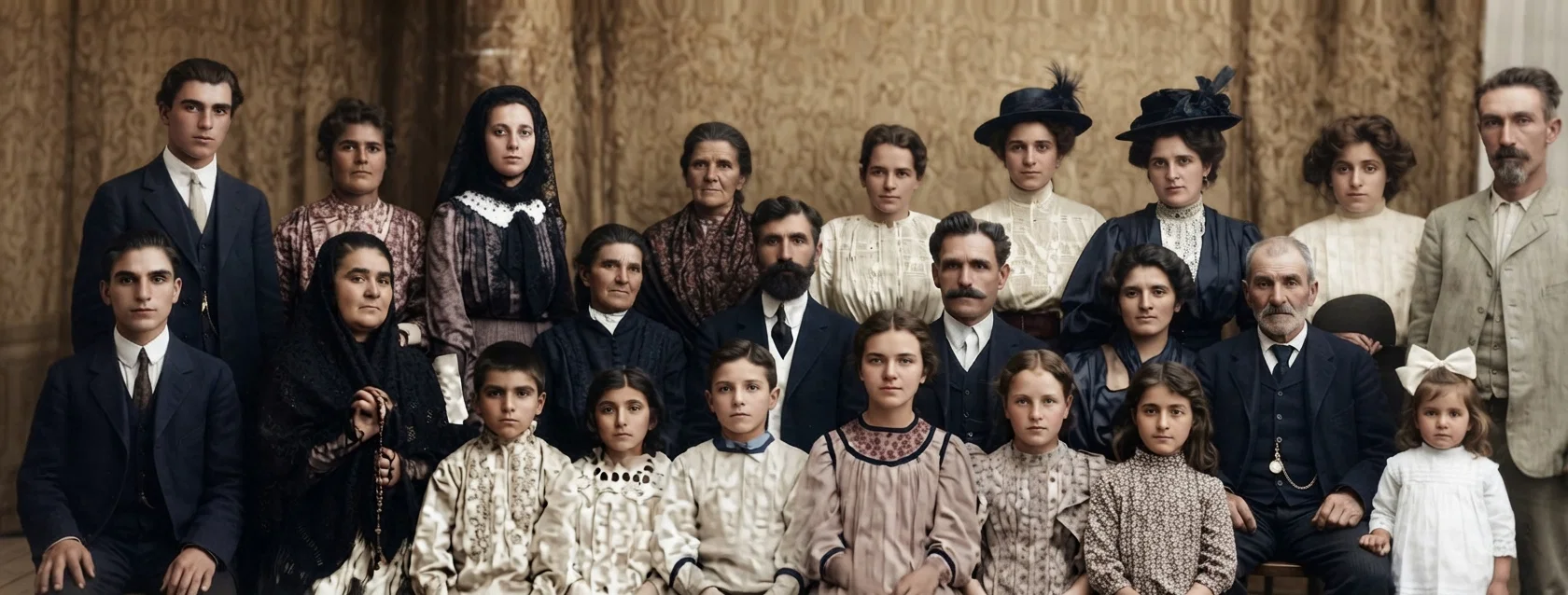
ACCOMPANIED by my wife and little boy, I came to Murcia June 5. The Lord has blessed the efforts of our Bible worker, Brother Lope Nicolas, in this city. In the latter part of March I had the privilege of baptizing three dear believers here, and this morning, June 15, four more followed their Lord in this sacred rite. The occasion was one which we shall long remember. The country surrounding the city of Murcia is extremely productive and very pretty; and when, at four o'clock, we were making our way to the place of baptism, all nature seemed to be rejoicing with us. The chosen spot was a retired one on the banks of the beautiful river Segura, which flows through the city. A bamboo grove along the river at that point makes a very desirable place for baptism. The four candidates were a mother and daughter, and two young men. The two women were strong Catholics when the light of present truth began to shine into their hearts. An uncle of the elder of these two sisters, who is a Roman Catholic priest, has a custom of visiting these relatives every day. As our worker studied the different points of the message with them, the Catholic Bible was brought into use. Had it not been for this instrument, it would probably have been very difficult to convince them of their erroneous ways.
GROUP OF WORKERS AND BELIEVERS IN SPAIN
How evident it is that God is going before his chosen people to-day in all lands, preparing the way for a quick work in the earth! The Word of God is the sword of the Spirit; and whether a Catholic version of the Bible, or some other version, the Holy Spirit is using its sword to-day, gathering out God's remnant people from all lands.
One of the men baptized had been a fervent Catholic; the other had been baptized a Catholic; but for several years his parents have been Protestants, and he naturally favored Protestant principles. His mother is a member of the Seventh-day Adventist Church. She was received into church fellowship one year ago. The father is much interested in the truth, and may begin to obey soon. Others are also interested here in Murcia. We desire an interest in the prayers of God's people for his continued blessings upon the various efforts being carried forward in Spain.
Smaller Unoccupied Mission Fields Waiting
By J. N. Anderson
J. N. ANDERSON
APART from the unreached millions of Central Asia (35,000,000) and the still larger masses of benighted peoples in the heart of Africa (50,000,000), there are scores of smaller areas in different parts of the heathen world where millions are waiting for the pioneer missionary who for the love of souls will gladly carry the gospel of healing to the remotest parts.
In the Malay Peninsula are four large districts that have recently come under the British flag, aggregating in population about 1,000,000. In none of these have we begun missionary operations.
A population of 21,500,000 is to be found in French Indo-China which, but for the presence of one solitary mission station with four workers, must be classed as unentered territory.
On the eastern half of Sumatra, together with some of the adjoining islands, are to be found 3,200,000 souls untouched by the gospel of our Saviour.
The central and western parts of the island of Borneo are still pagan, and no messenger of Christ is among the 400,000 in those regions.
Madura Island, just off the northeast coast of Java, together with Sumbawa, Flores, Timor, Bali, and Lombok Islands, strung along to the southeast and representing a population of 2,000,000, are without a single witness for the truth. These peoples are either already in the grasp of Islam or fast falling under the power of the false prophet.
The entire central and southern part of Celebes (east of Borneo), with a population of at least 200,000 distributed over a large area, has no messenger of the Great King. Still farther east, the island of Ceram, in the Molluca group, is an unentered field. In northern and central Papua, or New Guinea, a large area, with an unknown population, is another untouched field—the objective mission field of the great missionary, James Chalmers, who died a martyr a few years ago.
A population aggregating about 127,000, mostly Mohammedans, is to be found in the Sulu Archipelago, the Palawan and the Tawi-Tawi groups in the Philippine Islands. They have no missionary. Besides, there is the island of Samar, with a population of 266,000, in the same plight. Buka and Bougainville, in the Solomon Islands group, having a population of 60,000; and Socotra Island, south of the Arabian peninsula, once Christian and now wholly Moslem, are waiting for the first missionary.
In this connection should be mentioned the three great provinces of Nejd, Hedjaz, and Hadramaut, in Arabia, peopled with about 4,000,000. No missionary is there. In old Syria east of the Jordan are sections of country whose populations aggregate 500,000, and these all wait for the gospel. The Sinaitic Peninsula, the ancient land of Midian, where Moses cared for the sheep of his father-in-law, has 50,000 souls, but no spiritual shepherd.
Passing once more up toward the "roof of the world," we find there right under the eaves as it were, two independent kingdoms not included in the masses of Central Asia. Both of these kingdoms are unentered territory. Nepal, about 500 miles long from east to west and 150 miles broad, with an area of 54,000 square miles, has a population of about 5,000,000, mostly of the Hindu faith and descent. Nestled within the Himalayan range of mountains, is the little kingdom of Bhutan, 160 miles long by 90 miles wide, with a population of at least 300,000. It lies between Tibet and Assam, resembling the former in government and religion, though far in advance of that land in point of fertility, progress, and civilization. But it has been absolutely closed to all foreigners for centuries.
Crossing over from Asia to Africa and Madagascar, we find here, also several of those smaller areas, not included in that vast sweep of the untouched interior. The large island of Madagascar, now under French control, has for some time been in the class of entered fields, but its slender force of workers is so located that the larger part of the island is an unentered field.
In West Africa there are great gaps between the few mission stations; and the same is true in the Portuguese territories on the east and the west coasts, so making extensive districts where the gospel has not yet been carried.
North Africa is nominally an occupied mission field, but the pathetic fact remains that a mere handful of missionaries are so widely distributed over that vast stretch of territory, once Christian, so far apart and so slenderly manned, that the many large untouched areas make North Africa practically an unoccupied field.13
To summarize: this hasty survey of the two greatest continents of the world sets before us the very impressive and overwhelming figures representing in the aggregate not less than 60,000,000 souls in Asia and 70,000,000 in Africa who are unreached by any missionary society (Protestant) whatsoever. Nor is this all; these masses are quite outside all the immediate projected plans and hopes of all Protestant missionary societies. These unreached millions are a challenge to the entire Christian world after all these decades of world missions; but what shall we say they mean to us as a people who are looking for the soon-coming King?
But the great problem of fulfilling the commission of our Lord is not confined to the figures and facts set forth in the foregoing paragraphs. There is also the great task of fully preaching the message in those lands that are counted as entered and occupied. I am still dealing with the work of Protestant missions in general. In the relatively small field of Japan there are large sections that must be looked upon as unoccupied territory. India is even less adequately manned, leaving millions without resident missionaries. As for the Chinese field, it is perhaps sufficient to say that out of the 2,033 walled cities in the provinces only 476 have missionaries residing in them, nor is this fact so strange when it is remembered that there are only about 4,000 foreign missionaries in China.
Such a picture may, with the first view of it, seem depressing. It may even seem that the world has brought forth masses that yesterday were not. This catalogue of countries, races, and peoples indicated in these brief articles may seem to create a new geography, or to rudely revise the old maps. Such, however, is not the case. These lands and peoples have been just what they are and where they are for generations. Our knowledge has been circumscribed, limited, and hence these peoples have been to us as though they were not. It is of God that our vision of the world and its needs is being cleared. We are called to "look on the fields," not that we may falter and waver, but that we may "pray . . . the Lord of the harvest, that he would send forth laborers;" and this praying must be of such a character that it will, first of all, make us true missionaries at heart, prepared to say with the great apostle to the Gentiles, "So, as much as in me is, I am ready to preach the gospel;" and second, it will drive us to God for the fullest cooperation of the divine. It is not sufficient that we passively follow Jesus, inquiring, as the disciples did, "Wilt thou at this time restore again the kingdom to Israel?" for the same Jesus is still saying to his followers, "Give ye them to eat," "Ye shall receive power," and, "Ye shall be witnesses unto me . . . unto the uttermost part of the earth." Of our Saviour we read, "He shall not fail nor be discouraged, till he have set judgment in the earth: and the isles shall wait for his law."
A Visit to the Somabula Mission
By R. C. Porter
(Concluded)
R. C. PORTER
ON Sunday we had the privilege of baptizing twenty-one students who had decided to renounce heathenism and accept Christ. Of this company twelve were young men and nine were girls. They were all of mature age, and it was a blessed sight to see so many thus turning from heathen darkness to the light of the gospel. Seven of this company had come from the Que Que Reserve, forty miles distant, for the purpose of baptism. This is a sample of the influence of our out-schools in proclaiming the gospel.
On Wednesday we were asked to unite in Christian marriage four couples of our oldest students and workers. It was a great day for our students and the neighbors in the near-by kraals. There were one hundred fifty in attendance at our Sabbath service, and it was estimated that there were as many in attendance at the weddings. The brides and grooms were as neatly dressed as many Europeans on similar occasions. They made a very neat appearance in contrast with their heathen neighbors, who still dress like the aboriginal American Indian. The marriage feast is a great occasion for the natives. They are extremely fond of feasting. Among some of the tribes they have a feast when a child is born, another at the time of marriage, and a great feast at the time of the death of a member of the family. A sheep or a goat is sufficient for a birth or wedding feast or for the death of a child. For a grown person an ox is required for the death feast, and a headman is supposed to have several fat oxen in readiness for his death feast. An important chief will keep as many as sixteen fat oxen in readiness for his death feast. He holds these oxen above price, and will not part with them for any consideration. These death feasts sometimes last a month. The women wail and eat and drink and smoke. The men smoke and drink and eat, but do not wail for the dead. It is the same old custom of the women weeping for Tammuz in ancient heathen times. The wailing is unnatural and forced. Sometimes there are held annual wailing feasts for years after the death of prominent chiefs or other important persons. As the people become more civilized they drop these customs.
One marked feature of the wedding feast at the mission was the contrast between the appearance of the Christian natives and that of the half-naked heathen who came from the kraals in the vicinity of the mission. Some of the guests of the wedding party came with their babies tied on their backs, in the skins of animals. They were as happy in their half-clothed state as any members of the wedding party, as long as they received their full share of the wedding feast.
On Friday Brother Hutchinson and the writer, mounted on two of the best riding donkeys, set out for a ten-mile ride to the farm where Brother and Sister Butterfield make their home. After spending a quiet Sabbath and holding a service for the benefit of the family and their native help, we returned a distance of two miles, when we were joined by Brother Gibson and his family with the ox-team, and we trekked the greater part of the night in order to catch the morning train for Salisbury.
Although this station has to do its work under some disadvantages on account of being unable to procure a title to property in the reserves, yet the results of its work are very satisfactory. The influence of this mission is extending, and there is an urgent call from different sections for the establishing of more out-schools. We are confident that the workers in this mission will wear crowns that will sparkle with as bright jewels in evidence of souls won for the kingdom of God, as will those of workers who labor in more civilized countries for the conversion of more enlightened people. Let all pray for the success of the work in these dark regions where the light of the gospel has never penetrated.
The Philippines
By R. A. Caldwell
R. A. CALDWELL
BATANGAS, the capital of the province of the same name, is quite up to date, in that it has cinematographs, ice, electric plants, and hotels; soldiers also are in evidence. It is four hours by train from Manila, and is on the coast.
During my four years on the islands I have canvassed in eleven provinces. In this province [Batangas] I find considerable resemblance to California, both in its formation and in fertility. The land is rolling, and adapted for general agriculture. Sugar, hemp, and tobacco are the principal products, though large quantities of oranges also are grown. These are of an inferior grade, as they lack attention — as do almost all other things on the islands. In the coffee days, during the eighties, it was a rich section. Evidences of this are seen in the large two- and three-story houses now in neglect. Some fine horses and cattle are seen here. The altitude at the place of writing is 1,100 feet.
It has not been very encouraging for the book work; many are afraid to read any strange or new book. Still our few weeks' trip has not been a failure. Aside from my work, it gave my wife the distinction of being the only foreign lady in the town, and she was not neglected by the children and older inhabitants, who were curious to see her. These people, until a few months ago, had never seen a train, nor any of those evidences of civilization which attend the establishment of railway service.
Making Self-Denial Pleasurable
By Walter Scott
TEACH self-denial and make its practise pleasurable, and you create for the world a destiny more sublime than ever issued from the brain of the wildest dreamer.—Walter Scott.
Staying Up
We often hear the words, "Plenty of room at the top." The following lines are very inspiring when we remember the words of the scripture which says, "The steps of a good man are ordered by the Lord."
You can always take credit and cash and all that.
You can make a man's chances seem utterly flat;
With your gossip and malice his character flay;
But the man isn't down till he's willing to stay.
There are thousands of feet always ready to kick,
And more thousands of tongues fairly itching to prick;
All the faces once friendly turn coldly away;
But the man isn't down till he's willing to stay.
It is human to whine and complain of bad luck,
Deep to sink in the mire in which you are stuck;
But it's better and wiser to rise up and say:
"Here! A man isn't down till he's willing to stay."
—Selected.
Its Quiet Influences
By J. O. Corliss
Home Life — No. 2
Its Quiet Influences
THERE is something about the word home that suggests retirement and quiet. When one has been jostled all the day in the discharge of life's duties, the mere thought of home brings a restful feeling, because it suggests a peaceful respite from busy cares in public labor. This seems most natural when one thinks that the derivation of "home" signifies to enclose. It really means a shut-in place, where one is separate from, and guarded against, all the outside world. It is a sacred seclusion in which one's family dwells; a place of fondest ties, because of its pleasing possessions.
All nature intimates that to secure an ideal home it is necessary to be removed from busy marts and clamorous notes of human accent. The rudest aboriginal, whether animal or human, has ever instinctively sought the most secluded spot as a place of retirement, and a reliable protection for its offspring. This would seem to show that the divine Mind intended home to be a place shielded from the prying eyes and vuglar influences of the world at large.
Every family should have conveniences in the home to insure privacy for its members. One of the chief causes of extended crime in large cities has been found to spring from overcrowded dwellings, where ordinary comforts and conveniences are lacking. But in a city where rents are high, the poorer classes feel obliged to put up with inconvenient homes in order to live within a meager income. But why simply exist after this fashion? Why attempt to rear a family where no scenes of nature ever greet the eye, and where only the fetid breath of immorality is wafted in the morning air?
No city residence in a crowded thoroughfare can be a satisfactory home to one who loves nature. Every house should have ample space about it for a garden in which to grow the beautiful foliage and bright flowers, which may serve to turn the mind in gratitude toward the Creator of all things. This can not well be secured in the condensed residence space of a crowded town, especially by laboring men with scanty means of subsistence. It would be greatly to the advantage of such could they determine to make their homes in the country, and journey to and from the city to their daily work.
It may be objected that houses for rent are not plentiful in the country, and therefore such a proposition is not feasible. But if one would consider the advantage of securing a small home of this kind, and letting his monthly rental be paid toward the permanent possession of it, he would find himself endowed with new energy, and a higher ambition for an ideal home than was ever possible in a congested town. To such a home one could go with joy when the day is done, and greet his family with solid satisfaction, knowing that they have healthier bodies and purer minds for their country life. Besides, it is his own home, and not the possession of another, which he temporarily occupies. It is an anchor to hold him in check amid life's temptations. It is indeed his place of refuge from strife; a rest of pure delights, whose charms prevail against all that worldly pleasure offers or appetite suggests.
In such a home one can have the desired privacy his family interests demand. No one fears that some eavesdropper is catching words intended only for family consideration; and no one is annoyed by a near-by scolding mother or a neighbor's screaming child. Nothing comes there that would affect unfavorably the growing minds of the children, as would likely be the case were the home so exposed on either side and front and rear as to make the place of residence nearly like a great nondescript neighborhood family.
But even in such a location fatal mistakes may be made in arranging a home. Stately furnishings are apt to bring in formality and drive out genuine affection. If embellishments are too numerous or too expensive, children will be constantly warned to be careful not to touch or injure them. This repels the children, and they seek elsewhere the freedom that is denied them in their home. The children should have at least one room in the house in which to romp at pleasure, without fear of being called to order at every sound of innocent tumult.
Every home should be to the children a place to which they will look back with delight after having gone forth from it to make a home for themselves. The entire time of childhood should be a season of home education in which the taste and character have been greatly elevated. The bent of a child's matured life depends more on earlier home surroundings than most parents think. He may have been drilled regularly in the Sabbath-school lessons, and urged to be faithful in church attendance, but if he has missed the loving power of parental tenderness, his home is a cheerless place. This point is well illustrated by Will Carleton in a poem entitled "The Boy Convict's Story." The boy is represented as being in the charge of the sheriff, on his way to prison, when he began to offer advice to the officer as to how best to train his children. A few stanzas are worth repeating here, and well worth remembering. The boy told of all the stern, religious lessons he had received from his parents, and then said: —15
"O, yes! I'd a good enough home, Sir, so far as the house was concerned;
My parents were first-class providers — I ate full as much as I earned.
My clothes were all built of good timber, and fit every day to be seen;
There wasn't any lock on the pantry; my bedroom was tidy and clean;
And taking the home up and down, Sir, I'd more than an average part,
With one quite important exception — there wasn't any room for my heart.
"The house couldn't have been colder with snow-drifts in every room!
The house needn't have been any darker to make a respectable tomb!
I used to stop short on the door-step, and brace up a minute or more,
And bid a good-by to the sunshine, before I would open the door;
I used to feed daily on icebergs, — take in all the freeze I could hold, —
Then go out and warm in the sunshine, because my poor heart was so cold!
"And so, soon my body got hating a place which my soul couldn't abide,
And Pleasure was all the time smiling, and motioning me to her side;
And when I start out on a journey, I'm likely to go it by leaps
For good or for bad; I'm no half-way — I'm one or the other for keeps.
My wild oats flew thicker and faster. I reaped the same crop that I sowed,
And now I am going to market — I'm taking it over the road!
"Yes, it grieved my good father and mother to see me so sadly astray;
They deeply regretted my downfall — in a strictly respectable way;
They gave me some more admonition, and sent me off full of advice,
And wondered to see such a villain from parents so good and precise.
Indeed I have often conjectured, when full of neglect and its smart,
I must have been left on the door-step of their uncongenial hearts!
"My home in the prison is waiting, it opens up clear to my sight;
Hard work and no pay-day a-coming, a close cell to sleep in at night.
And there I must lie sad and lonesome, with more tribulation than rest,
And wake in the morning with sorrow sharp sticking like steel in my breast;
Maybe the strain and the trouble won't quite so much o'er me prevail
As 'twould be to some one who wasn't brought up in a kind of a jail!
"You've got a good home, Mr. Sheriff, with everything cozy and nice,
And 'tisn't for a wrist-shackled convict to offer you words of advice;
But this I must say: Of all places your children must visit or call,
Make home the most pleasant and happy — the sweetest and best of them all;
For the devil won't offer a dollar to have his world chances improved,
When home is turned into a side-show, with half the attractions removed!
"Don't think I'm too bitter, good sheriff — I like you; you've been very good;
I'm ever and ever so grateful — would pay it all back if I could.
I didn't mean to slander my parents — I've nothing against their good name,
And as for my unrighteous actions, it's mostly myself that's to blame;
Still, if I'd had a home — but the prison is only one station ahead.
I'm done, Mr. Sheriff; forget me, but don't forget what I have said."
Mountain View, Cal.
The Noon-Hour Prayer
By Editor
"Evening, and morning, and at noon, will I pray, and cry aloud: and he shall hear my voice." "And the Lord turned the captivity of Job, when he prayed for his friends."
REQUESTS for prayer have come in from many burdened hearts. We present these in brief form for the kind remembrance of the readers of the REVIEW. Make of these requests a midday offering of prayer, remembering each as the Spirit may direct:—
1. A sister in New Hampshire desires healing from a distressing disease which has stubbornly resisted medical treatment. She has reached a condition where her only hope for relief is in the saving power of divine healing.
2. A sister in Alabama, a widow, is likewise suffering. She is in very feeble health, and desires the prayers of God's people in her behalf.
3. A mother in Wisconsin writes of her great burden for her son, a young man of twenty years. He has known the Lord in the past, but the influences of worldly pleasures and sports are drawing him away from the truth. She believes that God, in answer to prayer, will reclaim him to the Master's service.
4. A similar request comes from a mother in Texas who desires prayers for her two sons.
5. From Pennsylvania a brother who has been sick for seventeen years, and unable to stand on his feet, writes desiring that his case be presented to the throne of grace for healing.
6. A similar request for healing comes from a sister in Michigan who has been suffering from blood-poisoning for a number of months, with but little relief from treatments.
7. A sister writes from Ohio, asking that the case of her afflicted daughter, who is in a serious condition, be presented before the throne of grace.
8. From Ohio likewise comes a request from a sister in behalf of her son who, having married outside of the truth, is losing his interest in spiritual things, and is drifting away from God. She desires wisdom to know how to lead him back to the Lord.
9. A sister in Pennsylvania presents the request of one of her neighbors whose daughter has become partially unbalanced as the result of a recent sickness.
10. A sister in Michigan has been sorely afflicted, and earnestly asks for prayers for her restoration. She realizes that there must be cooperation on her part, and that she must walk in obedience to the light of healthful living which God has given to his people.
11. Another sister in Michigan who has been deformed and crippled since early childhood, and who of late is becoming quite helpless, earnestly desires restoration to sound health.
12. From Texas comes a request for prayer in behalf of two men, the husband and the brother-in-law of the sister who writes. These have become discouraged and have gone into the world. Pray that God may lead them back to himself.
13. The hearts of both father and mother are burdened with sorrow in behalf of their little son who is seriously ill with Bright's disease. They turn to what they consider the only source of hope, desiring prayers in his behalf.
14. A sister in Nebraska, whose husband is a drunkard, and whose home, in consequence, is anything but pleasant, desires prayers for her husband that God may change his heart; also in behalf of her son who is drifting away into the world.
15. Another sister in Nebraska desires prayers in behalf of her stepdaughter who has married outside of the truth, and in whose life influences are operating to draw her away from God.
16. A request in behalf of a sorely afflicted young sister who has become mentally unbalanced, comes from Wisconsin. Her friends earnestly desire God to restore to her a sound mind.
17. A sister in Battle Creek, Mich., writes of her serious condition of the nerves, and of her earnest desire for restoration to health. In consequence of her condition, she is deprived of church services and other means of public grace.
18. From the home of one of our brethren living in Illinois a boy fifteen years of age has gone forth into the world. His parents are unable to locate him. They earnestly desire the prayers of their brethren and sisters that he may be kept from evil, and that God will give him a heart to yield to the Lord and to return to his parents.
19. From Colorado comes the request for prayer in behalf of a sister who is seriously sick with fever, under circumstances that are most unfavorable for her recovery.
20. A sister in Nebraska who has several unconverted children earnestly desires the prayers of the church that God may turn their hearts to him.
21. From Michigan comes a request for prayer in behalf of a young man suffering from tuberculosis. This young man finished the nurses' course, and is desirous of using his knowledge to the glory of God in connection with his closing work.
22. A sister who is passing through most trying difficulties writes, without giving post-office address, for the prayers of the church that God may strengthen her to endure all that he sees best to send in her experience.
23. Another sister, without giving address, writes in behalf of her oldest son and his wife, and also her daughter, that they may be converted to the Lord and be enrolled among the remnant people of God.
24. A sister writes from Texas that she lacks physical strength to rear her children for God. She desires help.
We suggest that these requests, or such ones as the Spirit shall impress upon hearts, be presented at the noon-hour prayer every day during the week following the reception of this paper. Further requests will be published from week to week as received.
He Didn't Get Them to "Give Up With"
By World's Crisis
Among some skaters was a boy so small and so evidently a beginner that his frequent mishaps awakened the pity of a tender-hearted spectator.
"Why, sonny, you are getting all bumped up," she said. "I wouldn't stay on the ice and keep falling down so; I'd just come off and watch the others."
The tears of the last downfall were still rolling over the rosy cheeks, but the child looked from his adviser to the shining steel on his feet, and answered, half indignantly:—
"I didn't get some new skates to give up with; I got 'em to learn how with."
Life's hard tasks are never sent for us "to give up with;" they are always intended to awaken strength, skill, and courage in learning how to master them.
The Circulation of Our Foreign Literature
By O. A. Olsen
An Appeal
It is a well-known fact that we have an immense foreign population here in America. These people have come to our shores from all lands, and from all nations in the world. They are here in thousands, hundreds of thousands, and from some nations a number of millions. The coming of all these people is not an accident. We must see in it a divine providence, and a definite purpose. It is a remarkable fact that the tremendous influx of foreigners into this country has come about during the time of the proclamation of the great advent message to the world. It is therefore in time with other events preparatory to the coming of the Lord.
The object of the advent movement is to warn the world of what is soon to come, and prepare a people to meet the Lord. This last message, the closing phase of the gospel to all the world, had its beginning here in America, and from here it is to go to every nation, kindred, tongue, and people. Its beginning was small, but its progress and growth have been marvelous.
The work has already extended to all the leading nations and countries of the world. At the same time that missionaries were sent out from here to other nations and peoples, a great migration from all these nations set in toward America to such an extent that, within the past ten years and more, it has averaged about one million a year. Never before has there been anything to compare with it. At the present time the foreigners compose about one third of the entire population of the United States.
The coming of these millions of foreigners to our shores, brings a great foreign mission field right to our very doors, and a most important field it is. Earnest efforts are being made to send the truth to these very nations and peoples in their home country. That is right, but what is being done to give the message to these millions whom Providence has brought to our very midst? They are found everywhere, in city and country, though more numerous in the city.
The first great lack is that of laborers. Here we have hundreds of thousands of Poles in all our large cities, but not a single laborer among them. We have hundreds of thousands of Russians in New York and other cities East and West, with not a single worker. Some work is being done for the Russians in North Dakota, but nothing in the East. We have the Italians, the Bohemians, the Slavs, and all the other nationalities to the number of forty and more, all practically without workers. While we shall not ignore the small beginning in the Italian, Hungarian, Bohemian, and Slavonic, still it is so small that we can hardly mention it. This state of things must not continue.
What Can Be Done?
To this we answer that while we do not have the workers for these nationalities, we do have publications. Yes, we have publications in seventy different languages and dialects, presenting the gospel message for this time. This is indeed a wonderful achievement. But these books, pamphlets, tracts, and periodicals do not have feet and hands; they can not take themselves around and place themselves in the hands of the people who can read them. They are like the grain in the bin: somebody must take it and scatter it on the field or there will be no increase.
Here is a work,—a work of the greatest importance,—to take these publications and bring them to those who can read them. These foreigners are found upon the farms in the country, in the stores and shops, among grocers, fruit dealers, and shopkeepers; you come in touch with them everywhere, for they are to be found everywhere.
It is not necessary that you should understand the language in order to distribute this literature. Many of these foreigners do understand a little English, but whether they do or not, you will soon learn who are Italians, or Hungarians, or Poles, and so on.
Here is a work that all our people can engage in. Now if our churches and individual members would take hold of this in real earnest, this distribution of literature would, to quite an extent, make up for the lack of laborers. We have proved the importance of the circulation of literature; we know that our literature on present truth is effective, that it enlightens the people, and brings them to a knowledge of the truth as it is in Jesus.
What can we say, what appeal can we make to our people in behalf of these millions of foreigners who are groping in the darkness of heathenism here in our very midst as verily as the people of Asia or Africa? We can not shirk this responsibility and be blameless in the day of the Lord.
We appeal to our people to consider this. Our church missionary societies should see to it that the church librarians or missionary secretaries have on hand a supply of publications in the various languages of the people who live in their communities. We appeal to our conference presidents to see to it that their State offices have these publications on hand, so that when individuals or churches call for them they can be supplied. I have known instances where tracts in Italian, Bohemian, and other languages have been called for at the State society office, and they did not have any. That should not be. Our local conference officers should realize that these foreigners are as much a part of their constituency as are the English-speaking people.
We have periodicals in Bohemian, Polish, Rumanian, Hungarian, Servian, Holland, Russian, Finnish, Italian, Spanish, Portuguese, Lettonian, Estonian, and other languages. Why should not our churches take clubs of these periodicals to circulate among such of these people as live in their midst?
We invite correspondence from any and all who may be interested in this subject, and we shall be only too glad to render any assistance we can in the way of procuring for you publications, or clubs of papers for circulation. Our address is 3645 Ogden Ave., Chicago, Ill.
O. A. OLSEN.