Signs of the Times, Vol. 40, No. 24.

FOR HIS TEMPLE

Signs of the Times

Jun 17, 1913

Pacific Press Publishing Association · Mountain View, California · Jun 17, 1913
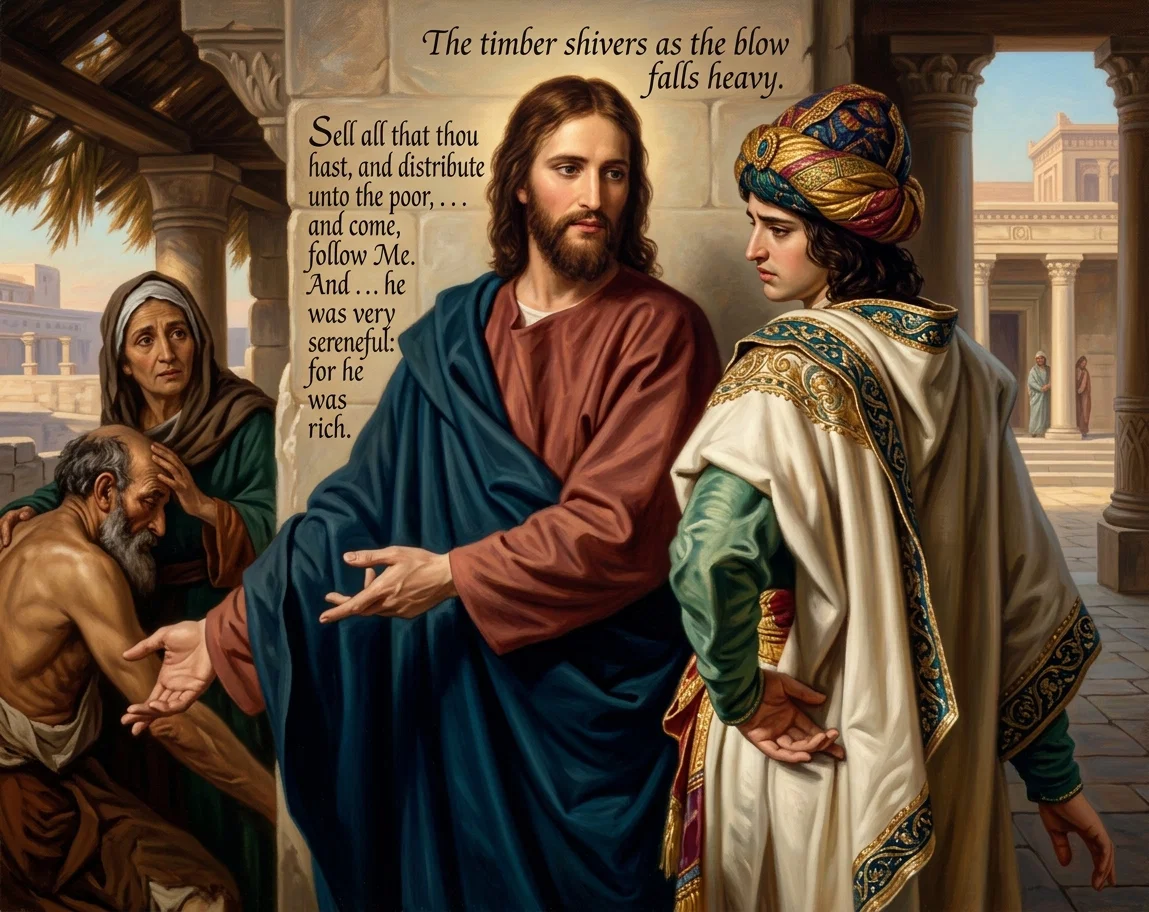
FOR HIS TEMPLE

By WORTHIE HARRIS HOLDEN
*In earthly forests and in earthly quarries, The Master for His temple must prepare; And for that building in the Glory-City, Each structure portion has minutest care.* *Within those walls, no stone shall be prepared, No timber hewn, nor saw nor hammer brought; So now for every niche and every turret The hewing and the squaring true is wrought.*
*The timber shivers as the blow falls heavy, And stones with fear behold the Master’s zest, Unseeing and unknowing His appointing— Forgetting, in their pain, their portion blessed.* *Ah, could we see the temple grand completed, Or sense the joy within His courts to be, No blow, howe’er severe, would wake a murmur, But praise that we are His eternally!*

Our Bible Band

Schedule for the Week Ending June 21, 1913
Sunday June 15 Esther 7, 8, 9, 10 Monday " 16 Job 1, 2, 3 Tuesday " 17 " 4, 5, 6, 7 Wednesday " 18 " 8, 9, 10 Thursday " 19 " 11, 12, 13, 14 Friday " 20 " 15, 16, 17 Sabbath " 21 " 18, 19 Psalm 45
We finish the book of Esther, with the triumphant vindication of God's people, and the utter and absolute defeat of the devil's agent, "wicked Haman." In this book of Esther the name of God does not occur in the English, and is found in the original only five times in the form of an acrostic. The book also gives the origin of the feast of Purim. Nineteen chapters of the book of Job, and Psalm 45, conclude our week's reading. Very interesting indeed is the book of Job, showing the great problems which have perplexed humanity during all the ages, of an overruling providence, and sin and suffering. God is disciplining Job, bringing him through the fire of affliction; and yet his three friends are determined to charge him with sin, and declare that his sufferings are because of the sin. How many times humanity is prone to misjudge its fellows in this same way in these days!
Psalm 45 is a beautiful prophetic song of Christ and the church.

Question Corner

“IF YE WILL INQUIRE, INQUIRE YE.”
This Inquirers’ Department is conducted for the purpose of helping those who are studying the Bible. The answers are oftentimes only suggestive. They are never to be considered infallible, only as they agree with the infallible Word. The writer who may answer these questions does not consider that his opinion is infallible. He will simply give the best that he has, and plead with the inquirer to search the Word. Such questions only will be answered as, to the editors, seem to minister to the good of the readers and to the mission of the paper. We can not answer repeatedly in the same volume questions upon the same scripture. The name and address must accompany question, not for publication, but as an evidence of good faith, and that answer may be made by letter if deemed advisable. No letters are answered which do not contain the name of the writer. It is well always to enclose stamp for reply.

4099 — Obedience to God and to Parents

Will you please tell me, would children under and over the age of twenty-one years, but still living with their parents, be breaking the fifth commandment by keeping the seventh-day Sabbath instead of Sunday, when the parents request them to keep Sunday? Eph. 6:1 reads: “Children, obey your parents in the Lord; for this is right.” If parents compel a child to work on the Sabbath of our Lord, when the child believes the truth, would the child be breaking the fourth or Sabbath commandment? S. S. S.
It is pretty difficult to fix the age of accountability of a child. The Jews had a rule among them that at twelve years of age the child became a “son of the law.” Previous to that time he was wholly under the power and control of his parents. But at that time, having been educated for that purpose, he became a “son of the law,” and went to Jerusalem, and was so recorded in the temple. This is what our Lord did, as recorded in the second chapter of Luke. When He was twelve years of age He went up to present Himself at the temple, and according to the Jewish system became a son of the law. He was then responsible to God. Normally, according to that rule, it was His duty to fulfil and obey conscientiously just what God taught Him to do. Yet we read of Jesus after this, that He was subject to His parents in all things. Of course with His parents this simply meant the fullest service of God, because His parents were godly parents. As to the application which should be made of that to children under age and under the control of their parents, it is almost impossible to say. If that child really understood and knew, in the full, clear sense, just what his duty was to God, that is one thing; but many times children really do not know their own mind. They would not have strength to stand alone; and until the child did have that strength to stand alone, or was in circumstances or environments where he would be helped on in the Christian life for which conversion has formed a true basis, I would say that they had better stay with their parents, and let the parents meet the account in the great day of God. But if that child is old enough to become indeed a son of the law, and is truly converted to God, God’s claim lies first. But there ought to be no spirit of rebellion in the doing of the Lord’s will.

4100 — Predestination

What is meant by predestination to the elect?—that some vessels are made to honor, and some to dishonor? I can not find these verses, or I would refer to them. G. W. O.
“Elect” means to choose; “predestination,” to mark out beforehand. God calls every responsible soul in this world, calls them to a crown, to a name, to a character, to eternal life. It is for these individuals to choose what God calls, or reject it if they will. Some of these, of course, God sees will choose; but the choosing must be on their part, and faithfulness on their part must abide with them, in order that they may obtain, at the end, the thing that they have chosen. And so Peter exhorts us, “Wherefore, brethren, give the more diligence to make your calling and election sure: for if ye do these things, ye shall never stumble.” 2 Peter 1:10. We have the predestination suggested in Eph. 1:5,—“Having predestinated us unto the adoption of children by Jesus Christ to Himself, according to the good pleasure of His will.” In the Revised Version it is “having foreordained”—having marked us out. It is for us to say whether we will let God develop the character which His marking out indicated. He calls us to a definite thing; He brings us through just such experiences as will develop the character within us to which He calls us.
See the tract which explains this more fully, entitled “Bible Election,” No. 67, Bible Students’ Library, the price of which is two cents by mail. It is a comforting subject if we study it aright.
The mention of vessels unto honor and dishonor is found in 2 Tim. 2:20, and there are other references also; but we are told in verse 21 that if a man will purge himself from these—that is, from the wrong things named before—he shall be a vessel unto honor, sanctified, meet for the Master’s use, prepared unto every good work. The vessels unto dishonor are those that have made themselves such by rejecting the One who would cleanse them.

4101 — Animals

Are animals created, or recreated, or resurrected? D. P.
Ps. 104:30 would seem to indicate that they are created. Verses 29 and 30 say: “Thou hidest Thy face, they are troubled: Thou takest away their breath, they die, and return to their dust. Thou sendest forth Thy Spirit, they are created: and Thou renewest the face of the earth.” Of course, that is practically true in the resurrection of God’s children who sleep. It is creative power that brings them back to life. The Bible, however, does not minister to our curiosity. Whether they are the same animals that lived here or not, God doesn’t inform us. Insofar as we know anything about animals at the present time, it would matter very little. As to their multiplication in the new earth, we may be assured of this,—that there will be no greater population than the earth will support. It will not be crowded, neither will it be underpopulated. Of this we may be sure,—that God’s plan will be perfect. We can leave all the details with Him.

4102 — Do Angels Propagate?

Do angels propagate? So it is claimed by one. D. P.
Yes, and no. There is a higher birth than natural birth. There are children who are dearer than blood children. Every true child of God is also a child of Jesus Christ, begotten of God through His word, born of the Spirit. Under Christ, angels may gather souls in this way with man. That is true of God’s children. Paul writes to those whom he has “begotten in the gospel.” He, under God, is their spiritual father. We know of no other way in which there will be propagation of souls in the matured individuals in Christ Jesus. In that world, they neither marry nor are given in marriage—God’s way of propagating physical beings. But there will be brought into the universe, we may well believe, continually new worlds and new populations of the new worlds; and the instructed among God’s servants, angels and men, will minister to these souls as spiritual fathers throughout the endless ages to come. Apart from these great, general truths, God has not revealed. It is an exceedingly dangerous thing to take some of the prophecies of the Old Testament, which were partly conditioned on Israel’s obedience, which were partially fulfilled to Israel in the restoration, and which will in a fuller sense be fulfilled when Christ shall come, and endeavor to make them literal in every sense in the future. One needs to take home to heart and keep before him the words of the apostle Paul in Eph. 3:1-6.

4103 — Working Horses on the Sabbath

Brother F. hired a team to a man who was traveling with a thrashing-machine, for an indefinite time, at $1.50 a day, and later to a lumberman for the winter, at an agreed price per month. The team was worked on the Sabbath, and Brother F. is blamed for it; but he contends that the horses became the property, or servants, of those who hired them, until this term of service expires. A. C. F.
We think that Brother F. is right. He sold that team for that time, and the man who worked them is responsible for them. Had they been working on Brother F.’s own premises, that would have been a different thing. They would have then been under his control. The duty of the Sabbath command lies in our own individual conduct and within our gates.

4104 — Tormented Forever and Ever

Please explain Rev. 20:10, about “tormented day and night forever and ever.”
We would prefer to commend to our inquirer Bible Students’ Library, No. 111, the price of which is one cent, two cents by mail, which takes up all these various texts much more fully than it is possible to do it in this department. In brief, the tract teaches that the word “torment” does not mean necessarily suffering pain, but means a test. It comes from the Greek word “basanos,” meaning the touchstone, which, if spurious metals were rubbed upon it, was supposed to reveal their character. The great touchstone by which God will test all characters in the last great day is the glory of His own presence, the unquenchable fire, and that testing will be forever. So the apostle tells us, in 1 Corinthians 3, that every man’s work shall be tested, yet so as by fire; for the day shall declare it. See 1 Cor. 3:11 and following. Satan has promised men that they can live notwithstanding any physical agency that may be brought against them. The glory of God’s presence will set the world on fire, and there will come the great test of characters. Those who are filled with God’s glory by faith will be among those that can dwell with the devouring fire, even as the three Hebrew children dwelt in the fiery furnace. But those who are not filled with His glory will perish in that fire. See Isa. 33:14, 15. And that testing shall be forever. “They shall consume; into smoke shall they consume away,” we read in the Thirty-seventh Psalm. And they shall be ashes on the face of the earth, Malachi tells us.
The little tract, in connection with this, explains such passages as Matt. 25:41, 46.

4105 — Right to Remarry

Does the Bible teach that it is right to remarry after one has been divorced for any reason, including fornication? What is the meaning of the word “divorce”? R. T.
From Matt. 5:32 and 19:9, it would seem that one has a right to marry after separation from a companion who had been guilty of fornication. “Divorce” comes from the Latin “divortium,” or “diverto,” having the same root as “divert,”—to turn from. In law, “the legal dissolution of a marriage contract; separation of husband and wife from the bonds of matrimony by process of law.” The word comes from two Hebrew words, meaning a cutting and to drive out, or divorce, put away; and in the New Testament, from Greek words which mean that which separates. Our Lord seems to have sanctioned but one proper cause of divorce, and that is fornication.

4106 — Days of Daniel

What of the 1,290 days and 1,335 days of Dan. 12:11, 12? M. H. R.
This department is too crowded to enter into a lengthy explanation of these periods. We will say simply this,—that the 1,290 days are held to begin in 508 and close in 1798. In about the year 508 the Papacy was established in France through the civil power, or at least was placed on a different basis under the influence of Clovis. The days ended in 1798, when papal supremacy came to an end. The 1,335 days evidently begin at the same date, and end in 1843, the time of the great Advent movement.

God’s Word the Parent’s Guide

By Mrs. E. G. White
Our great enemy is constantly seeking to make men believe themselves wiser than their Creator. Like Eve, many follow the dictates of human wisdom, in preference to the commands of the Omniscient One. Such was the sin of Eli; and terrible indeed were its results,—disaster and death to himself, ruin to his wicked sons, and ruin to thousands in Israel.
“Teach us, how shall we order the child, and what shall we do unto him?”
Yet there are many to-day, standing, like Eli, in holy office, who are making the same mistake.
They read his mournful history, but fail to profit by the warning. In their self-confidence, they think they know a better way of training their children than that which God has given us in His word. The earnest, anxious prayer does not ascend from their hearts, “Teach us, how shall we order the child, and what shall we do unto him?” With all their learning and intelligence, the results of their training show the vaunted wisdom of these persons to be but folly. Fond, indulgent parents, they allow their children to grow up from babyhood without restraint; and thus their forward, selfish, disagreeable ways become confirmed habits, rendering them unloving and unlovable.

The Only Safe Guide

God Himself established the family relations. His word is the only safe guide in the management of children. Human philosophy has not discovered more than God knows, or devised a wiser plan of dealing with children than that given by our Lord. Who can better understand all the needs of children than their Creator? Who can feel a deeper interest in their welfare than He who bought them with His own blood? If the word of God were carefully studied and faithfully obeyed, there would be less soul anguish over the perverse conduct of wicked children.
It is very natural for parents to be partial to their own children. Especially if these parents feel that they themselves possess superior ability, they will regard their children as superior to other children. Hence much that would be severely censured in others is passed over in their own children as smart and witty. While this partiality is natural, it is unjust and unchristian.

Are They Too Young?

A great wrong is done our children when we permit their faults to go uncorrected. Many foster wrong traits of character in their children, urging as an excuse: “They are too young to be punished. Wait until they become older, and can be reasoned with. They will outgrow many of these evil tendencies.” Thus their wrong habits are left to grow and strengthen until they become second nature.
Sometimes the father and mother are united in this error. Sometimes one would gladly pursue a wiser course; but when that one attempts to enforce obedience, the other takes the part of the child, and will not allow it to be brought into submission. The sad results of such a course can be fully seen only in eternity. They can never be estimated in this life.
When ministers and people will exchange their natural pride of heart and independence for a childlike, teachable spirit; when, instead of trusting to their own understanding, and conforming to the maxims and customs of the world, they will sit at the feet of Jesus, and earnestly inquire, “Lord, what wilt Thou have me to do?” then His wisdom will direct them, His Spirit work with their efforts, and we shall see the youth who now drift into the ranks of Satan, serving under the banner of the Prince of Life.

Do Not Irritate by Hard Censure

We have no sympathy with that discipline which would discourage children by hard censure, or irritate them by passionate correction, and then, as the impulse changes, smother them with kisses, or harm them by injurious gratification. Excessive indulgence and undue severity are alike to be avoided. While vigilance and firmness are indispensable, so also are sympathy and tenderness. Parents, remember that you deal with children who are struggling with temptation, and that to them these evil promptings are as hard to resist as are those that assail persons of mature years. Children who really desire to do right may fail again and again, and as often need encouragement. Watch the workings of these young minds with prayerful solicitude. Strengthen every good impulse, encourage every noble action.

The Inspired Symbols of Daniel 7

By K. C. Russell
One of the most effective and potent methods of instruction in these modern times is by the aid of object-lessons and illustrations. Every up-to-date newspaper uses copious illustrations and cartoons in making clear the news which the editor desires to impress upon the minds of his readers.
The seventh chapter of Daniel contains another remarkable outline of the world's history. It will be observed that the symbols contained in the second chapter of Daniel and the symbols of this chapter cover the same period of the world's history. It may be queried by the reader, Why, then, this repetition? In reply to this question, we would say that it is because the great Author of prophecy designed to bring out additional characteristics not related in the second chapter of Daniel.

The Prophetic Outline

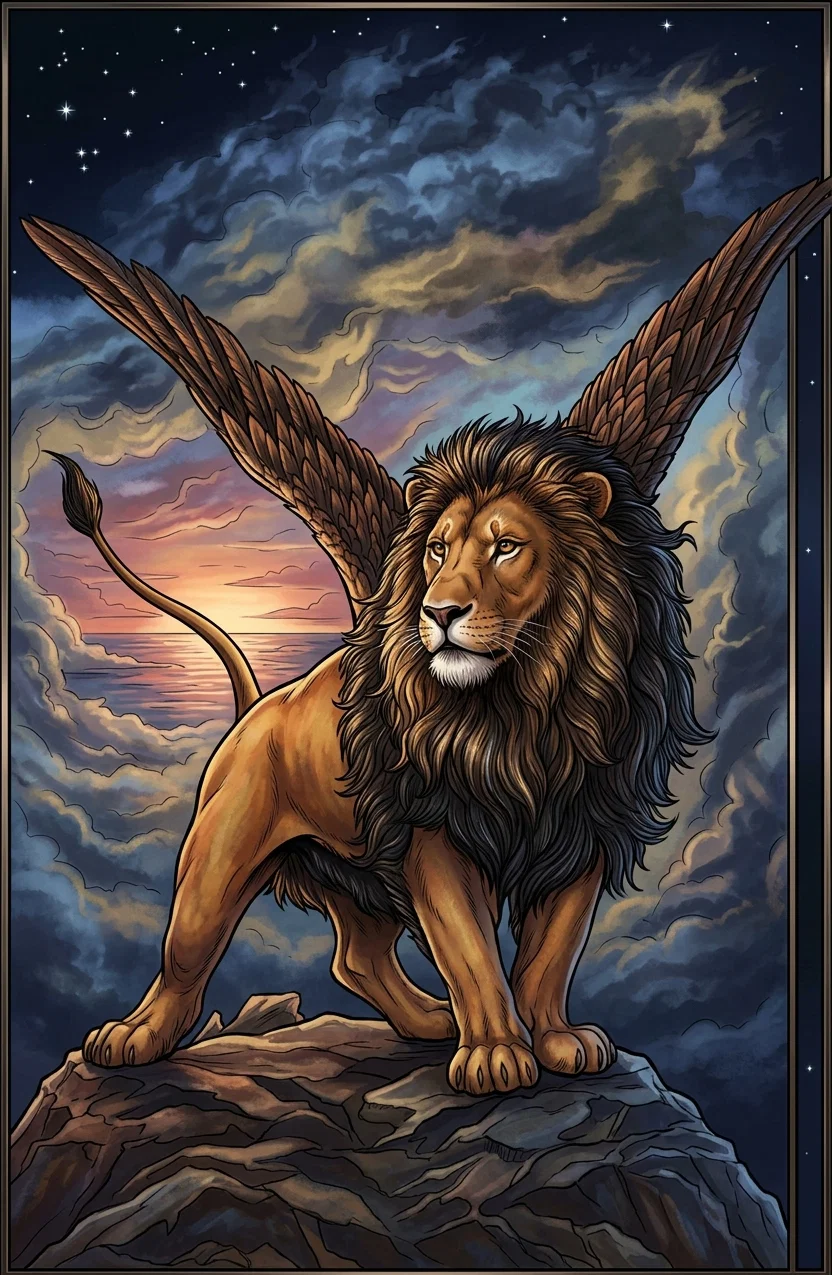
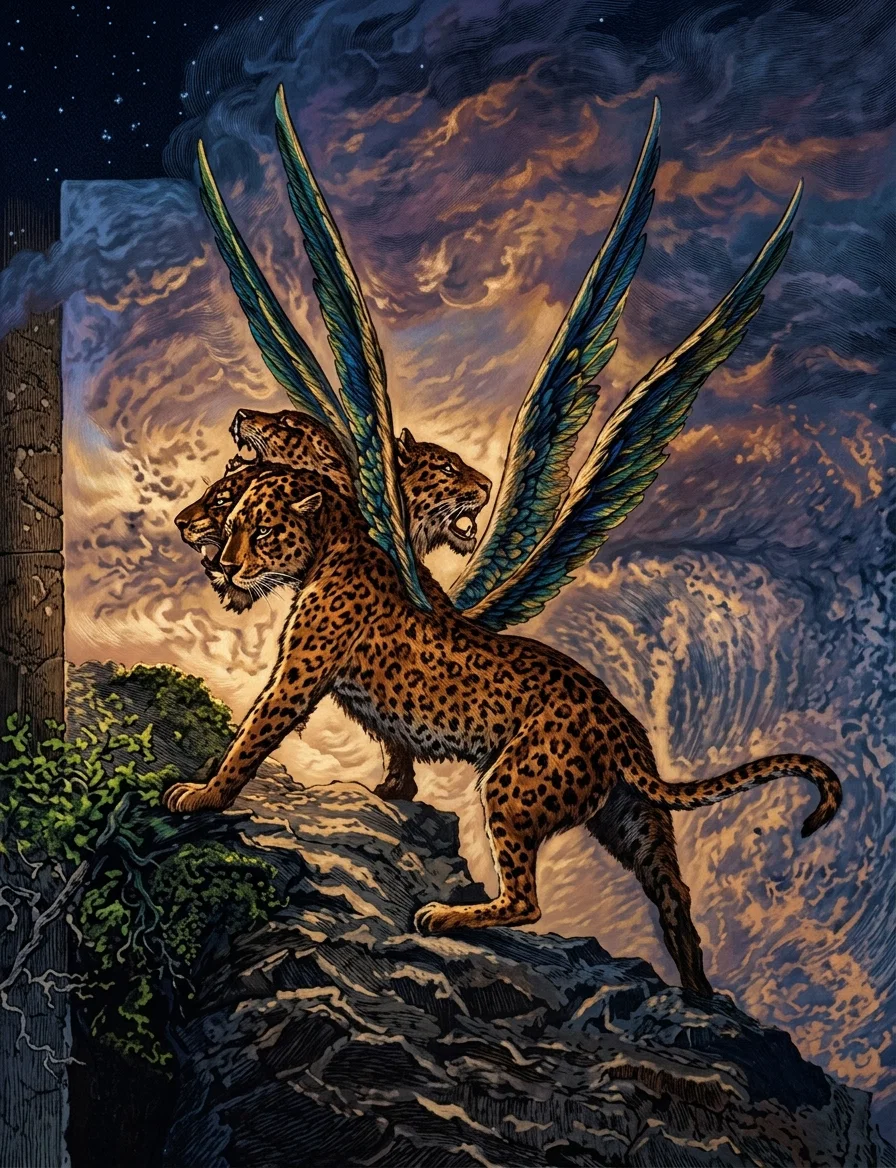
The brief and interesting outline of the symbols in this chapter is as follows: “In the first year of Belshazzar king of Babylon Daniel had a dream and visions of his head upon his bed: then he wrote the dream, and told the sum of the matters. Daniel spake and said, I saw in my vision by night, and, behold, the four winds of the heaven strove upon the great sea. And four great beasts came up from the sea, diverse one from another. The first was like a lion, and had eagle's wings: I beheld till the wings thereof were plucked, and it was lifted up from the earth, and made stand upon the feet as a man, and a man's heart was given to it. And behold another beast, a second, like to a bear, and it raised up itself on one side, and it had three ribs in the mouth of it between the teeth of it: and they said thus unto it, Arise, devour much flesh. After this I beheld, and lo another, like a leopard, which had upon the back of it four wings of a fowl; the beast had also four heads; and dominion was given to it. After this I saw in the night visions, and beheld a fourth beast, dreadful and terrible, and strong exceedingly; and it had great iron teeth: it devoured and brake in pieces, and stamped the residue with the feet of it; and it was diverse from all the beasts that were before it; and it had ten horns.”
“A second, like to a bear, . . . and it had three ribs in the mouth of it”

Not Left to Speculation

In our understanding of these sacred symbols, we are not obliged to resort to any human source for knowledge concerning them, for we have a divine and most sublime commentary which makes them so plain and clear that he who studies it may understand.
The first symbol brought to view in this prophecy is that of the striving of the great winds. This symbol is clearly defined in Jer. 25: 32, 33 to be that of political strife and commotion.
“The first was like a lion, and had eagle's wings”
And the sea or water is defined in Rev. 17: 15, by the revelator John, to be peoples, multitudes, nations, tongues. And the four beasts symbolize kingdoms, as is plainly shown from the 17th verse of Daniel 7, which says, “These great beasts, which are four, are four kings, which shall arise out of the earth.” The term “kings” presupposes kingdoms; so, in other language, the prophet teaches that four kingdoms shall arise.
The twenty-third verse says, “Thus he said, The fourth beast shall be the fourth kingdom upon earth, which shall be diverse from all kingdoms, and shall devour the whole earth, and shall tread it down, and break it in pieces.” From this scripture it is plainly to be seen that if the great nondescript beast signifies the fourth empire, the lion, which is the first beast, must of necessity symbolize the first universal kingdom of the world's history, which, all will agree, was the Babylonian kingdom.
“Lo another, like a leopard, which had upon the back of it four wings of a fowl”
The idea of kingdoms' being symbolized by beasts should not be thought at all strange even by those who have never studied these divine symbols. Were the reader to pause and reflect regarding the symbols which represent some of the great nations of the present time, he would observe that these nations also are represented by beasts. Mention of the lion suggests at once to the reader the British Empire. When we speak of the bear, our minds involuntarily turn to Russia. And further, the very suggestion of the eagle makes us think of our own government. So it will be seen how fitting it is for the great God of heaven to outline the world's history by the aid of symbols.

Symbols of the Babylonian Kingdom

It will be further observed that the lion corresponds to the head of gold on the image of Daniel 2. Both of these symbols indicate the superiority, dignity, honor, wealth, and glory over the other kingdoms. By the head of gold on the great image, and by the lion, the king of beasts, is fitly represented the Babylonian kingdom, which arose 625 B.C. The wings of the lion very aptly represent the rapidity with which her conquests were gained; and the timidity of a man's heart compared with that of a lion is shown by contrasting the character of the courageous and bold monarch Nebuchadnezzar with that displayed in the life of the last king, the weak and pusillanimous Belshazzar.

Medo-Persia

The bear is a fit symbol of the Medo-Persian kingdom, which came on the stage of action in 538 B.C. The characteristics of the bear, as seen in its stealthy manners, harmonize with the description of the Medo-Persian kingdom during its unjust reign. The raising itself up on one side, the higher coming up last, is a true representation of this kingdom, for history shows that the Persian division of that kingdom came up last. The “three ribs in the mouth of it” evidently signify the three provinces of Babylonia, Lydia, and Egypt.

Greece

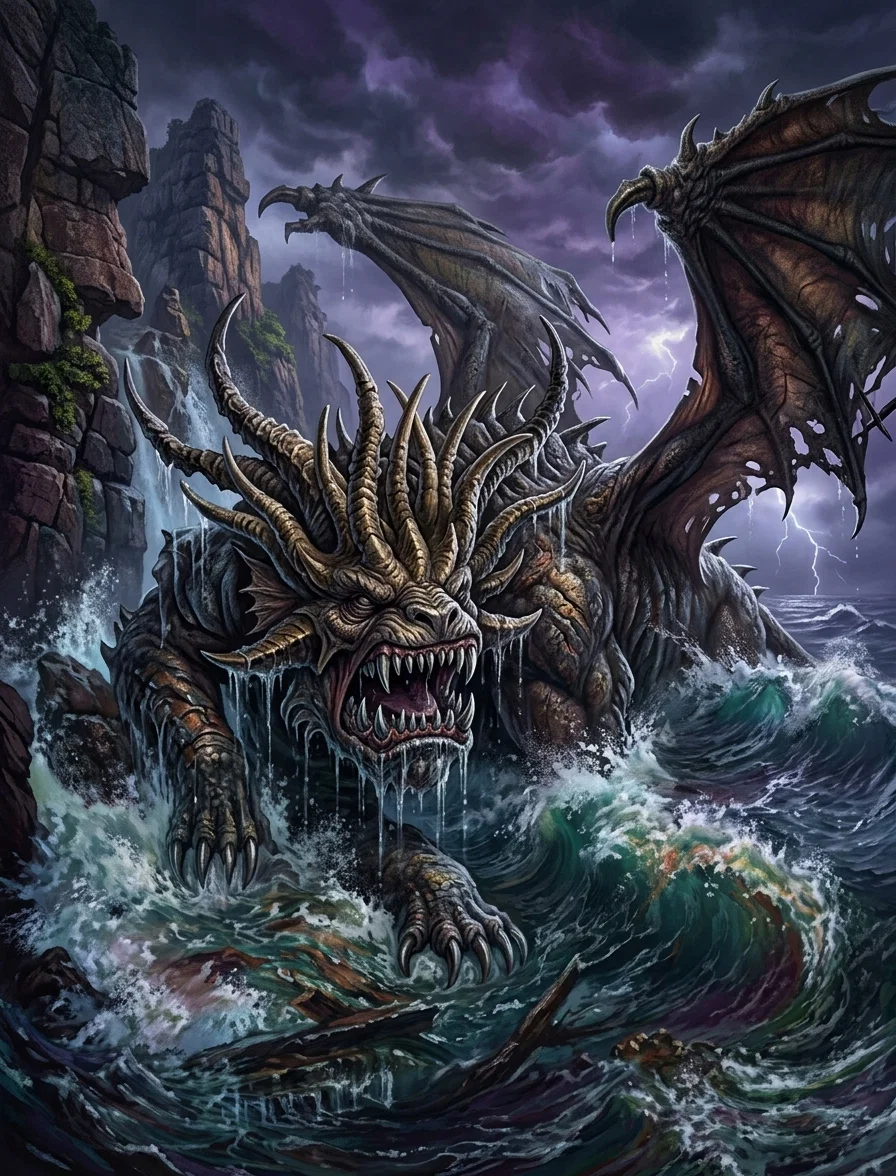
“Behold a fourth beast, dreadful and terrible, and strong exceedingly; and it had great iron teeth”
The third symbol, or the leopard, withfour heads and four wings, in a most pronounced and remarkable manner signifies the third universal empire, or the Grecian kingdom. It should be remembered, by the reader, that Grecia stands unparalleled among the kingdoms of earth in her rapid conquests.
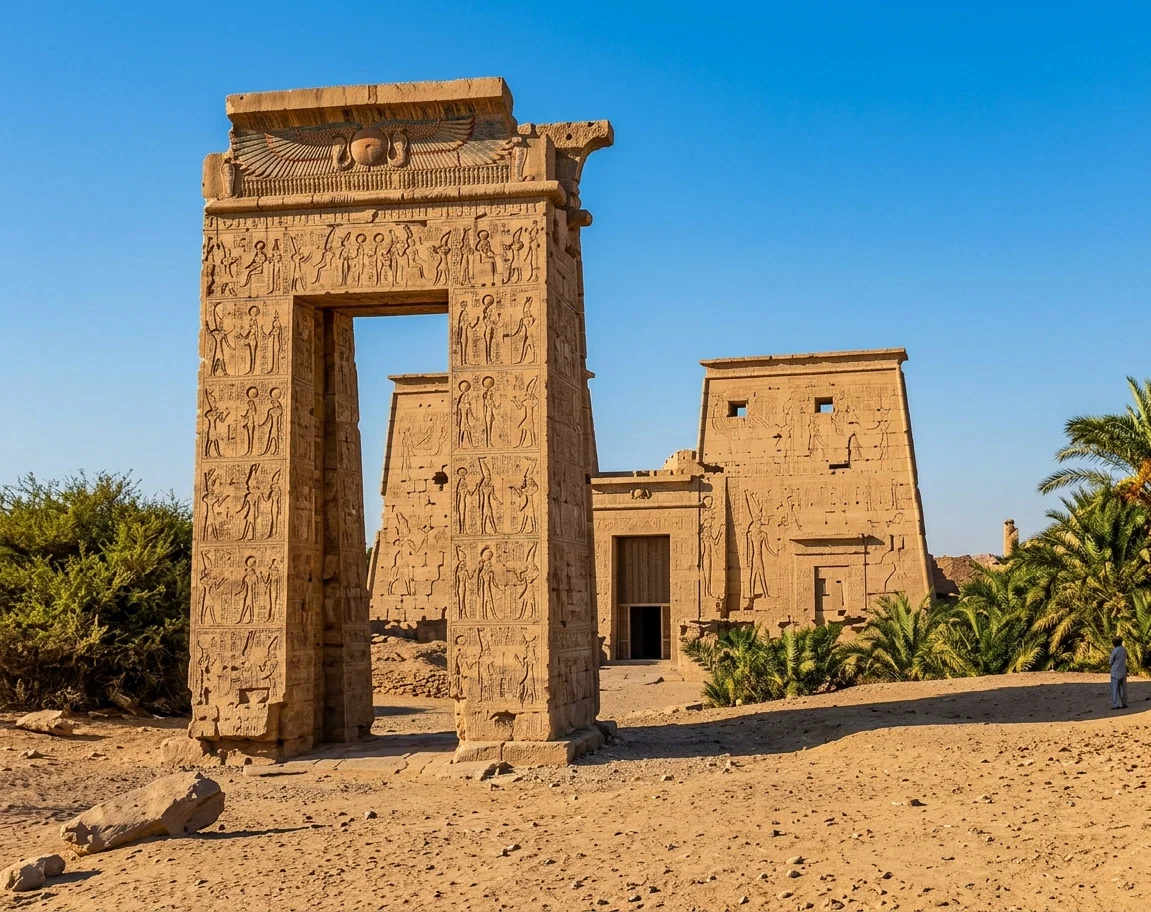
Temple of Rameses — the entrance of Ptolemy
Authentic history shows that under the reign of Alexander the Great, during the short period of eight years, he marched his armies over fifty-one hundred miles, and conquered everything with which he came in contact. What could more forcibly illustrate the great celerity of movement indicated by the fleet-footed leopard beast and its four wings than the wonderful swiftness in battle which was shown in the history of this kingdom!
As to the significance of the four heads, we have only to consider further the history of that remarkable kingdom in order to understand clearly the meaning of this part of the symbol. It must be borne in mind that since a beast is a representative of kingdom, the head of the beast would of course signify the head of the kingdom. It is a well-understood fact in history, that within the space of twenty-two years subsequent to Alexander's death, his kingdom was divided into just four parts, among four leading generals. Cassander had the west, embracing Macedon and Greece; Lysimachus had the north, consisting of Thrace and a part of Asia Minor; to Ptolemy was given the south, which included Egypt, Lydia, Arabia, Palestine, and Coele-Syria; and Seleucus possessed the east, which embraced the remaining portion of Alexander's kingdom and Syria.

Rome

The fourth beast was unlike any beast in nature. It became necessary for the Holy Spirit to symbolize Rome by a most unnatural beast. What a fitting symbol to represent the Roman Empire, the fourth and last universal kingdom which the world will ever see! Its iron teeth and the breaking and stamping to pieces of the residue of other kingdoms is true to the letter of the oppressive character of Rome in the subduing of other nations.

The Ten Divisions of Rome

The prophet continues his symbolic outline of the history of the great iron monarchy of Rome by the ten horns, which unmistakably signify the divided state of the empire.
The division of the Roman Empire took place between the years 351 and 476 A.D., as follows: the Alemanni, the Ostrogoths, the Visigoths, the Franks, the Vandals, the Suevi, the Burgundians, the Heruli, the Anglo-Saxons, and the Lombards.
The next remarkable change in the kingdom of Rome is symbolized by the appearance of another “little horn,” before which were plucked up three of the existing horns; namely, the Heruli, the Vandals, and the Ostrogoths. In a subsequent article we shall show of what power the “little horn” is the symbol.
The ninth and tenth verses of Daniel 7 are a most graphic description of the final judgment, when every case will pass in grand review before the great Judge of all the earth. Thus we are again brought face to face with eternity, as we were in our study of the second chapter of Daniel by the symbol of the great stone which was cut out of the mountain without hands, and smote the image upon its feet, when the kingdoms of the earth were dashed to pieces, and became as the chaff on the summer's thrashing-floor.
The great lesson designed to be taught by the Holy Spirit through the prophet Daniel is the importance of preparing to meet God in peace, and thus being ready to stand in that great day when every one is to be judged according to the deeds done in the body.
Continue reading: THE WITNESSING OF GOD: THE BASIS OF OUR CONFIDENCE