Your ShelfYour Projects

Signs of the Times, Vol. 34, No. 24.

Our Lord's Invitation

Signs of the Times

Jun 10, 1908

Pacific Press Publishing Company · Mountain View, California · Jun 10, 1908

Our Lord's Invitation

Ho, every one that thirsteth, come ye to the waters, and he that hath no money; come ye, buy, and eat; yea, come, buy wine and milk without money and without price. Wherefore do ye spend money for that which is not bread? and your labor for that which satisfieth not? Harken diligently unto Me, and eat ye that which is good, and let your soul delight itself in fatness. Incline your ear, and come unto Me: hear, and your soul shall live; and I will make an everlasting covenant with you, even the sure mercies of David. Behold, I have given Him for a witness to the people, a leader and commander to the people. . . .
"Seek ye the Lord while He may be found, call ye upon Him while He is near: let the wicked forsake his way, and the unrighteous man his thoughts: and let him return unto the Lord, and He will have mercy upon him; and to our God, for He will abundantly pardon. For My thoughts are not your thoughts, neither are your ways My ways, saith the Lord. For as the heavens are higher than the earth, so are My ways higher than your ways, and My thoughts than your thoughts." Isa. 55:1-9

With Our Inquirers

"If ye will inquire, inquire ye."
This Inquirers' Department is conducted for the purpose of helping those who are studying the Bible. The answers are oftentimes only suggestive. They are never to be considered infallible, only as they agree with the infallible word. The writer who may answer them does not consider that his opinion is infallible. He will simply give the best that he has, and plead with the inquirer to search the word. Such questions only will be answered which, to the editors, seem to minister to the good of the readers and to the mission of the paper. We can not answer repeatedly in the same volume questions upon the same scripture. The name and address must accompany question, not for publication, but as an evidence of good faith, and that answer may be made by letter if deemed advisable. No letters are answered which do not contain the name of the writer. It is well always to enclose stamp for reply.

2527.—The End of the Law.

Will you please explain Gal. 3:19, as some quote this to show that is the end of the law, as the Seed spoken of has come.
The verse reads in the American Revised Version: "What then is the law? It was added because of transgressions, till the Seed should come to whom the promise hath been made; and it was ordained thru angels by the hand of a Mediator." The thought is, what then is the law in connection with the promise? with the covenant? What is its purpose? In our Common Version: "Wherefore then serveth the law?" What is its purpose? Rotherham renders "Why then the law?" In other words, What did God come down upon Mount Sinai for and write it on tables of stone if we are not to obtain salvation by it? And yet the apostle's argument is that salvation does not come in that way. We are justified by faith, and only by faith. "The just shall live by faith." The law here mentioned is the law which points out sin. It was added because of transgressions; or as expressed in Rom. 5:20: "Moreover the law entered, that the offense might abound." In Rom. 7:13: "That sin by the commandment might become exceeding sinful." But does it mean that the law was just then given?—Not at all. The term is used in the sense of being spoken, given to them in a written form. Man's heart had become so unresponsive to the law which God in the beginning wrote in the moral nature of man, so unresponsive to His Spirit and conscience, that it was necessary that the law should be engraved upon stone and spoken by God's voice from heaven in order that men might not question its immutable precepts; therefore, God gave it from Mount Sinai; and when the Ten Precepts were spoken, it is distinctly said, "And He added no more." Deut. 5:22. That this term "added" is used in the sense of "spoken," is shown in Heb. 12:19 where the same Greek word prostithemi is used, that "the word should not be spoken to them any more." That clearly has reference to the Ten Commandment Law. One of the definitions given in Berry's Lexicon is "spoke again." That law was given to point out sin, as before remarked. It was not to show the sinner that he was just; it was not to mock him by saying, If you will only keep this and be righteous you will be saved; it was to show him that he was such a fearful transgressor that there was no salvation in himself at all, and that the only means by which he could be saved was to come to God, who would justify. That justification is proved to be the true and only justification of the law's witnessing to-day. Thru that same faith God writes that same law upon the heart, so that the child of faith delights in obedience to God's law. Now how long shall the law fill that office? how long shall it point out transgression? The answer is, "Till the Seed should come, to whom the promises were made." Who is the Seed?—Christ. "He saith not, And to seeds, as of many; but as of one, And to thy Seed, which is Christ." Gal. 3:16.
That Seed has not yet come. The Seed came in a partial sense when the Lord Jesus gave Himself to die in behalf of humanity, but He did not come then to reap the promises, or inherit the promises. Promises to Abraham include the heritage of the earth (Rom. 4:13), but not until Christ comes the second time does he take possession of the inheritance promised, and therefore, until Christ the Lord shall come the second time, the law still serves its purpose of condemning all who transgress it, and of leading to Christ as the only justifier of that law those who have sinned against God. See Eze. 21:25. There is no stronger text in the New Testament which shows the perfection of the law of God. When the Lord shall come, it will no longer be used as a monitor to point out sin; because of God's children from that time forward it shall be said, "Thy people are all righteous," and that law is written in the heart of every one.

2529.—Sodom and Gomorrah.

Will the people of Sodom and Gomorrah who suffered the vengeance of eternal fire be brought into judgment at the last day? J. H. A.
The judgments of God upon cities and nations thruout all the past are, first of all, temporary to the cities and nations as such, upon the community, upon the aggregate. All of them are more or less typical of the great judgments of God of the future. The destruction and affliction suffered by those who are counted with them in these judgments are not those which come to them directly for their particular sins, but because they are identified with the city, or the nation. Out of Sodom God called Lot, and he followed. It was possible for all Lot's relatives to have come out, and all the other Sodomites, had they believed God; but the time had come when the influence of that city must be blotted from the earth, and those who perished there chose to identify themselves with that city in its destruction. There will come a time when the graves will give up their dead. There shall be a resurrection, both of the just, and of the unjust, and in that resurrection will be the inhabitants of Sodom and Gomorrah.
The expression "suffering the vengeance of eternal fire" has to do with the city as a whole. It occurs in Jude 7. The apostle there tells us that the destruction of these cities is "set forth as an example, suffering the punishment of eternal fire." Peter tells us in his second epistle, second chapter, sixth verse, that this eternal fire turned "the cities of Sodom and Gomorrah into ashes condemned them with an overthrow, making them an ensample unto those that live ungodly." The "eternal fire" is used not in the sense of forever burning, but eternal in its effects. That fire is not now burning. The Dead Sea rolls its heavy waters over the place where the proud cities of the plain once stood.

2528.—The Sabbath Day.

Which day is the Sabbath day, Saturday or Sunday, and why? M. F. M.
Neither one. The Sabbath of the Lord is the seventh day. God's day begins at sunset, and ends at sunset. This is shown in the first chapter of Genesis, and also in Mark 1:32 and in Neh. 13:19. The common civil day begins at midnight, and ends at midnight. Therefore, as the days are not synchronous, neither Sunday nor Saturday can be wholly the Sabbath of the Lord. The Sabbath of the Lord begins at sunset of the sixth day, and lasts until sunset of the seventh day. The first day of the week is considered by all, Sunday. Inasmuch as Sunday begins at 12:00 o'clock Saturday night, it is, on the average, at least six hours removed from the Sabbath of the Lord.
The query will probably arise, Do we know that the seventh day from Friday at sunset, till Saturday at sunset, is the seventh day of the Bible? In reply we would say that we have every reason to believe it to be the seventh day. First, it would be unreasonable for the Lord to set apart a day to be kept holy, demand that men should keep it, and then permit the knowledge of it to be hidden from them. This is not like God. The record of the making of the Sabbath is found in Gen. 2:2, 3. Twenty-five hundred years after, a command was given to keep it, based on the same identical reasons. Ex. 20:8-10. Previous to the giving of this command, the Sabbath was known. Exodus 16. By a threefold weekly miracle for forty years the Lord marked the definite day, so that for forty years the people of God could keep no other day for the Sabbath, save the seventh day.
When Jesus died upon the cross, the Inspired Record states that the holy women kept the Sabbath "according to the commandment." Luke 23:56. Therefore, we have the identical Sabbath day of the Lord brought down to the time of our Saviour's death on the cross. Since that time there has been no question whatever among the nations of the earth, or chronologists, regarding the seventh day. The seventh day of that time is the seventh day of now, and the first day of that time is the first day of now. Therefore, whatever loss of knowledge may have come to the world during the patriarchal ages, or in those periods of which we have no history, it matters not. The Lord Himself has clearly and definitely fixed the day so that men may know if they desire.

2530.—Iniquity of the Fathers upon the Children.

Please explain these two passages of Scripture: The second commandment says, "I the Lord thy God am a jealous God, visiting the iniquity of the fathers upon the children unto the third and fourth generation of them that hate Me." Eze. 18:20 says "the son shall not bear the iniquity of the father, neither shall the father bear the iniquity of the son." How do these harmonize?
There are results of some sins that are inherited that affect posterity physically and mentally. For instance, the man who utterly ruins his health thru whisky, drugs, or vice, may leave a weakened and diseased constitution to his children. Physical defects of father or mother may be perpetuated for three or four generations; thus, it seems to us, the commandment is to be understood. The results of the iniquities of the fathers are visited upon the children. Sometimes the fathers are wicked, and God has suffered them to go into captivity, or slavery, and when their children are born, they are born slaves; thus also the result of the father's iniquities are visited upon the children.
On the other hand, the actual sins which the father commits will not be charged against the son. The son will not be held responsible for the actual deeds of wickedness which the father does. The second commandment has reference to the results of the sins of the parents, while the passage in Ezekiel has to do with the very motive in the sinning, and yet God is able to save the children from the results of their fathers' sins. "Where sin abounded, grace does much more abound."

2531.—Flesh Meats.

Is there more wrong done to eat flesh meats on Good Friday than on any other day, and why? Is Good Friday the anniversary of Christ's crucifixion, and Easter Sunday of the day He arose from the dead?
The Scriptures know nothing about the term "Good Friday" or "Easter Sunday." It knows nothing about abstinence from flesh foods on Good Friday more than on any other day. All these things have been built up by the superstition of men who have thought to do works which would win favor of God. All such things are superfluous, and the Lord will ask as He asked His people of old, "Who hath required this at your hand?" The fact that the day of the year does not correspond with the day of the week is sufficient evidence to show that no day of the week is an anniversary of a yearly event. Consequently there is no such thing as anniversaries of Christ's death, or resurrection, being kept on any day of the week. Men may fast from certain things on certain days, but the Lord does not require it. To us it seems to be a good thing to abstain from flesh meats on Good Friday, and all other Fridays, and all other days of the week. We have followed that practise for many years, and know that we have been benefited by it. The true memorial of Christ's crucifixion is the Lord's Supper, and the true memorial of Christ's resurrection is a life which begins at baptism, and which speaks forth to all the power and righteousness manifest in the resurrection of Christ.

Gems Scattered Along the Way

By Emma Hildreth Adams

Notes with the Bible Band.
THOSE who have been reading the thrilling chapters of Old Testament history, day by day, the past four months, with minds open to the quick, penetrating impressions of the Spirit, must often have been aroused by the powerful setting forth of some great object attained; by the lucid, pungent portrayal of some noble incident; by the gathering of some golden fruitage, after sorrowful sowing and nurturing; by the granting to a heavily burdened heart some cheering stimulus when courage was about to fail; by the ministering to a heart, smitten by enmity, censure, or ingratitude, some soothing comfort in an hour of despondency; or by the visiting of swift, telling punishment upon some wilful, hazardous infractor of God's intents and commands.
Conspicuous among the many striking deeds and events, recorded down to the days of Samuel, was the building of the wonderful tabernacle at Sinai.
We are apt to conceive of Israel—ready, waiting to move out of Egypt the night their chains were broken—as a destitute, urgent, inquisitive body, just emerging from slavery, bearing their unbaked bread upon their shoulders. But it will pay us to study the remarkable company later.
It is the third month of the year of their marvelous release from the land of Pharaoh. We observe the slow-moving throng as it emerges from the wilderness of Sin, lying between Elim and Sinai, in Western Arabia, ever since renowned above all other summits of earth.
Its fourth encampment thereafter took place at Sinai, the most celebrated of all earth's mountains, because of the majestic scenes it witnessed; because of the words of power to which it listened.
To Israel that mountain became a schoolhouse of flame, from whose lofty, burning doorway spoke the Teacher of the universe, giving out to that lowly, amazed throng many momentous lessons of LIFE if received and obeyed, lessons of DEATH if disobeyed.
Here, during the year which followed, was constructed the tabernacle, that most singular of all earthly buildings, a structure the like of which no human architect had ever designed. Its original occupied eminent place in the heavens, where dwelt the God of Israel. And of this original there was entrusted to Moses, on the great mountain, a pattern definite, careful, in the extreme, with rigid instructions not to deviate therefrom.
Reader, bear a little urging. Take seat. Read slowly, carefully, very thoughtfully, the book of Exodus, from chapter 25 to 31 inclusive, bringing to the surface, with aid of your mental microscope, the multitude of invigorating and instructive ideas, suggestions, lessons, which flood that wonderfully itemized text.
The depths of all its meaning we can not see, perhaps. All the reasons for the extreme exactness, the minute detail we can not fathom, may be. The complete motive for the profuse use of gold, silver, costly gems, and fine linen in the structure of the tabernacle, and the priestly attire for Aaron and his sons, we can not appreciate, possibly; but in the study there will be served us enough vitalizing food to strengthen our famishing hearts; enough water of life to refresh our worn spirits thru long, long days.
At the very beginning of chapter 25 the reader finds himself amazed at God's free, ready, unhesitating request—order—that the encamped people bring Him an offering, so varied, so bountiful, of materials so precious, of fine goods rarely possessed by a host just released from toilsome bondage.But God knew in what state they had come out of Egypt. He had not forgotten the consoling pledge He made to Abraham, His friend, more than 400 years before, touching this very body of people now tented before Him, Abraham's descendants. Listen to the promise. Gen. 15:14, "That nation, whom they shall serve, will I judge, and afterward shall they come out with great substance."
And thus, at Sinai, we find them able to comply to the uttermost with God's request that they bring Him "an offering," a gift, with which to build Him a marvelous dwelling-place among them. And they responded without grudge or stint or objection; but promptly, willingly, freely, gave their treasured things, gold, silver, fine brass, precious jewels—cut and uncut,—fine twined linen, costly skins of animals, "principal spices" for the anointing oils, and "sweet spices" for the fragrant perfume, of neither of which were they ever to make the like for themselves.
"Both men and women, as many as were willing-hearted, brought bracelets, earrings, rings, tablets, jewels of gold. And every man with whom was found blue, purple, scarlet, fine linen, goats' hair, red skins of rams, and badgers' skins, brought them, with silver, brass, and acacia wood, an offering unto the Lord." "All the women that were wise-hearted did spin with their hands, both blue, and purple, and scarlet, and fine linen, and brought that which they had spun." And the rulers brought onyx stones, and stones to be set, for the ephod and for the breastplate, and oil for the light, for the anointing, and for the sweet incense.
And this varied, affluent giving continued until "much more than enough for the work which the Lord had commanded" had been contributed.
But when, where, and how, did Israel obtain this munificent provision for the undreamed-of building in the desert? And whence came the many animals for daily sacrifices and offerings as soon as the tabernacle was finished?
In Exodus 12:31 we have these pressing, urgent words from the mouth of Pharaoh, as from the lips of a man in sore peril, weighed down with fear. They were spoken to Moses and Aaron in the night: "Rise up, and get you forth from among my people, ye, and the children of Israel. Go, serve the Lord, as ye have said. Take all your flocks and herds, and be gone; and bless me also!"
In verse thirty-five we read: "And the children of Israel . . . asked of the Egyptians jewels of silver, and jewels of gold, and raiment, and Jehovah gave them favor in the sight of the Egyptians, so that they let them have what they asked. And they spoiled the Egyptians."
Here then, we learn, in part, certainly, how the children of Israel left the land of their captivity with GREAT SUBSTANCE, as God promised Abraham they should. And perhaps, too, we here discern a reason for the overflowing abundance they contributed toward the building of that unique edifice at the foot of Sinai. Freely they had received. Freely they gave.
There is one point more—the effect upon Moses of those many days of nearness to God in the mountain, while he was being shown how to construct the building God was to honor with His presence. The most vivid imagination can not conceive the full result,—the enlargement of aim, purpose, endeavor, for the future of his life; the glad expanding of ideas Godward; the rapid increase of ability to comprehend God; the blessed lessening of the magnetic drawing power of this world.

Unreserved Surrender

By Mrs. E. G. White

THOSE who would at last be received into heaven as members of the royal family must here give themselves—body, soul, and spirit—to the service of Him who paid the price of their redemption. All that we have and are belongs to the Lord. "Ye are not your own," the apostle declares; "for ye are bought with a price: therefore glorify God in your body, and in your spirit, which are God's."
Christ declares, "If any man will come after Me, let him deny himself, and take up his cross daily and follow Me. For whosoever will save his life shall lose it; but whosoever will lose his life for My sake, the same shall save it. For what is a man advantaged, if he gain the whole world, and lose himself, or be cast away? For whosoever shall be ashamed of Me and of My words, of him shall the Son of Man be ashamed, when He shall come in His own glory, and the Father's, and of the holy angels."
By the casting of grain into the earth, the Saviour represents His sacrifice for us. "Except a corn of wheat fall into the ground and die," He says, "it abideth alone; but if it die, it bringeth forth much fruit." Only thru the sacrifice of Christ, the Seed, could fruit be brought forth for the service of God.
So with all who bring forth fruit as workers together with Christ, self-love, self-interest, must perish; the life must be cast into the furrow of the world's need. But the law of self-sacrifice is the law of self-preservation. The husbandman preserves his grain by casting it away. So the life that will be preserved is the life that is freely given in service to God and man.
The fulfilment of the promise that we shall be joint-heirs with Christ rests upon our willingness to deny self. When Christ takes possession of His kingdom, it will be those who on this earth have followed Him in self-denial and self-sacrifice that will receive the reward of everlasting life.
Christ's call to sacrifice and unreserved surrender means crucifixion of self. In order to obey it, we must have unquestioning faith in Him as the perfect example, and a clear realization that we are to represent Him to the world. The characters of those who work for Christ are to be conformed to His character. They are to work in His lines; they are to live His life. His call to unreserved surrender is to be to them supreme. They are to allow no earthly tie or interest to prevent them from giving Him the homage of their hearts and the service of their lives. Earnestly and untiringly they are to labor with God to save perishing souls from the power of the tempter.
Those who are thus connected with Christ learn constantly of Him, passing thru the successive stages of progress in Christian experience. Difficulty and perplexity come to them that they may learn more perfectly the will and way of Christ. But they pray and believe, and by exercise their faith increases.
"Take My yoke upon you," Christ said, as in human nature He lived and worked upon this earth. Constantly He wore the yoke of submission, meeting the difficulties that human beings must meet, bearing the trials that they must bear. The enemy will constantly assault as he assaulted Christ, bringing against us strong temptation. But for every one there is a way of escape. "Take My yoke upon you," Christ says, "and learn of Me; for I am meek and lowly in heart; and ye shall find rest unto your souls. For My yoke is easy, and My burden is light."
God's true workers accept their calling with an understanding of the conditions on which they serve the Master who was crucified for them. They stand ready to go where God sends them. They hold their possessions at His disposal, regarding themselves as stewards of His grace. Such Christians Christ counts worthy of a place in His kingdom. Their hearts throb in unison with the heart of Christ. Hearing the Macedonian cry, they say, "Lord, here am I; send me." Desire ripens into earnest endeavor as they move forward in His strength. They delight to testify of their loyalty to Him whose goodness they can never repay. Their hearts are filled with thanksgiving to Him whose mercies are too numerous to be numbered; and their great desire is to do something for Him who loves them and calls them His friends.

Christ the Door to God

CHRIST must be your door by which you go in to God and out to man.—Van Dyke.

Christ the Leader of Israel

By C. L. Taylor
PATRIARCHAL days were ended. Abraham, Isaac, and Jacob had passed away, and Israel, the people of God's choice, were suffering the horrors of Egyptian bondage. From the human standpoint it appeared that the knowledge of Jehovah was soon to become extinct.
But that hour of midnight darkness and wo was but the "fulness of time," when the covenant promise, made to Abraham centuries before, could be fulfilled. The clock of time had struck the hour of deliverance; and as Moses, the man of God's opportunity, fed his flocks at the base of Horeb, suddenly "the Angel of Jehovah appeared unto him in a flame of fire out of the midst of a bush." Ex. 3:2. He who had walked with Enoch, preserved Noah, tested Abraham, and encouraged Jacob, now came to sustain and uphold His aged servant in one of the greatest crises of earth's history. Men lived and died, ages came and went, but "the Angel of Jehovah," "the Messenger of the covenant," the Son of God, still continued in charge of His Father's plans, and brought blessing to the world.
"And Jehovah said, I have surely seen the affliction of My people that are in Egypt." Ex. 3:7. He who spake from the burning bush was the same as He of whom the prophet wrote: "For He said, Surely, they are My people, children that will not deal falsely: so He was their Saviour. In all their affliction He was afflicted, and the Angel of His presence saved them: in His love and in His pity He redeemed them; and He bare them, and carried them all the days of old." Isa. 63:8, 9. The message to Moses came thru "the Angel of His presence," the Lord Jesus Christ, thru Him who was "their Saviour," and by whose hand Israel was to be "redeemed."
The story of the deliverance, when Jehovah "by trials, by signs, and by wonders, and by war, and by a mighty hand, and by an outstretched arm, and by great terrors" (Deut. 4:34) took His people from Pharaoh's land, is therefore but a part of the greater story of redemption—the story of the Christ, the world's Redeemer. And to every child of God it must be a matter of tremendous encouragement to know that He who wrought for His oppressed people in those ancient days, to the end that He might lead them "into a land flowing with milk and honey" (Ex. 3:8), is the One who in these last days has "set His hand again the second time to recover the remnant of His people" "from the four corners of the earth" (Isa. 11:11, 12) that He may establish them in the heavenly land, where "the children of wickedness shall afflict them no more." 2 Sam. 7:10.
From the day that Israel went forth from their bondage, the Angel of God's presence ever went before them. "And Jehovah went before them by day in a pillar of cloud, to lead them the way, and by night in a pillar of fire, to give them light; that they might go by day and by night; the pillar of cloud by day, and the pillar of fire by night, departed not from before the people." Ex. 13:21, 22. And this was the pitiful constancy of the Son of God.
This same beautiful truth, stated in other words, is set before us by the apostle to the Gentiles: "I would not brethren, have you ignorant, that our fathers were all under the cloud, and all passed thru the sea; and were all baptized unto Moses in the cloud and in the sea; and did all eat the same spiritual food; and did all drink the same spiritual drink: for they drank of a spiritual Rock that followed them: and that Rock was Christ." 1 Cor. 10:1-4.
Bearing in mind that the Leader of Israel was the Son of God, how intensely interesting becomes the entire history of the journey from Egypt to Canaan! The passage thru the Red Sea, the healing of the bitter waters of Marah, the falling of the manna, the building of the tabernacle, and the smiting of the rock, these and many other incidents connected with the experiences of Israel all speak loudly of the goodness, the mercy, and the forbearance of the Lord Jesus Christ in His dealing with rebellious, ignorant children. Knowing that it was really He who led the people, we may gather great encouragement and hope as we review the history of the wilderness march.
Christ, the Leader of Israel, the Angel of Jehovah's presence, was therefore the One who in thunder tones proclaimed the law from Sinai's Mount. He who had led them forth from bondage was He who gave them those wonderful commandments. Indeed, then, the law "was ordained thru angels by the hand of a Mediator." Gal. 3:19. For there is only "one Mediator between God and man, Himself man, Christ Jesus." 1 Tim. 2:5.
When we thus think upon Sinai, it loses its terrors. Our Lord was there even as truly as He was at Calvary. In God's great economy, Sinai and Calvary stand together to accomplish man's salvation. Well did Bishop Simpson declare, "The congregation should be gathered as around the base of Sinai, as from the summit is heard the voice of God in those commandments which are eternal and unalterable in their character. . . . The law must be followed by the Gospel. The awakened sinner must be pointed to the Saviour that he may see that deep as his transgression may be, the blood of Christ can wash it away."—
Christ is still the Leader of Israel, the spiritual Seed of Abraham. For "if ye are Christ's, then are ye Abraham's seed." Gal. 3:29. Brother, sister, are you acquainted with Him? and do you follow Him? As "an Israelite indeed" may He ever know you, and as your Leader in Israel may you ever know Him.

The Sure Word of Prophecy.

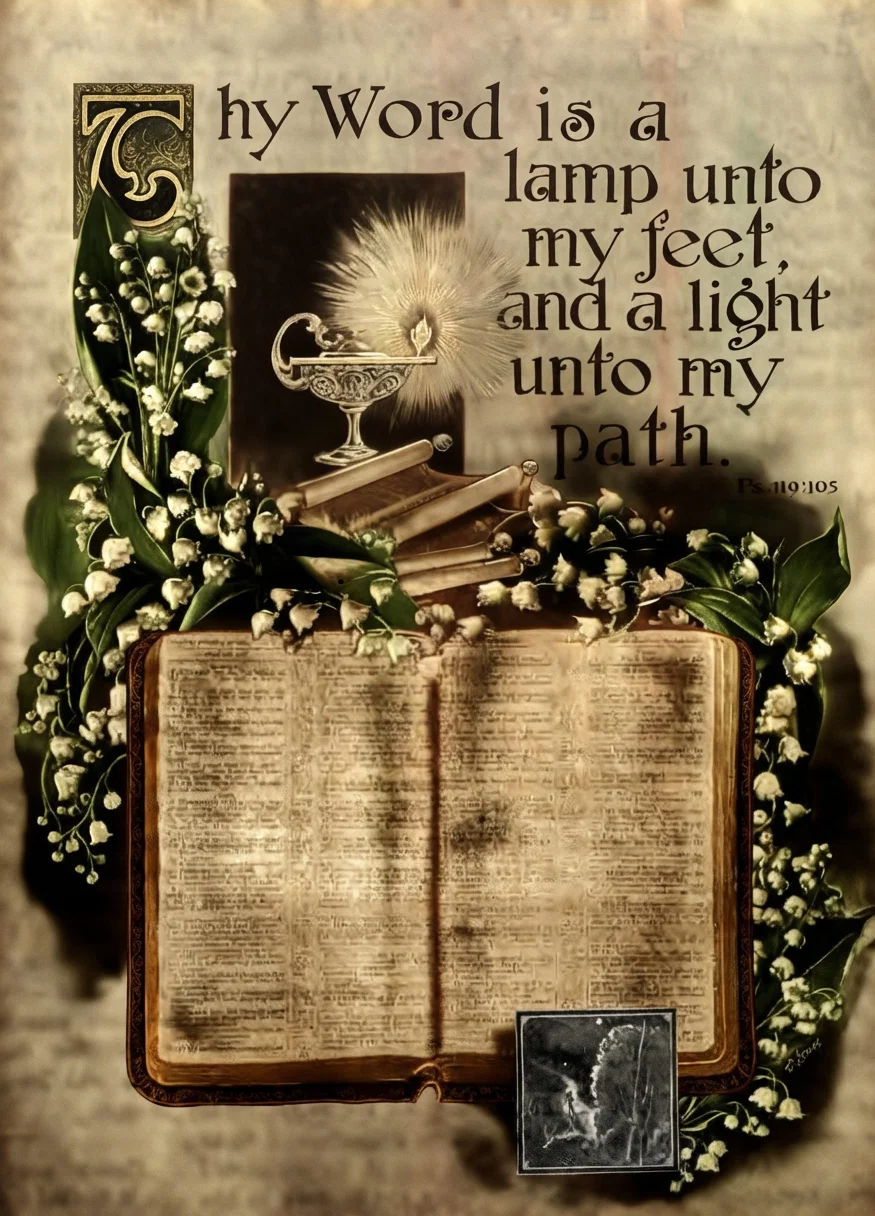
"We have also a more sure word of prophecy; whereunto ye do well that ye take heed, as unto a light that shineth in a dark place, until the day dawn, and the day-star arise in your hearts." 2 Peter 1: 19.
ADAM the first had not yet left Eden, till prophecies began. That first prophecy has been in process of fulfilment all thru the ages to the present time, but will not be completely fulfilled till Christ, Adam the Second, shall begin His everlasting reign, with all His saints in the restored, rebeautified, and re-glorified new heavens and new earth.
Prophecies pertaining to this world and its inhabitants in all ages have multiplied. We may truly say that a goodly portion of the written word of God is prophetic. Very many of these prophecies have already been fulfilled, and hence have passed into history. The number and accuracy of these fulfilments furnish a solid and immovable basis for faith in the predictions that still await their fulfilment. With Peter, we may confidently rest and trust in the sure word of prophecy.
As prophecies have increased in number, the light of their unfolding has proportionately increased. And from this source alone, a great flood of light from the prophetic word is flowing in upon the last generation. Those who reject it and turn from it will be in greater moral darkness than any people that ever lived upon the earth. Greater light brings greater illumination to those that take heed to it and walk in it, and greater darkness and condemnation to the willingly ignorant and disobedient. This class will be so numerous on the earth in the last days that it is prophetically declared that darkness covers the earth, and gross darkness the people.
But the remnant church of Christ, who have heeded the counsel of the faithful andtrue Witness, will be all light in the Lord. In them, all the truth of the everlasting Gospel will be made flesh, and dwell among the people. And as they run to and fro in the earth among all nations, tongues, and peoples, the last message of Gospel truth will truly run and be glorified. It is thus that the earth will be lighted with the glory of all the revealed truth of the ages. And that glad day hasteth greatly.
The remnant church, dangerously lukewarm tho they have been, will have turned over to Christ all their assets of wretchedness, misery, poverty, blindness, and nakedness. By zealous repentance they are enabled to exchange all their worthless things wherein they had trusted for the gold tried in the fire, the white raiment, and the eyesalve. Thus they have opened the door of their hearts, and Jesus comes in, bringing all His graces. And Jesus is the Day-star, the bright and morning Star, and when He comes, it will be the Day-star arising in their hearts. All such souls will then be fully conscious that they have entered the dawning that precedes the perfect day of eternal glory. They will thus "arise and shine," and in that shining they will rejoice to know that they are revealing Christ as the bright and morning Star in the very dawn of the revelation of Christ as the Sun of Righteousness arising with their everlasting healing in His wings.
H. A. ST. JOHN.

Emmanuel.

HE is coming! He is coming! When the winter days appear, When the trees are gaunt and leafless At the closing of the year— When the snowflakes softly falling O'er the earth their mantle fling, Hark! the sound of voices calling— “He is coming! Christ our King!”
He is coming! He is coming! Tho the night is wrapt in sleep, Yet the air is full of music, And the stars their watches keep; And the winds that murmur weirdly And the giant branches swing, Seem replete with voices calling— “He is coming! Christ our King!”
He is coming! He is coming! Yes, we feel it in our hearts; At the sound our pulses quiver, And the very life-blood starts— O, the time of mirth and gladness! O, the words that sweetly ring Thru the vista of the ages— “He is coming! Christ our King!” —Rev. J. I. Cameron.

Overcoming Sin.

THERE is no one who reads the Bible who has not a desire to "enter in thru the gates into the city" of God in the eternal world. There is but one thing which will keep anyone from doing so, and that is unforgiven sin. Those who enter there are "they that do His commandments." Sin, which is "the transgression of the law" of God, unless repented of and forsaken will forever close those pearly gates against the sinner.
One sin which will turn many away from that heavenly city is the indulgence of appetite. Both gluttony and drunkenness are condemned, and we are plainly told that drunkards shall not inherit the kingdom of God. 1 Cor. 6:10.
"Thou shalt not kill," is the command transgressed when we eat or drink that which injures the body, whether it be the taking of enough poison to kill in an hour, or indulging in smaller doses often repeated as in the case of the "moderate drinker." The latter finds in time that appetite has become his master, for "his servants ye are to whom ye obey." Rom. 6:16.
Many, when they realize this, and that unless this sin is overcome they can not be saved, give up in despair and make no further effort. But there is still hope. "Jesus Christ came into the world to save"—the righteous? No, thank God, He came "to save sinners."
When here upon earth, He was "tempted in all points like as we are" and His great heart of love "is touched with the feeling of our infirmities." Heb. 3:15. The record says that He was "without sin," so that altho tempted in every way by His subtle and implacable enemy, He never once yielded to him.
Now, how did He succeed in withstanding the temptations of Satan? We find an example in Matt. 4:3, 4, in which He overcame on this very point—appetite. After a fast of forty days, He was assailed by Satan with the temptation to prove that He was the Son of God by turning the stones lying about Him in that wilderness retreat into bread.
He was "an hungered." O, how He must have longed for bread! We who every day have such abundance of food can not understand the power of this temptation. "All things were made by Him," and He could instantly have provided for His need; but He was not a servant of Satan and would not obey him. His answer was, "It is written, Man shall not live by bread alone, but by every word that proceedeth out of the mouth of God."
So we find that when tempted to sin, Jesus remembered what "is written" which met that temptation; it strengthened Him to do right, and with it He silenced the tempter on that point. The word of God is "the sword of the Spirit," and was the weapon which Jesus used in conquering sin.
And, tempted one, this is the sword that we are given to use constantly in our warfare against the enemy of our souls. "The word of God is quick, and powerful, and sharper than any two-edged sword." Heb. 4:12. Christ, who is the Captain of our salvation, overcame him with this sword, and if we "hide His word" in our hearts that we "sin not," the Holy Spirit will bring to our "remembrance whatsoever He has said," just when we need it, and enable us to escape by the way which He always makes for the tempted. 1 Cor. 10:13.
There are wonderful promises in this book of God to the overcomer:

"Him That Overcometh"

  1. "Will I give to eat of the Tree of Life."
  2. "Shall not be hurt of the second death."
  3. "Will I give to eat of the hidden manna."
  4. "I will give him a white stone and in the stone a new name written."
  5. "Will I give power over the nations."
  6. "I will give him the morning star."
  7. "Shall be clothed in white raiment."
  8. "I will not blot out his name out of the Book of Life, but
  9. "I will confess his name before My Father, and before His angels."
  10. "Will I make a pillar in the temple of My God, and
  11. "He shall go no more out."
  12. "I will write upon him the name of My God, and the name of the city of My God, . . . and My new name."
  13. "Will I grant to sit with Me in My throne." Rev. 2:7, 11, 17, 26, 28; 2:5, 12, 21.
O, brother, sister, is it not well worth the battle against sin, in whatever form it assails us, when we may look forward to such complete victory and eternal joys? Then shall we join the heavenly throng in praise to God because "in all these things we are more than conquerors thru Him that loved us." Rom. 8:37.
LOUISE M. STORMONT.
Continue reading: The Sabbath