Your ShelfYour Projects

Signs of the Times, Vol. 36, No. 19.

Blessednesses of the Righteous

Signs of the Times

May 12, 1909

Pacific Press Publishing Association · Mountain View, California · May 12, 1909

Blessednesses of the Righteous

(Spurrell’s Translation)
Blessed is that man who followeth not after the counsel of the wicked,
Neither abideth in the way of sinners,
Nor sitteth in the seat of the scorners;
But rather delighteth in Jehovah’s law;
And in His law will he meditate by day and by night.
Surely he shall be like a tree planted by the streams of water,
Which shall produce its fruit at the proper season;
Surely his leaf shall not fade;
And whatsoever he will do shall prosper.
It is not thus with the wicked:
Rather like the chaff which shall be scattered by the wind are they.
Therefore the wicked shall not abide in the judgment;
Neither sinners in the assembly of the righteous.
Surely Jehovah knoweth the way of the righteous;
But the way of the wicked shall perish.

Question Corner

To Our Inquirers.—

(1) The name and address of all who ask questions must accompany questions, not necessarily for publication, in token of good faith, and that we may reply by letter if thought best. All communications will be considered confidential if so desired, and no name will be published unless requested. But we have no time to give to anonymous or unsigned epistles or articles. (2) Let the questions be to the point. Do not say, “Explain Josh. 7:1-8,” but state the thing upon which help is desired. (3) Questions can not be answered immediately in this department. Sometimes it will mean a month or more of waiting. We can not reply to the same question frequently. Read answers to other questions; you may find reply to yours. (4) Members of the Bible Band will kindly enclose stamp if answer is desired by letter. Others will please enclose ten cents. This does not begin to meet expenses oftentimes. (5) “Foolish . . . questions avoid.”

2839.—2,300 or 2,400.

I enclose an article in which it is stated that the Seventy, or Septuagint, has 2,400 days in Dan. 8:14 instead of 2,300. Is this as reliable as the Common Version or the Revised Version? A SUBSCRIBER.
The Septuagint gives 2,400 days, but the Alexandrian Septuagint gives 2,300 days. There is but one ancient copy that gives 2,400 days. There is one ancient copy that gives 2,200 days, but all of the very best copies of Hebrew and otherwise give 2,300 days. There is no question regarding this on the part of critical scholars. The only ones who question it are those who have some theory to sustain. The cleansing of the sanctuary was not a work to be done by the restoration of the Holy Land or the cleansing of this earth. It was a heavenly, spiritual work to be wrought by our great High Priest on high, and in the hearts of God’s children. If the writer of the article enclosed had understood this he would not have endeavored to sustain the reading in the Septuagint.

2840.—The Rest that Remains.

Please explain the rest spoken of in Heb. 4:1-8. Some have thought that it is the rest of the Sabbath that is referred to, others, the rest of the children of Israel after they entered the land. C. B.
The one thing above all which is referred to is the great, eternal rest of God. All other rests were types or shadows or pledges of this rest. Before sin entered of course that rest was assured when God created the earth and gave it to men. God rested on the seventh day. That was God’s pledge of an eternal rest; an eternal Sabbath-keeping to His people, for the Sabbath pertains not simply to one day of the week, but to all time. But because of sin man failed to enter the rest at that time. He brought misery and unrest upon the race. God offered it to His people when He called them out of Egypt. He tells us that men’s days would have been “as the days of heaven upon the earth” if they had obeyed Him, but they failed again. They did not enter into His rest because of unbelief, so the eighth verse implies that Joshua (“Jesus” in the Common Version, “Joshua” is the Hebrew form, of which “Jesus” is the Greek form) did not give them rest. Therefore the Lord referred to another day, quoting from the Psalms. It was “to-day” then that they could enter into His rest, a spiritual rest. Our Lord Jesus Christ offers us the same rest, giving up our own sins, our own works and accepting of the rest which is in Christ Jesus and His works. For that rest the Sabbath is a pledge, and he only truly keeps the Sabbath who knows the rest of Christ. That rest is a pledge of the eternal rest when all God’s children will enter the kingdom prepared from the foundation of the world. See the article, “The Seal of God and the Mark of the Beast,” in the SIGNS of April 28.

2841.—The Lord Giveth and the Lord Taketh Away.

Please give an explanation of the passage of Scripture (Job 1:21): “Jehovah gave, and Jehovah hath taken away; blessed be the name of Jehovah.” What part does the Lord have in taking away our loved ones from us? O. R. G.
What the Lord permits to be done, is often spoken of as He did it; because it is possible for Him to control all circumstances, as expressed in Rom. 8:28: “And we know that all things work together for good to them that love God.” Ps. 84:11: “No good thing will He withhold from them that walk uprightly.” Job evidently felt that God had in his trouble some good for him, and so, whatever came to him, he would bless God, even if it meant the removal of those who were dear to him. The Lord knew all about it, and he would bless the Lord for that. So ought His children always to do. It may bring sorrow of heart, and yet this need not take from us our faith in the overruling providence of God. This does not mean that it was through the Lord’s agency that death came. Death entered into our world as the result of sin, but the Lord permits death to remove from us those we love; and that not because He has enmity against us, but He suffers the consequences of sin upon all the human race. From these consequences He will redeem all His children.

2842.—Conversation on the Sabbath.

What course should be pursued when on the Sabbath I am asked a question in which only worldly interests are involved? D. A. F.
It is impossible to answer categorically a question of this kind. The rule for Sabbath conversation is given us in Isa. 58:13: “Not doing thine own ways, nor finding thine own pleasure, nor speaking thine own words.” Of course when we are brought into connection with those who have no regard for the Sabbath we must expect that they will ask all sorts of questions and will also enter into all kinds of worldly conversation. We must have the wisdom of God on such occasions as these,—true Christian tact to answer so wisely that we ourselves shall neither break the Sabbath nor willingly offend the other party. There are no questions but what can be answered as a Christian ought to answer, it seems to us. We can either give the answer that is desired, or we can kindly say that those are questions that we would prefer not to talk about on the Sabbath day. It must, of course, depend upon the question, the circumstances, the persons. All these are involved. God must give the wisdom. It is always well to remember that it is better even to offend than to sin, but all such difficulties can easily be obviated if we have the Spirit of Christ and the wisdom which He is willing to give. In such cases, no reasonable person will be offended.

2843.—The Life of the Boy Jesus.

Why is there nothing said in the Bible about the life of Jesus from the time He was twelve years old until His baptism? READER.
From twelve years old, the Bible puts it. At the age of twelve the child became responsible under the Jewish customs. It was then that our Lord was taken to the temple in Jerusalem. Between that time and the time when He was baptized, His whole life is summed up in one sentence: “And Jesus advanced in wisdom and stature, and in favor with God and men.” Luke 2:52. Of what special benefit would it have been to us if the Lord had given us the history of His Son in detail? The Bible never ministers to human curiosity. There are many things that as we read we wish the Lord had revealed, but Infinite Wisdom did not see necessary; Infinite Wisdom did not deem it necessary that a detailed account of our Lord’s life should be given during the age of youth. And we may believe that we have lost nothing by it, or the Lord would have given it.

2844.—Ascended into Heaven.

Have you any tract or reading that will harmonize 2 Kings 2:11 and John 3:13? L. J. R.
There is no inharmony. Elijah ascended and was carried to heaven with angels. These companies of angels were arranged in the form of chariot and horses of fire. John 3:13 is referring to another thing. It is not the mere abstract statement that no man ascended into heaven, but no man entered into heaven and came back again to teach the things that Jesus was teaching. He is the only one who came from heaven to do that work. Understanding the passage in that way there is no trouble. Elijah ascended into heaven; Moses was raised from the dead and taken to heaven; Enoch was translated, but none of them have come back to teach us as did our Lord. Read verse 11 in connection with verse 13. “We speak that which we know, and bear witness of that which we have seen.” Reading the context you will see that verse 13 refers to the matter of teaching the things in which our Lord was instructing Nicodemus.

2845.—Asking the Blessing.

Will you please tell me which is correct, to ask your company to ask the blessing at the table, or to ask it yourself? M. W.
It is quite common in some lands and among some peoples for the head of the family to always ask the blessing. It is not considered a breach of etiquette so to do, and yet as a general thing if our guest is a minister or an aged experienced Christian, it is always proper to ask him if we so desire. There are some who might consider it a breach of etiquette not to do it. Where the person who is our guest is a young person, or one of little experience, it is well for the head of the house to ask God’s blessing, not only upon the food, but upon the stranger who may be at the table. Let us follow the Golden Rule, guided by the Spirit of God in this part of the Lord’s worship as well as in others.

2846.—Which Law.

In 2 Cor. 3:7-17 was Paul speaking of the moral law or the ceremonial law? J. S.
It seems clear to us that the apostle was speaking of the moral law. Note that he does not say that the law was done away, but the condemnation which the law brings is done away. Note, too, how that condemnation is done away. It is done away only when one believes on the Lord Jesus Christ. There was a glory connected with the giving of the law; that glory was so great that when Moses was in converse with God it caused his own face to shine; shone out in fact from Moses’ heart, so that the children of Israel looking upon Moses’ face felt condemned, and in their unbelief in God asked that a veil be put over Moses’ face so they could not see that glory. The Lord wanted them to feel that condemnation so that they would put away the sin and receive of His glory that would cause that sin to be abolished and the glory of justification, or righteousness, take the place of the glory of condemnation. That would have placed the law within their own hearts so that they would have loved it and would not have been condemned by it. They would not do that; consequently the law was to them condemnation, and condemnation only. It is the condemnation which the Lord Jesus Christ takes away. It is the glory of the condemnation which fades in the greater glory of righteousness. For a much fuller explanation see No. 149 of “Bible Students’ Library: ‘What Is Done Away in Christ?’”

2847.—Breaking the Covenant.

Please explain Zech. 11:10. I thought that any covenant always meant the Ten Commandments, and it sounds as though this meant that God broke them Himself. Ps. 89:35 says, “My covenant will I not break.” O. S. J.
What the Lord is here showing are the conditional promises which He had made to Israel. These promises are most clearly stated in Jer. 18:7-10. Just as long as His people will walk in His way and trust Him, all His promises will hold good; when they are determined to walk in their own way, necessarily He must permit them to do it. He breaks His covenant only when they put themselves into that condition that it is impossible for Him to fulfil it. God would have done wonderful things for His people in the days of the prophet. He would have restored them to their own land and have made them a power and a praise in the earth, the one people above all other peoples. They would not let Him do it; consequently the promises which He had made concerning them could not in the very nature of the case be fulfilled.

Man’s Failure to Interpret Nature

God in Nature—No. 2
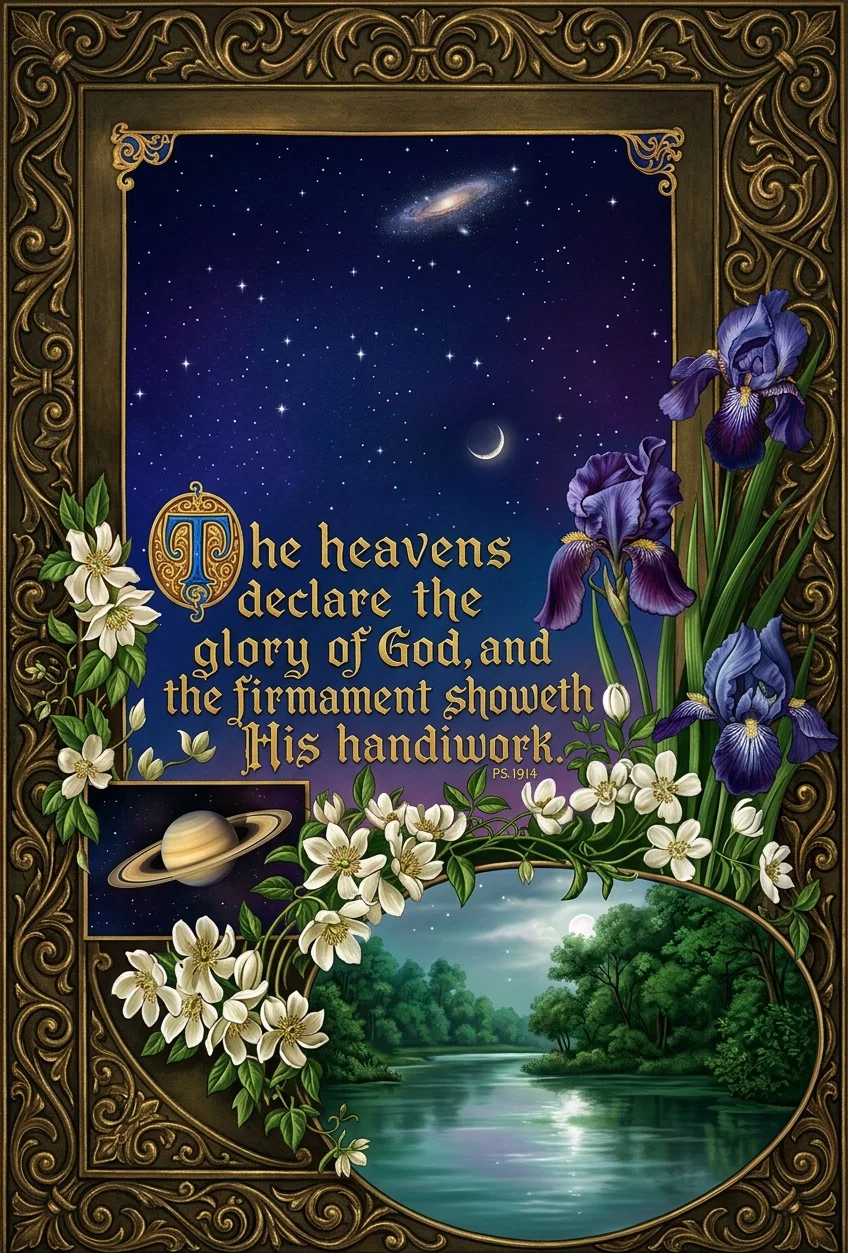
By Mrs. E. G. White

Man’s Failure to Interpret Nature

Apart from Christ we are still incapable of interpreting rightly the language of nature. The most difficult and humiliating lesson that man has to learn is his own inefficiency in depending upon human wisdom, and the sure failure of his efforts to read nature correctly. Of himself he can not interpret nature without placing it above God. He is in a condition similar to that of the Athenians, who, amidst their altars dedicated to the worship of nature, had one inscribed, “To the unknown God.” God was indeed unknown to them. He is unknown to all who, without the guidance of the divine Teacher, take up the study of nature. They will assuredly come to wrong conclusions.
In its human wisdom the world knows not God. Its wise men gather from His created works an imperfect knowledge of Him; but this knowledge, so far from giving them exalted conceptions of God, so far from elevating the mind and the soul, and bringing the whole being into conformity with His will, tends to make men idolaters. In their blindness they exalt nature and the laws of nature above nature’s God.
God has permitted a flood of light to be poured upon the world in the discoveries of science and art; but when professedly scientific men reason upon these subjects from a merely human point of view, they are sure to err. The greatest minds, if not guided by the word of God, become bewildered in their attempts to investigate the relations of science and revelation. The Creator and His works are beyond their comprehension; and because these can not be explained by natural laws, Bible history is pronounced unreliable.
Those who question the reliability of the Scripture records, have let go their anchor, and are left to beat about upon the rocks of infidelity. When they find themselves incapable of measuring the Creator and His works by their own imperfect knowledge of science, they question the existence of God, and attribute infinite power to nature.
In true science there can be nothing contrary to the teaching of the word of God; for both have the same Author. A correct understanding of both will always prove them to be in harmony. Truth, whether in nature or in revelation, is harmonious with itself in all its manifestations. But the mind not enlightened by God’s Spirit, will ever be in darkness in regard to His power. This is why human ideas in regard to science so often contradict the teaching of God’s word.

The Work of Creation

The work of creation can never be explained by science. What science can explain the mystery of life?
The theory that God did not create matter when He brought the world into existence, is without foundation. In the formation of our world, God was not indebted to preexisting matter. On the contrary, all things, material or spiritual, stood up before the Lord Jehovah at His voice, and were created for His own purpose. The heavens and all the host of them, the earth and all things therein, are not only the work of His hand: they came into existence by the breath of His mouth.
“By the word of the Lord were the heavens made; and all the host of them by the breath of His mouth. . . . He spake, and it was; He commanded, and it stood fast.”

Laws of Nature

In dwelling upon the laws of matter and the laws of nature, many lose sight of, if they do not deny, the continual and direct agency of God. They convey the idea that nature acts independent of God, having in and of itself its own limits and its own powers wherewith to work. In their minds there is a marked distinction between the natural and the supernatural. The natural is ascribed to ordinary causes, unconnected with the power of God. Vital power is attributed to matter, and nature is made a deity. It is supposed that matter is placed in certain relations, and left to act from fixed laws, with which God Himself can not interfere; that nature is endowed with certain properties, and placed subject to laws, and is then left to itself to obey these laws and perform the work originally commanded.
This is a false science; there is nothing in the word of God to sustain it. God does not annul His laws, but He is continuallyworking through them, using them as His instruments. They are not self-working. God is perpetually at work in nature. She is His servant, directed as He pleases. Nature in her work testifies of the intelligent presence and active agency of a Being who moves in all His works according to His will. It is not by an original power inherent in nature that year by year the earth yields its bounties and continues its march around the sun. The hand of Infinite Power is perpetually at work guiding this planet. It is God’s power momentarily exercised that keeps it in position in its rotation.
The God of heaven is constantly at work. It is by His power that vegetation is caused to flourish, that every leaf appears, and every flower blooms. Every drop of rain or flake of snow, every spire of grass, every leaf and flower and shrub, testifies of God. These little things so common around us, teach us that nothing is beneath the notice of the infinite God, nothing is too small for His attention.
The mechanism of the human body can not be fully understood; it presents mysteries that baffle the most intelligent. It is not as the result of a mechanism, which, once set in motion, continues its work, that the pulse beats, and breath follows breath. In God we live and move and have our being. Every breath, every throb of the heart, is a continual evidence of the power of an ever-present God.
It is God that causes the sun to rise in the heavens. He opens the windows of heaven, and gives rain. He causes the grass to grow upon the mountain. “He giveth snow like wool; He scattereth the hoar frost like ashes.” “When He uttereth His voice, there is a multitude of waters in the heavens. . . . He maketh lightnings with rain, and bringeth forth the wind out of His treasures.”
The Lord is constantly employed in upholding and using as His servants the things that He has made. Said Christ, “My Father worketh hitherto, and I work.”

Mysteries of Divine Power

Men of the greatest intellect can not understand the mysteries of Jehovah as revealed in nature. Divine Inspiration asks many questions which the most profound scholar can not answer. These questions were not asked that we might answer them, but to call our attention to the deep mysteries of God, and to teach us that our wisdom is limited; that in the surroundings of our daily life there are many things beyond the comprehension of finite minds; that the judgment and purposes of God are past finding out. His wisdom is unsearchable.
Skeptics refuse to believe in God, because with their finite minds they can not comprehend the infinite power by which He reveals Himself to men. But God is to be acknowledged more from what He does not reveal of Himself, than from that which is open to our limited comprehension. Both in divine revelation and in nature God has given to men mysteries to command their faith. This must be so. We may be ever searching, ever inquiring, ever learning, and yet there is an infinity beyond.
“Who hath measured the waters in the hollow of His hand, And meted out heaven with a span, And comprehended the dust of the earth in a measure, And weighed the mountains in scales, And the hills in a balance? Who hath directed the Spirit of Jehovah, Or being His counselor hath taught Him?” “Behold the nations are as a drop of a bucket, And are accounted as the small dust of the balance: Behold, He taketh up the isles as a very little thing. . . . “To whom then will ye liken God? Or what likeness will ye compare unto Him? . . . Have ye not known? Have ye not heard? Hath it not been told you from the beginning? Have ye not understood from the foundations of the earth? It is He that sitteth above the circle of the earth, And the inhabitants thereof are as grasshoppers; That stretcheth out the heavens as a curtain, And spreadeth them out as a tent to dwell in. . . . To whom then will ye liken Me, That I should be equal to him? Saith the Holy One. Lift up your eyes on high, And see who hath created these, That bringeth out their host by number; He calleth them all by name; By the greatness of His might, and for that He is strong in power, Not one is lacking.”
Continue reading: The Spirit World and a Future Life