Your ShelfYour Projects

Signs of the Times, Vol. 39, No. 47.

Question Corner

Signs of the Times

Dec 3, 1912

Pacific Press Publishing Association · Mountain View, California · Dec 3, 1912

Question Corner

"IF YE WILL INQUIRE, INQUIRE YE."
This Inquirers' Department is conducted for the purpose of helping those who are studying the Bible. The answers are oftentimes only suggestive. They are never to be considered infallible, only as they agree with the infallible Word. The writer who may answer them does not consider that his opinion is infallible. He will simply give the best that he has, and plead with the inquirer to search the Word. Such questions only will be answered as, to the editors, seem to minister to the good of the readers and to the mission of the paper. We can not answer repeatedly in the same volume questions upon the same scripture. The name and address must accompany question, not for publication, but as an evidence of good faith, and that answer may be made by letter if deemed advisable. No letters are answered which do not contain the name of the writer. It is well always to enclose stamp for reply.
A Positive Rule.—Almost every week there come some inquiries by persons who forget to sign their names. It is a positive rule that we do not answer these unless the names accompany them. For instance, we have one before us asking an explanation of Prov. 31:6, 7, which we would be glad to answer; and the one who asks it says that he is a regular reader of our paper. If so, he will see this note. If he wishes his question answered, he must give his name,—not that we desire it to publish, or to use in any way, but as an evidence of good faith, and so that we can answer the question by a direct letter to him, if so desired.

3926 — Leaving First Principles

Please explain Heb. 6:1-7.
J. F.
First of all, we are taught that we should not always abide on mere fundamentals. We should leave the doctrines of the first principles, or in other words, the mere rudiments of Christianity. It does not mean that these first principles are not true, and that they should not be held with us all the while, but we should build upon them. A building that never gets beyond its foundation is neither beautiful nor valuable. We like to see erected on a good foundation a strong, beautiful superstructure, that will be a blessing to humanity and a beauty to the world; and so God wants us to go on,—not to lay again by going back into sin and selfishness and repentance from dead works. Let our faith develop character, let our baptism show what our life should be,—a new life in Christ Jesus. Let all these truths which we receive in the fundamentals help us to build for God, and thus will we do, if God permit, we are told. Then another class is mentioned. (See also answers on questions pertaining to Heb. 10:26-30.) There are some who are enlightened, who have tasted of the heavenly gift, who have been made partakers of the Holy Spirit, who have tasted the good Word of God and the powers of the age to come, and such fell away; but those who thus fall away, having this wonderful knowledge of the truth, we are told it is impossible to renew to repentance. Why?—They crucified to themselves the Son of God afresh, and put Him to an open shame. The full meaning of the scripture is shown by the illustration that is used in verses 7 and 8. Here is land which is drinking in the rain continually, but instead of bearing that which is good, it brings forth thorns and thistles; and of course the more rain it drinks in, the more thorns and thistles it bears. So it is with a heart that continually rejects God's goodness until it is utterly filled with that which is evil.
Consequently it is rejected. But on the other hand, if that land which drinks in the rain brings forth herbs meet for them for whose sake it was tilled, that receives blessing from God. The heart that is satisfied with its own selfishness until it can not see the difference between its own selfishness and God's demands, becomes hopeless at last. The Lord has no means of reaching it. The unforgivable sin is the unrepentable sin.

3928—Elijah

Please explain Mal. 4:5, 6. A Mormon claimed that Elijah had come to them. Do you not think that Elijah will come, or has come? T.
Elijah, because of his stalwart reformation, his faithful character, his direct preaching in the power of God, has been used by Inspiration as a type of those who should come later. So he became a type of John the Baptist, and Jesus said, "And if ye are willing to receive it, this is Elijah, that is to come." Matt. 11:14. But when John was asked by the Jews, "Art thou Elijah?" he said, "I am not." John 1:21. How, then, can we harmonize these? Luke gives us the key to the harmony in his first chapter and 17th verse: "And he [John] shall go before His [Christ's] face in the spirit and power of Elijah." That is what John was; he was simply doing the work of Elijah adapted to his own time and his own way, but with the same spirit and power. But Malachi speaks of a different time, the time just before the great day of God shall come. What, then, are we to expect? That Elijah himself will come again?—Not at all. But just the same as Elijah was a type of John the Baptist, who heralded Christ's first coming, so he was a type of that people who will herald Christ's second coming. Not that it shall be necessarily confined to one, but the very body of people that shall herald Christ's second coming are typified by the one Elijah, and also by John the Baptist. John the Baptist went to a very small people, a small kingdom. It would be impossible for one individual to do the work in the last days that Elijah did in his day. That is, it would be impossible for one individual to give warning to the whole world as Elijah did to the people of God in his day.
Jezebel, an individual, is used as a type of the great apostasy in the Christian age. See Rev. 2:20. This does not refer to one woman, but it refers to the apostate church. So Elijah is used as the type of the true remnant church of God, which keep the commandments of God and the faith of Jesus. He will bring before the world the statutes and the judgments which God commanded to Israel. He will preach against the union of church and state just as Elijah did in the unholy union between Ahab and Jezebel. He will call the world back from idolatry to the great God who made the heavens and the earth. So it will be done in the last great messages recorded in Rev. 14:6-14. And this message is the only thing, because it is the everlasting gospel, which will turn the heart of the fathers with the children, and the heart of the children with the fathers, to the great God who made the heavens and the earth.

3925 — End of the World

Do the hundreds of other worlds come to an end when this one does in which we are living? A Subscriber.
The expression "the end of the world" in the Bible conveys a wrong idea. The term "world" in such case comes from a Greek word which indicates "age," as for instance in Matt. 28:20, "Lo, I am with you alway, even unto the end of the world;" or Matt. 13:39, "The harvest is the end of the world." In both of these cases, it means the end of the age. The world in the sense of the earth does not come to an end. The earth does not come to an end, as expressed in Eccl. 1:4, "The earth abideth forever." The earth passes through certain changes, or certain ages. The patriarchal age was one; the Jewish age was another; the Christian age is another. Then comes the close of probation, the great age of judgment; then the eternal ages of God. Presumably, wherever God has sentient, intelligent, responsible creatures, they have had a time of probation. These times of probation may already have closed. They may close when it does in this world; but there will be no such time of judgment or calamity come upon these other worlds, in all probability, as will come upon this. These other worlds have not sinned. The great problem of sin is being worked out upon this little planet. Doubtless it has affected all creation, as indicated in the 8th chapter of Romans; and when this earth emerges from its conflict victorious through Christ, other worlds also will receive the blessing which comes with the utter and absolute wiping out of sin from the universe.
How can Heb. 10:26, 27 be harmonized with 1 John 1:9? S.
1 John 1:9 reads, "If we confess our sins, He is faithful and just to forgive us our sins, and to cleanse us from all unrighteousness." Heb. 10:26, 27 reads, "For if we sin wilfully after that we have received the knowledge of the truth, there remaineth no more a sacrifice for sins, but a certain fearful expectation of judgment, and a fierceness of fire which shall devour the adversaries." In the one case there is repentance of heart, in the other case there is none. The man who treads underfoot the Son of God, counts the blood of the covenant wherewith he was sanctified an unholy thing, and does despite unto the Spirit of grace, has rejected the only means God has of saving him. The influence of the Spirit of God upon the heart to reprove of sin, and the blood of Christ to wash away the sin, are the means by which God saves men. But when a man utterly repudiates the Spirit of God, God has no means of reaching his heart; nor does the man know, when the Spirit comes, that it is the Spirit. And when a man turns from the only thing that would wash him clean, God has no other means. There is no other way but God's way. The man who comes, however, and confesses his sins, is a man who has repentance of sin. The Spirit of God has not left him, he responds to its reproof, and there is cleansing in the blood of Jesus. The unpardonable sin is the unrepentable sin, and the unrepentable sin is that which man brings upon himself by his resistance and rejection of the Spirit of God. He counts the blood of the covenant wherewith he was sanctified an unholy and common thing, and does despite to the Spirit of grace. Heb. 10:29.

3929 — Drinking Wine

Please explain 1 Tim. 5:23, regarding wine. A Subscriber.
The text reads, "Be no longer a drinker of water, but use a little wine for thy stomach's sake and thine often infirmities." There are two kinds of wine mentioned in the Bible — all agree to this — the pure juice of the grape and the fermented juice. Persumably, when the apostle is an inculcator of sobriety and temperance in all his writings, he did not advise Timothy to do anything, or drink anything, that would make him a drunkard.
Secondly, Timothy evidently had trouble. He was not a strong man. The apostle's words indicate that not only as regards his stomach was he troubled, but had also other infirmities. The water of those Eastern lands was many times notoriously bad, and the apostle advised Timothy, not for indulgence in something which he particularly loved, but something that he would utterly abstain from so as to give no excuse for even the appearance of evil, to take a little wine as that which would be beneficial in his case. There is nothing in it in any way to foster intemperance, or to give an excuse for one indulging to satisfy an abnormal appetite.

3930 — Other Churches

If one is living in a community where there is no Sabbath-school or church to go to, is he doing wrong by attending churches of other denominations?
That depends entirely upon the motive with which he goes. It is a matter of conscience which must rest with the individual and his God. If he finds that such a tendency is drawing him away from the love of the Bible, and the truth of the Bible, is making the simple truth of God seem less acceptable and less clear, if his conscience is less tender regarding vital truth, he would better stand aloof from all those things that would thus affect him; but if it is a means by which he can save souls, and bring them to a knowledge of the truth as it is in Christ Jesus, that is another thing. He himself must decide it.
Schedule for the Week Ending December 14, 1912

Schedule for the Week Ending December 14, 1912

Sunday December 8 Hebrews 12 Monday " 9 " 13 Tuesday " 10 James 1; Psalm 122 Wednesday " 11 " 2; " 123 Thursday " 12 " 3; " 124 Friday " 13 " 4; " 125 Sabbath " 14 " 5; " 126

Hebrews, James, and Psalms 122–126

Our week's reading closes Hebrews, includes James, and Psalms 122 to 126. Extended comment upon these blessed scriptures is not needed. All are plain, clear, and practical, and yet filled with a depth of infinitude. It is well to remark that the James who wrote this epistle was not James the brother of John the son of Zebedee one of the twelve, but probably James "the Lord's brother." These psalms were those which were sung by the Jews as they were going up to the feasts at Jerusalem. Therefore they are called "songs of ascent." Psalm 126 is without question postexilic, that is, it was composed after the captivity to Babylon.

God's Healing Message

IN the last three issues of this journal, there have been set forth "God's Great Oneness" in contrast with the divided condition of the religious world and the downward trend toward worldliness and infidelity. This division and consequent confusion, we learned, is named Babylon by the pen of inspiration, meaning confusion.
All the efforts of men to remedy these conditions have not only been futile, but worse than futile.
But is the church, the religious world, to be left without a remedy for its ills? Must confusion persist to the end?
No, emphatically, no. The great and wise Physician who has diagnosed our ills, has therefore the remedy. He who has met the needs of each age or generation, has a message for this age also.
It is a message foretold in God's Word, a message which bears on its own face the impress of the Divine, if men will but consider and receive it. It has within itself the evidence that it is from God. That message is not confined to one Bible writer or book; it is variously expressed. We refer to simply one statement of its great, positive truth, found in Revelation, the 14th chapter, and the 6th and 7th verses, as follows:
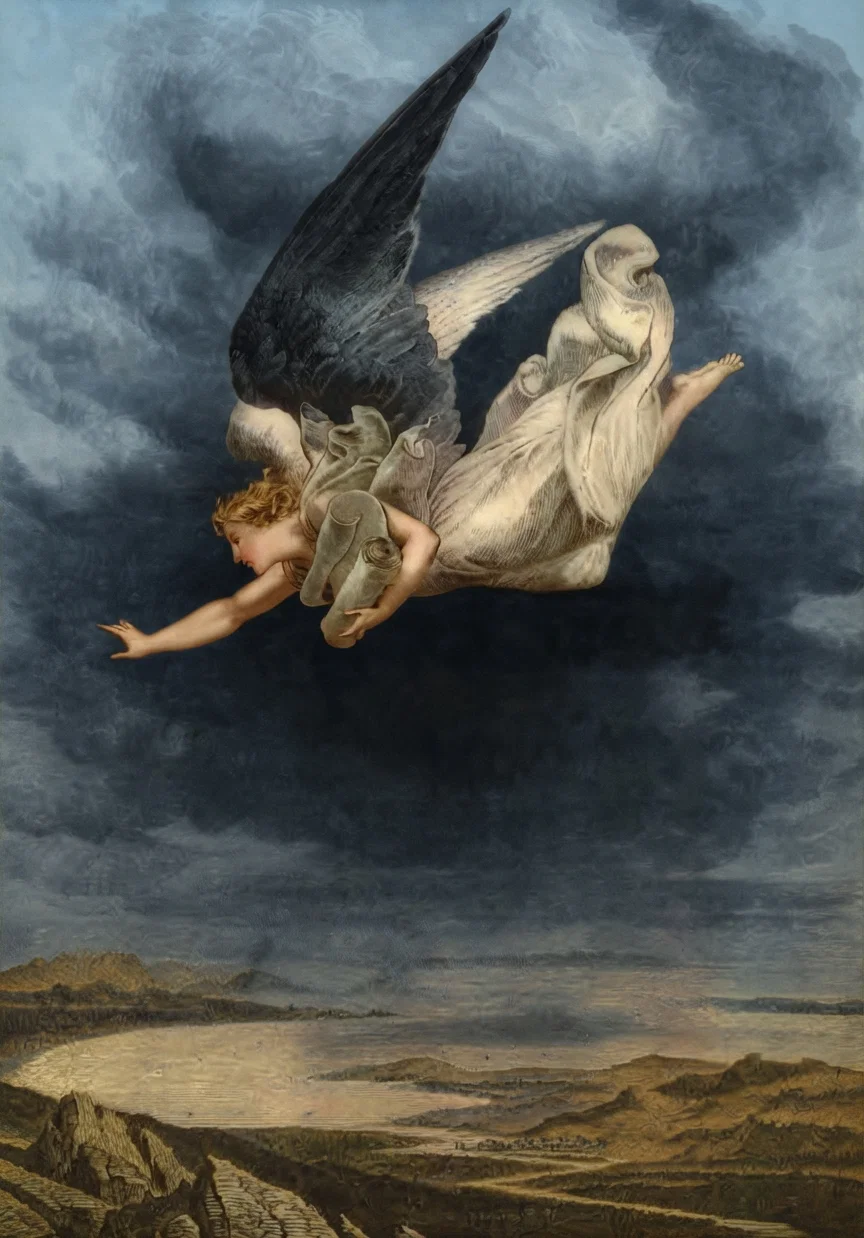
"And I saw another angel fly in the midst of heaven, having the everlasting gospel to preach unto them that dwell on the earth, and to every nation, and kindred, and tongue, and people, saying with a loud voice, Fear God, and give glory to Him; for the hour of His judgment is come: and worship Him that made heaven, and earth, and the sea, and the fountains of waters."
In this writing we wish to note these things:
1. The time of the message is indicated by the expression, "The hour of His judgment is come." In the teachings of our Lord, we are told that the great judgment-day is future—when Christ shall come (Matt. 25:31-34). The apostle Paul preached before Felix of "righteousness, temperance, and judgment to come" (Acts 24:25); and he declared to the Athenians that God had "appointed a day, in the which He will judge the world" (Acts 17:31). By all the New Testament writers the great day of judgment is placed in the future, and in connection with Christ's coming. But this message, we are prophetically told, applies at a time when "the hour of His judgment is come." The judgment is pending when that message is due to the world.
God's heavenly agencies always coöperate with His servants on earth. The last mighty gospel movement, as the first, has in its heralding unseen powers from God. The mighty angel is also symbolical of the rapid spread of the message.
The world has been resting in human judgment; it has trusted to the decrees of men, of councils, of conferences, of nations. The great bar of God has been forgotten, the Court of last Assize has found small place in the calculations of men. Human conduct has been molded by imperfect human standards. Surely all will recognize the necessity, the need, of a message that brings men back to the standard which God requires.
We spend in this world but a little time, at most. We may spend eternity elsewhere. This world is the preparation day for that longer period. How vastly important it is that the standard of our conduct, infinite in its results, shall be measured not by the standards which men erect, but by the standard which God Himself has given! Therefore the importance of calling men's attention to His judgment, to His holy standard. Surely such a message is demanded at this time.
2. The universality of the message. It is not a local message, as was God's message to Sodom, or to His own people at the time that our Lord first came, or as was Jonah's message to Nineveh. It is a universal message, a world-wide message. It is to go to every nation and kindred and tribe and tongue and people. They all need it. "We shall all stand before the judgment-seat of God." "Every one of us shall give account of himself to God." The message must be given to all. And God is giving just such a message as that to the world in these days.
3. It is the gospel message. It is not a new message; it is the old, ever-repeating message, in a new, living setting, for there can be but one gospel which is "the power of God unto salvation to every one that believeth." It has not lost its power in the lapse of time. As it was when Paul uttered the great truth to the Romans, it is to this generation. The power of God is manifest in creation—the heavens declare His glory; but the power of God is manifested through His gospel in the recreation of men, and there can be no greater power.
And this universal message for this time is a great gospel message—the everlasting gospel message which has regenerated men through all the ages of the past. The world needs it now, the church needs it now. The religion of Jesus Christ is more than mere form; it does not consist in inducing men to join a church and place their names upon a religious roster and declare that they will live a different life and follow a different form of mere ethics. There is no power in that. It may influence for a while, but it does not touch the fountain of the heart. What is needed is the life of Jesus Christ, by which men are born from above, created in Him, made new men and women.
One of the great charges against the church to-day is—and by this we mean Christianity in general—that her membershipis like the rest of the world; that there is no difference as a general thing in conduct, in character; that grafting, dishonesty, and failure to meet needed standards, is as manifest in the church as it is in the world. If this be true—and there are few who will deny it—the message of the everlasting gospel is needed now.
4. The very burden of that message indicates its need: "Fear God, and give Him glory," and "worship Him." The fear of man possesses men to-day. The whole trend of public life is away from the individuality, the manhood, of man. Recognizing more and more his weakness, he is gathering together by federations, by guilds, by bands. The individual is becoming lost in the mass; he is coming to recognize that he is of little worth if he stands, or seems to stand, against the interests of the many, and in this education men are coming to fear men.
They wish to question of men as to their conduct. They take the standards of the mass of men as to their character. Sounding out above all this is God's message, "Fear God." Let His presence be ever before you, let His law be your standard of character, let His Son be the example of your life, set Him always before your face.
The message has no respect to denominational boundary-lines. It bows to no creed. It cuts straight through all human barriers and creeds and councils, recognizes no priest, prelate, or pope, but brings the soul face to face alone with God.
The mighty men of all the ages, so far as Christian lands are concerned, are men who have had this vision of God, a vision of God's awful majesty, of His awful holiness of character, of the sure judgment which lies before; and having seen Him, and stood, as it were, an individual before His throne, they have come to fear God, and that fear of God has taken away the fear of men. It has not made man less precious in their sight—it has made him more precious, because he was the purchase of the blood of Christ; but it has made God so overwhelmingly great in their vision that they are no longer afraid of men. It has given them a recognition of man's right, which can come in no other way. In the sight of God, they have seen the little difference that exists in men, that they are all creatures in His sight, and no one of them or no combination of them has the right to lord it over his fellows, or to usurp the throne of the Infinite; to Him must all men be responsible. Surely such a message as that is needed for this time.
And with the fear of God goes the worship of God: "Worship Him." Men are worshiping men at the present day. Religious papers teem with the praise of man. They have little to say in the praise of God. Men's theories have swept away the blessedness of the gospel. Evolution has taken the place of re-creation, in the minds of men. Why should they not worship the men who have taught evolution, and men who in their wonderful wisdom set their hypotheses of science against the verities of the infinite God? Men are worshiped, the works of men's hands are worshiped, men's devices are worshiped. Human creeds are worshiped, and God is forgotten. Surely men need to-day that message, which we have quoted above: "Worship God." Truest worship is service, and worship is truest service, and the worship of God means the service of God.
5. That message received is a unifying message. It sweeps away all creeds, all human barriers; it brings the individual, soul-naked, before the throne of the infinite God. It gives him, in response to faith, the righteousness of God in Christ Jesus; it holds before him as a standard the norm, the rule, the law of God. It places in his heart and soul the blessed gospel of Christ to give to humanity. It leaves all human tradition behind, and treads underfoot all human superstition. Surely such a message as that is needed now.
And this is God's healing, unifying, exalting message of love and power to His church. All who receive the message find Him, the Healer.

Christ Our High Priest

By Mrs. S. N. Haskell
THE Saviour has many titles, for He "hath by inheritance" a more excellent name than all the angelic host of heaven. Of the many precious titles bestowed upon Him are the "Lamb of God" and "High Priest." By virtue of these two offices, He lifts poor fallen humanity up where we can share in His glorious kingdom of grace even while in the midst of this sin-cursed earth. In the typical service, the one who realized he was a sinner must bring a lamb. The priest could not officiate for him without an offering for sin. That entire service was but one great kindergarten lesson, making the way of salvation so simple that none could fail to comprehend it. When we realize that we have sinned, we remember our "Lamb," confess our sins, and in His name they are forgiven, then He officiates as High Priest in our behalf before the Father. He pleads the merits of His blood, and covers our life, stained with sin, with the robe of His spotless righteousness, and we stand before the Father "accepted in the Beloved." Eph. 1:6. How can we fail to love Him who offered His life for us, when Christ could say of His Father, "Therefore doth My Father love Me, because I lay down My life"! John 10:17. Even the infinite love of the Father for His Son was increased by that act.
In the type, the blood of the sin-offering was shed in the court, and then the priest entered the sanctuary with the blood to present it before the Lord. The Saviour gave His life a sacrifice for sin here upon the earth; and as He entered the heavenly sanctuary as High Priest, He is called the "Forerunner." Under no circumstances, only as He enters "within the veil" of the heavenly sanctuary, is that name applied to the Saviour. In all monarchical forms of government, the forerunner is a familiar character. In beautiful uniform, with waving plumes, he rides before and announces the approach of the royal carriage. While he is always hailed with joy by the waiting crowds, yet he is not the center of attraction, their eyes do not follow him as he passes on; but their eyes are turned down the road whence he came, to get the first glimpse of the royal personage of whom he is the forerunner.
Of all the wonderful condescensions on the part of our blessed Master, this is one of the grandest. When He entered heaven a mighty conqueror over death and the grave before the entire heavenly host and representatives of other worlds, He entered a Forerunner for us. He presented the "wave-sheaf" as sample of the race He had died to redeem, thus directing the attention of that wonderful assemblage down the road whence He came, to watch — for royalty! — Yes, for royalty made such by His precious blood. It is only a company of poor, frail mortals stumbling along and often falling by the way; but when they reach the heavenly gate, they will enter "heirs of God, and joint heirs with Christ." Rom. 8:17. It meant much for us that Christ entered the veil as our Forerunner, for all heaven is watching the church of God on earth.
When tempted by the enemy to doubt God’s love and care, remember that on account of the great sacrifice made, you are so dear to the Father that "he that toucheth you, toucheth the apple of His eye." Zech. 2:8. Heaven and earth are closely united since Christ entered within the veil as our Forerunner. The attention of every angel in glory is centered upon those striving to follow in Christ’s footsteps. 1 Peter 2:21. "Are they [the angels] not all ministering spirits, sent forth to minister for them who shall be heirs of salvation?" Heb. 1:14. Why should we falter by the way, and disappoint the heavenly host who are watching for us to come over the same road that our Forerunner entered as a mighty conqueror over death and the grave?
But let us never forget it is a blood-stained pathway. "When He was reviled, reviled not again; when He suffered, He threatened not; but committed Himself to Him that judgeth righteously." 1 Peter 2:23. We can not follow in His footsteps in our own strength. For that reason "in all things it behooved Him to be made like unto His brethren; that He might be a merciful and faithful High Priest in things pertaining to God, to make reconciliation for the sins of the people; for in that He Himself hath suffered, being tempted, He is able to succor them that are tempted. Wherefore, holy brethren, partakers of the heavenly calling, consider the Apostle and High Priest of our profession, Christ Jesus." Heb. 2:17, 18; 3:1.
In the earthly sanctuary, not only the high priest but also common priests officiated, because it was impossible for one man to perform all the work; but it required the work performed by all the priests in the typical services to represent the work of our High Priest. The work of one year was taken as a type of the entire work of our High Priest. During the year, "the priests [plural, both high and common] went always into the first tabernacle, accomplishing the service of God." This continued all the year, except that on one day the service changed, and "into the second [apartment] went the highpriest alone, . . . not without blood, which he offered for himself, and for the errors of the people." Heb. 9: 6, 7. These priests served "unto the example and shadow of heavenly things." Heb. 8: 5. When Christ entered heaven, He went as the antitype of the earthly service God had ordained, and entered within the first veil of the heavenly sanctuary. When the typical work ordained by God in the first apartment of the earthly sanctuary had fully met its antitype, He passed through the second veil (Heb. 9: 3) into the glorious apartment of the antitypeal holy of holies in the heavenly sanctuary, to perform the wondrous work which ends in the sins of the righteous being blotted out and forever destroyed, nevermore to be remembered by the redeemed host nor God Himself.
When the company who have traveled the road in the footsteps of the Forerunner, but often with stumbling step and faltering gait, the way ofttimes dimly seen because of falling tears, stand on the sea of glass, clad in the robes made white in the blood of the Lamb, Christ, as He stands in the midst, and places a glittering crown upon each head, will see of the travail of His soul, and be satisfied (Isa. 53: 11), and rejoice over them with singing; and all heaven will ring with melody as the angels who have served under their Commander in the work of saving souls, join in singing, "Blessing, and honor, and glory, and power, be unto Him that sitteth upon the throne, and unto the Lamb, forever and ever." Rev. 5: 13.

Object of Christian Living

By Mrs. E. G. White

CHRIST ever rebuked the Pharisees for their self-righteousness. They extolled themselves. They came forth from their religious services, not humbled with a sense of their own weakness, not feeling gratitude for the great privileges that God had given them. They were exalted to heaven in point of opportunity, in having the Scriptures, in knowing the true God; but their hearts were not filled with thankfulness to God for His great goodness toward them. They came forth filled with spiritual pride, and their theme was self—“myself, my feelings, my knowledge, my ways.” Their own attainments became the standard by which they measured others. Putting on the robes of self dignity, they mounted the judgment-seat to criticize and to condemn. But no human being has been authorized of God to do this work. It is the very essence of pharisaism. It is gathering about the soul the very shadows of darkness, so that the light of life can not penetrate the darkness. Satan deluded the Jews with a natural or legal religion, which was full of selfishness and hypocrisy, and thus were light and knowledge perverted; but this exalting of self, this self-righteousness, is nothing short of deception and self-destruction. Jesus said to Nicodemus, “Ye must be born again.”
The soil of the hearts of the Pharisees is a hopeless and profitless soil, where the seeds of heavenly truth can not take root. O, how self-deluding is this feeling of superiority that all Pharisees cherish! They suppose that others are at fault, and speak words of reproof and condemnation, and their words are strong and hard as nether millstones, and crush all hope and courage out of the soul. The goodness of heart manifested in the works of true Christians, puts into the heart of Pharisees roots of bitterness whereby many are defiled. They are full of evil thoughts, and suspect the purest. They make a man an offender for a word. Exalted self claims all their faith, honor, and love.
As Christ redoubled His efforts, manifesting His love in works of mercy, in pouring a flood of light upon a sin-stricken world, because the Pharisees could not controvert His doctrine, they threatened, hunted, and persecuted the Son of God. The people rejoiced in the wonderful works that Christ was doing; but the Pharisees, under the training and discipline of Satan, were so blinded that they charged Christ with casting out devils through the prince of devils. What a terrible pass for men to come to who profess to be the children of God! Those who begin to criticize and judge others know not to what lengths they will be led.
Jesus “spake this parable unto certain which trusted in themselves that they were righteous, and despised others.” Let every disciple of Christ inquire in all humility of mind, What must I do to be saved? If we sincerely desire to understand, we shall know. It is not because of our riches, our knowledge, our superiority of position, that Jesus loves us and blesses us, but because we believe in Him as our personal Saviour.
Jesus loved us while we were yet sinners, but having chosen us, He says He has ordained us to go and bring forth fruit. Has each one something to do?—Certainly, every one that is yoked up with Christ must bear His burden, work in His lines. Christians are not to be strengthless and indolent. No. “We are laborers together with God.” The life of Christ’s pardoning love in the soul is as a well of water springing up unto everlasting life. If the well of water is in the heart, then the entire life will reveal the fact, and the refreshing grace of God will be made manifest. Religion is not simply to have joyous feelings, to be conscious of having privileges and light, to have rapturous emotions, while expending all the energies to keep a balance in the Christian life, while doing nothing for the salvation of souls. Religion is doing the words of Christ; it is standing as faithful sentinels, not doing to earn salvation, but doing because, all undeserving, you have received the heavenly gift. Religion is to work out God’s plans, to coöperate with the intelligences of heaven. In this way you fulfil the words of Christ, “Ye have not chosen Me, but I have chosen you, and ordained you, that ye should go and bring forth fruit, and that your fruit should remain.”
It is the high privilege of the sons and daughters of God to go forth and present to others the truth as it is in Jesus; for we are to watch and to seek for souls as they that must give an account. We are to feel a constant sense of our indebtedness to God for the gift of His Son, and be ever watching for opportunities to enlist others in the army of the Lord. It is not he that enjoyeth righteousness, but he that doeth righteousness, that is righteous. Jesus said, “Whosoever shall do the will of My Father which is in heaven, the same is My brother, and sister, and mother.” The doing of the will of God is a result of possessing the faith that works by love and purifies the soul.
“That their hearts might be comforted, being knit together in love, and unto all riches of the full assurance of understanding, to the acknowledgment of the mystery of God, and of the Father, and of Christ; in whom are hid all the treasures of wisdom and knowledge.” If we will follow on to know the Lord, our views will broaden. They will not be bound about by self. We should pray the Lord to enlarge our understanding, so that we may not only understand that Jesus Christ is our substitute and surety, but that we belong to Christ as His purchased possession. Paul says, “Ye are bought with a price,” and draws this conclusion: “Therefore glorify God in your body, and in your spirit, which are God’s.”

OUR HIGH PRIEST

Heb. 7:25. Is able to save to the uttermost all that come to God by Him.
Heb. 4:15. Is touched with the feeling of our infirmities.
"Was in all points tempted like as we are, yet without sin."
Heb. 2:18. "For in that He Himself hath suffered, being tempted, He is able to succor them that are tempted."
Heb. 2:17. He is "a merciful and faithful High Priest in things pertaining to God, to make reconciliation for the sins of the people."
Heb. 7:25. He ever lives to make intercession for us.

Christ the Head of This House

“CHRIST is the head of this house, the chief guest at every meal, the chief listener to every conversation.”

Prayer Which Prevails

MORE than half a century ago, George Müller began to pray for a group of friends. I asked Mr. Müller, a short time before he died, if he had asked anything of God that had not been granted, and he told me he had prayed sixty-two years, three months, five days, two hours—with his mathematical precision—for two men to be converted, and neither of them showed any signs of that happening. I said, “Do you expect God to convert them?” “Certainly. Do you suppose that God would put upon His child for sixty-two years the burden of two souls if He had no purpose of their conversion?” Shortly afterward he died, and I was preaching in his pulpit, in Bristol, and referred to this occurrence. As I was going out, a lady said, “One of those men was my uncle, and he was converted, and died a few weeks ago.” I understand that the other man was brought to Christ in Dublin.—A. T. Pierson.

Protesting Against Wickedness

“It is not enough that the Christian character remains uncorrupted by the epidemic of wickedness; the Christian must protest against that wickedness, and war against it to the death.”

God First

In the business office of Sir George Williams the visitor might always have seen this framed illuminated motto: “God first.”

Speaking Pleasantly of Others

“In speaking of persons, if you can not say a pleasant word, say nothing.”
Continue reading: What Is It?