Your ShelfYour Projects

Signs of the Times, Vol. 23, No. 4.

Goodness

Signs of the Times

Jan 28, 1897

Pacific Press Publishing Company · Oakland, California · Jan 28, 1897

Goodness

Editorial
Goodness.—The sixth-named fruit of the Spirit of God is “goodness.” It must be studied in connection with the fruits named before. Like all the wondrous things of God, they are interlaced, interlocked, and all pervaded by that One Life, the life of God.
Goodness is the divine attribute or quality of being good; excellence, virtue, kindness, benevolence. It is that which has led the Great Father to pour out of himself upon his creatures, and especially upon lost and sinful men. In fact, God could not give of himself without bestowing upon man his goodness; for goodness in all its perfection is an essential attribute of God. He could not be else than good; he could not minister to men without ministering his goodness.
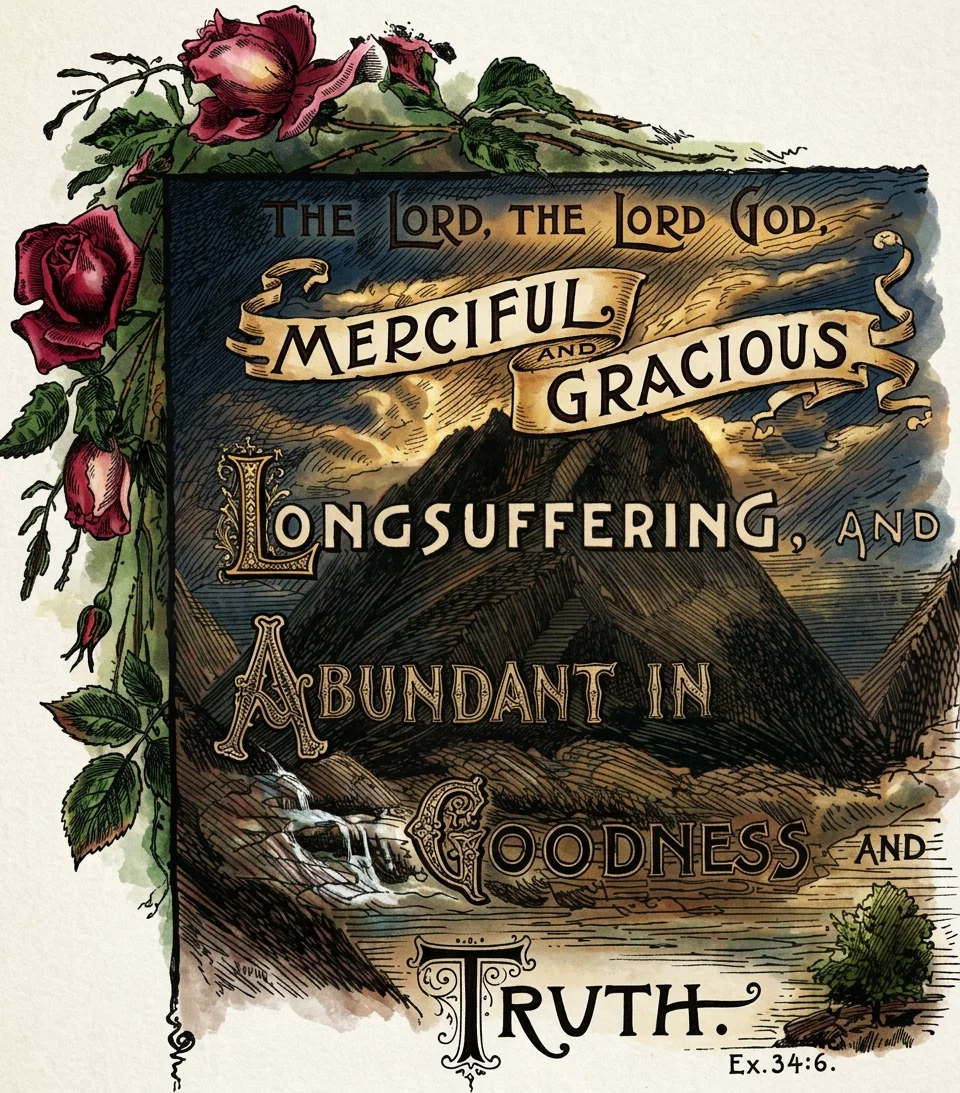
Goodness His Name.—When the Lord passed before Moses in response to the request of the man of God, he declared unto his servants for all coming time his name. Read its wonderful meaning: “Jehovah God, merciful and gracious, long-suffering, and abundant in goodness and truth, keeping mercy for thousands, forgiving iniquity and transgression and sin.” This is the meaning of the wonderful name. Whether the roots of “God” and “good” are the same or not, as some affirm, we know that our God is goodness. He has not only declared it in his name, but he has written it in glorious perfection of beauty on all creation unmarred by sin; and even in that which bears sin’s brand we may see much that is good and glorious. In the earth fitted for man’s home, in the revelation of God the Creator, in the companionship and ministration of holy angels, in the Infinite and Eternal Gift of his only-beloved Son, in all the purchased blessings of God, bought by the sacrifice of his Son, God has revealed his goodness to the children of men. Nay, he has not only revealed it to them but in them; for for every breath which the wicked draw are they indebted to God, and every good thing which they enjoy or pervert is a gift of God’s goodness to them in order that the goodness of God may lead to repentance. Rom. 2:4.
Exhaustless Goodness.—God’s goodness is exhaustless; for, even as of life, with him is the fountain of goodness. Men despise his goodness, yet he bestows it. They trample on his laws, yet he beseeches them in mercy to return. They use the breath of life given of him to profane his name and pervert his truth. They open that which he designed to be an earthly temple for his holiness—this wonderful human body—to a troop of unholy and selfish lusts and passions. Men have been made in God’s image and are the special objects of his love, yet are they cursed, reviled, persecuted, destroyed by other men made in the same image. Yet God’s goodness fails not. It can not fail. Even when the end of the wicked forever comes, it will be the best boon that the Eternal Goodness could bestow upon them. God is good; God only is good. All other goodness is given or borrowed from the great Source.
God’s Goodness His Glory.—The glory of some men is their knowledge, of others their riches, of others fame in letters and art, of others science and rulership; but God’s glory is his goodness. When the children of Israel loved sin, they besought that God would not speak to them any more; but Moses, who had renounced sin, plead with the boldness of the sense of a great need, “I beseech thee, show me thy glory.” The answer of Jehovah was, “I will make all my goodness pass before thee.” Ex. 33:18, 19. This is the glory, the character, of which all sinners have “come short” (Rom. 3:23); and because we have come short, God in his great love comes down to us, places his glory on humanity in Jesus Christ, and bids all to partake. It matters not tho we have sinned; we may plead, “For thou, Lord, art good, and ready to forgive; and plenteous in mercy.” In giving his Son God gave all. In Jesus Christ dwells “all the fulness of the Godhead bodily.” He is a pledge that “no good thing will he withhold from them that walk uprightly.” It is God’s goodness now, goodness all the way, goodness to all eternity, which God has for his people. “Thou hast prepared of thy goodness for the poor.” “He filleth the hungry soul with goodness.” “O how great is thy goodness, which thou hast laid up for them that fear thee; which thou hast wrought for them that trust in thee before the sons of men!” “The goodness of the Lord endureth continually.”
The Lesson.—The lesson for us, each and all, dear readers, is that God’s goodness should lead us to repentance, should empty our hearts of selfishness, should let in God’s Spirit of Life and Light and Glory, that his goodness may not only be wrought for us but in us; for the “fruit of the Spirit is in all goodness and righteousness and truth.” Letting Christ’s life rule in us, letting God’s Spirit of goodness abide with us, then indeed will it be true that God will “fulfil all the good-pleasure of his goodness, and the work of faith with power” in us, and “the name of our Lord Jesus Christ” will “be glorified.” 2 Thess. 1:11. Then indeed may we say with the psalmist, “Surely goodness and mercy shall follow me all the days of my life.” Our lives will be blessings to others. The Lord will go before us and be our rearward. As we have received, so will we give. Goodness is the fruit of the Spirit of Christ; “if any man have not the Spirit of Christ, he is none of his.”
“Heaven and earth are witnesses. That Thy glory goodness is.”

THE NATURE OF GOD'S COMMANDMENT.

“If a man say, I love God, and hateth his brother, he is a liar; for he that loveth not his brother, whom he hath seen, can not love God whom he hath not seen. And this commandment have we from him, That he who loveth God love his brother also.” 1 John 4:20, 21, R.V. A little consideration of this text will give a very clear idea of the nature of the commandments of God. Let us first ask a few questions about it.
Does the text teach that whoever loves God is thereby laid under obligations to love his brother also? that if a man loves God and does not love his brother also, he will be punished for violation of law? Manifestly not, from the very statement of the text, that a man can not love God without loving his brother. “He that loveth not his brother whom he hath seen, can not love God whom he hath not seen.” Since a man can not love God if he does not also have love for his brother, or neighbor, it is evident that the text does not mean that there is a special law enacted for those who love God, requiring them to love their brethren.
Love comes from God. “Every one that loveth is begotten of God, and knoweth God. He that loveth not knoweth not God; for God is love.” Therefore whoever loves God must of necessity love his brother also. He must love all men, for God’s love is without respect of persons. And this shows that men can not, as is now quite commonly thought, learn to love God by first loving their fellow-men. Love to God is first. Jesus said: “The first of all the commandments is, Hear, O Israel; the Lord our God is one Lord; and thou shalt love the Lord thy God with all thy heart, and with all thy soul, and with all thy mind, and with all thy strength; this is the first commandment. And the second is like, namely this, Thou shalt love thy neighbor as thyself.” Mark 12:29-31.
No man can love his neighbor unless he loves God, because love is of God; and nobody can love God without loving his brother. Love is one. It can not be forced, for the use of force is sure death to love. It must flow spontaneously. Yet we have the statement, “This commandment have we from him, That he who loveth God love his brother also.” The thing therefore that we are to learn from this is that the commandment of God is something far different from the commandments of men. Human laws are wholly a matter of force; but God’s commandment is that we should love one another, and that can not be a matter of force.
The law of God is love. “For this is the love of God, that we keep his commandments; and his commandments are not grievous.” 1 John 5:3. “For all the law is fulfilled in one word, even in this: Thou shalt love thy neighbor as thyself.” Gal. 5:14. “Owe no man anything, but to love one another; for he that loveth another hath fulfilled the law.” “Love worketh no ill to his neighbor; therefore love is the fulfilling of the law.” Rom. 13:8, 10. When God spoke his law, it was because “he loved the people.” Deut. 33:2, 3.
It is clear from these scriptures that the law of God is love, even the love of God. But God himself is love. He does not merely have love, but love is the very life of God. Therefore the law of God is his life. And this brings us to the words of Jesus: “For I spake not from myself; but the Father which sent me, he hath given me a commandment, what I should say, and what I should speak. And I know that his commandment is life eternal.” John 12:49, 50, R.V. The commandment of God is life eternal, and to know God is life eternal (John 17:3), showing that the commandment of God is his own life. We know one only as we know his life. So we know God only by knowing his life, and his life is eternal life; but his commandment is life eternal, because his commandment is his life. In other words, the life of God is the law for man.
“No man hath seen God at any time; the only-begotten Son, which is in the bosom of the Father, he hath declared him.” John 1:18. God set forth his Son, in whom was his own life, in order that we might know what the law is. In Christ we have the real, living law.
We read that out of the heart are the issues of life. Now Christ said of himself, “Lo, I come; in the volume of the book it is written of me, I delight to do thy will, O my God; yea, thy law is within my heart.” Ps. 40:7, 8. Therefore the life which issued from Christ was the law of God; and as he lived by the Father (John 6:57), we see again that the law of God is his life.
In Christ “all fulness” dwells, even “all the fulness of the Godhead bodily.” The apostle Paul wrote thus of his prayer: “I bow my knees unto the Father of our Lord Jesus Christ, of whom the whole family in heaven and earth is named, that he would grant you, according to the riches of his glory, to be strengthened with might by his Spirit in the inner man; that Christ may dwell in your hearts by faith; that ye, being rooted and grounded in love, may be able to comprehend with all saints what is the breadth, and length, and depth, and height; and to know the love of Christ, which passeth knowledge, that ye might be filled with all the fulness of God.” Eph. 3:14-19.
This is an inspired prayer, and therefore we know that it is the will of God that its requests should be granted. If we but allow Christ to dwell in our hearts, he will bring in all his own fulness, which is all the fulness of God. Then from our hearts will issue the same life that issued from the heart of Christ on earth, even the life of God. And so we shall find that his commandment is not grievous, because it is not an arbitrary requirement laid on us, but our very life. It is not something which we are to do by our own strength, but which, if we allow it, will work itself out in us.
How will this life be manifested in us? Just as it was in Christ when he was on earth; for he is the same yesterday, and to-day, and forever. When tempted to idolatry, he replied, “It is written, Thou shalt worship the Lord thy God, and him only shalt thou serve.” Matt. 4:10. Therefore the one in whom is the life of Christ, can not be an idolater.
When the parents of Jesus found him in the temple, asking and answering the questions of the doctors, he was not impatient of control, altho he was so wonderfully wise, far exceedingthem in that respect; but “he went down with them, and came to Nazareth, and was subject unto them.” Luke 2:51. Therefore the one in whom is the real law of God, in the form of the life of Christ, will honor his father and his mother, as required by the fifth commandment; and he will not find it burdensome to do so.
Jesus said, “To this end was I born, and for this cause came I into the world, that I should bear witness unto the truth.” John 18:37. He “did no sin, neither was guile found in his mouth.” 1 Peter 2:22. Therefore those in whom he dwells will not only tell the truth, but they will love the truth. They will love the truth so much that they will never seek to parry its force, nor to evade any portion of the truth of God’s word.
The tenth commandment says, “Thou shalt not covet.” So far was Christ from coveting, that he freely gave up everything that was his own. And so those in whom he dwells will not find it a grievous matter to be content with such things as they have.
Christ kept the Sabbath, even the seventh day of the week, and no other. His life was God’s life, and the life of God is the law for men; therefore those who live solely by him will also keep the Sabbath day. They will not consider this a burdensome thing, but will delight in it, even as Christ delighted to do the will of God. Those who delight in the Sabbath, also delight themselves in the Lord (Isa. 58:13, 14), thus showing again that the law of God, including the fourth commandment, is the life of God. To delight in the law is to delight in the life of the Lord.
Let us therefore say to Christ as he stands at the door and knocks, “Come in, thou that comest in the name of the Lord.” Let him come in with all the divine fulness, to live in us his own blessed will. It will be different from anything that we have ever before done, “for my thoughts are not your thoughts, neither are your ways my ways, saith the Lord. For as the heavens are higher than the earth, so are my ways higher than your ways, and my thoughts than your thoughts.” Isa. 55:8, 9. The desire of man is to rise, and here is elevation indeed. The life of God will lift the one who accepts it from earth to heaven.
F. J. W.

ROMAN CATHOLICISM AND DEMOCRATIC GOVERNMENT.

Some time ago Lecky, the historian (see Literary Digest, May 30, 1896), pictured no roseate future for Democratic rule, claiming it to be the rule of ignorance. F. H. Giddings, professor of sociology of Columbia University, New York, takes issue with this broad statement, and contends that only now has democracy begun to develop a positive program; hitherto its position has been negative, a “rectification of wrongs” from which the people have suffered. And yet Professor Giddings admits that it may continue to be the rule of ignorance. Absolute democracy, he thinks, is an impossibility. If the masses will not choose “cultivated men” as leaders, they will choose “that most preposterous and contemptible of potentates, the ‘boss.’ Leadership of some kind men must and will have.” And Professor Giddings further points out that the “ignorant masses” “will not rule through their ignorance,” but “will rule through their deference to great humbugs, great scoundrels, great priests, or great men.” What this writer thinks is necessary is “faith in the true aristocracy of intellect and conscience.” He then continues (we quote from the Literary Digest of January 2):—
Only to the faint-hearted and to the short-sighted should there be any need to say that a determined effort to restore that faith is to be the most momentous sociological phenomenon of the next fifty years. The initiative may be taken by the Roman Catholic Church. Accepting democracy as the inevitable form of the State within the Constitution, the Roman Catholic Church fully and deliberately intends to make itself again what once it was—the ruling aristocracy of the State behind the Constitution. If this purpose becomes more and more obvious, the forces of Protestantism will again be roused to intense activity. The principles of liberty and of individual responsibility will again be opposed to the principle of authority, and will again fascinate the minds of rationalistic men. “In all probability, therefore, the destiny of democracy is to be controlled either by religious authority or by a much more earnest and thoughtful type of Protestant liberalism than that which prevails to-day. In a struggle between these forces men of all ranks and conditions, the rich and the poor, the learned and the unlearned, will give their allegiance to worthy leaders. The ‘boss,’ with his deeds of ignorance and of evil, will sink into oblivion. It should be needless to add that such a struggle, if it comes, will be a contest of ideas.”
What is said here respecting Roman Catholicism is unquestionably true; more than this, in this field Roman Catholics will unquestionably triumph; for the “sure word of prophecy declares it.” But as for the masses of the so-called great Protestant churches arousing, we have little hope; there are found among them too many apologists for Rome; and, more than this, these churches have, in their great representative bodies, committed themselves to the principles of Roman Catholicism, union of Church and State, on the Sunday question, and in other ways. And yet there will be true Protestants, men who will protest on the ground where stood Jesus of Nazareth, Martin Luther, Roger Williams,—the ground of absolute separation of Church and State, the absolute non-interference of the civil magistrate in matters religious, the supremacy of conscience over creed, the sufficiency of God’s word as the rule of faith. Reader, in this “contest of ideas,” of eternal principles, where will you stand?

ARGUMENT

If the Gospel could be propagated by argument, it would be vastly more popular than it now is. If men could be saved by argument and controversy, there would be thousands saved to-day where there are only tens. But the fact is that it is not argument that is needed, but “holding forth the word of life.” A man always weakens his cause when he consents to debate and strive and argue about it. Strife and debate are so firmly imbedded in human nature that it takes us a long time to learn this. But if we were to stop and think we should see that it is true.
Men do not argue about that of which they are perfectly sure. You would not argue with a man to prove to him that the sun is shining at noon. You point out the fact to him, and if he wishes to see it for himself, he can, and if he does not, you can not help him by argument. You would not debate with a man to convince him that the twenty-six letters of the alphabet are what they are. If he does not know them, you may teach him, but not by a debate. If he does not wish to have you teach him, but wishes to argue the point, you would simply leave him to himself.
And you would not be at all moved by his boast that you dared not debate with him, and that your refusal showed that you did not dare put your belief to the test of argument. “You do not simply believe, but you know, and it is much better to put knowledge to the test of actual use than to the test of argument. To argue the case would indicate a doubt about it in your own mind.”
Now what the Gospel wants is not men who are ready to debate, but who know Christ, and who know his word. Such men will teach by their quiet lives, and if any want to learn further, they will be ready to point them to the Word, but they will not lower the standard by arguing with those who do not want to learn.
The man who wants to learn never wants to argue. The man who is anxious to argue a point, does not want to learn anything from the one with whom he argues, but he wants, by arguing, to fortify himself in the opinions that he already holds. By repeating his arguments he helps to convince himself that they are true; and if he can outtalk his opponent, that proves to him that he is right. Therefore the time spent on him while he is in that condition is wasted. The Christian can afford to let him talk and even rail, knowing that the truth can not be injured. This very confidence begets in the other a desire to know what it is that is so sure that you are not in the least afraid that it will be overthrown by argument. Then is your time to instruct him.
So, then, argumentative ability is not necessarily a part of the outfit of the servant of Christ. For “the servant of the Lord must not strive; but be gentle unto all men, apt to teach [not to argue], patient; in meekness instructing those that oppose themselves; if God peradventure will give them repentance to the acknowledging of the truth.” 2 Tim. 2: 24, 25.
F. J. W.

Who Knows Best?

—We are moved to ask this question by various and sundry remarks which we hear and read concerning matters which God has revealed in his word. Men professing to be Christian teachers gravely tell us that the prophecies of God's word are of minor interest to us, that men should not trouble themselves about the second coming of Christ, and that the day of the Sabbath of the Lord is of little or no importance. Who knows best—God who gave the prophecies to be a light shining in a dark place, or men blind by nature, who need the light? Who knows best—Christ the Lord who promised that he would come again, and enjoined his disciples to watch, or men who are indifferent to eternal interests to be decided by that coming? Who knows best about the Sabbath—the God who gave it, the Saviour who kept it, or the men who trample it underfoot? Who knows best, the Lawgiver and Judge of all, or the men who are to be judged? Whose word will you take, reader?

The Word of God Our Guide

The word of God alone is our guide.

Question Corner

“Enquire, and make search, and ask diligently.”
Let it be understood; it is an invariable rule. We answer no unsigned communications. We do not ask the name for publication; but we wish the privilege of replying by letter if deemed necessary. If the name of the writer is not signed to the letter accompanying the question, the question finds its way to the wastebasket.

No. 465. The Account of Creation.

WHY did Moses state that God finished everything in six days, including man and woman, and yet say in the next chapter that Eve was made after everything else was finished? Please explain Gen. 1:27 and 2:21, 22. Lindell.
There is no contradiction in the accounts. The former gives an account of the first week’s work in general, the latter takes up a portion of the sixth day’s work, that part relating to mankind, in detail. There is nothing in the first chapter to show that Eve was not created last. The first chapter to the third verse of chapter 2 gives a brief outline of the entire work of creation. The remainder of the second chapter gives fuller particulars concerning a portion of earth, and its prince, man.

No. 466. Trodden Down of the Gentiles.

THE times of the Gentiles, seven times, 2,520 years from B.C. 606, reach to A.D. 1915. Will you please explain? J. B. B.
The “seven times” of Lev. 26:18, 21, 24, 28 simply means sevenfold. The word “times” is not in the original, simply the word “seven,” indicating completeness, or sevenfold, or seven separate times, seven times over. Rabbi Isaac Leeser’s translation renders “sevenfold.” See Ps. 119:164; Prov. 24:16, for the use of the term. The “times” of the Gentiles doubtless has reference to the prophetic periods given by the prophet Daniel. Of all these, that of the 2,300 days, or years, of chap. 8:14 is the most extensive. Seventy weeks of this time, or 490 years, were marked off on the Jewish people (chap. 9:24-27), beginning in B.C. 457 and ending in A.D. 34, when the Jews as a nation were cut off. The remainder of the time, 1,810 years, reaches to 1844. We have also in Daniel the time, times, and an half (1,260 years), the 1,290, and the 1,335 years, ending in A.D. 1798 and 1843, but all fall within the period of 2,300 years. There are “days,” or years, allotted to the Gentiles beyond 1844 (Rev. 10:7), but they are definite only in the knowledge of God. When they are ended, Christ will come, and the reign of the nations who know not the Lord will be over. The “times of the Gentiles” are not those fixed up by man, but those given in the word of God.

No. 467. Seeing and Blind.

KINDLY explain John 9:39: “For judgment I am come into this world, that they which see not might see; and they which see might be made blind.” In what way were they made blind? Annie J. J.
It has reference to spiritual sight. Those who saw not the light of truth, yet were waiting in darkness for it, saw it when God revealed himself in Jesus of Nazareth; while those to whom God had given light, who were made the depositary of his truth, were made blind by rejecting Jesus, the Light of the World. When they rejected him, they were left in total darkness spiritually, having no light in themselves.

No. 468. How Men Come to Christ.

PLEASE explain John 6:44, 65: “No man can come to me, except the Father which hath sent me draw him.” How is it given us of the Father? How is it the Father draws us? A. J. J.
God has given to every man the power to choose. He has placed within every man that which is responsive to good, and which hates evil and its author. Gen. 3:15. He “lighteth every man that cometh into the world.” But man of himself can do nothing. While he may choose the good, he has in himself no power to do the good, not even to come to the One who can deliver. But here God’s mercy meets our need. The Comforter, the Spirit of Truth from the Father, comes and convicts the soul of sin, and the righteousness to be found in Jesus Christ. John 16:7-10. It is by the Spirit of God that we are drawn to Jesus Christ.

DENYING SELF.

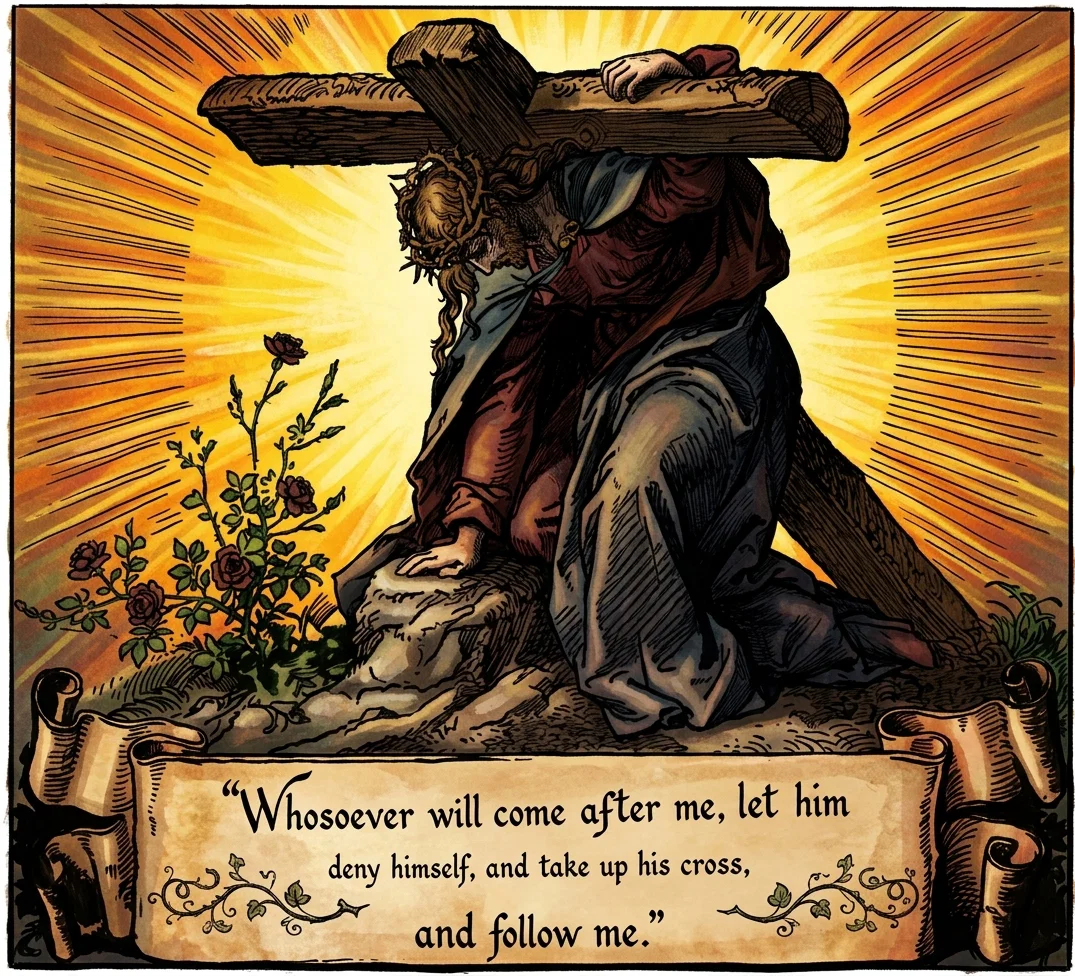
“Deny thyself,” the Saviour said, “If thou wouldst follow after Me;” Take up the cross that Jesus bore; The life He lives He’ll live in thee.
Denying self is not to go On some hard pilgrimage of pain, ’Tis not to torture flesh and blood, That we may thereby favor gain.
’Tis this: O, let me tell it clear, ’Tis just what Jesus said it was When He upon that awful night Told Peter He’d forsake His cause!
To Peter on that night He said, Thrice, Me erelong thou wilt deny: Whatever therefore Peter did, With Jesus’ words will well comply.
What then did Peter on that night, In his denial of the Lord? ’Twas this: he said, “I know him not,” And cursed and swore to prove his word.
Not knowing Him he thus denied The suffering One so long ago. So, if we would ourselves deny, ’Tis sinful self we will not know.
Go, then, ye followers of the Man, Deny yourselves, know Him alone; He is your strength, your life, your all; In knowing Him ye shall be known.
D. A. ROBINSON.

THE INFLUENCE OF PRAYER.

Who can tell the result of a prayer uttered in sincerity? Little the one praying knows what may be the outcome of his heaven-sent words.
A life-boat went out on a dangerous coast to the relief of a shipwrecked vessel. The waves ran high, and threatened to swamp the boat. At last the coxswain said:—
“Mates, shall we turn back? We are going to certain death. The ship has sunk, and doubtless all hands have gone down with her.”
There was a moment’s hesitation, and then one man cried out: “No, let’s go on. As I ran down the beach, I passed two ladies on their knees praying for the lives of the men in yonder wreck. I believe God will hear them. I believe we may yet find some alive.” His words had such an effect on the crew that theyplucked up courage and rowed on midst the breakers. They picked up five poor fellows, one by one, clinging to the wreckage or otherwise supporting themselves.—Selected.

THE TRUE LIGHT.

Before sin entered our world through the transgression of God’s law, it was the glory of Adam and Eve to obey God’s requirements. They lived in perfect conformity to his will. Not a cloud rested upon their minds, to obscure their view of God. There was no doubt or uncertainty in regard to their moral obligations, and all the strength of their affections was given to their heavenly Father. A beautiful soft light, proceeding from God, enshrouded the holy pair, and was reflected from every object upon which they looked. God was their teacher, and in the beauties of nature around them his lessons were repeated. The invisible things of God were clearly seen and understood by the things which he had made.
Had man remained true to God, the light of Heaven would have continued to guide him. But when sin entered, he severed his connection with Jehovah, and the light which had enshrouded him departed. Sin so defaced the image of God in him, so darkened his understanding, that it became necessary for God to send his only-begotten Son to shine as the light of the world.
Ever since his fall from the purity of heaven, it has been the object of Satan to instill his spirit into the sons of men, and cause them to follow the same path that he traveled when he sought to become equal with God. He has led sinful, erring men, transgressors of God’s law, to attach to their names “Reverend” and “Right Reverend”—names which should be applied to none but God himself. These are not following the example which Christ gave us in his life on earth. He has said, “Blessed are the poor in spirit; for theirs is the kingdom of heaven.” And he invites his followers, “Learn of me; for I am meek and lowly in heart.”
“For thus saith the high and lofty One that inhabiteth eternity, whose name is holy; I dwell in the high and holy place, with him also that is of a contrite and humble spirit, to revive the spirit of the humble, and to revive the heart of the contrite ones.” Those who “follow on to know the Lord,” will know that “his going forth is prepared as the morning.”
Why is it that men to whom the Lord has given capabilities and talents, resist the drawing of Christ, refuse to wear his yoke, and bear his burdens? It is because they are proud of their knowledge and influence, “puffed up” with the favor and applause they receive because of these talents. They make their boast of science and philosophy, and place these above Christ, the God of science and true philosophy. Thus these worldly-wise men magnify themselves, seeking to eclipse by their flashing meteors the Light of the world. But are these men above Christ? Can the stars outshine the sun? Can the whole firmament of heaven do more than declare the glory of God?
The Lord calls these men fools because they place such value upon the gifts bestowed upon them, while they despise the Fountain of supply, and reject the Source of all wisdom and light, who can make these gifts to constantly increase.
The principle that prompts men to place their human ideas first leads to many false conjectures and delusions. Christ has made no man independent. He has given men talents that they may improve them by exercise, learning of him how to use them wisely. He has said, “I am the light of the world; he that followeth me shall not walk in darkness, but shall have the light of life.”
Reason was never given man to lead him to suppose that he can climb higher than the Source from which that reason flows. God gave man his reasoning powers, and he can remove them, as in the case of Nebuchadnezzar, when they are not used to his glory. In Noah’s day the inhabitants of the earth sought out many inventions. They were wise to do evil. The imaginations of their hearts were only evil continually, and God swept them from the face of the earth.
Through his prophet the Lord exhorts us: “Let not the wise man glory in his wisdom, neither let the mighty man glory in his might, let not the rich man glory in his riches; but let him that glorieth glory in this, that he understandeth and knoweth me, that I am the Lord which exercise loving-kindness, judgment, and righteousness, in the earth; for in these things I delight, saith the Lord.”
The glory of God is seen in the life and character of Christ. In the pure, lofty piety exhibited in his life in humanity we have an example of what pure religion is. His life of uncompromising holiness creates in the hearts of those who are in rebellion against God, a desire to follow their own inclinations, as did the inhabitants of the antediluvian world; for “the carnal mind is enmity against God; for it is not subject to the law of God, neither indeed can be.” The Lord has said, “Come out from among them, and be ye separate.” But men rebel against the light because the path it marks out involves a cross.
Perfection of character can be attained only through Jesus Christ. He alone is able to dispel the darkness that has gathered about the souls of men. He will lift fallen humanity into a pure and holy atmosphere, if men will believe on him as their personal Saviour. He will inspire in their hearts and minds an enthusiasm that will make them noble, and mould them after the divine similitude.
The Christian believer possesses the key to true philosophy. In connection with Christ, co-operating with him in good works, he may shine amid the darkness of this world. Christ is the Truth, the Life and the Light of the world, and by beholding him his followers will be changed into the same image, from glory to glory.
Satan would cast his shadows across our pathway, to prevent the light of heaven from shining into the chambers of the mind, into the soul temple; but the mists from beneath can not dim the bright beams of the Sun of Righteousness. The true Light brightens beyond the clouds of doubt and unbelief.
The words, “I am the light of the world,” have been sounding down through the ages to the present time. They are no less true now than they were in Christ’s day, and to-day they have the same comfort for the follower of Christ, the same hope for those that sit in the darkness and shadow of death. God appeals to his children to uplift before the world the Man of Calvary, that with him human nature may be lifted up. “Ye are a chosen generation, a royal priesthood, a holy nation, a peculiar people; that ye should show forth the praises of Him who hath called you out of darkness into His marvelous light.”
MRS. E. G. WHITE.
Continue reading: JEWISH CUSTOMS AND TRADITIONS