A Token of Personal Experience — The Form in Harmony with the Purpose
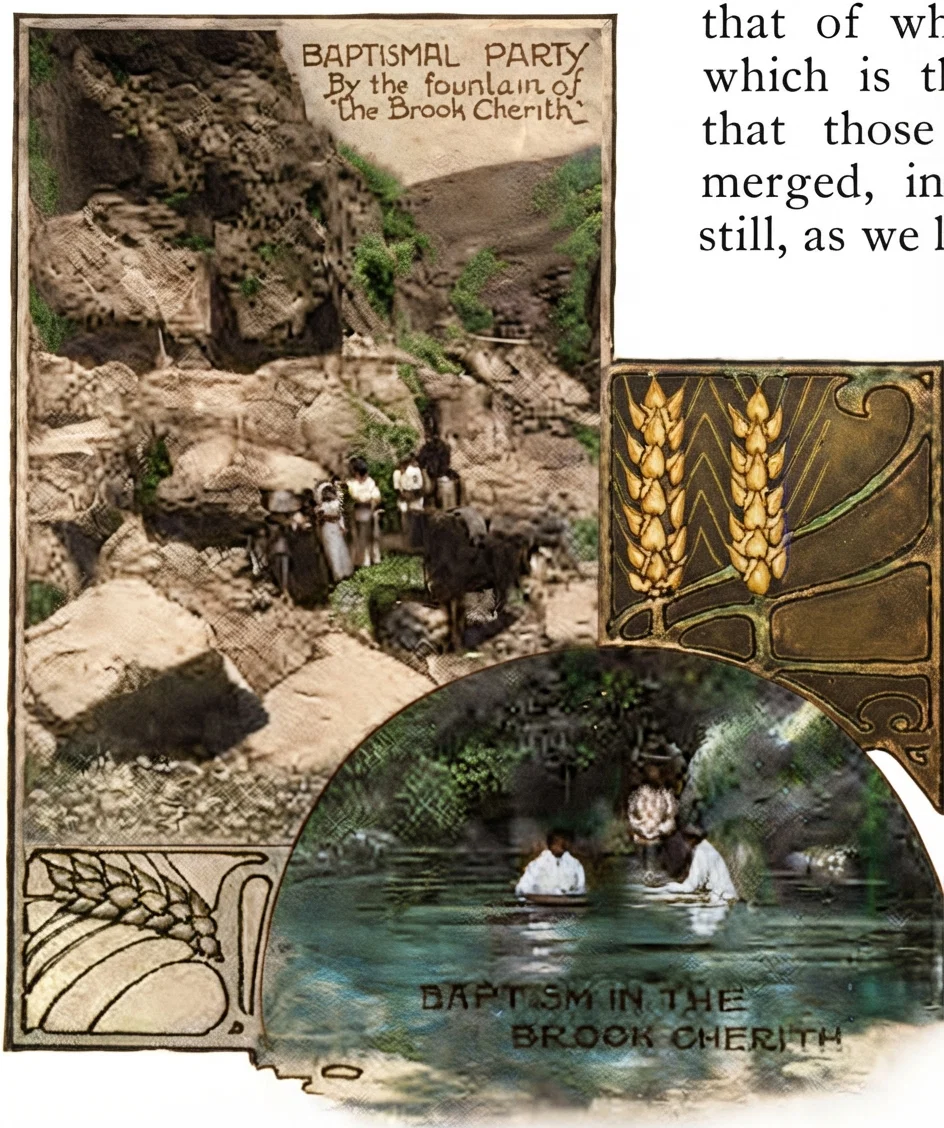
EVERY step in the way of salvation is a walking with Christ. We are crucified with Him; we die with Him to self and sin; we are buried with Him by baptism; we rise to walk with Him in newness of life; we are made to sit with Him in heavenly places in spiritual experience; and if faithful to the end, we shall reign with Him in glory. In the ordinance of baptism left with the church by Christ's commandment, we are taught as by an object-lesson this fundamental truth of dying with Christ and rising again with Him.
IT PICTURES DEATH AND BURIAL
The very word "baptism," as spoken by the Lord Jesus, and as written by inspiration of the Spirit of God, gives the picture of the death and burial of the sinner to the old life, and the resurrection to a life of righteousness; for the meaning of the word is "to plunge," "to immerse." Speaking of the meaning of baptism, the apostle Paul wrote:
"We are buried with Him by baptism into death: that like as Christ was raised up from the dead by the glory of the Father, even so we also should walk in newness of life. For if we have been planted together in the likeness of His death, we shall be also in the likeness of His resurrection." Rom. 6: 4, 5.
Baptism is a profession of faith in the Saviour who went down into the grave for us, and who rose again for us. The profession is set forth in the solemn act that has in it "the likeness" to the great fundamental fact of redemption, Christ's own burial and resurrection.
OUTWARD TOKEN OF REAL EXPERIENCE
This ordinance, with all its likeness to that of which it is the memorial, is an outward token of the actual experience of the believer in dying to sin and being raised to a new life by the power of divine grace.
The perversion of the ordinance into sprinkling, and that in infancy, takes away the divinely appointed object-lesson. It substitutes ceremonialism for the living experience. This is evident; for the innocent babe, not yet held accountable, can have no experience of believing and repenting, which are the divinely stated conditions for baptism. Therefore the great commission reads, "He that believeth and is baptized," etc.
HOW THE CHANGE IN FORM CAME
The change in form evidently came about concurrently with the change in apprehension of the true meaning of this Christian ordinance. Dean Stanley, one of the brightest scholars of the Church of England, dean of Westminster, wrote in his "Christian Institutions" that it was not until the third century, in church history, that "we find one case of the baptism of infants." On the change in the form of the ordinance from immersion to sprinkling, he says:
"What is the justification of this almost universal departure from the primitive usage? There may have been many reasons, some bad, some good. One, no doubt, was the superstitious feeling, already mentioned, which regarded baptism as a charm, indispensable to salvation, and which insisted on imparting it to every human being who could be touched with water, however unconscious."
Ceremonialism was taking the place of experience. As men lost sight of the real death to sin and the resurrection to righteousness, of which baptism was the divinely appointed likeness and confession, the merit was attributed to the mystical touch of the water. Then how natural that in the case of a dying person unable to be carried to the water for baptism, the water should be brought and poured or sprinkled upon the person, in order that its mystical power might take away sin? Then very naturally must have come the next step. If the physical touch of the water could purge every sin away, why should not the infant be plunged into the regenerating waters?
A PROCESS OF CENTURIES
The perversion of the form, however, was a process of centuries. Dean Stanley says of this: "For the first thirteen centuries, the almost universal practise of baptism was that of which we read in the New Testament, and which is the very meaning of the word 'baptize,'—that those who were baptized were plunged, submerged, immersed into the water. That practise is still, as we have seen, continued in the Eastern churches.
We are taught as by an object-lesson this fundamental truth of dying with Christ.
In the Western church it still lingers among Roman Catholics in the solitary instance of the Cathedral of Milan; among Protestants in the numerous sects of the Baptists. It lasted long into the middle ages. . . . But since the beginning of the seventeenth century, the practise has become exceedingly rare. With the few exceptions just mentioned, the whole of the Western churches have now substituted for the ancient bath the ceremony of letting fall a few drops of water on the face.
"The reason of the change is obvious. The practise of immersion, though peculiarly suitable to the Southern and Eastern countries for which it was designed, was not found seasonable in the countries of the North and West. Not by any decree of council or parliament, but by the general sentiment of Christian liberty, this remarkable change was effected. Beginning in the thirteenth century, it has gradually driven the ancient Catholic usage out of the whole of Europe. There is no one who would now wish to go back to the old practise. It followed, no doubt, the example of the apostles and of their Master. . . . But, speaking generally, the Christian civilized world has decided against it. It is a striking example of the triumph of common sense and convenience over the bondage of form and custom."—"Christian Institutions," pages 21, 22.
From the point of view of mere historical research and ecclesiastical record the dean's conclusion may satisfy some. However, when he declares that this change in the divinely appointed form was a triumph of common sense and convenience, he really charges Christ and the apostles with not having used good judgment in the original institution of the ordinance. But the divine institution of it was to teach the great lesson that the Christian life is not a form, and that at the beginning of it there must be the death to sin, and the resurrection by the power of the Holy458Spirit. To teach this lesson, the Lord Himself commanded the ordinance in the "likeness" of His own resurrection. The reformation from error and apostasy to which God is calling believers in these last days includes the call to follow the Lord Jesus Christ in baptism; and those who follow Christ's example in this will find in it the blessing that always attends loving obedience to the divine precepts.
W. A. S.
A WORD TO OUR READERS
By Editor
We send no papers from this office to individuals without pay in advance. When persons receive copies without ordering them, they are sent by other parties, and we can give no information in regard to them. Persons thus receiving copies of the SIGNS are not indebted to the office, and will not be called upon to pay for them. Please read the papers you may receive, and hand them to your friends to read.
DATE OF EXPIRATION
The SIGNS wrapper bears date of last issue due on your subscription. Unless renewed in advance, paper stops with expiration date.
If herewith is an order-blank, you will know you have overlooked sending renewal. You will not wish to miss a single issue. Back numbers often can not be furnished.
SCRIPTURE QUOTATIONS
Our authority for the doctrines we teach is the Bible. Quotations are usually from the King James Version or the American Standard Revised.
One new yearly subscription and one renewal, or two new, sent at one time, $3.00.
Two new yearly subscriptions and one renewal, or three new, sent at one time, $4.00.
Three new yearly subscriptions and one renewal, or four new, sent at one time, $5.00.
Five or more copies to one person, six months, each $0.60.
Five or more copies to separate addresses, six months, each $0.65.
Weekly and Monthly SIGNS one year, $2.25.
G. C. HOSKIN, Circulation Manager.
THE CORONATION OF THE GREAT KING
By R. C. P.
SINCE the days of Adam, loyal children of the kingdom of God, surrounded by sin, with its darkness and gloom, have looked, longed, and hoped for the breaking of the long promised day when "the seed of the woman" shall have bruised "the serpent's head." That hope, radiant as the bow of promise, more glorious than the morning star, has strengthened their faith, and, anchored beyond the woes and storms of life, it has led them to grasp the holy splendors of eternity.
"This is the heir; come, let us kill him, and the inheritance shall be ours."
THE CORONATION OF THE GREAT KING
His Supreme Tragedy Precedes His Crowning — Satan for a Moment Triumphant — No Federated Power of Men Can Crown the Christ
Standing upon the threshold of this transcendent theme, which means the closing of earth's long, dreary conflict, and the coronation of earth's rightful King, language can not express the feelings, imagination can not picture the joyous anticipations of the church militant as she steps upon the shores of the land of promise and becomes the church triumphant. With what ecstasy of delight will the last waiting, watching remnant of the church militant burst into songs of unalloyed praise as it sees the passing of the last token which assures it of the immediate return of its long promised King!
"O for a thousand tongues to sing
My great Redeemer's praise,
The glories of my God and King,
The triumphs of His grace!"
THE CHARACTER OF THE KING
For ages the world has witnessed royalty ruling by might. Christ rules by love. Haughty kings have laughed to scorn weary pilgrims toiling mid winter's cold and summer's heat to restore the lost to a kingdom of love. During all of their conflicts, these pilgrims have "run with patience the race that is set before us, looking unto Jesus the author and finisher of our faith; who for the joy that was set before Him endured the cross, despising the shame, and is set down at the right hand of the throne of God. For consider Him that endured such contradiction of sinners against Himself, lest ye be wearied and faint in your minds. Ye have not yet resisted unto blood, striving against sin." Heb. 12: 1-4.
EARTH'S SUPREME TRAGEDY
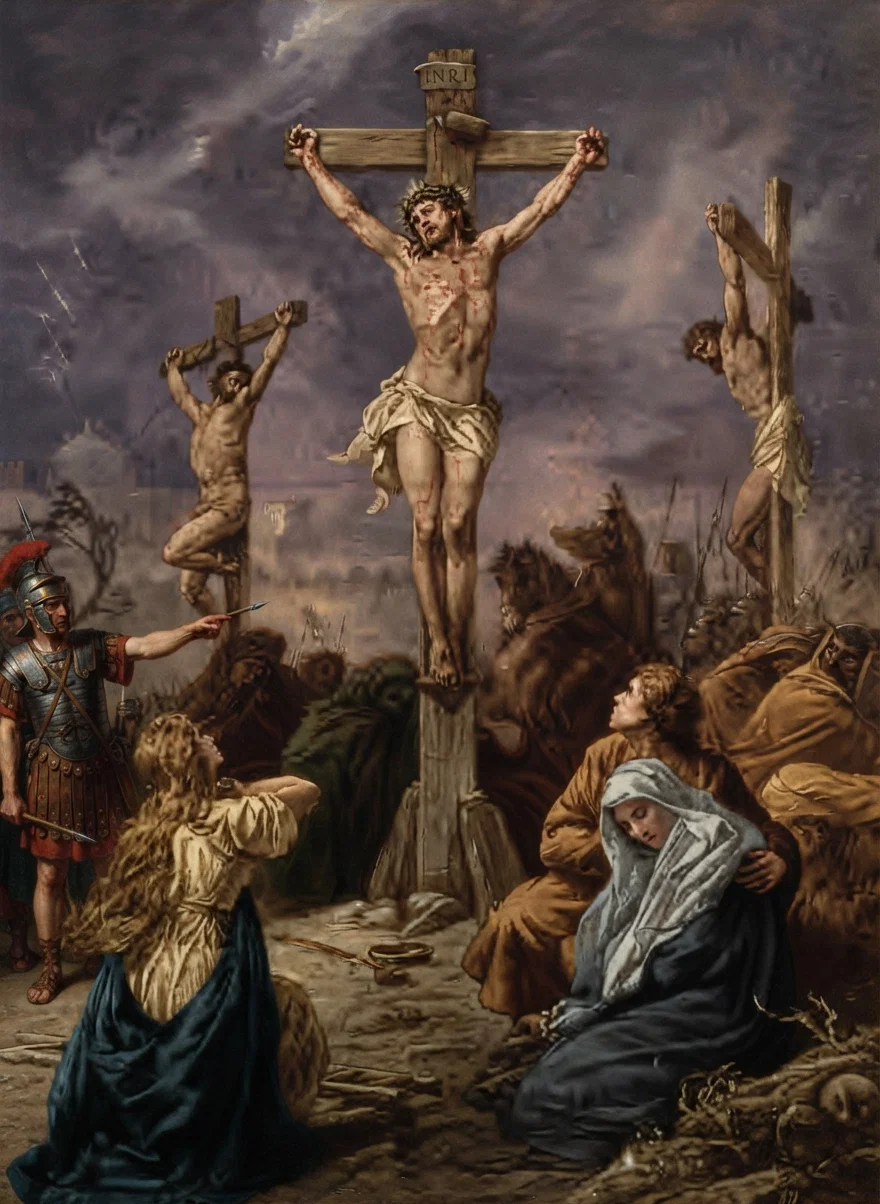
Christ's crucifixion was earth's supreme tragedy. "The kings of the earth set themselves, and the rulers take counsel together, against the Lord, and against His anointed, saying, Let us break their bands asunder, and cast away their cords from us." Ps. 2: 2, 3. "This is the heir; come, let us kill him, and the inheritance shall be ours." Mark 12: 7.
"Jerusalem was the chosen place where the name of the Lord rested. It was 'the city of the great King.' In her streets had been shed the blood of holy prophets. Martyrs had often fallen there, sacrifices to the fury of apostates and carnally mad men. There was the chosen spot for redemption's offering to be made. Her hills, which had witnessed the manifestations of God's power and glory, must witness the awful manifestation of God in humility and sorrow. No mere mortal ever manifested such humility. No mere man ever felt such sorrow and anguish.
ALL UNITED TO DESTROY HIM
"The people were, for once, in general union. Herod and Pilate became one in action. Pharisees and Sadducees dropped their old enmity to each other. The mad cry against Jesus arose from the vast multitude. Nothing could be heard but the shrill and fiendish cry, 'Away with Him! Crucify Him! Crucify Him!'
"It was the great hour of earth's insanity. That indescribable madness was honored as reason. Sentence was passed against Jesus. All faces were turned towards Calvary. Pretorian soldiers formed the escort guard. The procession which followed let no man attempt to describe! Jesus bore His cross. He fainted under the load. Behold the derision of the mad multitude! They take it, and compel an old Cyrenian to bear it to Calvary. They crucified Him there. They threw up the cross. As Moses lifted up the serpent in the wilderness, so Jesus was lifted up. Roman soldiers did the work. They stood as guards around the cross. Priests derided. Thieves railed. Jews mocked. Romans jeered. Disciples beheld afar off. Women wept. The heavens were shaded with nightly darkness. Earth quaked to her center. A cry of supplication and pity arose from the cross! Another cry, of agony! Jesus died."—"Jesus in His Offices," by A. G. Comings, pages 371, 372.
SATAN APPARENTLY TRIUMPHS
The confederacy of church and state, while pretending to adore, had crucified their Lord. Satan and his angels, at whose instigation all this untold agony was caused, held high carnival around the cross. They had apparently triumphed. The King was in their power. Christ having meekly said, "This is your hour, and the power of darkness," "like a lamb dumb before his shearer, so opened He not His mouth." Acts 8: 32. "When He was reviled, reviled not again; when He suffered, He threatened not; but committed Himself to Him that judgeth righteously." Crowned with thorns as king in mockery, He prayed for forgiveness for His persecutors.
Sad as was the sight from heaven, where loyal angels, weeping, beheld the shameless mockery of their King, God did not swerve from His purpose in that hour of earth's deepest gloom. God's kingdom is not like man's; it triumphs in crucifixion. In that hour of dense darkness, light was breaking o'er the hill of Calvary that was to cover the earth as waters cover the sea.
This counsel was sent from the eternal throne to earth's haughty kings who in that hour of crisis turned persecutors of their greatest benefactor: "He that sitteth in the heavens shall laugh: the Lord shall have them in derision. Then shall He speak unto them in His wrath, and vex them in His sore displeasure. Yet have I set My King upon My holy hill of Zion. I will declare the decree: the Lord hath said unto Me, Thou art My Son; this day have I begotten Thee. Ask of Me, and I shall give Thee the heathen for Thine inheritance, and the uttermost parts of the earth for Thy possession. Thou shalt break them with a rod of iron; Thou shalt dash them in pieces like a potter's vessel. Be wise now therefore, O ye kings: be instructed, ye judges of the earth. Serve the Lord with fear, and rejoice with trembling. Kiss the Son, lest He be angry, and ye perish from the way, when His wrath is kindled but a little. Blessed are all they that put their trust in Him." Ps. 2: 4-12.459
NO FEDERATED POWER OF MAN REQUIRED
The time had now come for the coronation foretold when the crown was removed from Israel's last king under the old covenant kingdom. "Thus saith the Lord God; Remove the diadem, and take off the crown: this shall not be the same: exalt him that is low, and abase him that is high. I will overturn, overturn, overturn, it; and it shall be no more, until He come whose right it is; and I will give it Him." Eze. 21: 26, 27.
It will require no federation of churches and kingdoms to crown that worthy King. He who sits in the heavens, who could bring kingship out of crucifixion, will with His own loving hand place the crown of glory upon that thorn-crowned head; and kingdoms and federations which have sought to crown Him before the time, shall be dashed to pieces like worthless pottery fitted to destruction. Dan. 2: 34.
THE MANNER OF HIS KINGDOM
Just before the transfiguration, Jesus promised His disciples, "There be some standing here, which shall not taste of death, till they see the Son of man coming in His kingdom." Matt. 16: 28. "And after six days Jesus taketh Peter, James, and John his brother, and bringeth them up into an high mountain apart, and was transfigured before them: and His face did shine as the sun, and His raiment was white as the light. And, behold, there appeared unto them Moses and Elias talking with Him." Matt. 17: 1-3. "And His raiment became shining, exceeding white as snow; so as no fuller on earth can white them." Mark 9: 3.
This transfiguration scene illustrates the manner of Christ's kingdom. It is not a kingdom adapted to this sin-cursed earth. It is a kingdom of heavenly glory. It is because Christ had announced that His kingdom shall be one in which He will be robed in garments of light and glory such as no earthly fuller can provide, that Satan will appear as an angel of light in the great federation movement when churches and nations shall unite to enthrone Him a political king. But when Christ's kingdom is established, the righteous dead represented by Moses, and the living righteous translated without dying, represented by Elijah, will be there, with faces radiant with celestial glory as the sun, and garments of Edenic light for their clothing, as in the kingdom originally given to Adam.
That this transfiguration scene was a "vision" of the kingdom of glory, designed to show the power, glory, and heavenly character of the kingdom of Christ, is plainly stated in Matt. 17: 8, 9: "And when they had lifted up their eyes, they saw no man, save Jesus only. And as they came down from the mountain, Jesus charged them, saying, Tell the vision to no man, until the Son of man be risen again from the dead." Peter confirms this view, saying: "For we have not followed cunningly devised fables, when we made known unto you the power and coming of our Lord Jesus Christ, but were eye-witnesses of His majesty. For He received from God the Father honor and glory, when there came such a voice to Him from the excellent glory, This is My beloved Son, in whom I am well pleased. And this voice which came from heaven we heard, when we were with Him in the holy mount." 2 Peter 1: 16-18. The glorious majesty of such a kingdom is not established by federated earthly councils, but by the almighty power of the King eternal.
THE TERRITORY OF CHRIST'S KINGDOM
Christ is the second Adam. He came to seek and to save that which was lost in the fall of the first Adam. In the fall, the original dominion of the earth was lost. It is to be restored to Christ. It is His "purchased possession." "And Thou, O Tower of the flock, the Stronghold of the daughter of Zion, unto Thee shall it come, even the first dominion; the kingdom shall come to the daughter of Jerusalem." Micah 4: 8. "For the promise, that he should be the heir of the world, was not to Abraham, or to his seed [Christ—Gal. 3: 29], through the law, but through the righteousness of faith." Rom. 4: 13. Yes, the original kingdom will be restored with all its original purity, power, and glory, to Him whose it is by right, and He will be crowned its King.
THE CORONATION SCENE
It was a scene of exceptional grandeur and glory when his majesty King George V and her majesty Queen Mary were crowned in London, in June, 1911. It will be an infinitely more glorious scene when Christ is crowned King of kings and Lord of lords, and comes in the glory of His Father and all the holy angels to redeem His people.
DOES NOT TAKE PLACE ON EARTH
The coronation does not take place upon earth. It takes place before the throne of God in the heavenly kingdom. "I beheld till the thrones were cast down, and the Ancient of days did sit, whose garment was white as snow, and the hair of His head like the pure wool: His throne was like the fiery flame, and His wheels as burning fire. A fiery stream issued and came forth from before Him: thousand thousands ministered unto Him, and ten thousand times ten thousand stood before Him: the Judgment was set, and the books were opened."
"I saw in the night visions, and, behold, One like the Son of man came with the clouds of heaven, and came to the Ancient of days, and they brought Him near before Him. And there was given Him dominion, and glory, and a kingdom, that all people, nations, and languages, should serve Him: His dominion is an everlasting dominion, which shall not pass away, and His kingdom that which shall not be destroyed." Dan. 7: 9, 10, 13, 14.
The investigative Judgment has decided whether the invited guests are robed in the wedding garments provided by the King. Matt. 22: 11-14. The wedding garment is the righteousness of Christ provided for His people. When the last invitation has been thrice extended, the inspection work of judgment closes, and, observed by all the loyal subjects of the heavenly kingdom, God the Father places upon the head of His dear Son a diadem so rare and magnificent that earthly wealth and glory give no basis for comparison.
On earth He bowed beneath a cross with the dignity of a king. In heaven He bows to receive a crown with the humility of a servant. "A scepter of righteousness" marks Him evermore as "King of righteousness."
R. C. P.
THE PURIFYING TRIALS
By J. O. C.
An old Chinese proverb runs something like this: As a gem can not be polished without friction, so neither can a man be perfected without trials. From a much wiser source one may learn the reason why trials are so necessary to human elevation. The largest contract ever assumed on man's behalf is his elevation from the earth-born, low estate, to that of a Christian character.
So large, indeed, is such a venture, that even Jehovah does not undertake it altogether by Himself. That is to say, He demands the full cooperation of the one who is to receive the benefit of the experience, and then success is assured only when passive submission is rendered, first to the process of having removed all sinful obstructions to the better life.
This is wherein the trial of one's faith in the operation becomes useful, because from its persevering attitude under these painful removals to make way for that which is infinitely better, necessary patience is gradually gendered. Since it is in patience alone that one possesses, preserves, or keeps his soul, and since patience develops only through trials, these greatly assist in the perfecting process for the uplift of humanity. J. O. C.
Systematic Bible Study
By Editor
WE begin this week the reading of the book of Revelation, a book that is worthy of the closest study. One of the best helps in studying it is that splendid work by the late Uriah Smith, entitled "Thoughts on Daniel and the Revelation."
Among the helps on the book of Samuel, to which we are introduced this week, there is none more valuable than "Patriarchs and Prophets." The story of the life of Samuel which is presented in that book is one of the most inspiring and helpful.
Read one chapter in 1 Samuel each week-day, and two on the Sabbath. Read a chapter each day in Isaiah. Read a chapter a day from the remaining scriptures, closing with two chapters from Revelation on the Sabbath.