Your ShelfYour Projects

Signs of the Times, Vol. 26, No. 43.

THE LIGHT OF LIFE

Signs of the Times

Oct 24, 1900

Pacific Press Publishing Company · Oakland, California · Oct 24, 1900

THE LIGHT OF LIFE.
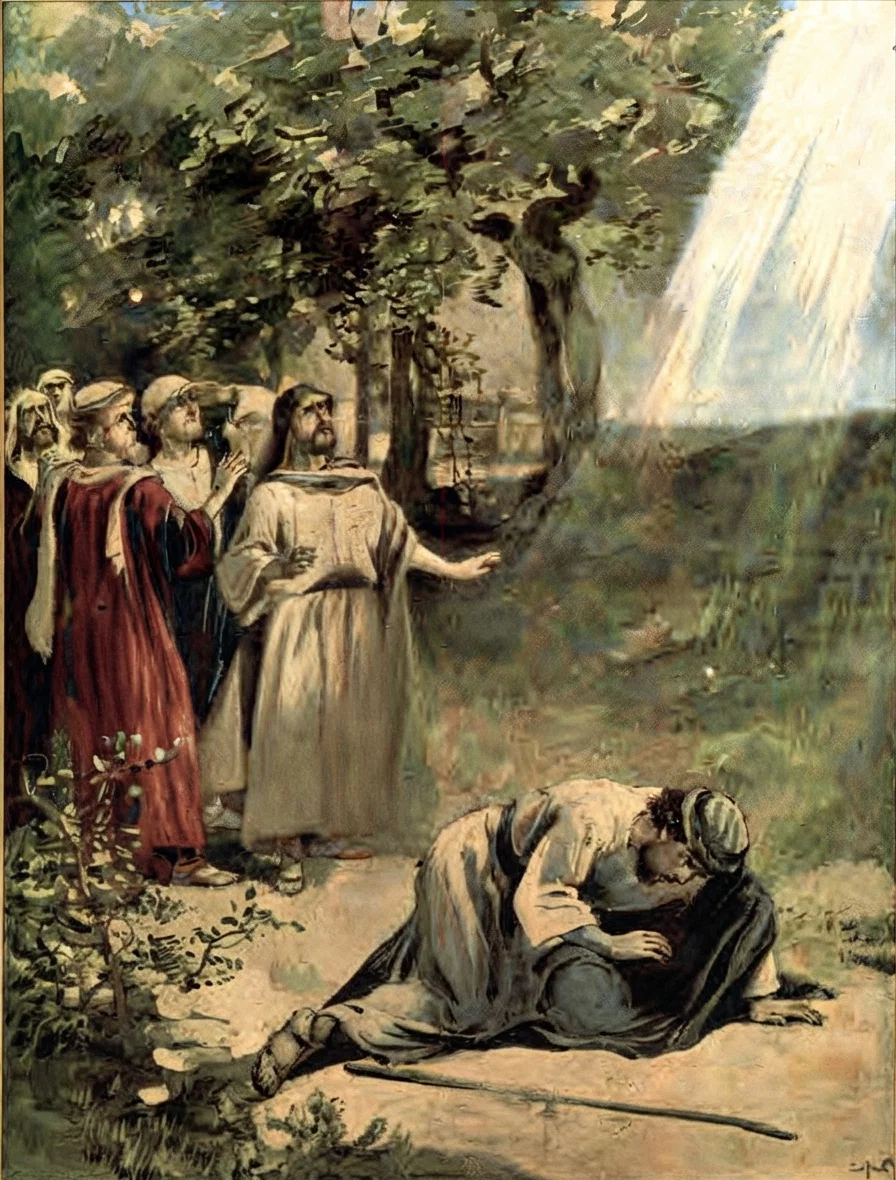
THE light of the glorious Gospel of Christ was just beginning to shine above the world's horizon when Saul of Tarsus made his historic journey to Damascus.
THE Jewish Sanhedrin had thought to quench on Calvary the first outshining of this light. Perhaps they imagined they had succeeded; but at Pentecost it blazed no brighter than ever. The Spirit was poured out in mighty power. Three thousand converted in a day; and soon "the number of the men" that believed "was about five thousand," and among those who were obedient to the faith was "a great company of the priests."
THE preaching of the apostles was attended with such divine power, such signs and miracles were wrought in the name of Christ, and so much had been accomplished in a short time, that the Jewish leaders were startled. Clearly something must be done. The Sanhedrin was aroused to action. Stephen won a martyr-crown, and the "great persecution" that followed his death scattered the believers far and wide. But each outcast was a light-bearer, and the dispersed "went everywhere preaching the word." The light at Jerusalem was not extinguished; for there was still a church there with the apostles at its head; and little lights were beginning to twinkle all over the Jewish world. The persecution was not accomplishing its object. Still more vigorous measures must be taken. Then it was that, authorized by the Sanhedrin, Saul went to Damascus on an errand of cruelty and oppression against the infant church.
As he journeyed, he came near Damascus; and suddenly there shined round about him a light from heaven; and he fell to the earth, and heard a voice saying unto him, Saul, Saul, why persecutest thou Me?
SAUL and the men that were with him were approaching Damascus. Perhaps as they traveled the hot, dusty road, with the burning midday sun overhead, they could see before them the gleaming white city, "resting, like an island of Paradise, in the green inclosure of its beautiful gardens." "A wilderness of gardens,—gardens with roses among the tangled shrubberies, and with fruit on the branches overhead," it seemed; and everywhere among the trees was the murmur of unseen rivulets that drew their cool waters from the Anti-Libanus. A veritable oasis in the mountain-desert was and still is this ancient and beautiful city.
AS THEY journeyed, suddenly there fell around Saul and his companions a light above the brightness of the Eastern sun shining in its midday splendor; and a voice demanded of the proud Pharisee, "Saul, Saul, why persecutest thou Me?" During three days of darkness and isolation, Paul had time to think of this question. Feared and shunned by the disciples, who knew him as the chief persecutor of this new way; surrounded by zealous adherents of Judaism, who could have no sympathy with the revelation he had received, he was alone with God and his own heart, —alone in self-abasement, and fasting, and humble prayer.
WHY had he persecuted? He answered this question himself when he was no longer Saul the persecutor, but Paul the apostle. Defending himself at Jerusalem, he said: "I am verily a man which am a Jew, . . . brought up in this city at the feet of Gamaliel, and taught according to the perfect manner of the law of the fathers, and was zealous toward God, as ye all are this day." Acts 22:3. Again he declares that he was "of the stock of Israel, of the tribe of Benjamin, an Hebrew of the Hebrews;as touching the law, a Pharisee," and according to "the righteousness which is in the law, blameless." Phil. 3:5, 6.
NONE knew better than this Hebrew of the Hebrews that to Israel pertained "the adoption, and the glory, and the covenants, and the giving of the law, and the service of God, and the promises." Rom. 9:4. The faith of his fathers stood to him for home, country, and the worship of God,—all that was dearest in life. Could he see a movement arising in the very heart of the Hebrew church that threatened to undermine its doctrines and prestige, and not be stirred to the very depths of his fiery, zealous heart? Could he see the ancient landmarks threatened, the glory of Israel obscured, and not be aroused to the most determined action? He says, "I verily thought with myself, that I ought to do many things contrary to the name of Jesus of Nazareth."
BUT the three days of darkness in the house of Judas at Damascus, were three days of new, strange light to Paul. He began to see the relation between the law and the Gospel. The temple service and the ministration of the priests took on a new meaning. For centuries the temple had been the center of the religious life of the Jewish nation. It was the tower in the vineyard, the object to which all eyes turned. Thither year by year the tribes went up, "the tribes of the Lord unto the testimony of Israel, to give thanks unto the name of the Lord." By the daily service within its sacred walls, Jehovah was acknowledged as the covenant God of Israel; while in the homes of the devout, hearts turned to the temple at the hour of morning and evening worship, and prayers and thanksgivings ascended with the smoke of the incense and of the sacrificial offering.
DAY by day the priests, ministering in the temple, received the offerings of the people. Thither came the penitent with offerings for trespasses and sins. The pardoned sinner expressed in freewill-offerings his gratitude and praise for peace with God. Tithes and first-fruits were presented to their King, the Giver of every blessing; while the good hand of God in the bestowal of special blessings was recognized by thank-offerings. And at the close of the year came the solemn day of atonement, when the sanctuary was cleansed from sin, and the people stood free before God.
THUS the sanctuary and its service were interwoven with the very life of the people. It is no wonder that they loved it. But with all its stately beauty, with all its grand and solemn round of ceremonies, with all its dear and hallowed associations, the earthly temple was but a type of "the true tabernacle, which the Lord pitched, and not man." With its service, it was "a shadow of things to come." It was a daily object-lesson, a parable of One who was to appear. The temple service made nothing perfect, or complete. It invited the worshiper to look beyond, even "into heaven itself," where Christ as our priest and advocate has now entered, "to appear in the presence of God for us." To this sanctuary we are to look for pardon and peace; from the divine love and sympathy there flow all our blessings.
PAUL saw that the "hope of the promise made of God unto our fathers; unto which promise our twelve tribes, instantly serving God day and night, hope to come," centered in Jesus of Nazareth, who was indeed the promised Messiah. And he went forth to preach Christ with the same earnest purpose that had characterized his persecutions when he was "exceedingly mad" against the believers. He became a bearer of the light he had tried to extinguish. He helped to fulfill the prophecy: "The people that walked in darkness have seen a great light; they that dwell in the land of the shadow of death, upon them hath the light shined." Isa. 9:2.

A PRESENT HELP IN EVERY TIME OF NEED.

CHRIST'S workers should be well qualified, well trained men and women, enjoying the vigorous use of all their powers. They should be men and women who have denied self, who in a crisis will know, as did Daniel, what course to pursue in order to honor and glorify God.
Infidelity in many specious forms will have to be met. Satan works under disguise, and it will require a well-trained mind, sharpened by divine enlightenment, to meet his wily devices. Men can not now retain with safety defects of character. If they do not make determined efforts to overcome hereditary and cultivated tendencies to wrong, these tendencies will become lusts which war against the soul.
My heart is stirred within me as I see so many cities and villages in the darkness of superstition and ignorance, with no one to teach them the special truths so important for this time. I can scarcely restrain myself from crying aloud. Where are the missionaries to carry light to these ignorant ones? Where are the men and women who will work with self-denial and self-sacrifice to save souls?
Alas, are there not many like the doomed fig-tree which bore no fruit, mere cumberers of the ground? They seem to think that to profess Christ constitutes the sum of Christianity. Many live in the hope of some day growing better, but they do not advance a step. They dishonor the religion of the Bible by lowering the standard to meet their own attainments. They do not prepare to meet the assaults of Satan. They do not realize that God calls upon them to engage in a constant warfare against the selfishness and pride of their own hearts. They do not crucify self. O, for more of the Spirit of the Master! How much His people need it!
Every day and every hour we need the sanctification of the Spirit, else we shall be taken unawares. Christ, the Commander of heaven, durst not bring against the devil a railing accusation, altho He had every excuse for doing so. We need to learn how to manifest Christlike humility. "Take My yoke upon you, and learn of Me," the Saviour says. "I am not boastful. I hide My glory. I am meek and lowly in heart." When God's people have sanctified hearts and sanctified tongues, they will do a work that will not need to be repented of. The influence they exert will be a savor of life unto life. The Lord is opening the way for the spread of the Gospel, but we are not ready. Daily we need to be softened and refined by the Holy Spirit's power. Even our thoughts are to be brought into subjection to Christ. Unconsecrated self is to be crucified. Like Mary, we are to sit at the feet of Christ and learn of Him.
As we work for Christ, we need not appeal to the wisdom of human beings. Christ says, "Come unto Me, . . . and I will give you rest." Have faith in God. What is faith?—"The substance of things hoped for, the evidence of things not seen." Without faith it is impossible to please God. Make faith in Christ a glorious reality. A mighty faith in the Redeemer exerts an influence which nothing can withstand. God Himself comes to His tried and tempted but faithful followers.
God is our only sure defense. The new and living way is opened before every one who cheerfully submits to the yoke of Christ. The strength of the Lord is made perfect in the weakness of His followers, whether they be as renowned as Paul or as obscure as the least of the disciples. Those who suppose that they are perfect need to take Christ's yoke upon them, and learn of Him His meekness and lowliness. Thus they will find out how weak and inefficient they really are. Those who think themselves to be pure in spirit and strong in faith need to learn daily the meaning of the words, "Without Me ye can do nothing."
As laborers together in God we are to be thankful that we are not all cast in the same mould. Every leaf in the Lord's creation has an identity of its own. God does not ask His followers to be precisely alike. Temptations come to each one in a different way, and God reveals His power by upholding and delivering each one. Deliverance in time of trial is prepared for all who are tempted, no matter how diverse their temptations may be. Strength to advance upward and forward is provided for each one.
Every soul must fight his own battles. He must himself put on the armor. He must pray for himself. He must commune with God for himself. He must keep his own soul under watchful guidance, knowing that if he does his part, God will not fail of doing His part.
As the tempted one draws nigh to God, God draws nigh to him, and lifts up for him a standard against the enemy. As human beings seek the Lord in earnest prayer, they will learn what no human being can teach them. They will see what transgression of the law means, and what a costly price has been paid for the redemption of the race. They will hate the sins that wound the heart of Christ. They will see in Jesus a compassionate, tender High Priest, and will bow in contrition before Him.
God's people are weak because they have not made Him their trust. They have notmade Him their dependence, but have laid their burdens on finite minds and human hearts. The help they have received has been like the helpers they have sought. God has been lost sight of. Look to Him who can say, "I will; be thou clean," and straightway the leprosy of sin departs. Go for help to Him who commands the winds and the waves, and they obey His voice; who speaks, and the dead come forth from corruption to life and health. Glory and majesty surround Him in all His ways.
Who ever spake as did Jesus? His prayers were an expression of the divine will. Who ever loved men and women like Him who gave His life for them? He is the Holy One of God, and He is entitled to our praise and adoration. His glory and majesty fill the heavens, and yet He is filled with love and sympathy for His weakest child.
How infinitely inferior we are to the perfect Pattern that we are called upon to copy! Yet in His strength we can reach the ideal set before us. We can do "all things" in His power. We are to give to the people of God to-day the message given to Moses for the children of Israel, "Go forward." Christ spoke these words. He guided the children of Israel through the wilderness. His right arm brought them victory in their warfare against their enemies; and He is just as willing to help us in our warfare as He was to help them.
MRS. E. G. WHITE.

JESUS, THOU WHO FOR ME DIED.

JESUS, Thou who for me died, All my soul goes out to Thee; Keep me closely by Thy side, In my weakness care for me. When the storm and tempest break, Fierce with wrath, upon my head, Shelter me between Thy feet, Thy protection o'er me spread.
In the darkness and the storm, In the tempest's wild increase, Let me see outlined Thy form, Hear Thy voice commanding peace. In my weakness make me strong Through the grace Thou dost impart; Turn my plaint into a song; With Thyself fill all my heart.
Storm and trial may beset, Foes encompass me about, I will neither shrink nor fret, Thou wilt bring me safely out. Why should aught my heart appal, Or my soul with terror fill? Thou, O Christ, doth rule o'er all, Working out Thy gracious will!
He whose trust is in the Lord Never shall confounded be; Needed help is in Him stored, That from fear we might be free. None who unto Christ belong E'er shall come to any harm. Devils thick their way may throng, None shall pluck them from His arm. —William G. Haeselbart

THE SIGNS OF CREATIVE POWER.

It has been clearly shown that it was Jesus Christ who created all things, being associated with His Father, and that He was the active agent in the execution of plans formed with the Father in the council chamber of eternity. Thus the Creator and the Redeemer are the same.
The same Being who created a world by His word saves a soul by the same word, by the same power. In creation is seen manifested the power of God; in the Gospel is the same power. Rom. 1:16. Therefore in the record of creation as given in Genesis is taught the Gospel, and those who substitute something else for the account the Lord inspired Moses to write, pervert the Scriptures. They reject the Gospel of their own salvation, and teach "another gospel."
That untiring enemy of God, the devil, desires the simple story of creation to be discredited, and the power of God to be correspondingly hidden. The Lord designs this power, which is the power of our salvation, to be everywhere known and remembered. He therefore made a "memorial of His great creation." Ps. 111:4, Jewish translation.
Six days were occupied in the stupendous and unfathomable work of creation. So great was the power herein displayed that the "morning stars sang together, and all the sons of God shouted for joy." Job 38:7. As the crowning act in the achievements of the celestial Architect, man was made, formed in the image of his Maker, and given dominion over all the earth. A new world was added to the family of worlds, the home of human beings, designed by their Creator to glorify Him.
"And on the seventh day God ended His work which He had made; and He rested on the seventh day from all His work which He had made. And God blessed the seventh day, and sanctified it; because that in it He had rested from all His work which God created and made." Gen. 2:2, 3.
Who rested? Who blessed the seventh day? Who sanctified it, or commanded its observance? — As Jesus Christ was the active agent in creating all things, He of course is the One who rested, and who blessed and sanctified the seventh day.
He made the Sabbath, for "without Him was not anything made that was made." John 1:3. Jesus made the Sabbath; "therefore the Son of man is Lord also of the Sabbath." Mark 2:28. Let those carefully and prayerfully meditate on this who, while professing to love and adore their Redeemer, trample every week beneath their feet the day He made and gave to men as a memorial of His great creation.
The reasons for the observance of the seventh-day Sabbath are given in the fourth precept of the Decalogue, which was handed down amid the grandeur of Sinai, and written by the Creator's finger on the agate of the mountain: "Remember the Sabbath day, to keep it holy. Six days shalt thou labor, and do all thy work; but the seventh day is the Sabbath of the Lord thy God; in it thou shalt not do any work, thou, nor thy son, nor thy daughter, thy man servant, nor thy maid servant, nor thy cattle, nor thy stranger that is within thy gates. For in six days the Lord made heaven and earth, the sea, and all that in them is, and rested the seventh day; wherefore [for this reason] the Lord blessed the Sabbath day, and hallowed it." Ex. 20:8-11.
The Lord directs our minds back to creation as the reason for keeping the Sabbath. It is a memorial of creative power. Its existence is based on the facts of creation. Some wrote learnedly on the abolition of the Sabbath. Vain effort! Alexander Campbell once truly said that the only way the Sabbath could be changed would be for the Creator to go through the work of creation again, and rest upon another day. So long as the facts of creation remain true, so long will the Sabbath, made in Eden, for man, exist. When it is no longer true that the Lord worked six days, rested on the seventh, and blessed and sanctified the day, then the seventh day will cease to be the Sabbath binding on men. But these facts will be true through the unending ages of eternity; therefore the seventh day will be the Sabbath of the redeemed in eternity. Isa. 66:22, 23.
The Lord having instituted the Sabbath as a memorial of creative power, those who keep it are led to remember that the Saviour, who redeems them, had power to create the heavens and the earth. "It is a sign between Me and the children of Israel forever; for in six days the Lord made heaven and earth, and on the seventh day He rested, and was refreshed." Ex. 31:17.
The Sabbath is not kept in order that men shall be saved; but those who truly keep it holy do so because they are saved. "Moreover also I gave them My Sabbaths, to be a sign between Me and them, that they might know that I am the Lord that sanctify them." Eze. 20:12. It is an outward sign of an inward work. Simply having the sign without the thing which it signifies — viz., sanctification — is equivalent to a sign-board on the front of a building announcing articles for sale when there is no merchandise within.
By observing the Sabbath we say: "I am a Christian. The Lord is sanctifying me. He is saving me from my sins. He is my Saviour, having redeemed me from all my iniquity." Since it is the sign of creation, and redemption is a creation, — a new creation of a sinner, — the Sabbath is the sign not only of creation but of redemption also; and every soul who is redeemed by the power of Jesus Christ from all his sins should observe the Sabbath, — the sign of this power, — as a sign that he has been redeemed.
When the Lord led the children of Israel from Egypt, delivering them from the hosts of Pharaoh, He reminded them of the Sabbath. Why? — Because it took creative power thus to deliver them.
It took the same power to separate and congeal the waters of the Red Sea that it took to make a world. Creative power was displayed. The Gospel was manifested. The Lord, by His power and by His outstretched arm, had delivered His children from Egyptian bondage and darkness; "therefore the Lord thy God commanded thee to keep the Sabbath day." Deut. 5:15. He was not instituting a new memorial; but, having displayed openly the power of which the Sabbath is a sign, He commanded them to keep it.
By nature we are in sin and in the bondage of which Egypt is a type. This is the unfortunate condition of all who are not converted. When we are converted and delivered from this law of darkness and death, we should remember to keep the sign of this power?
Reader, have you been converted? Has the Lord by His power and outstretched arm delivered you from spiritual Egypt? If so, "the Lord thy God commanded thee to keep the Sabbath." Deut. 5:15.
G. B. THOMPSON.

THE PROBLEM OF LIVING TOGETHER.

BY REV. WALTER B. VASSAR.
IF we should speak of this problem as the problem of social life, it would be one of the many ways of expressing it, each meaning the same thing. It is the problem of the family, the community, and of the nations. The problem began with the race, and never before in the world's history were we confronted by it as now.
We see China, old, hoary with age, living in the completest isolation, and to whom a foreign human being is a foreign foe. If ever a nation was as ill prepared as China, to live with others in the community of nations, history makes no record of it. And yet the problem of adjustment to society is hers along with ours. Humankind can not escape it.
What has China to help her in the movement upward? We wish we could say that Christian nations, all of them, presented the example of the brotherhood that the Master taught; but so far we see, looking over the map of the world, what we might see in a community where every man carried a revolver in his pocket and a gun pointing from the front door of his residence.
If China, now waking from its long sleep, could have the race prejudices and the race passions subdued by the spirit of the Gospel which so-called Christianity professes, who knows what might be done to conquer and win the heart of even a Chinaman?
But as nations, we can not speak in the name of Christ. Our own discipline in the matter of social life is far insufficient for effective example. Many leaders in Christian thought are far enough along, however, in the school of Christ to say emphatically that if the spirit in which we are to meet this waking nation is to be of the nature and example shown by some of her western competitors, then the world's darkest night is upon us.
The problem of living together finds its solving along other lines. Human brotherhood is cultivated in another spirit. The world, like the commonwealth, can only stand as it stands together.
Hamilton, N. Y.

Christ’s Salvation Is Sufficient

THE salvation of Christ is sufficient for every soul that has ever lived upon the earth. Men will refuse to come to Christ; and men will be lost by refusing; but the plan of salvation is not to blame, nor Christ an insufficient Saviour.

LESSONS FROM MATTHEW 24

THE SIGNS OF THE LORD'S COMING AND OF THE END OF THE WORLD.

"What shall be the sign of Thy coming, and of the end of the world?"
THIS question the disciples asked Jesus. And Jesus answered the question directly, and even more fully than they had asked. They asked, "What shall be the sign?" and Jesus answered; "There shall be signs"—not one only, but a number of them; and these in different places.
But first He tells definitely the time when the signs would begin to appear, so that those who would intelligently look for His coming could know when to expect the signs, and as a consequence know that His coming and the end were near. Thus He says, "Immediately after the tribulation of those days, there shall be signs."
In the stretch of time that would elapse, and the course of events which would occur between the day of His discourse and the day of His coming and of the end of the world, He had said, as noted in the preceding study, that upon the elect "there shall be great tribulation, such as there hath not been the like, from the beginning of the creation which God created until now, no, nor ever shall be. And except those days should be shortened, there should no flesh be saved; but for the elect's sake those days shall be shortened."
These are the "one thousand two hundred and threescore days," each day for a year, in which the church of God—the elect—was "nourished from the face of the serpent," and protected from the flood of wrath, which the dragon through his earthly instrument cast out of his mouth "after the woman, that he might cause her to be carried away of the flood." Rev. 12:7, 14, 15. They are the days during which the power symbolized by the "little horn" of Dan. 7:8, 20-22, 25, "made war with the saints, and prevailed against them," and wore them out. They are the days in which death, on his "pale horse," rode prosperously, with hell following with him, while he killed "with sword, and with hunger, and with death, and with the beasts of the earth" those who must be "slain for the Word of God and the testimony which they held." Rev. 6:8, 9. They are the days in which "that woman Jezebel," "Babylon the great, the mother of harlots, and abominations of the earth," used her terrible power so astonishingly that she was "drunken with the blood of the saints, and with the blood of the martyrs of Jesus." Rev. 2:19; 17:3-6. They are the days in which this "abomination that astonisheth" (Dan. 11:31, margin) caused many to "fall by the sword, and by flame, by captivity, and by spoil, many days." Dan. 11:31-33.
Thus "those days" are the twelve hundred and sixty years of papal supremacy, which began in A.D. 538, at the rooting up of the last of the "three" kingdoms mentioned in Dan. 7:8, 20, 24, and ended in A.D. 1798, when the papal government was abolished in Rome, when a Roman republic was again declared there, and "the old foundations of the capital were made again to resound with the cries, if not the spirit, of freedom; and the venerable ensign, S. P. Q. R., after the lapse of fourteen hundred years, again floated in the winds," and when the pope was made a prisoner and was carried into captivity in France, where he died at Valence, Aug. 29, 1799. And "the tribulation of those days" is the terrible persecution inflicted by the Papacy, as shown by the scriptures referred to in the preceding paragraph, and as certified in the history of the Dark Ages.
But Jesus said "those days should be shortened," and "for the elect's sake." "They shall be holpen with a little help," said the angel to David. Dan. 11:34. "The earth helped the woman" in the wilderness, wrote John. Rev. 12:16. The tribulation was shortened; the elect were relieved before the days ended, else there would have been none left. The tribulation ended in the suppression of the Jesuits in 1773. The days ended A.D. 1798. And "immediately after the tribulation" ended, yet before the days ended, the signs of His coming would begin to appear; for said Jesus, "In those days, after that tribulation," the signs should begin.
And where would be the signs? Read: "Immediately after the tribulation of those days" (in the days) "there shall be signs— (a) "In the sun, and (b) "In the moon, and (c) "In the stars, and (d) "Upon the earth distress of nations with perplexity; (e) "The sea and the waves roaring; (f) "Men's hearts failing them for fear, and for looking after those things which are coming on the earth." Luke 21:25, 26.
Thus the signs of the coming of the Lord and of the end of the world are to be abundant, and in so many places that it is impossible for anybody to fail to see, at the very least, some of them. The signs are to be in the heavens and on the earth, amongst the nations, upon the sea, and among men as individuals.
The signs in the heavens are to be in the sun, in the moon, and in the stars. And these are the first signs mentioned. Not only are they the first mentioned, but they are definitely specified as the ones which would begin in the days, and after the tribulation: "Immediately after the tribulation of those days [in the days] the sun shall be darkened, and the moon shall not give her light." "The sun became black as sackcloth of hair, and the moon became as blood." Mark 13:24; Matt. 24:29; Rev. 6:12; Joel 2:31.
As already stated, the tribulation ended in 1773. The days ended in 1798. And May 19, 1780, just seven years after the tribulation ended and eighteen years before the days ended, the sun was darkened from about 10 o'clock in the morning all the rest of the day, and till past midnight; and in that night of darkness such as "doubtless had not been since the Almighty first gave birth to light," the moon, which had failed the day before, appeared as red as blood. Of the darkening of the sun, and, consequently, of the moon, one of the best accounts is the following:—
Almost if not altogether alone, as the most mysterious and as yet unexplained phenomenon of its kind in nature's diversified range of events, during the last century, stands the dark day of May 19, 1780—a most unaccountable darkening of the whole visible heavens and atmosphere in New England—which brought intense alarm and distress to multitudes of minds, as well as dismay to the brute creation, the fowls fleeing bewildered to their roosts, and the birds to their nests, and the cattle returning to their stalls. Indeed, thousands of the good people of that day became fully convinced that the end of all things terrestrial had come; many gave up, for the time, their secular pursuits, and betook themselves to religious devotions; while many others regarded the darkness as not only a token of God's indignation against the various iniquities and abominations of the age, but also as an omen of some future destruction that might overwhelm the land—as in the case of the countries mentioned in Biblical history—unless speedy repentance and reformation took place. The ignorant indulged in vague and wild conjectures as to the cause of the phenomenon; and those profounder minds, even, that could "gauge the heavens and tell the stars," were about equally at loss for any rational explanation of the event. It is related that the Connecticut Legislature was in session at the time, and that so great was the darkness the members became terrified, and thought that the day of judgment had come; a motion was consequently made to adjourn. At this Mr. Davenport arose and said: "Mr. Speaker, it is either the day of judgment or it is not. If it is not, there is no need of adjourning. If it is, I desire to be found doing my duty. I move that candles be brought, and that we proceed to business."
The time of the commencement of this extraordinary darkness was between the hours of 10 and 11 in the forenoon of Friday of the date already named; and it continued until the middle of the following night, but with different appearances at different places. As to the manner of its approach it seemed to appear, first of all, in the southwest. The wind came from that quarter, and the darkness appeared to come on with the clouds that came in that direction. The degree to which the darkness arose varied in different localities. In most parts it became so dense that people were unable to read common print distinctly, or accurately determine the time of day by their clocks or watches, or dine, or manage their domestic affairs conveniently without the light of candles. In some places the degree of darkness was just about equal to preventing persons seeing to read ordinary print in the open air for several hours together.
The extent of this darkness was also very remarkable. It was observed at the most easterly regions of New England; westward to the farthest parts of Connecticut, and at Albany; to the southward, and observed all along the seacoasts; and to the north as far as the American settlements extended. It probably far exceeded these boundaries, but the exact limits were never positively known.
With regard to its duration, it continued in the neighborhood of Boston for at least fourteen or fifteen hours; but it was doubtless longer or shorter in some other places. The appearance and effects were such as tended to make the prospect extremely dull, gloomy, and unnatural. Candles were lighted up in the houses; the birds, in the midst of their blithesome forenoon enjoyments, stopped suddenly, and, singing their evening songs, disappeared, and became silent; the fowls retired to their roosts; the cocks were crowing in their accustomed manner at the break of day; objects could not be distinguished at a comparatively slight distance; and everything bore the aspect and gloom of night,—to say nothing of the effect upon the minds of the people, which, indeed, was quite indescribable.
The above general facts concerning this strange phenomenon were ascertained, after much painstaking inquiry, soon after its occurrence, by Prof. Williams, of Harvard College, who also collected together some of the more particular observations made in different parts of the country, relative to the remarkable event.
At 8 in the evening the darkness was so impenetrably thick as to render traveling positively impracticable; and, altho the moon rose nearly full about 9 o'clock, yet it did not give light enough to enable a person to distinguish between the heavens and the earth.
That this darkness was not caused by an eclipse is manifest by the various positions of the planetary bodies at that time; for the moon was more than one hundred and fifty degrees from the sun all that day, and according to accurate calculations made by the most celebrated astronomers, there could not, in the order of nature, be any transit of the planet Venus or Mercury upon the disc of the sun that year; nor could it be a blazing star—much less a mountain—that darkened the atmosphere; for this would still leave unexplained the deep darkness of the following night. Nor would such excessive nocturnal darkness follow an eclipse of the sun; and as to the moon, she was at that time more than forty hours' motion past her opposition.—Our First Century, pp. 89, 90, 93, 95, Great and Memorable Events.
A. T. JONES. (To be continued.)
Continue reading: THE CYCLE OF THE SABBATH