A Sabbath Day's Services

3%

Review and Herald Publishing Association · Takoma Park Station, Washington, D. C. · Mar 12, 1908

FromReview and Herald, Vol. 85, No. 11.

Read the full edition

A Sabbath Day's Services

At the Tamil Christian Church, South India, Sabbath, Dec. 28, 1907
GEO. F. ENOCH
PROMPTLY at 3 A. M., long before sunrise, we were aroused from our slumbers by a sound unlike any we had ever heard. We soon remembered, however, that we had been told the night before that the first signal for the Sabbath day's services would be the “blowing of trumpets” at 3 A. M. This would be the signal for all Sabbath-keeping families to arise and prepare for the day's services.
Brethren J. L. Shaw and J. S. James, and the writer, rubbed from their eyes the sleep that was reluctant to go, and prepared themselves for the service that was to begin promptly at 4:30.
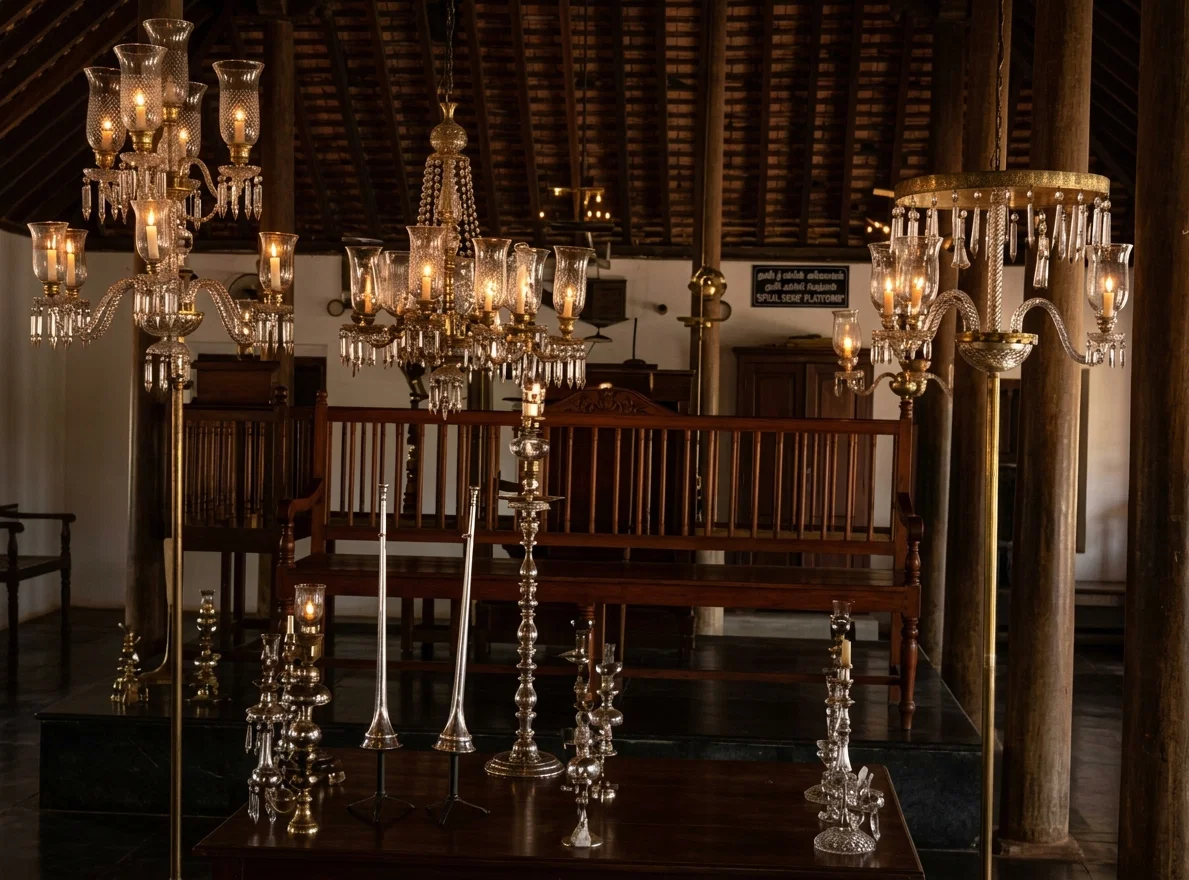
As soon as we were able to examine the instruments from which the warning signal was given, we were pointed to the Bible, and a few verses received new emphasis in our minds. “And the Lord spake unto Moses, saying, Make thee two trumpets of silver; of a whole piece shalt thou make them: that thou mayest use them for the calling of the assembly, and for the journeying of the camp.” Num. 10:1, 2. One trumpet was to be blown to call the elders, and two to assemble the camp. So at the very beginning of the day's services we were reminded forcibly of the anxiety of these people to have all parts of their service in harmony with the Word of God.
The two trumpets here used were about four feet long, beaten out of solid silver, fitted with a mouthpiece similar to one found on a tenor horn in a modern brass band. We were told that these trumpets could be heard four miles.
As we left the street to enter the church building, we found ourselves ina wide, high porch, with tall columns of palmyra palm upholding the roof. This porch proved to be the place where we were to remove our shoes.
SPEAKERS' PLATFORM IN THE TAMIL CHURCH
We had inquired diligently beforehand as to the real purport of this rule. We learned that from the Scripture these people had derived a sense of great sacredness concerning their place of worship. They believe that in the same way that God descended and honored the worshipers by his presence in the sanctuary of old, even so at times now he descends among those who worship him in spirit and in truth, and honors them with his presence. They also read such scriptures as Ex. 3:5; Joshua 5:15; Acts 7:33. We also learned that the removing of the shoes from the feet means about the same to the Oriental as the removing of the hat does to those from the Occident.
So after counseling together, we decided that we would lay before the people the matter as we saw it, explaining that while it was not the custom for us to do so in our churches, yet in accordance with their custom we would do so at this time. They seemed to understand the situation, and thanked us most heartily for our kindness, which brought them great relief.
The three of us will never forget the impressions received as we entered the well-lighted church. Toward the front was a platform about three feet high, encircled with a hand rail. On the top of this platform was an ordinary table, and two large candlesticks of beaten brass, burning seven tapers each. Behind the table stood the preacher of the morning, on either side of the table, seated on the floor, was a choir of about twenty boys between the ages of ten and twelve, who were lustily singing a hymn of praise in Tamil, led by an orchestra of four violins. During the service the leader of the orchestra proved abundantly that he had special ability in
this line. But his dress, while entirely conventional here, would hardly be considered so in Western countries. He did not have a stitch of clothing from his waist up or from his knees down.
As we entered, on our immediate right, extending nearly to the pulpit, seated on the floor in true Oriental style, was a company of more than two hundred women. They were dressed with clean clothes, very simply, with the exception of the jewelry which they wore in quite large quantities. We were struck with the visible touch of the feminine hand, as we looked over the crowd of heads reverently bowed, and noticed the graceful and modest draping of their simple garments, composed for
the most part of but two or three pieces. On the right hand, extending quite around and behind the pulpit, were an almost equal number of men. We afterward learned that many of the men were away from home, in Ceylon and other places, trading. Here and there among the women was one dressed in pure white. These were widows, who are not allowed to remarry unless they have no children, when they are allowed to marry their husband's brother, or the nearest of kin. Usually these widows have estate enough to keep them. Otherwise they are well looked after by near relatives, or lacking them, by the congregation.
As we approached the front, we were surprised to see a group of about one hundred little girls, seated on the floor immediately in front of the women, and extending along the side of the church. And just beyond, reaching around behind and beneath the pulpit, was an equal number of little boys, surprisingly quiet, but with their bright, keen little eyes fixed on the three white sahibs coming up the aisle. The morning service was opened by all chanting in concert, standing, the eighteenth and nineteenth verses of the seventy-second psalm. After
kneeling in silent prayer for a moment, all arose and chanted the forty-seventh psalm, the preacher for the day and a leading male singer chanting a verse, then the entire congregation repeating the same, led by the orchestra and choir.
The chanting of these psalms seemed marvelous to us, the congregation of more than five hundred voices keeping almost perfectly in unison. Even the children joined in the chants, and it seemed almost painful to watch their faces as they strove to reach the highest strains. My readers can scarcely imagine the effect of more than five hundred voices, in so small a building, each chanting lustily to the utmost of his ability. The nearly perfect unison seemed marvelous, and we could easily follow the tunes of the chant, yet each of us agreed that he had never before so fully appreciated the meaning of the psalm which says, ‘Make a joyful noise unto the Lord.’
At the completion of the psalm, two chapters were read, one from the Old and one from the New Testament. The lessons for this service were found in Proverbs 25 and Luke 1. Following the Scripture reading, the one hundred forty-eighth psalm was chanted. The music was very appropriate to the genius of the psalm, and one could feel that the people were expressing great joy for the manifold blessings of God.
The sermon followed. On account of the extreme Jewish setting of the ritual, we thought best to go back to the beginning and establish the fact that Jesus was Creator, and that the law and the Sabbath were from the beginning. The writer spoke concerning creation, using the following texts: John 1:1-14; 17:5; 1 Cor. 8:6; Heb. 1:1-3; Genesis 1; Ps. 33:6, 9; Rom. 4:17; Gen. 2:1-3.
At the close of the sermon came a very interesting part of the service. On a table in front of the pulpit were twenty-eight heaps of money brought in by different individuals. Immediately in front of the table were thirty-seven offerings, consisting of eggs, and the produce of their fields, for the most part in neat little baskets. In these baskets were such things as rice, dahl (lentils), pumpkins, etc.
As soon as the sermon was ended, the steward of the church stepped forward and counted each heap of money, holding it up and calling out the amount. The donor would then arise from his place in the congregation and acknowledge the offering. If no one responded, the offering was set aside, and would not go into the treasury until the donor was known.
During this part of the ceremony there came what proved to be a most interesting diversion. When one offering of about one and one-half cents was announced, it was claimed by a man seated near us. The acknowledgment was scarcely out of his mouth when Teacher Abraham, one of the leaders of the congregation, was upon his feet with a series of questions. He and the preacher in the pulpit held a most animated conversation for a few minutes with the donor, whereupon the steward rejected the donation, passing it to another table. Then the donor stood, and made a most earnest explanation before the entire congregation, which proved satisfactory, as the steward then took the money and placed it with the accepted offerings.
Our interpreter explained to us that the donor was accused of getting this money by breaking the Sabbath. The money was a portion realized from the sale of a fowl, which the leaders had been informed was sold on the Sabbath, and they absolutely refused to receive such tainted money. The final acceptance was only after the donor had solemnly assured them that the fowl had been sold after sundown the previous Sabbath.
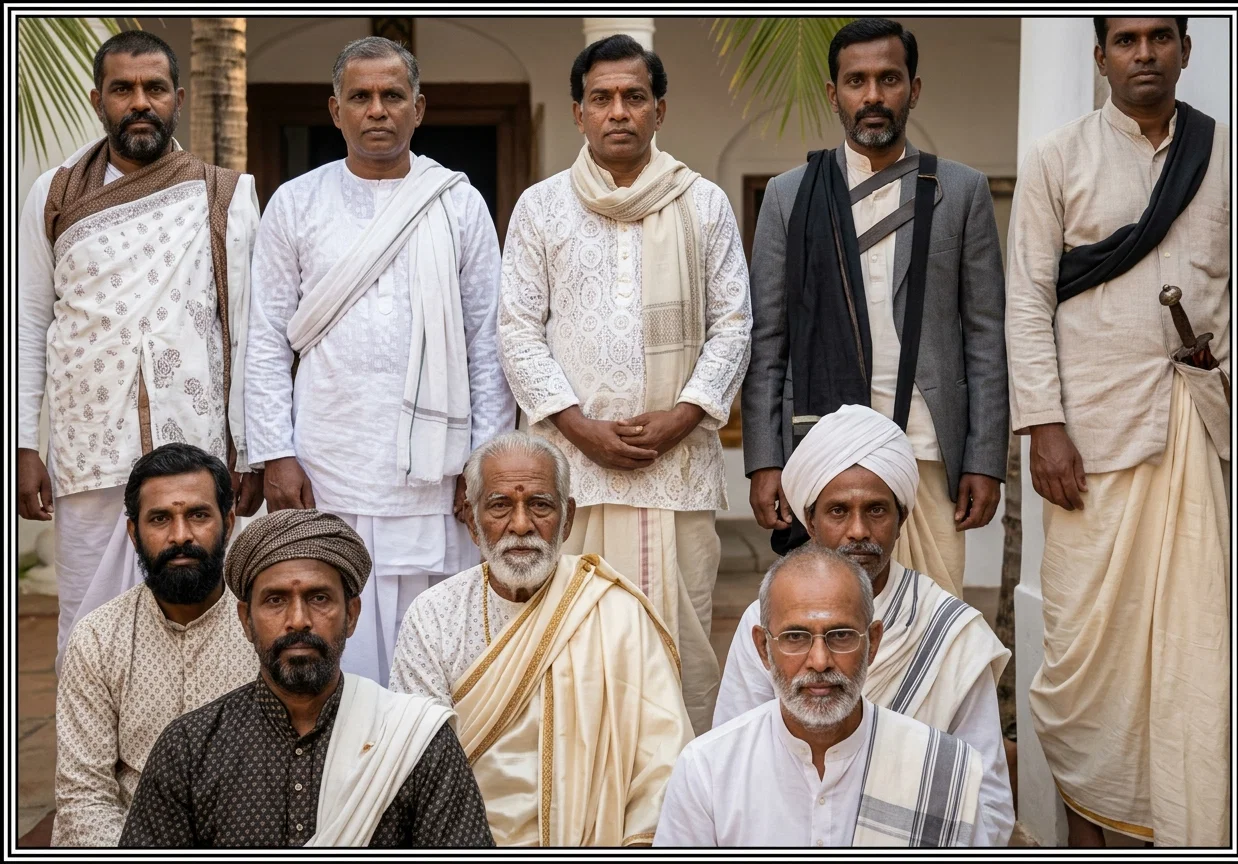
ELDERS AND LEADERS OF THE SABBATH-KEEPING TAMILS
It is worthy to note that the children were well represented among these donors. These offerings for the most part were called “first-fruits.”
There were also among them offerings made as an expression of gratitude to God, for some blessing, such as deliverance from sickness, a safe return from a long journey, etc. The accepted money was then placed in the treasure box, made of beaten brass, well padlocked. During the services the usual receptacle for this treasure box was a stone pillar near the door, where the faithful could drop
in their offerings on certain occasions. The steward explained that this box was similar to the one of which Jesus spoke when he tells of the widow who dropped in two mites. After the offerings had been received, the fifth psalm was chanted, after which the entire congregation in unison repeated, while standing, the Lord's prayer, closing with two Amens. Then while the congregation knelt, the leader in the pulpit prayed most earnestly in Tamil, after which the benediction was pronounced, the meeting closing exactly as described in Neh. 8:6.
At 10:30 came the second service of the day, which was very similar to the first, with the addition of the repeating of the ten commandments responsively.
Thinking that it will be of interest to our people generally to know the variety of psalms used, as well as the order of the service, I give below the program of the other two services:—
At 10:30 A. M.,—(1) Choir boys chant the one hundredth psalm. (2) Prayer, repeating in unison Ps. 72:18, 19. (3) Chant, Psalm 19. (4) Repeating the ten commandments responsively. (5) Scripture reading, Proverbs 26 and Luke 2.
(6) Chant, Ps. 89:15-52. (7) Sermon by J. S. James.—God's Memorial: Ps. 102:12; 135:13; Gen. 2:2, 3; Eze. 20:11, 12; Jer. 10:10, 11; 32:17; Ps. 96:5; Ex. 31:13-17; Ps. 9:7. (8) Chant, Ps. 102:12-28. (9) Lord's prayer, prayer by leader, benediction.
At 4:30 P. M.,—(1) Sacred song by choir. (2) Ps. 72:18, 19. (3) Chant, Psalm 145. (4) Scripture reading, Proverbs 27; Luke 3. (5) Chant, Psalm 34. (6) Sermon by J. L. Shaw,—The Moral Law: Rom. 7:7; 1 John 3:4; Rom. 4:15; John 1:1-3; Genesis 3; Gen. 4:8; 26:5; Gal. 3:27; Ex. 16:4, 28, 29; James 1:22, 23; Psalm 1. (7) Reception of offerings as in the morning service. (8) Chant, Psalm 134. (9) Lord's prayer in unison, prayer by leader, benediction.
It is interesting to note how strictly the children were kept in order. Imagine more than one hundred children, aroused
at three in the morning, and made to attend three services of one and one-half hours each. This was more remarkable as there seemed an evident desire that everybody should go to church in harmony with Joel 2:16. This good order was not kept without some effort, which, however, was very quietly but effectively carried out, by a monitor who walked around among the boys with a very serviceable-looking whip, which he would occasionally hit against the floor. But we did not see it get any nearer to any of the children.
As we were sitting in that church, after the services here outlined, at the close of one of the most interesting Sabbaths of our lives, looking into the faces of those earnest worshipers, our hearts were overwhelmed with the task that lies before us in leading these people out into the full light of the third angel's message. This is only one of five similar churches, and some over in Ceylon besides. As we realized something of the tremendous task, and our own frailty, separated as we are from them by India's most difficult language, the tears could not be restrained.
Brethren and sisters, pray for us, that
we may be given quickly the language of this people, that we may be humble and filled with the spirit of Jesus, that the enemy may in no way bring in anything that will hinder these dear souls from uniting fully with us, and that we may in every way through Jesus be equal to the task that lies before us.