The Bible Sabbath

1%

Review and Herald Publishing Association · Takoma Park, Washington, D. C. · Feb 7, 1916

FromReview and Herald, Vol. 93, No. 7.

Read the full edition

THY WORD IS TRUTH
THY WORD IS TRUTH

The Bible Sabbath

By W. A. Spicer
“But he answered and said, Every plant, which my heavenly Father hath not planted, shall be rooted up.” Matt. 15:13.
The scribes had come to Jesus with the complaint,— “Why do thy disciples transgress the tradition of the elders?”
Jesus answered them with another question,— “Why do ye also transgress the commandment of God by your tradition?”
They had thought that Christ was introducing novelties, preaching new things, contrary to established church custom and practice. He showed them that really he stood for the old and established things of God’s Word, and that their own religious customs, however old, were really the novelties, without divine authority. He said,— “In vain they do worship me, teaching for doctrines the commandments of men.”
And finally he added the words of the text,— “Every plant, which my heavenly Father hath not planted, shall be rooted up.”
Let the principles be applied to the question of Sabbath observance. Sometimes in our day those who preach the word of God regarding the abiding holiness of the seventh-day Sabbath are accused of preaching new doctrines, contrary to the traditions and customs of the church. But really, the observance of Sunday, the first day, is of modern origin; the seventh-day Sabbath is of ancient foundation.
Which of these two institutions has our heavenly Father planted? It is possible to ascertain to a surety; for every plant of his planting, every doctrine of his truth, will be found rooted in the Holy Scriptures. 2 Tim. 3:16, 17.

Is the Seventh-Day Sabbath a Plant of Our Heavenly Father’s Planting?

The Old Testament Record

1. From the Beginning.

When the Creator made the earth and man upon it, he made the seventh day of the weekly cycle his holy Sabbath:— “Thus the heavens and the earth were finished, and all the host of them, . . . And God blessed the seventh day, and sanctified it; because that in it he had rested from all his work which God created and made.” Gen. 2:1-3.
To sanctify is to set apart, and so the day made holy and blessed by God was set apart for man. Then it was, as Jesus said, that “the Sabbath was made for man.” Mark 2:27. Here the Sabbath institution was planted at the beginning of the world.

2. At the Exodus.

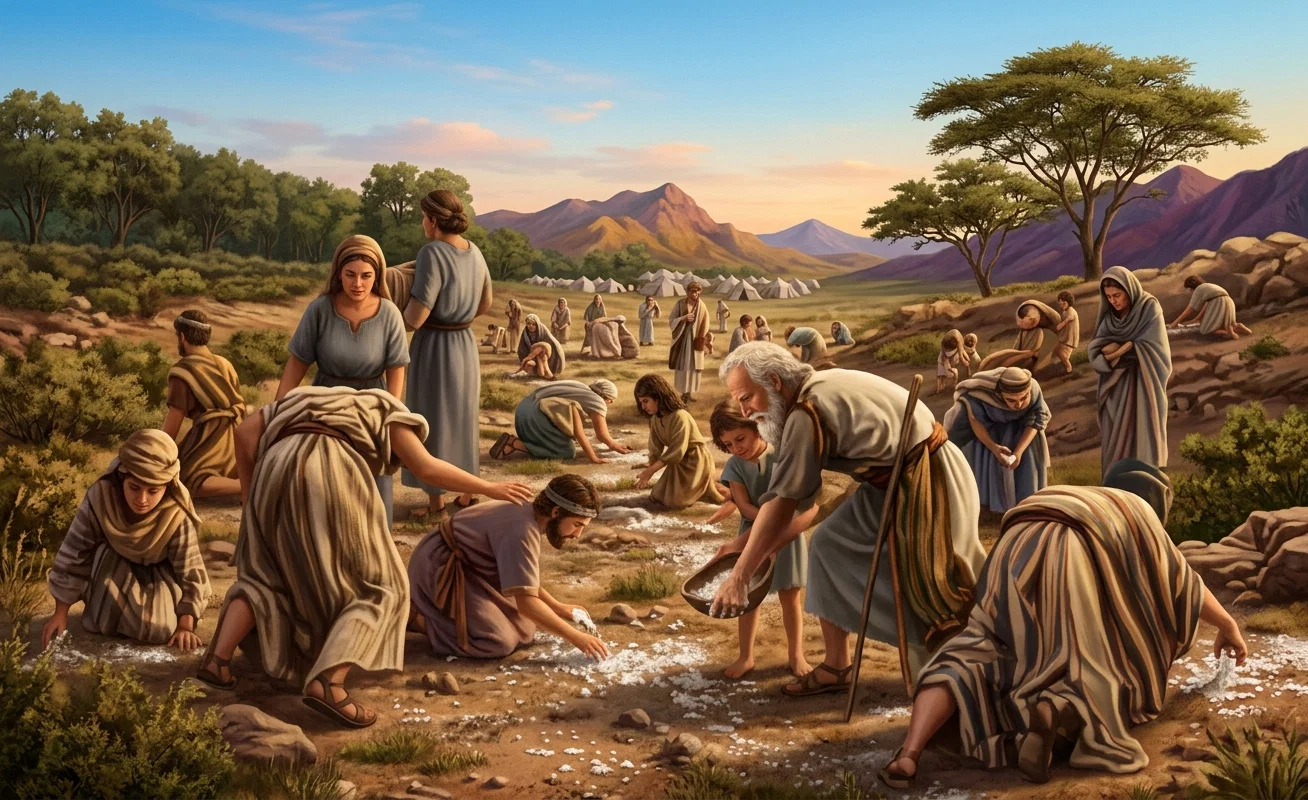
The people of Israel, in their bondage in Egypt, had fallen away from the knowledge of God and become corrupted by the idolatrous worship of Egypt. Hence, as the Lord called them out to be his people, he tested their loyalty to his law by observing how they regarded his holy Sabbath:— “Then said the Lord unto Moses, Behold, I will rain bread from heaven for you; and the people shall go out and gather a certain rate every day, that I may prove them, whether they will walk in my law, or no.” Ex. 16:4.
So through the forty years the Lord sent the manna for them to gather on the six working days, withholding it on the Sabbath. (And this scripture shows that the Sabbath was a part of God’s law before he spoke that holy law from Sinai.)

3. At Sinai.

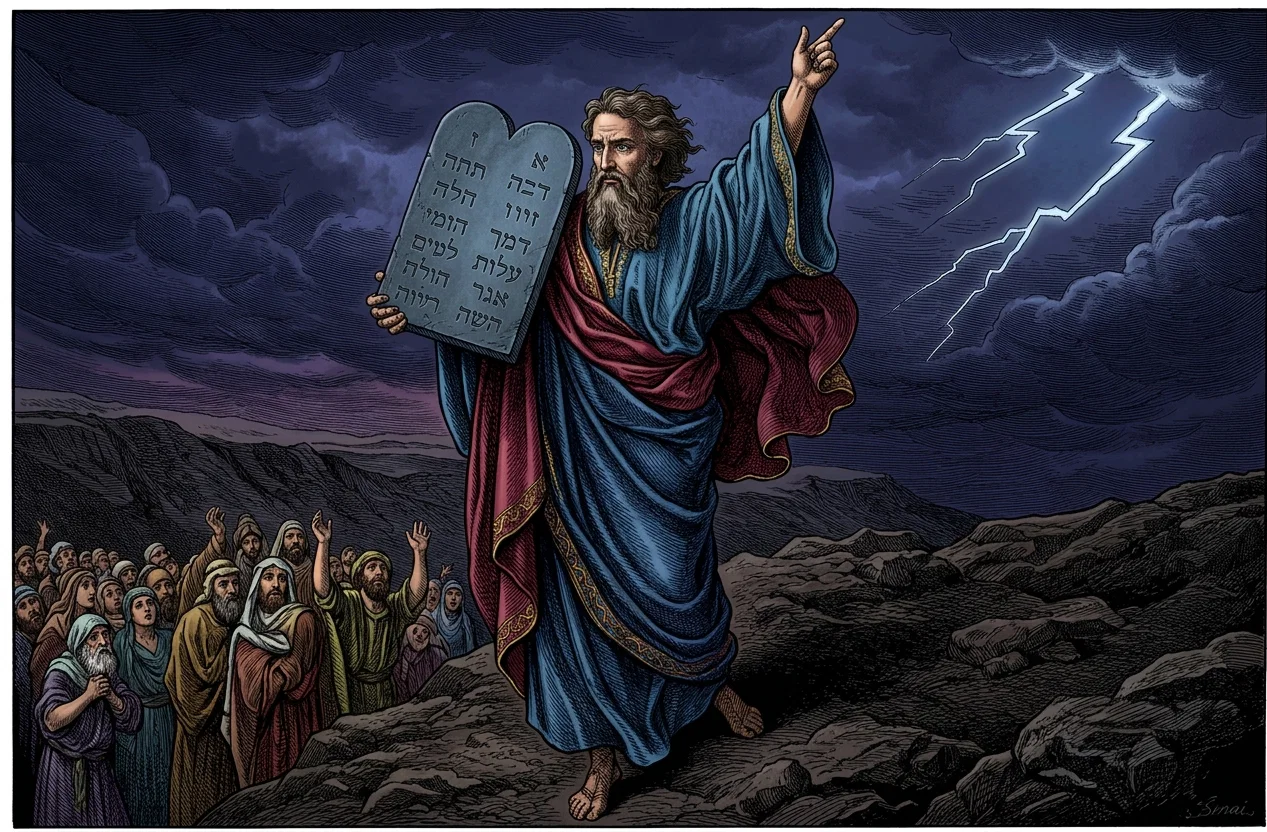
When the time came that the Lord would speak his holy law from heaven, the eternal foundation of his moral government, the Sabbath precept was enshrined in the heart of it:— “Remember the Sabbath day, to keep it holy. Six days shalt thou labor, and do all thy work; but the seventh day is the Sabbath of the Lord thy God; in it thou shalt not do any work, thou, nor thy son, nor thy daughter, thy manservant, nor thy maidservant, nor thy cattle, nor thy stranger that is within thy gates; for in six days the Lord made heaven and earth, the sea, and all that in them is, and rested the seventh day: wherefore the Lord blessed the Sabbath day, and hallowed it.” Ex. 20:8-12.

4. Through Israel’s History.

Sabbath keeping was the great mark of loyalty to God. When Israel fell into idolatry, they “observed times” (2 Kings 21:6), doubtless such heathen festivals to the sun god and other deities as were common among the idolatrous nations. These observances of other days meant Sabbath breaking. (“Neither shall ye . . . observe times. . . . Ye shall keep my Sabbaths.” Lev. 19:26-30.) The Lord had promised Jerusalem,— “If ye diligently hearken unto me, saith the Lord, to bring in no burden through the gates of this city on the Sabbath day, but hallow the Sabbath day, to do no work therein; then shall there enter into the gates of this city kings and princes sitting upon the throne of David, . . . and this city shall remain forever.” Jer. 17:24, 25.
The divine pleading was slighted, and Jerusalem’s fall and the Babylonish captivity came as the result of disregard of God’s holy day.
Thus throughout the inspired record of the Old Testament the seventh-day Sabbath appears as a plant of the heavenly Father’s own planting.

In the New Testament

5. The Example and Teaching of Jesus.

(1) It was his “custom” to worship on the seventh day. Luke 4:16.
(2) Jesus, who himself made the Sabbath at creation (John 1:3), taught that it was “made for man,”—for the human race,—and declared, “The Son of man is Lord also of the Sabbath.” Mark 2:27, 28. It is, therefore, “the Lord’s day.” Rev. 1:10.
(3) He did on the Sabbath only that which was “lawful,” or according to the law of God’s holy day. Matt. 12:12.
(4) He kept his Father’s commandments throughout his earthly life. John 15:10.
(5) And, giving instruction regarding events to take place many years after his ascension, he showed that he expected his followers to continue prayerful regard for the holy Sabbath. “Pray ye,” he commanded, “that your flight be not in the winter, neither on the Sabbath day.” Matt. 24:20.

6. Among New Testament Disciples.

(1) The women, after the crucifixion, “rested the Sabbath day according to the commandment.” Luke 23:56.
(2) Inspiration says that the apostle Paul’s custom was to preach the gospel publicly Sabbath after Sabbath. Acts 13:14; 16:13; 17:1, 2; 18:4. When the Gentiles of Antioch heard the gospel preached by the apostle one Sabbath, they “besought that these words might be preached to them the next Sabbath.” Acts 13:42.
(3) Throughout the New Testament, written years after Christ’s ascension, the Holy Spirit, speaking of the seventh day, calls it “the Sabbath” (upward of fifty times). “Sabbath” means rest; therefore when the Holy Spirit, in the Christian age, calls the seventh day the rest day, it must infallibly be the day of rest for Christians—the Christian Sabbath.
In the Levitical or sacrificial ordinances of the sanctuary services there were annual sabbaths and feasts, associated with meats and drinks and ceremonial observances. But in appointing these the Lord specifically separated between them and the one and only weekly Sabbath, which was from the beginning. “These are the feasts of the Lord,” he said, “beside the Sabbaths of the Lord.” Lev. 23:37, 38.
These annual festivals and sabbaths, like all the ordinances of the Levitical service, were shadows of things to come, and found their fulfilment in the great Sacrifice of Calvary. Col. 2:16, 17.
But the Sabbath of the Lord was made blessed and holy by God at the creation, before sin had entered the world, before any sacrificial or shadowy service was instituted to point to a coming Redeemer. It is a fundamental and primary institution, a part of the moral order of God’s government for man, the same as the obligations set forth in all the ten commandments.
And Inspiration declares the eternal perpetuity of the blessed Sabbath day, in the future home of the saved, when the prophet describes the felicity of the redeemed as from month to month, and “from one Sabbath to another,” all flesh shall come to worship before the Lord. Isa. 66:23.
Thus we find the seventh-day Sabbath a plant of the heavenly Father’s planting, rooted deep in all Holy Scripture, and abiding eternally in the world to come.

Is the First-Day Rest an Institution of God’s Planting?

What Saith Holy Scripture?
1. In the beginning, the first day was employed by God in the work of creation. Gen. 1:5. 2. Throughout all the Old Testament history it was one of “the six working days.” Eze. 46:1. 3. It was the day of Christ’s resurrection;
but Inspiration says specifically that “the Sabbath was past” when that “first day of the week” came. Mark 16:1, 2. Inspiration called this first day merely by the ordinary secular name in common business use, and suggested not a word of attaching any sacredness to the day. For some of the disciples it was a day of journeying, in which the risen Christ joined them. Luke 24:13-29. Later he appeared to the other disciples in Jerusalem, gathered not in meeting, but at supper in their common dwelling house. Mark 16:14.
4. The only religious meeting recorded of the first day of the week was that at Troas, in Acts 20:6-13. The context shows that it was an evening meeting, after the Sabbath,—Saturday night, as we would call it,—for the Bible reckoning is from evening to evening. It was the last time that the believers were ever to see the apostle’s face, and as they lingered after the close of the Sabbath, he held an all-night farewell meeting, breaking bread with the believers, leaving at daybreak Sunday morning for the eighteen- or twenty-mile journey, on foot, across country to Assos. And while he spent that first day traveling afoot, his companions were journeying by boat.
Conybeare and Howson (of the Church of England), in that standard work “Life and Epistles of St. Paul,” tell the plain fact of the inspired record—save that manifestly they should not have applied the title “Jewish” to God’s Sabbath (not the Sabbath of the Jews, but “the Sabbath of the Lord thy God”):— “It was the evening which succeeded the Jewish Sabbath. On the Sunday morning the vessel was about to sail.”—Chap. 20, page 520.
And describing the road between Troas and Assos, they add:— “Strength and peace were surely sought and obtained by the apostle from the Redeemer, as he pursued his lonely road that Sunday afternoon in spring, among the oak woods and the streams of Ida.”—Id., page 522.
5. Once again the “first day of the week” is mentioned, in 1 Cor. 16:2. But that scripture says no word of any sacredness of the day or of any religious observance of it. The apostle was gathering a fund for the poor at Jerusalem, and asked every believer to “lay by” something every first day of the week, so that the money would be ready when he came. As Dean Stanley (Church of England) says:— “There is nothing to prove public assemblies, inasmuch as the phrase par’ eautō (by himself, at his own house) implies that the collection was to be made individually and in private.”
And Neander’s “Church History” says:— “All mentioned here is easily explained, if one simply thinks of the ordinary beginning of the week in secular life.”—Vol. I, page 339. To meet the emergency of need in Judea, these believers were asked to look over their business affairs at the beginning of each week, until Paul should come, laying aside a gift as God had prospered them.
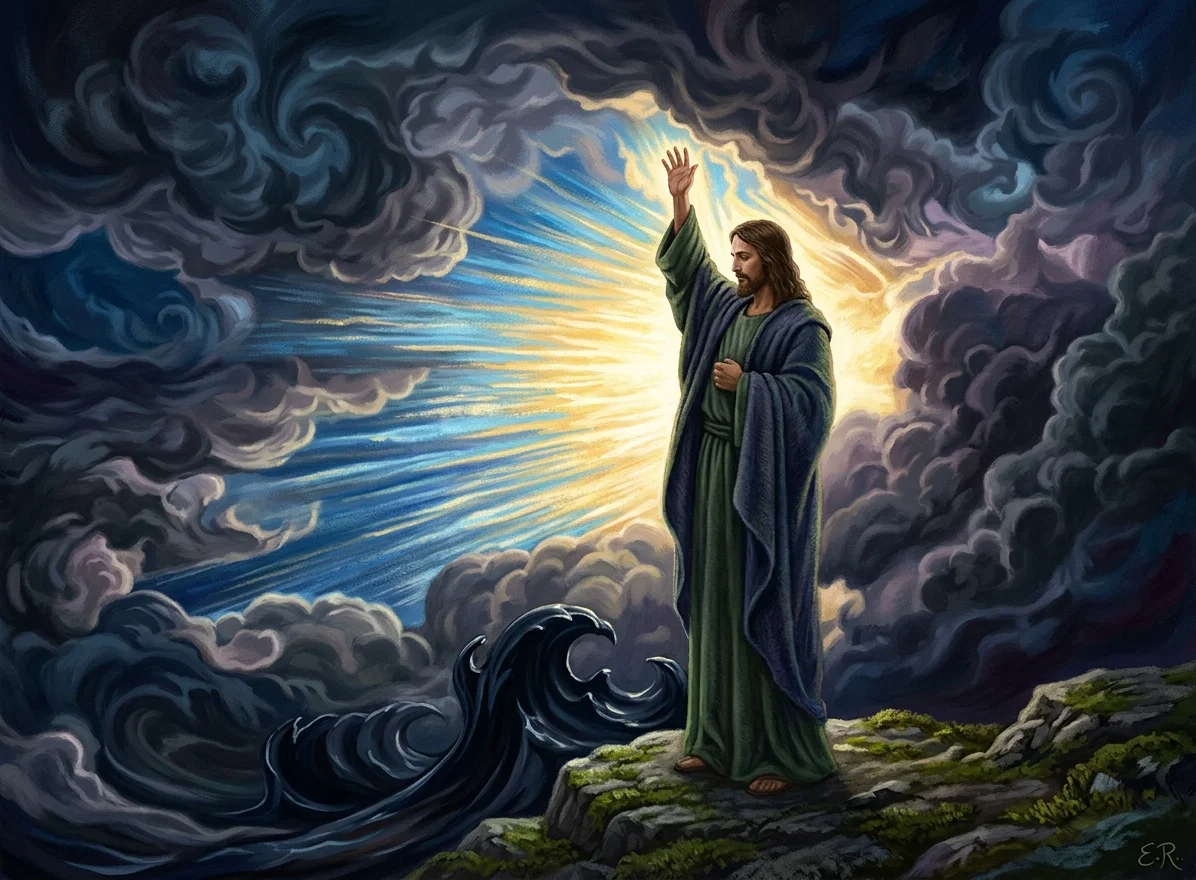
CHRIST, THE CREATOR. "ALL THINGS WERE MADE BY HIM"

No Sunday Sacredness in the New Testament
This is the record—not one suggestion in all the New Testament of Sunday sacredness, to say nothing of precept or commandment of the Lord. The late R. W. Dale, D. D. (a leading Congregationalist), of England, wrote:— “It is quite clear that, however rigidly or devotedly we may spend Sunday, we are not keeping the Sabbath. . . . The Sabbath was founded on a specific, divine command. We canplead no such command for the observance of Sunday. . . . There is not a single line in the New Testament to suggest that we incur any penalty by violating the supposed sanctity of Sunday.”—The Ten Commandments, pages 108, 107.
The religious classic, Smith and Cheetham’s Dictionary of Christian Antiquities, says that the “notion of a formal substitution” of the first day for the seventh,—“and the transference to it, perhaps in a spiritualized form, of the Sabbatical obligation established by the promulgation of the fourth commandment, has no basis whatever, either in Holy Scripture or in Christian antiquity.”—Article “Sabbath.”
Dr. E. F. Hiscox, author of “The Baptist Manual,” says:— “There was and is a commandment to ‘keep holy the Sabbath day,’ but that Sabbath was not Sunday. It will, however, be readily said, and with some show of triumph, that the Sabbath was transferred from the seventh to the first day of the week. . . . Where can the record of such a transaction be found? Not in the New Testament—absolutely not.”—The New York Examiner, Nov. 16, 1893.
GATHERING THE MANNA
GATHERING THE MANNA
Such declarations by well-known scholars might be multiplied; but it is not necessary. The record is open—any one may see it. There is not a word in Holy Scripture of any first-day sacredness.
The Sunday institution is not a plant of our heavenly Father’s planting.
There has been no change of the Sabbath by divine authority. Men may choose to rest on any other day, but that cannot make such a day God’s rest day, his holy Sabbath. One cannot change one’s birthday by celebrating another day as such. It is a fact of history that on a certain day of the month one was born. That fact cannot be changed by choosing to celebrate another day as the birthday. Just so it is a fact of divine history that God rested on a given day of the week, and on no other. That made the seventh day his rest day.
It is different from other days in character also, for he blessed it and made it holy. To deny the difference between the holy day and the common days is to say that when the great Creator blesses and makes holy, it is a vain performance. That cannot be. It would take away all hope of holiness or salvation for men. The blessing is upon the day, as every soul finds who keeps it by faith.

How the Change Came About

When men choose to set apart another day than that blessed and sanctified of God, it is plainly a setting up of the humanly appointed time against the divinely appointed time. It is exalting man’s sabbath against God’s Sabbath. It is man exalting himself “above all that is called God.” 2 Thess. 2:4.
This was what made the Roman Papacy. The apostle Paul wrote that in his day the spirit of lawlessness was already working. He said it would lead to a “falling away” from the truth of God, and the full exaltation of the man of sin. 2 Thessalonians 2. The falling away came. As Dr. Killen (Presbyterian), of Ireland, says in the preface to the Ancient Church:— “In the interval between the days of the apostles and the conversion of Constantine, the Christian commonwealth changed its aspect. . . . Rites and ceremonies, of which neither Paul nor Peter ever heard, crept silently into use, and then claimed the rank of divine institutions.”
In his “Development of Christian Doctrine,” Cardinal Newman (Roman Catholic) tells how rites and ceremonies were borrowed from paganism: “Confiding then in the power of Christianity to resist the infection of evil, and to transmute the very instruments and appendages of demon worship to an evangelical use, . . . the rulers of the church from early times were prepared, should the occasion arise, to adopt, or imitate, or sanction, the existing rites and customs of the populace, as well as the philosophy of the educated class.”—Pages 371, 372.
Thus along with other adaptations came the Sunday festival. Dean Stanley (Church of England) says:— “The retention of the old pagan name Dies Solis, or Sunday, for the weekly festival, is, in a great measure, owing to the union of pagan and Christian sentiment with which the first day of the week was recommended by Constantine to his subjects, pagan and Christian alike, as the ‘venerable day of the sun.’”—History of the Eastern Church, lecture 6, par. 5.
Thus the Sunday institution comes in, marked by its pagan origin, and adapted to ecclesiastical purposes by the church of the “falling away” that grew into the Roman Papacy. To quote again from the Baptist author, Dr. Hiscox:— “Of course, I quite well know that Sunday did come into use in early Christian history as a religious day, as we learn from the Christian Fathers and other sources. But what is said is that it comes branded with the mark of paganism, and christened with the name of the sun god, when adopted and sanctioned by the papal apostasy, and bequeathed as a sacred legacy to Protestantism.”—New York Examiner, Nov. 16, 1893.
No wonder that with the coming of the latter days, and the proclamation of the message of preparation for Christ’s second coming, there should come a call to Christians to follow Christ and Holy Scripture in keeping God’s holy Sabbath.
Again the voice of Jesus is heard in protest against traditions that make void the commandment of God. “Every plant,” he says, “which my heavenly Father hath not planted, shall be rooted up.” Matt. 15:13.

Glimpses of Sabbath Keeping After New Testament Times

Not at once did the innovation of Sunday observance set aside the Sabbath of the Lord in the practice of even the general church, and through history, when the general church had fallen away, we catch glimpses here and there of faithful witnesses to God’s holy Sabbath truth.

First Centuries

An old English writer, Professor Brerewood, of Gresham College, London, put in shortest phrase what many writers tell us:— “They know little who do not know that the ancient Sabbath did remain, and was observed by the Eastern churches three hundred years after our Saviour’s passion.”—Treatise on the Sabbath, page 77.

Fourth Century

Canon 29, of the Council of Laodicea (A. D. 364), shows that the ecclesiastical system was laboring to put an end to Sabbath keeping:— “Christians shall not Judaize and be idle on the Sabbath, but shall work on that day; but the Lord’s Day [as they call Sunday] they shall especially honor, and, as being Christians, shall, if possible, do no work on that day. If, however, they be found Judaizing, they shall be accursed from Christ.”

Fifth Century

Sozomen’s “Ecclesiastical History” shows Rome evidently leading in the effort to abolish any recognition whatever of the Sabbath: “The people of Constantinople, and of several other cities, assemble together on the Sabbath, as well as on the next day; which custom is never observed at Rome or at Alexandria.”—Book 7, chap. 19.

Seventh Century

There were Sabbath keepers in Rome itself, evidently teaching the truth of God among the people, and bringing upon themselves the denunciation of Pope Gregory the Great, who wrote “to his most beloved sons the Roman citizens:” “It has come to my ears that certain men of perverse spirit have sown among you some things that are wrong and opposed to the holy faith, so as to forbid any work being done on the Sabbath day. What else can I call these but preachers of Antichrist?”—Book 13, epistle 1, “Nicene and Post-Nicene Fathers,” Vol. XIII.

Eleventh Century

The Pope’s legates at Constantinople (A. D. 1054) were called to discuss with Nicetas, “one of the most learned men at the time in the East,” says Bower, whose position was “that the Sabbath ought to be kept holy, and that priests should be allowed to marry.”—History of the Popes, Vol. II, page 358.
The people of north Scotland, the ancient Culdee church founded by Columba and his followers, far removed from direct papal influence, was still keeping the Sabbath in the eleventh century. Margaret of England married Malcolm the Great, the Scottish king, in 1069. An ardent Catholic, Queen Margaret at once set about Romanizing the Celtic church. Of this church, Andrew Lang says in his “History of Scotland:”— “They worked on Sunday, but kept Saturday, as a Sabbatical manner.”—Vol. I, page 96.
Skene, in his classic work, “Celtic Scotland,” says of these Sabbath keepers:— “They seemed to have followed a custom of which we find traces in the early monastic church of Ireland, by which they held Saturday to be the Sabbath, on which they rested from all their labors.”—Book 2, chap. 8.
Queen Margaret called in the church leaders and held long discussions with them. At last, with the help and authority of her royal husband, and quoting the instructions of “the blessed Pope Gregory,” she succeeded in turning the ancient Culdee church in Scotland away from the Sabbath. (See “Life of St. Margaret,” by Turgot, her confessor.)

Twelfth to Fifteenth Centuries

Among the numerous sects of southern Europe and the Alpine valleys, who were pursued and persecuted by Rome, were at least some who saw and obeyed the Sabbath truth. Thus, of one of these bodies, the historian Goldastus says:— “They were called Insabbatati, not because they were circumcised, but because they kept the Sabbath according to the Jewish law.”—Deutsche Biographie, article “Goldast,” Vol. IX, page 327.

Fifteenth Century

Sabbath keepers in Norway drew the condemnation of a church council held in 1435:— “The archbishop and the clergy assembled in this provincial council at Bergen do decide that the keeping of Saturday must never be permitted to exist, except as granted in the church law.”—Keyser’s “Norske Kirkes Historie,” Vol. II, page 488.

Sixteenth Century

With the setting free of the Word of God by the Reformation, and the protest against the doctrine of papal tradition, multitudes saw that the Sunday institution was not of divine origin; while not a few went farther, recognizing the claims of God’s Sabbath. Moravia was a refuge, in those early Reformation days, for many believers in the reformed doctrines, and among these were Sabbath-keeping Christians:— “Even most prominent men, as the princes of Lichtenstein, held to the observance of the true Sabbath. When persecution finally scattered them, the seeds of truth must have been sown by them in the different portions of the Continent. . . . We have found them Sabbath keepers in Bohemia. They were also known in Silesia and Poland. Likewise they were in Holland and in northern Germany. . . . There were at this time Sabbath keepers in France, one of whom, M. de la Roque, wrote in defense of the Sabbath
against Bosuet, Catholic bishop of Meaux. . . . That Sabbatarian again appeared in England by the time of the Reformation, and in the reign of Queen Elizabeth (A. D. 1553-1603), Dr. Chambers testifies in his Cyclopedia (article “Sabbath”).”—History of the Sabbath, Andrews and Conradi, pages 649, 650.
In this century, also, Sabbath keepers appeared in Norway, Sweden, and Finland. In 1554 King Gustavus Vasa of Sweden addressed a letter of remonstrance “to the common people in Finland,” because so many were turning to keep the seventh day.

Seventeenth Century

There was much discussion in England over the authority for Sunday observance. When other church festivals were ignored, as Easter, King Charles I wanted to know why Sunday should be kept. He wrote:— “It will not be found in Scripture where Saturday is discharged to be kept, or turned into the Sunday; wherefore it must be the church’s authority that changed the one and instituted the other; therefore my opinion is that those who will not keep this feast [Easter] may as well return to the observation of Saturday, and refuse the weekly Sunday.”—Cox’s “Sabbath Laws,” page 383.
It was in this time that the idea first obtained of enforcing Sunday obligation by the fourth commandment, and calling it the Sabbath. It was argued that any “one day in seven” was what the commandment meant. Of this argument, John Milton, the statesman-poet, wrote:— “It is impossible to extort such a sense from the words of the commandment; seeing that the reason for which the commandment itself was originally given, namely, as a memorial of God’s having rested from the creation of the world, cannot be transferred from the seventh day to the first; nor can any new motive be substituted in its place, whether the resurrection of our Lord or any other, without the sanction of a divine commandment.”—Milton’s “Prose Works” (Bohn), Vol. V, page 70.
While kings and poets and ecclesiastics discussed, here and there believers began to follow the plain Word of God and Christ’s example in Sabbath keeping.

“LOVED NOT THEIR LIVES UNTO THE DEATH”
In 1618 John Trask and his wife, of London, were condemned for the Sabbath of the Lord, the man being whipped, and both imprisoned. He recanted under the pressure, after a year, but Mrs. Trask, a gifted schoolteacher, was given grace to hold out for sixteen years, dying in prison for the word of the Lord. An estimable woman she was, says one old chronicler, save for this “whimsy” of hers, that she would keep the seventh day. All that she asked of men, on her prison deathbed, was that she might be buried “in the fields.”
By 1661 Sabbath keepers in London had further increased. In that year John James was minister to a considerable congregation, meeting in East London, off the Whitechapel Road. As part of proceedings against dissenting sects after the restoration of the monarchy, he was arrested and condemned to death on “Tyburn Tree.” His wife knelt at the feet of King Charles II and pleaded for her husband’s life; but the king scornfully rejected the plea, and said that the man should hang. Bogue says:— “For once the king remembered his promise, and Mr. James was sent to join the noble army of martyrs.”—History of Dissenters, Vol. I, page 166.
In 1683 Francis Bampfield—formerly an influential minister of the Church of England, but later pastor of a Sabbath-keeping congregation meeting in Pinner’s Hall, London—died of hardships in Newgate prison, for the Sabbath of the Lord. An old writer says that his body was followed to burial by “a very great company of factious and whimsical people,” in other words, dissenters from the state church.
“Sabbatarian Baptists,” these English witnesses to God’s Sabbath were first called
in those times, and then Seventh-day Baptists. In 1664 Stephen Mumford, of one of these London congregations, was sent over to New England. He settled in Rhode Island, where the Baptist pioneer of religious liberty, Roger Williams, had founded his colony. In 1671 the first Sabbatarian church in America was formed in Rhode Island. Evidently this movement created a stir; for the report went over to England that the Rhode Island colony did not keep the Sabbath—meaning Sunday. Roger Williams wrote to his friends in England denying the report, but calling attention to the fact that there was no Scripture for “abolishing the seventh day,” and adding:— “You know yourselves do not keep the Sabbath, that is the seventh day.”—Letters of Roger Williams, Vol. VI, page 346 (Narragansett Club Publications).
Through the following century, numbers of Seventh-day Baptist churches were founded in America. Then, as the events of the ending of the long period of the papal supremacy had moved Bible students to the earnest study of the prophecies, and as the predicted signs of the near approach of Christ’s coming began to appear, there arose the great advent awakening in the earlier decades of the nineteenth century.
The prophecies regarding the work of the Papacy in seeking to change the law of God began to be understood, and it was seen that the last message of the everlasting gospel was a call to turn from human traditions to the New Testament standard of “the commandments of God, and the faith of Jesus.” Rev. 14:12. Then began the great movement for Sabbath reform and the proclamation of Christ’s second coming, which has given rise to the Seventh-day Adventist people, with a work spreading through all lands,
leading thousands every year to take hold of the Lord’s blessed Sabbath day.
Soon Christ is to be revealed in righteousness and judgment. One burden of God’s message for the last days is:— “Thus saith the Lord, Keep ye judgment, and do justice: for my salvation is near to come, and my righteousness to be revealed. Blessed is the man that doeth this, and the son of man that layeth hold on it; that keepeth the Sabbath from polluting it, and keepeth his hand from doing any evil.” Isa. 56:1.
Through all the dark centuries, the Lord had somewhere a little remnant keeping the light of the Sabbath truth glowing. They, too, overcame by the blood of the Lamb and the word of their testimony, loving not their lives unto the death. Now, with the clear light shining from the open Book, it is for Christians everywhere to turn from tradition to the way of God’s commandments and the example and teachings of Jesus Christ and his apostles.
THE GIVING OF THE LAW