The Church

6%

Pacific Press Publishing Association · Mountain View, California · Jul 7, 1909

FromSigns of the Times, Vol. 36, No. 26.

Read the full edition

The Church

I. What the Term “Church” Implies
By C. S. Longacre
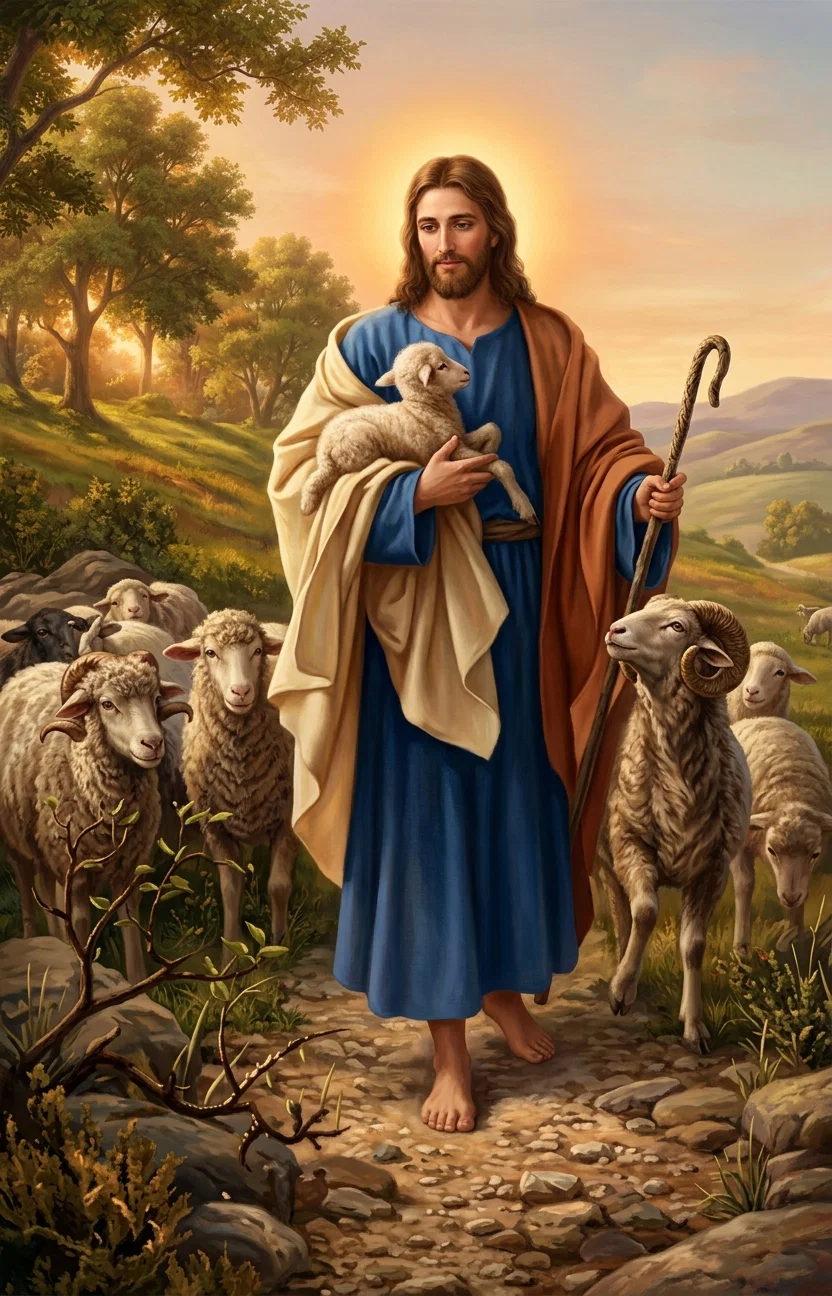
“And there shall be one fold, and one Shepherd.”

The Church Regularly Called

The significance of the term “church” is, “a religious assembly selected and called out of the world.” The Greek word translated “church” in the New Testament is “ekklesia,” meaning literally, “regularly called out.” The same word in the Hebrew is edah and kahal, which are invariably translated “assembly” and “congregation.” That the words “church” and “congregation” signify the same thing is plainly taught in Acts 7:38, as follows: “This is he that was in the church in the wilderness.” The Hebrew New Testament uses the word kahal for church in this text. The Hebrew word kahal is used in Deut. 31:30 and is translated “congregation.” “And Moses spake in the ears of all the congregation of Israel.” This same identical “congregation” Stephen called “the church.”
The Hebrew word for church in the following New Testament passage, “He [Christ] is the head of the body,” the church, is edah, which is also translated “congregation” in the following passage: “That the congregation of the Lord be not as sheep which have no shepherd.” Num. 27:17. Thus we learn from the Salkinson-Ginsburg’s Hebrew New Testament that the Hebrew words for “church of God” in the New Testament are the same words that are used in the Old Testament for the “congregation of the Lord.” This shows at once the fallacy of the argument that the church did not exist before A.D. 27.
The church has been in existence since the foundation of the world. This is evident from the definition of the Hebrew word edah. Genesius, in his Hebrew lexicon, defines the word as a secondary definition, thus: “Company, family, household.” The church is called “the household of God.” Eph. 2:19. It is also called “the household of faith.” Gal. 6:10. From this we learn that the church constitutes the elect of God, of what nation soever, from the beginning to the end of the world. They are called but “one body,” of which Jesus Christ is the only Head, and one “building,” of which He is “the chief corner-stone,” and “one fold,” of which He is “the chief Shepherd.”

Illustrations of the Church

The whole church used in a collective sense is compared to a “building;” “Ye are God’s building.” 1 Cor. 3:9. It has but one foundation; “For other foundation can no man lay than that is laid, which is Jesus Christ.” 1 Cor. 3:11. The individual members are compared to the stones of the building; “Ye also, as lively stones, are built up a spiritual house.” 1 Peter 2:5. These stones are not a disorganized and disconnected medley; “All the building fitly framed together groweth unto an holy temple in the Lord: in whom ye also are builded together for an habitation of God through the Spirit.” Eph. 2:21, 22.
The Scriptures use many and varied illustrations to set forth the symmetry of the organization of the church, its structure, its functions, its mission, its relation to its Head and its component members, and its particular phases of harmonious operations and administrations.
To show the relation the church sustains to its Head, the church is compared to “a chaste virgin” espoused to the Lord as to “one husband.” Eph. 5:31, 32; 2 Cor. 11:2. Again, to show the vital connection between Christ and the church, the figure of a goodly vine with its fruit-bearing branches is employed. The Father is represented as being the husbandman. John 15:1-8; Isa. 5:1-7. Again, to show that there is to be but one church as well as one Lord and one faith, He uses the distinctive figures of a sheepfold. “And other sheep I have, which are not of this fold; them also I must bring, and they shall hear My voice; and there shall be one fold, and one Shepherd.” John 10:16.

Organization Necessary

While the Scripture recognizes many distinct and local churches, yet all these separate churches are not absolutely independent of each other, but are fitly organized into one “body, the church,” of which Christ is the great Head. Thus we read of “the general assembly and church.” Heb. 12:23. To show that the churches are all under one common and general government and constitute an organized body, the Lordcalls the church with its component organizations “the commonwealth of Israel.”
The church is “called out” of the world and out of Babylon, but on the other hand “by one Spirit we are all baptized into one body, whether we be Jews or Gentiles,” and we all become “fellow citizens with the saints,” of “the commonwealth of Israel.” 1 Cor. 12:13.
When a whole organization becomes corrupt, it is perfectly Scriptural to come out of that body in harmony with the Lord’s call, and organize a pure one; but to contend that it is wrong in principle to have a common organization in the church as a whole to which every local church is subject, and that each local church is absolutely independent and is directly governed by the invisible Head, is as absurd as it would be for the hand to disconnect itself from the arm and body and then ask the head to pick it up and operate it without using the body and arm as a medium. The head ever acts through the body as an organized medium in the operation of its particular members that belong to it.
Organization is a good thing, perfect machinery is excellent, but these without the living Spirit pervading and operating the whole are like an embalmed body, where art has preserved perfect form without life. There may be “differences of administrations” and “diversities of operations,” but it is the same God that “worketh all in all,” in the church, and gives “to every man to profit withal.” 1 Cor. 12:5-7. The best method of administration should be tested by its results. God blesses the methods which lead the most souls to the Lord Jesus and give the most consecrated men and women to the work of God upon the earth. What the Holy Ghost uses the most effectually, we have no right to condemn.
The inspired definition for the term “church” is: “We are God’s fellow workers;” “we are laborers together with God.” The mission of the church is to serve, to toil and work for the Master. She is the saving witness of the truth. God is not satisfied to save souls through a written word only, any more than a wife is satisfied with a pack of love-letters and a marriage certificate. She wants the man; just so God needs a loving, serving church to effect His plans.