THE earthly sanctuary was built according to the pattern shown in the mount. It consisted of two apartments, the holy and the most holy. Certain articles of furniture were found in the first apartment, and certain others in the second. Likewise the heavenly sanctuary has its holy and its most holy apartment, with the articles of furniture peculiar to each. The apostle John was taken to heaven, and in vision beheld the temple of God. In the temple he saw, in the holy place, the seven golden candlesticks, the golden altar of incense before the throne, and the golden censer filled with fire of the altar. Again he saw the temple of God opened in heaven, and in His temple the ark of His testament. Rev. 4:1, 5; 8:3-5; 11:19.
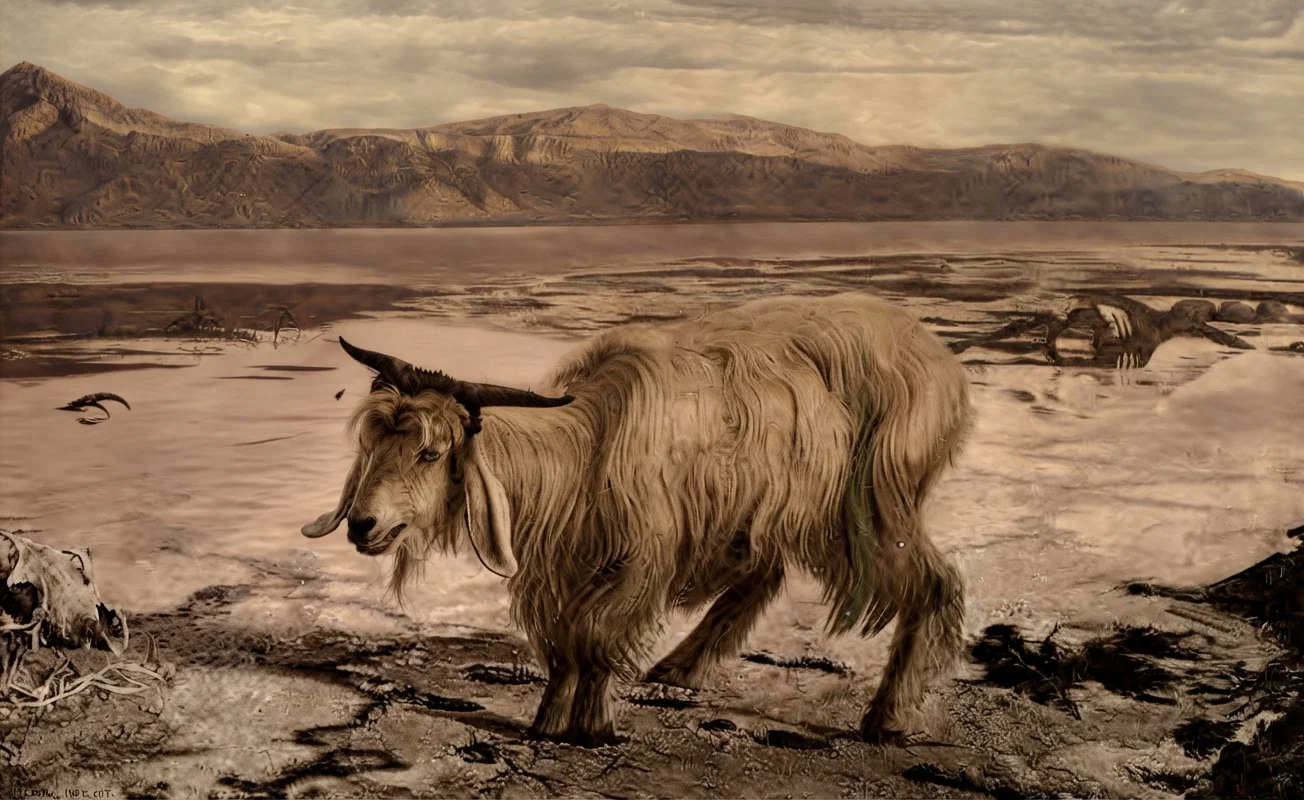
The ministry in the earthly sanctuary consisted of two divisions. In the first apartment the priests ministered daily, while "into the second went the high priest alone once every year, not without blood, which he offered for himself, and for the errors of the people." Heb. 9:7. The service performed in the most holy place consisted of a special ministration, which the high priest alone was permitted to perform, on the great day of atonement, for the cleansing of the sanctuary. By means of the daily ministration, the sins of the people were transferred to the sanctuary, where they continued to accumulate till the day of atonement, when the high priest entered the second apartment, and performed the service of cleansing, bringing all the sins of the people forth from the sanctuary, and by confession placing them upon the head of the scapegoat, when it was led away into the wilderness to perish with the sins of God's penitent people. Israel was then free from guilt; for if any one failed to afflict his soul on the day of atonement, he was to be cut off from among his people. Lev. 23:26-30.
Such was the service performed "unto the example and shadow of heavenly things." Heb. 8:5. That which was done in type in the ministrations of the earthly sanctuary by the Levitical priesthood, was done in reality in the ministrations of the heavenly sanctuary by our great High Priest.
The Heavenly Sanctuary Opened
"After He had offered one sacrifice for sins forever," and before a human hand had been permitted to touch Him, the Saviour ascended to His Father, that He might receive the assurance of His Father's acceptance of His offering. Heb. 10:12; John 20:16, 17. Having performed the ceremony of consecration or dedication of the heavenly sanctuary by the sprinkling of His own precious blood, in harmony with the type, "being by the right hand of God exalted, and having received of the Father the promise of the Holy Ghost," the Saviour poured upon His waiting disciples the Holy Spirit, as a testimonial to them, and to the world, that the way into the holiest of all was made manifest; that His ministry in the heavenly sanctuary was actually begun; that henceforth all penitent souls were to come boldly to the throne of grace, where they would find their Saviour ever living to make intercession for them, and grace to help in time of need. Acts 2:33; Heb. 9:8; 4:16; 7:25.
Two Divisions
As the typical ministry consisted of two divisions, each occupying a distinctive place in the earthly sanctuary, so the ministry of Christ consists of two divisions, the daily and the yearly service, and to each a department of the heavenly temple is devoted.
In the type, the blood of the sacrificial victim removed the sin from the penitent, but it rested in the sanctuary until the day of atonement; so the blood of Christ releases the penitent transgressor from the condemnation of the law, but the sin stands on the book of record in the sanctuary until the antitypical day of atonement. Peter exhorted the people in Solomon's porch, saying, "Repent ye therefore, and be converted, that your sins may be blotted out, when the times of refreshing shall come from the presence of the Lord." Acts 3:19. As we come to Jesus in penitence and contrition of heart, confessing our sin, the Saviour as our Advocate and Intercessor before the Father, pleads His precious blood in our behalf. While the sin is not then canceled, yet pardon and acceptance are secured.
The Life Record Preserved
In describing the judgment scene, the prophet Daniel says, "The judgment was set, and the books were opened." Dan. 7:10. The apostle John says, "I saw the dead, small and great, stand before God; and the books were opened: and another book was opened, which is the Book of Life: and the dead were judged out of those things which were written in the books, according to their works." Rev. 20:12. In each instance, books were seen in the judgment, and they were opened when the judgment began. It is therefore clear that they have an important part to act in the work of that great tribunal. We are told, "The dead were judged out of those things which were written in the books, according to their works." It would seem, therefore, that the books to be opened in the judgment, and out of which every man will be judged according to his works, must contain a faithful record of the life-work of every individual.
Among the books opened in that great day is found the "Book of Life." In this book are written the names of the righteous. Rev. 13:8; Phil. 4:3; Rev. 3:5; 20:15; 21:27. Another book, called the "Book of Remembrance," was written before Him for them that feared the Lord and that thought upon His name. Mal. 3:16. Since this book is written for them that fear the Lord, and who think upon His name, it is very probable that it contains a record of all the good deeds of God's children. The psalmist prayed to the Lord, saying, "Thou tellest my wanderings: put Thou my tears into Thy bottle: are they not in Thy book?" Ps. 56:8.
Sin is also recorded in the books kept in the sanctuary. "Tho thou wash thee with niter, and take thee much soap, yet thine iniquity is marked before Me, saith the Lord God." Jer. 2:22. Through Isaiah the Lord declared of the sin of Judah, "It is written before Me." Isa. 65:6. Of the sin of Israel the Lord said, "Is not this laid up in store with Me, and sealed up among My treasures?" Deut. 32:34. A faithful record of each one's actions is kept in the sanctuary above. The heavenly mirror accurately reflects5every thought, word, and deed that makes up the texture of his character, and that determines the course of his life. This record is preserved in the heavenly archives, and in the great day of judgment—the antitypical day of atonement—the books are opened, and the final decisions are rendered which are to determine the destiny of every soul.
The Great Day of Atonement
This solemn work was prefigured by the services of the great day of atonement in the earthly sanctuary. Dean Farrar says of this day, in his "Early Days of Christianity," "So awful was the day of atonement that we are told in a Jewish book of ritual that the very angels run to and fro in fear and trembling, saying, 'Lo, the day of judgment is come!'" That was the day when the sins of Israel for the entire year were expiated. It was the day for the cleansing of the sanctuary. Upon this day the high priest went into the most holy place with the blood of the Lord's goat (Leviticus 16), and sprinkled it upon the mercy-seat over the broken law. When he had completed his work in the two apartments of the sanctuary, he came out bearing the sins of Israel. "And Aaron shall lay both his hands upon the head of the live goat, and confess over him all the iniquities of the children of Israel, and all their transgressions in all their sins, putting them upon the head of the goat, and shall send him away by the hand of a fit man into the wilderness: and the goat shall bear upon him all their iniquities unto a land not inhabited ["of separation," margin]: and he shall let go the goat." The sins of Israel that had been confessed and borne into the sanctuary throughout the year by means of the daily ministration were now brought out and removed forever from the camp of Israel. In this way the sanctuary was cleansed and hallowed from the uncleanness of the children of Israel. This was the last work in the yearly round of service, and the type of the last work of Christ in the sanctuary above in behalf of fallen men.
The Judgment
Before the Saviour's work is finished in the heavenly sanctuary, He passes through the veil from the holy to the most holy place, the judgment is set, and the books are opened. Dan. 7:10, 13. One by one the cases of those whose names appear in the books of life are examined, the sins of the overcomers are blotted from the books of record (Acts 3:19), their names are retained in the Book of Life, and are confessed by the Saviour before His Father and before His angels. Rev. 3:5. The names of those who, upon examination, are found to have failed to prove faithful to the end, are blotted out from the Book of Life. Rev. 2:10; Matt. 24:13; Ex. 32:32, 33.
THE SCAPEGOAT
This is the work of cleansing the heavenly sanctuary, not from physical impurity, but from the sins that have been accumulating in the records of heaven. It is this cleansing of which the apostle Paul speaks when he says, "It was therefore necessary that the patterns of things in the heavens should be purified ["cleansed," R.V.] with these [the blood of calves and of goats]; but the heavenly things themselves with better sacrifices than these." Heb. 9:23. It was of this work that the Saviour spoke when He said, "They which shall be accounted worthy to obtain that world, and the resurrection from the dead, neither marry, nor are given in marriage: neither can they die any more; for they are equal unto the angels; and are the children of God, being the children of the resurrection." Luke 20:35, 36. When this work shall have been completed, the sins of the overcomers all blotted out from the books of record—covered with the blood of Jesus our Lord—the names of the unfaithful blotted from the Book of Life, our great High Priest comes out of the sanctuary, and confesses the sins upon the head of the antitypical scapegoat—the originator of sin—an angel from heaven lays hold on "the dragon, that old serpent, which is the devil, and Satan," and binds him a thousand years, and casts him into the bottomless pit, and shuts him up, and sets a seal upon him; "that he should deceive the nations no more, till the thousand years should be fulfilled;" and at the end of the thousand years the devil that deceived them is cast into the lake of fire (Rev. 20:1-10). Then will type have met antitype fully. The mystery of God will have been finished. Then, having made up the subjects of His kingdom, the Lord of Glory will receive from His Father "dominion, and glory, and a kingdom, that all people, nations, and languages, should serve Him: His dominion is an everlasting dominion, which shall not pass away, and His kingdom that which shall not be destroyed." Dan. 7:14. Dear reader, are your sins all confessed and put away? Are you ready for your great High Priest to come forth from the sanctuary, to lay aside His priestly robes, to say, "It is done"? Are you prepared to meet your Saviour in glory, wearing the royal robes and the kingly crown? If not, then make haste and "prepare to meet thy God."