PROPHECY

6%

Pacific Press Publishing Company · Mountain View, Cal. · Jan 24, 1906

FromSigns of the Times, Vol. 32, No. 4.

Read the full edition

PROPHECY.

(Concluded.)
[The following is a paper read by Elder Geo. M. Brown, of Mexico, in a meeting of missionaries in that city, and sent to the SIGNS for publication.]
OFTEN in our own day when the faithful minister rebukes the sins which he sees are dragging the people down to eternal ruin, and believing the sure Word of prophecy warns the church and the world of that which will surely come unless decided reforms are made, he is accused of being a pessimist, a crank, and lacking in patriotism.
Such accusations are as false now as they were in the days of Jeremiah; for the student of prophecy, while cognizant of present evils and the inevitable result of persistence in them, can look beyond all these things and see the true Israel of God, from all ages and from every nation, dwelling peacefully in the promised land, where, through the ceaseless ages of eternity, they will dwell in the presence of God, and have ample opportunity to execute the grandest plans.
John the Baptist, the forerunner of Christ, appealed to the prophecies as authority for his work. Luke 3:2-4. The prophecies were explicit as to the place and manner of Christ's birth, and the priests at Jerusalem understood the matter so well that the wise men, following their instruction, found the infant Saviour. Matt. 2:1-12. Simeon, and Anna the prophetess, recognized Christ as He was brought to the temple because they were seeking to be led of God, and understood the prophecies.
Of the beginning of Christ's ministry Mark says: "Now after that John was put in prison, Jesus came into Galilee, preaching the Gospel of the kingdom of God, and saying, The time is fulfilled, and the kingdom of God is at hand; repent ye, and believe the Gospel." Mark 1:14, 15. Paul says that He came in the "fulness of time." Gal. 4:4. These expressions doubtless refer to the great prophetic period of time found in Dan. 9:24-27. This is one of the most remarkable prophecies in the Bible. The time of the Jewish return from captivity and the rebuilding of Jerusalem is the starting point. From this time, 457 B.C. as a basis, the prophecy foretold the exact year of Christ's baptism and crucifixion, also the time of the final rejection of the Gospel by the Jewish nation, and the beginning of the work for the Gentiles. This long prophetic period reaches down to A.D. 1844, and points to a solemn work in connection with the great plan of salvation, which began at that date.
In the founding of the apostolic church the apostles constantly appealed to the fulfilment of the prophecies concerning the Messiah, in the life and work of Jesus, as the strongest evidence of His divinity, and the truth of their claim that He was the Messiah. Note the words of Peter, "But those things which God before had showed by the mouth of all His prophets, that Christ should suffer, He hath so fulfilled." Acts 3:18. In Stephen's defense and in Paul's discourse before Agrippa, we find similar references to the relation of prophecy to the Gospel.
The example of the apostles demonstrates that they considered prophecy one of the pillars of the Christian church, and a most potent factor in successful Gospel work. Referring to the evidence of the prophecy in comparison with the evidence given the disciples on the Mount of Transfiguration, Peter calls it "a more sure Word of prophecy," and admonishes the brethren to heed it as a light that is set in a dark place. 2 Peter 1:19.
God hath set the prophets in the church (1 Cor. 12:28), and prophecy is one of the gifts of the Holy Spirit. 1 Cor. 12:10; Eph. 4:11-13. This gift is just as essential as any other spiritual gift, and the church that does not possess it can no more succeed in its Gospel work than it could if it lacked the pastoral or the evangelistic gift. The Jewish Church believed many grand truths, but, refusing the light sent through the prophets, it lost its spiritual life, and at last rejected Jesus the Christ. Thus we see that the rejection of the gift of prophecy led to the rejection of the Gospel, to the ruin of the nation, and the apostasy of the church.
Jesus, forseeing this, wept as from the brow of Olivet He looked upon the city and temple which both Jew and Roman had delighted to beautify and adorn, and said, "If thou hadst known, even thou, at least in this thy day, the things which belong unto thy peace! but now they are hid from thine eyes." Luke 19:42. He foretold the destruction of the city, and doubtless some who heard His words lived to see their fulfilment. In A.D. 70 the city was taken by Titus, a Roman general, the wall was broken down, and the beautiful temple became a heap of smoldering ruins, fit emblems of the spiritual ruin and blasted hopes that have been the heritage of the Jewish people from that day to the present.
Let us turn for a moment from the sad picture presented by those who rejected the light sent through the prophets, and contemplate the glorious work achieved by those who received it, and accepted the despised Jesus of Nazareth as their Teacher and Saviour. These men, tho lacking much of what is usually thought essential to success, were so inspired by the Holy Spirit, and filled with the wonderful truth which they had received, that they consecrated themselves wholly to the work of telling others. God sent them forth, clothed with His power, an invincible band of Christian warriors who carried the glad tidings of the Gospel through all the then known world in less than a hundred years, making the very foundations of the mighty Roman Empire tremble, and triumphing over every device of Paganism to exterminate the hated religion.
As there was then a special Gospel message to be given to the world, so in our day the prophecies reveal a special Gospel message which is to prepare the people for the coming of Christ the second time, without sin unto salvation. Heb. 9:28. The book of Daniel gives a prophetic outline of the world's history from the time of Babylonian supremacy to the setting up of the eternal kingdom of Christ. This is supplemented by the prophecies of Revelation which give us additional points, presenting more in detail the great apostasy in the church, and the events just before the coming of Christ. Jesus Himself gives the signs that are to herald the second advent. These are to be seen in the sun, moon, and stars, and among the nations of the earth. Already many of these signs have been fulfilled so that we know His coming is near. John saw a mighty Gospel movement which was to be universal in its scope, and which would prepare the world for the final judgment. He describes it thus: "And I saw another angel fly in the midst of heaven, having the everlasting Gospel to preach unto them that dwell on the earth, and to every nation, and kindred, and tongue, and people, saying with a loud voice, Fear God, and give glory to Him; for the hour of His judgment is come; and worship Him that made heaven, and earth, and the sea, and the fountains of waters." Rev. 14:6, 7.
Can we not see in the great missionary movement of the nineteenth century the beginning of the fulfilment of this prophecy?—Yea, verily. There is now going to the world a message which is based upon these and the following verses of Revelation 14, and thus the prophecy is again recognized, as in apostolic days, as the basis of a world-wide Gospel movement. Jesus said that the end would follow the preaching of the Gospel in all the world (Matt. 24:14), so it becomes evident that this world-wide missionary movement is in itself an incontrovertible evidence of the imminence of the second advent.
I believe, in view of the foregoing facts and many others that might be mentioned, that prophecy may rightly be considered an integral part of the Gospel, and that it is through the light of prophecy that the ministers of God learn the testing message for the time in which they live. This light will shine till the dawning of that perfect and eternal day when the redeemed of the Lord shall return and come with singing unto Zion (Isa. 51:11), and there shall they abide forever with the Lord.
This glorious hope brings courage to the weary worker, and lightens the hardest labor. Abraham, David, Paul, and an innumerable multitude of the faithful of all ages have looked forward with joyous hearts to that glad time when sin and sorrow shall be no more, and we shall be privileged to see the lovely face of Jesus, and hear the music of His voice as He says, "Come, ye blessed of My Father, inherit the kingdom prepared for you from the foundation of the world." Matt. 25:34.
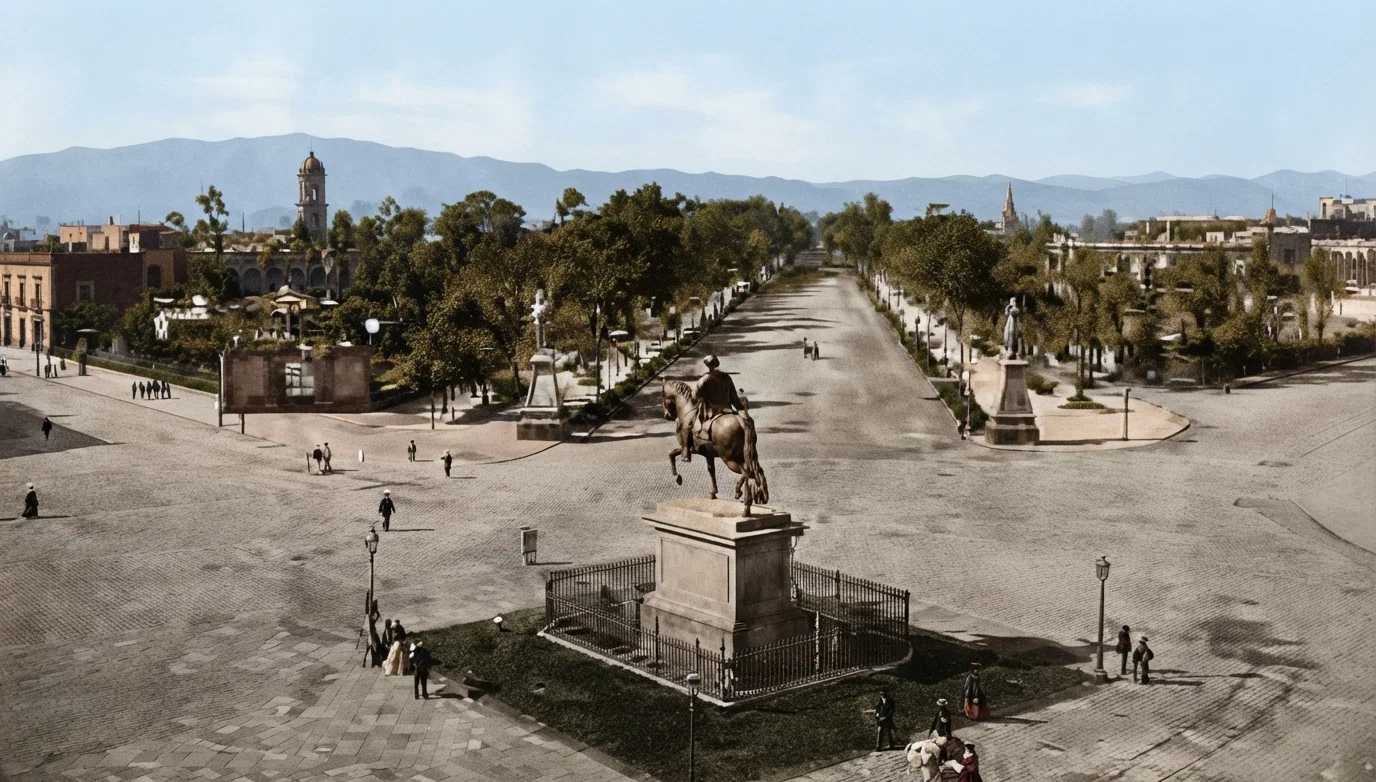
The Main Street of the City of Mexico.
As we contemplate this glorious vision, can wenot join with new fervor in singing the beautiful words written by Isaac Watts: "The God of glory down to men Removes His blest abode; Men are the objects of His love, And He their gracious God. His own soft hand shall wipe the tears From every weeping eye; And pains, and groans, and griefs, and fears, And death itself, shall die. How bright the vision! O how long Shall this glad hour delay? Fly swiftly round, ye wheels of time, And bring the welcome day."