ARMAGEDDON

3%

Pacific Press Publishing Association · Mountain View, California · May 9, 1916

FromSigns of the Times, Vol. 43, No. 19.

Read the full edition

ARMAGEDDON

TO BE FOUGHT IN PALESTINE

CAN WE KNOW WHEN THIS WORLD GATHERING OF THE INFURIATED NATIONS WILL TAKE PLACE?
By ARTHUR G. DANIELLS
“THE battle of that great day of God” at Armageddon, foretold in the prophecy of Rev. 16: 12-16, seems ominously near. It is almost in sight. The great war now raging in Europe and Asia Minor is preparing the nations for Armageddon. So great and so terrible is this war, that it is called by many the war of Armageddon.
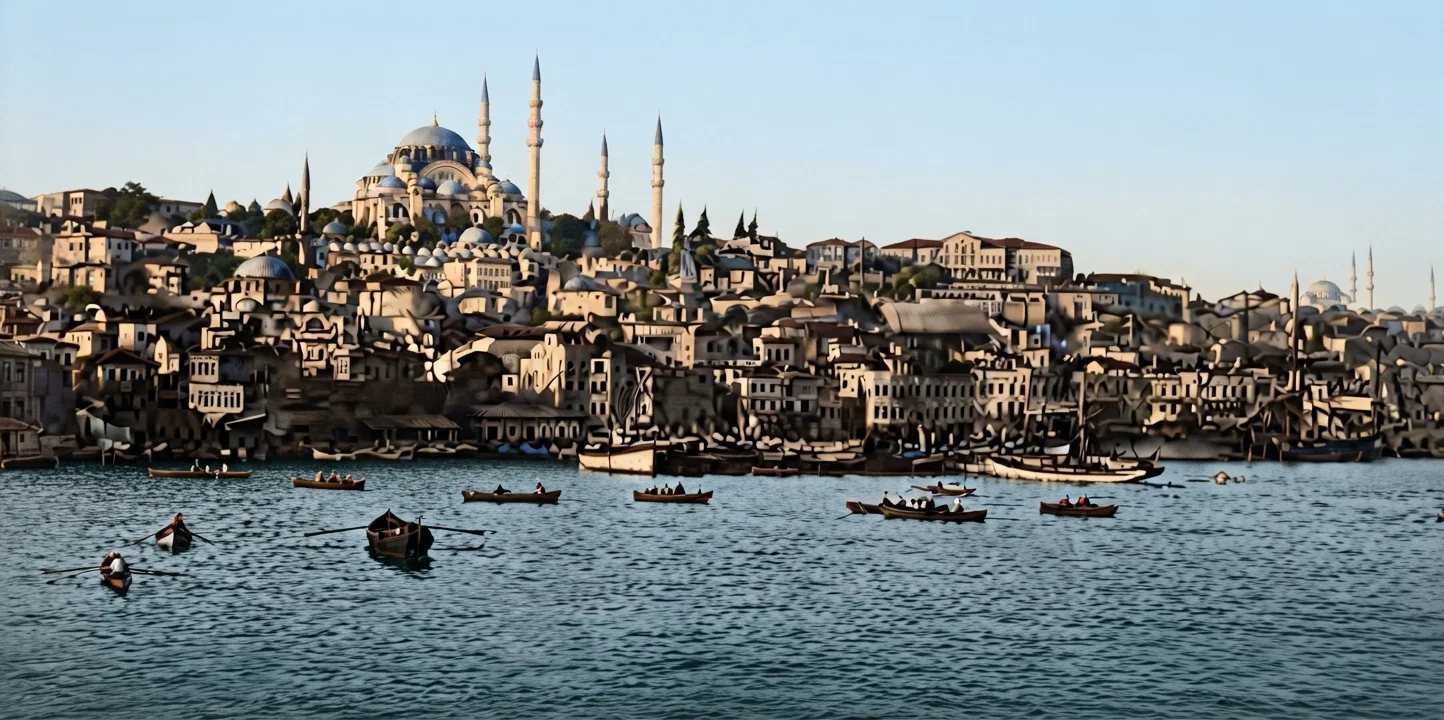
As dreadful as this devastating struggle is coming to be, it is not yet the Armageddon of the Apocalypse. There are specifications of the prophecy yet to be fulfilled before “the battle of that great day of God” can be fought at Armageddon. One of these is the utter overthrow of the Turkish empire, not only in Europe, but in Asia as well. The disintegration of Turkey has been going steadily and surely on for a hundred years. Now its downfall is definitely decreed by the great powers of Europe, and the decree is being executed. Its western boundary has already been pressed toward its center until it is within a few miles of Constantinople, the heart of the empire. Now the allies are steadily pressing the eastern boundary back toward the center.

A NATION IS DYING

The tragic character of what is now taking place in Turkey is expressed by Albert Bushnell Hart, professor of history in the university of Harvard, as follows:
“Tragic as are the obsequies of a soldier, how much more tragic are the obsequies of a nation, the last ceremonies over a proud empire which for half a millennium has caused its people to rejoice and its enemies to tremble! “That is what the world is witnessing now. The sick man of Turkey is dying at last. The government offices are open; Constantinople is there; twenty millions of Turkish subjects still live; hundreds of thousands of men are called soldiers, and a score of vessels name themselves a navy. Nevertheless Turkey is seeing its last days. It may live weeks, months, perhaps a few years; but the end is in sight; the country is dying.”
And that is precisely what the prophets foretold. Daniel said, “He shall come to his end, and none shall help him.” Dan. 11: 45. John said Turkey would be “dried up.” And both of these prophets declared that Turkey’s end would be accompanied by the greatest trouble the world has ever known. Said Daniel, “There shall be a time of trouble, such as never was since there was a nation even to that same time.” Dan. 12: 1. John declared that when the Turkish empire should be “dried up,” the way would be “prepared”—made ready—for the deceived, war-maddened nations to gather at Armageddon for “the war of the great day of God, the Almighty.” Rev. 16: 13-16.

A UNIVERSAL PROCLAMATION OF WAR

While Turkey is being “dried up, that the way of the kings of the east might be prepared,” the “spirits of demons, working signs,” are going “forth unto the kings of the whole world, to gather them together unto the war of the great day of God.”
These predictions were written thousands of years ago, and now they are in process of fulfillment. Though the great Armageddon is not yet being fought, nor has that awful “time of trouble” gripped the world, these events are approaching with alarming rapidity. The generation now living is watching the fulfillment as it is told each morning in the daily papers. How serious these daily events are! How full of meaning to the world! Oh that all living would see and realize their meaning!
The prophet Joel foresaw this time and the tremendously serious events now occurring. He saw the war spirit, the anger of the nations. He heard the universal proclamation of war. He saw such colossal preparations for war that it appeared as though the nations were turning their implements of agriculture into instruments of warfare and destruction. He saw the nations—awakened, aroused, maddened—gathering in the land of Palestine for battle. And there he saw their overthrow and utter destruction. His prophecy should be read with the greatest care by all the world just now. Here is his graphic description:
“Proclaim ye this among the gentiles; Prepare war, wake up the mighty men, let all the men of war draw near; let them come up: beat your plowshares into swords, and your pruning hooks into spears: let the weak say, I am strong. Assemble yourselves, and come, all ye heathen, and gather yourselves together round about: thither cause Thy mighty ones to come down, O Lord. Let the heathen be wakened, and come up to the Valley of Jehoshaphat: for there will I sit to judge all the heathen round about. Put ye in the sickle, for the harvest is ripe: come, get you down; for the press is full, the fats overflow; for their wickedness is great. Multitudes, multitudes in the valley of decision: for the day of the Lord is near in the valley of decision.” Joel 3: 9-14.

THE TIME AND PLACE OF ARMAGEDDON FORETOLD
This world-gathering of the infuriated nations for battle takes place when “the day of the Lord is near.” The war they will wage will be “the war of the great day of God” foretold by John in the Revelation.
In this terrible time, “the Lord will be the hope of His people, and the strength of the children of Israel.” Joel 3: 16. Daniel gives the same assurance. He says: “At that time thy people shall be delivered, every one that shall be found written in the book.” Dan. 12: 1.
These prophets all agree as to the time of this world war. It is when the day of the Lord is near. They all agree, also, regarding the general place of gathering for the last great clash of the nations. They all name the land of Palestine as the storm center around which the nations will gather. Daniel points to “the glorious holy mountain,” John names Arma-geddon, and Joel designates the Valley of Jehoshaphat.

Armageddon

(Continued from page 5)
These places are all in the land of Palestine. “The glorious holy mountain” (Dan. 11: 45) is Mount Zion, on which Jerusalem stands. Dan. 9: 16; Zech. 8: 3. Armageddon, named by John (Rev. 16: 16), is also in Palestine. Of this place Johnson, in his “Universal Cyclopedia,” says, “Armageddon (Mount Megiddo): the Plain of Esdraelon, the great battle field of the Old Testament.”
The definition given in the “Encyclopedia Americana” is as follows: “Armageddon, the great battle field where occurred the chief conflicts between the Israelites and their enemies. The name was applied to the tableland of Esdraelon in Galilee and Samaria, in the center of which stood the town of Megiddo, on the site of the modern Lejjun,” the Roman Legio.

THE ROYAL CITY OF JEZEBEL

According to these definitions, Armageddon embraces more than the town and mountain of Megiddo. It stands for the whole Plain of Esdraelon, in which Megiddo stood. Of the Plain of Esdraelon Hastings gives an excellent description. Although somewhat lengthy, it is worth reading. He says:
“Esdraelon.—This is the Greek way of writing the Hebrew name Jezreel—‘God soweth’—the royal city of Ahab and Jezebel, which, standing on the eastern edge, gave its name to ‘the great plain’ of central Palestine. . . . It may be described generally as triangular in form. It is bounded by irregular lines, drawn from the foot of Carmel, along the northern edge of the low hills which join Carmel to the Samaritan mountains to Jenin; from Jenin to the base of Mount Tabor; and thence under the Nazareth hills back to Carmel. The southern boundary is the longest, extending some twenty miles; the other two are nearly equal, being each about fifteen miles in length. . . . We have practically one continuous plain from the seashore to the lip of the Jordan Valley. There is the Plain of Acre, running up to the gorge at the eastern end of Carmel; the great central plain spreading north and south, and rolling east to the base of Gilboa and Little Hermon, the general elevation of which is about 200 feet above the sea level; then the Vale of Jezreel, which, in the twelve miles from Zerin to Beisan, sinks 600 feet before falling steeply into the Jordan Valley. . . .
“The plain owed its importance chiefly to its central position, and to the great highways that lay athwart it. The main gateways of entrance were five in number: (1) that coming down from the north between Tabor and the Nazareth hills, guarded by the fortress on the mountain; (2) that from the east, up the Vale of Jezreel, commanded by this city; (3) the approach from the south by Jenin; (4) that up Wady Arah into the plain by the old stronghold Megiddo, now Lejjun; (5) that through the pass under Carmel, from the Plain of Acre. . . .
“During the long period of the Jewish wars, the plain often resounded with the tramp and the noise of battle. In the vision of the Jewish-Christian seer (Rev. 16: 14, 16), the most fitting place whither ‘the kings of the whole world’ shall be gathered ‘together unto the war of the great day of God, the Almighty,’ is the level reaches, so often drenched in blood, which take their name from ‘the place which is called in the Hebrew tongue Har-Magedon.’”—“Dictionary of the Bible.”

THE CROSSROADS OF EMPIRES

“Esdraelon,” Hastings tells us, “is the Greek way of writing the Hebrew name Jezreel.” Of Jezreel the Schaff-Herzog encyclopedia says:
“Jezreel is the largest plain in the mountain land of Israel, and is therefore called the ‘valley’ (Judges 5: 15; 1 Sam. 31: 7), and ‘the great plain’ (1 Macc. 12: 49). It was of great significance in commerce, and the road from Egypt led by three branches to the southern edge of the plain and continued northwest to the coast, northeast to Tabor and Damascus, while the eastern edge was crossed by the road from Samaria to Galilee. This made it a continual cause of strife.
“The Israelites first gained possession of it by the victory of Barak and Deborah (Judges 5), though the Canaanites retained possession of Megiddo, Ibleam, Taanach, and Dor until the time of the kings (Judges 1: 27).”—“The New Schaff-Herzog Encyclopedia of Religious Knowledge.”
The Valley of Jehoshaphat is explained by Fausset as follows:
“Valley of Jehoshaphat, Joel 3: 2, 12, parallel to Zech. 14: 2-4. . . . As Jehoshaphat means the ‘judgment of Jehovah,’ the Valley of Jehoshaphat’ is probably the general name for the scene of His judgment. . . . The word in Joel is Emek, which means a spacious valley, not a narrow ravine (for which the term is nacha), such as the Valley of Kedron. In Joel 3: 14, ‘the Valley of Jehoshaphat’ is called ‘the valley of decision,’ or ‘excision,’ where the foes shall meet their determined doom.
“‘Armageddon’ in Rev. 16: 16 corresponds: from har, a mountain, and Megiddo, the Valley of Jezreel, the great battle field of Canaan, where godly Josiah fell before Pharaoh Necho. Some great plain antitypical to the two valleys will probably be the scene of the last conflict.”—“Critical and Expository Bible Cyclopedia.”
From the scriptures to which reference has been made, and from the definitions and explanations given by reliable scholars, it seems plain that the general gathering place of the nations for the war of Armageddon is in Syria and Palestine, along the eastern shores of the Mediterranean Sea.