THE THREE ANGELS OF

4%

Publishing Committee · Rochester, N. Y. · Mar 20, 1855

FromReview and Herald, Vol. 6, No. 25.

Read the full edition

THE THREE ANGELS OF

BY J. N. ANDREWS.

[Continued.]

THE THIRD ANGEL.

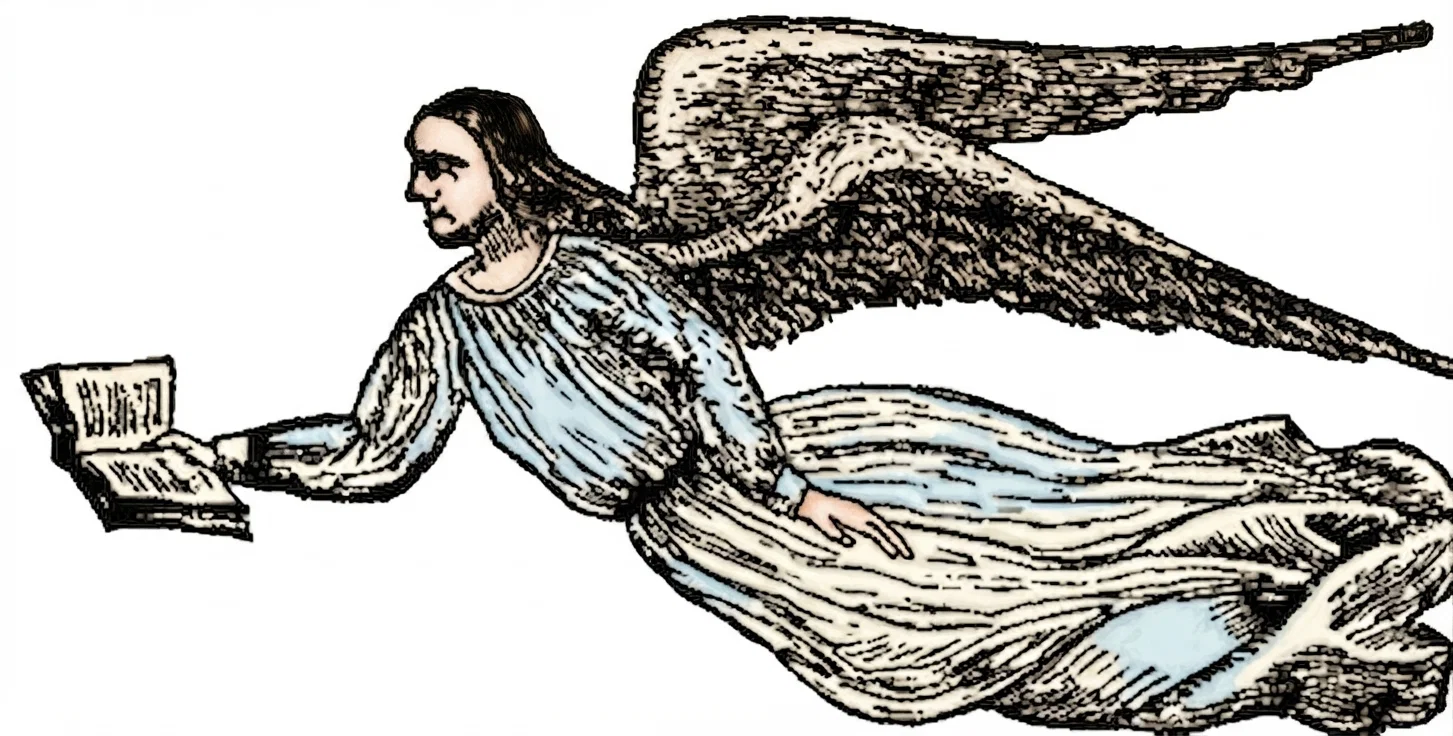
"And the third angel followed them, saying with a loud voice, If any man worship the beast and his image, and receive his mark in his forehead, or in his hand, the same shall drink of the wine of the wrath of God, which is poured out without mixture into the cup of his indignation; and he shall be tormented with fire and brimstone in the presence of the holy angels, and in the presence of the Lamb; and the smoke of their torment ascendeth up for ever and ever; and they have no rest day nor night, who worship the beast and his image, and whosoever receiveth the mark of his name. Here is the patience of the saints: here are they that keep the commandments of God, and the faith of Jesus." This is the most solemn warning that the Bible contains. As the pen of inspiration has recorded this language for our instruction, it will be wise for us to listen and obey. It is certain that the record of our world's history presents no testimony that this message has been heard in the past. And the fact that the first and second angels of this series have been proved to belong to the present generation, most clearly establishes the point that this message does not belong to past ages. Said J. V. Himes in 1847: "But the fourteenth chapter [of Rev.] presents an astounding cry, yet to be made, as a warning to mankind in that hour of strong temptation. Verses 9-11. A denunciation of wrath so dreadful, cannot be found in the book of God, besides this. Does it not imply a strong temptation, to require so terrific an admonition?—Facts on Romanism, p. 112. The work of the two-horned beast in performing miracles, and causing those that dwell upon the earth, by means of those miracles, to form an image to the beast which all men must worship, certainly pertains to the future. The third angel's message is a warning to prepare the church for this fearful scene. In proof of this fact we place the prophecy respecting the two-horned beast, and the warning of the third angel in contrast.

THE TWO-HORNED BEAST.

"And I beheld another beast coming up out of the earth; and he had two horns like a lamb, and he spake as a dragon. And he exerciseth all the power of the first beast before him, and causeth the earth and them which dwell therein to worship the first beast, whose deadly wound was healed. And he doeth great wonders, so that he maketh fire come down from heaven on the earth in the sight of men, and deceiveth them that dwell on the earth by the means of those miracles which he had power to do

THE THIRD ANGEL.

"And the third angel followed them, saying with a loud voice, If any man worship the beast and his image, and receive his mark in his forehead, or in his hand, the same shall drink of the wine of the wrath of God, which is poured out without mixture into the cup of his indignation; and he shall be tormented with fire and brimstone in the presence of the holy angels, and in the presence of the Lamb: and the smoke of their torment ascendeth up for ever and ever: and they have no rest day nor night, who worship the beast and his image, and whosoever receiveth the mark of his name. Here is the patience of the saints: here are they that keep the commandments of God, and the faith of Jesus." Chap. xiv, 9-12.
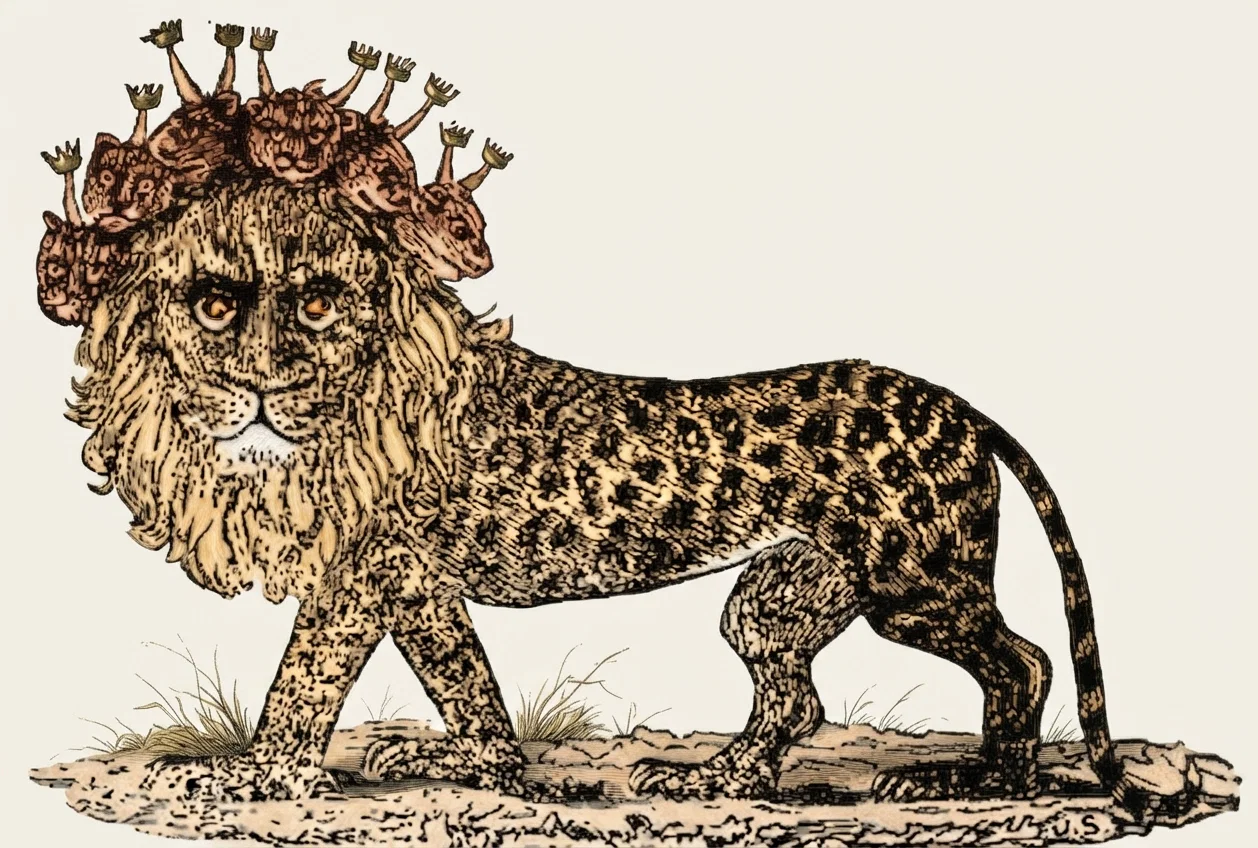
in the sight of the beast, saying to them that dwell on the earth, that they should make an image to the beast, which had the wound by a sword, and did live. And he had power to give life unto the image of the beast, that the image of the beast should both speak, and cause that as many as would not worship the image of the beast should be killed. And he causeth all, both small and great, rich and poor, free and bond, to receive a mark in their right hand, or in their foreheads: and that no man might buy or sell, save he that had the mark, or the name of the beast, or the number of his name." Chap. xiii, 11-17. A comparison of these scriptures, shows us what an hour of temptation and anguish there is yet before us. If men worship the beast and his image, they will receive of the wine of the wrath of God; and if they refuse, it is at the peril of their lives. This doubtless refers to the time when all that dwell upon the earth shall worship the beast, whose names are not written in the book of life. Chap. xiii, 8. That we may understand the cause of this fearful warning against the worship of the beast and his image, and the reception of his mark, it is necessary that we should examine the testimony respecting the beast and also the two-horned beast that caused the image to be made to the first beast. What then is the beast? This question may be answered by referring to Rev. xiii, 1-10. When Daniel in his vision of the seventh chapter, was shown the various empires that should successively bear rule over the earth, they were represented under the symbols of beasts arising from the sea. Three of these having passed away, it is proper that the fourth of the series, only, should be shown to John. The beast with ten horns, described by Daniel, is also seen by John to ascend out of the sea. In him are blended the marks of all the preceding beasts—the body of the leopard, the feet of the bear, and the mouth of the lion. Dan. vii, 4-6. The beast is evidently the Papal form of the fourth empire; for it receives its power and seat from the dragon, Imperial Rome. Verse 2. In proof of this, we present the following evidence as arranged by brother Litch. He is showing the identity of the Papal power in Dan. vii, with the beast of Rev. xiii, 1-10. "1. The little horn was to be a blasphemous power. 'He shall speak great words against the Most High' Dan. vii, 25. So, also, was the beast of Rev. xiii, 6, to do the same. 'He opened his mouth in blasphemy against God.' "2. The little horn 'made war with the saint'and prevailed against them.' Dan. vii, 21. Thus the beast of Rev. xiii, 7, was also 'to make war with the saints, and to overcome them.' "3. The little horn had 'a mouth that spake very great things.' Dan. vii, 8, 20. So, likewise, there was given the beast of Rev. xiii, 5, 'a mouth speaking great things and blasphemies.' "4. Power was given the little horn of Dan. vii, 25, 'until a time, times, and the dividing of time.' To the beast, also, power was given 'to continue forty and two months.' Rev. xiii, 5. "5. The dominion of the little horn was to be taken away at the termination of that specified period. The beast of Rev. xiii, 10, who led into captivity and put to death with the sword so many of the saints, was himself to be led into captivity and be killed with the sword, at the end of the forty and two months. "With these points of similarity in the two emblems, the little horn and the beast, who can doubt their identity!" Restitution, pp. 119, 120. "The dragon [Imperial Rome] gave unto the beast [Papal Rome] his power, and his seat, and great authority." We have before proved that the city of Rome was the seat of the dragon, which is here represented as transferred to the beast. It is well known that the seat of empire was by the emperor Constantine removed from Rome to Constantinople. And that Rome itself, at a later period, was given to the Popes by the emperor Justinian. The seven heads are seven forms of civil power which successively bear rule. These seven heads belong alike to the dragon of Chap. xii, the beast of Chap. xiii, and that of Chap. xvii. This shows conclusively that the dragon and these two beasts are symbols of the same power under different heads. For there are not three sets of seven heads, but it is evident that the heads are successive forms of its power, one of them bearing rule at a time, and then giving place to another. Chap. xvii, 9, 10. It appears that the dragon of Chap. xii, and the beast of Chap. xiii, and that of Chap. xvii, each represent some one or more of the seven heads; yet as each is seen with the seven heads, they must each in a certain sense extend over all the period covered by the three symbols. For there are not 21 heads. The proper period of each seems to be this: the dragon before the 1260 years; the beast of Chap. xiii, during that period, and the beast of Chap. xvii, since the deadly wound and captivity at the close of that period. The ten horns are the ten kingdoms of the fourth empire. They are distinct from the seven heads and hence the ten kingdoms are not to be counted as one of the heads as some have done. The horns are cotemporary, that is, all reign at the same time; while the heads are successive, but one existing at a time. It seems that John in Chap. xiii, 1-10, goes twice over the history of the beast; once in verses 1-3, and again in verses 4-10. We now inquire respecting the time when the beast received its deadly wound. That this event took place at the close of the 1260 years, and not before the commencement of that period, or during its continuance, we think evident from the following facts: 1. A head wounded before that period would not be a head of the beast, but a head of the dragon. The prophecy does not relate to the wounding of a head of the dragon to make way for the rise of the beast, as some suppose, but to the wounding of a head of the beast. 2. Nor could it take place during the 1260 years; for it is said that the beast receives his power and seat from this dragon, and that from that time he was to have power for 1260 years, so that he should be able to overcome the saints, and should have power over all kindreds and tongues and nations. This 1260 years rule began with the act of the dragon in giving his seat, the city of Rome, unto the beast, 538, and ended in 1798, when the city of Rome was taken from the beast, and his power was wrested from him. During this period, therefore, the deadly wound and overthrow of the beast could not take place. 3. The time when the beast received this deadly wound seems to be clearly marked in verse 10. It is there stated that he that leadeth into captivity and killeth with the sword, must be led into captivity and killed with the sword. That is, the Papal power which had thus acted for 1260 years, must at the close of that period of triumph be thus used. Such were the facts in 1798. So that John goes over the history of the beast twice. First in verses 1-3, ending with the deadly wound; and the second time in verses 4-10, ending with the beast's being led into captivity and slain. This is the event predicted in Dan. vii, 26: "they shall take away his dominion." The mouth given to the beast speaking great words and blasphemies, evidently signifies the same as the mouth of the little horn of Dan. vii, which should speak great words against the Most High, and think to change times and laws. It is the Papacy, claiming infallibility and to be the Vicar of God upon earth. That this prophecy has been fulfilled in the most wonderful manner, and that the 1260 years of Papal triumph expired about the close of the last century, cannot be denied. The Papal power was then subverted, and the seat of the dragon wrested from him. We believe however, that verse 8, "And all that dwell upon the earth shall worship him, whose names are not written in the book of life of the Lamb slain from the foundation of the world," has never yet been fully accomplished. It is certain that the time never yet was that all except true Christians, worshiped the beast. But this time is yet to be witnessed in the fulfillment of the prophecy respecting the two-horned beast. We expect this in the hour of temptation that shall come on all the world to try them that dwell upon the earth. It is in view of this scene that the third angel utters his voice of warning. The beast of Rev. xiii, 1-10, though wounded with a deadly wound was to recover from that wound, and must, according to Rev. xix, 19, 20; Dan. vii, 7-11, continue till the battle of the great day of God Almighty, after which he is to be cast into the lake of fire.

THE TWO-HORNED BEAST.

It is the two-horned beast that is to cause the world to worship the first beast and to form an image to that beast which all must worship on pain of death. We have shown that it is the two-horned beast which is to cause the fearful scene respecting which the third angel utters his voice of solemn warning. It is therefore evident that if we would understand this warning, we must carefully examine the prophecy respecting the two-horned beast. What power then is symbolized by this beast with two horns like a lamb? Several answers have been returned to this question. We will briefly notice them. 1. In 1842 Josiah Litch advanced the view that Napoleon was the two-horned beast. But in 1848 he renounced this view, assigning as his reason for this, the fact that Napoleon did not impose a mark upon any as the sign of their allegiance to the beast, but granted free toleration to all religions. To the foregoing reason we may add another. This two-horned beast is identical with the false prophet. Compare Rev. xiii, 14, 15 with Chap. xix, 20. From the comparison it is evident that the two-horned beast is to act an important part in the battle of the great day of God Almighty, yet before us. But Napoleon long since passed from the stage of action; hence it is certain that he is not the subject of this prophecy. 2. Others contend that the two-horned beast is England and Wales; while others still, contend that it is England and Scotland. But in either case they might as well have four horns as two; viz., England, Scotland, Ireland and Wales. But it is certain that
the British empire never yet deceived men by the miracle of bringing down fire from heaven; and that it never by means of such miracles caused those that dwell upon the earth to make an image to the beast which all should worship on pain of death. No one can point out such a miracle on the part of that empire, or indeed of any other in our world's past history. But such miracles must be performed before the image is made which all must worship. Hence this prophecy respecting the image and its worship has not been fulfilled in the past. Another important fact is this. Those who claim that England has caused the dwellers upon the earth to worship this image to the beast on pain of death, refer back some three centuries in the past for the fulfillment of the prophecy. The third angel warns men of the scene described in Rev. xiii, 14, 15. Now if that was fulfilled three centuries since, it is certain that the third angel's message must have been given at that time. We have proved that the first angel's proclamation belongs to the last generation of the human family. But if the foregoing view of the two-horned beast is correct it follows that the third angel's message was given some hundred years before that of the first! But besides the lack of fitness in this application there is one fact which is of itself a sufficient refutation of the whole matter. It is this: England is one of the ten kingdoms represented by the ten horns of the first beast of Chap. xiii, and consequently cannot constitute a distinct beast with two horns. For the two-horned beast which arises about the time of the deadly wound of the first beast, is from the time of its rise contemporary with that ten-horned beast. So that the two-horned beast and the ten-horned beast are two distinct powers. Hence one of the ten horns of the first beast, cannot constitute a contemporary two-horned beast. And this fact equally disproves the view that France or any other of the ten kingdoms of the fourth empire is the two-horned beast. 3. The "Holy Alliance" of the great powers of Europe, which was formed some forty years since, has been supposed by some to be the subject of the prophecy respecting the two-horned beast. And England and Russia, as being the most important members of this alliance, have been represented as the two horns of this beast. But neither the Russian bear nor the British lion is very much "like a lamb." But that holy alliance is now perfectly dissolved, and England and Russia, the supposed horns of the beast, are now engaged in deadly warfare. Hence this view of the two-horned beast is false. 4. Others have recently explained the two-horned beast as the Russian empire; the two horns being Russia and Poland. And the image which the two-horned beast was to form, they represent as the holy alliance, to which reference has already been made. We think this the most unreasonable view of the subject that has ever been presented. For Poland is a feeble, conquered province, and a kingdom in name only. While Russia is a gigantic power bearing complete sway over the province of Poland, Russia should therefore be represented as an exceeding great horn, while Poland, which has no real existence as a kingdom, cannot deserve to be represented as a horn of any kind. Besides this, Russia has never performed any of the wonders noted in this prophecy. The bringing down fire from heaven preceded the making of the image, and was the cause of its being made by the dwellers upon the earth. If the holy alliance was that image, then all these wonders must be in the past; for that alliance has now crumbled to atoms. But as the predicted wonders have not been seen, it follows that this view is false and absurd. 5. The view has also been put forth that the eastern Roman empire constituted this two-horned beast; its two horns being, first, the Roman power, and second, the Mahometan power, or Turkish empire, that was erected upon the ruins of the eastern Roman empire in 1453. Thus making the two horns successive, and also making the second pluck up the first. And this view further represents the first beast as the civil power of the western empire as embodied in the ten kingdoms; while the Papacy is called the image of that beast, set up by the eastern empire. It also represents the Papacy as the mouth which was given to the ten horned beastspeaking blasphemies. So that we are to look to the eastern empire as a power that caused all the world to worship the western empire, and that did, through the bringing down of fire from heaven, and other miracles, cause the image to be made to the first beast. To this view of the two-horned beast we object for the following reasons: 1. The eastern empire is, by this view, represented as causing all the world to worship the ten kingdoms of the western empire, which is false in point of fact. 2. The eastern empire existed before the rise of the first of the ten kingdoms; so that the ten kingdoms are not the first beast, if the eastern empire is the two-horned beast. 3. Those who hold this view, teach that the two-horned beast began its existence when Constantine removed the seat of empire from Rome to Constantinople, A. D. 324. They also teach that Constantine and his successors were the seventh head of the dragon; and that this seventh head of the dragon was the head of the beast that was wounded unto death. This view therefore effectually confounds the two-horned beast with the seventh head of the dragon, and confounds the seventh head of the dragon with the beast which received the deadly wound. It also represents the conversion of Constantine and his accession to the empire as putting an end to the dragonic period, and at the same time represents Constantine and his successors as the seventh head of the dragon! Further, those who teach thus, represent that the wounding of the head was by the rise of the ten kingdoms of the western empire. A very singular fulfillment of the wounding of the beast unto death! For these ten kingdoms are made out to be the beast which receives the deadly wound, and yet they teach that the deadly wound was given unto the dragon by the rise of this beast! But the rise of the ten kingdoms did not inflict a deadly wound upon the imperial head of the dragon; for it was able to continue 1000 years after the rise of the ten kingdoms! And it is certainly very absurd to first apply all the heads to the dragon without reserving a single one for the beast, and then say that the beast who had no head at all, had one of his heads wounded unto death! And this deadly wound of the beast, was, after all, nothing more than the rise of the beast himself from the sea! This is simply reversing the prophecy, and making the ten-horned beast the one that inflicts the deadly wound, and not the one which receives it. 4. The two-horned beast makes an image unto the beast that had the wound by a sword and did live. The view under consideration represents that the two-horned beast is the same as the seventh head of the dragon; and it also as we have seen makes the seventh head of the dragon, the beast that was wounded unto death. So that if the two-horned beast makes an image unto the beast which had the wound by a sword and did live, it must be understood that it makes an image unto itself. This is a manifest absurdity, yet it is a necessary conclusion from the views which we are examining. 5. If the Papacy is the image to the beast, as represented by this view, then it must be shown that the eastern empire formed this image in consequence of bringing down fire from heaven, and other wonders which it was to perform in the sight of them that dwell upon the earth. If we show that such was not the case we shall have fully disproved the view in question. Those who apply the two-horned beast to the eastern Roman empire, and the image of the beast to the Papacy, attempt to show that this prophecy respecting the bringing down of fire from heaven, refers to a destructive agent in use in the eastern empire, called "Greek fire." But that this is not the subject of this prophecy appears from the following facts: 1. This fire was not brought down from heaven upon the earth in the sight of men. 2. It was not a miracle, but it was the skillful preparation of a distinguished chemist; the secret of which is now lost. And it may be added that the eastern empire never performed any miracle whatever. 3. But the most decisive fact is this: The bringing down of fire from heaven was the cause of the image's being made. But the Greek fire was not invented until about 130 years after Papacy the
supposed image was set up. The Papacy as has been shown many times was set up about 538, while the Greek fire was not invented until 688. "Greek fire was invented in the seventh century. When the Arabs besieged Constantinople in 668, the Greek architect, Callinicus of Heliopolis, deserted from the Caliphs to the Greeks, and took with him a composition, which by its wonderful effects, struck terror into the enemy and forced them to take flight."—Encyclopedia Americana. Then it is an undeniable fact that this supposed bringing down of fire from heaven did not take place until long after the Papacy was set up. This is most conclusive proof that the view which we have been examining is false. And it is not only true that the "Greek fire" had nothing to do with the formation of the image, but that it had nothing to do with sustaining it. No one will claim that the eastern empire caused the world to worship the image of the beast by any such means. On the contrary, if the Turks are one of the two horns all that the eastern empire did by means of the Greek fire was to keep the second lamb-like horn, the Turks, from rising as soon as they otherwise would. 6. If the Papacy is the mouth of the first beast, [see Rev. xiii, 5.] as is admitted by those who teach that the two horned beast is a symbol of the eastern empire, it is absurd to make it also the image to the first beast. For it cannot be both the image to the beast, and the mouth of the beast also. 7. The two horned beast is said to become the false prophet, when the eastern empire was conquered by the Turks. But how can this be true when the false prophet is represented as working miracles in connection with the beast or Papal power? The Mahometan power has never wrought miracles, but had it wrought many miracles, it would have wrought none of them to strengthen the Papal power. Rev. xix, 20. 8. It is self-evident that the third angel's warning relates to the acts of the two-horned beast. Now if the acts of the two-horned beast are rightly located by this view in the sixth century, and the second angel's proclamation which according to this view belongs to the sixteenth century is rightly located there, it follows that the third angel must utter his voice of warning 1000 years before the second! That is, the third angel relates to the events of the sixth century, while the second relates to those of the sixteenth! It is true that those who hold the view of the two-horned beast which we have been examining, understand that the third angel makes his proclamation later than the second, which they think belonged to the sixteenth century. But it is well known that the eastern empire was subverted before the sixteenth century, so that if that power was the two-horned beast, the third angel's message must have been given prior to the second, our opponents themselves being judges. Those who hold the view that has been here examined, think that the rise of the ten kingdoms is what the prophecy relates to, which speaks of the dragon giving his power and seat unto the beast. But we think it manifest that the act of the dragon in giving his power and seat unto the beast, must relate to a voluntary act, and not to the conquest of one power by another. In the act of the eastern empire in giving the ancient seat of the empire to the Papal power, we may see a perfect fulfillment of the prophecy. It is confounding this act with that of the two-horned beast in making the image to the beast, that leads to all the mistakes on this subject. It necessarily confounds the dragon with the two-horned beast, and makes the beast which all that dwell upon the earth, whose names are not written in the book of life shall yet worship, to be nothing but the civil power of the ten kingdoms of the western empire! We have now presented some of the most important reasons for rejecting the various views of the two-horned beast, referred to above. It is proper that we should now inquire respecting the true application of this important symbol. We think that most conclusive reasons have been offered to show that the two-horned beast is not the eastern Roman empire; that it is not Russia, not France, not England; and, indeed, that it is not any one of the ten kingdoms of the western empire. We have already
seen that the fourth beast of Daniel, which in its Papal form is the same as the beast which received the deadly wound, of which John speaks, does not give his place to another beast, but continues until the judgment, when he is to be cast into the fiery flame. Dan. vii, 11; Rev. xix, 20. Hence it is certain that the location of the two horned beast is not in the ten kingdoms of the fourth beast. We cannot take one of the horns of the fourth beast and with it constitute another beast, or the horns of another. The two-horned beast is "another beast" besides the ten-horned beast. It is not the first beast healed of his deadly wound, for the work of the two-horned beast is in the sight of that beast. Rev. xiii, 14. It would indeed be a surprising change if the ten horns were to be plucked up, and in their stead two other horns should arise. Yet such is a necessary conclusion if the two-horned beast is but another form of the first beast. Hence we conclude that the two-horned beast is another and distinct power. It is, however, from the time of its rise, a power contemporary with the beast whose deadly wound was healed. It acts in the sight of the first beast in performing its wonders. The manner of its rise is not to be overlooked. The four beasts of Daniel, of which series John's first beast constituted the fourth, are all seen to rise out of the sea in consequence of the striving of the winds. Dan. vii, 2, 3; Rev. xiii, 1. They arose by overturning the powers that preceded them, by means of general war. Winds denoting war or strife among men, and waters or sea denoting people, nations, etc. Rev. vii, 1-3; xvii, 15. But this power arises in a peaceful, or lamb-like manner from the earth. For it does not arise by the strife of the winds upon the sea, that is by the overthrow of other nations and empires, but it arises where no other beast exists, and acts its part in the presence of its predecessors. This shows that it must arise from a new and previously unoccupied territory. When was the power to arise? Not prior to the first beast, certainly. Not at the same time; for then there would be no propriety in designating either as the first beast. It is said that it shall exercise all the power of the first beast before him. Then we may look for it to come on the stage of action about the close of the first beast's dominion, at the end of the 1260 years. Again, it is to cause the world to worship the first beast whose deadly wound was healed, which shows that its period of action is this side 1798. J. Litch says:—"The two-horned beast is represented as a power existing and performing his part, after the death and revival of the first beast. . . . If asked for my opinion as to what will constitute that beast with two horns, or the false prophet, I must frankly confess I do not know. I think it is a power yet to be developed or made manifest as an accomplice of the Papacy in subjecting the world. It will be a power which will perform miracles, and deceive the world with them. See Rev. xix, 20."—Restitution, pp. 131, 133. Mr. Wesley in his notes on Rev. xiii, says of the two-horned beast: "He has not yet come, though he cannot be far off; for he is to appear at the end of the forty-two months of the first beast." On the 15th verse speaking of anti-christ, he says: "It seems his last and most cruel persecution is to come. This persecution, the reverse of all that preceded it, will as we may gather from many scriptures, fall on the outward court worshippers, the formal Christian. It is probable that few real Christians shall perish by it: on the contrary, those who watch and pray always shall be accounted worthy to escape all these things, and stand before the Son of man." One fact of interest may be noticed here. The course of empire beginning with the first great empire near the garden of Eden has been ever tending westward. Thus the seat of the Babylonian and Persian empires was in Asia. The seat of the Grecian and Roman empires was in Europe. The Roman empire, in its divided state as represented by the ten horns, occupies all the remaining territory west to the Atlantic ocean. Hence we still look westward for the rise of the power described in this prophecy. Bishop Berkely in his celebrated poem on America, written more than 100 years since, seemed to foresee something of the greatness of this power, and he most forcibly describes its connection with its predecessors:"Westward the course of empire takes its way; The four first acts already past, A fifth shall end the drama with the day; Time's noblest offspring is the last." By "the four first" acts, the Bishop doubtless referred to the four great empires of the prophet Daniel. The fifth with which the scene closes, is the power that has arisen this side the Atlantic. As the four powers of the eastern continent were not to be succeeded by a fifth, we understand that the power represented by the beast with two horns, which arises in the last days of the fourth beast, must be located in America. This lamb-like power, the noblest and the last offspring of time, must also in its dragonic character prove itself the basest. As we have said the two-horned beast does not arise by overthrowing its predecessor. And it is worthy of notice that the ten kingdoms of the fourth empire were all complete long before the discovery of America. And the war of the revolution was not for the purpose of overthrowing one of the ten kingdoms of the fourth empire, but it was to maintain the just rights of the American people. This power is evidently the last one with which the people of God are connected; for the message of the third angel which immediately precedes the view of Jesus on the white cloud, pertains almost entirely to the action of the two-horned beast. Compare Rev. xiv, 9-11; xiii, 11-18. And it is a fact which ought not to be overlooked, that those powers with which the people of God are connected, are the only ones noted in prophecy. It is also plain that the march of civilization and of Christianity, like the course of the natural sun, has ever been westward. And it is evident that the territory of this last power is to be the field of the angels' messages, the land where the crowning truths of the gospel, ere it finishes its course, are to be brought out. The rise of each of the great powers has been gradual. For a series of years they were preparing for the stations which they afterward assumed, but they begin to be represented in prophecy, at the time when they are prepared to act their part in the great drama. We come now to trace the rise of an empire which has come up in the sight of the first beast; a power still further on toward the setting sun, with the history of which the great circuit of empire will be accomplished, for the boundary of the vast Pacific has been reached.
A short time before the Reformation in the days of Martin Luther, a new continent was discovered. The rise of the reformers brought out a large class who were determined to worship God according to the dictates of their own conscience. They desired a greater measure of civil and religious freedom; hence they with many others fled to the wilds of America and laid the foundation of a new empire. They did not establish their power by overturning another power, but they planted themselves in an uncultivated waste, and laid the foundation of a new government. The preceding powers had arisen through the strife of the winds on the great sea, but this power arises out of the earth. That is, the first powers arose through the action of wars in overturning and subverting other nations, to be in turn overthrown and subverted by their successors, but this power appears to arise from the earth in a peaceful manner. It comes up in the sight of the first beast like the settlement and growth of a new country. "The Dublin Nation" thus notices the progress and the power of this republic:
"In the east there is arising a colossal centaur called the Russian Empire. With a civilized head and front, it has the sinews of a huge barbaric body. There one man's brain moves 70,000,000. There all the traditions of the people are of aggression and conquest in the west. There but two ranks are distinguishable, serfs and soldiers. There the map of the future includes Constantinople and Vienna as outposts of St. Petersburg.
"In the west an opposing and still more wonderful American empire is EMERGING. We Islanders have no conception of the extraordinary events which, amid the silence of the earth, are daily adding to the power and pride of this gigantic nation. Within three years, territories more extensive than these three kingdoms, France and Italy put together, have been quietly, and in almost 'matter of course' fashion annexed to the Union. "In seventy years seventeen new sovereignties, the smallest of them larger than Great Britain, have peaceably united themselves to the federation. No standing army was raised, no national debt sunk, no great exertion was made, but there they are. And the last mail
brings news of the organization of three more great States about to be joined to the thirty. Minnesota in the north-west; Deseret in the south-west, and California on the shores of the Pacific. These three States will cover an area equal to one half the European continent. "Nor is this a mere addition on the map. It is not piling barren Pelion upon uncultivated Ossa. It is an actual conquest of new strength and resources. Already has Minnesota its capital—St. Paul, which has its journals, churches, schools, parties, interests and speculations. The Mormon founders of Deseret are doing what the Puritans did in Massachusetts two centuries ago—taking care to possess themselves of the best lands and waters in their new State. Instead of becoming a lawless horde of adventurers, the settlers in California are founding cities, electing delegates, magistrates, sheriffs, and Congressmen, as methodically and as intently as if they trod the beaten paths of life on the Atlantic shore of the continent. "And with this increase of territory, there is a commensurate increase of industry in the Older States. The census of 1850 about to be taken in the United States, will show a growth of numbers, territory, and industry entirely unexampled in human history. Let the 'gray powers of the old world' look to it—let the statesmen of France, Germany, and Russia, read the census carefully though it should startle them. Let despotism count every man of these millions as a mortal enemy, and every acre of that vast commonwealth as an inheritance of mankind mortgaged to the cause of freedom. America is as grand a field for human enterprise as when the ships of Columbus first neared the shores of Guanihana." The progress of our own country since its first settlement, has indeed been wonderful. We trace its rise from the time of its settlement by those who fled from the oppression of the fourth empire, onward till it assumes its station among the great powers of earth, a little previous to the end of the 1260 years. Its territory has increased more than tenfold since that period, by the addition of the vast territories of Louisiana, Florida, Texas, New Mexico and California, and the extension of an undisputed title to Oregon. Thus extending its dominion to the vast Pacific. A few facts from the census of 1852, as compared with that of 1792, may be of value in estimating the growth of this power.
1792. 1852.
Population of U. States, 3,000,000, 22,000,000,
" " Boston, 18,000, 130,000,
" " Philadelphia, 42,000, 407,000,
" " N. Y. City, 20,000, 515,000,
U. States Imports, $31,000,000, $178,000,000,
" Exports, $26,000,000, $151,000,000,
Miles Territory, 300,000, 3,000,000,
Miles of Rail Road, — 8,500,
" Telegraph, — 12,000,
No. of Post Offices, 200, 21,000,
Amount of Postage, $100,000, $5,000,000,
[To be Continued.]