Your ShelfYour Projects

Prophets and Kings

0%

Prophets and Kings

Ellen G. White

Pacific Press Publishing Association · Mountain View, California · 1917
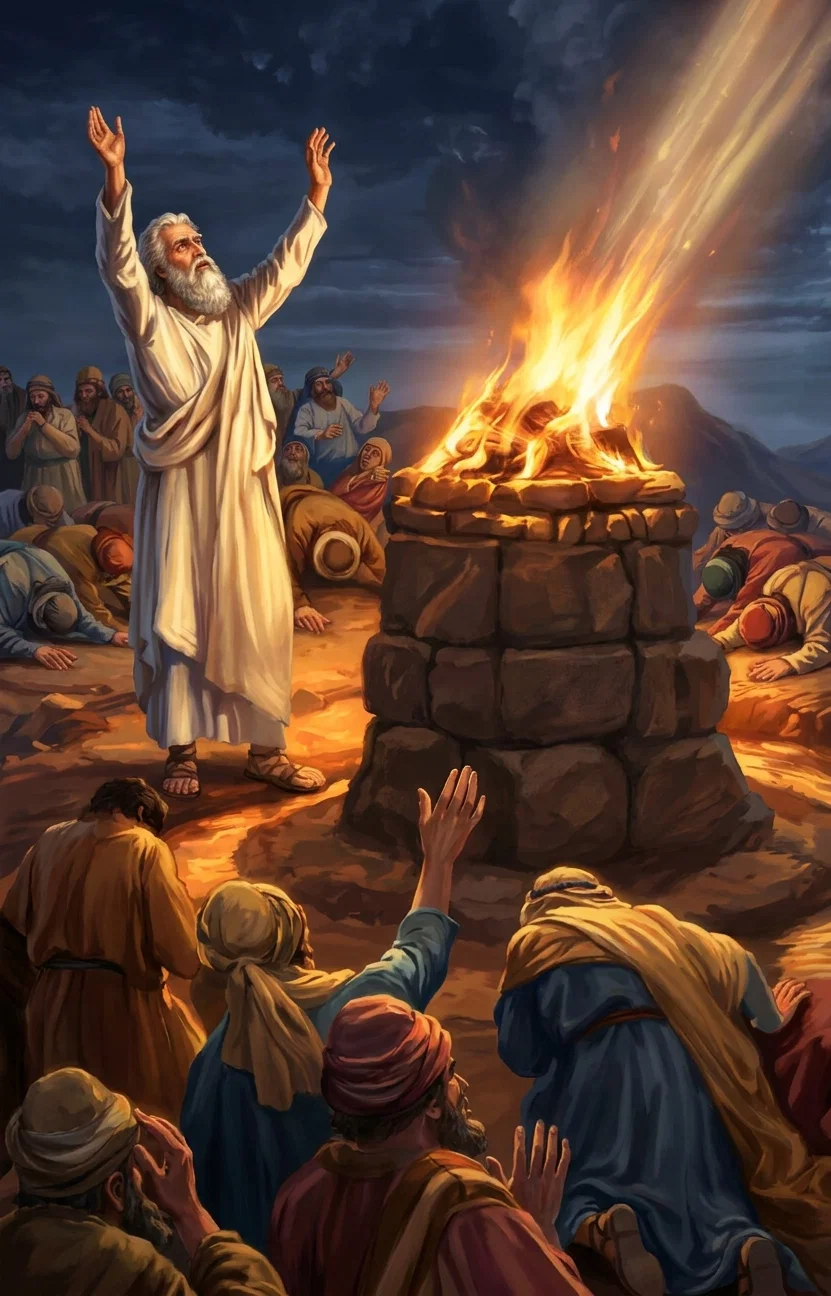
THE ALTAR OF JEHOVAH ON MOUNT CARMEL

“Let it be known this day that Thou art God in Israel.”
THE ALTAR OF JEHOVAH ON MOUNT CARMEL “Let it be known this day that Thou art God in Israel.”
PREFACE
PREFACE
THE whole story of the “chosen people,” the children of Abraham “according to the flesh,” is of vast and vital interest, chiefly, perhaps, because it reveals the many-sidedness of the sublime character of God,—His infinite compassion, His perfect justice, His illimitable wisdom, His unmeasured power, and His everlasting love.
But of the entire period, no part is more interesting than that of which this volume treats, from the time of Israel’s crown of worldly glory, to her captivity and restoration.
It is not the object of the book to give a detailed chronicle or story of that time, nor a systematic historic account. This has been done at various times by others. Rather, the purpose of the book is to do the greater things,—to point out the large moral lessons to be learned from Israel’s triumphs, defeats, backslidings, captivity, and reformations, to make these lessons practical helps to souls in times of testing, and to show the fullness of God’s love and mercy in all His dealings with a gainsaying and obdurate people.
The volume begins with Israel as a united kingdom, in her glory, with her magnificent temple,—the world center of true worship. Then follows division; the ten-tribe kingdom, on account of its disloyalty, meeting oblivion in captivity.
The checkered career of Judah is given us under the crucial reigns of her principal kings, good and bad, until we find her in captivity, her children weeping by the waters ofthe Euphrates, their harps hung upon the willows, their eyes turned with longing to Jerusalem in desolation.
We are told of Israel’s sojourn in Babylon, of her holy men and prophets, of the message of deliverance in the proclamation of a mighty monarch of earth, of the journey to Jerusalem, the rebuilding of the temple under divine direction, and the reëstablishment of Israel in her own land.
The book abounds in great character studies,—Solomon the wise, whose wisdom alone kept not back the heart from transgression; Jeroboam, the man of policy, and the evil results which followed; the mighty Elijah, without pedigree, it is true, but not without mission and message; Elisha, the prophet of peace and healing; Ahaz, the fearful and wicked; Hezekiah, the timid and good; Daniel, the beloved of God; Jeremiah, the prophet of sorrow; Haggai, Zechariah, and Malachi, prophets of the restoration. Beyond them all rises, in glory supernal, the coming King, the Lamb of God, the only-begotten Son, in whom all types of sacrifice, righteousness, and peace find eternal fulfillment.
The volume illustrates the unthwarted plans of God. If His blessed gospel cannot be given to the world with the co-operation of His people, it will go on broader wings in spite of them. What though they are captive in Babylon? Through the faithful witness of a few, Babylon’s greatest king is led to publish to all the world, by a royal proclamation, the knowledge of the true God. In their deliverance from captivity, the message of freedom is proclaimed by Cyrus the Great of Persia. The wealth and power of empires are placed at their disposal, if God so wills.
Thus we are carried forward, in God’s plan, from type to antitype; from the rulers that die, to the King eternal; from the glories that fade, to the glories everlasting and fadeless; from the mortal people, who sin and perish, to the people righteous in their God, immortal forever.
That this volume, from the truly lamented author, who died as the last chapters were preparing, may, like its companion volumes by the same author, be blessed in bringing many precious souls to become worshipers of the true and only God, is the prayer of — The Publishers.
The VineYard of the Lord

The Vineyard of the Lord

It was for the purpose of bringing the best gifts of Heaven to all the peoples of earth, that God called Abraham out from his idolatrous kindred, and bade him dwell in the land of Canaan. “I will make of thee a great nation,” He said, “and I will bless thee, and make thy name great; and thou shalt be a blessing.” It was a high honor to which Abraham was called,—that of being the father of the people who for centuries were to be the guardians and preservers of the truth of God to the world, the people through whom all the nations of the earth should be blessed in the advent of the promised Messiah.
Men had well-nigh lost the knowledge of the true God. Their minds were darkened by idolatry. For the divine statutes, which are “holy, and just, and good,” men were endeavoring to substitute laws in harmony with the purposes of their own cruel, selfish hearts. Yet God in His mercy did not blot them out of existence. He purposed to givethem opportunity for becoming acquainted with Him through His church. He designed that the principles revealed through His people should be the means of restoring the moral image of God in man.
God’s law must be exalted, His authority maintained; and to the house of Israel was given this great and noble work. God separated them from the world, that He might commit to them a sacred trust. He made them the depositaries of His law, and He purposed through them to preserve among men the knowledge of Himself. Thus the light of heaven was to shine out to a world enshrouded in darkness, and a voice was to be heard appealing to all peoples to turn from idolatry to serve the living God.
“With great power, and with a mighty hand,” God brought His chosen people out of the land of Egypt. “He sent Moses His servant; and Aaron whom He had chosen. They showed His signs among them, and wonders in the land of Ham.” “He rebuked the Red Sea also, and it was dried up: so He led them through the depths.” He rescued them from their servile state, that He might bring them to a good land,—a land which in His providence He had prepared for them as a refuge from their enemies. He would bring them to Himself, and encircle them in His everlasting arms; and in return for His goodness and mercy, they were to exalt His name and make it glorious in the earth.
“The Lord’s portion is His people; Jacob is the lot of His inheritance. He found him in a desert land, and in the waste howling wilderness; He led him about, He instructed him, He kept him as the apple of His eye. As an eagle stirreth up her nest, fluttereth over her young, spreadeth abroad her wings, taketh them, beareth them on her wings: so the Lord alone did lead him, and there was no strange god with him.” Thus He brought the Israelites unto Himself, that they might dwell as under the shadow of the Most High. Miraculously preserved from the perils of the wilderness wandering, they were finally established in the land of promise as a favored nation.
By means of a parable, Isaiah has told with touching pathos the story of Israel’s call and training to stand in the world as Jehovah’s representatives, fruitful in every good work:
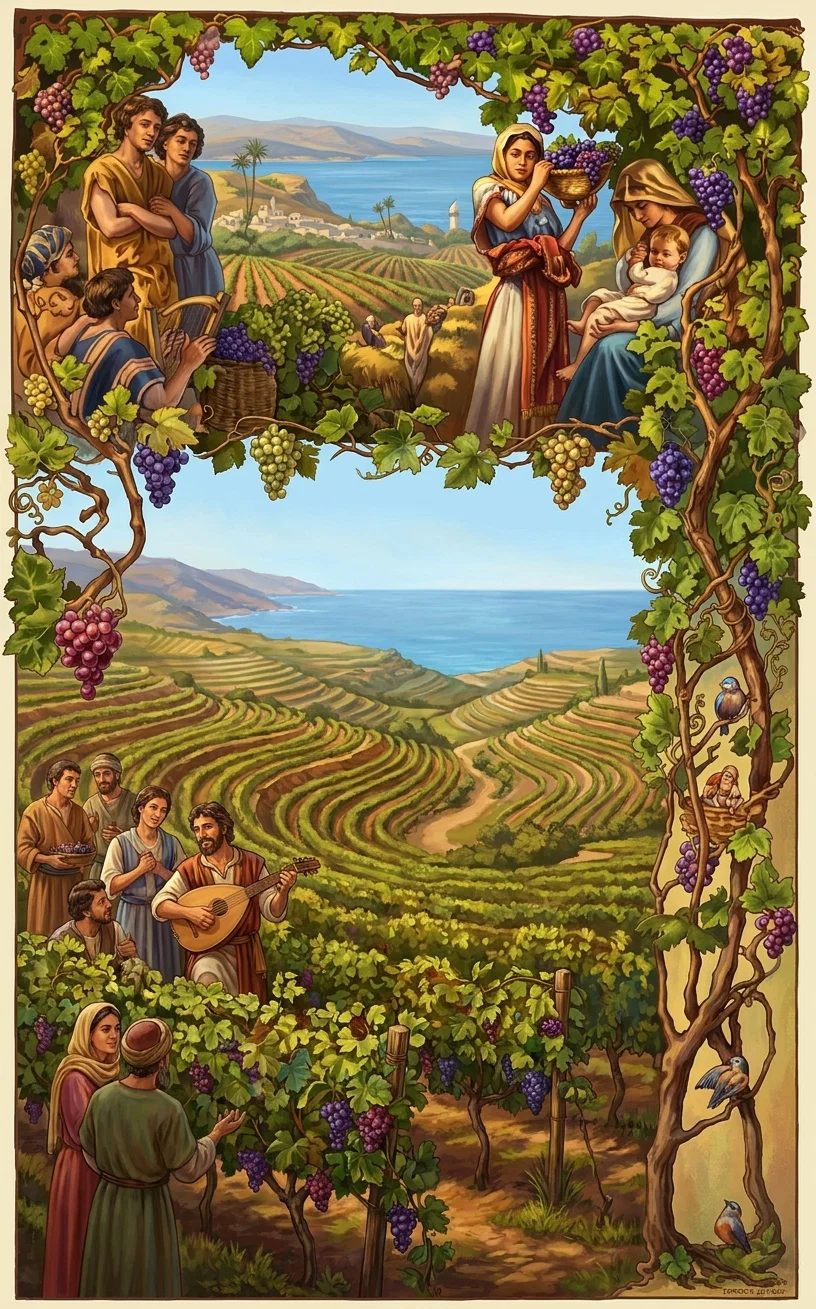
“Now will I sing to my well-beloved a song of my beloved touching His vineyard. My well-beloved hath a vineyard in a very fruitful hill: and He fenced it, and gathered out the stones thereof, and planted it with the choicest vine, and built a tower in the midst of it, and also made a winepress therein: and He looked that it should bring forth grapes.”
Through the chosen nation, God had purposed to bring blessing to all mankind. “The vineyard of the Lord of hosts,” theprophet declared, “is the house of Israel, and the men of Judah His pleasant plant.”
To this people were committed the oracles of God. They were hedged about by the precepts of His law, the everlasting principles of truth, justice, and purity. Obedience to these principles was to be their protection, for it would save them from destroying themselves by sinful practices. And as the tower in the vineyard, God placed in the midst of the land His holy temple.
Christ was their instructor. As He had been with them in the wilderness, so He was still to be their teacher and guide. In the tabernacle and the temple His glory dwelt in the holy shekinah above the mercy-seat. In their behalf He constantly manifested the riches of His love and patience.
Through Moses the purpose of God was set before them, and the terms of their prosperity made plain. “Thou art an holy people unto the Lord thy God,” he said; “the Lord thy God hath chosen thee to be a special people unto Himself, above all people that are upon the face of the earth.”
“Thou hast avouched the Lord this day to be thy God, and to walk in His ways, and to keep His statutes, and His commandments, and His judgments, and to hearken unto His voice: and the Lord hath avouched thee this day to be His peculiar people, as He hath promised thee, and that thou shouldest keep all His commandments; and to make theehigh above all nations which He hath made, in praise, and in name, and in honor; and that thou mayest be an holy people unto the Lord thy God, as He hath spoken.”
The children of Israel were to occupy all the territory which God appointed them. Those nations that rejected the worship and service of the true God, were to be dispossessed. But it was God’s purpose that by the revelation of His character through Israel men should be drawn unto Him. To all the world the gospel invitation was to be given. Through the teaching of the sacrificial service, Christ was to be uplifted before the nations, and all who would look unto Him should live. All who, like Rahab the Canaanite, and Ruth the Moabitess, turned from idolatry to the worship of the true God, were to unite themselves with His chosen people. As the numbers of Israel increased, they were to enlarge their borders, until their kingdom should embrace the world.
But ancient Israel did not fulfill God’s purpose. The Lord declared: “I had planted thee a noble vine, wholly a right seed: how then art thou turned into the degenerate plant of a strange vine unto Me?” “Israel is an empty vine, he bringeth forth fruit unto himself.” “And now, O inhabitants of Jerusalem, and men of Judah, judge, I pray you, betwixt Me and My vineyard. What could have been done more to My vineyard, that I have not done in it? Wherefore,when I looked that it should bring forth grapes, brought it forth wild grapes? And now go to; I will tell you what I will do to My vineyard: I will take away the hedge thereof, and it shall be eaten up: and break down the wall thereof, and it shall be trodden down: and I will lay it waste: it shall not be pruned, nor digged; but there shall come up briers and thorns: I will also command the clouds that they rain no rain upon it. For . . . He looked for judgment, but behold oppression; for righteousness, but behold a cry.”
The Lord had through Moses set before His people the result of unfaithfulness. By refusing to keep His covenant, they would cut themselves off from the life of God, and His blessing could not come upon them. At times these warnings were heeded, and rich blessings were bestowed upon the Jewish nation and through them upon surrounding peoples. But more often in their history they forgot God, and lost sight of their high privilege as His representatives. They robbed Him of the service He required of them, and they robbed their fellow men of religious guidance and a holy example. They desired to appropriate to themselves the fruits of the vineyard over which they had been made stewards. Their covetousness and greed caused them to be despised even by the heathen. Thus the Gentile world was given occasion to misinterpretthe character of God and the laws of His kingdom.
With a father’s heart, God bore with His people. He pleaded with them by mercies given and mercies withdrawn. Patiently He set their sins before them, and in forbearance waited for their acknowledgment. Prophets and messengers were sent to urge His claim upon the husbandmen; but instead of being welcomed, these men of discernment and spiritual power were treated as enemies. The husbandmen persecuted and killed them. God sent still other messengers, but they received the same treatment as the first, only that the husbandmen showed still more determined hatred.
The withdrawal of divine favor during the period of the exile led many to repentance; yet after their return to the land of promise, the Jewish people repeated the mistakes of former generations, and brought themselves into political conflict with surrounding nations. The prophets whom God sent to correct the prevailing evils, were received with the same suspicion and scorn that had been accorded the messengers of earlier times; and thus, from century to century, the keepers of the vineyard added to their guilt.
The goodly vine planted by the divine Husbandman upon the hills of Palestine was despised by the men of Israel, and was finally cast over the vineyard wall; theybruised it, and trampled it under their feet, and hoped that they had destroyed it forever. The Husbandman removed the vine, and concealed it from their sight. Again He planted it, but on the other side of the wall, and in such a manner that the stock was no longer visible. The branches hung over the wall, and grafts might be joined to it, but the stem itself was placed beyond the power of men to reach or harm.
Of special value to God’s church on earth to-day—the keepers of His vineyard—are the messages of counsel and admonition given through the prophets who have made plain His eternal purpose in behalf of mankind. In the teachings of the prophets, His love for the lost race, and His plan for their salvation, are clearly revealed. The story of Israel’s call, of their successes and failures, of their restoration to divine favor, of their rejection of the Master of the vineyard, and of the carrying out of the plan of the ages by a goodly remnant to whom are to be fulfilled all the covenant promises,—this has been the theme of God’s messengers to His church throughout the centuries that have passed. And to-day God’s message to His church—to those who are occupying His vineyard as faithful husbandmen—is none other than that spoken through the prophet of old:
“Sing ye unto her, A vineyard of red wine. “I the Lord do keep it; I will water it every moment: Lest any hurt it, I will keep it night and day.”
Let Israel hope in God. The Master of the vineyard is even now gathering from among men of all nations and peoples the precious fruits for which He has long been waiting. Soon He will come unto His own; and in that glad day, His eternal purpose for the house of Israel will finally be fulfilled. “He shall cause them that come of Jacob to take root: Israel shall blossom and bud, and fill the face of the world with fruit.”

FROM STRENGTH TO WEAKNESS

“Thus saith the Lord, Let not the wise man glory in his wisdom, neither let the mighty man glory in his might, let not the rich man glory in his riches: but let him that glorieth glory in this, that he understandeth and knoweth Me, that I am the Lord which exercise loving-kindness, judgment, and righteousness, in the earth: for in these things I delight, saith the Lord.” Jer. 9: 23, 24.
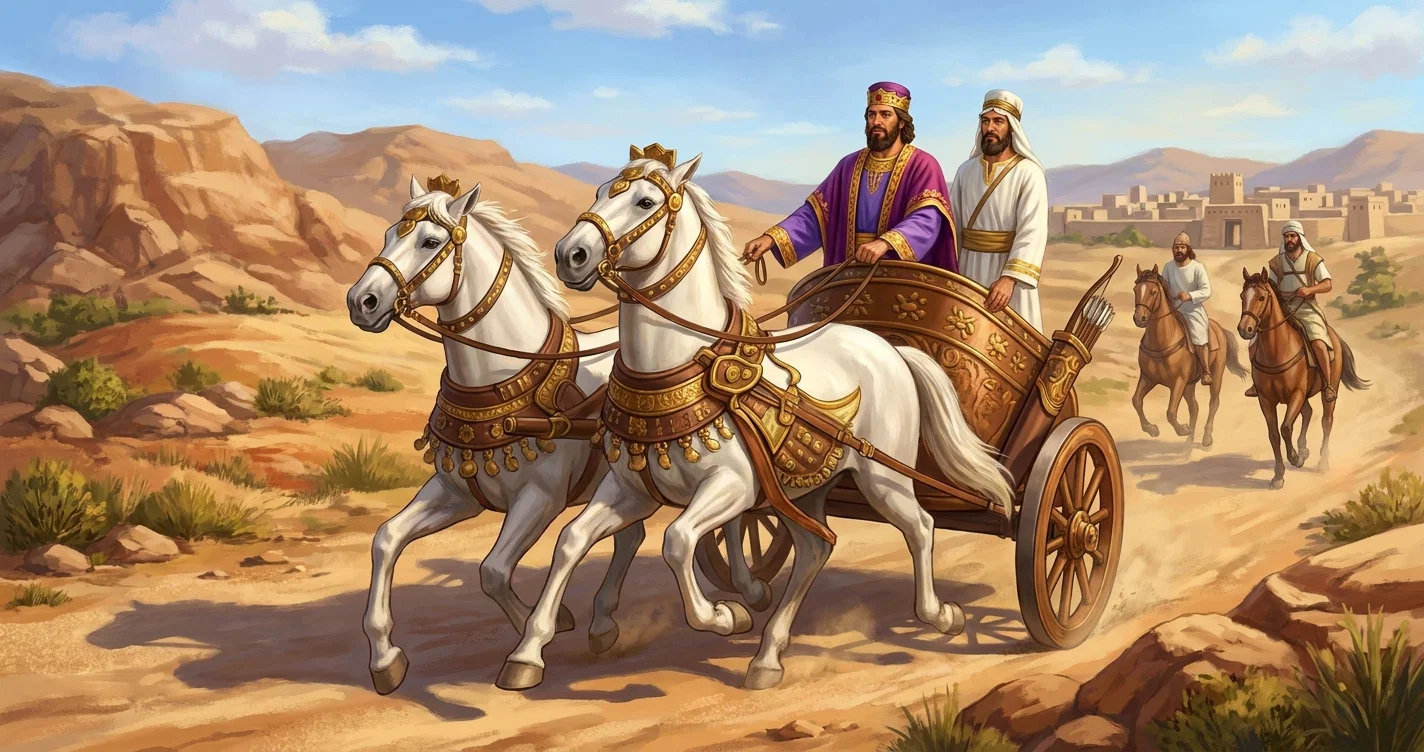
SOLOMON APPROACHING GIBEON

SOLOMON—1

In the reign of David and Solomon, Israel became strong among the nations, and had many opportunities to wield a mighty influence in behalf of truth and the right. The name of Jehovah was exalted and held in honor, and the purpose for which the Israelites had been established in the land of promise bade fair of meeting with fulfillment. Barriers were broken down, and seekers after truth from the lands of the heathen were not turned away unsatisfied. Conversions took place, and the church of God on earth was enlarged, and prospered.
Solomon was anointed and proclaimed king in the closing years of his father David, who abdicated in his favor. His early life was bright with promise, and it was God’s purpose that he should go on from strength to strength, from glory to glory, ever approaching nearer the similitude of the character of God, and thus inspiring His people to fulfill their sacred trust as the depositaries of divine truth.
David knew that God’s high purpose for Israel could be met only as rulers and people should seek with unceasing vigilance to attain to the standard placed before them. He knew that in order for his son Solomon to fulfill the trust with which God was pleased to honor him, the youthful ruler must be not merely a warrior, a statesman, and a sovereign, but a strong, good man, a teacher of righteousness, an example of fidelity.
With tender earnestness David entreated Solomon to be manly and noble, to show mercy and loving-kindness to his subjects, and in all his dealings with the nations of earth to honor and glorify the name of God and to make manifest the beauty of holiness. The many trying and remarkable experiences through which David had passed during his lifetime had taught him the value of the nobler virtues, and led him to declare in his dying charge to Solomon: “He that ruleth over men must be just, ruling in the fear of God. And he shall be as the light of the morning, when the sun riseth, even a morning without clouds; as the tender grass springing out of the earth by clear shining after rain.”
O, what an opportunity was Solomon’s! Should he follow the divinely inspired instruction of his father, his reign would be a reign of righteousness, like that described in the seventy-second psalm:
“Give the king Thy judgments, O God, And Thy righteousness unto the king’s son. He shall judge Thy people with righteousness, And Thy poor with judgment. . . . He shall come down like rain upon the mown grass: As showers that water the earth. In his days shall the righteous flourish; And abundance of peace so long as the moon endureth. He shall have dominion also from sea to sea, And from the river unto the ends of the earth. . . . The kings of Tarshish and of the isles shall bring presents: The kings of Sheba and Seba shall offer gifts. Yea, all kings shall fall down before him: All nations shall serve him. For he shall deliver the needy when he crieth; The poor also, and him that hath no helper. . . . Prayer also shall be made for him continually; And daily shall he be praised. . . . His name shall endure forever: His name shall be continued as long as the sun: And men shall be blessed in him: All nations shall call him blessed.”
“Blessed be the Lord God, the God of Israel, Who only doeth wondrous things. And blessed be His glorious name forever: And let the whole earth be filled with His glory; Amen, and Amen.”
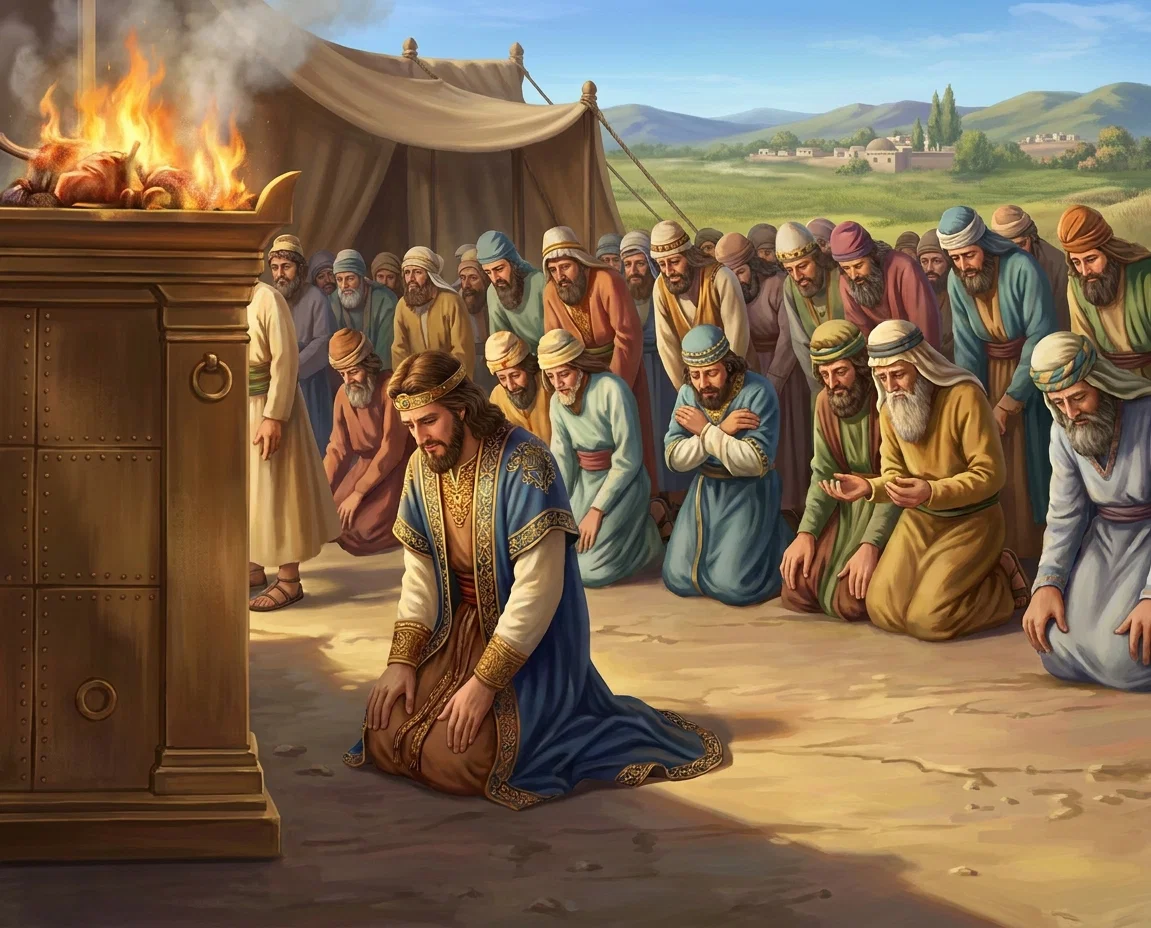
In his youth Solomon made David’s choice his own, and for many years he walked uprightly, his life marked with strict obedience to God’s commands. Early in his reign he went with his counselors of state to Gibeon, where the tabernacle that had been built in the wilderness still was, and there he united with his chosen advisers, “the captains of thousands and of hundreds,” “the judges,” and “every governor in all Israel, the chief of the fathers,” in offering sacrifices to God and in consecrating themselves fully to the Lord’s service. Comprehending something of the magnitude of the duties connected with the kingly office, Solomon knew that those bearing heavy burdensmust seek the Source of wisdom for guidance, if they would fulfill their responsibilities acceptably. This led him to encourage his counselors to unite with him heartily in making sure of their acceptance with God.
Above every earthly good, the king desired wisdom and understanding for the accomplishment of the work God had given him to do. He longed for quickness of mind, for largeness of heart, for tenderness of spirit. That night the Lord appeared to Solomon in a dream, and said, “Ask what I shall give thee.” In his answer the young and inexperienced ruler gave utterance to his feeling of helplessness and his desire for aid. “Thou hast showed unto Thy servant David my father great mercy,” he said, “according as he walked before Thee in truth, and in righteousness, and in uprightness of heart with Thee; and Thou hast kept for him this great kindness, that Thou hast given him a son to sit on his throne, as it is this day.”
“And now, O Lord my God, Thou hast made Thy servant king instead of David my father: and I am but a little child: I know not how to go out or come in. And Thy servant is in the midst of Thy people which Thou hast chosen, a great people, that cannot be numbered nor counted for multitude. Give therefore Thy servant an understanding heart to judge Thy people, that I may discern between good and bad: for who is able to judge this Thy so great a people?”
“And the speech pleased the Lord, that Solomon had asked this thing.”
“Because this was in thine heart,” God said to Solomon, “and thou hast not asked riches, wealth, or honor, nor the life of thine enemies, neither yet hast asked long life; but hast asked wisdom and knowledgefor thyself, that thou mayest judge My people,” “behold, I have done according to thy words: lo, I have given thee a wise and an understanding heart; so that there was none like thee before thee, neither after thee shall any arise like unto thee. And I have also given thee that which thou hast not asked, both riches, and honor,” “such as none of the kings have had that have been before thee, neither shall there any after thee have the like.”
SOLOMON IN PRAYER AT GIBEON

“I am but a little child. Give there
for Thy servant an understanding heart.”
SOLOMON IN PRAYER AT GIBEON “I am but a little child. Give there for Thy servant an understanding heart.”
“And if thou wilt walk in My ways, to keep My statutes and My commandments, as thy father David did walk, then I will lengthen thy days.”
God promised that as He had been with David, so He would be with Solomon. If the king would walk before the Lord in uprightness, if he would do what God had commanded him, his throne would be established, and his reign would be the means of exalting Israel as “a wise and understanding people,” the light of the surrounding nations.
The language used by Solomon while praying to God before the ancient altar at Gibeon, reveals his humility and his strong desire to honor God. He realized that without divine aid, he was as helpless as a little child to fulfill the responsibilities resting on him. He knew that he lacked discernment, and it was a sense of his great need that led him to seek God for wisdom. In his heart there was no selfish aspiration for a knowledge that would exalt him above others. He desired to discharge faithfully the duties devolving upon him, and he chose the gift that would be the means of causing his reign to bring glory to God. Solomon was never so rich or so wise or so truly great as when he confessed, “I am but a little child: I know not how to go out or come in.”
Those who to-day occupy positions of trust should seek to learn the lesson taught by Solomon’s prayer. The higher the position a man occupies, the greater the responsibility that he has to bear, the wider will be the influence that he exerts, and the greater his need of dependence on God. Ever should he remember that with the call to work, comes the call to walk circumspectly before his fellow men. He is to stand before God in the attitude of a learner. Position does not give holiness of character. It is by honoring Godand obeying His commands that a man is made truly great.
The God whom we serve is no respecter of persons. He who gave to Solomon the spirit of wise discernment, is willing to impart the same blessing to His children to-day. “If any of you lack wisdom,” His word declares, “let him ask of God, that giveth to all men liberally, and upbraideth not; and it shall be given him.” When a burden-bearer desires wisdom more than he desires wealth, power, or fame, he will not be disappointed. Such a one will learn from the great Teacher not only what to do, but how to do it in a way that will meet with the divine approval.
So long as he remains consecrated, the man whom God has endowed with discernment and ability will not manifest an eagerness for high position, neither will he seek to rule or control. Of necessity men must bear responsibilities; but instead of striving for the supremacy, he who is a true leader will pray for an understanding heart, to discern between good and evil.
The path of men who are placed as leaders is not an easy one. But they are to see in every difficulty a call to prayer. Never are they to fail of consulting the great Source of all wisdom. Strengthened and enlightened by the Master-worker, they will be enabled to stand firm against unholy influences, and to discern right from wrong, good from evil. They will approve that which God approves, and will strive earnestly against the introduction of wrong principles into His cause.
The wisdom that Solomon desired above riches, honor, or long life, God gave him. His petition for a quick mind, a large heart, and a tender spirit wasgranted. “God gave Solomon wisdom and understanding exceeding much, and largeness of heart, even as the sand that is on the seashore. And Solomon’s wisdom excelled the wisdom of all the children of the east country, and all the wisdom of Egypt. For he was wiser than all men; . . . and his fame was in all nations round about.”
“And all Israel . . . feared the king: for they saw that the wisdom of God was in him, to do judgment.” The hearts of the people were turned toward Solomon, as they had been toward David, and they obeyed him in all things. “Solomon . . . was strengthened in his kingdom, and the Lord his God was with him, and magnified him exceedingly.”
For many years Solomon’s life was marked with devotion to God, with uprightness and firm principle, and with strict obedience to God’s commands. He directed in every important enterprise, and managed wisely the business matters connected with the kingdom. His wealth and wisdom; the magnificent buildings and public works that he constructed during the early years of his reign; the energy, piety, justice, and magnanimity that he revealed in word and deed, won the loyalty of his subjects and the admiration and homage of the rulers of many lands.
The name of Jehovah was greatly honored during the first part of Solomon’s reign. The wisdom and righteousness revealed by the king bore witness to all nations of the excellency of the attributes of the God whom he served. For a time Israel was as the light of the world, showing forth the greatness of Jehovah. Not in the surpassing wisdom, the fabulous riches, thefar-reaching power and fame that were his, lay the real glory of Solomon’s early reign; but in the honor that he brought to the name of the God of Israel through a wise use of the gifts of Heaven.
As the years went by and Solomon’s fame increased, he sought to honor God by adding to his mental and spiritual strength, and by continuing to impart to others the blessings he received. None understood better than he that it was through the favor of Jehovah that he had come into possession of power and wisdom and understanding, and that these gifts were bestowed that he might give to the world a knowledge of the King of kings.
Solomon took an especial interest in natural history, but his researches were not confined to any one branch of learning. Through a diligent study of all created things, both animate and inanimate, he gained a clear conception of the Creator. In the forces of nature, in the mineral and the animal world, and in every tree and shrub and flower, he saw a revelation of God’s wisdom; and as he sought to learn more and more, his knowledge of God and his love for Him constantly increased.
Solomon’s divinely inspired wisdom found expression in songs of praise and in many proverbs. “He spake three thousand proverbs: and his songs were a thousand and five. And he spake of trees, from the cedar tree that is in Lebanon even unto the hyssop that springeth out of the wall: he spake also of beasts, and of fowl, and of creeping things, and of fishes.”
In the proverbs of Solomon are outlined principles of holy living and high endeavor; principles that are heaven-born and that lead to godliness; principlesthat should govern every act of life. It was the wide dissemination of these principles, and the recognition of God as the one to whom all praise and honor belong, that made Solomon’s early reign a time of moral uplift as well as of material prosperity.
“Happy is the man that findeth wisdom,” he wrote, “and the man that getteth understanding. For the merchandise of it is better than the merchandise of silver, and the gain thereof than fine gold. She is more precious than rubies: and all the things thou canst desire are not to be compared unto her. Length of days is in her right hand; and in her left hand riches and honor. Her ways are ways of pleasantness, and all her paths are peace. She is a tree of life to them that lay hold upon her: and happy is every one that retaineth her.”
“Wisdom is the principal thing; therefore get wisdom: and with all thy getting get understanding.” “The fear of the Lord is the beginning of wisdom.” “The fear of the Lord is to hate evil: pride, and arrogancy, and the evil way, and the froward mouth, do I hate.”
O that in later years Solomon had heeded these wonderful words of wisdom! O that he who had declared, “The lips of the wise disperse knowledge,” and who had himself taught the kings of the earth to render to the King of kings the praise they desired to give to an earthly ruler, had never with a “froward mouth,” in “pride and arrogancy,” taken to himself the glory due to God alone!
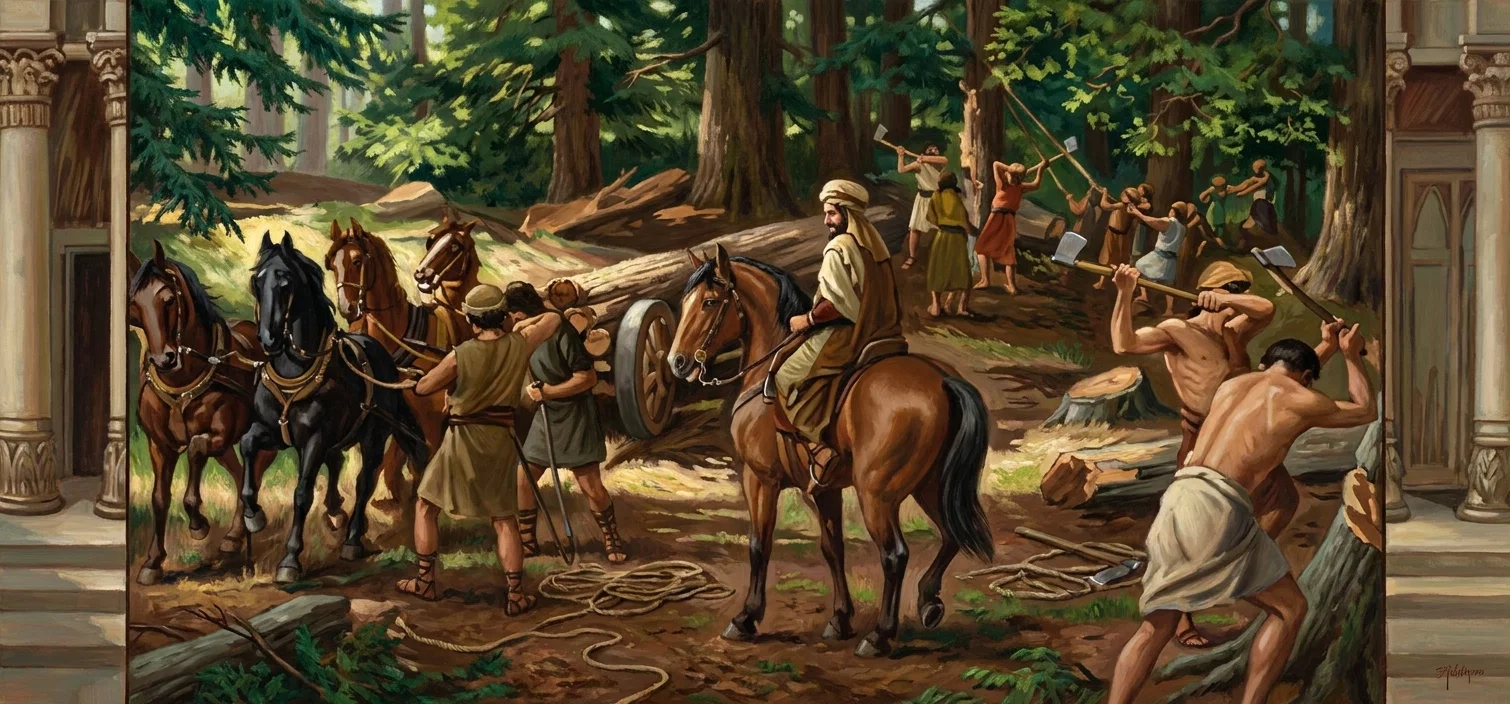
HEWING CEDARS FOR THE TEMPLE
Continue reading: THE TEMPLE AND ITS DEDICATION—2