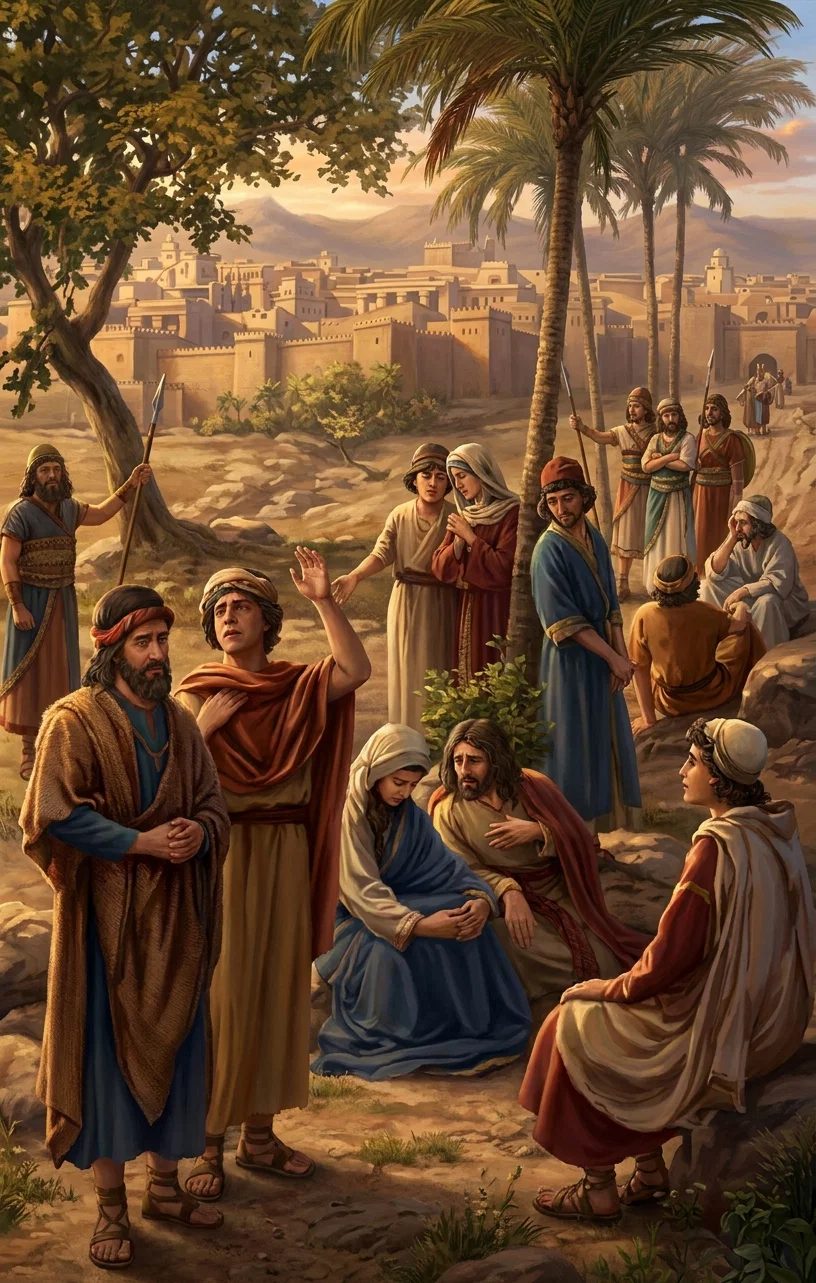
The closing years of the ill-fated kingdom of Israel were marked with violence and bloodshed such as had never been witnessed even in the worst periods of strife and unrest under the house of Ahab. For two centuries and more the rulers of the ten tribes had been sowing the wind; now they were reaping the whirlwind. King after king was assassinated to make way for others ambitious to rule. “They have set up kings,” the Lord declared of these godless usurpers, “but not by Me: they have made princes, and I knew it not.” Every principle of justice was set aside; those who should have stood before the nations of earth as the depositaries of divine grace, “dealt treacherously against the Lord” and with one another.
With the severest reproofs, God sought to arouse the impenitent nation to a realization of its imminent danger of utter destruction. Through Hosea and280Amos He sent the ten tribes message after message, urging full and complete repentance, and threatening disaster as the result of continued transgression. “Ye have plowed wickedness,” declared Hosea, “ye have reaped iniquity; ye have eaten the fruit of lies: because thou didst trust in thy way, in the multitude of thy mighty men. Therefore shall a tumult arise among thy people, and all thy fortresses shall be spoiled. . . . In a morning shall the king of Israel utterly be cut off.”
Of Ephraim the prophet testified: “Strangers have devoured his strength, and he knoweth it not: yea, gray hairs are here and there upon him, yet he knoweth not.” “Israel hath cast off the thing that is good.” “Broken in judgment,” unable to discern the disastrous outcome of their evil course, the ten tribes were soon to be “wanderers among the nations.”
Some of the leaders in Israel felt keenly their loss of prestige, and wished that this might be regained. But instead of turning away from those practices which had brought weakness to the kingdom, they continued in iniquity, flattering themselves that when occasion arose, they would attain to the political power they desired by allying themselves with the heathen. “When Ephraim saw his sickness, and Judah saw his wound, then went Ephraim to the Assyrian.” “Ephraim also is like a silly dove without heart: they call to Egypt, they go to Assyria.” “They do make a covenant with the Assyrians.”
Through the man of God that had appeared before the altar at Bethel, through Elijah and Elisha, through Amos and Hosea, the Lord had repeatedly set before the ten tribes the evils of disobedience. But notwithstanding reproof and entreaty, Israel had sunk lower and still lower in apostasy. “Israel slideth back as a backsliding heifer,” the Lord declared; “My people are bent to backsliding from Me.”
There were times when the judgments of Heaven fell very heavily on the rebellious people. “I hewed them by the prophets,” God declared; “I have slain them by the words of My mouth: and thy judgments are as the light that goeth forth. For I desired mercy, and not sacrifice; and the knowledge of God more than burnt offerings. But they like men have transgressed the covenant: there have they dealt treacherously against Me.”
“Hear the word of the Lord, ye children of Israel,” was the message that finally came to them: “Seeing thou hast forgotten the law of thy God, I will also forget thy children. As they were increased, so they sinned against Me: therefore will I change their glory into shame. . . . I will punish them for their ways, and reward them their doings.”
The iniquity in Israel during the last half century before the Assyrian captivity, was like that of the days of Noah, and of every other age when men have rejected God and have given themselves wholly to evil-doing. The exaltation of nature above the God of nature, the worship of the creature instead of the Creator, has always resulted in the grossest of evils. Thus when the people of Israel, in their worship of282Baal and Ashtoreth, paid supreme homage to the forces of nature, they severed their connection with all that is uplifting and ennobling, and fell an easy prey to temptation. With the defenses of the soul broken down, the misguided worshipers had no barrier against sin, and yielded themselves to the evil passions of the human heart.
Against the marked oppression, the flagrant injustice, the unwonted luxury and extravagance, the shameless feasting and drunkenness, the gross licentiousness and debauchery, of their age, the prophets lifted their voices; but in vain were their protests, in vain their denunciation of sin. “Him that rebuketh in the gate,” declared Amos, “they hate, . . . and they abhor him that speaketh uprightly.” “They afflict the just, they take a bribe, and they turn aside the poor in the gate from their right.”
Such were some of the results that had followed the setting up of the two calves of gold by Jeroboam. The first departure from established forms of worship had led to the introduction of grosser forms of idolatry, until finally nearly all the inhabitants of the land had given themselves over to the alluring practices of nature-worship. Forgetting their Maker, Israel “deeply corrupted themselves.”
The prophets continued to protest against these evils, and to plead for right-doing. “Sow to yourselves in righteousness, reap in mercy,” Hosea urged; “break up your fallow ground: for it is time to seek the Lord, till He come and rain righteousness upon you.” “Turn thou to thy God: keep mercy and judgment, and wait on thy God continually.” “O Israel,283return unto the Lord thy God; for thou hast fallen by thine iniquity: . . . say unto Him, Take away all iniquity, and receive us graciously.”
The transgressors were given many opportunities to repent. In their hour of deepest apostasy and greatest need, God’s message to them was one of forgiveness and hope. “O Israel,” He declared, “thou hast destroyed thyself; but in Me is thine help. I will be thy King: where is any other that may save thee?”
“Come, and let us return unto the Lord,” the prophet entreated; “for He hath torn, and He will heal us; He hath smitten, and He will bind us up. After two days will He revive us: in the third day He will raise us up, and we shall live in His sight. Then shall we know, if we follow on to know the Lord: His going forth is prepared as the morning; and He shall come unto us as the rain, as the latter and former rain unto the earth.”
To those who had lost sight of the plan of the ages for the deliverance of sinners ensnared by the power of Satan, the Lord offered restoration and peace. “I will heal their backsliding, I will love them freely,” He declared: “for Mine anger is turned away from him. I will be as the dew unto Israel: he shall grow as the lily, and cast forth his roots as Lebanon. His branches shall spread, and his beauty shall be as the olive tree, and his smell as Lebanon. They that dwell under His shadow shall return; they shall revive as the corn, and grow as the vine: the scent thereof shall be as the wine of Lebanon. Ephraim shall say, What have I to do any more with284idols? I have heard him, and observed him: I am like a green fir tree. From Me is thy fruit found.
“Who is wise, and he shall understand these things?
Prudent, and he shall know them?
For the ways of the Lord are right,
And the just shall walk in them:
But the transgressors shall fall therein.”
The benefits of seeking God were strongly urged. “Seek ye Me,” the Lord invited, “and ye shall live: but seek not Bethel, nor enter into Gilgal, and pass not to Beersheba: for Gilgal shall surely go into captivity, and Bethel shall come to naught.”
“Seek good, and not evil, that ye may live: and so the Lord, the God of hosts, shall be with you, as ye have spoken. Hate the evil, and love the good, and establish judgment in the gate: it may be that the Lord God of hosts will be gracious unto the remnant of Joseph.”
By far the greater number of those who heard these invitations, refused to profit by them. So contrary to the evil desires of the impenitent were the words of God’s messengers, that the idolatrous priest at Bethel sent to the ruler in Israel, saying, “Amos hath conspired against thee in the midst of the house of Israel: the land is not able to bear all his words.”
Through Hosea the Lord declared: “When I would have healed Israel, then the iniquity of Ephraim was discovered, and the wickedness of Samaria.” “The pride of Israel testifieth to his face: and they do not return to the Lord their God, nor seek Him for all this.”
From generation to generation, the Lord had borne with His wayward children; and even now, in the face of defiant rebellion, He still longed to reveal Himself to them as willing to save. “O Ephraim,” He cried, “what shall I do unto thee? O Judah, what shall I do unto thee? for your goodness is as a morning cloud, and as the early dew it goeth away.”
The evils that had overspread the land, had become incurable; and upon Israel was pronounced the dread sentence: “Ephraim is joined to idols: let him alone.” “The days of visitation are come, the days of recompense are come; Israel shall know it.”
The ten tribes of Israel were now to reap the fruitage of the apostasy that had taken form with the setting up of the strange altars at Bethel and at Dan. God’s message to them was: “Thy calf, O Samaria, hath cast thee off; Mine anger is kindled against them: how long will it be ere they attain to innocency? For from Israel was it also: the workman made it; therefore it is not God: but the calf of Samaria shall be broken in pieces.” “The inhabitants of Samaria shall fear because of the calves of Beth-aven: for the people thereof shall mourn over it, and the priests thereof that rejoiced on it. . . . It shall be also carried unto Assyria for a present to King Jareb” (Sennacherib).
“Behold, the eyes of the Lord God are upon the sinful kingdom, and I will destroy it from off the face of the earth; saving that I will not utterly destroy the house of Jacob, saith the Lord. For, lo, I will command, and I will sift the house of Israel among all nations, like as corn is sifted in a sieve, yet286shall not the least grain fall upon the earth. All the sinners of My people shall die by the sword, which say, The evil shall not overtake nor prevent us.”
“The houses of ivory shall perish, and the great houses shall have an end, saith the Lord.” “The Lord God of hosts is He that toucheth the land, and it shall melt, and all that dwell therein shall mourn.” “Thy sons and thy daughters shall fall by the sword, and thy land shall be divided by line; and thou shalt die in a polluted land: and Israel shall surely go into captivity forth of his land.” “Because I will do this unto thee, prepare to meet thy God, O Israel.”
For a season, these predicted judgments were stayed, and during the long reign of Jeroboam II, the armies of Israel gained signal victories; but this time of apparent prosperity wrought no change in the hearts of the impenitent, and it was finally decreed, “Jeroboam shall die by the sword, and Israel shall surely be led away captive out of their own land.”
The boldness of this utterance was lost on king and people, so far had they gone in impenitence. Amaziah, a leader among the idolatrous priests at Bethel, stirred by the plain words spoken by the prophet against the nation and their king, said to Amos: “O thou seer, go, flee thee away into the land of Judah, and there eat bread, and prophesy there: but prophesy not again any more at Bethel: for it is the king’s chapel, and it is the king’s court.”
To this the prophet firmly responded: “Thus saith the Lord, . . . Israel shall surely go into captivity.”
The words spoken against the apostate tribes were literally fulfilled; yet the destruction of the kingdom came gradually. In judgment the Lord remembered mercy, and at first, when “Pul the king of Assyria came against the land,” Menahem, then king of Israel, was not taken captive, but was permitted to remain on the throne as a vassal of the Assyrian realm. “Menahem gave Pul a thousand talents of silver, that his hand might be with him to confirm the kingdom in his hand. And Menahem exacted the money of Israel, even of all the mighty men of wealth, of each man fifty shekels of silver, to give to the king of Assyria.” The Assyrians, having humbled the ten tribes, returned for a season to their own land.
Menahem, far from repenting of the evil that had wrought ruin in his kingdom, continued in “the sins of Jeroboam the son of Nebat, who made Israel to sin.” Pekahiah and Pekah, his successors, also “did that which was evil in the sight of the Lord.” “In the days of Pekah,” who reigned twenty years, Tiglath-pileser, king of Assyria, invaded Israel, and carried away with him a multitude of captives from among the tribes living in Galilee and east of the Jordan. “The Reubenites, and the Gadites, and the half tribe of Manasseh,” with others of the inhabitants of “Gilead, and Galilee, all the land of Naphtali,” were scattered among the heathen, in lands far removed from Palestine.
From this terrible blow the northern kingdom never recovered. The feeble remnant continued the forms of government, though no longer possessed of power. Only one more ruler, Hoshea, was to follow288Pekah. Soon the kingdom was to be swept away forever. But in that time of sorrow and distress God still remembered mercy, and gave the people another opportunity to turn from idolatry. In the third year of Hoshea’s reign, good King Hezekiah began to rule in Judah, and as speedily as possible instituted important reforms in the temple service at Jerusalem. A Passover celebration was arranged for, and to this feast were invited not only the tribes of Judah and Benjamin, over which Hezekiah had been anointed king, but all the northern tribes as well. A proclamation was sounded “throughout all Israel, from Beersheba even to Dan, that they should come to keep the Passover unto the Lord God of Israel at Jerusalem: for they had not done it of a long time in such sort as it was written.
“So the posts went with the letters from the king and his princes throughout all Israel and Judah,” with the pressing invitation, “Ye children of Israel, turn again unto the Lord God of Abraham, Isaac, and Israel, and He will return to the remnant of you, that are escaped out of the hand of the kings of Assyria. . . . Be ye not stiff-necked, as your fathers were, but yield yourselves unto the Lord, and enter into His sanctuary, which He hath sanctified forever: and serve the Lord your God, that the fierceness of His wrath may turn away from you. For if ye turn again unto the Lord, your brethren and your children shall find compassion before them that lead them captive, so that they shall come again into this land: for the Lord your God is gracious and merciful, and will not turn away His face from you, if ye return unto Him.”
CAPTIVES IN ASSYRIA
“Through these, ‘the sons of the living God,’ He would bring multitudes to a knowledge of the attributes of His character and the beneficence of His law.”
“From city to city through the country of Ephraim and Manasseh even unto Zebulun,” the couriers sent out by Hezekiah carried the message. Israel should have recognized in this invitation an appeal to repent and turn to God. But the remnant of the ten tribes still dwelling within the territory of the once-flourishing northern kingdom, treated the royal messengers from Judah with indifference, and even with contempt. “They laughed them to scorn, and mocked them.” There were a few, however, who gladly responded. “Divers of Asher and Manasseh and of Zebulun humbled themselves, and came to Jerusalem, . . . to keep the feast of unleavened bread.”
About two years later, Samaria was invested by the hosts of Assyria under Shalmaneser; and in the siege that followed, multitudes perished miserably of hunger and disease as well as by the sword. The city and nation fell, and the broken remnant of the ten tribes were carried away captive, and scattered in the provinces of the Assyrian realm.
The destruction that befell the northern kingdom was a direct judgment from Heaven. The Assyrians were merely the instruments that God used to carry out His purpose. Through Isaiah, who began to prophesy shortly before the fall of Samaria, the Lord referred to the Assyrian hosts as “the rod of Mine anger.” “The staff in their hand,” He said, “is Mine indignation.”
Grievously had the children of Israel “sinned against the Lord their God, . . . and wrought wicked things.” “They would not hear, but . . . rejected His statutes, and His covenant that He made with292their fathers, and His testimonies which He testified against them.” It was because they had “left all the commandments of the Lord their God, and made them molten images, even two calves, and made a grove, and worshiped all the host of heaven, and served Baal,” and refused steadfastly to repent, that the Lord “afflicted them, and delivered them into the hand of spoilers, until He had cast them out of His sight,” in harmony with the plain warnings He had sent them “by all His servants the prophets.”
“So was Israel carried away out of their own land to Assyria,” “because they obeyed not the voice of the Lord their God, but transgressed His covenant, and all that Moses the servant of the Lord commanded.”
In the terrible judgments brought upon the ten tribes, the Lord had a wise and merciful purpose. That which He could no longer do through them in the land of their fathers, He would seek to accomplish by scattering them among the heathen. His plan for the salvation of all who should choose to avail themselves of pardon through the Saviour of the human race, must yet be fulfilled; and in the afflictions brought upon Israel, He was preparing the way for His glory to be revealed to the nations of earth. Not all who were carried captive were impenitent. Among them were some who had remained true to God, and others who had humbled themselves before Him. Through these, “the sons of the living God,” He would bring multitudes in the Assyrian realm to a knowledge of the attributes of His character and the beneficence of His law.
“TAKE HEED, LEST YE FORGET”
“DESTROYED FOR LACK OF KNOWLEDGE”—24
God’s favor toward Israel had always been conditional on their obedience. At the foot of Sinai, they had entered into covenant relationship with Him as His “peculiar treasure . . . above all people.” Solemnly they had promised to follow in the path of obedience. “All that the Lord hath spoken we will do,” they had said. And when, a few days afterward, God’s law was spoken from Sinai, and additional instruction in the form of statutes and judgments was communicated through Moses, the Israelites with one voice had again promised, “All the words which the Lord hath said will we do.” At the ratification of the covenant, the people had once more united in declaring, “All that the Lord hath said will we do, and be obedient.” God had chosen Israel as His people, and they had chosen Him as their King.
Near the close of the wilderness wandering, the conditions of the covenant had been repeated. At294Baal-peor, on the very borders of the promised land, where many fell a prey to subtle temptation, those who remained faithful renewed their vows of allegiance. Through Moses they were warned against the temptations that would assail them in the future; and they were earnestly exhorted to remain separate from the surrounding nations, and to worship God alone.
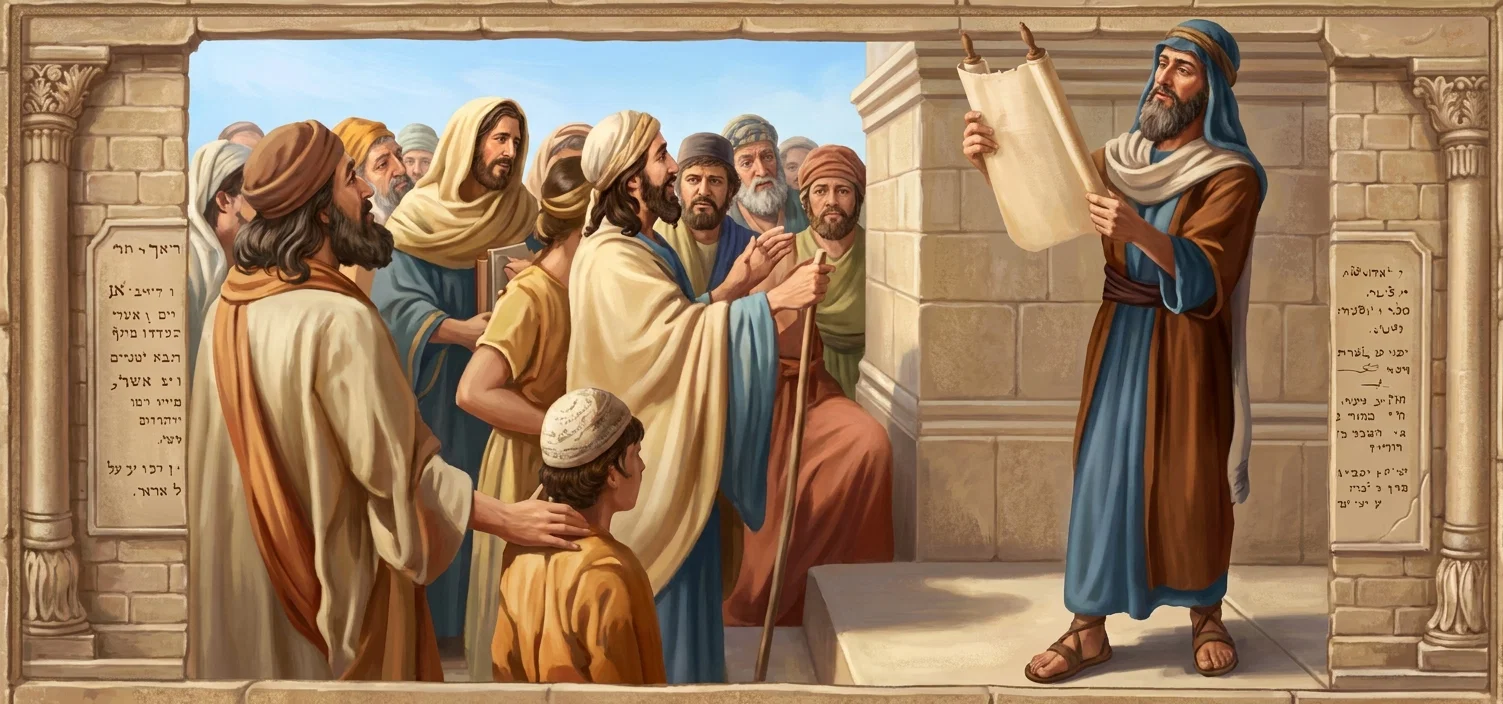
“Now therefore hearken,” Moses had instructed Israel, “unto the statutes and unto the judgments, which I teach you, for to do them, that ye may live, and go in and possess the land which the Lord God of your fathers giveth you. Ye shall not add unto the word which I command you, neither shall ye diminish aught from it, that ye may keep the commandments of the Lord your God which I command you. . . . Keep therefore and do them; for this is your wisdom and your understanding in the sight of the nations, which shall hear all these statutes, and say, Surely this great nation is a wise and understanding people.”
The Israelites had been specially charged not to lose sight of the commandments of God, in obedience to which they would find strength and blessing. “Take heed to thyself, and keep thy soul diligently,” had been the word of the Lord to them through Moses, “lest thou forget the things which thine eyes have seen, and lest they depart from thy heart all the days of thy life: but teach them thy sons, and thy sons’ sons.” The awe-inspiring scenes connected with the giving of the law at Sinai were never to be forgotten. Plain and decided were the warnings that had been given Israel against the idolatrous customs prevailing295among the neighboring nations. “Take ye . . . good heed unto yourselves,” was the counsel given; “lest ye corrupt yourselves, and make you a graven image, the similitude of any figure,” “and lest thou lift up thine eyes unto heaven, and when thou seest the sun, and the moon, and the stars, even all the host of heaven, shouldest be driven to worship them, and serve them, which the Lord thy God hath divided unto all nations under the whole heaven.” “Take heed unto yourselves, lest ye forget the covenant of the Lord your God, which He made with you, and make you a graven image, or the likeness of anything, which the Lord thy God hath forbidden thee.”
Moses traced the evils that would result from a departure from the statutes of Jehovah. Calling heaven and earth to witness, he declared that if, after having dwelt long in the land of promise, the people should introduce corrupt forms of worship, and bow down to graven images, and should refuse to return to the worship of the true God, the anger of the Lord would be aroused, and they would be carried away captive and scattered among the heathen. “Ye shall soon utterly perish from off the land whereunto ye go over Jordan to possess it,” he warned them; “ye shall not prolong your days upon it, but shall utterly be destroyed. And the Lord shall scatter you among the nations, and ye shall be left few in number among the heathen, whither the Lord shall lead you. And there ye shall serve gods, the work of men’s hands, wood and stone, which neither see, nor hear, nor eat, nor smell.”
This prophecy, fulfilled in part in the time of the judges, met a more complete and literal fulfillment in the captivity of Israel in Assyria, and of Judah in Babylon.
The apostasy of Israel had developed gradually. From generation to generation, Satan had made repeated attempts to cause the chosen nation to forget “the commandments, the statutes, and the judgments” that they had promised to keep forever. He knew that if he could only lead Israel to forget God, and to “walk after other gods, and serve them, and worship them,” they would “surely perish.”
The enemy of God’s church upon the earth had not, however, taken fully into account the compassionate nature of Him who “will by no means clear the guilty,” yet whose glory it is to be “merciful and gracious, long-suffering, and abundant in goodness and truth, keeping mercy for thousands, forgiving iniquity and transgression and sin.” Despite the efforts of Satan to thwart God’s purpose for Israel, nevertheless even in some of the darkest hours of their history, when it seemed as if the forces of evil were about to gain the victory, the Lord graciously revealed Himself. He spread before Israel the things that were for the welfare of the nation. “I have written to him the great things of My law,” He declared through Hosea, “but they were counted as a strange thing.” “I taught Ephraim also to go, taking them by their arms; but they knew not that I healed them.” Tenderly had the Lord dealt with them, instructing them by His prophets line upon line, precept upon precept.
Had Israel heeded the messages of the prophets, they would have been spared the humiliation that followed. It was because they had persisted in turning aside from His law, that God was compelled to let them go into captivity. “My people are destroyed for lack of knowledge,” was His message to them through Hosea. “Because thou hast rejected knowledge, I will also reject thee: . . . seeing thou hast forgotten the law of thy God.”
In every age, transgression of God’s law has been followed by the same result. In the days of Noah, when every principle of right-doing was violated, and iniquity became so deep and widespread that God could no longer bear with it, the decree went forth, “I will destroy man whom I have created from the face of the earth.” In Abraham’s day the people of Sodom openly defied God and His law; and there followed the same wickedness, the same corruption, the same unbridled indulgence, that had marked the antediluvian world. The inhabitants of Sodom passed the limits of divine forbearance, and there was kindled against them the fire of God’s vengeance.
The time preceding the captivity of the ten tribes of Israel was one of similar disobedience and of similar wickedness. God’s law was counted as a thing of naught, and this opened the floodgates of iniquity upon Israel. “The Lord hath a controversy with the inhabitants of the land,” Hosea declared, “because there is no truth, nor mercy, nor knowledge of God in the land. By swearing, and lying, and killing, and stealing, and committing adultery, they break out, and blood toucheth blood.”
The prophecies of judgment delivered by Amos and Hosea were accompanied by predictions of future glory. To the ten tribes, long rebellious and impenitent, was given no promise of complete restoration to their former power in Palestine. Until the end of time, they were to be “wanderers among the nations.” But through Hosea was given a prophecy that set before them the privilege of having a part in the final restoration that is to be made to the people of God at the close of earth’s history, when Christ shall appear as King of kings and Lord of lords. “Many days,” the prophet declared, the ten tribes were to abide “without a king, and without a prince, and without a sacrifice, and without an image, and without an ephod, and without teraphim.” “Afterward,” the prophet continued, “shall the children of Israel return, and seek the Lord their God, and David their king; and shall fear the Lord and His goodness in the latter days.”
In symbolic language Hosea set before the ten tribes God’s plan of restoring to every penitent soul who would unite with His church on earth, the blessings granted Israel in the days of their loyalty to Him in the promised land. Referring to Israel as one to whom He longed to show mercy, the Lord declared: “I will allure her, and bring her into the wilderness, and speak comfortably unto her. And I will give her her vineyards from thence, and the valley of Achor for a door of hope: and she shall sing there, as in the days of her youth, and as in the day when she came up out of the land of Egypt. And it shall be at that day, saith the Lord, that thou shalt call Me Ishī [My husband]; and shalt call Me no299more Baali [My lord]. For I will take away the names of Baalim out of her mouth, and they shall no more be remembered by their name.”
In the last days of this earth’s history, God’s covenant with His commandment-keeping people is to be renewed. “In that day will I make a covenant for them with the beasts of the field, and with the fowls of heaven, and with the creeping things of the ground: and I will break the bow and the sword and the battle out of the earth, and will make them to lie down safely. And I will betroth thee unto Me forever; yea, I will betroth thee unto Me in righteousness, and in judgment, and in loving-kindness, and in mercies. I will even betroth thee unto Me in faithfulness: and thou shalt know the Lord.
“And it shall come to pass in that day, I will hear, saith the Lord, I will hear the heavens, and they shall hear the earth; and the earth shall hear the corn, and the wine, and the oil; and they shall hear Jezreel. And I will sow her unto Me in the earth; and I will have mercy upon her that had not obtained mercy; and I will say to them which were not My people, Thou art My people; and they shall say, Thou art my God.”
“In that day” “the remnant of Israel, and such as are escaped of the house of Jacob, . . . shall stay upon the Lord, the Holy One of Israel, in truth.” From “every nation, and kindred, and tongue, and people” there will be some who will gladly respond to the message, “Fear God, and give glory to Him; for the hour of His judgment is come.” They will turn from every idol that binds them to earth, and will300“worship Him that made heaven, and earth, and the sea, and the fountains of waters.” They will free themselves from every entanglement, and will stand before the world as monuments of God’s mercy. Obedient to the divine requirements, they will be recognized by angels and by men as those that have kept “the commandments of God, and the faith of Jesus.”
“Behold, the days come, saith the Lord, that the plowman shall overtake the reaper, and the treader of grapes him that soweth seed; and the mountains shall drop sweet wine, and all the hills shall melt. And I will bring again the captivity of My people of Israel, and they shall build the waste cities, and inhabit them; and they shall plant vineyards, and drink the wine thereof; they shall also make gardens, and eat the fruit of them. And I will plant them upon their land, and they shall no more be pulled up out of their land which I have given them, saith the Lord thy God.”
A PREACHER
OF RIGHTEOUSNESS
“Shall the prey be taken from the mighty, or the lawful captive delivered?” “Thus saith the Lord, Even the captives of the mighty shall be taken away, and the prey of the terrible shall be delivered.” “They shall be greatly ashamed, that trust in graven images, that say to the molten images, Ye are our gods.” Isa. 49:24, 25; 42:17.