The accession of Ahaz to the throne brought Isaiah and his associates face to face with conditions more appalling than any that had hitherto existed in the realm of Judah. Many who had formerly withstood the seductive influence of idolatrous practices, were now being persuaded to take part in the worship of heathen deities. Princes in Israel were proving untrue to their trust; false prophets were arising with messages to lead astray; even some of the priests were teaching for hire. Yet the leaders in apostasy still kept up the forms of divine worship, and claimed to be numbered among the people of God.
The prophet Micah, who bore his testimony during those troublous times, declared that sinners in Zion, while claiming to “lean upon the Lord,” and blasphemously boasting, “Is not the Lord among us? none evil can come upon us,” continued to “build up Zion with blood, and Jerusalem with iniquity.” Against these evils the prophet Isaiah lifted his voice323in stern rebuke: “Hear the word of the Lord, ye rulers of Sodom; give ear unto the law of our God, ye people of Gomorrah. To what purpose is the multitude of your sacrifices unto Me? saith the Lord. . . . When ye come to appear before Me, who hath required this at your hand, to tread My courts?”
Inspiration declares, “The sacrifice of the wicked is abomination: how much more, when he bringeth it with a wicked mind?” The God of heaven is “of purer eyes than to behold evil,” and cannot “look on iniquity.” It is not because He is unwilling to forgive, that He turns from the transgressor; it is because the sinner refuses to make use of the abundant provisions of grace, that God is unable to deliver from sin. “The Lord’s hand is not shortened, that it cannot save; neither His ear heavy, that it cannot hear: but your iniquities have separated between you and your God, and your sins have hid His face from you, that He will not hear.”
Solomon had written, “Woe to thee, O land, when thy king is a child!” Thus it was with the land of Judah. Through continued transgression, her rulers had become as children. Isaiah called the attention of the people to the weakness of their position among the nations of earth; and he showed that this was the result of wickedness in high places. “Behold,” he said, “the Lord, the Lord of hosts, doth take away from Jerusalem and from Judah the stay and the staff, the whole stay of bread, and the whole stay of water, the mighty man, and the man of war, the judge, and the prophet, and the prudent, and the324ancient, the captain of fifty, and the honorable man, and the counselor, and the cunning artificer, and the eloquent orator. And I will give children to be their princes, and babes shall rule over them.” “For Jerusalem is ruined, and Judah is fallen: because their tongue and their doings are against the Lord.”
“They which lead thee,” the prophet continued, “cause thee to err, and destroy the way of thy paths.” During the reign of Ahaz this was literally true; for of him it is written: “He walked in the ways of the kings of Israel, and made also molten images for Baalim. Moreover he burnt incense in the valley of the son of Hinnom;” “yea, and made his son to pass through the fire, according to the abominations of the heathen, whom the Lord cast out from before the children of Israel.”
This was indeed a time of great peril for the chosen nation. Only a few short years, and the ten tribes of the kingdom of Israel were to be scattered among the nations of heathendom. And in the kingdom of Judah also the outlook was dark. The forces for good were rapidly diminishing, the forces for evil multiplying. The prophet Micah, viewing the situation, was constrained to exclaim: “The good man is perished out of the earth: and there is none upright among men.” “The best of them is as a brier: the most upright is sharper than a thorn hedge.” “Except the Lord of hosts had left unto us a very small remnant,” declared Isaiah, “we should have been as Sodom, and . . . Gomorrah.”
In every age, for the sake of those who have remained true, as well as because of His infinite love325for the erring, God has borne long with the rebellious, and has urged them to forsake their course of evil, and return to Him. “Precept upon precept; line upon line, . . . here a little, and there a little,” through men of His appointment, He has taught transgressors the way of righteousness.
And thus it was during the reign of Ahaz. Invitation upon invitation was sent to erring Israel to return to their allegiance to Jehovah. Tender were the pleadings of the prophets; and as they stood before the people, earnestly exhorting to repentance and reformation, their words bore fruit to the glory of God.
Through Micah came the wonderful appeal: “Hear ye now what the Lord saith; Arise, contend thou before the mountains, and let the hills hear thy voice. Hear ye, O mountains, the Lord’s controversy, and ye strong foundations of the earth: for the Lord hath a controversy with His people, and He will plead with Israel.”
“O My people, what have I done unto thee? and wherein have I wearied thee? testify against Me. For I brought thee up out of the land of Egypt, and redeemed thee out of the house of servants; and I sent before thee Moses, Aaron, and Miriam.
“O My people, remember now what Balak king of Moab consulted, and what Balaam the son of Beor answered him from Shittim unto Gilgal; that ye may know the righteousness of the Lord.”
The God whom we serve is long-suffering; “His compassions fail not.” Throughout the period of probationary time, His Spirit is entreating men to326accept the gift of life. “As I live, saith the Lord God, I have no pleasure in the death of the wicked; but that the wicked turn from his way and live: turn ye, turn ye from your evil ways; for why will ye die?” It is Satan’s special device to lead man into sin, and then leave him there, helpless and hopeless, fearing to seek for pardon. But God invites, “Let him take hold of My strength, that he may make peace with Me; and he shall make peace with Me.” In Christ every provision has been made, every encouragement offered.
In the days of apostasy in Judah and Israel, many were inquiring: “Wherewith shall I come before the Lord, and bow myself before the high God? shall I come before Him with burnt offerings, with calves of a year old? will the Lord be pleased with thousands of rams, or with ten thousands of rivers of oil?” The answer is plain and positive: “He hath showed thee, O man, what is good; and what doth the Lord require of thee, but to do justly, and to love mercy, and to walk humbly with thy God?”
In urging the value of practical godliness, the prophet was only repeating the counsel given Israel centuries before. Through Moses, as they were about to enter the promised land, the word of the Lord had been: “And now, Israel, what doth the Lord thy God require of thee, but to fear the Lord thy God, to walk in all His ways, and to love Him, and to serve the Lord thy God with all thy heart and with all thy soul, to keep the commandments of the Lord, and His statutes, which I command thee this day for thy good?” From age to age these counsels were repeated by327the servants of Jehovah to those who were in danger of falling into habits of formalism, and of forgetting to show mercy. When Christ Himself, during His earthly ministry, was approached by a lawyer with the question, “Master, which is the great commandment in the law?” Jesus said to him: “Thou shalt love the Lord thy God with all thy heart, and with all thy soul, and with all thy mind. This is the first and great commandment. And the second is like unto it, Thou shalt love thy neighbor as thyself. On these two commandments hang all the law and the prophets.”
These plain utterances of the prophets and of the Master Himself, should be received by us as the voice of God to every soul. We should lose no opportunity of performing deeds of mercy, of tender forethought and Christian courtesy, for the burdened and the oppressed. If we can do no more, we may speak words of courage and hope to those who are unacquainted with God, and who can be approached most easily by the avenue of sympathy and love.
Rich and abundant are the promises made to those who are watchful of opportunities to bring joy and blessing into the lives of others. “If thou draw out thy soul to the hungry, and satisfy the afflicted soul; then shall thy light rise in obscurity, and thy darkness be as the noonday: and the Lord shall guide thee continually, and satisfy thy soul in drought, and make fat thy bones: and thou shalt be like a watered garden, and like a spring of water, whose waters fail not.”
The idolatrous course of Ahaz, in the face of the earnest appeals of the prophets, could have but one328result. “The wrath of the Lord was upon Judah and Jerusalem, and He . . . delivered them to trouble, to astonishment, and to hissing.” The kingdom suffered a rapid decline, and its very existence was soon imperiled by invading armies. “Rezin king of Syria and Pekah son of Remaliah king of Israel came up to Jerusalem to war: and they besieged Ahaz.”
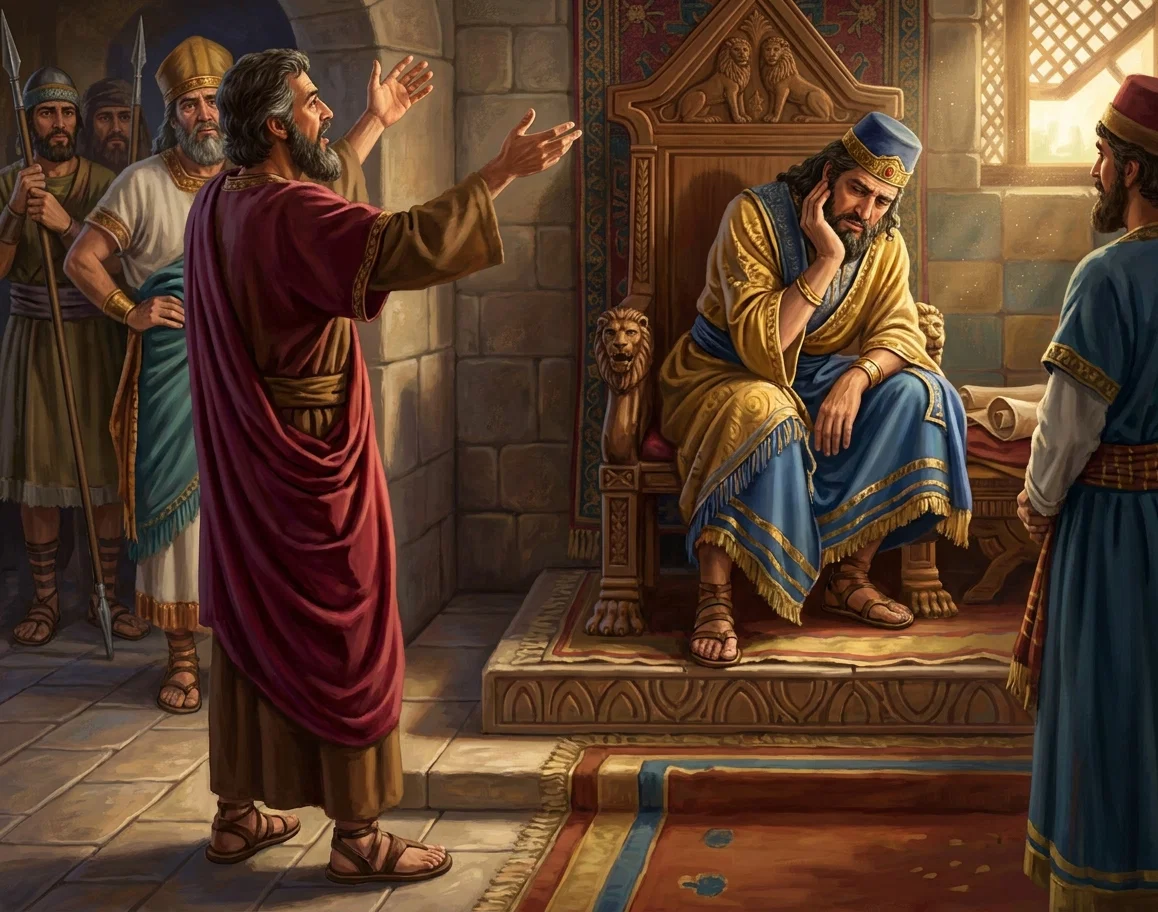
ISAIAH SPEAKING WORDS OF COMFORT TO THE KING
Had Ahaz and the chief men of his realm been true servants of the Most High, they would have had no fear of so unnatural an alliance as had been formed against them. But repeated transgression had shorn them of strength. Stricken with a nameless dread of the retributive judgments of an offended God, the329heart of the king “was moved, and the heart of his people, as the trees of the wood are moved with the wind.” In this crisis, the word of the Lord came to Isaiah, bidding him meet the trembling king, and say: “Take heed, and be quiet; fear not, neither be faint-hearted. . . . Because Syria, Ephraim, and the son of Remaliah, have taken evil counsel against thee, saying, Let us go up against Judah, and vex it, and let us make a breach therein for us, and set a king in the midst of it, . . . thus saith the Lord God, It shall not stand, neither shall it come to pass.” The prophet declared that the kingdom of Israel, and Syria as well, would soon come to an end. “If ye will not believe,” he concluded, “surely ye shall not be established.”
Well would it have been for the kingdom of Judah had Ahaz received this message as from heaven. But choosing to lean on the arm of flesh, he sought help from the heathen. In desperation he sent word to Tiglath-pileser, king of Assyria: “I am thy servant and thy son: come up, and save me out of the hand of the king of Syria, and out of the hand of the king of Israel, which rise up against me.” The request was accompanied by a rich present from the king’s treasure and from the temple storehouse.
The help asked for was sent, and King Ahaz was given temporary relief, but at what a cost to Judah! The tribute offered aroused the cupidity of Assyria, and that treacherous nation soon threatened to overflow and spoil Judah. Ahaz and his unhappy subjects were now harassed by the fear of falling completely into the hands of the cruel Assyrians.
“The Lord brought Judah low” because of continued transgression. In this time of chastisement, Ahaz, instead of repenting, trespassed “yet more against the Lord: . . . for he sacrificed unto the gods of Damascus.” “Because the gods of the kings of Syria help them,” he said, “therefore will I sacrifice to them, that they may help me.”
As the apostate king neared the end of his reign, he caused the doors of the temple to be closed. The sacred services were interrupted. No longer were the candlesticks kept burning before the altar. No longer were offerings made for the sins of the people. No longer did sweet incense ascend on high at the time of the morning and the evening sacrifice. Deserting the courts of the house of God, and locking fast its doors, the inhabitants of the godless city boldly set up altars for the worship of heathen deities on the street corners throughout Jerusalem. Heathenism had seemingly triumphed; the powers of darkness had well-nigh prevailed.
But in Judah there dwelt some who maintained their allegiance to Jehovah, steadfastly refusing to be led into idolatry. It was to these that Isaiah and Micah and their associates looked in hope as they surveyed the ruin wrought during the last years of Ahaz. Their sanctuary was closed, but the faithful ones were assured: “God is with us.” “Sanctify the Lord of hosts Himself; and let Him be your fear, and let Him be your dread. And He shall be for a sanctuary.”
“AN ATONEMENT FOR ALL ISRAEL”
HEZEKIAH—28
In sharp contrast with the reckless rule of Ahaz was the reformation wrought during the prosperous reign of his son. Hezekiah came to the throne determined to do all in his power to save Judah from the fate that was overtaking the northern kingdom. The messages of the prophets offered no encouragement to half-way measures. Only by most decided reformation could the threatened judgments be averted.
In the crisis, Hezekiah proved to be a man of opportunity. No sooner had he ascended the throne than he began to plan and to execute. He first turned his attention to the restoration of the temple services, so long neglected; and in this work he earnestly solicited the coöperation of a band of priests and Levites who had remained true to their sacred calling. Confident of their loyal support, he spoke with them freely concerning his desire to institute immediate and far-reaching reforms. “Our fathers have trespassed,” he confessed, “and done that which was332evil in the eyes of the Lord our God, and have forsaken Him, and have turned away their faces from the habitation of the Lord.” “Now it is in mine heart to make a covenant with the Lord God of Israel, that His fierce wrath may turn away from us.”
In a few well-chosen words the king reviewed the situation they were facing,—the closed temple and the cessation of all services within its precincts; the flagrant idolatry practiced in the streets of the city and throughout the kingdom; the apostasy of multitudes who might have remained true to God had the leaders in Judah set before them a right example; and the decline of the kingdom and loss of prestige in the estimation of surrounding nations. The northern kingdom was rapidly crumbling to pieces; many were perishing by the sword; a multitude had already been carried away captive; soon Israel would fall completely into the hands of the Assyrians, and be utterly ruined; and this fate would surely befall Judah as well, unless God should work mightily through chosen representatives.
Hezekiah appealed directly to the priests to unite with him in bringing about the necessary reforms. “Be not now negligent,” he exhorted them; “for the Lord hath chosen you to stand before Him, to serve Him, and that ye should minister unto Him, and burn incense.” “Sanctify now yourselves, and sanctify the house of the Lord God of your fathers.”
It was a time for quick action. The priests began at once. Enlisting the coöperation of others of their number who had not been present during this conference, they engaged heartily in the work of cleansing333and sanctifying the temple. Because of the years of desecration and neglect, this was attended with many difficulties; but the priests and the Levites labored untiringly, and within a remarkably short time they were able to report their task completed. The temple doors had been repaired and thrown open; the sacred vessels had been assembled and put into place; and all was in readiness for the reëstablishment of the sanctuary services.
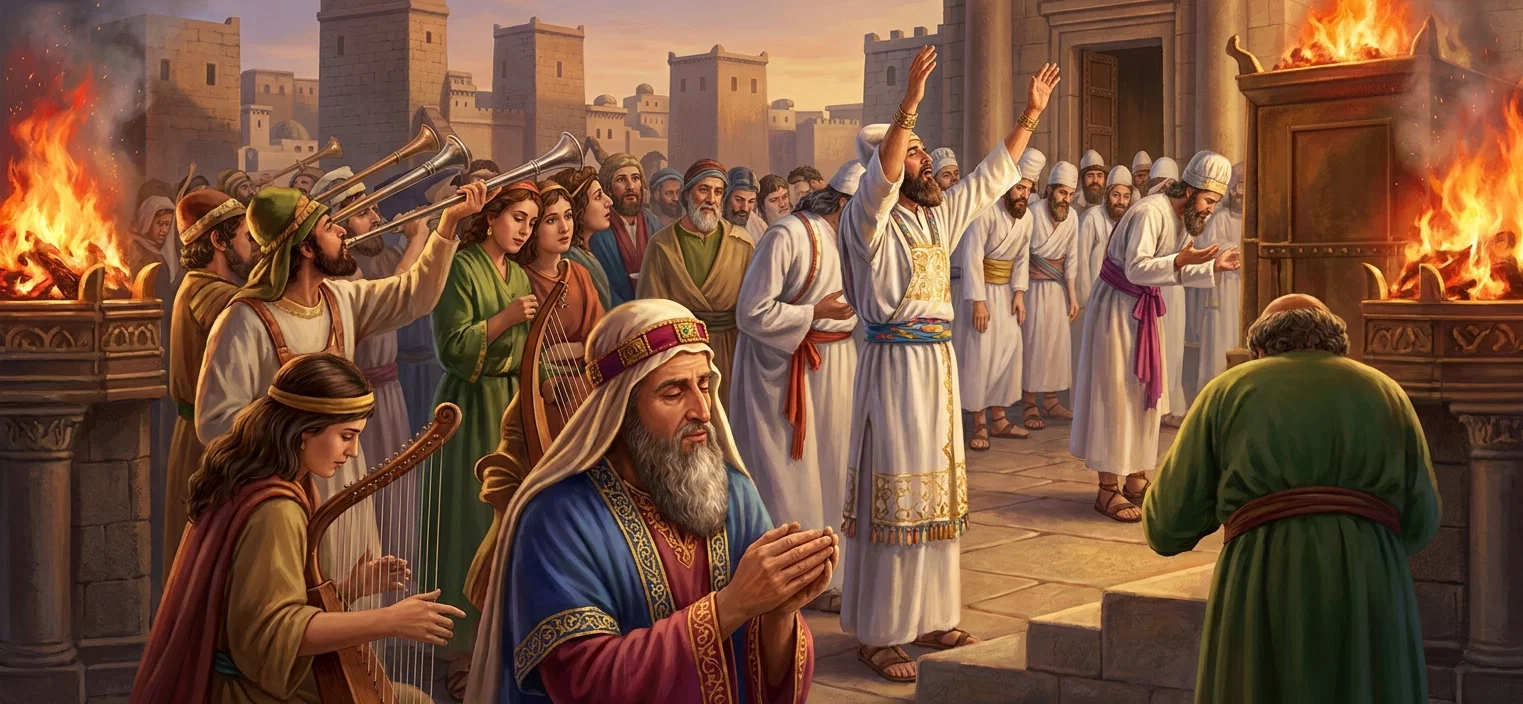
In the first service held, the rulers of the city united with King Hezekiah and with the priests and Levites in seeking forgiveness for the sins of the nation. Upon the altar were placed sin offerings “to make an atonement for all Israel.” “And when they had made an end of offering, the king and all that were present with him bowed themselves, and worshiped.” Once more the temple courts resounded with words of praise and adoration. The songs of David and of Asaph were sung with joy, as the worshipers realized that they were being delivered from the bondage of sin and apostasy. “Hezekiah rejoiced, and all the people, that God had prepared the people: for the thing was done suddenly.”
God had indeed prepared the hearts of the chief men of Judah to lead out in a decided reformatory movement, that the tide of apostasy might be stayed. Through His prophets He had sent to His chosen people message after message of earnest entreaty,—messages that had been despised and rejected by the ten tribes of the kingdom of Israel, now given over to the enemy. But in Judah there remained a goodly remnant, and to these the prophets continued to appeal. Hear Isaiah urging, “Turn ye unto Him from334whom the children of Israel have deeply revolted.” Hear Micah declaring with confidence: “I will look unto the Lord; I will wait for the God of my salvation: my God will hear me. Rejoice not against me, O mine enemy: when I fall, I shall arise; when I sit in darkness, the Lord shall be a light unto me. I will bear the indignation of the Lord, because I have sinned against Him, until He plead my cause, and execute judgment for me: He will bring me forth to the light, and I shall behold His righteousness.”
These and other like messages revealing the willingness of God to forgive and accept those who turned to Him with full purpose of heart, had brought hope to many a fainting soul in the dark years when the temple doors remained closed; and now, as the leaders began to institute a reform, a multitude of the people, weary of the thralldom of sin, were ready to respond.
Those who entered the temple courts to seek forgiveness and to renew their vows of allegiance to Jehovah, had wonderful encouragement offered them in the prophetic portions of Scripture. The solemn warnings against idolatry, spoken through Moses in the hearing of all Israel, had been accompanied by prophecies of God’s willingness to hear and forgive those who in times of apostasy should seek Him with all the heart. “If thou turn to the Lord thy God,” Moses had said, “and shalt be obedient unto His voice; (for the Lord thy God is a merciful God;) He will not forsake thee, neither destroy thee, nor forget the covenant of thy fathers which He sware unto them.”
And in the prophetic prayer offered at the dedication of the temple whose services Hezekiah and his associates were now restoring, Solomon had prayed: “When Thy people Israel be smitten down before the enemy, because they have sinned against Thee, and shall turn again to Thee, and confess Thy name, and pray, and make supplication unto Thee in this house: then hear Thou in heaven, and forgive the sin of Thy people Israel.” The seal of divine approval had been placed upon this prayer; for at its close fire had come down from heaven to consume the burnt offering and the sacrifices, and the glory of the Lord had filled the temple. And by night the Lord had appeared to Solomon, to tell him that his prayer had been heard, and that mercy would be shown those who should worship there. The gracious assurance was given: “If My people, which are called by My name, shall humble themselves, and pray, and seek My face, and turn from their wicked ways; then will I hear from heaven, and will forgive their sin, and will heal their land.”
These promises met abundant fulfillment during the reformation under Hezekiah.
The good beginning made at the time of the purification of the temple was followed by a broader movement, in which Israel as well as Judah participated. In his zeal to make the temple services a real blessing to the people, Hezekiah determined to revive the ancient custom of gathering the Israelites together for the celebration of the Passover feast.
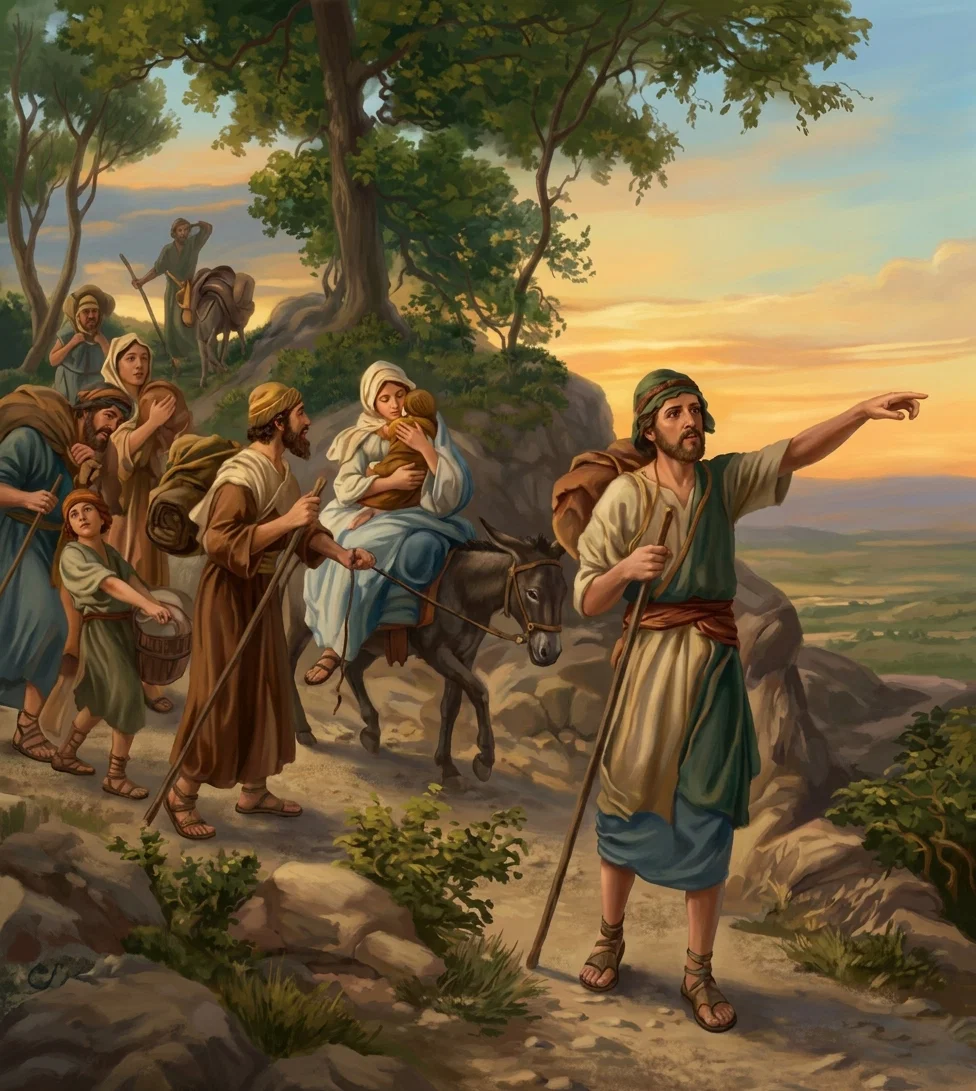
For many years the Passover had not been observed as a national festival. The division of the kingdom after the close of Solomon’s reign had made336this seem impracticable. But the terrible judgments befalling the ten tribes were awakening in the hearts of some a desire for better things; and the stirring messages of the prophets were having their effect. By royal couriers the invitation to the Passover at Jerusalem was heralded far and wide, “from city to city through the country of Ephraim and Manasseh337even unto Zebulun.” The bearers of the gracious invitation were usually repulsed. The impenitent turned lightly aside; nevertheless some, eager to seek God for a clearer knowledge of His will, “humbled themselves, and came to Jerusalem.”
COMING TO THE PASSOVER
“Some humbled themselves, and came to Jerusalem.”
In the land of Judah the response was very general; for upon them was “the hand of God,” “to give them one heart to do the commandment of the king and of the princes,” —a command in accord with the will of God as revealed through His prophets.
The occasion was one of the greatest profit to the multitudes assembled. The desecrated streets of the city were cleared of the idolatrous shrines placed there during the reign of Ahaz. On the appointed day the Passover was observed; and the week was spent by the people in offering peace offerings, and in learning what God would have them do. Daily the Levites “taught the good knowledge of the Lord;” and those who had prepared their hearts to seek God, found pardon. A great gladness took possession of the worshiping multitude; “the Levites and the priests praised the Lord day by day, singing with loud instruments;” all were united in their desire to praise Him who had proved so gracious and merciful.
The seven days usually allotted to the Passover feast passed all too quickly, and the worshipers determined to spend another seven days in learning more fully the way of the Lord. The teaching priests continued their work of instruction from the book of the law; daily the people assembled at the temple to offer their tribute of praise and thanksgiving; and as the great meeting drew to a close, it was evident338that God had wrought marvelously in the conversion of backsliding Judah, and in stemming the tide of idolatry which threatened to sweep all before it. The solemn warnings of the prophets had not been uttered in vain. “There was great joy in Jerusalem: for since the time of Solomon the son of David king of Israel there was not the like in Jerusalem.”
The time had come for the return of the worshipers to their homes. “The priests the Levites arose and blessed the people: and their voice was heard, and their prayer came up to His holy dwelling-place, even unto heaven.” God had accepted those who with broken hearts had confessed their sins, and with resolute purpose had turned to Him for forgiveness and help.
There now remained an important work, in which those who were returning to their homes must take an active part; and the accomplishment of this work bore evidence to the genuineness of the reformation wrought. The record reads: “All Israel that were present went out to the cities of Judah, and brake the images in pieces, and cut down the groves, and threw down the high places and the altars out of all Judah and Benjamin, in Ephraim also and Manasseh, until they had utterly destroyed them all. Then all the children of Israel returned, every man to his possession, into their own cities.”
Hezekiah and his associates instituted various reforms for the upbuilding of the spiritual and temporal interests of the kingdom. “Throughout all Judah” the king “wrought that which was good and right and truth before the Lord his God. And in every work that339he began, . . . he did it with all his heart, and prospered.” “He trusted in the Lord God of Israel, . . . and departed not from following Him, but kept His commandments, which the Lord commanded Moses. And the Lord was with him; and he prospered.”
The reign of Hezekiah was characterized by a series of remarkable providences, which revealed to the surrounding nations that the God of Israel was with His people. The success of the Assyrians in capturing Samaria and in scattering the shattered remnant of the ten tribes among the nations, during the earlier portion of his reign, was leading many to question the power of the God of the Hebrews. Emboldened by their successes, the Ninevites had long since set aside the message of Jonah, and had become defiant in their opposition to the purposes of Heaven. A few years after the fall of Samaria, the victorious armies reappeared in Palestine, this time directing their forces against the fenced cities of Judah, with some measure of success; but they withdrew for a season because of difficulties arising in other portions of their realm. Not until some years later, toward the close of Hezekiah’s reign, was it to be demonstrated before the nations of the world whether the gods of the heathen were finally to prevail.