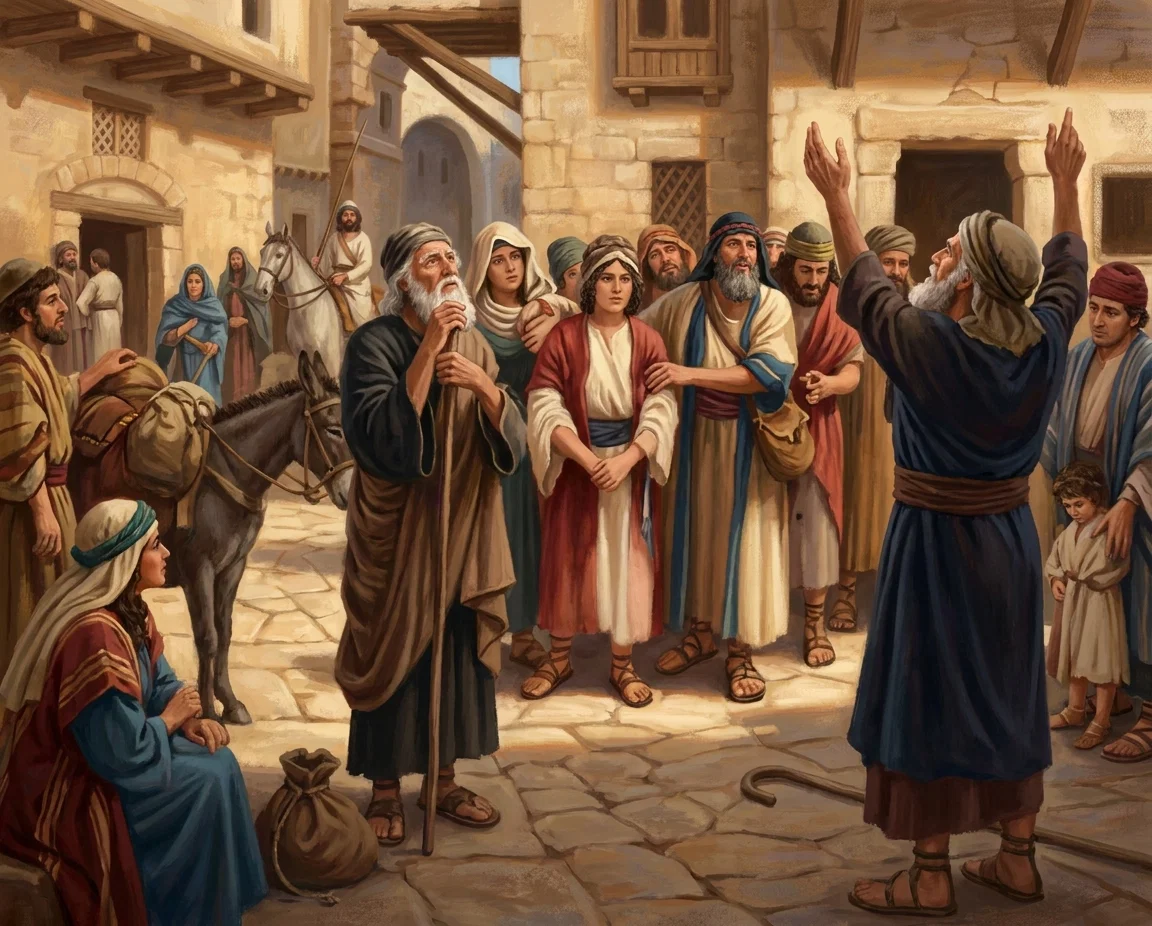
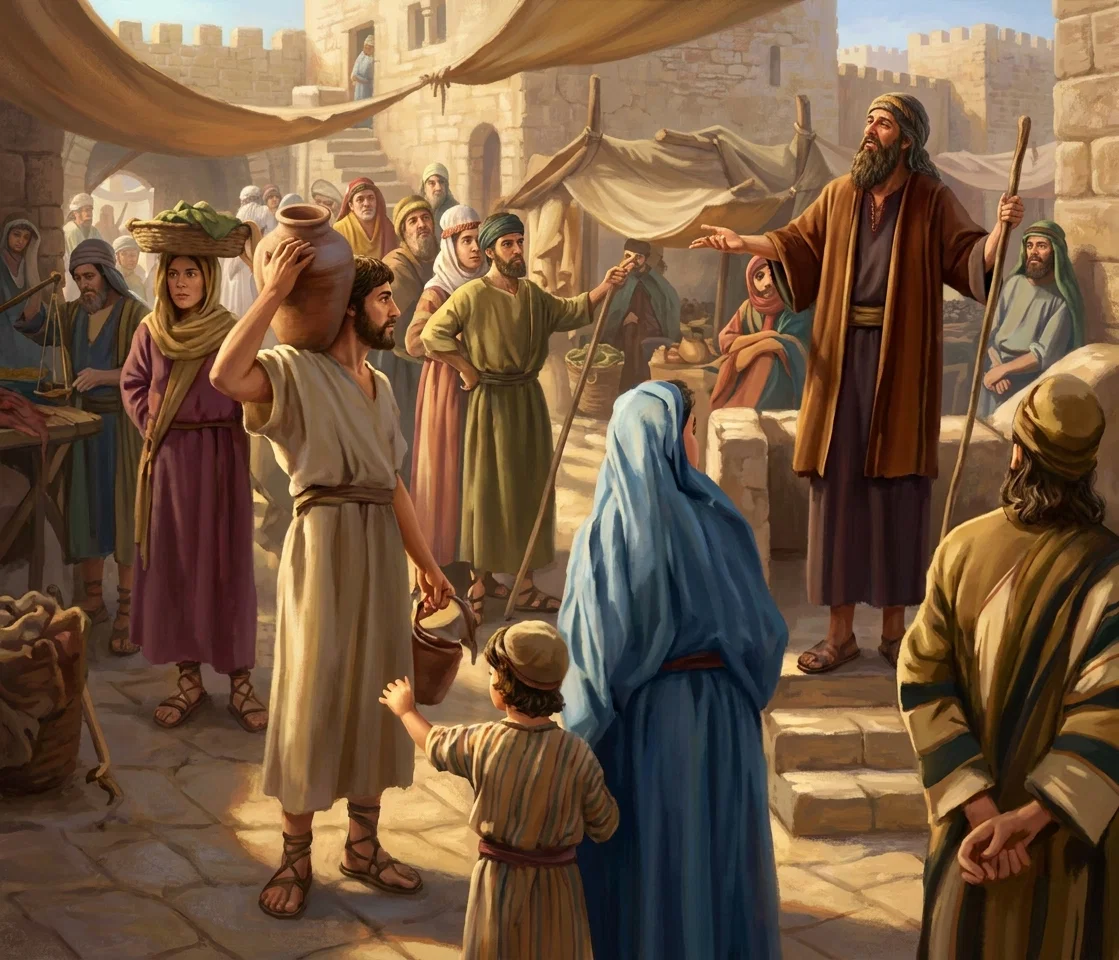
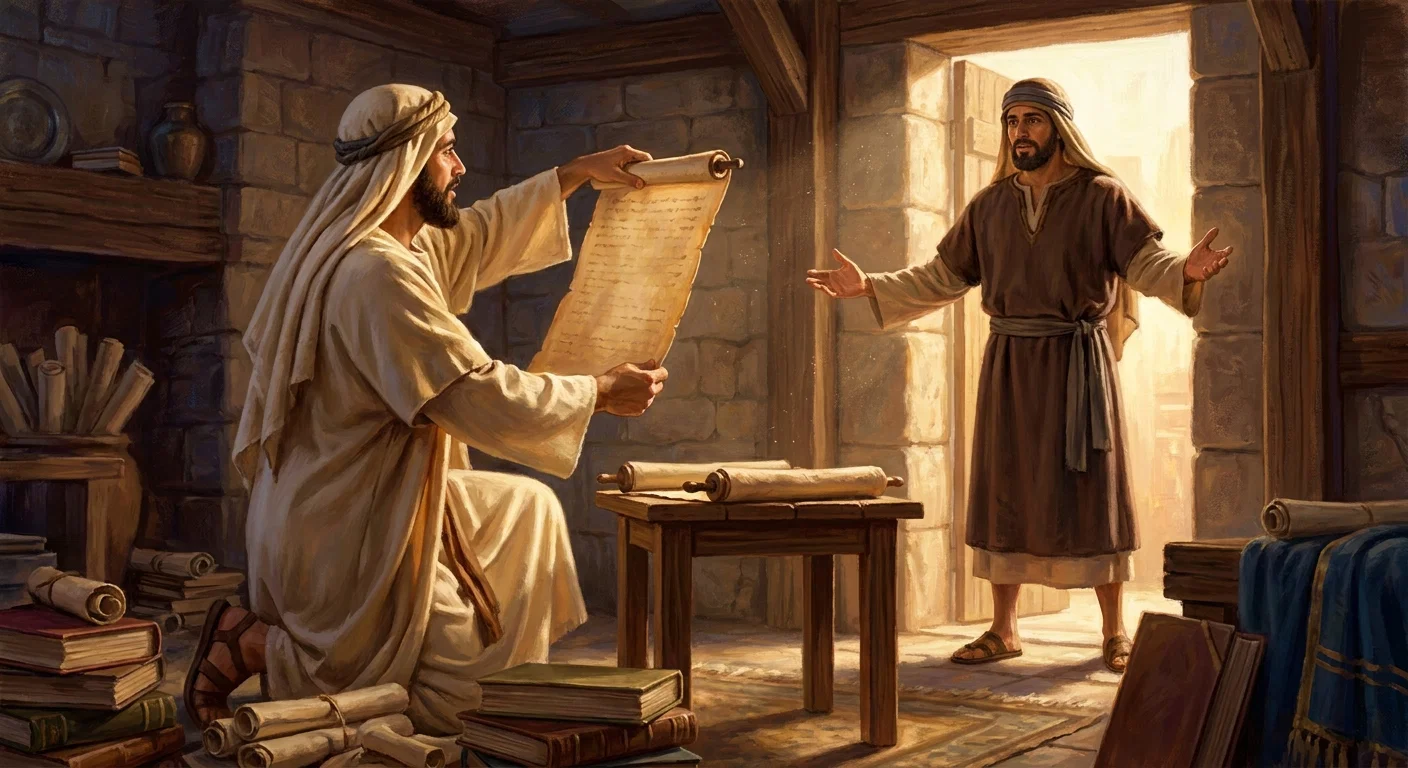
Throughout his ministry, Isaiah bore a plain testimony concerning God’s purpose for the heathen. Other prophets had made mention of the divine plan, but their language was not always understood. To Isaiah it was given to make very plain to Judah the truth that among the Israel of God were to be numbered many who were not descendants of Abraham after the flesh. This teaching was not in harmony with the theology of his age; yet he fearlessly proclaimed the messages given him of God, and brought hope to many a longing heart reaching out after the spiritual blessings promised to the seed of Abraham.
The apostle to the Gentiles, in his letter to the believers in Rome, calls attention to this characteristic of Isaiah’s teaching. “Isaiah is very bold,” Paul declares, “and saith, I was found of them that sought Me not; I was made manifest unto them that asked not after Me.”
Often the Israelites seemed unable or unwilling to understand God’s purpose for the heathen. Yet it368was this very purpose that had made them a separate people, and had established them as an independent nation among the nations of the earth. Abraham, their father, to whom the covenant promise was first given, had been called to go forth from his kindred, to the regions beyond, that he might be a light-bearer to the heathen. Although the promise to him included a posterity as numerous as the sand by the sea, yet it was for no selfish purpose that he was to become the founder of a great nation in the land of Canaan. God’s covenant with him embraced all the nations of earth. “I will bless thee,” Jehovah declared, “and make thy name great; and thou shalt be a blessing: and I will bless them that bless thee, and curse him that curseth thee: and in thee shall all families of the earth be blessed.”
In the renewal of the covenant shortly before the birth of Isaac, God’s purpose for mankind was again made plain. “All the nations of the earth shall be blessed in him,” was the assurance of the Lord concerning the child of promise. And later, the heavenly visitant once more declared, “In thy seed shall all the nations of the earth be blessed.”
The all-embracing terms of this covenant were familiar to Abraham’s children and to his children’s children. It was in order that the Israelites might be a blessing to the nations, and that God’s name might be made known “throughout all the earth,” that they were delivered from Egyptian bondage. If obedient to His requirements, they were to be placed far in advance of other peoples in wisdom and understanding; but this supremacy was to be reached and369maintained only in order that through them the purpose of God for “all nations of the earth” might be fulfilled.
The marvelous providences connected with Israel’s deliverance from Egyptian bondage and with their occupancy of the promised land, led many of the heathen to recognize the God of Israel as the Supreme Ruler. “The Egyptians shall know,” had been the promise, “that I am the Lord, when I stretch forth Mine hand upon Egypt, and bring out the children of Israel from among them.” Even proud Pharaoh was constrained to acknowledge Jehovah’s power. “Go, serve the Lord,” he urged Moses and Aaron, “and bless me also.”
The advancing hosts of Israel found that knowledge of the mighty workings of the God of the Hebrews had gone before them, and that some among the heathen were learning that He alone was the true God. In wicked Jericho the testimony of a heathen woman was, “The Lord your God, He is God in heaven above, and in earth beneath.” The knowledge of Jehovah that had thus come to her, proved her salvation. By faith “Rahab perished not with them that believed not.” And her conversion was not an isolated case of God’s mercy toward idolaters who acknowledged His divine authority. In the midst of the land, a numerous people—the Gibeonites—renounced their heathenism, and united with Israel, sharing in the blessings of the covenant.
No distinction on account of nationality, race, or caste, is recognized by God. He is the Maker of all mankind. All men are of one family by creation, and370all are one through redemption. Christ came to demolish every wall of partition, to throw open every compartment of the temple courts, that every soul may have free access to God. His love is so broad, so deep, so full, that it penetrates everywhere. It lifts out of Satan’s influence those who have been deluded by his deceptions, and places them within reach of the throne of God, the throne encircled by the rainbow of promise. In Christ there is neither Jew nor Greek, bond nor free.
In the years that followed the occupation of the promised land, the beneficent designs of Jehovah for the salvation of the heathen were almost wholly lost sight of, and it became necessary for Him to set forth His plan anew. “All the ends of the world,” the psalmist was inspired to sing, “shall remember and turn unto the Lord: and all the kindreds of the nations shall worship before Thee.” “Princes shall come out of Egypt; Ethiopia shall soon stretch out her hands unto God.” “The heathen shall fear the name of the Lord, and all the kings of the earth Thy glory.” “This shall be written for the generation to come: and the people which shall be created shall praise the Lord. For He hath looked down from the height of His sanctuary; from heaven did the Lord behold the earth; to hear the groaning of the prisoner; to loose those that are appointed to death; to declare the name of the Lord in Zion, and His praise in Jerusalem; when the people are gathered together, and the kingdoms, to serve the Lord.”
Had Israel been true to her trust, all the nations of earth would have shared in her blessings. But the hearts of those to whom had been entrusted a371knowledge of saving truth, were untouched by the needs of those around them. As God’s purpose was lost sight of, the heathen came to be looked upon as beyond the pale of His mercy. The light of truth was withheld, and darkness prevailed. The nations were overspread with a veil of ignorance; the love of God was little known; error and superstition flourished.
Such was the prospect that greeted Isaiah when he was called to the prophetic mission; yet he was not discouraged, for ringing in his ears was the triumphal chorus of the angels surrounding the throne of God, “The whole earth is full of His glory.” And his faith was strengthened by visions of glorious conquests by the church of God, when “the earth shall be full of the knowledge of the Lord, as the waters cover the sea.” “The face of the covering cast over all people, and the veil that is spread over all nations,” was finally to be destroyed. The Spirit of God was to be poured out upon all flesh. Those who hunger and thirst after righteousness were to be numbered among the Israel of God. “They shall spring up as among the grass, as willows by the watercourses,” said the prophet. “One shall say, I am the Lord’s; and another shall call himself by the name of Jacob; and another shall subscribe with his hand unto the Lord, and surname himself by the name of Israel.”
To the prophet was given a revelation of the beneficent design of God in scattering impenitent Judah among the nations of earth. “My people shall know My name,” the Lord declared; “they shall know372in that day that I am He that doth speak.” And not only were they themselves to learn the lesson of obedience and trust; in their places of exile they were also to impart to others a knowledge of the living God. Many from among the sons of the strangers were to learn to love Him as their Creator and their Redeemer; they were to begin the observance of His holy Sabbath day as a memorial of His creative power; and when He should make “bare His holy arm in the eyes of all the nations,” to deliver His people from captivity, “all the ends of the earth” should see of the salvation of God. Many of these converts from heathenism would wish to unite themselves fully with the Israelites, and accompany them on the return journey to Judea. None of these were to say, “The Lord hath utterly separated me from His people;” for the word of God through His prophet to those who should yield themselves to Him and observe His law, was that they should thenceforth be numbered among spiritual Israel—His church on earth.
“The sons of the stranger, that join themselves to the Lord, to serve Him, and to love the name of the Lord, to be His servants, every one that keepeth the Sabbath from polluting it, and taketh hold of My covenant; even them will I bring to My holy mountain, and make them joyful in My house of prayer: their burnt offerings and their sacrifices shall be accepted upon Mine altar; for Mine house shall be called an house of prayer for all people. The Lord God which gathereth the outcasts of Israel saith, Yet373will I gather others to Him, beside those that are gathered unto Him.”
The prophet was permitted to look down the centuries to the time of the advent of the promised Messiah. At first he beheld only “trouble and darkness, dimness of anguish.” Many who were longing for the light of truth were being led astray by false teachers into the bewildering mazes of philosophy and spiritism; others were placing their trust in a form of godliness, but were not bringing true holiness into the life practice. The outlook seemed hopeless; but soon the scene changed, and before the eyes of the prophet was spread a wondrous vision. He saw the Sun of Righteousness arise with healing in His wings; and, lost in admiration, he exclaimed: “The dimness shall not be such as was in her vexation, when at the first He lightly afflicted the land of Zebulun and the land of Naphtali, and afterward did more grievously afflict her by the way of the sea, beyond Jordan, in Galilee of the nations. The people that walked in darkness have seen a great light: they that dwell in the land of the shadow of death, upon them hath the light shined.”
This glorious Light of the world was to bring salvation to every nation, kindred, tongue, and people. Of the work before Him, the prophet heard the eternal Father declare: “It is a light thing that Thou shouldest be My servant to raise up the tribes of Jacob, and to restore the preserved of Israel: I will also give Thee for a light to the Gentiles, that Thou mayest be My salvation unto the end of the earth.” “In an acceptable time have I heard Thee, and in a374day of salvation have I helped Thee: and I will preserve Thee, and give Thee for a covenant of the people, to establish the earth, to cause to inherit the desolate heritages; that Thou mayest say to the prisoners, Go forth; to them that are in darkness, Show yourselves.” “Behold, these shall come from far: and, lo, these from the north and from the west; and these from the land of Sinim.”
Looking on still farther through the ages, the prophet beheld the literal fulfillment of these glorious promises. He saw the bearers of the glad tidings of salvation going to the ends of the earth, to every kindred and people. He heard the Lord saying of the gospel church, “Behold, I will extend peace to her like a river, and the glory of the Gentiles like a flowing stream;” and he heard the commission: “Enlarge the place of thy tent, and let them stretch forth the curtains of thine habitations: spare not, lengthen thy cords, and strengthen thy stakes; for thou shalt break forth on the right hand and on the left; and thy seed shall inherit the Gentiles.”
Jehovah declared to the prophet that He would send His witnesses “unto the nations, to Tarshish, Pul, and Lud, . . . to Tubal, and Javan, to the isles afar off.”
“How beautiful upon the mountains Are the feet of him that bringeth good tidings, That publisheth peace; That bringeth good tidings of good, That publisheth salvation; That saith unto Zion, Thy God reigneth!”
The prophet heard the voice of God calling His church to her appointed work, that the way might be prepared for the ushering in of His everlasting kingdom. The message was unmistakably plain:
“Arise, shine; for thy light is come,
And the glory of the Lord is risen upon thee.
“For, behold, the darkness shall cover the earth,
And gross darkness the people:
But the Lord shall arise upon thee,
And His glory shall be seen upon thee.
And the Gentiles shall come to thy light,
And kings to the brightness of thy rising.”
“Lift up thine eyes round about, and see:
All they gather themselves together, they come to thee:
Thy sons shall come from far,
And thy daughters shall be nursed at thy side.”
“And the sons of strangers shall build up thy walls,
And their kings shall minister unto thee:
For in My wrath I smote thee,
But in My favor have I had mercy on thee.
Therefore thy gates shall be open continually;
They shall not be shut day nor night;
That men may bring unto thee the forces of the Gentiles,
And that their kings may be brought.”
‘Look unto Me, and be ye saved, all the ends of the earth: For I am God, and there is none else.’
These prophecies of a great spiritual awakening in a time of gross darkness, are to-day meeting fulfillment in the advancing lines of mission stations that are reaching out into the benighted regions of earth. The groups of missionaries in heathen lands have been likened by the prophet to ensigns set up for the376guidance of those who are looking for the light of truth.
“In that day,” says Isaiah, “there shall be a root of Jesse, which shall stand for an ensign of the people; to it shall the Gentiles seek: and his rest shall be glorious. And it shall come to pass in that day, that the Lord shall set His hand again the second time to recover the remnant of His people. . . . And He shall set up an ensign for the nations, and shall assemble the outcasts of Israel, and gather together the dispersed of Judah from the four corners of the earth.”
The day of deliverance is at hand. “The eyes of the Lord run to and fro throughout the whole earth, to show Himself strong in the behalf of them whose heart is perfect toward Him.” Among all nations, kindreds, and tongues, He sees men and women who are praying for light and knowledge. Their souls are unsatisfied: long have they fed on ashes. The enemy of all righteousness has turned them aside, and they grope as blind men. But they are honest in heart, and desire to learn a better way. Although in the depths of heathenism, with no knowledge of the written law of God nor of His Son Jesus, they have revealed in manifold ways the working of a divine power on mind and character.
At times those who have no knowledge of God aside from that which they have received under the operations of divine grace, have been kind to His servants, protecting them at the risk of their own lives. The Holy Spirit is implanting the grace of Christ in the heart of many a noble seeker after377truth, quickening his sympathies contrary to his nature, contrary to his former education. The “Light, which lighteth every man that cometh into the world,” is shining in his soul; and this Light, if heeded, will guide his feet to the kingdom of God.
ISAIAH, A PROPHET OF HOPE
“Look unto Me, and be ye saved,
all the ends of the earth.”
The prophet Micah said: “When I sit in darkness, the Lord shall be a light unto me. . . . He will bring me forth to the light, and I shall behold His righteousness.”
Heaven’s plan of salvation is broad enough to embrace the whole world. God longs to breathe into378prostrate humanity the breath of life. And He will not permit any soul to be disappointed who is sincere in his longing for something higher and nobler than anything the world can offer. Constantly He is sending His angels to those who, while surrounded by circumstances the most discouraging, pray in faith for some power higher than themselves to take possession of them, and bring deliverance and peace. In various ways God will reveal Himself to them, and will place them in touch with providences that will establish their confidence in the One who has given Himself a ransom for all, “that they might set their hope in God, and not forget the works of God, but keep His commandments.”
“Shall the prey be taken from the mighty, or the lawful captive delivered?” “Thus saith the Lord, Even the captives of the mighty shall be taken away, and the prey of the terrible shall be delivered.” “They shall be greatly ashamed, that trust in graven images, that say to the molten images, Ye are our gods.”
“Happy is he that hath the God of Jacob for his help, whose hope is in the Lord his God!” “Turn you to the stronghold, ye prisoners of hope!” Unto all the honest in heart in heathen lands—“the upright” in the sight of Heaven—“there ariseth light in the darkness.” God hath spoken: “I will bring the blind by a way that they knew not; I will lead them in paths that they have not known: I will make darkness light before them, and crooked things straight. These things will I do unto them, and not forsake them.”
NATIONAL RETRIBUTION
“I will correct thee in measure, and will not leave thee altogether unpunished.” Jer. 30:11.
“THE JUST SHALL LIVE BY HIS FAITH”
MANASSEH AND JOSIAH—32
The kingdom of Judah, prosperous throughout the times of Hezekiah, was once more brought low during the long years of Manasseh’s wicked reign, when paganism was revived, and many of the people were led into idolatry. “Manasseh made Judah and the inhabitants of Jerusalem to err, and to do worse than the heathen.” The glorious light of former generations was followed by the darkness of superstition and error. Gross evils sprang up and flourished,—tyranny, oppression, hatred of all that is good. Justice was perverted; violence prevailed.
Yet those evil times were not without witnesses for God and the right. The trying experiences through which Judah had safely passed during Hezekiah’s reign had developed, in the hearts of many, a sturdiness of character that now served as a bulwark against the prevailing iniquity. Their testimony in behalf of truth and righteousness aroused the anger of Manasseh and his associates in authority, who endeavored382to establish themselves in evil-doing by silencing every voice of disapproval. “Manasseh shed innocent blood very much, till he had filled Jerusalem from one end to another.”
One of the first to fall was Isaiah, who for over half a century had stood before Judah as the appointed messenger of Jehovah. “Others had trial of cruel mockings and scourgings, yea, moreover of bonds and imprisonment: they were stoned, they were sawn asunder, were tempted, were slain with the sword: they wandered about in sheepskins and goat-skins; being destitute, afflicted, tormented; (of whom the world was not worthy:) they wandered in deserts, and in mountains, and in dens and caves of the earth.”
Some of those who suffered persecution during Manasseh’s reign were commissioned to bear special messages of reproof and of judgment. The king of Judah, the prophets declared, “hath done wickedly above all . . . which were before him.” Because of this wickedness, his kingdom was nearing a crisis; soon the inhabitants of the land were to be carried captive to Babylon, there to become “a prey and a spoil to all their enemies.” But the Lord would not utterly forsake those who in a strange land should acknowledge Him as their Ruler; they might suffer great tribulation, yet He would bring deliverance to them in His appointed time and way. Those who should put their trust wholly in Him, would find a sure refuge.
Faithfully the prophets continued their warnings and their exhortations; fearlessly they spoke to Manasseh383and to his people; but the messages were scorned; backsliding Judah would not heed. As an earnest of what would befall the people should they continue impenitent, the Lord permitted their king to be captured by a band of Assyrian soldiers, who “bound him with fetters, and carried him to Babylon,” their temporary capital. This affliction brought the king to his senses; “he besought the Lord his God, and humbled himself greatly before the God of his fathers, and prayed unto Him: and He was entreated of him, and heard his supplication, and brought him again to Jerusalem into his kingdom. Then Manasseh knew that the Lord He was God.” But this repentance, remarkable though it was, came too late to save the kingdom from the corrupting influence of years of idolatrous practices. Many had stumbled and fallen, never again to rise.
Among those whose life experience had been shaped beyond recall by the fatal apostasy of Manasseh, was his own son, who came to the throne at the age of twenty-two. Of King Amon it is written: “He walked in all the way that his father walked in, and served the idols that his father served, and worshiped them: and he forsook the Lord God of his fathers;” he “humbled not himself before the Lord, as Manasseh his father had humbled himself; but Amon trespassed more and more.” The wicked king was not permitted to reign long. In the midst of his daring impiety, only two years from the time he ascended the throne, he was slain in the palace by his own servants; and “the people of the land made Josiah his son king in his stead.”
With the accession of Josiah to the throne, where he was to rule for thirty-one years, those who had maintained the purity of their faith began to hope that the downward course of the kingdom was checked; for the new king, though only eight years old, feared God, and from the very beginning “he did that which was right in the sight of the Lord, and walked in all the way of David his father, and turned not aside to the right hand or to the left.” Born of a wicked king, beset with temptations to follow in his father’s steps, and with few counselors to encourage him in the right way, Josiah nevertheless was true to the God of Israel. Warned by the errors of past generations, he chose to do right, instead of descending to the low level of sin and degradation to which his father and his grandfather had fallen. He “turned not aside to the right hand or to the left.” As one who was to occupy a position of trust, he resolved to obey the instruction that had been given for the guidance of Israel’s rulers; and his obedience made it possible for God to use him as a vessel unto honor.
At the time Josiah began to rule, and for many years before, the true-hearted in Judah were questioning whether God’s promises to ancient Israel could ever be fulfilled. From a human point of view, the divine purpose for the chosen nation seemed almost impossible of accomplishment. The apostasy of former centuries had gathered strength with the passing years; ten of the tribes had been scattered among the heathen; only the tribes of Judah and Benjamin remained, and even these now seemed on the verge of moral and national ruin. The prophets385had begun to foretell the utter destruction of their fair city, where stood the temple built by Solomon, and where all their earthly hopes of national greatness had centered. Could it be that God was about to turn aside from His avowed purpose of bringing deliverance to those who should put their trust in Him? In the face of the long-continued persecution of the righteous, and of the apparent prosperity of the wicked, could those who had remained true to God hope for better days?
These anxious questionings were voiced by the prophet Habakkuk. Viewing the situation of the faithful in his day, he expressed the burden of his heart in the inquiry: “O Lord, how long shall I cry, and Thou wilt not hear! even cry out unto Thee of violence, and Thou wilt not save! Why dost Thou show me iniquity, and cause me to behold grievance? for spoiling and violence are before me: and there are that raise up strife and contention. Therefore the law is slacked, and judgment doth never go forth: for the wicked doth compass about the righteous; therefore wrong judgment proceedeth.”
God answered the cry of His loyal children. Through His chosen mouthpiece He revealed His determination to bring chastisement upon the nation that had turned from Him to serve the gods of the heathen. Within the lifetime of some who were even then making inquiry regarding the future, He would miraculously shape the affairs of the ruling nations of earth, and bring the Babylonians into the ascendancy. These Chaldeans, “terrible and dreadful,” were to fall suddenly upon the land of Judah as a386divinely appointed scourge. The princes of Judah and the fairest of the people were to be carried captive to Babylon; the Judean cities and villages and the cultivated fields were to be laid waste; nothing was to be spared.
Confident that even in this terrible judgment the purpose of God for His people would in some way be fulfilled, Habakkuk bowed in submission to the revealed will of Jehovah. “Art Thou not from everlasting, O Lord my God, mine Holy One?” he exclaimed. And then, his faith reaching out beyond the forbidding prospect of the immediate future, and laying fast hold on the precious promises that reveal God’s love for His trusting children, the prophet added, “We shall not die.” With this declaration of faith, he rested his case, and that of every believing Israelite, in the hands of a compassionate God.
This was not Habakkuk’s only experience in the exercise of strong faith. On one occasion, when meditating concerning the future, he said, “I will stand upon my watch, and set me upon the tower, and will watch to see what He will say unto me.” Graciously the Lord answered him: “Write the vision, and make it plain upon tables, that he may run that readeth it. For the vision is yet for an appointed time, but at the end it shall speak, and not lie: though it tarry, wait for it; because it will surely come, it will not tarry. Behold, his soul which is lifted up is not upright in him: but the just shall live by his faith.”
The faith that strengthened Habakkuk and all the holy and the just in those days of deep trial, was the same faith that sustains God’s people to-day.387In the darkest hours, under circumstances the most forbidding, the Christian believer may keep his soul stayed upon the source of all light and power. Day by day, through faith in God, his hope and courage may be renewed. “The just shall live by his faith.” In the service of God there need be no despondency, no wavering, no fear. The Lord will more than fulfill the highest expectations of those who put their trust in Him. He will give them the wisdom their varied necessities demand.
Of the abundant provision made for every tempted soul, the apostle Paul bears eloquent testimony. To him was given the divine assurance, “My grace is sufficient for thee: for My strength is made perfect in weakness.” In gratitude and confidence the tried servant of God responded: “Most gladly therefore will I rather glory in my infirmities, that the power of Christ may rest upon me. Therefore I take pleasure in infirmities, in reproaches, in necessities, in persecutions, in distresses for Christ’s sake: for when I am weak, then am I strong.”
We must cherish and cultivate the faith of which prophets and apostles have testified,—the faith that lays hold on the promises of God, and waits for deliverance in His appointed time and way. The sure word of prophecy will meet its final fulfillment in the glorious advent of our Lord and Saviour Jesus Christ, as King of kings and Lord of lords. The time of waiting may seem long, the soul may be oppressed by discouraging circumstances, many in whom confidence has been placed may fall by the way; but with the prophet who endeavored to encourage Judah in a time of unparalleled apostasy, let us confidently388declare, “The Lord is in His holy temple: let all the earth keep silence before Him.” Let us ever hold in remembrance the cheering message, “The vision is yet for an appointed time, but at the end it shall speak, and not lie: though it tarry, wait for it; because it will surely come, it will not tarry. . . . The just shall live by his faith.”
“O Lord, revive Thy work in the midst of the years,
In the midst of the years make known;
In wrath remember mercy.
“God came from Teman,
And the Holy One from Mount Paran.
His glory covered the heavens,
And the earth was full of His praise.
And His brightness was as the light;
He had bright beams out of His side:
And there was the hiding of His power.
Before Him went the pestilence,
And burning coals went forth at His feet.
He stood, and measured the earth:
He beheld, and drove asunder the nations;
And the everlasting mountains were scattered,
The perpetual hills did bow:
His ways are everlasting.”
“Thou wentest forth for the salvation of Thy people,
Even for salvation with Thine anointed.”
“Although the fig tree shall not blossom,
Neither shall fruit be in the vines;
The labor of the olive shall fail,
And the fields shall yield no meat;
The flock shall be cut off from the fold,
And there shall be no herd in the stalls:
Yet I will rejoice in the Lord,
I will joy in the God of my salvation.
The Lord God is my strength.”
Habakkuk was not the only one through whom was given a message of bright hope and of future triumph as well as of present judgment. During the reign of Josiah the word of the Lord came to Zephaniah, specifying plainly the results of continued apostasy, and calling the attention of the true church to the glorious prospect beyond. His prophecies of impending judgment upon Judah apply with equal force to the judgments that are to fall upon an impenitent world at the time of the second advent of Christ:
ZEPHANIAH PROPHESYING
“The great day of the Lord is near,
It is near, and hasteth greatly.”
“The great day of the Lord is near,
It is near, and hasteth greatly,
Even the voice of the day of the Lord:
The mighty man shall cry there bitterly.”
“That day is a day of wrath,
A day of trouble and distress,
A day of wasteness and desolation,
A day of darkness and gloominess,
“A day of clouds and thick darkness,
A day of the trumpet and alarm
Against the fenced cities,
And against the high towers.”
“I will bring distress upon men, that they shall walk like blind men, because they have sinned against the Lord: and their blood shall be poured out as dust. . . . Neither their silver nor their gold shall be able to deliver them in the day of the Lord’s wrath; but the whole land shall be devoured by the fire of His jealousy: for He shall make even a speedy riddance of all them that dwell in the land.”
“Gather yourselves together, yea, gather together,
O nation not desired;
Before the decree bring forth,
Before the day pass as the chaff,
Before the fierce anger of the Lord come upon you,
Before the day of the Lord’s anger come upon you.
“Seek ye the Lord, all ye meek of the earth, Which have wrought His judgment; Seek righteousness, Seek meekness: It may be ye shall be hid In the day of the Lord’s anger.”
“Behold, at that time I will deal with all them that afflict thee: and I will save her that halteth, and391gather her that was driven away; and I will make them a praise and a name, whose shame hath been in all the earth. At that time will I bring you in, and at that time will I gather you: for I will make you a name and a praise among all the peoples of the earth, when I bring again your captivity before your eyes, saith the Lord.”
“Sing, O daughter of Zion; shout, O Israel;
Be glad and rejoice with all the heart,
O daughter of Jerusalem.
The Lord hath taken away thy judgments,
He hath cast out thine enemy:
The King of Israel, even the Lord,
Is in the midst of thee:
Thou shalt not see evil any more.”
“In that day it shall be said to Jerusalem, Fear thou not:
And to Zion, Let not thine hands be slack.
The Lord thy God in the midst of thee
Is mighty; He will save,
He will rejoice over thee with joy;
He will rest in His love,
He will joy over thee with singing.”