Exalted to the pinnacle of worldly honor, and acknowledged even by Inspiration as “a king of kings,” Nebuchadnezzar nevertheless at times had ascribed to the favor of Jehovah the glory of his kingdom and the splendor of his reign. Such had been the case after his dream of the great image. His mind had been profoundly influenced by this vision, and by the thought that the Babylonian empire, universal though it was, was finally to fall, and other kingdoms were to bear sway, until at last all earthly powers were to be superseded by a kingdom set up by the God of heaven, which kingdom was never to be destroyed.
Nebuchadnezzar’s noble conception of God’s purpose concerning the nations was lost sight of later in his experience; yet when his proud spirit was humbled before the multitude on the plain of Dura, he once more had acknowledged that God’s kingdom is “an everlasting kingdom, and His dominion is from generation to generation.” An idolater by birth and515training, and at the head of an idolatrous people, he had nevertheless an innate sense of justice and right, and God was able to use him as an instrument for the punishment of the rebellious and for the fulfillment of the divine purpose. “The terrible of the nations,” it was given Nebuchadnezzar, after years of patient and wearing labor, to conquer Tyre; Egypt also fell a prey to his victorious armies; and as he added nation after nation to the Babylonian realm, he added more and more to his fame as the greatest ruler of the age.
It is not surprising that the successful monarch, so ambitious and so proud-spirited, should be tempted to turn aside from the path of humility, which alone leads to true greatness. In the intervals between his wars of conquest, he gave much thought to the strengthening and beautifying of his capital, until at length the city of Babylon became the chief glory of his kingdom, “the golden city,” “the praise of the whole earth.” His passion as a builder, and his signal success in making Babylon one of the wonders of the world, ministered to his pride, until he was in grave danger of spoiling his record as a wise ruler whom God could continue to use as an instrument for the carrying out of the divine purpose.
In mercy God gave the king another dream, to warn him of his peril, and of the snare that had been laid for his ruin. In a vision of the night, Nebuchadnezzar saw a great tree growing in the midst of the earth, its top towering to the heavens, and its branches stretching to the ends of the earth. Flocks and herds from the mountains and hills enjoyed shelter beneath its shadow, and the birds of the air built their nests516in its boughs. “The leaves thereof were fair, and the fruit thereof much, and in it was meat for all: . . . and all flesh was fed of it.”
As the king gazed upon the lofty tree, he beheld “a Watcher,” even “an Holy One,” who approached the tree, and in a loud voice cried:
“Hew down the tree, and cut off his branches, shake off his leaves, and scatter his fruit: let the beasts get away from under it, and the fowls from his branches: nevertheless leave the stump of his roots in the earth, even with a band of iron and brass, in the tender grass of the field; and let it be wet with the dew of heaven, and let his portion be with the beasts in the grass of the earth: let his heart be changed from man’s, and let a beast’s heart be given unto him; and let seven times pass over him. This matter is by the decree of the watchers, and the demand by the word of the holy ones: to the intent that the living may know that the Most High ruleth in the kingdom of men, and giveth it to whomsoever He will, and setteth up over it the basest of men.”
Greatly troubled by the dream, which was evidently a prediction of adversity, the king repeated it to “the magicians, the astrologers, the Chaldeans, and the soothsayers;” but although the dream was very explicit, none of the wise men could interpret it.
Once more in this idolatrous nation, testimony was to be borne to the fact that only those who love and fear God can understand the mysteries of the kingdom of heaven. The king in his perplexity sent for his servant Daniel, a man esteemed for his integrity and constancy and for his unrivaled wisdom.
When Daniel, in response to the royal summons, stood in the king’s presence, Nebuchadnezzar said, “O Belteshazzar, master of the magicians, because I know that the spirit of the holy gods is in thee, and no secret troubleth thee, tell me the visions of my dream that I have seen, and the interpretation thereof.” After relating the dream, Nebuchadnezzar said: “O Belteshazzar, declare the interpretation thereof, forasmuch as all the wise men of my kingdom are not able to make known unto me the interpretation: but thou art able; for the spirit of the holy gods is in thee.”
To Daniel the meaning of the dream was plain, and its significance startled him. He “was astonied for one hour, and his thoughts troubled him.” Seeing Daniel’s hesitation and distress, the king expressed sympathy for his servant. “Belteshazzar,” he said, “let not the dream, or the interpretation thereof, trouble thee.”
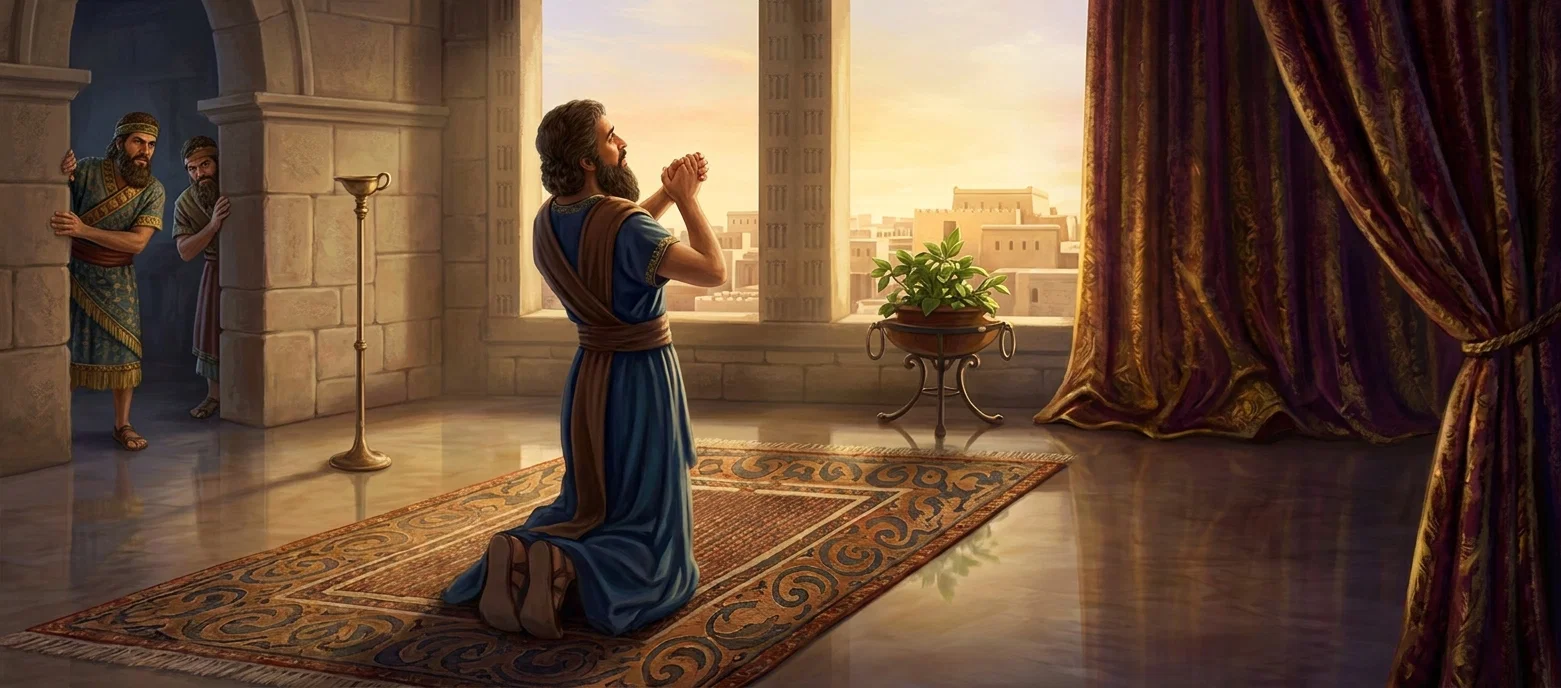
“My lord,” Daniel answered, “the dream be to them that hate thee, and the interpretation thereof to thine enemies.” The prophet realized that upon him God had laid the solemn duty of revealing to Nebuchadnezzar the judgment that was about to fall upon him because of his pride and arrogance. Daniel must interpret the dream in language the king could understand; and although its dreadful import had made him hesitate in dumb amazement, yet he must state the truth, whatever the consequences to himself.
Then Daniel made known the mandate of the Almighty. “The tree that thou sawest,” he said, “which grew, and was strong, whose height reached unto the heaven, and the sight thereof to all the earth: whose518leaves were fair, and the fruit thereof much, and in it was meat for all; under which the beasts of the field dwelt, and upon whose branches the fowls of the heaven had their habitation: it is thou, O king, that art grown and become strong: for thy greatness is grown, and reacheth unto heaven, and thy dominion to the end of the earth.
“And whereas the king saw a Watcher and an Holy One coming down from heaven, and saying, Hew the tree down, and destroy it; yet leave the stump of the roots thereof in the earth, even with a band of iron and brass, in the tender grass of the field; and let it be wet with the dew of heaven, and let his portion be with the beasts of the field, till seven times pass over him; this is the interpretation, O king, and this is the decree of the Most High, which is come upon my lord the king: that they shall drive thee from men, and thy dwelling shall be with the beasts of the field, and they shall make thee to eat grass as oxen, and they shall wet thee with the dew of heaven, and seven times shall pass over thee, till thou know that the Most High ruleth in the kingdom of men, and giveth it to whomsoever He will. And whereas they commanded to leave the stump of the tree roots; thy kingdom shall be sure unto thee, after that thou shalt have known that the Heavens do rule.”
Having faithfully interpreted the dream, Daniel urged the proud monarch to repent and turn to God, that by right-doing he might avert the threatened calamity. “O king,” the prophet pleaded, “let my counsel be acceptable unto thee, and break off thy sins by righteousness, and thine iniquities by showing519mercy to the poor; if it may be a lengthening of thy tranquillity.”
For a time the impression of the warning and the counsel of the prophet was strong upon Nebuchadnezzar; but the heart that is not transformed by the grace of God soon loses the impressions of the Holy Spirit. Self-indulgence and ambition had not yet been eradicated from the king’s heart, and later on these traits reappeared. Notwithstanding the instruction so graciously given him, and the warnings of past experience, Nebuchadnezzar again allowed himself to be controlled by a spirit of jealousy against the kingdoms that were to follow. His rule, which heretofore had been to a great degree just and merciful, became oppressive. Hardening his heart, he used his God-given talents for self-glorification, exalting himself above the God who had given him life and power.
For months the judgment of God lingered. But instead of being led to repentance by this forbearance, the king indulged his pride until he lost confidence in the interpretation of the dream, and jested at his former fears.
A year from the time he had received the warning, Nebuchadnezzar, walking in his palace, and thinking with pride of his power as a ruler and of his success as a builder, exclaimed, “Is not this great Babylon, that I have built for the house of the kingdom by the might of my power, and for the honor of my majesty?”
While the proud boast was yet on the king’s lips, a voice from heaven announced that God’s appointed time of judgment had come. Upon his ears fell the mandate of Jehovah: “O King Nebuchadnezzar, to520thee it is spoken; The kingdom is departed from thee. And they shall drive thee from men, and thy dwelling shall be with the beasts of the field: they shall make thee to eat grass as oxen, and seven times shall pass over thee, until thou know that the Most High ruleth in the kingdom of men, and giveth it to whomsoever He will.”
In a moment the reason that God had given him was taken away; the judgment that the king thought perfect, the wisdom on which he prided himself, was removed, and the once mighty ruler was a maniac. His hand could no longer sway the scepter. The messages of warning had been unheeded; now, stripped of the power his Creator had given him, and driven from men, Nebuchadnezzar “did eat grass as oxen, and his body was wet with the dew of heaven, till his hairs were grown like eagles’ feathers, and his nails like birds’ claws.”
For seven years Nebuchadnezzar was an astonishment to all his subjects; for seven years he was humbled before all the world. Then his reason was restored, and looking up in humility to the God of heaven, he recognized the divine hand in his chastisement. In a public proclamation he acknowledged his guilt, and the great mercy of God in his restoration. “At the end of the days,” he said, “I Nebuchadnezzar lifted up mine eyes unto heaven, and mine understanding returned unto me, and I blessed the Most High, and I praised and honored Him that liveth forever, whose dominion is an everlasting dominion, and His kingdom is from generation to generation: and all the inhabitants of the earth are reputed as nothing: and He doeth according to His will in the army of521heaven, and among the inhabitants of the earth: and none can stay His hand, or say unto Him, What doest Thou?
“At the same time my reason returned unto me; and for the glory of my kingdom, mine honor and brightness returned unto me; and my counselors and my lords sought unto me; and I was established in my kingdom, and excellent majesty was added unto me.”
The once proud monarch had become a humble child of God; the tyrannical, overbearing ruler, a wise and compassionate king. He who had defied and blasphemed the God of heaven, now acknowledged the power of the Most High, and earnestly sought to promote the fear of Jehovah and the happiness of his subjects. Under the rebuke of Him who is King of kings and Lord of lords, Nebuchadnezzar had learned at last the lesson which all rulers need to learn,—that true greatness consists in true goodness. He acknowledged Jehovah as the living God, saying, “I Nebuchadnezzar praise and extol and honor the King of heaven, all whose works are truth, and His ways judgment: and those that walk in pride He is able to abase.”
God’s purpose that the greatest kingdom in the world should show forth His praise, was now fulfilled. This public proclamation, in which Nebuchadnezzar acknowledged the mercy and goodness and authority of God, was the last act of his life recorded in sacred history.
“I WILL SWEEP IT WITH THE BESOM OF DESTRUCTION”
THE UNSEEN WATCHER—43
TOWARD the close of Daniel’s life, great changes were taking place in the land to which, over three-score years before, he and his Hebrew companions had been carried captive. Nebuchadnezzar, “the terrible of the nations,” had died, and Babylon, “the praise of the whole earth,” had passed under the unwise rule of his successors, and gradual but sure dissolution was resulting.
Through the folly and weakness of Belshazzar, the grandson of Nebuchadnezzar, proud Babylon was soon to fall. Admitted in his youth to a share in kingly authority, Belshazzar gloried in his power, and lifted up his heart against the God of heaven. Many had been his opportunities to know the divine will, and to understand his responsibility of rendering obedience thereto. He had known of his grandfather’s banishment, by the decree of God, from the society of men; and he was familiar with Nebuchadnezzar’s conversion and miraculous restoration. But Belshazzar523allowed the love of pleasure and self-glorification to efface the lessons that he should never have forgotten. He wasted the opportunities graciously granted him, and neglected to use the means within his reach for becoming more fully acquainted with truth. That which Nebuchadnezzar had finally gained at the cost of untold suffering and humiliation, Belshazzar passed by with indifference.
It was not long before reverses came. Babylon was besieged by Cyrus, nephew of Darius the Mede, and commanding general of the combined armies of the Medes and Persians. But within the seemingly impregnable fortress, with its massive walls and its gates of brass, protected by the river Euphrates, and stocked with provision in abundance, the voluptuous monarch felt safe, and passed his time in mirth and revelry.
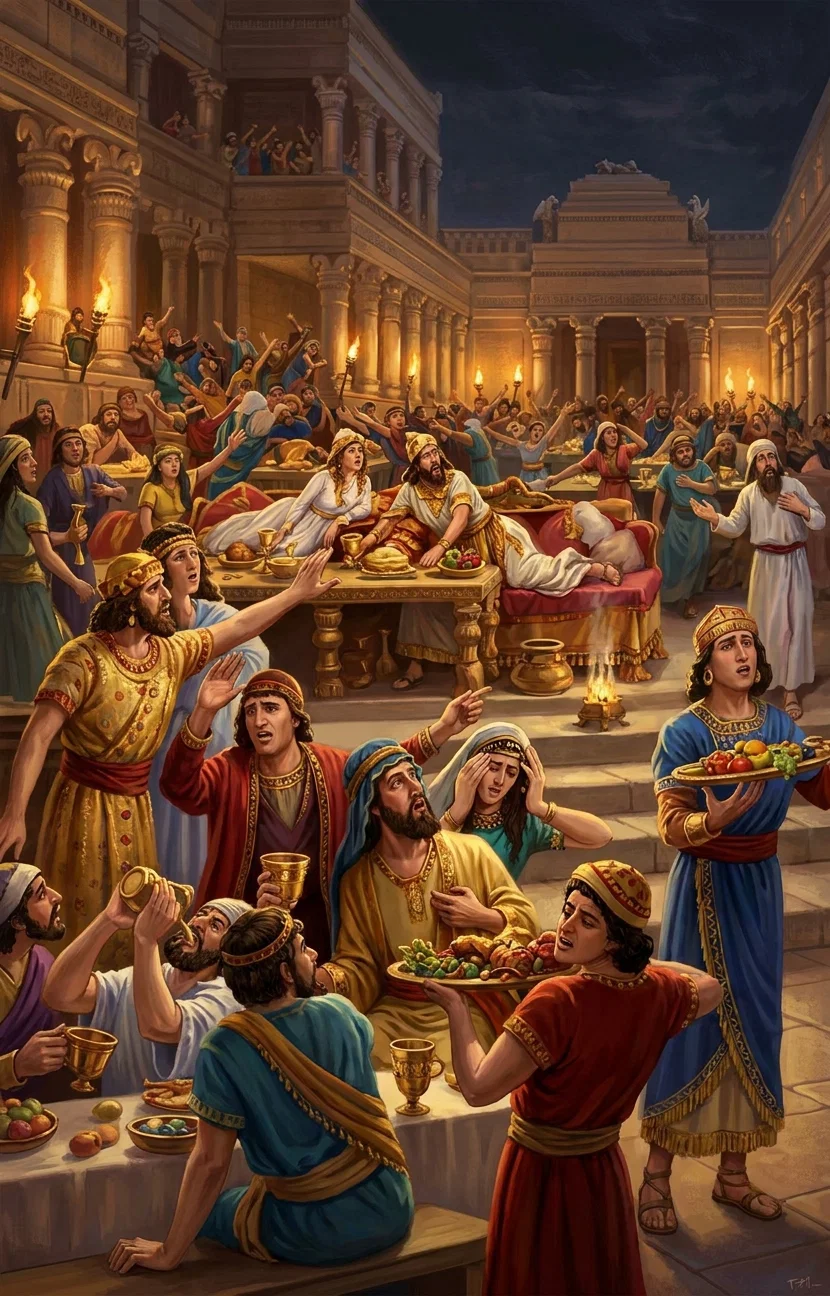
In his pride and arrogancy, with a reckless feeling of security, Belshazzar “made a great feast to a thousand of his lords, and drank wine before the thousand.” All the attractions that wealth and power could command, added splendor to the scene. Beautiful women with their enchantments were among the guests in attendance at the royal banquet. Men of genius and education were there. Princes and statesmen drank wine like water, and reveled under its maddening influence.
With reason dethroned through shameless intoxication, and with lower impulses and passions now in the ascendancy, the king himself took the lead in the riotous orgy. As the feast progressed, he “commanded to bring the golden and silver vessels which . . . Nebuchadnezzar had taken out of the524temple which was in Jerusalem; that the king, and his princes, his wives, and his concubines, might drink therein.” The king would prove that nothing was too sacred for his hands to handle. “They brought the golden vessels; . . . and the king, and his princes, his wives, and his concubines, drank in them. They drank wine, and praised the gods of gold, and of silver, of brass, of iron, of wood, and of stone.”
Little did Belshazzar think that there was a heavenly Witness to his idolatrous revelry; that a divine Watcher, unrecognized, looked upon the scene of profanation, heard the sacrilegious mirth, beheld the idolatry. But soon the uninvited Guest made His presence felt. When the revelry was at its height, a bloodless hand came forth, and traced upon the walls of the palace characters that gleamed like fire,—words which, though unknown to the vast throng, were a portent of doom to the now conscience-stricken king and his guests.
Hushed was the boisterous mirth, while men and women, seized with nameless terror, watched the hand slowly tracing the mysterious characters. Before them passed, as in panoramic view, the deeds of their evil lives; they seemed to be arraigned before the judgment-bar of the eternal God, whose power they had just defied. Where but a few moments before had been hilarity and blasphemous witticism, were pallid faces and cries of fear. When God makes men fear, they cannot hide the intensity of their terror.
Belshazzar was the most terrified of them all. He it was who above all others had been responsible for the rebellion against God which that night had reached its height in the Babylonian realm. In the presence525of the unseen Watcher, the representative of Him whose power had been challenged and whose name had been blasphemed, the king was paralyzed with fear. Conscience was awakened. “The joints of his loins were loosed, and his knees smote one against another.” Belshazzar had impiously lifted himself up against the God of heaven, and had trusted in his own might, not supposing that any would dare say, “Why doest thou thus?” but now he realized that he must render an account of the stewardship entrusted him, and that for his wasted opportunities and his defiant attitude he could offer no excuse.
BELSHAZZAR’S FEAST
“In that last night of mad folly, Belshazzar and his lords had filled up the measure of their guilt and the guilt of the Chaldean kingdom.”
In vain the king tried to read the burning letters. But here was a secret he could not fathom, a power he could neither understand nor gainsay. In despair he turned to the wise men of his realm for help. His wild cry rang out in the assembly, calling upon the astrologers, the Chaldeans, and the soothsayers to read the writing. “Whosoever shall read this writing,” he promised, “and show me the interpretation thereof, shall be clothed with scarlet, and have a chain of gold about his neck, and shall be the third ruler in the kingdom.” But of no avail was his appeal to his trusted advisers, with offers of rich awards. Heavenly wisdom cannot be bought or sold. “All the king’s wise men . . . could not read the writing, nor make known to the king the interpretation thereof.” They were no more able to read the mysterious characters than had been the wise men of a former generation to interpret the dreams of Nebuchadnezzar.
Then the queen-mother remembered Daniel, who, over half a century before, had made known to King Nebuchadnezzar the dream of the great image and its528interpretation. “O king, live forever,” she said. “Let not thy thoughts trouble thee, nor let thy countenance be changed: there is a man in thy kingdom, in whom is the spirit of the holy gods; and in the days of thy father light and understanding and wisdom, like the wisdom of the gods, was found in him; whom the king Nebuchadnezzar . . . made master of the magicians, astrologers, Chaldeans, and soothsayers; forasmuch as an excellent spirit, and knowledge, and understanding, interpreting of dreams, and showing of hard sentences, and dissolving of doubts, were found in the same Daniel, whom the king named Belteshazzar: now let Daniel be called, and he will show the interpretation.
“Then was Daniel brought in before the king.” Making an effort to regain his composure, Belshazzar said to the prophet: “Art thou that Daniel, which art of the children of the captivity of Judah, whom the king my father brought out of Jewry? I have even heard of thee, that the spirit of the gods is in thee, and that light and understanding and excellent wisdom is found in thee. And now the wise men, the astrologers, have been brought in before me, that they should read this writing, and make known unto me the interpretation thereof: but they could not show the interpretation of the thing: and I have heard of thee, that thou canst make interpretations, and dissolve doubts: now if thou canst read the writing, and make known to me the interpretation thereof, thou shalt be clothed with scarlet, and have a chain of gold about thy neck, and shalt be the third ruler in the kingdom.”
Before that terror-stricken throng, Daniel, unmoved by the promises of the king, stood in the quiet dignity of a servant of the Most High, not to speak words of flattery, but to interpret a message of doom. “Let thy gifts be to thyself,” he said, “and give thy rewards to another; yet I will read the writing unto the king, and make known to him the interpretation.”
The prophet first reminded Belshazzar of matters with which he was familiar, but which had not taught him the lesson of humility that might have saved him. He spoke of Nebuchadnezzar’s sin and fall, and of the Lord’s dealings with him,—the dominion and glory bestowed upon him, the divine judgment for his pride, and his subsequent acknowledgment of the power and mercy of the God of Israel; and then in bold and emphatic words he rebuked Belshazzar for his great wickedness. He held the king’s sin up before him, showing him the lessons he might have learned but did not. Belshazzar had not read aright the experience of his grandfather, nor heeded the warning of events so significant to himself. The opportunity of knowing and obeying the true God had been given him, but had not been taken to heart, and he was about to reap the consequence of his rebellion.
“Thou, . . . O Belshazzar,” the prophet declared, “hast not humbled thine heart, though thou knewest all this; but hast lifted up thyself against the Lord of heaven; and they have brought the vessels of His house before thee, and thou, and thy lords, thy wives, and thy concubines, have drunk wine in them; and thou hast praised the gods of silver, and gold, of brass, iron, wood, and stone, which see not, nor hear, nor know: and the God in whose hand thy breath is,530and whose are all thy ways, hast thou not glorified: then was the part of the hand sent from Him; and this writing was written.”
Turning to the Heaven-sent message on the wall, the prophet read, “MENE, MENE, TEKEL, UPHARSIN.” The hand that had traced the characters was no longer visible, but these four words were still gleaming forth with terrible distinctness; and now with bated breath the people listened while the aged prophet declared:
“This is the interpretation of the thing: MENE; God hath numbered thy kingdom, and finished it. TEKEL; Thou art weighed in the balances, and art found wanting. PERES; Thy kingdom is divided, and given to the Medes and Persians.”
In that last night of mad folly, Belshazzar and his lords had filled up the measure of their guilt and the guilt of the Chaldean kingdom. No longer could God’s restraining hand ward off the impending evil. Through manifold providences, God had sought to teach them reverence for His law. “We would have healed Babylon,” He declared of those whose judgment was now reaching unto heaven, “but she is not healed.” Because of the strange perversity of the human heart, God had at last found it necessary to pass the irrevocable sentence. Belshazzar was to fall, and his kingdom was to pass into other hands.
As the prophet ceased speaking, the king commanded that he be awarded the promised honors; and in harmony with this, “they clothed Daniel with scarlet, and put a chain of gold about his neck, and made a proclamation concerning him, that he should be the third ruler in the kingdom.”
More than a century before, Inspiration had foretold that “the night of . . . pleasure” during which king and counselors would vie with one another in blasphemy against God, would suddenly be changed into a season of fear and destruction. And now, in rapid succession, momentous events followed one another exactly as had been portrayed in the prophetic scriptures years before the principals in the drama had been born.
While still in the festal hall, surrounded by those whose doom had been sealed, the king is informed by a messenger that “his city is taken” by the enemy against whose devices he had felt so secure; “that the passages are stopped, . . . and the men of war are affrighted.” Even while he and his nobles were drinking from the sacred vessels of Jehovah, and praising their gods of silver and of gold, the Medes and the Persians, having turned the Euphrates out of its channel, were marching into the heart of the unguarded city. The army of Cyrus now stood under the walls of the palace; the city was filled with the soldiers of the enemy, “as with caterpillars;” and their triumphant shouts could be heard above the despairing cries of the astonished revelers.
“In that night was Belshazzar the king of the Chaldeans slain,” and an alien monarch sat upon the throne.
Clearly had the Hebrew prophets spoken concerning the manner in which Babylon should fall. As in vision God had revealed to them the events of the future, they had exclaimed: “How is Sheshach taken! and how is the praise of the whole earth surprised!532how is Babylon become an astonishment among the nations!” “How is the hammer of the whole earth cut asunder and broken! how is Babylon become a desolation among the nations!” “At the noise of the taking of Babylon the earth is moved, and the cry is heard among the nations.”
“Babylon is suddenly fallen and destroyed.”
“The spoiler is come upon her, even upon Babylon, and her mighty men are taken, every one of their bows is broken: for the Lord God of recompenses shall surely requite. And I will make drunk her princes, and her wise men, her captains, and her rulers, and her mighty men: and they shall sleep a perpetual sleep, and not wake, saith the King, whose name is the Lord of hosts.”
“I have laid a snare for thee, and thou art also taken, O Babylon, and thou wast not aware: thou art found, and also caught, because thou hast striven against the Lord. The Lord hath opened His armory, and hath brought forth the weapons of His indignation: for this is the work of the Lord God of hosts in the land of the Chaldeans.”
“Thus saith the Lord of hosts; The children of Israel and the children of Judah were oppressed together: and all that took them captives held them fast; they refused to let them go. Their Redeemer is strong; the Lord of hosts is His name: He shall thoroughly plead their cause, that He may give rest to the land, and disquiet the inhabitants of Babylon.”
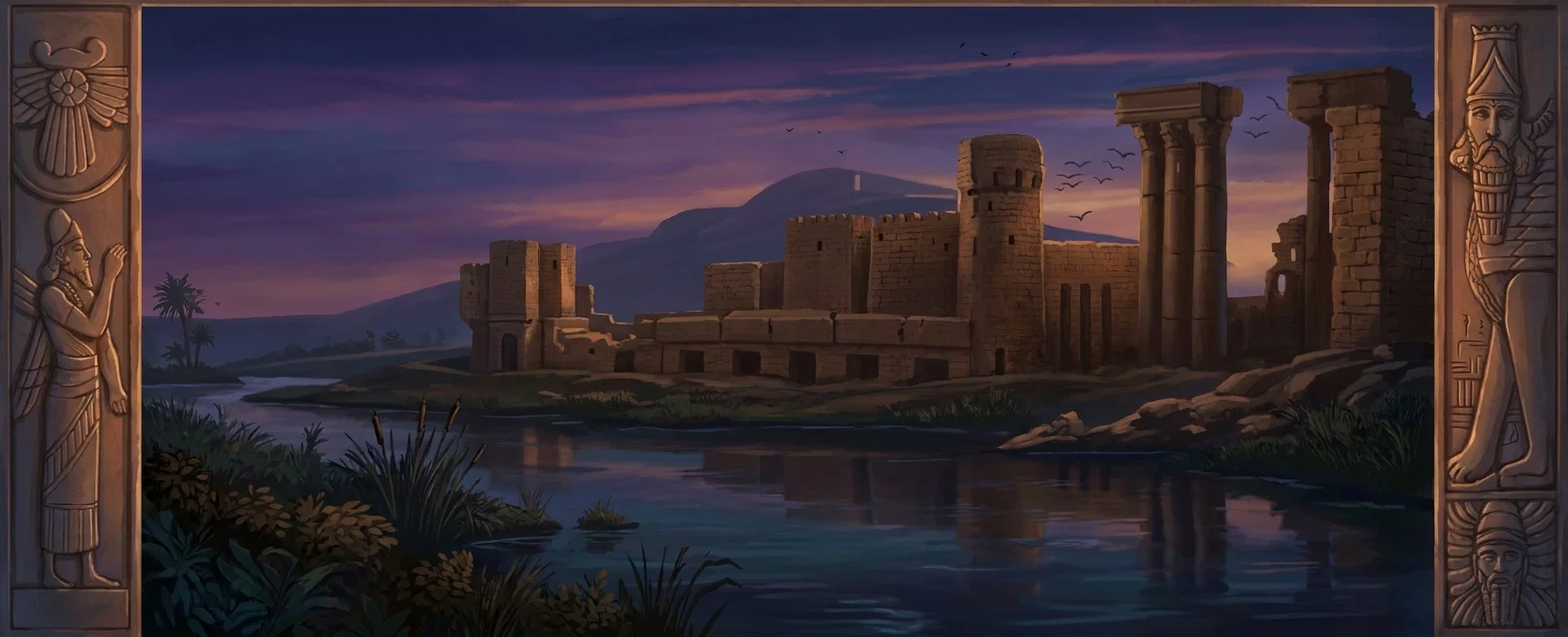
Thus “the broad walls of Babylon” became “utterly broken, and her high gates . . . burned with fire.” Thus did Jehovah of hosts “cause the arrogancy533of the proud to cease,” and lay low “the haughtiness of the terrible.” Thus did “Babylon, the glory of kingdoms, the beauty of the Chaldees’ excellency,” become as Sodom and Gomorrah,—a place forever accursed. “It shall never be inhabited,” Inspiration has declared, “neither shall it be dwelt in from generation to generation: neither shall the Arabian pitch tent there; neither shall the shepherds make their fold there. But wild beasts of the desert shall lie there; and their houses shall be full of doleful creatures; and owls shall dwell there, and satyrs shall dance there. And the wild beasts of the islands shall cry in their desolate houses, and dragons in their pleasant palaces.” “I will also make it a possession for the bittern, and pools of water: and I will sweep it with the besom of destruction, saith the Lord of hosts.”
To the last ruler of Babylon, as in type to its first, had come the sentence of the divine Watcher: “O king, . . . to thee it is spoken; ‘The kingdom is departed from thee.’”
“Come down, and sit in the dust, O virgin daughter of Babylon,
Sit on the ground: there is no throne. . . .
Sit thou silent,
And get thee into darkness, O daughter of the Chaldeans:
For thou shalt no more be called, The lady of kingdoms.
“I was wroth with My people,
I have polluted Mine inheritance, and given them into thine hand:
Thou didst show them no mercy; . . .
“And thou saidst, I shall be a lady forever:
So that thou didst not lay these things to thy heart,
Neither didst remember the latter end of it.
“Therefore hear now this, Thou that art given to pleasures, That dwellest carelessly, That sayest in thine heart, I am, and none else beside me; I shall not sit as a widow, Neither shall I know the loss of children: . . .
“These two things shall come to thee in a moment in one day,
The loss of children, and widowhood:
They shall come upon thee in their perfection for the multitude of thy sorceries, and for the great abundance of thine enchantments.
For thou hast trusted in thy wickedness:
Thou hast said, None seeth me.
“Thy wisdom and thy knowledge, it hath perverted thee;
And thou hast said in thine heart,
I am, and none else beside me.
Therefore shall evil come upon thee;
Thou shalt not know from whence it riseth:
And mischief shall fall upon thee;
Thou shalt not be able to put it off:
And desolation shall come upon thee suddenly, which thou shalt not know.
“Stand now with thine enchantments, and with the multitude of thy sorceries, wherein thou hast labored from thy youth;
If so be thou shalt be able to profit,
If so be thou mayest prevail.
“Thou art wearied in the multitude of thy counsels. Let now the astrologers, the stargazers, the monthly prognosticators, Stand up, and save thee from these things that shall come upon thee. Behold, they shall be as stubble; . . . They shall not deliver themselves from the power of the flame: . . . None shall save thee.”
Every nation that has come upon the stage of action has been permitted to occupy its place on the earth, that the fact might be determined whether it would fulfill the purposes of the Watcher and the Holy One. Prophecy has traced the rise and progress of the world’s great empires,— Babylon, Medo-Persia, Greece, and Rome. With each of these, as with the nations of less power, history has repeated itself. Each has had its period of test; each has failed, its glory faded, its power departed.
While nations have rejected God’s principles, and in this rejection have wrought their own ruin, yet a divine, overruling purpose has manifestly been at work throughout the ages. It was this that the prophet Ezekiel saw in the wonderful representation given him during his exile in the land of the Chaldeans, when before his astonished gaze were portrayed the symbols that revealed an overruling Power that has to do with the affairs of earthly rulers.
Upon the banks of the river Chebar, Ezekiel beheld a whirlwind seeming to come from the north, “a great cloud, and a fire infolding itself, and a brightness was about it, and out of the midst thereof as the color of amber.” A number of wheels intersecting one another were moved by four living beings. High above all these “was the likeness of a throne, as the appearance of a sapphire stone: and upon the likeness of the throne was the likeness as the appearance of a man above upon it.” “And there appeared in the cherubims the form of a man’s hand under their wings.” The wheels were so complicated in arrangement, that at first sight they appeared to be in confusion; yet they moved in perfect harmony. Heavenly536beings, sustained and guided by the hand beneath the wings of the cherubim, were impelling those wheels; above them, upon the sapphire throne, was the Eternal One; and round about the throne was a rainbow, the emblem of divine mercy.
As the wheel-like complications were under the guidance of the hand beneath the wings of the cherubim, so the complicated play of human events is under divine control. Amidst the strife and tumult of nations, He that sitteth above the cherubim still guides the affairs of this earth.
The history of nations speaks to us to-day. To every nation and to every individual God has assigned a place in His great plan. To-day men and nations are being tested by the plummet in the hand of Him who makes no mistake. All are by their own choice deciding their destiny, and God is overruling all for the accomplishment of His purposes.
The prophecies which the great I AM has given in His word, uniting link after link in the chain of events, from eternity in the past to eternity in the future, tell us where we are to-day in the procession of the ages, and what may be expected in the time to come. All that prophecy has foretold as coming to pass, until the present time, has been traced on the pages of history, and we may be assured that all which is yet to come will be fulfilled in its order.
To-day the signs of the times declare that we are standing on the threshold of great and solemn events. Everything in our world is in agitation. Before our eyes is fulfilling the Saviour’s prophecy of the events to precede His coming: “Ye shall hear of wars and rumors of wars. . . . Nation shall rise against nation,537and kingdom against kingdom: and there shall be famines, and pestilences, and earthquakes, in divers places.”
The present is a time of overwhelming interest to all living. Rulers and statesmen, men who occupy positions of trust and authority, thinking men and women of all classes, have their attention fixed upon the events taking place about us. They are watching the relations that exist among the nations. They observe the intensity that is taking possession of every earthly element, and they recognize that something great and decisive is about to take place,—that the world is on the verge of a stupendous crisis.
The Bible, and the Bible only, gives a correct view of these things. Here are revealed the great final scenes in the history of our world, events that already are casting their shadows before, the sound of their approach causing the earth to tremble, and men’s hearts to fail them for fear.
“Behold, the Lord maketh the earth empty, and maketh it waste, and turneth it upside down, and scattereth abroad the inhabitants thereof; . . . because they have transgressed the laws, changed the ordinance, broken the everlasting covenant. Therefore hath the curse devoured the earth, and they that dwell therein are desolate.”
“Alas for the day! for the day of the Lord is at hand, and as a destruction from the Almighty shall it come. . . . The seed is rotten under their clods, the garners are laid desolate, the barns are broken down; for the corn is withered. How do the beasts groan! the herds of cattle are perplexed, because they538have no pasture; yea, the flocks of sheep are made desolate.” “The vine is dried up, and the fig tree languisheth; the pomegranate tree, the palm tree also, and the apple tree, even all the trees of the field, are withered: because joy is withered away from the sons of men.”
“I am pained at my very heart; . . . I cannot hold my peace, because thou hast heard, O my soul, the sound of the trumpet, the alarm of war. Destruction upon destruction is cried; for the whole land is spoiled.”
“Alas! for that day is great, so that none is like it: it is even the time of Jacob’s trouble; but he shall be saved out of it.”
“Because thou hast made the Lord, which is my refuge,
Even the Most High, thy habitation;
There shall no evil befall thee,
Neither shall any plague come nigh thy dwelling.”
“O daughter of Zion, . . . the Lord shall redeem thee from the hand of thine enemies. Now also many nations are gathered against thee, that say, Let her be defiled, and let our eye look upon Zion. But they know not the thoughts of the Lord, neither understand they His counsel.” God will not fail His church in the hour of her greatest peril. He has promised deliverance. “I will bring again the captivity of Jacob’s tents,” He has declared, “and have mercy on his dwelling-places.”
Then will the purpose of God be fulfilled; the principles of His kingdom will be honored by all beneath the sun.