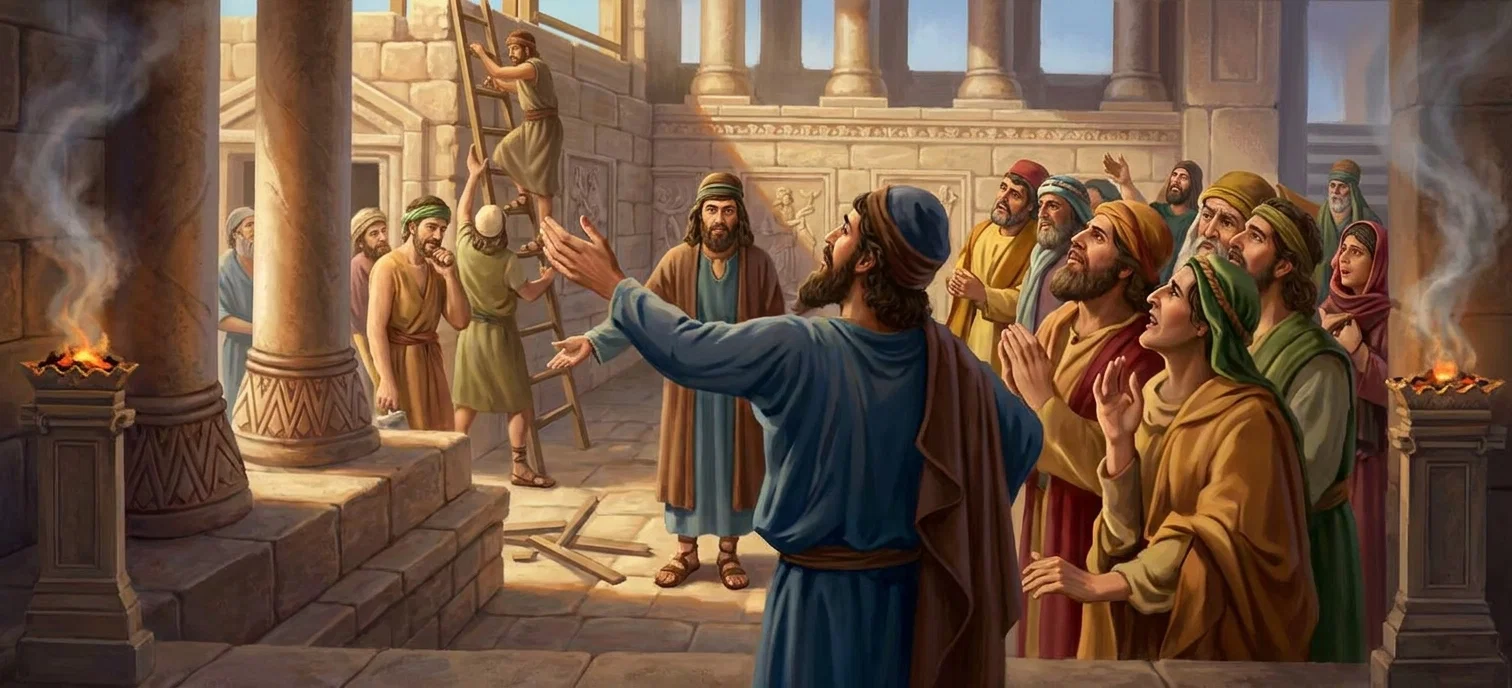
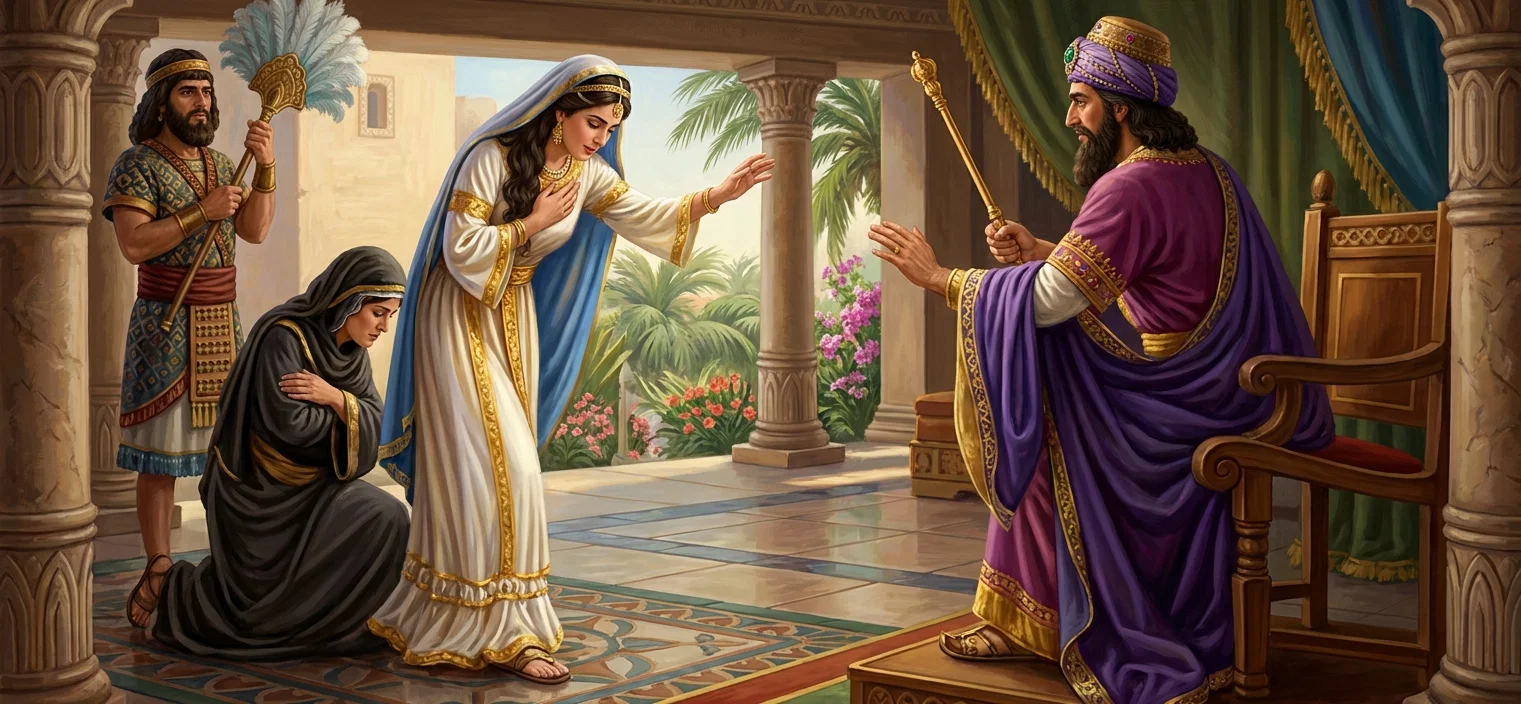
The steady advancement made by the builders of the temple greatly discomfited and alarmed the hosts of evil. Satan determined to put forth still further effort to weaken and discourage God’s people by holding before them their imperfections of character. If those who had long suffered because of transgression could again be induced to disregard God’s commandments, they would be brought once more under the bondage of sin.
Because Israel had been chosen to preserve the knowledge of God in the earth, they had ever been the special objects of Satan’s enmity; he was determined to cause their destruction. While they were obedient, he could do them no harm; therefore he had bent all his power and cunning to entice them into sin. Ensnared by his temptations, they had transgressed the law of God, and had been left to become the prey of their enemies.
Yet though they were carried as captives to Babylon, God did not forsake them. He sent His prophets (582)581Ato them with reproofs and warnings, and aroused them to see their guilt. When they humbled themselves before God, and returned to Him with true repentance, He sent them messages of encouragement, declaring that He would deliver them from captivity, restore them to His favor, and once more establish them in their own land. And now that this work of restoration had begun, and a remnant of Israel had already returned to Judea, Satan was determined to frustrate the carrying out of the divine purpose, and to this end he was seeking to move upon the heathen nations to destroy them utterly.
But in this crisis the Lord strengthened His people “with good words and comfortable words.” Through an impressive illustration of the work of Satan and the work of Christ, He showed the power of their Mediator to vanquish the accuser of His people.
In vision the prophet beholds “Joshua the high priest,” “clothed with filthy garments,” standing before the Angel of the Lord, entreating God’s mercy in behalf of his afflicted people. As he pleads for the fulfillment of God’s promises, Satan stands up boldly to resist him. He points to the transgressions of Israel as a reason why they should not be restored to the favor of God. He claims them as his prey, and demands that they be given into his hands.
The high priest cannot defend himself or his people from Satan’s accusations. He does not claim that Israel is free from fault. In filthy garments, symbolizing the sins of the people, which he bears as their representative, he stands before the Angel,584confessing their guilt, yet pointing to their repentance and humiliation, and relying upon the mercy of a sin-pardoning Redeemer. In faith he claims the promises of God.
Then the Angel, who is Christ Himself, the Saviour of sinners, puts to silence the accuser of His people, declaring, “The Lord rebuke thee, O Satan; even the Lord that hath chosen Jerusalem rebuke thee: is not this a brand plucked out of the fire?” Long had Israel remained in the furnace of affliction. Because of their sins, they had been well-nigh consumed in the flame kindled by Satan and his agents for their destruction; but God had now set His hand to bring them forth.
As the intercession of Joshua is accepted, the command is given, “Take away the filthy garments from him;” and to Joshua the Angel says, “Behold, I have caused thine iniquity to pass from thee, and I will clothe thee with change of raiment.” “So they set a fair miter upon his head, and clothed him with garments.” His own sins and those of his people were pardoned. Israel was clothed with “change of raiment,”—the righteousness of Christ imputed to them. The miter placed upon Joshua’s head was such as were worn by the priests, and bore the inscription, “Holiness to the Lord,” signifying that notwithstanding his former transgressions, he was now qualified to minister before God in His sanctuary.
The Angel now declared to Joshua: “Thus saith the Lord of hosts; If thou wilt walk in My ways, and if thou wilt keep My charge, then thou shalt also judge My house, and shalt also keep My courts, and585I will give thee places to walk among these that stand by.” If obedient, he should be honored as the judge, or ruler, over the temple and all its services; he should walk among attending angels, even in this life; and at last he should join the glorified throng around the throne of God.
“Hear now, O Joshua the high priest, thou, and thy fellows that sit before thee: for they are men wondered at: for, behold, I will bring forth My Servant the Branch.” In the Branch, the Deliverer to come, lay the hope of Israel. It was by faith in the coming Saviour that Joshua and his people had received pardon. Through faith in Christ they had been restored to God’s favor. By virtue of His merits, if they walked in His ways and kept His statutes, they would be “men wondered at,” honored as the chosen of Heaven among the nations of the earth.
As Satan accused Joshua and his people, so in all ages he accuses those who seek the mercy and favor of God. He is “the accuser of our brethren, . . . which accused them before our God day and night.” Over every soul that is rescued from the power of evil, and whose name is registered in the Lamb’s book of life, the controversy is repeated. Never is one received into the family of God without exciting the determined resistance of the enemy. But He who was the hope of Israel then, their defense, their justification and redemption, is the hope of the church to-day.
Satan’s accusations against those who seek the Lord are not prompted by displeasure at their sins. He exults in their defective characters; for he knows586that only through their transgression of God’s law can he obtain power over them. His accusations arise solely from his enmity to Christ. Through the plan of salvation, Jesus is breaking Satan’s hold upon the human family, and rescuing souls from his power. All the hatred and malignity of the archrebel is stirred as he beholds the evidences of Christ’s supremacy; and with fiendish power and cunning he works to wrest from Him the children of men who have accepted salvation. He leads men into skepticism, causing them to lose confidence in God and to separate from His love; he tempts them to break the law, and then claims them as his captives, contesting Christ’s right to take them from him.
Satan knows that those who ask God for pardon and grace will obtain it; therefore he presents their sins before them, to discourage them. Against those who are trying to obey God, he is constantly seeking occasion for complaint. Even their best and most acceptable service, he seeks to make appear corrupt. By countless devices, the most subtle and the most cruel, he endeavors to secure their condemnation.
In his own strength, man cannot meet the charges of the enemy. In sin-stained garments, confessing his guilt, he stands before God. But Jesus, our Advocate, presents an effectual plea in behalf of all who by repentance and faith have committed the keeping of their souls to Him. He pleads their cause, and by the mighty arguments of Calvary, vanquishes their accuser. His perfect obedience to God’s law has given Him all power in heaven and in earth, and He claims from His Father mercy and reconciliation for guilty man. To the accuser of His people He declares: “The587Lord rebuke thee, O Satan. These are the purchase of My blood, brands plucked from the burning.” And to those who rely on Him in faith, He gives the assurance, “Behold, I have caused thine iniquity to pass from thee, and I will clothe thee with change of raiment.”
All who have put on the robe of Christ’s righteousness will stand before Him as chosen, and faithful, and true. Satan has no power to pluck them out of the hand of the Saviour. Not one soul who in penitence and faith has claimed His protection, will Christ permit to pass under the enemy’s power. His word is pledged: “Let him take hold of My strength, that he may make peace with Me; and he shall make peace with Me.” The promise given to Joshua is given to all: “If thou wilt keep My charge, . . . I will give thee places to walk among these that stand by.” Angels of God will walk on either side of them, even in this world, and they will stand at last among the angels that surround the throne of God.
Zechariah’s vision of Joshua and the Angel applies with peculiar force to the experience of God’s people in the closing scenes of the great day of atonement. The remnant church will then be brought into great trial and distress. Those who keep the commandments of God and the faith of Jesus, will feel the ire of the dragon and his hosts. Satan numbers the world as his subjects; he has gained control even of many professing Christians. But here is a little company who are resisting his supremacy. If he could blot them from the earth, his triumph would be complete. As he influenced the heathen nations to destroy Israel,588so in the near future he will stir up the wicked powers of earth to destroy the people of God. Men will be required to render obedience to human edicts in violation of the divine law.
Those who are true to God will be menaced, denounced, proscribed. They will be “betrayed both by parents, and brethren, and kinsfolks, and friends,” even unto death. Their only hope is in the mercy of God; their only defense will be prayer. As Joshua pleaded before the Angel, so the remnant church, with brokenness of heart and unfaltering faith, will plead for pardon and deliverance through Jesus, their Advocate. They are fully conscious of the sinfulness of their lives, they see their weakness and unworthiness; and they are ready to despair.
The tempter stands by to accuse them, as he stood by to resist Joshua. He points to their filthy garments, their defective characters. He presents their weakness and folly, their sins of ingratitude, their unlikeness to Christ, which has dishonored their Redeemer. He endeavors to affright them with the thought that their case is hopeless, that the stain of their defilement will never be washed away. He hopes so to destroy their faith that they will yield to his temptations, and turn from their allegiance to God.
Satan has an accurate knowledge of the sins that he has tempted God’s people to commit, and he urges his accusations against them, declaring that by their sins they have forfeited divine protection, and claiming that he has the right to destroy them. He pronounces them just as deserving as himself of exclusion from the favor of God. “Are these,” he says, “the people who are to take my place in heaven, and the589place of the angels who united with me? They profess to obey the law of God; but have they kept its precepts? Have they not been lovers of self more than lovers of God? Have they not placed their own interests above His service? Have they not loved the things of the world? Look at the sins that have marked their lives. Behold their selfishness, their malice, their hatred of one another. Will God banish me and my angels from His presence, and yet reward those who have been guilty of the same sins? Thou canst not do this, O Lord, in justice. Justice demands that sentence be pronounced against them.”
But while the followers of Christ have sinned, they have not given themselves up to be controlled by the satanic agencies. They have repented of their sins, and have sought the Lord in humility and contrition; and the divine Advocate pleads in their behalf. He who has been most abused by their ingratitude, who knows their sin and also their penitence, declares: “The Lord rebuke thee, O Satan. I gave My life for these souls. They are graven upon the palms of My hands. They may have imperfections of character; they may have failed in their endeavors; but they have repented, and I have forgiven and accepted them.”
The assaults of Satan are strong, his delusions are subtle; but the Lord’s eye is upon His people. Their affliction is great, the flames of the furnace seem about to consume them; but Jesus will bring them forth as gold tried in the fire. Their earthliness will be removed, that through them the image of Christ may be perfectly revealed.
At times the Lord may seem to have forgotten the perils of His church, and the injury done her by her enemies. But God has not forgotten. Nothing in this world is so dear to the heart of God as His church. It is not His will that worldly policy shall corrupt her record. He does not leave His people to be overcome by Satan’s temptations. He will punish those who misrepresent Him, but He will be gracious to all who sincerely repent. To those who call upon Him for strength for the development of Christian character, He will give all needed help.
In the time of the end, the people of God will sigh and cry for the abominations done in the land. With tears they will warn the wicked of their danger in trampling upon the divine law, and with unutterable sorrow they will humble themselves before the Lord in penitence. The wicked will mock their sorrow and ridicule their solemn appeals. But the anguish and humiliation of God’s people is unmistakable evidence that they are regaining the strength and nobility of character lost in consequence of sin. It is because they are drawing nearer to Christ, because their eyes are fixed on His perfect purity, that they discern so clearly the exceeding sinfulness of sin. Meekness and lowliness are the conditions of success and victory. A crown of glory awaits those who bow at the foot of the cross.
God’s faithful, praying ones are, as it were, shut in with Him. They themselves know not how securely they are shielded. Urged on by Satan, the rulers of this world are seeking to destroy them; but could the eyes of God’s children be opened, as were the eyes of Elisha’s servant at Dothan, they would see angels591of God encamped about them, holding in check the hosts of darkness.
As the people of God afflict their souls before Him, pleading for purity of heart, the command is given, “Take away the filthy garments,” and the encouraging words are spoken, “Behold, I have caused thine iniquity to pass from thee, and I will clothe thee with change of raiment.” The spotless robe of Christ’s righteousness is placed upon the tried, tempted, faithful children of God. The despised remnant are clothed in glorious apparel, nevermore to be defiled by the corruptions of the world. Their names are retained in the Lamb’s book of life, enrolled among the faithful of all ages. They have resisted the wiles of the deceiver; they have not been turned from their loyalty by the dragon’s roar. Now they are eternally secure from the tempter’s devices. Their sins are transferred to the originator of sin. A “fair miter” is set upon their heads.
While Satan has been urging his accusations, holy angels, unseen, have been passing to and fro, placing upon the faithful ones the seal of the living God. These are they that stand upon Mount Zion with the Lamb, having the Father’s name written in their foreheads. They sing the new song before the throne, that song which no man can learn save the hundred and forty and four thousand which were redeemed from the earth. “These are they which follow the Lamb whithersoever He goeth. These were redeemed from among men, being the first-fruits unto God and to the Lamb. And in their mouth was found no guile: for they are without fault before the throne of God.”
Now is reached the complete fulfillment of the words of the Angel: “Hear now, O Joshua the high priest, thou, and thy fellows that sit before thee: for they are men wondered at: for, behold, I will bring forth My Servant the Branch.” Christ is revealed as the Redeemer and Deliverer of His people. Now indeed are the remnant “men wondered at,” as the tears and humiliation of their pilgrimage give place to joy and honor in the presence of God and the Lamb. “In that day shall the branch of the Lord be beautiful and glorious, and the fruit of the earth shall be excellent and comely for them that are escaped of Israel. And it shall come to pass, that he that is left in Zion, and he that remaineth in Jerusalem, shall be called holy, even every one that is written among the living in Jerusalem.”
“They Built, and Finished It”
“NOT BY MIGHT, NOR BY POWER”—48
Immediately after Zechariah’s vision of Joshua and the Angel, the prophet received a message regarding the work of Zerubbabel. “The Angel that talked with me,” Zechariah declares, “came again, and waked me, as a man that is wakened out of his sleep, and said unto me, What seest thou? And I said, I have looked, and behold a candlestick all of gold, with a bowl upon the top of it, and his seven lamps thereon, and seven pipes to the seven lamps, which are upon the top thereof: and two olive trees by it, one upon the right side of the bowl, and the other upon the left side thereof.
“So I answered and spake to the Angel that talked with me, saying, What are these, my Lord? . . . Then He answered and spake unto me, saying, This is the word of the Lord unto Zerubbabel, saying, Not by might, nor by power, but by My Spirit, saith the Lord of hosts.”
“Then answered I, and said unto Him, What are these two olive trees upon the right side of the candlestick594stick and upon the left side thereof? And I answered again, and said unto Him, What be these two olive branches which through the two golden pipes empty the golden oil out of themselves? . . . Then said He, These are the two anointed ones, that stand by the Lord of the whole earth.”
In this vision the two olive trees which stand before God are represented as emptying the golden oil out of themselves through golden tubes into the bowl of the candlestick. From this the lamps of the sanctuary are fed, that they may give a bright, continuous light. So from the anointed ones that stand in God’s presence the fullness of divine light and love and power is imparted to His people, that they may impart to others light and joy and refreshing. Those who are thus enriched are to enrich others with the treasure of God’s love.
In rebuilding the house of the Lord, Zerubbabel had labored in the face of manifold difficulties. From the beginning, adversaries had “weakened the hands of the people of Judah, and troubled them in building,” “and made them to cease by force and power,” But the Lord had interposed in behalf of the builders, and now He spoke through His prophet to Zerubbabel, saying: “Who art thou, O great mountain? before Zerubbabel thou shalt become a plain: and he shall bring forth the headstone thereof with shoutings, crying, Grace, grace unto it.”
Throughout the history of God’s people, great mountains of difficulty, apparently insurmountable, have loomed up before those who were trying to carry out the purposes of Heaven. Such obstacles are permitted595by the Lord as a test of faith. When we are hedged about on every side, this is the time above all others to trust in God and in the power of His Spirit. The exercise of a living faith means an increase of spiritual strength and the development of an unfaltering trust. It is thus that the soul becomes a conquering power. Before the demand of faith, the obstacles placed by Satan across the pathway of the Christian will disappear; for the powers of heaven will come to his aid. “Nothing shall be impossible unto you.”
The way of the world is to begin with pomp and boasting. God’s way is to make the day of small things the beginning of the glorious triumph of truth and righteousness. Sometimes He trains His workers by bringing to them disappointment and apparent failure. It is His purpose that they shall learn to master difficulties.
Often men are tempted to falter before the perplexities and obstacles that confront them. But if they will hold the beginning of their confidence steadfast unto the end, God will make the way clear. Success will come to them as they struggle against difficulties. Before the intrepid spirit and unwavering faith of a Zerubbabel, great mountains of difficulty will become a plain; and he whose hands have laid the foundation, even “his hands shall also finish it.” “He shall bring forth the headstone thereof with shoutings, crying, Grace, grace unto it.”
Human power and human might did not establish the church of God, and neither can they destroy it. Not on the rock of human strength, but on Christ596Jesus, the Rock of Ages, was the church founded, “and the gates of hell shall not prevail against it.” The presence of God gives stability to His cause. “Put not your trust in princes, nor in the son of man,” is the word that comes to us. “In quietness and in confidence shall be your strength.” God’s glorious work, founded on the eternal principles of right, will never come to naught. It will go on from strength to strength, “not by might, nor by power, but by My Spirit, saith the Lord of hosts.”
The promise, “The hands of Zerubbabel have laid the foundation of this house; his hands shall also finish it,” was literally fulfilled. “The elders of the Jews builded, and they prospered through the prophesying of Haggai the prophet and Zechariah the son of Iddo. And they builded, and finished it, according to the commandment of the God of Israel, and according to the commandment of Cyrus, and Darius, and Artaxerxes king of Persia. And this house was finished on the third day of the month Adar [the twelfth month], which was in the sixth year of the reign of Darius the king.”
Shortly afterward, the restored temple was dedicated. “The children of Israel, the priests, and the Levites, and the rest of the children of the captivity, kept the dedication of this house of God with joy;” and “upon the fourteenth day of the first month” they “kept the Passover.”
The second temple did not equal the first in magnificence, nor was it hallowed by those visible tokens of the divine presence which pertained to the first temple.597There was no manifestation of supernatural power to mark its dedication. No cloud of glory was seen to fill the newly erected sanctuary. No fire from heaven descended to consume the sacrifice upon its altar. The shekinah no longer abode between the cherubim in the most holy place; the ark, the mercy-seat, and the tables of testimony were not found there. No sign from heaven made known to the inquiring priest the will of Jehovah.
And yet this was the building concerning which the Lord had declared by the prophet Haggai: “The glory of this latter house shall be greater than of the former.” “I will shake all nations, and the Desire of all nations shall come: and I will fill this house with glory, saith the Lord of hosts.” For centuries learned men have endeavored to show wherein the promise of God, given to Haggai, has been fulfilled; yet in the advent of Jesus of Nazareth, the Desire of all nations, who by His personal presence hallowed the precincts of the temple, many have steadfastly refused to see any special significance. Pride and unbelief have blinded their minds to the true meaning of the prophet’s words.
The second temple was honored, not with the cloud of Jehovah’s glory, but with the presence of the One in whom dwelt “all the fullness of the Godhead bodily,”—God Himself “manifest in the flesh.” In being honored with the personal presence of Christ during His earthly ministry, and in this alone, did the second temple exceed the first in glory. The “Desire of all nations” had indeed come to His temple, when the Man of Nazareth taught and healed in the sacred courts.