UNDER the favor shown them by Cyrus, nearly fifty thousand of the children of the captivity had taken advantage of the decree permitting their return. These, however, in comparison with the hundreds of thousands scattered throughout the provinces of Medo-Persia, were but a mere remnant. The great majority of the Israelites had chosen to remain in the land of their exile, rather than undergo the hardships of the return journey and the reëstablishment of their desolated cities and homes.
A score or more of years passed by, when a second decree, quite as favorable as the first, was issued by Darius Hystaspes, the monarch then ruling. Thus did God in mercy provide another opportunity for the Jews in the Medo-Persian realm to return to the land of their fathers. The Lord foresaw the troublous times that were to follow during the reign of Xerxes,—the Ahasuerus of the book of Esther,—and He not only wrought a change of feeling in the hearts599of men in authority, but also inspired Zechariah to plead with the exiles to return.
“Ho, ho, come forth, and flee from the land of the north,” was the message given the scattered tribes of Israel who had become settled in many lands far from their former home. “I have spread you abroad as the four winds of the heaven, saith the Lord. Deliver thyself, O Zion, that dwellest with the daughter of Babylon. For thus saith the Lord of hosts; After the glory hath He sent me unto the nations which spoiled you: for he that toucheth you toucheth the apple of His eye. For, behold, I will shake mine hand upon them, and they shall be a spoil to their servants: and ye shall know that the Lord of hosts hath sent me.”
It was still the Lord’s purpose, as it had been from the beginning, that His people should be a praise in the earth, to the glory of His name. During the long years of their exile He had given them many opportunities to return to their allegiance to Him. Some had chosen to listen and to learn; some had found salvation in the midst of affliction. Many of these were to be numbered among the remnant that should return. They were likened by Inspiration to “the highest branch of the high cedar,” which was to be planted “upon an high mountain and eminent: in the mountain of the height of Israel.”
It was those “whose spirit God had raised” who had returned under the decree of Cyrus. But God ceased not to plead with those who voluntarily remained in the land of their exile; and through manifold agencies He made it possible for them also to return. The large number, however, of those who600failed to respond to the decree of Cyrus, remained unimpressible to later influences; and even when Zechariah warned them to flee from Babylon without further delay, they did not heed the invitation.
Meanwhile conditions in the Medo-Persian realm were rapidly changing. Darius Hystaspes, under whose reign the Jews had been shown marked favor, was succeeded by Xerxes the Great. It was during his reign that those of the Jews who had failed of heeding the message to flee, were called upon to face a terrible crisis. Having refused to take advantage of the way of escape God had provided, now they were brought face to face with death.
Through Haman the Agagite, an unscrupulous man high in authority in Medo-Persia, Satan worked at this time to counterwork the purposes of God. Haman cherished bitter malice against Mordecai, a Jew. Mordecai had done Haman no harm, but had simply refused to show him worshipful reverence. Scorning to “lay hands on Mordecai alone,” Haman plotted “to destroy all the Jews that were throughout the whole kingdom of Ahasuerus, even the people of Mordecai.”
Misled by the false statements of Haman, Xerxes was induced to issue a decree providing for the massacre of all the Jews “scattered abroad and dispersed among the people in all the provinces” of the Medo-Persian kingdom. A certain day was appointed on which the Jews were to be destroyed and their property confiscated. Little did the king realize the far-reaching results that would have accompanied the complete carrying out of this decree. Satan himself,601the hidden instigator of the scheme, was trying to rid the earth of those who preserved the knowledge of the true God.
“In every province, whithersoever the king’s commandment and his decree came, there was great mourning among the Jews, and fasting, and weeping, and wailing; and many lay in sackcloth and ashes.” The decree of the Medes and Persians could not be revoked; apparently there was no hope; all the Israelites were doomed to destruction.
But the plots of the enemy were defeated by a Power that reigns among the children of men. In the providence of God, Esther, a Jewess who feared the Most High, had been made queen of the Medo-Persian kingdom. Mordecai was a near relative of hers. In their extremity, they decided to appeal to Xerxes in behalf of their people. Esther was to venture into his presence as an intercessor. “Who knoweth,” said Mordecai, “whether thou art come to the kingdom for such a time as this?”
The crisis that Esther faced demanded quick, earnest action; but both she and Mordecai realized that unless God should work mightily in their behalf, their own efforts would be unavailing. So Esther took time for communion with God, the source of her strength. “Go,” she directed Mordecai, “gather together all the Jews that are present in Shushan, and fast ye for me, and neither eat nor drink three days, night or day: I also and my maidens will fast likewise; and so will I go in unto the king, which is not according to the law: and if I perish, I perish.”
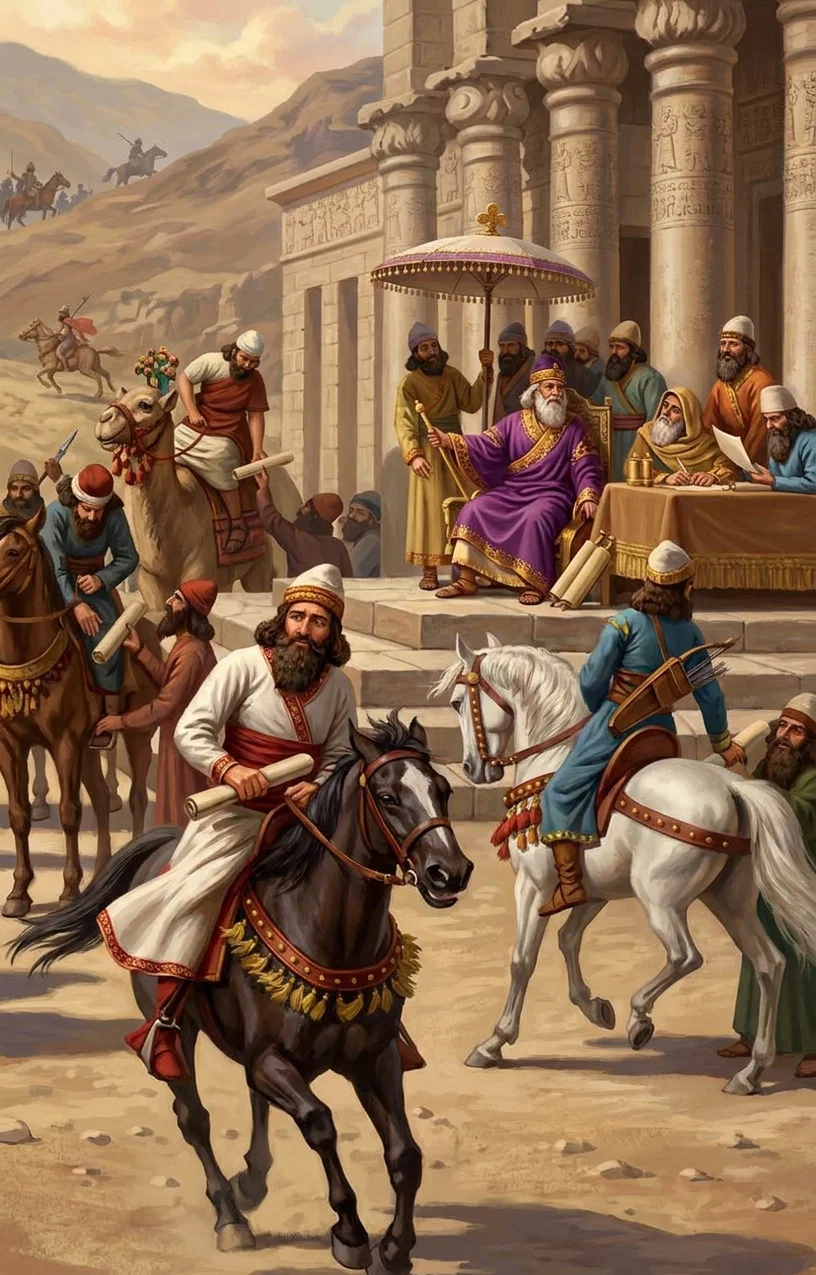
The events that followed in rapid succession,—the appearance of Esther before the king, the marked favor shown her, the banquets of the king and queen with Haman as the only guest, the troubled sleep of the king, the public honor shown Mordecai, and the humiliation and fall of Haman upon the discovery of his wicked plot,—all these are parts of a familiar story. God wrought marvelously for His penitent people; and a counter decree issued by the king, allowing them to fight for their lives, was rapidly communicated to every part of the realm by mounted couriers, who were “hastened and pressed on by the king’s commandment.” “And in every province, and in every city, whithersoever the king’s commandment and his decree came, the Jews had joy and gladness, a feast and a good day. And many of the people of the land became Jews; for the fear of the Jews fell upon them.”
On the day appointed for their destruction, “the Jews gathered themselves together in their cities throughout all the provinces of the king Ahasuerus, to lay hand on such as sought their hurt: and no man could withstand them; for the fear of them fell upon all people.” Angels that excel in strength had been commissioned by God to protect His people while they “stood for their lives.”
Mordecai was given the position of honor formerly occupied by Haman. He “was next unto King Ahasuerus, and great among the Jews, and accepted of the multitude of his brethren;” and he sought to promote the welfare of Israel. Thus did God bring His chosen people once more into favor at the Medo-Persian court,603making possible the carrying out of His purpose to restore them to their own land. But it was not until several years later, in the seventh year of Artaxerxes I, the successor of Xerxes the Great, that any considerable number returned to Jerusalem, under Ezra.
SENDING OUT THE DECREE OF AHASUERUS
“He wrote in the king Ahasuerus’ name, and sent letters by posts.”
The trying experiences that came to God’s people in the days of Esther were not peculiar to that age alone. The revelator, looking down the ages to the close of time, has declared, “The dragon was wroth with the woman, and went to make war with the remnant of her seed, which keep the commandments of God, and have the testimony of Jesus Christ.” Some who to-day are living on the earth will see these words fulfilled. The same spirit that in ages past led men to persecute the true church, will in the future lead to the pursuance of a similar course toward those who maintain their loyalty to God. Even now preparations are being made for this last great conflict.
The decree that will finally go forth against the remnant people of God will be very similar to that issued by Ahasuerus against the Jews. To-day the enemies of the true church see in the little company keeping the Sabbath commandment, a Mordecai at the gate. The reverence of God’s people for His law, is a constant rebuke to those who have cast off the fear of the Lord, and are trampling on His Sabbath.
Satan will arouse indignation against the minority who refuse to accept popular customs and traditions. Men of position and reputation will join with the lawless and the vile to take counsel against the people of God. Wealth, genius, education, will combine to606cover them with contempt. Persecuting rulers, ministers, and church-members will conspire against them. With voice and pen, by boasts, threats, and ridicule, they will seek to overthrow their faith. By false representations and angry appeals, men will stir up the passions of the people. Not having a “Thus saith the Scriptures” to bring against the advocates of the Bible Sabbath, they will resort to oppressive enactments to supply the lack. To secure popularity and patronage, legislators will yield to the demand for Sunday laws. But those who fear God, cannot accept an institution that violates a precept of the Decalogue. On this battle-field will be fought the last great conflict in the controversy between truth and error. And we are not left in doubt as to the issue. To-day, as in the days of Esther and Mordecai, the Lord will vindicate His truth and His people.
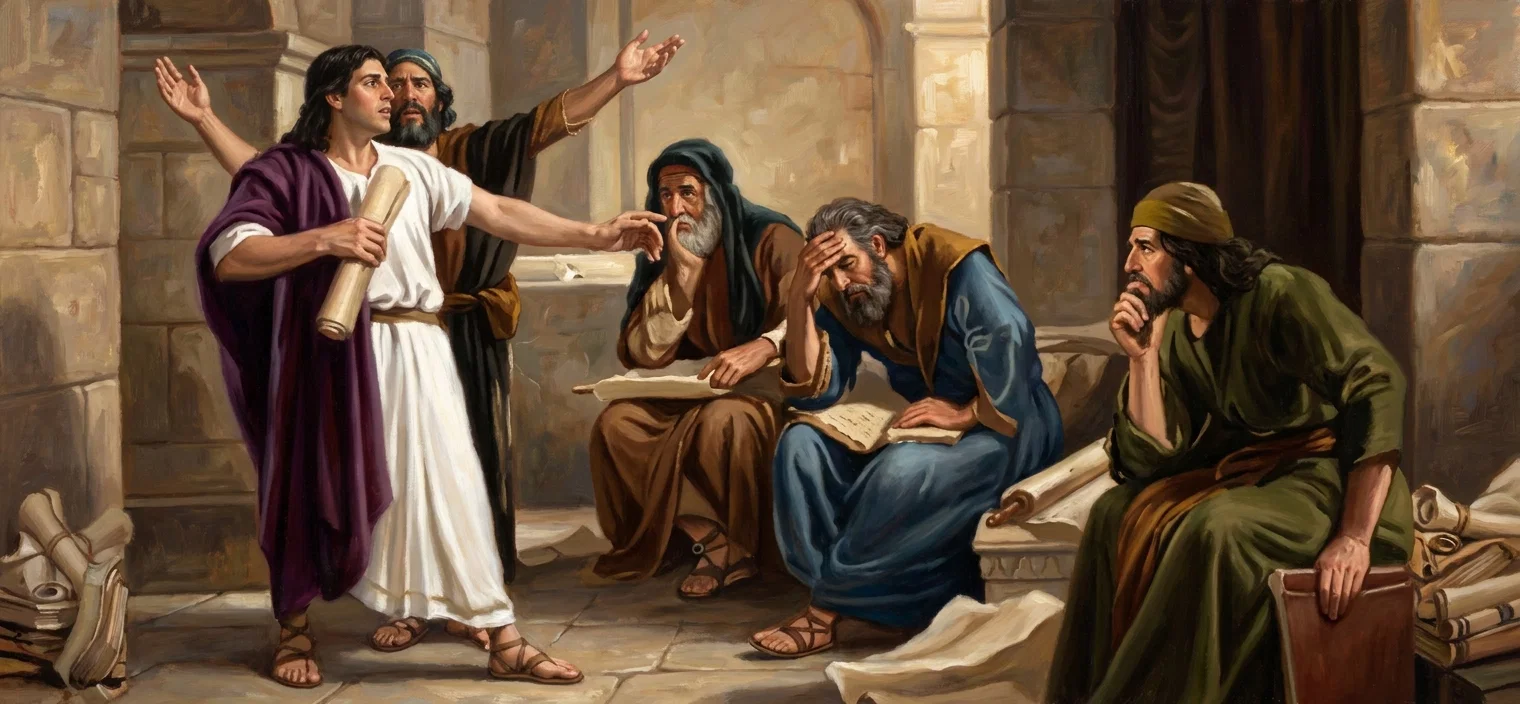
“THE KING WAS DEEPLY IMPRESSED”
EZRA, THE PRIEST AND SCRIBE—50
ABOUT seventy years after the return of the first company of exiles under Zerubbabel and Joshua, Artaxerxes Longimanus came to the throne of Medo-Persia. The name of this king is connected with sacred history by a series of remarkable providences. It was during his reign that Ezra and Nehemiah lived and labored. He is the one who in 457 B. C. issued the third and final decree for the restoration of Jerusalem. His reign saw the return of a company of Jews under Ezra, the completion of the walls of Jerusalem by Nehemiah and his associates, the reorganization of the temple services, and the great religious reformations instituted by Ezra and Nehemiah. During his long rule, he often showed favor to God’s people; and in his trusted and well-beloved Jewish friends, Ezra and Nehemiah, he recognized men of God’s appointment, raised up for a special work.
The experience of Ezra while living among the Jews who remained in Babylon, was so unusual that608it attracted the favorable notice of King Artaxerxes, with whom he talked freely regarding the power of the God of heaven, and the divine purpose in restoring the Jews to Jerusalem.
Born of the sons of Aaron, Ezra had been given a priestly training; and in addition to this he had acquired a familiarity with the writings of the magicians, the astrologers, and the wise men of the Medo-Persian realm. But he was not satisfied with his spiritual condition. He longed to be in full harmony with God; he longed for wisdom to carry out the divine will. And so he “prepared his heart to seek the law of the Lord, and to do it.” This led him to apply himself diligently to a study of the history of God’s people, as recorded in the writings of prophets and kings. He searched the historical and poetical books of the Bible, to learn why the Lord had permitted Jerusalem to be destroyed, and His people carried captive into a heathen land.
To the experiences of Israel from the time the promise was made to Abraham, Ezra gave special thought. He studied the instruction given at Mount Sinai, and through the long period of wilderness wandering. As he learned more and still more concerning God’s dealings with His children, and comprehended the sacredness of the law given at Sinai, Ezra’s heart was stirred. He experienced a new and thorough conversion, and determined to master the records of sacred history, that he might use this knowledge to bring blessing and light to his people.
Ezra endeavored to gain a heart preparation for the work he believed was before him. He sought God earnestly, that he might be a wise teacher in Israel.609As he learned to yield mind and will to divine control, there were brought into his life the principles of true sanctification, which, in later years, had a moulding influence, not only upon the youth who sought his instruction, but upon all others associated with him.
God chose Ezra to be an instrument of good to Israel, that He might put honor upon the priesthood, the glory of which had been greatly eclipsed during the captivity. Ezra developed into a man of extraordinary learning, and became “a ready scribe in the law of Moses.” These qualifications made him an eminent man in the Medo-Persian kingdom.
Ezra became a mouthpiece for God, educating those about him in the principles that govern heaven. During the remaining years of his life, whether near the court of the king of Medo-Persia or at Jerusalem, his principal work was that of a teacher. As he communicated to others the truths he learned, his capacity for labor increased. He became a man of piety and zeal. He was the Lord’s witness to the world of the power of Bible truth to ennoble the daily life.
The efforts of Ezra to revive an interest in the study of the Scriptures, were given permanency by his painstaking, lifelong work of preserving and multiplying the Sacred Writings. He gathered all the copies of the law that he could find, and had these transcribed and distributed. The pure Word, thus multiplied and placed in the hands of many people, gave knowledge that was of inestimable value.
Ezra’s faith that God would do a mighty work for His people, led him to tell Artaxerxes of his desire to return to Jerusalem to revive an interest in the study of God’s word and to assist his brethren in610restoring the holy city. As Ezra declared his perfect trust in the God of Israel as one abundantly able to protect and care for his people, the king was deeply impressed. He well understood that the Israelites were returning to Jerusalem that they might serve Jehovah; yet so great was the king’s confidence in the integrity of Ezra, that he showed him marked favor, granting his request, and bestowing on him rich gifts for the temple service. He made him a special representative of the Medo-Persian kingdom, and conferred on him extensive powers for the carrying out of the purposes that were in his heart.
The decree of Artaxerxes Longimanus for the restoring and building of Jerusalem, the third issued since the close of the seventy years’ captivity, is remarkable for its expressions regarding the God of heaven, for its recognition of the attainments of Ezra, and for the liberality of the grants made to the remnant people of God. Artaxerxes refers to Ezra as “the priest, the scribe, even a scribe of the words of the commandments of the Lord, and of His statutes to Israel;” “a scribe of the law of the God of heaven.” The king united with his counselors in offering freely “unto the God of Israel, whose habitation is in Jerusalem;” and in addition he made provision for meeting many heavy expenses by ordering that they be paid “out of the king’s treasure-house.”
“Thou art sent of the king, and of his seven counselors,” Artaxerxes declared to Ezra, “to inquire concerning Judah and Jerusalem, according to the law of thy God which is in thine hand.” And he further decreed: “Whatsoever is commanded by the God of heaven, let it be diligently done for the house611of the God of heaven: for why should there be wrath against the realm of the king and his sons?”
In giving permission to the Israelites to return, Artaxerxes arranged for the restoration of the members of the priesthood to their ancient rites and privileges. “We certify you,” he declared, “that touching any of the priests and Levites, singers, porters, Nethinims, or ministers of this house of God, it shall not be lawful to impose toll, tribute, or custom, upon them.” He also arranged for the appointment of civil officers to govern the people justly, in accordance with the Jewish code of laws. “Thou, Ezra, after the wisdom of thy God, that is in thine hand,” he directed, “set magistrates and judges, which may judge all the people that are beyond the river, all such as know the laws of thy God; and teach ye them that know them not. And whosoever will not do the law of thy God, and the law of the king, let judgment be executed speedily upon him, whether it be unto death, or to banishment, or to confiscation of goods, or to imprisonment.”
Thus, “according to the good hand of his God upon him,” Ezra had persuaded the king to make abundant provision for the return of all the people of Israel, and of the priests and Levites, in the Medo-Persian realm, who were minded “of their own free will to go up to Jerusalem.” Thus again the children of the dispersion were given opportunity to return to the land with the possession of which were linked the promises to the house of Israel. This decree brought great rejoicing to those who had been uniting with Ezra in a study of God’s purposes concerning His people.612“Blessed be the Lord God of our fathers,” Ezra exclaimed, “which hath put such a thing as this in the king’s heart, to beautify the house of the Lord which is in Jerusalem: and hath extended mercy unto me before the king, and his counselors, and before all the king’s mighty princes.”
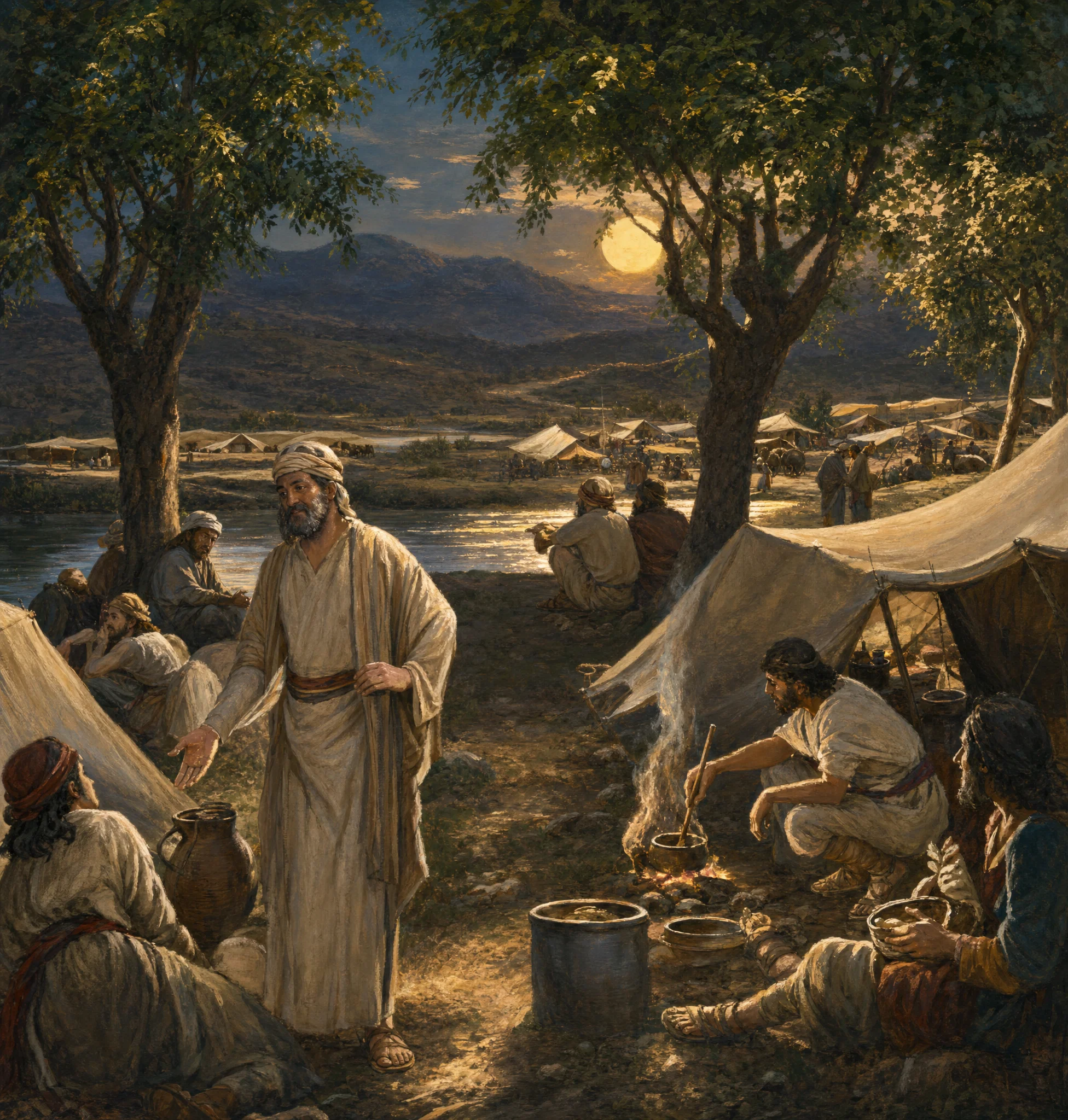
In the issuing of this decree by Artaxerxes, God’s providence was manifest. Some discerned this, and gladly took advantage of the privilege of returning under circumstances so favorable. A general place of meeting was named; and at the appointed time, those who were desirous of going to Jerusalem assembled for the long journey. “I gathered them together to the river that runneth to Ahava,” Ezra says, “and there abode we in tents three days.”
Ezra had expected that a large number would return to Jerusalem, but the number who responded to the call was disappointingly small. Many who had acquired houses and lands had no desire to sacrifice these possessions. They loved ease and comfort, and were well satisfied to remain. Their example proved a hindrance to others who otherwise might have chosen to cast in their lot with those who were advancing by faith.
As Ezra looked over the company assembled, he was surprised to find none of the sons of Levi. Where were the members of the tribe that had been set apart for the sacred service of the temple? To the call, Who is on the Lord’s side? the Levites should have been the first to respond. During the captivity, and afterward, they had been granted many privileges. They had enjoyed the fullest liberty to minister613to the spiritual needs of their brethren in exile. Synagogues had been built, in which the priests conducted the worship of God, and instructed the people. The observance of the Sabbath, and the performance of the sacred rites peculiar to the Jewish faith, had been freely allowed.
THE ENCAMPMENT BY THE RIVER
“There abode we in tents three days.”
But with the passing of the years after the close of the captivity, conditions changed, and many new614responsibilities rested upon the leaders in Israel. The temple at Jerusalem had been rebuilt and dedicated, and more priests were needed to carry on its services. There was pressing need of men of God to act as teachers of the people. And besides, the Jews remaining in Babylon were in danger of having their religious liberty restricted. Through the prophet Zechariah, as well as by their recent experience during the troublous times of Esther and Mordecai, the Jews in Medo-Persia had been plainly warned to return to their own land. The time had come when it was perilous for them to dwell longer in the midst of heathen influences. In view of these changed conditions, the priests in Babylon should have been quick to discern in the issuance of the decree a special call to them to return to Jerusalem.
The king and his princes had done more than their part in opening the way for the return. They had provided abundant means; but where were the men? The sons of Levi failed at a time when the influence of a decision to accompany their brethren would have led others to follow their example. Their strange indifference is a sad revelation of the attitude of the Israelites in Babylon toward God’s purpose for His people.
Once more Ezra appealed to the Levites, sending them an urgent invitation to unite with his company. To emphasize the importance of quick action, he sent with his written plea several of his “chief men” and “men of understanding.”
While the travelers tarried with Ezra, these trusted messengers hastened back with the plea,
“Bring unto us ministers for the house of our God.” The appeal was heeded; some who had been halting, made final decision to return. In all, about forty priests and two hundred and twenty Nethinim,—men upon whom Ezra could rely as wise ministers and good teachers and helpers,—were brought to the camp.
All were now ready to set forth. Before them was a journey that would occupy several months. The men were taking with them their wives and children, and their substance, besides large treasure for the temple and its service. Ezra was aware that enemies lay in wait by the way, ready to plunder and destroy him and his company; yet he had asked from the king no armed force for protection. “I was ashamed,” he has explained, “to require of the king a band of soldiers and horsemen to help us against the enemy in the way: because we had spoken unto the king, saying, The hand of our God is upon all them for good that seek Him; but His power and His wrath is against all them that forsake Him.”
In this matter, Ezra and his companions saw an opportunity to magnify the name of God before the heathen. Faith in the power of the living God would be strengthened if the Israelites themselves should now reveal implicit faith in their divine Leader. They therefore determined to put their trust wholly in Him. They would ask for no guard of soldiers. They would give the heathen no occasion to ascribe to the strength of man the glory that belongs to God alone. They could not afford to arouse in the minds of their heathen friends one doubt as to the sincerity of their616dependence on God as His people. Strength would be gained, not through wealth, not through the power and influence of idolatrous men, but through the favor of God. Only by keeping the law of the Lord before them, and striving to obey it, would they be protected.
This knowledge of the conditions under which they would continue to enjoy the prospering hand of God, lent more than ordinary solemnity to the consecration service that was held by Ezra and his company of faithful souls just before their departure. “I proclaimed a fast there, at the river of Ahava,” Ezra has declared of this experience, “that we might afflict ourselves before our God, to seek of Him a right way for us, and for our little ones, and for all our substance.” “So we fasted and besought our God for this: and He was entreated of us.”
The blessing of God, however, did not make unnecessary the exercise of prudence and forethought. As a special precaution in safeguarding the treasure, Ezra “separated twelve of the chief of the priests,”—men whose faithfulness and fidelity had been proved,—“and weighed unto them the silver, and the gold, and the vessels, even the offering of the house of our God, which the king, and his counselors, and his lords, and all Israel there present, had offered.” These men were solemnly charged to act as vigilant stewards over the treasure entrusted to their care. “Ye are holy unto the Lord,” Ezra declared; “the vessels are holy also; and the silver and the gold are a freewill offering unto the Lord God of your fathers. Watch ye, and keep them, until ye weigh them before the chief of the priests and the617Levites, and chief of the fathers of Israel, at Jerusalem, in the chambers of the house of the Lord.”
The care exercised by Ezra in providing for the transportation and safety of the Lord’s treasure, teaches a lesson worthy of thoughtful study. Only those whose trustworthiness had been proved, were chosen; and they were instructed plainly regarding the responsibility resting on them. In the appointment of faithful officers to act as treasurers of the Lord’s goods, Ezra recognized the necessity and value of order and organization in connection with the work of God.
During the few days that the Israelites tarried at the river, every provision was completed for the long journey. “We departed,” Ezra writes, “on the twelfth day of the first month, to go unto Jerusalem: and the hand of our God was upon us, and He delivered us from the hand of the enemy, and of such as lay in wait by the way.” About four months were occupied on the journey, the multitude that accompanied Ezra, several thousand in all, including women and children, necessitating slow progress. But all were preserved in safety. Their enemies were restrained from harming them. Their journey was a prosperous one; and on the first day of the fifth month, in the seventh year of Artaxerxes, they reached Jerusalem.