Your ShelfYour Projects

Review and Herald, Vol. 91, No. 13.

A Son's Testimony

Review and Herald

Mar 26, 1914

Review and Herald Publishing Association · Takoma Park Station, Washington, D. C. · Mar 26, 1914

A Son's Testimony

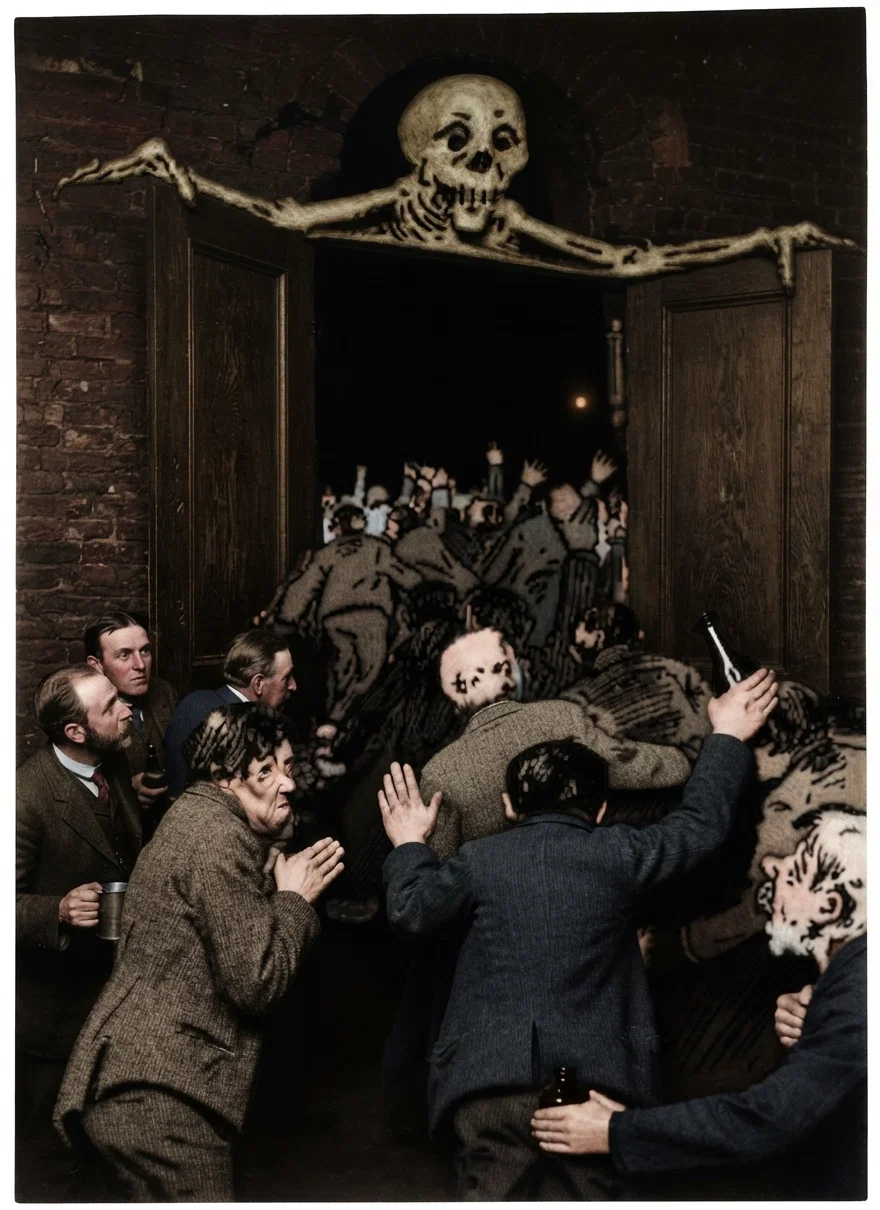
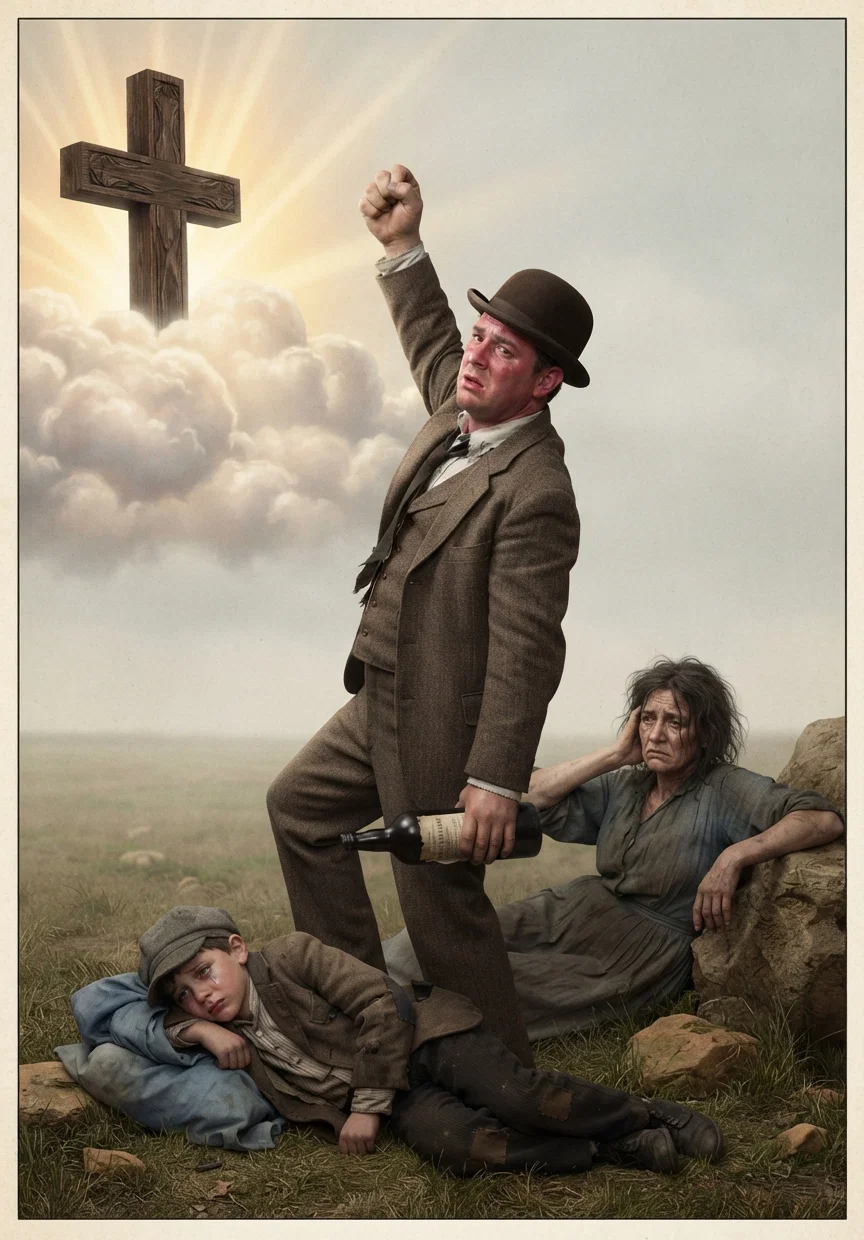
Illustrating the Need of the Temperance Instructor
To the Editor of the Instructor:—
I have had a copy of your February Instructor handed to me, and it just suits me. As I am a rum seller's only son, and have seen my dear mother slain by the hands of a drunkard, who was my father, I have never allowed myself to touch either liquor or tobacco in any form. Now what I want is to get your Instructor.
Thousands of others want the Instructor, and many more need it. The whole world calls, and we must respond.

Religious Liberty in America

By C. M. SNOW
This book deals with the growth of the principles of religious and civil liberty from the beginning of the Christian era down to our own time. It shows how the two principles — religious liberty and religious oppression — have run side by side through the history of nations, the one building up the true kingdom of Christ and the other making martyrs of Christ's true followers. The planting of those two principles on the shores of the New World, and the struggle between them for dominance here, is pictured in interesting detail. Considerable space is devoted to the growth and work of such un-American and oppressive organizations as the National Reform Association, the Lord's Day Alliance, and the Federal Council of the Churches; how these forces propose to unite and are now uniting for the enforcement of oppressive legislation, and have opened the way for union with the Catholic Church for the same purpose. The author shows how this combination of forces is working directly to fulfill the desires and purposes of Rome concerning America. The revelation of what those purposes are and what Rome is doing to bring them about makes one of the most thrilling sections of the book. The closing chapter, "Heaven's Answer to Earth's Great Problem," shows how God will work out the problem of this world through the second coming of Christ, and the establishment of his reign in this sin-smitten world. 436 pages, fully illustrated.
Cloth - - - - - - $1.00
Paper Cover, Berean Library No. 11 - - .35

Love the Foundation of the Law of God and of the Christian's Hope

“THOU shalt love the Lord thy God with all thy heart, and with all thy soul, and with all thy mind.” “Thou shalt love thy neighbor as thyself.” Matt. 22:37, 39.
Are we willing to receive that love? If we are, the Holy Spirit will impart it, and we shall show in every act and word the same spirit that prompted our blessed Redeemer, “because the love of God is shed abroad in our hearts by the Holy Ghost.” Rom. 5:5. Then we shall be able to do what he commands in these words: “But I say unto you which hear, Love your enemies, do good to them which hate you, bless them that curse you, and pray for them which despitefully use you.” Luke 6:27, 28.
“Therefore all things whatsoever ye would that men should do to you, do ye even so to them: for this is the law and the prophets.” Matt. 7:12. Our Lord “went about doing good.” Acts 10:38. He came into personal touch with all he could reach.
He denied himself, suffered the cruel, shameful death on the cross, and forgave his murderers. That is the kind of love he would place in our hearts, and have appear in our lives. His last and sweetest command, which includes all the others, says: “A new commandment I give unto you, That ye love one another; as I have loved you, that ye also love one another. By this shall all men know that ye are my disciples, if ye have love one to another.” John 13:34, 35.
Is not the absence of true Christ love among us the cause of the Holy Spirit's being withheld from our midst? The fruit of the Spirit is love, righteousness. See 1 John 4:3: 10. “As we have therefore opportunity, let us do good unto all men, especially unto them who are of the household of faith.” Gal. 6:10. The Lord is waiting for us to accept his love, and to show it to others, that he may finish his work and cut it short in righteousness. Rom. 9:28. God is love; and the measure of love we have for our fellows is the measure of our love for God.
Battle Creek, Mich.

Some Week of Prayer Thoughts

MRS. W. H. MC KEE
What do I need to make my life fruitful for God?
What must I be to please God?
What must I have to accomplish the work he has given me?
I need to have all sin removed from my heart and life,—all murmuring, complaining, questioning, doubting, and rebelling against God's dealings with me. In other words, I must have Job's experience.
I need to know what real humility and meekness mean.
I need all selfishness removed, so that I may not stand in God's way.
I need all love of approbation, pride, and sensitiveness taken away.
I need to die daily,—to be fully surrendered to God's will and not seek my own will and way.
I need to be unmoved by either praise or censure.
I need to be much in secret prayer; for this "is the life of the soul."—"Steps to Christ."
I need to be willing to "decrease," that He may "increase." John 3: 30.
I must be willing to confess that I am "wretched, and miserable, and poor, and blind, and naked." Rev. 3: 17.
I must be "rooted and grounded in love." Eph. 3: 17.
I must be Christlike, reflecting the image of Jesus.
I must be as he is in this world. 1 John 4: 17.
I must be "found in him, not having mine own righteousness; . . . being made conformable to his death." Phil. 3: 9, 10.
I must be pure in heart, a peacemaker, and an overcomer. Matt. 5: 8, 9; Rev. 21: 7.
I must be loving and forgiving toward my enemies. Matt. 5: 44.
I must be without guile, that He may present me at the royal court faultless. Zeph. 3: 13; Rev. 14: 5; Jude 24.
I must have the Spirit of Christ dwelling within me. Rom. 8: 9.
I must have the spirit of praise constantly. Ps. 34: 1.
I must have divine love toward God and man, so that I will love God with all my heart, soul, mind, and strength, and my neighbor as myself. Mark 12: 30, 31.
I must have divine faith, the faith of Jesus, the faith that pleases God. Rev. 14: 12; Heb. 11: 4.
I must have that divine patience of the saints which makes me perfect. James 1: 4; Rev. 14: 12.
I must have that divine wisdom that cometh from God only, and liberally. James 1: 5.
I must have that perfect love that casteth out fear of either men or devils—must have fearlessness to tell men the truth of God. Isa. 62: 10.
I must have the courage and fortitude of the martyrs of old. Rev. 6: 11.
I must have the witness of the Spirit, that agrees with the Word, that I am a child of God. Rom. 8: 16.
I must have that hungering and thirsting for righteousness which esteems his word more than my necessary food. Job 23: 12; Matt. 5: 6.
I must have a love for prayer, and a knowledge of its efficacy by personal experience. Ps. 65: 3; 1 Cor. 9: 27.
I must have control of my body, and bring it into subjection, that my tongue may not cause me to sin, and that I may eat and drink to the glory of God; as, by conquering my appetite, I shall be enabled to conquer other temptation. Eccl. 5: 6; 1 Cor. 10: 31. See "Testimonies for the Church," Vol. III, pages 491, 492.
I must have a clear vision of my own nothingness, and the glory, greatness, majesty, and power of God.
I must have a baptism of the Holy Spirit for service, and so be able to have part in the loud cry of the last message to a doomed world. Id., Vol. V, page 214.
Byron Center, Mich.

A. G. DANIELLS

Does the History of Turkey and Egypt Since 1798 Fulfill the Prophecy of Dan. 11: 40-44 ?—No. 22

A. G. DANIELLS
"But tidings out of the east and out of the north shall trouble him: therefore he shall go forth with great fury to destroy, and utterly to make away many." Dan. 11:44.
At the battle of Nezib, near the Euphrates River, June 25, 1839, the Asiatic division of the Turkish army was destroyed, and the camp, with its entire equipment of baggage, arms, and ammunition, was taken by the Egyptian army. This made the Egyptians masters of the whole eastern division of the Turkish Empire. There was no obstacle left to prevent them from marching to Constantinople.
DISTANCES FROM CONSTANTINOPLE
The destruction of the army was quickly followed by the desertion of the entire navy. As this forms a part of the movement leading to the loss of Turkey's independence in 1840, we shall give a very brief account of this desertion. Alison Phillips says:—
"Disaster followed disaster, heralding, as it seemed, the downfall of the Turkish rule. On June 30 the old sultan Mahmud died, leaving the throne to Abdul-Medjid, a lad of sixteen. And finally, as though to crown the edifice of ruin, the Capudan Pasha Ahmed sailed to Alexandria, and, on the plea that the Turkish ministers were sold to Russia, handed over the Ottoman fleet to Mehemet Ali."—"Modern Europe," by Alison Phillips, page 130.
"Misfortunes fell thick and fast upon the Turks. The sultan Mahmud died June 30 (1839), and the empire fell to the sixteen-year-old youth, his son Abdul-Medjid. Five days later Capudan Pasha, with the Turkish fleet, sailed out of the Dardanelles under orders to attack the Egyptians. Instead of this, they went over to Mehemet Ali with this whole fleet."—"History of Ready Reference," by J. R. Larned, Vol. V, page 3152.
Of this surrender of the Turkish fleet, Paton gives a lengthy and interesting account, from which is taken the following:—
"Equally fatal to the sultan were the events of which the Mediterranean was the theater. The Ottoman fleet, which had been fitted out at a great expense, was intrusted to the command of a man whose character was disfigured by defects of a more serious kind than those of the unskillful but faithful Hafiz. . . .
"On the ninth of June the fleet left the Golden Horn for the Dardanelles, where it remained at anchor. On the morning of the fourth of July the Capudan Pasha received the official notification of the death of Sultan Mahmud. . . . In the afternoon of that day they weighed anchor and stood out of the Dardanelles—the fleet comprising eight ships of the line, twelve frigates, one corvet, four brigs, two schooners, three fire ships, and one steam vessel. . . .
"The fourteenth of July, they fell in with the Egyptian fleet, consisting of eleven ships of the line, three frigates, and two brigs, which were cruising about ten miles off Alexandria. . . . On the sixteenth the Turkish fleet anchored off the western entrance of Alexandria, about six miles from the town, when all the admirals and captains went on shore to wait upon Mehemet Ali. . . . The political agents of the five European powers in Alexandria were utterly astounded by this event. . . .
"The consuls maintained that the best method would be to restore the fleet to His Highness, and to send to Constantinople without delay some person charged to make in his (Mehemet Ali's) name his submission to the grand seignior. They urged that the Capudan Pasha, having quitted the Dardanelles after having received the order to proceed with the fleet to Constantinople, had committed an act of high treason, and that the representatives of the great courts were unwilling to believe that he (Mehemet Ali) was ready to make himself an accomplice of the Capudan Pasha by accepting the fleet at his hands. Mehemet Ali loudly protested against such an argument as this, alleging that 'in time of war it was permitted to receive deserters.'"—"A History of the Egyptian Revolution," by A. A. Paton, pages 137-142.
Thus, by the destruction of her army at Nezib, June 25, and the surrender of the fleet at Alexandria, July 16, Turkey's power of resistance was utterly broken.
"So far as the forces of the Ottoman Empire were concerned, Mehemet Ali was now absolute master of the situation."—Encyclopedia Britannica, article "Mehemet Ali."
"The Ottoman Empire now seemed hopelessly doomed; but the advisers of the new sultan decided to attempt a direct appeal to Mehemet Ali. In the name of Abdul-Medjid the great vizier wrote to the pasha enlarging on his master's desire to avoid the effusion of further Mussulman blood, promising him pardon for his offenses against the late sultan, together with the highest personal honor it was possible for him to bestow, and a settlement based on a grant of the hereditary pashalic of Egypt to Mehemet Ali himself and of the government of Syria to Ibrahim—the latter to be restored to the sultan in the event of Ibrahim's succeeding to Egypt on his father's death.
"To these overtures Mehemet Ali returned a diplomatic reply. They represented, indeed, far less in the way of concession than he had counted on receiving; but he knew that he must depend ultimately on the good will of one or more of the powers, and that this could only be gained by studied moderation."—"Cambridge Modern History," page 562.
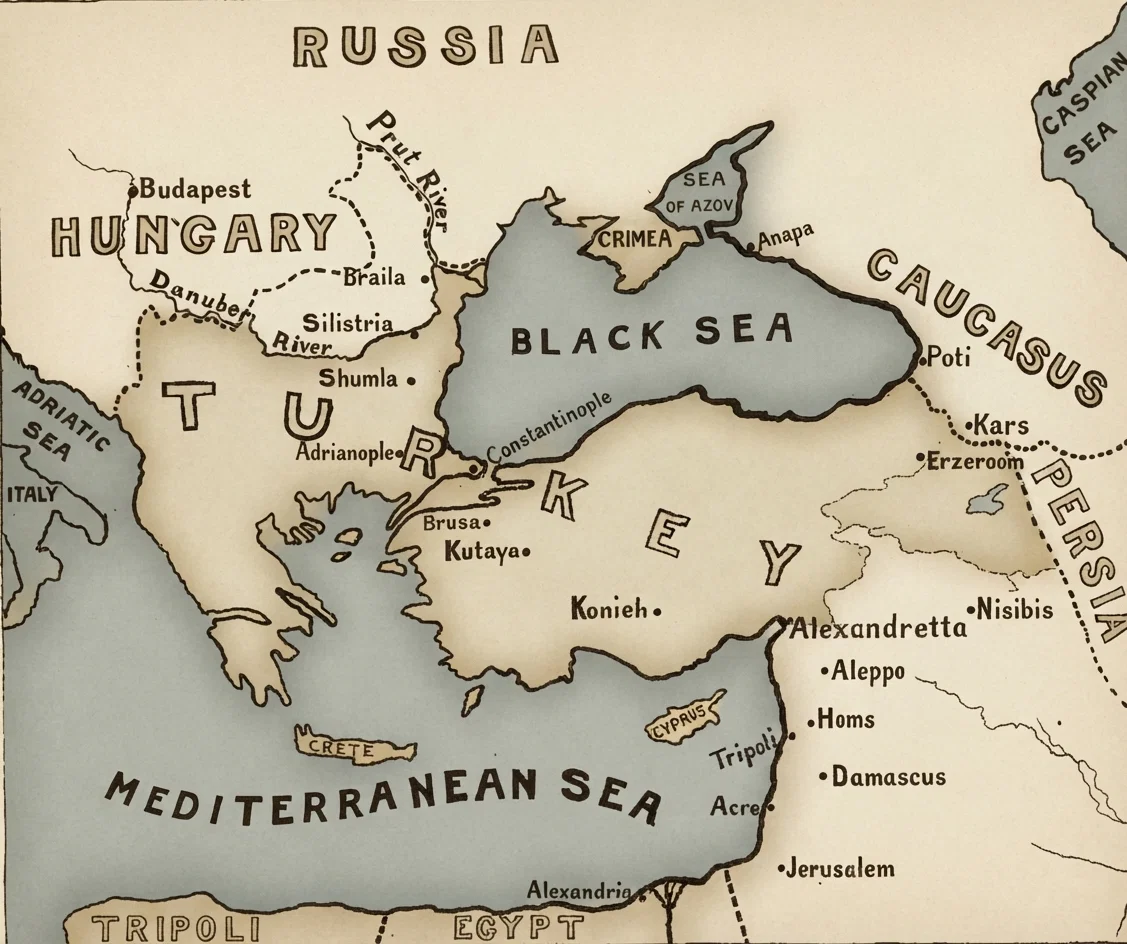
As we are now to trace the history of negotiations between Constantinople and Alexandria and the passing of Turkey's independence into the hands of the European powers, it may be worth while to refresh our memories regarding the highway between Alexandria and Constantinople, and the immediate surroundings of the latter city. In his history of the Russian Empire, Abbott says:—
"A brief sketch of the geography of these realms will give one a more vivid idea of the nature of that conflict, which now, under the title of the Eastern, or Turkish, Question, engrosses the attention of Europe."The strait which connects the Mediterranean Sea with the Sea of Marmora was originally called the Hellespont, from the fabulous legend of a young lady, named Helle, falling into it in attempting to escape from a cruel mother-in-law. At the mouth of the Hellespont there are four strong Turkish forts, two on the European and two on the Asiatic side. These forts are called the Dardanelles, and hence, from them, the straits frequently receive the name of the Dardanelles. This strait is thirty-three miles long, occasionally expanding in width to five miles, and again being crowded by the approaching hills into a narrow channel less than half a mile in breadth. Through the serpentine navigation of these straits, with fortresses frowning upon every headland, one ascends to the Sea of Marmora, a vast inland body of water one hundred and eighty miles in length and sixty miles in breadth. Crossing this sea to the northern shore, you enter the beautiful straits of the Bosporus. Just at the point where the Bosporus enters the Sea of Marmora, upon the western shore of the straits, sits enthroned upon the hills, in peerless beauty, the imperial city of Constantine, with its majestic domes, arrowy minarets, and palaces of snow-white marble glittering like a fairy vision beneath the light of an oriental sun.
"The straits of the Bosporus, which connect the Sea of Marmora with the Black Sea, are but fifteen miles long and of an average width of but about one fourth of a mile. In natural scenery and artistic embellishments this is probably the most beautiful reach of water upon the globe. It is the uncontradicted testimony of all tourists that the scenery of the Bosporus, in its highly cultivated shores, its graceful sweep of hills and mountain ranges, in its gorgeous architecture, its atmospheric brilliance, and its vast accumulations of the costumes and customs of all Europe and Asia, presents a scene which can nowhere else be paralleled.
"On the Asiatic shore, opposite Constantinople, lies Scutari, a beautiful city embowered in the foliage of the cyprus. An arm of the strait reaches around the northern portion of Constantinople, and furnishes for the city one of the finest harbors in the world. This bay, deep and broad, is called the Golden Horn. Until within a few years, no ambassador of Christian powers was allowed to contaminate the Moslem city by taking up his residence in it. The little suburb of Pera, on the opposite side of the Golden Horn, was assigned to these ambassadors, and the Turk, on this account, denominated it 'the swine's quarters.'
"Passing through the Bosporus fifteen miles, there expands before you the Euxine, or Black, Sea. This inland ocean, with but one narrow outlet, receives into its bosom the Danube, the Dniester, the Dnieper, the Don, and the Kuban. These streams, rolling through unmeasured leagues of Russian territory, open them to the commerce of the world. This brief sketch reveals the infinite importance of the Dardanelles and the Bosporus to Russia. This great empire, 'leaning against the north pole,' touches the Baltic Sea only far away amidst the ices of the North. St. Petersburg, during a large portion of the year, is blockaded by ice. Ninety millions of people are thus excluded from all the benefits of a foreign commerce for a large portion of the year unless they can open a gateway to distant shores through the Bosporus and the Dardanelles."—"Empire of Russia," by Abbott, pages 507, 508.

What Is Truth?

B. C. HAAK
TRUTH is an important factor in the development of Christian character. Jesus said, "The truth shall make you free." Surely the desire of every child of God is to be free from sin. The only way this can be accomplished is by knowing the truth.
"What is truth?" was once asked of Jesus by Pilate. How much more is there room for this question now, when unbelief is filling the hearts and minds of people everywhere. Men will resort to almost anything rather than accept God's truth. They feel they must accept something to satisfy their hearts' longing, and error is the easier to obtain.
Is there, then, any solution to the above question? Everything depends upon a right answer. Is there anything that we can rely upon as a correct answer? Thank God, there is. The answer was spoken by Christ himself, and comes to us in a threefold application:—
First, Jesus said, "I am the way, the truth, and the life." Jesus thus becomes the agent through whom we are made free. It is he who is waiting to take up his abode in every heart. But this he cannot do as long as sin is tolerated. It is necessary for us to get rid of sin, and thus be free.
Jesus also said, "Lo, I am with you alway," which is a promise of continued freedom, and power to resist. The Holy Spirit is also given us that we might be made free.
Another promise is, "I go to prepare a place for you. . . . I will come again, and receive you unto myself." From this we see that an important part of possessing the truth is to have a knowledge of Christ's second coming and be waiting for his return. It is impossible to live or teach all the truth without teaching the return of Christ. The world is full of those who claim to have and teach the truth, yet who miserably misinterpret this beautiful truth of Jesus' coming, and are spreading all sorts of erroneous doctrines to try to fill up the gap thus made. Truth cannot be treated in this way, but must be taught in its purity, unadulterated. The instruction of Jesus is, "Continue in my words."
Second, in the prayer of Christ, as recorded in the seventeenth chapter of John, he said, "Thy word is truth." It would almost seem as if Jesus were contradicting himself, for he has just told us, "I am the way, the truth." Is there, then, more than one truth? John will clear this up for us if we will study the first chapter of his Gospel. There he says, "The Word was with God, and the Word was God. . . . The Word was made flesh, and dwelt among us." This can refer only to Christ, and thus the two statements of Jesus are in perfect harmony. There can be only one; the truth, the Word, is Christ, and can make us free. This is why the psalmist could say, "Thy word have I hid in mine heart, that I might not sin against thee."
Jesus does not divide the word and say that only a part of it is the truth, but classes it all together. Thus it is that he could say, "In the volume of the book it is written of me." How, then, can any one teach the whole truth, which saves from sin, and discard a part of the blessed Word? They who do this are simply rejecting Christ, and yet all the time crying, "We want Christ; give us Christ and nothing else." What an awful delusion!
The third application of the truth is made by the psalmist. He said, "Thy law is the truth." Ps. 119: 142. In reading this wonderful chapter we find David using the terms law and word interchangeably. The Lord himself speaks of the law as his ten words. No wonder, then, that through the keeping of it, by God's grace, David was kept from sin and became wiser than the ancients. This will also be true of the one who keeps God's law today. He will not only be wiser than the ancients, but wiser than the modernists with all their learning. God's law teaches us true wisdom, which is the fear of the Lord, and knowledge, or understanding, which is to depart from evil.
There can still be only one truth, as in the case of the Word and Christ; so we must conclude that Jesus is also the law expressed in character. How could it be otherwise when the law is the very transcript of his character? Thus by having the law written in our hearts and minds by the Holy Spirit, we can refrain from sin. We thus may be made free, which is in keeping with the first statement of Christ as noted above.
There are those who claim to love Christ, but hate the law and want nothing to do with it. But how can this condition exist when Jesus is the expression of the law? Satan would try to deceive us into thinking that this can be done, but according to God's Word, it is impossible. We must either accept both or reject both, for they are one and the same thing. By rejecting the law we remain in sin, and our reward will be death. No one can fully preach Christ and condemn God's law. It takes the whole truth—Jesus, the Word, and the law—to give us the gospel, "which is the power of God unto salvation." May God help us to appreciate his truth.

A Clear Life Intention

Do not dare to live without some clear intention toward which your living shall be bent. Mean to be something with all your might.—Phillips Brooks.

Editorial

Deliverance of a Protestant Witness in France

PAUL RABOUT was a Protestant minister of Nimes, and a member of the French Assembly in the days of 1789. Those were days when men were struggling to break the bonds that centuries of papal rule had fastened upon mankind. Rabout had joined the assembly in the declaration that "all citizens are equal in the eyes of the law;" and in a speech for liberty of conscience he declared, "I demand for all non-Catholics what you demand for yourselves — equality of rights — liberty, the liberty of their religion, the liberty of their worship."
His faithful championship of true religion and liberty of worship had made him the mark of the Romanist oppressors, who were seeking to stifle the protest against spiritual and social tyranny. Dr. Less, a personal friend of Rabout's, says:—
For many years he was nowhere safe, not even in his own house. Soldiers came suddenly both by day and night, surrounding his house and searching for him. Every trick was used for seizing and getting rid of one justly viewed as the chief support of Protestantism. Everywhere surrounded by spies, and every moment in danger, he usually performed his ministerial duties only in the night; or if it was needful in the day, he disguised himself as a bricklayer or a stocking weaver. Often he was obliged to leave his house, and to lie whole days and nights in the open fields, or in some remote, pitiful hut, certain that if seized, he must instantly suffer an ignominious death.
In these dangers his only human security was the fidelity of his flock. They constantly watched over him, and at the first approach of hazard gave him warning. He assured me that he often escaped by secret forebodings of the designs of his enemies. One night at supper he felt a sudden and almost irresistible impulse to leave his own house, and to sleep somewhere else. Accordingly he left it, though his wife entreated him to stay, as there was not the least appearance of danger. Next morning he was informed that about three o'clock in the morning a detachment of soldiers had surrounded his house and searched for him. I the rather regard these accounts, as I never knew a man farther from enthusiasm. — Lorimer's "Protestant Church of France," page 500.
"To him," as the human agent, it was said by Dr. Less, "the preservation of Protestants in France has been chiefly owing. His whole life has been a constant sacrifice to the interests of religion."
And as he was a true witness amidst papal oppression, so also he stood true in those days of the terror, when revolutionary France, in revolt against papal tyranny, turned against all religion, as predicted' in the prophecy of Revelation II. Refusing to go with the multitude in the denial of his Lord, Rabout was arrested by order of the Convention, and sent to prison riding upon an ass, being too infirm with age to walk. "It was only the fall of Robespierre," says Lorimer, "which saved him from the guillotine at nearly eighty years of age."
We have but the most meager records of the Protestant story in those revolutionary and prerevolutionary times in France, when prophecy was fulfilling and the period of papal supremacy was drawing to its close. But the glimpses of delivering providences of God in Rabout's active life show us the living God all the time watching over his own and intervening in times of peril with special deliverances. W. A. S.

The Value of Baptism

Is baptism essential to salvation?—Under conditions which make it possible and reasonable we believe that it is. It is an ordinance of the church established by our Lord whereby the believer manifests his faith in the death, burial, and resurrection of Christ as his individual Saviour. There might be circumstances under which it would be impossible for the believer to avail himself of the privileges of this ordinance. Such an instance was that of the thief on the cross, who, with his expiring breath, confessed his faith in the Lord Jesus Christ. Other conversions to the Lord have taken place under similar circumstances, where no opportunity was afforded for any part in the baptismal service. But, on the other hand, the Scriptures of Truth clearly enjoin that this rite should be performed by the heralds of the cross and received as a part of Christian experience by gospel believers.
However, this doctrine, like many others, is being set at naught by many Christian teachers at the present time. In the Ladies' Home Journal Lyman Abbott, D. D., editor of the Outlook, edits regularly a page of inquiries regarding Christian experience and religious subjects. In the January number of the Journal the inquiry is made, "Just what is accomplished by baptism, and how vital do you hold the ceremony?" To this Dr. Abbott replies:—
Various are the views held by scholars respecting baptism. I can only give my own view here. In Christ's time, when a pagan became a Jew he was baptized, in token that his old paganism was washed away and he became the possessor of a new faith and the citizen of a new and spiritual kingdom. Christ never baptized, but the Christian Church took over this Jewish form and adopted it as a symbol of Christian conversion and dedication. I regard baptism, then, as simply a symbolic rite which is used to express either the dedication by an adult of himself to God, or the dedication by parents of their children to God. In either case the vital effect of this baptism depends on the seriousness and sincerity of the dedication, and the dedication may be made, as it has been by Quakers, without baptism; and if it is sincere and serious, it is no less vital whether accompanied by baptism or not. The direction of Christ to his disciples to go into all the world, baptizing in the name of the Father and of the Son and of the Holy Spirit, I regard, not as the creation of a new rite, nor as a command rendering obligatory a peculiar ceremony, but as an authority for the use of an old rite with a new significance and in a new spirit.
In reviewing Dr. Abbott's statement we can do no better than to quote the words of the editor of the Christian Standard in the issue of that paper of March 7. The editor calls attention to two points only, as follows:—
1. Mr. Abbott says that "Christ never baptized." Literally speaking, this is true; but the inference from this fact is not what he evidently aims to draw. It does not imply that the Saviour regarded the ordinance of minor importance, but that the baptizing was done by his disciples. John 4: 1, 2. He was so absorbed with other great things which the disciples could not do that he turned over this work to them. Even Paul, under similar circumstances, seems to have acted in the same way. 1 Cor. 1: 14-17. But since it is true that what one does through an agent he does himself, it is not safe to say that "Christ never baptized."
2. But is it true that the Master treated the matter as one of indifference, to be attended to or not, according to one's own preference?—We think not, as is clear in the light of the following facts: Jesus himself, despite the protest of John the Baptist, was baptized by him in the Jordan. Evidently he attached great importance to it. And the Father so regarded it also; for as the Son came up from the water, the Spirit in the form of a dove descended upon him, and the voice of God broke the silence of the centuries and said, "This is my beloved Son, in whom I am well pleased." The fact already noted, that he had his disciples baptized, teaches the same lesson. And the fact that the "Pharisees and lawyers rejected the counsel of God against themselves," by not being baptized, is further confirmation. And the famous night conference with Nicodemus shows withmuch force the vital importance of the ordinance. To this earnest searcher after truth he says, 'Verily, verily, I say unto thee, Except a man be born of water and of the Spirit, he cannot enter into the kingdom of God.' And finally, when his work was finished, and he was about to return to the Father, he commissioned his apostles to go forth on a world-wide conquest in his name, saying to them, 'Go ye therefore, and teach all nations, baptizing them in the name of the Father, and of the Son, and of the Holy Ghost.'
Just how one who believes the Bible to be the word of God can so teach in regard to this ordinance is beyond our ken. If these six facts, to say nothing of the practice of the New Testament church as recorded in Acts of Apostles, do not surround baptism with a solemnity, sacredness, and significance, lifting it high above the realm of things indifferent, it would seem impossible to so elevate it. And yet Mr. Abbott says it is at least only an act of 'dedication,' and it 'may be made, as it has been by Quakers, without baptism; and if it is sincere and serious it is no less vital whether accompanied by baptism or not.' The example of the Son, the approval of the Father, the teachings of the Book, and the examples of inspired men when building up the early church—all of these things are merely incidental, and they are important or not just in proportion to our own individual ideas concerning them. If so, we are as sailors at sea without chart or compass, drifting hither and thither according to the whims of every wind and wave. But such is not the case. The Saviour's example and word are law, and the Bible is our only rule of faith and practice, and we cannot without sin ignore these teachings on this and on all other questions.
As expressed by the psalmist, 'It is better to trust in the Lord than to put confidence in man. It is better to trust in the Lord than to put confidence in princes.' It matters very little, after all, what eminent men of the world may declare regarding the basis of faith or the conditions of salvation, but it makes all the difference in the world as to what the Lord declares. 'The prophet that hath a dream, let him tell a dream; and he that hath my word, let him speak my word faithfully. What is the chaff to the wheat? saith the Lord.'
F. M. W.
Continue reading: North Pacific Union Institute and Conference