Your ShelfYour Projects

Signs of the Times, Vol. 28, No. 40.

TREES

Signs of the Times

Oct 1, 1902

Pacific Press Publishing Company · Oakland, California · Oct 1, 1902

TREES

The grandest, the most magnificent, the most durable of earth’s vegetable products are the trees. Including their fruits, they are the most valuable of earth’s gifts to man. Barren indeed would be the earth bereft of its trees. The first thing the Lord did for our father Adam was to provide him a home, and the most prominent feature of that home was its trees. “The Lord God planted a garden eastward in Eden; and there He put the man whom He had formed. And out of the ground made the Lord God to grow every tree that is pleasant to the sight, and good for food; the tree of life also in the midst of the garden, and the tree of knowledge of good and evil.”
GOD chose a tree through which to impart a continuance of life to the race, and He also chose a tree by which to test the man’s integrity and faithfulness. The two trees stood side by side “in the midst of the garden.” Gen. 2:9; 3:3. The one tree held out the promise of life; the other, as long as it stood as a test—during the man’s probationary period—implied the possibility of death. A choice of trees was the test whether man would prove obedient or not. The woman was deceived into believing that she could get wisdom through disobedience, the deceiver having taken his position in the forbidden tree, so near to the tree of life! Thus men are constantly being deceived by dogmas so near the truth, yet leading to death.
Photo by E.J. Drake. Scene in the Tuolumne “Big Tree Grove,” California. The tree in the foreground is a sequoia gigantea, 28 feet in diameter 10 feet from the ground. Compare its size with that of the man at its foot.
IN ancient times people lived under the shelter of trees, and their places of worship were the groves. When three angels in the guise of men came to visit Abraham, he entertained them under a tree in the plain of Mamre, or Hebron. Gen. 18:1–8. There is still a very large oak tree at Hebron which is called Abraham’s oak; but it is not at all likely that it was much of a tree so long ago, if, indeed, it existed at all. Deborah, a prophetess, was at one time a judge or ruler, in Israel; “and she dwelt under the palm tree of Deborah, between Ramah and Bethel in Mount Ephraim; and the children of Israel came up to her for judgment.” Such were the humble residences of one to whom was given the promise that he should be “heir of the world” (Rom. 4:13), and one whom God recognized as ruler of His people, and through whom He gave them counsel. Judges 4:4–9, 14.
WHEN Jacob returned to Canaan, after meeting his brother Esau at Peniel, the Lord told him to go to Bethel. But before going there He took the strange gods which his wives had secretly brought from Padan-aram and hid them under an oak at Shechem. Arriving at Bethel, Deborah, Leah’s nurse, died, and Jacob buried her under an oak tree. “And he called the place Allon-bachuth,” margin, “the oak of weeping.” See Gen. 35:1–8. When Joshua was about to die, he made a covenant with the people of Israel, in which he enjoined them to incline their hearts to God, and they promised to obey His voice. So “Joshua wrote these words in the book of the law of God, and took a great stone and set it up there under an oak, that was by the sanctuary of the Lord.” This stone was for a witness to the covenant. Joshua 24:22, 26, 27.
TREES were the subject of a significant parable spoken by Jotham, one of the sons of Gideon. See Judges 9. The lesson portrayed the folly of the men of Shechem in choosing as a ruler one who had caused his own brothers to be slain, and had hired “vain and light persons” to be his immediate followers. It also teaches that those who are doing the most valuable work in the Lord’s cause have no desire to be rulers over their brethren; and that an ambition to be exalted over others is evidence of utter lack of qualification for rulership.
AMONG the trees especially noted in Scriptures is the palm. Israel, after leaving their camp at Marah, where the bitter waters were healed, came to Elim, where were “twelve wells of water and threescore and ten palm trees.” On the desert the sight of palm trees was always a cause of rejoicing, because it was a sure indication of fresh water. The city of Jericho was called “the city of palm trees.” Deut. 34:3; Judges 3:13; 2 Chron. 28:15. The palm branch is a noted symbol of victory. John 12:13; Rev. 7:9. The date and coconut palms are especially valuable for their fruits.
OF the many illustrations of Solomon’s wisdom, his knowledge of trees must have been regarded as exceedingly remarkable. “He spake of trees, from the cedar tree that is in Lebanon even unto the hyssop that springeth out of the wall.” 1 Kings 4:33. Solomon was well acquainted with the cedar, altho it grew principally in the northern part of his kingdom and in Tyre and Sidon. David had built for himself a house of cedar, and half of Solomon’s reign was occupied in building himself a house and the temple of the Lord. 1 Kings 6:38; 7:1. Chapter 7 tells of his contract with Hiram, king of Tyre, for cedar timber. Solomondid also much other building in which the cedar was extensively used.
THE Lord’s people are compared to trees. The man who delights in the law of the Lord is like “a tree planted by the rivers of water, that bringeth forth his fruit in his season; his leaf also shall not wither; and whatsoever he doeth shall prosper.” Ps. 1:3. Again we are told that “the trees of the Lord are full of sap” (Ps. 104:16) which represents the Spirit of God. The sap is the blood, or life, of a tree, and from it comes the flower and fruit. So the “trees of the Lord” being filled with the Spirit (Luke 1:15; Acts 4:8; 6:3, 5; 13:9; Eph. 5:18), bring forth the “fruit of the Spirit” which is “love, joy, peace, long-suffering, gentleness, goodness, faith, meekness, temperance.” Gal. 5:22, 23. In this way they become “trees of righteousness, the planting of the Lord, that He might be glorified.” Isa. 61:3.
THE olive tree has a higher place in symbolism than any other tree. The prophet Zechariah saw in vision two olive trees that emptied their golden oil into seven lamps. On asking what they meant, an angel answered him, “These are the two anointed ones, that stand by the Lord of the whole earth.” Zech. 4:14. The oil of the olive tree stands for the Spirit of God, by which the Word of God is to be made plain. The apostle John was also shown two olive trees in vision (Rev. 11:4), which evidently symbolize the Word of God, the Old and New Testament. The olive tree also stands for the Seed of Abraham, which is Christ (as we learn in Gal. 3:16); and a wild olive tree very appropriately represents those who have not known Christ. The lesson of Romans 11 concerning the grafting of branches from the wild olive into the good olive is worthy of special study, as, indeed, are all of the various lessons from the trees which are set forth in the Word.
THE tree of life, from which man was disconnected when he chose to eat of the forbidden tree, will be at the service of the redeemed, who have chosen the part of obedience. The inspired description of the New Jerusalem tells us of the River of Life flowing out of the throne of God and of the Lamb “in the midst of the street of it, and on either side of the river was there the tree of life, which bare twelve manner of fruits, and yielded her fruit every month.” Rev. 22:1, 2. And to this grand prospect is added the encouraging promise: “Blessed are they that do His commandments, that they may have right to the tree of life, and may enter in through the gates into the city.” Verse 14. G.

MAKE A CONNECTION.

[From a sermon by Russell H. Conwell, in The Temple Review.]
I remember in the army they came around and tested some of us as to our relative conductability of electricity, to ascertain through whom it would circulate best. And I remember the jokes made of my brother over it, who was at last selected as being the best. The line had been cut down, and it was necessary to open communication to get reinforcements. But there was no means at hand of repairing it. Some one was needed to take hold of each end, thus establishing the current; and after testing a number of men, they finally set my brother at the post, and while it made him very ill afterwards, and the shocks were almost unbearable, I suppose, at times, yet he held on, the communication was complete, the reinforcements came and the battle was won.
This thought is of great importance in religious work. Though there were broken connections, there was found a person to fill that gap; and the great fault of the church to-day lies in the broken currents. We sometimes hear that the church should not be so social, that it should keep away from the world and its people; that when they converse in the church building they will talk of worldly affairs, and yet we refuse to stand in these gaps.

“WHAT HAVE THEY SEEN IN THINE HOUSE?”

BY MRS. E. G. WHITE.
I CUT from an exchange the following paragraphs. They convey an important lesson, and one well worthy of our consideration:—
A lady had just parted with some friends who had been her guests for a few days. With a feeling of loneliness she sat down in her deserted drawing-room. Her eyes fell on a Bible, and opening it, she read the words, “What have they seen in thine house?” “Strange words,” she thought. “What do they mean?” Glancing through the preceding chapter, she learned how graciously the Lord had delivered Hezekiah from the dangers of battle and then from sickness. She read how ambassadors came with presents from the king of Babylon, and how Hezekiah entertained them. What did he show them?—“Not the Lord’s doings,” said the lady, with a rising feeling of self-reproach. “Surely,” she thought, “the Lord must have sent these words to me. Two years ago the Lord delivered me in my terrible conflict with unbelief, and brought me into the liberty and joy of a child of God.
“Last summer, when I lay in my darkened chamber, sick unto death, I earnestly entreated God to give me back my health, that I might tell my friends of Christ’s love and righteousness, and of the wonderful riches of His grace.
“Mrs. R. and her daughter have been my guests, and now the Lord asks me, ‘What have they seen in thine house?’ What can I answer? After dinner yesterday I showed them all our water-color drawings; then I took Mrs. R. to my boudoir to see my new carpet. I do not remember what they saw on Wednesday, except that I showed Mrs. R. the beautiful set of jewels that my uncle gave me. We spent Wednesday afternoon considering what our children should wear next spring. What a precious opportunity I have lost of speaking to her of the spotless robe of Christ’s righteousness. And Marian has gone home longing to have a bracelet like the one she saw on my child. Had I been faithful, she would have left me to speak of Jesus and His glory.
“What have they seen in my house? Alas! vanity, idleness, worldly treasure! And what have they heard? True, they heard family reading and prayer. But it must have seemed a mere form. They must have thought that we had far more delight in the worldly songs that were sung, and in the gay conversation, which the form of family worship hardly interrupted. They left me, having seen nothing better than the visitors from Babylon saw in the house of Hezekiah.”
Reader, is not this a word to your soul? Look around you, and see how many things you have gathered that war against the soul. Review your social intercourse, your entertainment of guests, and then to God answer the question, “What have they seen in thine house?”
I hope that these paragraphs which I have quoted will impress the minds of those who read them as forcibly as they did mine. We are living amid the closing scenes of this earth’s history. It is a time when we should draw very near to God. How is our time occupied? What are we doing to lead those with whom we associate to seek earnestly for higher, holier attainments? The Lord has given us the assurance that we may be laborers together with Him in the work of soul-saving. He desires us to be ever on the watch for opportunities to point souls to Christ, saying, “Behold the Lamb of God, which taketh away the sin of the world.”
What have your friends and acquaintances seen in your house? Are you, instead of revealing the treasures of the grace of Christ, displaying those things that will perish with the using? Or do you, to those with whom you are brought in contact, communicate some new thought of Christ’s character and work? Have you always some fresh revelation of His pitying love to impart to those who know Him not?
Study the case of Hezekiah. He had been sick unto death. He had appealed to the Lord, and God had added to his life fifteen years. “At that time Merodach-baladan the son of Baladan, king of Babylon, sent letters and a present to Hezekiah; for he had heard that he had been sick, and was recovered. And Hezekiah was glad of them, and showed them the house of his precious things, the silver, and the gold, and the spices, and the precious ointment, and all the house of his armor, and all that was found in his treasures; there was nothing in his house, nor in all his dominion, that Hezekiah showed them not. Then came Isaiah the prophet unto king Hezekiah, and said unto him, What said these men? and from whence came they unto thee? And Hezekiah said, They are come from a far country unto me, even from Babylon. Then said he, What have they seen in thine house? And Hezekiah answered, All that is in mine house have they seen; there is nothing among my treasures that I have not showed them. Then said Isaiah unto Hezekiah, Hear the word of the Lord of hosts: Behold, the days come, that all that is in thine house, and that which thy fathers have laid up in store unto this day, shall be carried to Babylon; nothing shall be left, saith the Lord.”
The visit of the ambassadors to Hezekiah was a test of his gratitude and devotion. The record says, “Howbeit, in all the business of the ambassadors of the princes of Babylon, who sent unto him to inquire of the wonder that was done in the land, God left him, to try him, that he might know all that was in his heart.” God had raised him from a bed of death, giving him a new lease of life. The Babylonians had heard of his wonderful recovery. They marveled that the sun had been turned back ten degrees, as a sign that the word of the Lord should be fulfilled. They sent messengers to Hezekiah to congratulatehim on his recovery. The visit of these messengers gave him an opportunity to extol the God of heaven. How easy it would have been to point them to the God of gods. But pride and vanity took possession of Hezekiah’s heart, and in his self-exaltation he laid open to covetous eyes the treasures with which God had enriched His people. Not to glorify God did he do this, but to exalt himself in the eyes of the foreign princes. He did not stop to think that these men had not the fear or the love of God in their hearts, and that therefore they were not safe confidants. His indiscretion prepared the way for national disaster. The ambassadors carried to Babylon the report of Hezekiah’s riches, and the king and his counsellors planned to enrich Babylon with the treasures of Jerusalem.
Had Hezekiah improved the opportunity given him to bear witness to the power, the goodness, the compassion, of the God of Israel, the report of the ambassadors would have been as light piercing darkness. But he magnified himself above the Lord of hosts, and failed to give God the glory. He “rendered not again according to the benefit done unto him; for his heart was lifted up; therefore there was wrath upon him, and upon Judah and Jerusalem.”
O that those for whom God has done marvelous things would show forth His praises, and tell of His mighty works. But how often those for whom God works are like Hezekiah,—forgetful of the Giver of all their blessings.

“BEHOLD HE PRAYETH.”

He lays his old, rebellious weapons down, He casts his trailing colors in the dust; He supplicates the scepter, throne and crown, He once despised, with penitential trust. He now abandons that which he had sought; His prayer—“Lord what wilt Thou have me to do?” With holy purpose and contrition fraught; Has higher aims and nobler ends in view. “Behold he prayeth”—suing for relief, Regards his former course with poignant grief. He pleads for favor like a loyal soul, He seeks to please Him whom he once did wrong; His needle’s instinct seeks its proper pole, And thitherward he turns with hope and song. Behold the man is changed! What can he do, But follow his convictions to the end? He has become in Christ a creature new, And in Him found a constant, faithful Friend. “Behold he prayeth,”—trusting in God’s grace, He enters now his upward, pilgrim race.
JOHN WM. STEIN.
Kalamazoo, Mich.

Sickness an Effect; Sin the Cause

THE MISSION OF PAIN AND THE LANGUAGE OF DISEASE. NO. 10.

Sickness an Effect; Sin the Cause.
MANY entertain the idea that sickness and sin are one and the same thing. The Scriptures teach that when we desire to obtain forgiveness of sin, all we have to do is to confess our sins, and the Lord is “faithful and just to forgive us our sins,” and that settles the matter. So some seek to teach that if we would be healed of our diseases and recover from our sicknesses, all we have to do is, in like manner to confess our wrongs, and then we shall always be instantly healed of our diseases and immediately delivered from our sufferings.
This reasoning seems very plausible on its face, if we overlook the fact that the premises are altogether wrong. Sickness and sin are not synonymous; they are not one and the same thing. Sin is the cause while sickness is the effect. Sin is a transgression, and sickness is the result of that transgression. The devil was in the cause, the transgression; but God is in the effect, the sickness, speaking to the soul of man, endeavoring to show him the folly and peril of disobedience, and thus to turn him from his purpose of transgression into the paths of harmony and obedience to the laws of health and grace.
Repentance and confession secures the immediate and absolute forgiveness of the sin that was the cause of our affliction; but the affliction itself, which is the heaven-sent correction of sin, is not always instantly removed upon our repenting of the sin that produced it. The cause of affliction—the sowing—may, when recognized as wrong, be instantly stopped; but the effects—the reaping—may often continue for some time. And even then, the briers of wrong-doing may be removed from our experience only as the result of much painstaking toil and effort. To illustrate: You may sow thorns and brier bushes in your garden, and next year you may heartily repent of your misdeed; and so you confess your wrong to God, and you are forgiven then and there. But the thorns and the briers are still in the garden. Your record in heaven is clear; your case is right with God; but the garden spot is still cumbered by the result of your wrong sowing. And so you will have to bring forth fruits meet for repentance. Go into the garden and pull up those evidences of your misconduct; and then—and not till then—will the last vestige of your transgression disappear.
It must be clear that while God instantly removes the guilt of sin when it is recognized and confessed, the getting rid of the consequences of past wrong-doing often demands the persevering co-operation of the wrong-doer himself. Sickness and sin bear to each other the relation of sowing and reaping, cause and effect. Causes may be wrong, but effects are always right; for they proceed from God, are controlled by Him, and have for their purpose the correction of the wrongs that called them forth.
W. S. SADLER.

THE SECOND VISION; REBUILDING THE CITY.
In verse 12 a question is asked concerning the rebuilding of the city of Jerusalem; and the statement is made that because they had grieved the Lord, the desolation of seventy years had come upon them. In reply to this inquiry, good words, comforting words, are spoken. These are just the kind of words which are always heard by those who inquire after the plans of God, and who long to see His work carried forward. The deep interest and watchcare of God is set forth in the following verses. God is jealous for Jerusalem and for Zion with great jealousy. He is sore displeased with the heathen, for while He was but a little displeased with Israel, and had intended to use the heathen as a means of punishing them, as the prophet Isaiah says of Assyria which God called the rod in His hand, they (the heathen) had purposed to go far beyond what God had intended, and to utterly destroy Israel. But God has interposed, and now gives this precious promise:
“I am returned to Jerusalem with mercies; my house shall be built in it, . . . and a line shall be stretched forth upon Jerusalem. . . . My cities through prosperity shall yet be spread abroad; and the Lord shall yet comfort Zion, and shall yet choose Jerusalem.”
Then the prophet has a vision in which he sees four horns, representing the four powers which have scattered Judah, Israel, and Jerusalem; to-wit, Assyria, Babylon, Syria, and Egypt. Next he sees four carpenters. These symbolize the four decrees, backed up by the power which they represented, and which cast out those nations, and rebuilt the city; for we read in Ezra 6:14: “And the elders of the Jews builded, and they prospered through the prophesying of Haggai the prophet and Zechariah the son of Iddo. And they builded, and finished it, according to the commandment of the God of Israel, and according to the commandment of Cyrus, and Darius, and Artaxerxes king of Persia.”
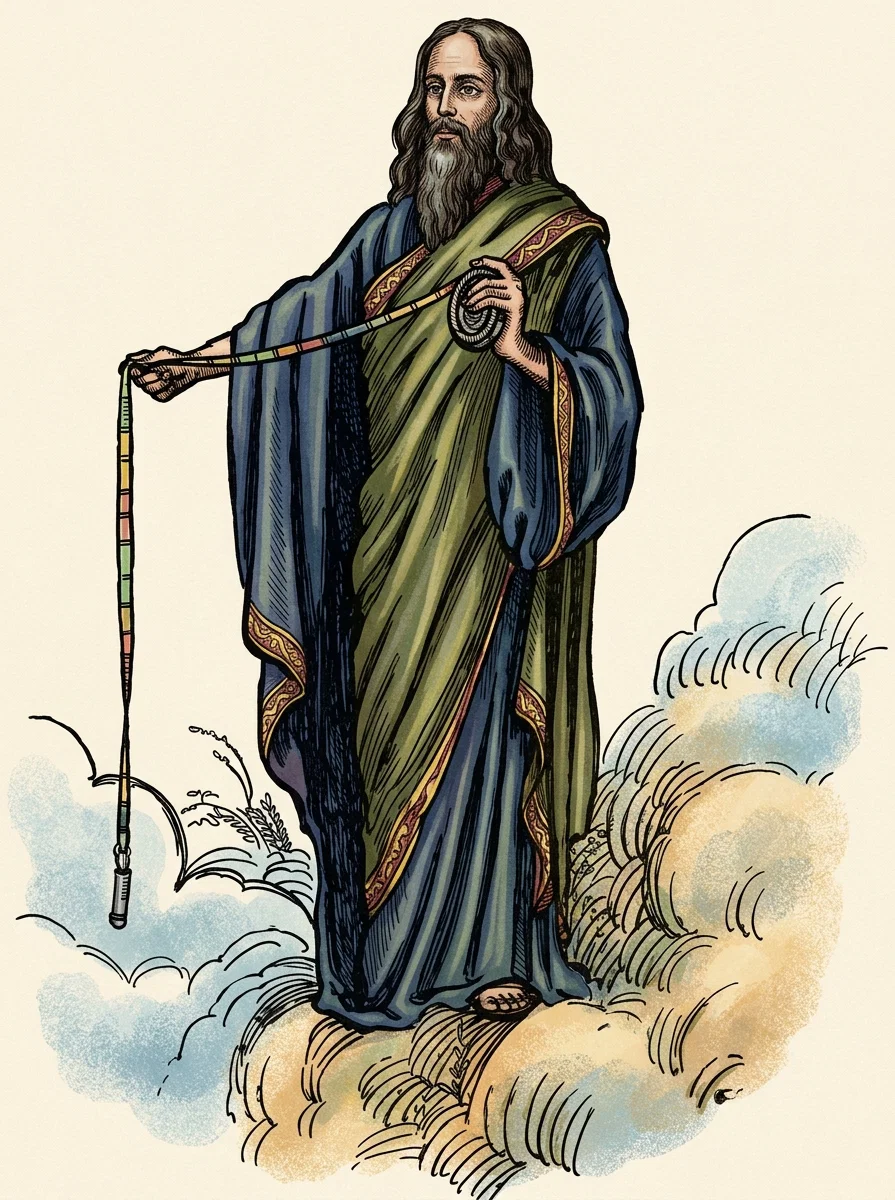
“I lifted up mine eyes again, and looked, and behold a man with a measuring line in his hand. Then said I, Whither goest thou? And he said unto me, To measure Jerusalem, to see what is the breadth thereof, and what is the length thereof. And, behold, the angel that talked with me went forth, and another angel went out to meet him, and said unto him, Run, speak to this young man, saying, Jerusalem shall be inhabited as towns without walls for the multitude of men and cattle therein.”
The prophet sees a man about to measure, or lay out, the city of Jerusalem. This young man represents the children of Israel who had returned, and were engaged in rebuilding the city. The angels are interested in it. They meet and converse concerning it. They observe all that is being done.
They know that the boundaries which the people are marking out will be the site of walls which they will construct about the city. They know that these walls, when built, will be the chief reliance of the people for defense. But God should be their defense. “Glorious things are spoken of thee, O city of God.” But these walls will lessen the faith and trust of the people in God, and this lack of trust and faith will limit the manifestations of His power for them. The angels are anxious. “Run,” says one to another, “tell this young man. Jerusalem shall be inhabited as towns without walls for the multitude of men and cattle therein; for I, saith the Lord, will be unto her a wall of fire round about, and will be the glory in the midst of her.” O if the people could only grasp what God has for them! if they could only realize what He wishes to be unto them!
Then follows an earnest, stirring appeal to Israel in general. “Ho, ho, come forth, and flee from the land of the north, saith the Lord; for I have spread you abroad as the four winds of heaven, saith the Lord. Deliver thyself, O Zion, that dwellest with the daughters of Babylon.” Medo-Persia, as the successor of Babylon, is here spoken of as her daughter. “After the glory (or in accordance with His glorious plan), hath He sent me unto the nations that spoiled you, for he that toucheth you toucheth the apple of His eye.”
If Israel would but arise, and gird on her strength: if she would but clothe herself in the panoply of God; if she would but rally, and keep step with the marshalling strains of music which come to her from the band of heaven; if she would but allow the cloudy pillar to lead her, and the glory of the Lord to be her rearward; then even her masters would become her servants. Then God would dwell in her midst, and many nations would join themselves to the Lord to share the blessing of Abraham, and God would enter into His inheritance. But they went on, and built the walls, and then trustedin them, and forgot God their Saviour, and limited the holy one of Israel, until God’s purpose for that people miscarried. But will it never be carried out? Will the enemy of peace always triumph? Will the reign of the King of Israel never begin?—It will be carried out. The enemy shall not always triumph. The reign of peace shall begin; for God’s purposes are eternal. “For the earth shall be filled with the knowledge of the glory of the Lord, as the waters cover the sea.” Hab. 2:14. “And the kingdom and dominion, and the greatness of the kingdom under the whole heaven, shall be given to the people of the saints of the Most High, whose kingdom is an everlasting kingdom.” Dan. 7:27.
In view of this fact the chapter closes with the solemn admonition, “Be silent, O all flesh, before the Lord: for He is raised up out of His holy habitation.” As we realize that God is raised up, that He has taken to Himself His great power, and is about to reign, let us be silent, listening to hear His voice, that we may know and do His will, and have an abundant entrance into His glorious kingdom so soon to be established.
[“The Experience of the High Priest” (chapter 3) is the subject of the next article.]

HAIL, ALL HAIL!

“Amen, even so, come, Lord Jesus.”
HAVE you heard it? Christ is coming! Coming back to earth again; Coming soon, in glory coming, Clothed with might, He comes amain!
Not as babe in manger lowly; Not as child on earth again; But as Judge, most high and holy, Conquering King, He comes to reign.
King of kings and Judge of nations, On His dread and awful throne; Who createth all creations, Christ of God shall rule alone.
Christ is coming! Anthems ringing! Christ with all His angel band; Heavenly music—hear them singing! Seraph songs from Beulah land!
Full and strong, ten thousand voices, Rolls the chorus, grand refrain. “Jesus comes, and earth rejoices, Jesus, Lamb that once was slain!”
O the glory! O the gladness! Of His children gathered in. O the sighing! O the sadness! Of the souls who die in sin!
All the dead of all the ages, High and humble, great and small, Priest and prophet, peasant sages, Soon shall hear His trumpet call.
Up from earth-beds dark and olden, Some shall rise to joy and light; Some to sing on harps all golden; Some to weep and mourn the night.
For He comes with bane or blessing, Crown of life or death-dark pall. Joy to all His name confessing, Anguish where the curse must fall.
Now, O now! while time is passing; As we will it, day by day, “Choose ye curse or choose ye blessing,” Father, Son, and Spirit say.
Fast the day is hastening onward; Signs portend Him “at the door,” Omens of His nearing vanguard, Warning sent in love before.
Kings and kingdoms in commotion; Stress and strife on land and sea; Men-of-war on every ocean, Tell of turmoil none may flee
(None but they who know the covert Of the great and mighty Rock; Shadow in the dreary desert, Safe retreat from battle-shock.)
Hark, the groaning globe’s convulsion! Tidal waves o’erleap sea walls! Mountains flame in fierce eruption, Pelée roars and St. Pierre falls!
Flood and fire and windy tempest Rage and burn the world around; Here and there, then yonder fiercest, Grim destruction girds the ground.
Wine of wrath and plagues of evil; Famine gaunt, and noisome sore; Madness; murder! Still men cavil,— “All continues as of yore.”
Darkness gross the earth shall cover, But “the wise shall understand;” They beneath His wing shall hover, “In the hollow of His hand.”
They shall shine as orbs of heaven; Stars of brightness, glory-crowned; Robes of white and palms be given, Tuneful harps of joyful sound.
Hearts of men with fear are quaking For the things that threaten earth; Yet, behold! the light is breaking! Out of travail cometh birth.
Cometh birth of day celestial; Day of love and life and light. Who would cling to clay terrestrial? Cling to curse and gloom of night?
Joy! O joy! the Lord is coming! Shout and song shall rend the sky! Long our hearts have waited, watching, Now “Redemption draweth nigh!”
O ye people, heed the story! Hail! O earth, the King of kings! Lo! He comes, the God of glory Comes “with healing in His wings!”
M. ELISABETH BURNS-HOWELL.
San Francisco, Cal.

LIBERTY

A Dream.

In my dream I suddenly arrived at a place where a multitude of people were assembled. At once I became interested to discover the object of the assembly, and so was not long in learning that it was Independence Day, and that the people were being addressed by stirring speakers on the subject of liberty. Pressing near to the speakers’ stand, I heard the closing words of one speaker, and no sooner was he seated, than, to my great surprise, my name was called. And instantly, it seemed to me, a multitude of voices were calling loudly and lustily for me to appear on the rostrum, and make a speech on the subject of liberty. At first I felt sorry that I had appeared in their midst, but there seemed no way of escape, so I quickly stepped on the platform. At once I noticed two vacant chairs, and the one nearest to me was a rocking-chair. I mounted the rocker, and, in part, spoke as follows:—
Ladies and gentlemen, fellow-citizens: You are, on this glorious Fourth of July, being filled and thrilled with the inspiring theme of national liberty. Our forefathers, the founders of our glorious republic, secured this liberty for themselves and for us, their posterity. They fought, and shouted, “Give us liberty, or give us death.” They obtained the liberty, but where are they to-day?—Ah! they are dead. It will be so with all of us who are alive here this day. We may fight to obtain or retain liberty of speech, but in a little while we lose the power to speak altogether. We may secure liberty of action, but in a little while we lose all power to act, we pass off the stage of action. Political, civil, or national, liberty is a good thing, as far as it goes, but it does not go far enough. It will not give one of us continued or immortal life. And the foes of our civil liberty are ever on the alert, and they abound in our very midst. It has passed into a national maxim that “Eternal vigilance is the price of liberty.” It may be likened to this rocking-chair upon which I stand. It requires my constant attention to preserve my equilibrium. Allow me to change my standpoint to the still, strong chair by my side. As you see, I have made the change easily, with the aid of a friend near by, for the better foundation was near at hand. Just as near to every one of us as this, is a liberty resting upon a foundation that can not be moved; as much broader, and better, and higher than simple civil liberty, as the heavens are broader and higher than the earth. I refer to the liberty freely offered to every soul in the Gospel of Christ.
Jesus Christ is the greatest Liberator the world ever knew, or ever can know. He gave His life to purchase liberty for all who will accept it. And he whom Jesus makes free, is free indeed. This is really the only liberty worth the name. And this soul liberty is rightat your hand. Do not stand on the rocking-chair foundation of civil liberty alone, but take the outstretched hand of the great Liberator, and He will plant your feet upon the Rock of Ages. Then you will begin to appreciate the only true liberty, the liberty of body, soul, and spirit, liberty for time and eternity, liberty that earth can neither give nor take away, a liberty that transforms the requirements of God into a law of liberty. This is perfect, personal, and perpetual liberty. First a gracious liberty, next a growing liberty, and last a glorious liberty, even the glorious liberty of the children of God.
Strike for this Gospel liberty, and then at no distant day your last armed foe, which is death, will expire under the hand of your great Liberator and Deliverer. Then all oppressive rule, and authority, and dominion, and force, will be put down forever. Supreme love to God, and equal love to fellow-creatures, will pervade and govern the universe of God, henceforth and forever. Then the long-looked-for and prayed-for kingdom of God will have come, and the will of God will be done on earth as it is now done in heaven. Then, and not till then, will this world of ours become the land of the free and the home of the saved. Then every house will be a palace, every meal a banquet, every step a triumph, every day a jubilee, every hour a rapture, every moment an ecstasy, every breath an inspiration, every thought a doxology. Glorious liberty, internal, external, and eternal. H. A. St. JOHN.

IT WILL NOT STOP.

A CARAVAN is crossing a desert. The tropical sun above, the hot sand beneath, are no longer endurable. With their water-supply exhausted, their mouths dry and parched, and their tongues swollen, cracked, and bleeding, the intensity of their suffering baffles description. How they long to rest in the shade of some desert palm, and to drink refreshing draughts of pure, cold water.
At a short distance to their right, they unexpectedly discover a beautiful oasis, where trees of luxuriant foliage are watered by an exhaustless spring, cool and refreshing. Do they, with all possible speed, dismount from their camels to relieve their intense thirst, and to shelter themselves from the noonday sun? Strange to say, unwilling thus to exert themselves, they remove their eyes from that pleasant scene and continue their journey to reach some imaginary oasis farther on, which they can enter with less trouble to themselves. Lured on by false hopes, they perish one by one.
Foolish! crazy! do I hear you say? If you were with that caravan, would you do as they do? You answer most emphatically, No.
That caravan is the people of this world; sin is the desert. You are with this caravan. The heavenly oasis of living green is in sight. The “Fountain of Life” is there. Look at that signboard: “Whosoever Will, Let Him Take the Water of Life Freely.”
The suffering travelers look, read, but heeding not the invitation, are passing by the sheltering wood, the living fountain, to suffer—to die. Surprisingly foolish! strangely insane! Still on they pass. Will they not stop?—No; “As it was in the days of Noah, so shall it be also in the days of the Son of Man.” Luke 17:26. Only eight of the antediluvian caravan chose the part of wisdom; and there is a prophecy for this particular time which reads that “evil men and seducers shall wax worse and worse.” 2 Tim. 3:13.
No the caravan will not stop. If you enter the gates of heaven, you must dismount, forsake forever many dear relatives and friends, to enter, with the “few,” that straight and narrow way that “leadeth unto life.” The caravan contains its millions of the most talented and learned people of the world. But you must leave them; for they obstinately refuse to stop, to drink—to live. “Come out from among them, and be ye separate;” “Escape for thy life,” are warnings loud and clear. 2 Cor. 6:17; Gen. 19:17. W. C. MATHEWSON.
Continue reading: LET HIS LIGHT SHINE