EUROPE is the throbbing heart of the world. Through her wealth, arts, sciences, universities, industries, commerce, and political power, the thought of the world is molded, and the destinies of the nations controlled. The changes which here take place are, in consequence, full of meaning for all peoples.
The Rise of the German Empire and Triple Alliance.
During no period of equal length have so many changes of such varied import taken place in Europe as during the quarter century now closing. Of the more significant, the consolidation of the German Empire ranks among the first. A leading question for Europe has ever been the holding of the balance of power. At the beginning of the present century, France haughtily held this coveted position, filling all Europe with such terror as to drive enemies together for self-preservation.
In the rising Prussian monarchy, France saw the danger of being supplanted by a German federation. To prevent this was the chief object of the war of 1870. The result was the sudden development and firm welding together of the German Empire; since then Germany has moved forward by leaps and bounds, till she is acknowledged to be the first military power of the earth.
Since the formation of the Triple Alliance, Germany, as the leading power of this coalition, has been watched with the closest scrutiny by the world.
Russian Ascendancy—Franco-Russian Alliance.
The Triple Alliance led other nations to seek alliances. France, especially, was on the alert for a powerful ally to enable her to recover Alsace-Lorraine and to avenge her lost honor and her humiliation. Russia continued to increase in power, and extended her empire eastward and southward till in the war of 1877 and 1878 she was about to seize Constantinople, and thus hold the balance of power in Europe. By the united action of the powers, this coveted position was denied her; but in the efforts of the powers to regulate Turkish affairs on the occasion of the recent Armenian massacres, Russia was tacitly accorded the first place among the powers.
France, humbled by Prussia, and irritated by the English, who adroitly robbed her of the Suez Canal and the control of Egypt, saw her opportunity in an alliance with Russia; this must be secured at any price; when the alliance was finally effected, the nation was wild with enthusiasm. In the political world this step was of equal importance with the formation of the German Empire and the Triple Alliance. By these alliances the greatest military forces of the world were arrayed in two hostile camps.
War Preparations—Labor Troubles—Sunday Laws.
While making repeated efforts at peace congresses and disarmament, the last twenty-five years have witnessed unparalleled changes in the weapons of war. The marvelously-developed industries have been put under tribute to perfect the elements of destruction. This feverish haste in the perfection of the implements of destruction is a significant sign of the times.
The increase of armies, and the frequent change of old arms for the improved, have imposed an unbearable burden on the people. Chafing under the load, the toiling millions of Europe have sought relief in social and political organizations. This has resulted in the development of socialism and anarchy among the more desperate. The demands of the laboring classes have been punctuated by strikes and emphasized in parliaments till important legislation has been secured.
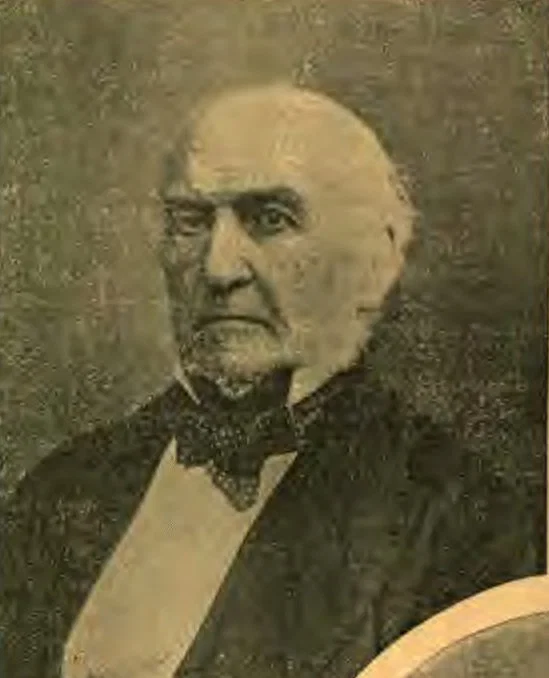
Most of the work of Europe being in factories, in proportion as the laboring man has been protected, factories have been curbed. Prominent among the restrictions in factory laws is the clause forbidding Sunday work. The first day is not observed as the Sabbath by the masses of Europe. But prophecy has indicated that it will receive universal recognition. The last twenty-five years have witnessed the literal fulfilment of this in factory and other Sunday laws in nearly every nation of Europe. These Sunday laws partially result from the Sunday-law movement in America. Agitators were sent from America to Europe. This led to organizations to secure a better observance of Sunday, and the multiplication of Sunday literature. Gladstone and the emperor of Germany have taken an active interest in this Sunday crusade; and even Belgian postage-stamps have a Sunday clause.
Ascending Papal Power.
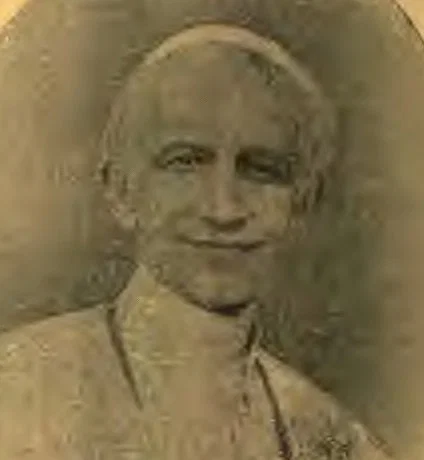
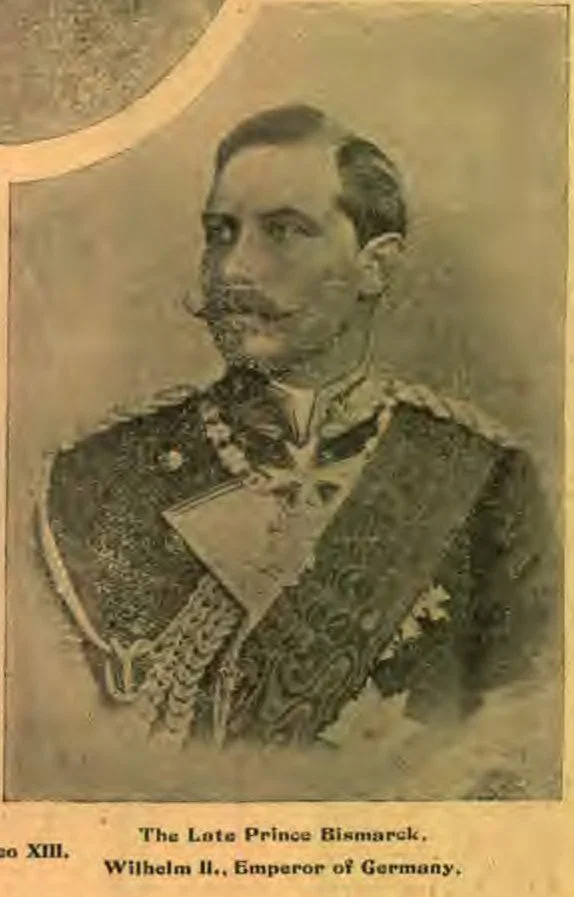
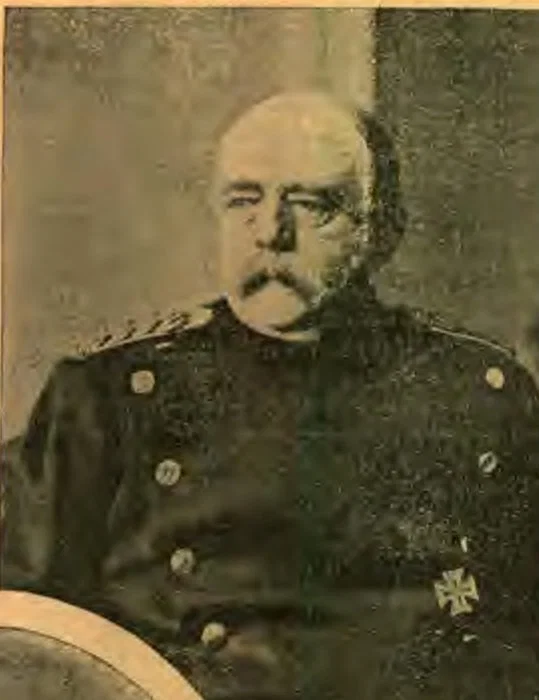
The past quarter century is of note in the history of the Papacy. At the time of the Franco-Prussian War, the dogma of papal infallibility was proclaimed. At this time France, the mainstay of the Papacy, was humbled by Prussia. Then the powerful German Empire, strongly Protestant in sentiment, and exuberant over its great victory, undertook to break the Papal power. Under the bold leadership of Bismarck, the iron statesman of the century, great progress was made in curbing the Catholic power. The Pope's answer was the declaration of the supremacy of the church in ecclesiastical matters, in education, and in marriage. Bismarck's reply was, "We will not go to Canossa," and the noted May Laws. Under these laws Jesuits were excluded, the State took charge of Catholic seminaries, and required priests to pass a State examination before ordination. The Pope declared to the Emperor, "Every one who has been baptized belongs in some way or other to the Pope."
[[FIGURE]]
This controversy concerning the supremacy of the Papacy is one of the most significant of the age under question. Against Rome was the most powerful empire, guided by one of the greatest statesmen of the century. The power of the empire was concentrated to assert the supremacy of the State above the Papacy. Laws to this end were enacted and enforced. What was the result?—From 1882 to 1885 the May Laws were repealed, while the Iron Chancellor was at the helm and the empire in its vigor.15Bismarck went to Canossa.
[[FIGURE]]
The multiplied troubles arising from the organization of labor and capital against each other, and the growing discontent of the masses under the crushing weight of increasing armaments, have contributed much to aggrandize the power of the Pope, and give weight to his claim of being the arbiter of nations. In addition to the repeal of the May Laws, we note that in the most Protestant countries,—Switzerland, Germany, England,—the membership and popularity of the Catholic Church are rapidly increasing.
The recent troubles in Italy further illustrate the rising power of the Papacy; the civil power wrested from the Papacy the affairs of the State, and undertook to manage them independent of the hierarchy; but while its troubles are increasing, the Papacy gallantly unfurls its sails in these State-rending storms, and sails on to victory. Thus in Europe Rev. 13: 3-8, and portions of chapters seventeen and eighteen, are fulfilling.
Abdel Hamid, Sultan of Turkey.
European Colonial Policy.
Another significant change in Europe is the sudden development of the colonial policy. The rapid increase of factories has led to overproduction, and made a larger market necessary. Labor-saving machines have driven many abroad to secure work. First Africa was the object of general grabbing; and next in turn came Asia. By this colonial policy all the earth is being brought under the more direct control of a few leading powers, and these are forming alliances. The outcome is not hard to anticipate. Even the old, dormant nations are seized and shaken up from their sleep of centuries, and drilled for the final struggle.
Spiritualism—the Zionist Movement.
The secret power working behind the screen and bringing about the important changes which are preparing the world for what is soon to take place, is that of Satan. Rev. 16: 13, 14. His agencies, in religious garb, under the various forms of Modern Spiritualism, have manifested new activity and attained greater popularity in Europe during recent years. As in the Sunday-law movement, a wave of Modern Spiritualism swept over Europe from America. Some of the most remarkable manifestations have been exhibitions of its power to control the minds of men distant from the operator. It is specially significant that in spiritualistic circles Napoleon has appeared and conversed with those present.
Another change worthy of note is the increase of Anti-Semitism and the Zionist movement. Besides preparing the world for war, the great deceiver seduces the religious world. While Christians claim to see dawning rays of the temporal millennium, and cite the return of the Jews to Palestine as the first step in the fruition of their hopes, behold, a strong, organized movement of the Jews for the very purpose of returning to Palestine! The Turks refuse to let the Jews enter Palestine. The Jews expect that Christians will aid them in securing their native land. Prophecy shows that one of the last acts to prepare the way for the world-gathering in Palestine will be the drying up of the Euphrates, a symbol of the Turkish Empire. How naturally such a gathering will result from the present situation! Hence this Zionist movement may be regarded as a factor in bringing about what prophecy has long foretold as the last act of earth's history.
The Third Angel's Message.
Finally, we note the arrival of the first preacher of the last warning message in Europe, just twenty-five years ago. From this beginning, the Lord's message of warning has increased till there are now in the leading nations of Europe about 6,000 who are in various ways calling attention to the signs of the times, and declaring the truth concerning the coming of the Lord. Thus these changes in Europe during the last twenty-five years,—the rise of the German Empire, Triple Alliance, Russian ascendancy, Franco-Russian Alliance, multiplied war preparations, labor organizations, Sunday laws, ascending Papal power, colonial policy, Spiritualism, Zionist movement, and the preaching of the advent message,—when read in the light of prophecy show unmistakably that the great day is at hand.
FOREIGN HISTORICAL EVENTS OF NOTE.
1874.—Fall of Gladstone government in England, return of Disraeli to power.—Restoration of monarchy in Spain under Alphonso XII.
1875.—Adoption of Constitution in France.—Revolt of Bosnia and Herzegovina against Turkish rule.
1876.—Insurrection in Bulgaria suppressed by the Turks with great cruelty.
1877.—Defeat of Servia in war with Turks.16—Russo-Turkish war, siege of Plevna and Kars.—Title "Empress of India" assumed by Queen Victoria.
1878.—Second war of England in Afghanistan.—End of Russo-Turkish war.—Treaty of San Stefano superseded by Berlin Congress and treaty.—Servia and Roumania independent.—Bosnia transferred to Austria.—Bulgaria divided.—Leo XIII. elected.
1879.—President McMahon resigns in France, M. Jules Grevy elected.—War in Afghanistan by English, Ameer deposed, continued in 1880.—English war with Zulus.
1880.—Disraeli resigns, Gladstone returns to power.
1881.—Czar Alexander assassinated, March 13.—England's war with Boers.—Arabs revolt in Egypt against the government.
1882.—British bombard Alexandria.—Death of Gambetta in France.—Panama Canal begun.
1883.—Suppression of Arabs' rebellion, and English occupation of Egypt.—War in Soudan, 1883.
1884.—War of France in Tonquin with China.—Turcomans conquered by Russia, who occupies Merv.
(Continued on page 30.)
Foreign Historical Events.
(Continued from page 15.)
1885.—Gladstone government overthrown, Salisbury primate.—Fall of Khartum and death of Gordon.—Independent State of Kongo.
1886.—Gladstone returned to power, defeated in Home Rule for Ireland; Salisbury succeeds.
1887.—President Grevy, of France, forced to resign, Sadi Carnot elected.—Panama Canal Company fails.
1888.—Death of German emperor, William I.—Accession and death of Frederick III.—Accession of present emperor, William II.—Slavery abolished in Brazil.
1889.—King Milan, of Servia, abdicates in favor of his young son.—Revolution in Brazil, expulsion of emperor and family.—British South African Company chartered.—Constitution promulgated in Japan.
1890.—Bismarck dismissed from office by German emperor.—Financial collapse and revolution in Argentine Republic.—Brazil becomes a republic.
1891.—Civil war in Chile, President Balmaceda defeated, suicides.—Free schools established in England.
1892.—Panama scandal stirs France.—Gladstone again comes to power, but Home Rule Bill for Ireland defeated by House of Lords.—Revolution in Venezuela.
1893.—Suspension of free coinage of silver in India.—Financial crisis throughout the world begins.—War between British and Matabeles.
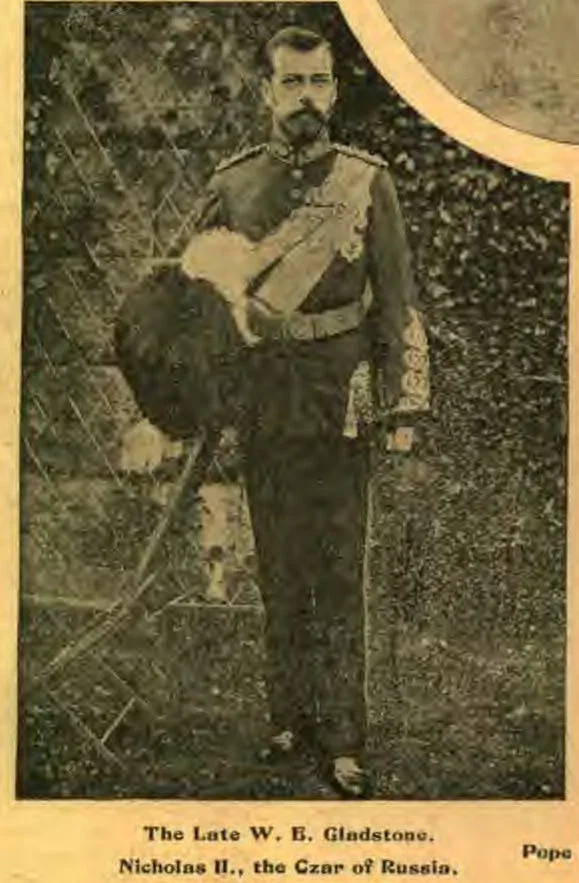
1894.—Czar Alexander III, of Russia dies, November 1.—Nicholas II. proclaimed czar, November 2.
1895.—Massacre of 30,000 Armenian Christians.—Casimer Perier resigns French presidency, January 15.—Felix Faure elected, January 17.—Elbe, N. German Lloyd steamship, sunk in collision with British ship Crathrie, 334 lives lost, January 19.—Chinese fleet destroyed by Japanese at Wei-Hai-Wei, February 4.—Treaty of peace signed April 16.—Reina Regenta, Spanish cruiser, lost in bay of Trafalgar, with 402 on board.—French capture Antananarivo, capital of Madagascar, September 30.—American missionary buildings destroyed by Turks, November 16.—Kaiser William ship canal opened by the emperor, William II., January 19.
1896.—Massacre of 3,000 Armenian Christians by the Kurds, January 4.—Italians repulse 60,000 Abyssinians at Makala, January 21.—Ferdinand of Bulgaria recognized as ruler by Germany, February 16.—Abyssinians defeat Italian army, 5,000 killed.—Ecuador suspends payment of foreign debt, March 21.—Alliance between England and Italy, March 25.—Ancient Olympian games renewed in Greece, March and April.—Shah of Persia assassinated, May 1.—Coronation of Czar Nicholas II. of Russia, May 26.—Treaty of peace between Italy and Abyssinia signed October 26.—November 26 settlement arranged between United States and Great Britain over Venezuela matter.—December 1, Gen. Porfirio Diaz inaugurated President of Mexico for the fifth time.—December 31, a report on finances of Turkey showed an average yearly deficit of $4,400,000 since 1890.
1897.—General arbitration treaty between the United States and Great Britain signed January 11.—Ambassadors of the six European powers draw a collective note to be sent to the Porte regarding the Cretan settlement.—Diplomatic relations between Great Britain and Venezuela resumed, March 2.—Greece replies to the ultimatum of the Powers refusing to withdraw her troops from Crete, March 8.—Greek transport sunk by an Austrian war ship in Cretan waters, March 18.—Crete blockaded by the Powers, March 21.—Sultan of Zanzibar abolishes slavery, April 6.—Fighting begins between Greece and Turkey, on the Thessalian frontier, April 9.—Turkey declares a state of war exists, April 17.—Diplomatic relations broken off between Turkey and Greece, April 18.—A fifteen days' armistice declared May 31, to date from May 20, the Turks generally victorious.—Preliminary treaty of peace signed at Constantinople, September 18.—Final treaty of peace between Turkey and Greece signed December 16.—China grants permission to the Russian squadron to winter at Port Arthur, December 22.
1898.—Kalou-chau ceded to Germany by China, January 5.—President Barrios, of Guatemala, assassinated, February 8.—The Chinese Government agrees to all of Russia's demands in the matter of leasing Port Arthur and Talienwan.—Serious bread riots in Italy, from April 27 to May 8, during which hundreds of persons were killed in the streets of Milan.—Great Britain takes possession of Wei-Hai-Wei, China, May 24.—Japan and Russia sign a protocol guaranteeing the independence of Corea, June 5.—The empress dowager of China relieves the emperor of all actual power, August 1.—The emperor abdicates in favor of the empress dowager, September 22.—Turkey disclaims all responsibility for loss of property of American missionaries in Armenian massacres, August 7.—Colonel Henry, of the French army, confesses to forging a letter to secure the conviction of Captain Dreyfus, and commits suicide, August 31; all France stirred over the Dreyfus case; feeling against the Jews intense.—Anglo-Egyptian forces defeat the Dervishes at Omdurman, inflicting upon them a loss of over 10,000, and totally destroying the power of the Khalifa.—Last of the Turkish troops leave Crete November 9; Prince George, of Greece, appointed by the Powers governor of Crete. Sinking of French liner La Bourgogne in collision near Nova Scotia, July 4, 549 lives lost.—English steamship Mohegan wrecked off south coast of England, October 14, 119 lives lost.—November 27, steamship Portland wrecked in a terrible storm off Cape Cod, 120 lives lost; 200 vessels of all grades reported wrecked.
UNION OF CHURCH AND STATE
By Alonzo T. Jones
By Alonzo T. Jones, Author of "Two Republics," "Rights of the People," etc.
TWENTY-FIVE years' progress toward the union of Church and State in the United States!
To many into whose hands this paper may fall it may be thought an exceedingly strange thing that there should be any progress at all, much less twenty-five years of it, toward a union of Church and State in the United States.
It is strange that such a thing should be so. But so it is.
The Government of the United States was founded upon the principle of total separation of religion and the State, as certainly as it was founded upon the principles of a republic. Indeed, the total separation of religion and the State is inherent in the principle of a republic; and logic and consistency demand that in every republic there shall be such a separation.
Yet, true as this is, the makers of this American republic did not leave it to logic and consistency to effect this important thing; they positively and continuously, in State papers and organic laws, declared it, from the time that the Declaration of Independence was made to the time when the National Constitution was finally established and ordained. The total separation of religion and the State is a fundamental Christian principle, enunciated in the words of Holy Writ, "Behold, the people [Israel] shall dwell alone, and shall not be reckoned among the nations." "If any man hear My words and believe not, I judge him not." "Render, therefore, unto Caesar the things that are Caesar's; and unto God the things which are God's."
It was in positive recognition of this principle as a Christian principle that it was made a fundamental feature in the establishment of the American republic. The men who made this nation said:—
"Almighty God hath created the mind free; all attempts to influence it by temporal punishments or burdens, or by civil incapacitations, tend only to beget habits of hypocrisy and meanness, and are a departure from the plan of the holy Author of our religion, who, being Lord of both body and mind yet chose not to propagate it by coercions on either, as was in His mighty power to do."—Rights of the People, p. 90.
"To judge for ourselves, and to engage in the exercise of religion agreeably to the dictates of our own consciences, is an unalienable right, which, upon the principles on which the Gospel was first propagated, and the Reformation from Papacy carried on, can never be transferred to another."—Ib., p. 89.
"It is impossible for the magistrate to adjudge the right of preference among the various sects professing the Christian faith, without erecting a claim to infallibility, which would lead us back to the Church of Rome."—Ib., p. 87.
Therefore the supreme law of the land was made to declare that—
"No religious test shall ever be required as a qualification to any office or public trust under the United States."—Constitution.
"Congress shall make no law respecting an establishment of religion or prohibiting the free exercise thereof."—First Amendment.
"The Government of the United States is not in any sense founded on the Christian religion."—Treaty with Tripoli.
Thus the constitutionally-declared principle of the total separation of religion and the State in the United States, is explicitly a Christian principle, as it is also "the logical consequence of either of the two great distinguishing principles of the Reformation—as well of justification by faith alone as of the equality of all believers."—Bancroft.
Who only, then, could be expected to desire the governmental recognition of religion, the union of Church and State, in the United States?—Surely, none who respect either the principles of Christianity or of the Reformation. As the American principle of the total separation of religion and the State is a true principle of Christianity and the Reformation; and as a recognition of religion by the Government of the United States, the union of Church and State in the United States, would, on the face of it, be in open disregard of the principles of Christianity and of the Reformation, it follows plainly enough that no one who has any true regard for Christianity or respect for the Reformation can ever engage in any movement or combination to secure governmental recognition of religion, or any union of Church and State in the United States.
But we are publishing an article on "Twenty-five Years of Progress toward the Union of Church and State in the United States." Who, then, are they who are aiming at this, that there should be any such progress at all?—Strangely enough, all the leading and active workers and organizations to this antichristian and anti-Protestant end, are loudly professed Christians and just as loudly professed Protestants.
Twenty-five years ago there was but one organization in the land definitely committed to this cause. This was an organization mostly of Reformed Presbyterians, tho including prominent men of other denominations, under the name of the "National Reform Association," whose avowed purpose was to secure an amendment to the national Constitution "recognizing the being and attributes of Almighty God, the divine authority of the Holy Scriptures, the law of God as the paramount rule, and Jesus, the Messiah, the Saviour and Lord of all," and "so placing all Christian laws, institutions, and usages upon an undeniable legal basis in the fundamental law of the land."
This organization slowly gained strength and influence, until 1887, when it secured the alliance of the W. C. T. U. and the Prohibition party. In 1888 the American Sabbath Union, receiving its initiative in the Methodist General Conference held that year in New York, and including the leading denominations of the country, was added to the combination.
This combination had sufficient influence to secure, in that very year, 1888, the introduction into Congress of a joint resolution and a bill, recognizing the Christian religion and establishing by law the observance of Sunday as the Christian sabbath. And these points have been held before Congress ever since.
In 1889 this combination sought and gained the coöperation of the Catholic Church.
In 1892 the judiciary department of the national government practically joined this combination, through a unanimous declaration of the Supreme Court that "the establishment of the Christian religion" is within the "meaning" of the Constitution, and that consequently "this is a Christian nation."
In 1893 the legislative department of the National Government followed the lead of the Supreme Court, and in legislating for the World's Fair at Chicago, officially recognized and established Sunday as the Sabbath of the Fourth Commandment; in which Congress did do the very thing which the makers of the nation said it was impossible to do without erecting a claim to infallibility,—Congress did adjudge the right of preference between different sects professing the Christian faith, adopted Sunday as the national sabbath, and in so doing did erect a claim to infallibility, which leads back to the Church of Rome.
At the same time the Executive Department of the national government also joined the combination, by the President's official approval of this religious act of Congress; and, further, in 1896, by the declaration that "this is a Christian nation, and they will have to face the music."
As all this was the clear repudiation of the Christian and Protestant principle, and the adoption of the papal principle, the Papacy immediately began to build upon the foundation that had thus been laid. In October, 1893, Archbishop Ireland, in a panegyric at the Jubilee of Cardinal Gibbons, exclaimed:—
"I preach the new, the most glorious crusade Church and Age! Unite them in the mind and heart, in the name of humanity, in the name of God. Church and Age! . . . Rome is the Church; America is the Age."
In September, 1894, by a papal rescript, the United States was "declared to be a Catholic country," and "was elevated to the first rank as a Catholic nation."
And in 1898 an official representative of the Papacy was received by the United States Government at Washington, upon official credentials from the Secretary of State of the Papacy addressed to the Secretary of State of the United States. And, having been so received by this government, international matters between the United States and Spain were conducted through this papal representative, until all negotiations were broken off by the declaration of war.
Such, briefly sketched, is the twenty-five years of progress toward the union of Church and State in the United States, up to date. And who can say but that this progress has been such as to demand the serious attention of every person in the land who has any regard for true Christianity, for true Protestantism, or for true American principles?
And still this vast combination of National Reform, W. C. T. U., Prohibition, Sabbath Union, B. Y. P. U., Y. P. S. C. E., Christian Citizenship, and papal elements, is steadily pushing forward the original design,—the union of Church and State in the United States.